
Building Blocks of Behavioral Strategy   29-slide PPT PowerPoint presentation template (PPT)
$29.00

Building Blocks of Behavioral Strategy (29-slide PPT PowerPoint presentation slide deck (PPT)) Preview Image
Log in to unlock full preview.
Building Blocks of Behavioral Strategy (29-slide PPT PowerPoint presentation slide deck (PPT)) Preview Image
Arrow   Click main image to view in full screen.

Building Blocks of Behavioral Strategy – PowerPoint PPT Template

PowerPoint (PPT) 29 Slides FlevyPro Document

$29.00
FlevyPro price: FREE (included in subscription)
This framework is developed by a team of former McKinsey and Big 4 consultants. The presentation follows the headline-body-bumper slide format used by global consulting firms.
Add to Cart


Immediate download
Free lifetime updates

DECISION MAKING PPT TEMPLATE DESCRIPTION

Editor Summary Building Blocks of Behavioral Strategy is a 29-slide PowerPoint deck presenting a framework to recognize and counter cognitive biases in strategic decision-making. Read more

Behavioral Economics has exposed that not many strategists making crucial decisions consciously consider cognitive biases. These biases are systematic human tendencies to deviate from rational calculations. In strategic decision making, leaders need to recognize their own biases, as these biases influence important strategic decisions made by the smartest managers in the best companies.

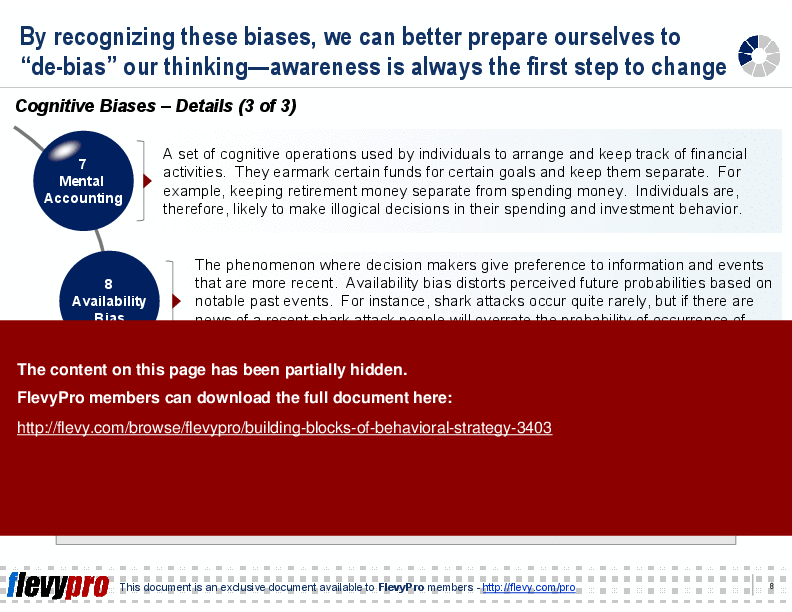
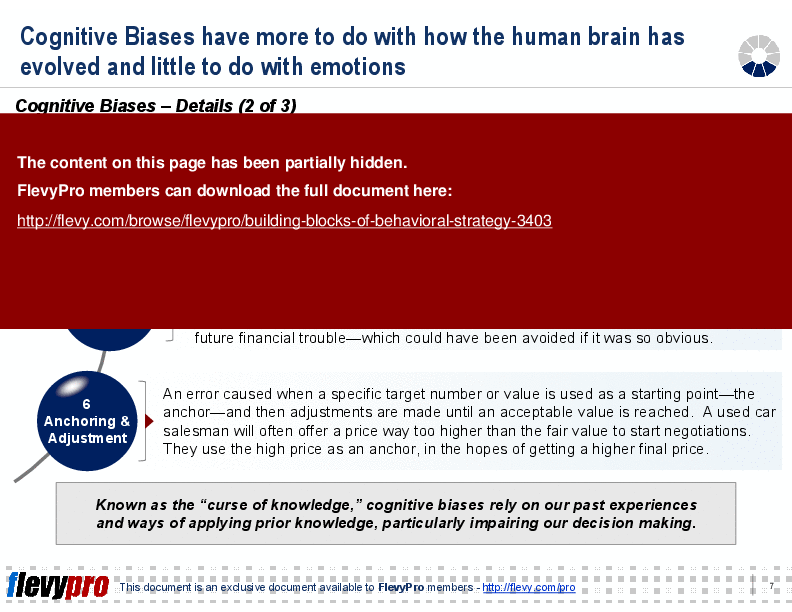
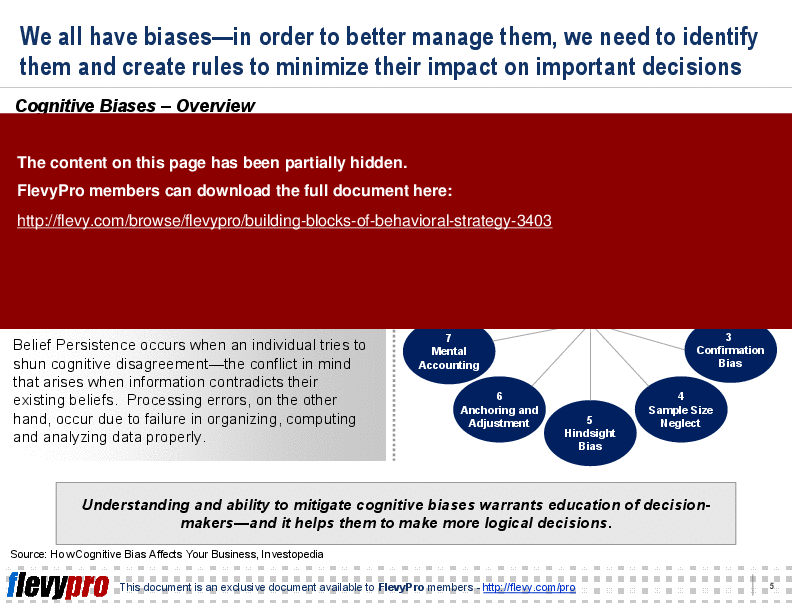
This slide deck begins with a discussion on the 9 most common Cognitive Biases in humans:

1. Conservatism Bias
2. Base Rate Neglect
3. Confirmation Bias
4. Sample Size Neglect
5. Hindsight Bias
6. Anchoring and Adjustment
7. Mental Accounting
8. Availability Bias
9. Framing Bias

These subconscious biases impair strategic decision making. Leaders need to manage them to improve corporate performance.

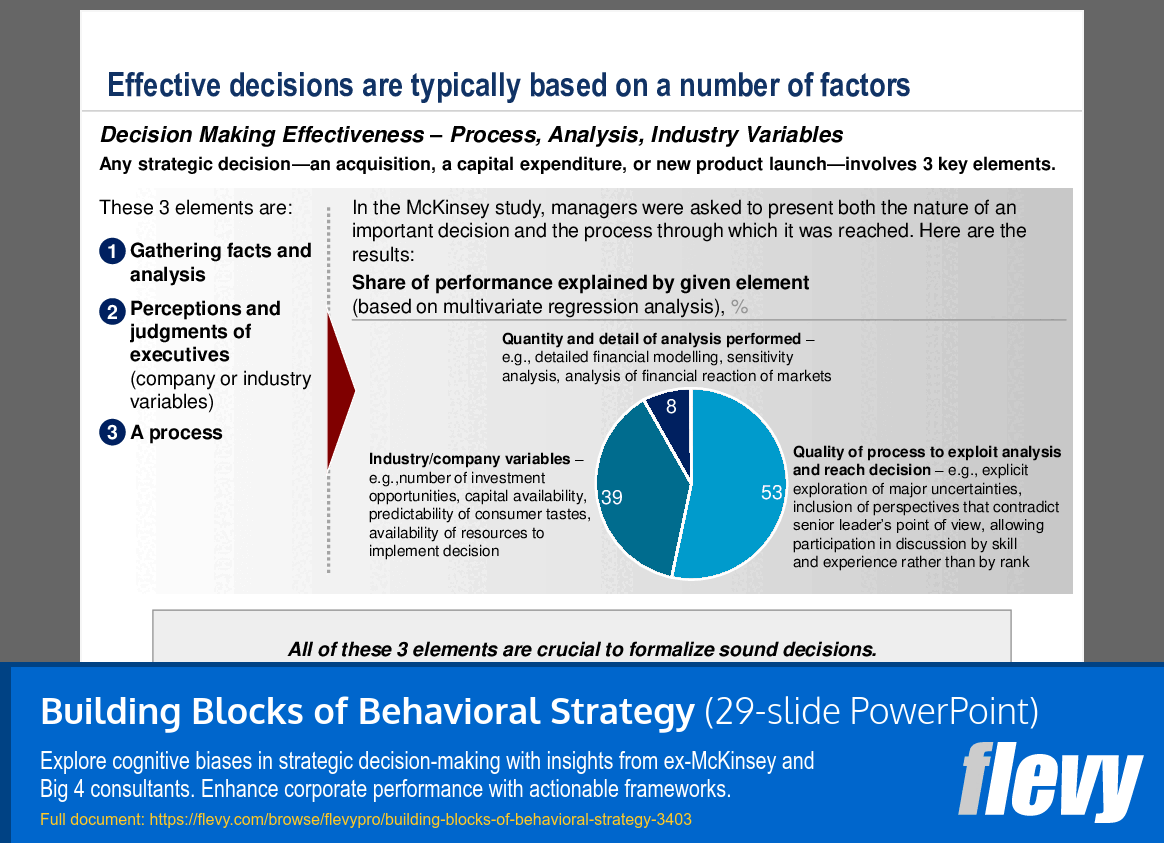
The presentation then discusses the results of a decision making study quantifying the financial benefits of processes that "de-bias" strategic decisions and make a case for applying behavioral strategy. Next, there is a deliberation on the 3 key factors affecting decision making effectiveness.

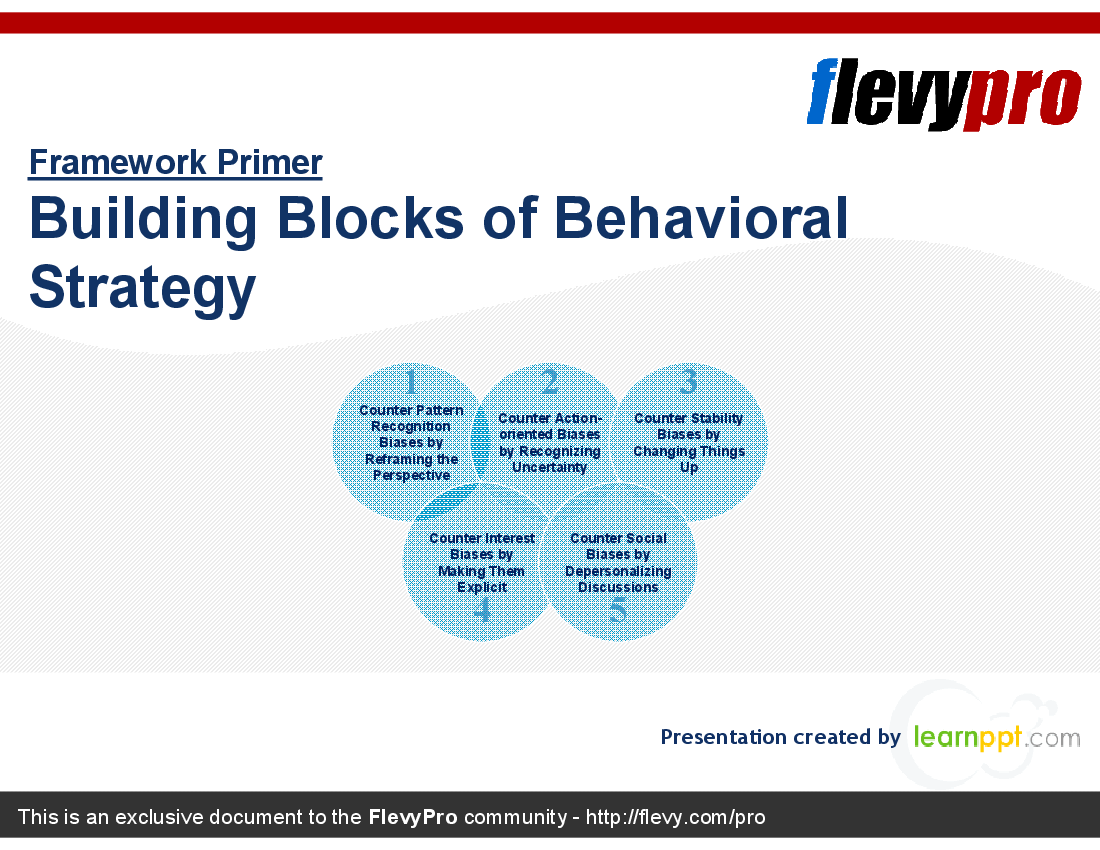
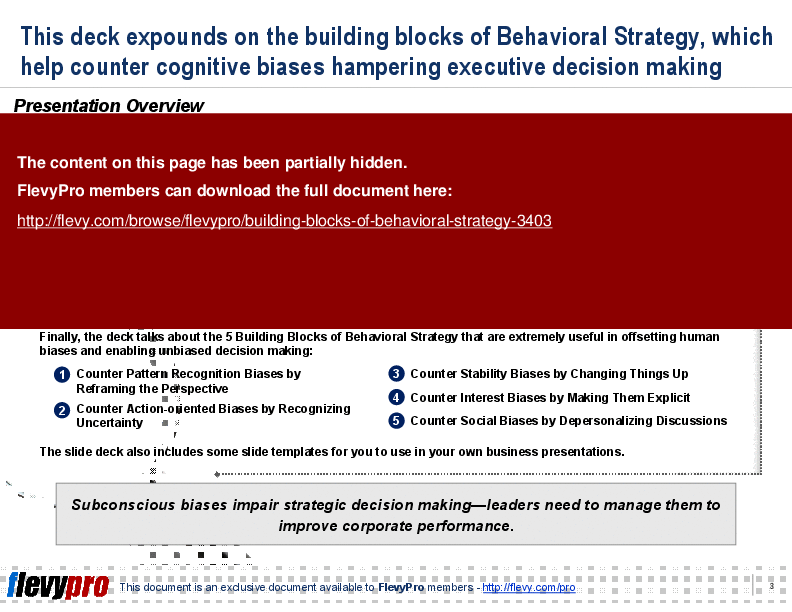
Finally, the deck talks about the 5 Building Blocks of Behavioral Strategy that are extremely useful in offsetting human biases and enabling unbiased decision making:

1. Counter Pattern Recognition Biases by Reframing the Perspective
2. Counter Action-oriented Biases by Recognizing Uncertainty
3. Counter Stability Biases by Changing Things Up
4. Counter Interest Biases by Making Them Explicit
5. Counter Social Biases by Depersonalizing Discussions

The slide deck also includes some slide templates for you to use in your own business presentations.

This comprehensive slide deck delves into the intricacies of cognitive biases and their impact on decision-making. It highlights the importance of recognizing and mitigating biases to enhance strategic outcomes. The presentation includes detailed analyses of various biases and offers practical frameworks for leaders to implement behavioral strategies effectively. It also provides actionable insights and templates to facilitate the application of these strategies in real-world scenarios. This resource is essential for executives aiming to refine their decision-making processes and drive better business performance.

Got a question about this document? Email us at flevypro@flevy.com.

MARCUS OVERVIEW

This synopsis was written by Marcus [?] based on the analysis of the full 29-slide presentation.


Executive Summary
The "Building Blocks of Behavioral Strategy" presentation provides a comprehensive framework for understanding and countering cognitive biases that hinder effective strategic decision-making. Developed by experts with backgrounds in McKinsey and Big 4 consulting, this deck equips corporate leaders with actionable insights to enhance decision-making effectiveness and improve overall corporate performance. By recognizing and addressing biases, executives can foster a culture of rational decision-making, leading to better outcomes in strategic initiatives.

Who This Is For and When to Use
•  Corporate executives seeking to improve decision-making processes
•  Strategy leaders looking to implement behavioral strategies within their teams
•  Consultants advising organizations on cognitive bias management
•  HR professionals focused on leadership development and training

Best-fit moments to use this deck:
•  During strategic planning sessions to identify and mitigate biases
•  In leadership training programs focused on decision-making skills
•  When conducting workshops on behavioral economics and its application in business

Learning Objectives
•  Define the concept of cognitive biases and their impact on decision-making
•  Identify the nine most common cognitive biases affecting executives
•  Analyze the effectiveness of decision-making processes in organizations
•  Implement the 5 building blocks of behavioral strategy to counter biases
•  Develop frameworks for unbiased decision-making within teams
•  Create actionable plans to enhance corporate performance through better decision-making

Table of Contents
•  Overview (page 3)
•  Cognitive Biases (page 5)
•  Decision Making Effectiveness (page 10)
•  Building Blocks of Behavioral Strategy (page 14)
•  Templates (page 20)

Primary Topics Covered
•  Cognitive Biases - An exploration of the nine common cognitive biases that affect decision-making, including conservatism bias and confirmation bias.
•  Decision Making Effectiveness - Insights from McKinsey research on how biases influence strategic decisions and the importance of process over analysis.
•  Building Blocks of Behavioral Strategy - Five key strategies to counteract biases: reframing perspectives, recognizing uncertainty, changing stability biases, making interests explicit, and depersonalizing discussions.
•  Templates - Practical templates for implementing the discussed frameworks in business presentations and strategy sessions.

Deliverables, Templates, and Tools
•  Cognitive bias identification template for assessing decision-making scenarios
•  Action plan template for implementing behavioral strategies
•  Framework for evaluating decision-making processes
•  Presentation slides for training sessions on cognitive biases
•  Checklist for recognizing and mitigating biases in strategic decisions

Slide Highlights
•  Overview of the nine cognitive biases and their implications for decision-making
•  Findings from McKinsey's research on decision-making effectiveness
•  Detailed explanation of the 5 building blocks of behavioral strategy
•  Visual representations of cognitive biases and their counteractions
•  Templates for practical application in business contexts

Potential Workshop Agenda
Understanding Cognitive Biases (60 minutes)
•  Introduction to cognitive biases and their impact
•  Group discussion on personal experiences with biases
•  Interactive activity to identify biases in case studies

Implementing Behavioral Strategies (90 minutes)
•  Overview of the 5 building blocks of behavioral strategy
•  Breakout sessions to develop action plans for countering biases
•  Presentation of group findings and strategies

Customization Guidance
•  Adapt the templates to fit specific organizational contexts and terminology
•  Incorporate company-specific case studies to illustrate cognitive biases
•  Modify the agenda to align with organizational training schedules and objectives

Secondary Topics Covered
•  The role of emotional biases in decision-making
•  Strategies for fostering a culture of open discussion and debate
•  Techniques for measuring the effectiveness of decision-making processes
•  The impact of organizational culture on cognitive bias prevalence

Topic FAQ

What are the most common cognitive biases that affect strategic decision-making?

Strategic decision-making is commonly impaired by conservatism bias, base rate neglect, confirmation bias, sample size neglect, hindsight bias, anchoring and adjustment, mental accounting, availability bias, and framing bias. These nine biases are the specific biases detailed in the deck as most relevant to executive decisions.

What are the core building blocks of a behavioral strategy framework?

A behavioral strategy framework can include reframing perspectives, recognizing uncertainty, changing stability biases, making interests explicit, and depersonalizing discussions. Flevy’s Building Blocks of Behavioral Strategy presents these 5 building blocks as structured countermeasures to common executive biases.

How does bias influence decision-making effectiveness in organizations?

Biases lead decision-makers to overweight prior beliefs, ignore base rates, overgeneralize from small samples, and favor familiar options, which reduces decision quality. The deck references McKinsey findings and a decision-making study quantifying the financial benefits of de-biasing processes to illustrate this effect.

What should I look for in a slide deck or toolkit when buying behavioral strategy resources?

Seek clear definitions of common biases, evidence or research linking biases to outcomes, structured countermeasures, ready-to-use templates, and a facilitation agenda for workshops. A useful toolkit will include templates and a workshop agenda to operationalize training and interventions.

How much time and structure is needed to run a practical de-biasing workshop?

The product outlines a two-part workshop structure: a 60-minute session on understanding cognitive biases and a 90-minute session on implementing behavioral strategies, totaling about 150 minutes, with group discussions, interactive activities, and breakout sessions for action planning.

I need to improve leadership decision-making — which behavioral strategy elements should I apply?

Apply the 5 elements of behavioral strategy: reframe perspectives to counter pattern-recognition bias, explicitly acknowledge uncertainty, rotate options to counter stability bias, require disclosure of interests, and depersonalize discussions to reduce social bias. Flevy’s Building Blocks of Behavioral Strategy organizes these 5 elements for training use.

How can I measure whether de-biasing interventions are working?

Measure changes in decision outcomes, track adherence to decision processes, and assess whether decisions reference alternative frames and disclosed interests. Use a decision-making evaluation framework and a checklist to periodically assess impact and process compliance as concrete metrics.

Are ready-made templates like bias identification and action plans worth the cost compared with custom consulting?

Templates accelerate deployment and give teams a repeatable structure for diagnosing and mitigating biases, reducing upfront consulting time while still requiring contextual customization. The deck includes a cognitive bias identification template and an action plan template to support internal rollout.

Document FAQ
These are questions addressed within this presentation.

What are cognitive biases?
Cognitive biases are systematic patterns of deviation from norm or rationality in judgment, affecting decision-making processes.

How can this presentation help improve decision-making?
The presentation provides frameworks and strategies to recognize and mitigate cognitive biases, leading to more rational and effective decision-making.

What are the 5 building blocks of behavioral strategy?
The 5 building blocks include reframing perspectives, recognizing uncertainty, changing stability biases, making interests explicit, and depersonalizing discussions.

Can this framework be applied in any industry?
Yes, the principles of behavioral strategy and cognitive bias management are applicable across various industries and organizational contexts.

How do I implement these strategies in my organization?
Use the provided templates and action plans to tailor the strategies to your specific organizational needs and culture.

What resources are included in the presentation?
The presentation includes templates for identifying biases, action plans for implementing strategies, and slides for training sessions.

How can I measure the effectiveness of these strategies?
Establish metrics for decision-making outcomes and regularly assess the impact of implemented strategies on corporate performance.

Is there a follow-up process after the workshop?
Yes, it is recommended to schedule follow-up sessions to review the implementation of strategies and assess progress.

Glossary
•  Cognitive Bias - A systematic pattern of deviation from norm or rationality in judgment.
•  Behavioral Strategy - A framework that incorporates insights from behavioral economics to improve decision-making.
•  Decision-Making Process - The steps taken to arrive at a decision, including gathering information and evaluating options.
•  Conservatism Bias - The tendency to favor prior information over new data.
•  Confirmation Bias - The tendency to search for, interpret, and remember information that confirms one’s pre-existing beliefs.
•  Stability Bias - The inclination to maintain the status quo and resist change.
•  Interest Bias - The tendency for individuals to prioritize their own interests over organizational goals.
•  Social Bias - The tendency to conform to the opinions of the group or authority figures.
•  Framing Bias - The influence of the way information is presented on decision-making.
•  Mental Accounting - The cognitive process of categorizing and evaluating financial activities.
•  Availability Bias - The tendency to rely on immediate examples that come to mind when evaluating a specific topic.
•  Anchoring Bias - The reliance on the first piece of information encountered when making decisions.
•  Hindsight Bias - The inclination to see events as having been predictable after they have already occurred.
•  Sample Size Neglect - The error of drawing conclusions from a small sample size.
•  Base Rate Neglect - The tendency to ignore the general prevalence of an event when making decisions.

DECISION MAKING PPT TEMPLATES

Cognitive Biases: Understanding Decision-Making Influences

Key Elements of Effective Strategic Decision-Making

Understanding Cognitive Biases in Investment Decisions

Addressing Stability Biases in Budgeting Strategies

Managing Social Biases through Depersonalization and Debate

Source: Best Practices in Decision Making, Cognitive Bias, Behavioral Economics, Organizational Behavior PowerPoint Slides: Building Blocks of Behavioral Strategy PowerPoint (PPT) Presentation Slide Deck, LearnPPT Consulting


$29.00
FlevyPro price: FREE (included in subscription)
This framework is developed by a team of former McKinsey and Big 4 consultants. The presentation follows the headline-body-bumper slide format used by global consulting firms.
Add to Cart
  

Did you need more documents?

Consider a FlevyPro subscription from $39/month. View plans here.

For $10.00 more, you can download this document plus 2 more FlevyPro documents. That's just $13 each.

ABOUT FLEVYPRO

This document is part of the FlevyPro Library, a curated knowledge base of documents for our FlevyPro subscribers.

FlevyPro is a subscription service for on-demand business frameworks and analysis tools. FlevyPro subscribers receive access to an exclusive library of curated business documents—business framework primers, presentation templates, Lean Six Sigma tools, and more—among other exclusive benefits.

Click here to learn more about FlevyPro and its benefits.

Did you know?
The average daily rate of a McKinsey consultant is $6,625 (not including expenses). The average price of a Flevy document is $65.


Trusted by over 10,000+ Client Organizations
Since 2012, we have provided business templates to over 10,000 businesses and organizations of all sizes, from startups and small businesses to the Fortune 100, in over 130 countries.
AT&T GE Cisco Intel IBM Coke Dell Toyota HP Nike Samsung Microsoft Astrazeneca JP Morgan KPMG Walgreens Walmart 3M Kaiser Oracle SAP Google E&Y Volvo Bosch Merck Fedex Shell Amgen Eli Lilly Roche AIG Abbott Amazon PwC T-Mobile Broadcom Bayer Pearson Titleist ConEd Pfizer NTT Data Schwab


Read Customer Testimonials

 
"One of the great discoveries that I have made for my business is the Flevy library of training materials.

As a Lean Transformation Expert, I am always making presentations to clients on a variety of topics: Training, Transformation, Total Productive Maintenance, Culture, Coaching, Tools, Leadership Behavior, etc. Flevy "

– Ed Kemmerling, Senior Lean Transformation Expert at PMG
 
"Flevy is now a part of my business routine. I visit Flevy at least 3 times each month.

Flevy has become my preferred learning source, because what it provides is practical, current, and useful in this era where the business world is being rewritten.

In today's environment where there are so "

– Omar Hernán Montes Parra, CEO at Quantum SFE
 
"As a niche strategic consulting firm, Flevy and FlevyPro frameworks and documents are an on-going reference to help us structure our findings and recommendations to our clients as well as improve their clarity, strength, and visual power. For us, it is an invaluable resource to increase our impact and value."

– David Coloma, Consulting Area Manager at Cynertia Consulting
 
"I am extremely grateful for the proactiveness and eagerness to help and I would gladly recommend the Flevy team if you are looking for data and toolkits to help you work through business solutions."

– Trevor Booth, Partner, Fast Forward Consulting
 
"I have found Flevy to be an amazing resource and library of useful presentations for lean sigma, change management and so many other topics. This has reduced the time I need to spend on preparing for my performance consultation. The library is easily accessible and updates are regularly provided. A wealth of great information."

– Cynthia Howard RN, PhD, Executive Coach at Ei Leadership
 
"As a consulting firm, we had been creating subject matter training materials for our people and found the excellent materials on Flevy, which saved us 100's of hours of re-creating what already exists on the Flevy materials we purchased."

– Michael Evans, Managing Director at Newport LLC
 
"[Flevy] produces some great work that has been/continues to be of immense help not only to myself, but as I seek to provide professional services to my clients, it gives me a large "tool box" of resources that are critical to provide them with the quality of service and outcomes they are expecting."

– Royston Knowles, Executive with 50+ Years of Board Level Experience
 
"Flevy is our 'go to' resource for management material, at an affordable cost. The Flevy library is comprehensive and the content deep, and typically provides a great foundation for us to further develop and tailor our own service offer."

– Chris McCann, Founder at Resilient.World


Customers Also Bought These Documents


Customers Also Like These Documents

Explore Templates on Related Management Topics


Your Recently Viewed Documents
Download our FREE Strategy & Transformation Framework Templates

Download our free compilation of 50+ Strategy & Transformation slides and templates. Frameworks include McKinsey 7-S, Balanced Scorecard, Disruptive Innovation, BCG Curve, and many more.