Editor's Note: Take a look at our featured best practice, Logistics and Transportation Value Chain (31-slide PowerPoint presentation). An Industry Value Chain is a visual representation of the series of steps an organization in a specific industry takes to deliver a product or service to the market. It captures the main business functions and processes that are involved in delivering the end product or service, illustrating how [read more]
* * * *
Moving a vehicle rarely gets treated as what it is: a sourcing decision. Whether you are relocating an executive, repositioning a company car, or moving fleet equipment between sites, the choice runs on the same disciplines as any vendor selection. You are buying a service against a set of requirements, and the outcome depends on how well you define those requirements before anyone quotes a price.
That framing matters because car shipping has no list price. The cost shifts with distance, vehicle type, transport method, timing, and how reachable the pickup and delivery points are. Two shipments that look identical can come back at very different rates, for the same reason two supplier bids on one scope can diverge: the assumptions underneath them are not the same. So before you commit budget, the practical starting point is to estimate your vehicle shipping cost and set a baseline to measure quotes against.
Reading the cost drivers does the same work a cost breakdown does in any procurement exercise. It turns a confusing set of numbers into a decision you can defend.
What Affects the Price
There are a number of factors that go into how much it costs to ship your vehicle․
The distance is the biggest factor‚ but not the only one․
Short trips are less economical‚ however‚ if they are in a remote area and must be switched in a hurry‚ while longer trips are more economical if they are common routes already served by carriers․
Size and weight are also key factors․
A small sedan is usually cheaper to transport than a large SUV‚ pickup truck‚ or other vehicle with a large footprint‚ which takes more room on the trailer and costs more to operate․
In general‚ the larger and heavier a car is‚ the more intensive the handling and the higher the price․
Transport type is another factor․
Open transport is usually cheaper‚ because it is more common and easier to schedule than enclosed transport․
Enclosed transport is usually more expensive but provides a greater level of protection‚ making it suitable for transporting classic‚ luxury‚ or high-value vehicles.
Typical Cost Drivers
The biggest key to how much shipping will cost is that shipping is not just based on the distance of travel․
The distance in which the car needs to be transported‚ the type of vehicle being shipped‚ time frames‚ and whether the carrier has to travel a difficult route are all considered․
There are other factors related to pickup and delivery flexibility․
The narrower the time window during which the shipment must be picked up and delivered‚ the greater the cost of shipping․
If your schedule is flexible‚ you will often benefit from a lower rate than if your schedule is not․
Markets may also be seasonal: periods of heavy demand due to moving will tend to put upward pressure on rates‚ while quieter periods will tend to see more space available and lower rates.
Route and Location
Cost can also be affected by the specific origin and destination․
A major city or common interstate route may be cheaper to service than a less-used route between two secondary towns․
Remote areas and rural locations with lightly traveled roads usually cost more due to the longer time and higher fuel costs․
A quote for one route may be different than one for another, even if the cars are the same; sometimes the convenience of a route may be just as important as the distance‚ and a route that fits easily into a carrier’s schedule is cheaper than a route that requires detours.
Vehicle Condition
In general‚ it is cheaper and easier to load a working vehicle than one that will not start or move․
It may require special equipment or more manual labor‚ which may be reflected in the final cost․
For example‚ a car full of personal items may have more restrictions‚ or a car with less clearance may need to be loaded a little more carefully․
The cleaner and simpler a shipment is‚ the easier it is for a carrier to accurately price.
How Pricing Is Usually Built
Most quotes for car shipment are a combination of operational cost and market demand‚ including fuel‚ space on the trailer‚ distance, and labor needed to transport a vehicle․
So the lowest quote may not always be the best‚ it may not necessarily cover important details relating to the service․
A good quote will say what the move is assumed to involve‚ in terms of vehicle size‚ trailer type‚ and service type․
If the quote amounts seem low‚ you may want to ask what assumptions they made in determining the price․
RoadRunner is one name you’ll see in the car shipping business‚ though the same advice applies: look for the details of the shipment when getting quotes‚ not just the price.
Ways to Lower the Cost
There are many practical ways to reduce what you pay without sacrificing the basic things you want․
The most important is flexibility․
If you can give the carrier a wider pickup window‚ you are often in a better position to get a better rate․
Open transport‚ as opposed to enclosed transport‚ may also help reduce costs․
For everyday cars‚ open transport is usually satisfactory, and the cheapest option available․
And enclosed service makes sense when the extra protection justifies the higher cost․
They need to make sure they are ready for their car to be picked up‚ which includes removing personal items‚ keeping the gas tank at a reasonable level‚ and ensuring there is nothing blocking their car’s access to the transport truck; this makes the handoff less time-consuming and problematic.
How to Compare Quotes
Be sure to compare transport type‚ estimated pick-up window‚ estimated delivery time‚ and whether special handling requirements were included with the price being quoted, and that the price quoted is not simply for a different service level․
Another thing to consider with quotes in this format is that the lower quote may be for larger time slots or more non-stop service with faster pickup․
If the quotes are based on different assumptions‚ then a fair comparison really cannot be made.
A good approach is to make a simple checklist before you choose:
Vehicle type and size.
Transport method.
Pickup flexibility.
Delivery expectations.
Vehicle condition.
Route difficulty.
With those details in front of you, the true difference between the two quotes becomes much easier to spot.
When Paying More Makes Sense
In some cases‚ it pays to pay more․
If the car is worth a lot of money‚ is fragile‚ or irreplaceable‚ you might want the extra protection․
The same is true if you need faster service or more specialized handling․
But if you need convenience more than money and you need to be in your new home quickly‚ the cheaper quote may not be the better one if it delays your move or causes other problems․
In such a situation‚ reliability is part of the value․
More sensibly‚ for most people‚ the lowest figure may not be best; you need the right car‚ the right route‚ and the right level of cover that suits your needs.
A Simple Way to Think about Cost
The best way to analyze the factors or variables that will affect the cost of auto transport is to break it down into layers: distance‚ size of vehicle‚ transport type‚ route complexity‚ and time․
In that way, you get a realistic approximation․
Shippers can obtain lower rates if they are shipping a standard car‚ shipping to a popular destination or along a popular route‚ and if they have some flexibility in the time frame․
Rates can be higher for larger vehicles and out-of-the-way locations․
That is why the first step and the most useful is to find out your vehicle shipping cost as soon as possible․
Once you have an idea of the main factors of the final cost‚ budgeting and choosing the right option is easy.
Final Thoughts
Vehicle shipping looks like a logistics errand, but it behaves like a procurement decision and rewards the same habits. Define the requirement, understand what drives the cost, and compare bids on matching assumptions rather than on the headline number. Distance, vehicle size, transport type, and schedule all pull on the final figure, and the lowest quote is the best one only when it covers the same scope as the rest.
Treat it the way you would any vendor selection and you come out ahead: clear on the trade-offs between cost, speed, and protection, and able to justify the call instead of defaulting to whatever number came in lowest. Decide which features matter, hold every quote to those features, and the right option usually picks itself.
The financial model for a Trucking Company Financial Plan is designed to help trucking company owners, and investors make informed decisions about their business. It provides a comprehensive analysis and projection of the company's financial performance, allowing users to assess the viability and [read more]
Do You Want to Implement Business Best Practices?
You can download in-depth presentations on Transportation and 100s of management topics from the FlevyPro Library. FlevyPro is trusted and utilized by 1000s of management consultants and corporate executives.
For even more best practices available on Flevy, have a look at our top 100 lists:
These best practices are of the same as those leveraged by top-tier management consulting firms, like McKinsey, BCG, Bain, and Accenture. Improve the growth and efficiency of your organization by utilizing these best practice frameworks, templates, and tools. Most were developed by seasoned executives and consultants with over 20+ years of experience.
Readers of This Article Are Interested in These Resources
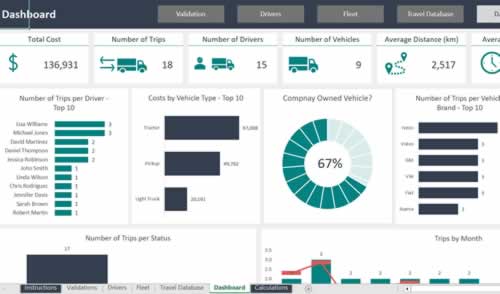
The Freight Management Worksheet is a comprehensive tool designed to provide you with full control over your logistics operations. Below is an overview of the key components of the worksheet, with a focus on each specific sheet:
1. Validation Tab
The Validation Tab ensures the accuracy and [read more]
A Trucking Company is an enterprise that provides transportation services for the movement of goods via trucks. These companies play a critical role in the logistics and supply chain industry by ensuring the smooth and efficient delivery of commodities across various locations. With a fleet of [read more]
If you are trying to validate your trucking business (or a general delivery business), this 5-year financial model is just the right tool. These assumptions were specifically designed to meet the needs of a trucking business whose primary revenue stream is from making deliveries. Here is a [read more]
Driven by continued globalism, consumerism, and urbanism, we have seen tremendous increase in freight transportation. Further propelled by the COVID-19 pandemic, the Transportation & Logistics (T&L) industry is facing immense change and disruption, including Digital Transformation, new market [read more]
 Moving a vehicle rarely gets treated as what it is: a sourcing decision. Whether you are relocating an executive, repositioning a company car, or moving fleet equipment between sites, the choice runs on the same disciplines as any vendor selection. You are buying a service against a set of requirements, and the outcome depends on how well you define those requirements before anyone quotes a price.