Editor's Note: Take a look at our featured best practice, Employee Engagement Culture (17-slide PowerPoint presentation). Improving Employee Engagement is a priority in most Talent and HR Strategies. This presentation provides a 5-step approach to building a culture of Employee Engagement. This processed was developed by Aon Hewitt based on the Aon Hewitt Top Companies for Leaders study.
Best practices from the [read more]
* * * *
 Implementing data-driven employee reviews can change the way organizations evaluate performance. It makes the appraisal process fairer and more transparent for both employees and management teams. Effective evaluations that highlight areas of strength and growth make for optimal results for everyone involved.
Setting Clear Objectives
The first step is to determine what the organization wants to measure. The objectives provide a basis for determining how to evaluate, stay on track, and be relevant. This may involve enhancing productivity, rewarding top performers, or pinpointing areas that need training. The organization’s mission and values must guide every single metric for data-driven employee evaluations.
Selecting the Right Metrics
Choosing meaningful indicators is essential. These could be attendance, project completion rate, customer rates, skill development, etc. It should be possible to quantify each metric, and it should be free from bias and should pertain to the employee’s role. Steer clear of irrelevant data points because their inclusion invites confusion or even resentment in the disciplinary process.
Ensuring Accurate Data Collection
Reliable results depend on the quality of information gathered. Automated systems can help reduce errors and inconsistencies. Data should come from reputable sources, such as performance management platforms or validated surveys. Regular auditing of data collection processes helps maintain integrity and trust in the evaluation results.
Training Managers and Supervisors
Data-driven evaluations require interpretation and application. Thorough training helps managers know how to use the data fairly and consistently. Supervisors get comfortable with new tools through regular workshops and resources. Informed managers are less likely to misread the data or inject their own biased views.
Encouraging Open Communication
Employees need to be aware of how and why they are evaluated for these assessments to be successful. It enhances trust in the process and minimizes resistance. When you explain metrics and how mastery of them relates to the job they do, it gives team members confidence. Being open also motivates people to ask questions about feedback.
Protecting Employee Privacy
It requires a strict code of conduct while dealing with sensitive information. It adds that organizations should implement this through robust access controls and confidentiality agreements to protect the data. Only authorized personnel should have access to individual performance records. Such transparency about its usage alleviates concerns over privacy and trust.
Regularly Reviewing and Updating Metrics
Continuous improvement keeps the evaluation system relevant. Periodic reviews allow us to assess whether the metrics we are tracking today are still aligned with what the organization is trying to achieve. Then, feedback from employees can help find where you need to adjust. Regular updates to metrics maintain the process’s significance for everyone.
Balancing Data with Human Insight
Equal weight should be given to qualitative information as opposed to quantitative information. Also, managers need to add observations and conversations to the reports. Together, these present a more rounded perspective of what each employee adds to the big picture. While data is important, contextualizing data in such discrete situations is best left to human judgment.
Addressing Bias and Fairness
There is the risk of bias in any evaluation process. Conduct outcome analyses regularly to detect patterns of favoritism or discrimination. Having review panels or external audits is one way to implement checks and balances to ensure fairness is upheld. Monitoring illustrates that equity is an organizational priority.
Acting on Evaluation Results
Feedback is essential, and organizations should know how to utilize it wisely. Getting recognition for accomplishments and benefits for improvement will help keep workers motivated and engaged. Individual development plans and tailored support enable people to develop to their full potential. Timely follow-through on evaluations is essential for the process to remain valuable.
Encouraging a Mindset of ongoing Progress
Data-driven evaluations should form part of a broader commitment to growth. Encouraging employees to set personal goals and pursue professional development supports a vibrant workplace culture. Regular check-ins and constructive feedback sessions promote ongoing learning and adaptation. A supportive environment inspires everyone to strive for excellence.
Conclusion
There is a lot of thought that needs to go into how to implement a data-driven employee evaluation program correctly. Successful teams begin with clear objectives, solid data, fair processes, and transparent communication. These assessments, when administered with diligence and regularity, produce substantial progress towards improving both organizations and teams.
26-slide PowerPoint presentation
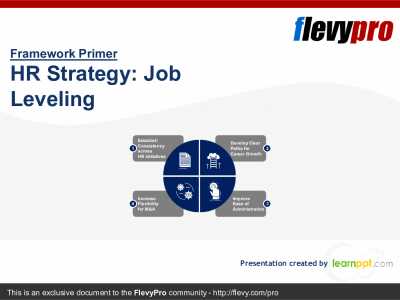
Job Leveling is a disciplined approach to gauge the value of work for individual positions across the organization. It entails ascertaining the nature of work done by each position, authority levels, and the effect of each job on business results.
Jobs that are configured inadequately bread
[read more]
Do You Want to Implement Business Best Practices?
You can download in-depth presentations on Employee Management and 100s of management topics from the FlevyPro Library. FlevyPro is trusted and utilized by 1000s of management consultants and corporate executives.
For even more best practices available on Flevy, have a look at our top 100 lists:
These best practices are of the same as those leveraged by top-tier management consulting firms, like McKinsey, BCG, Bain, and Accenture. Improve the growth and efficiency of your organization by utilizing these best practice frameworks, templates, and tools. Most were developed by seasoned executives and consultants with over 20+ years of experience.
Readers of This Article Are Interested in These Resources
32-slide PowerPoint presentation
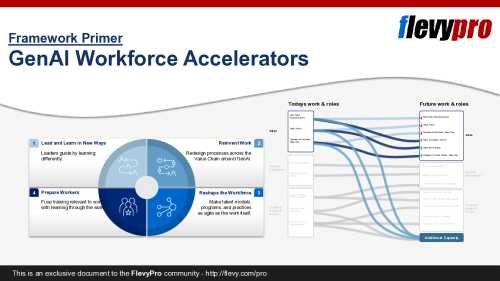
Generative AI (GenAI) is the most significant shift to work since the industrial revolution--and the Trifecta of Opportunities it unlocks (the economic, business, and people upsides) is the strategic objective. This presentation moves from the opportunity to the path: how leaders capture
[read more]

27-slide PowerPoint presentation
In the face of the COVID-19 pandemic, Strategic Workforce Planning has emerged as the key to organizations effectively managing and adapting to unforeseen disruptions.
HR leaders excel in conducting Workforce Planning at the business unit level, but face challenges when it comes to incorporating
[read more]
24-slide PowerPoint presentation
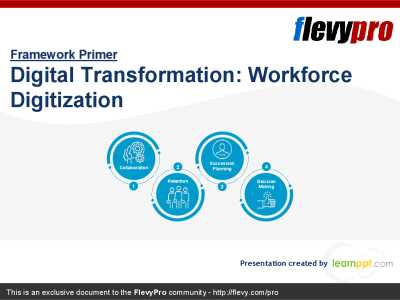
The approaching Age of Automation, together with the impending penetration of digital technology into the labor force, threatens to destabilize crucial aspects of how employees work by. It undermines the stability companies depend on to be agile.
Executives can re-solidify their companies even
[read more]
32-slide PowerPoint presentation
This guide is a basic introduction to performance management, the process, setting objectives, providing feedback, the performance discussion between manager and employee. It is geared to small and mid-sized companies who want to provide a process that is clear and easy to use for managers.
This
[read more]