Editor's Note: Take a look at our featured best practice, Key Performance Indicators (KPIs) | Supply Chain Functions (113-slide PowerPoint presentation). This document provides a collection of 100+ Key Performance Indicators (KPIs) related to the Supply Chain functions listed further below.
Keeping in mind that each organization is different, the enclosed KPIs are intended as a general reference and their relevance depends on the specific [read more]
* * * *
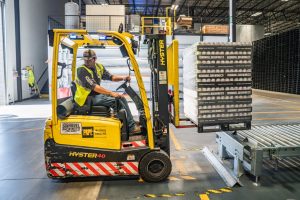
The term palletization means putting and packaging products on pallets. The latter is always of a pre-determined size and layout. This process appeared at the beginning of the 20th century and became more widespread during World War II. It was the best way to store goods in a warehouse and transport them between companies or even countries.
Back then, palletizing was all about manual labor, as people had to lift extremely heavy weights. It wasn’t really effective but had its advantages since other transporting methods for large batches didn’t exist. Years have passed bringing modern palletizing systems automated nature. Let’s dig deeper to see what advantages and disadvantages modern palletizing brings to manufacturing and packaging.
Safer Working Environment
Palletizing used to be a dangerous and maiming process, as people had to do it with their hands. Today’s factories strive to apply different palletizing solutions, implementing automated robots being one of them. These are the upsides robotics offers you in this sphere today:
Reduced chance of maiming yourself
Speeded up the manufacturing process and improved quality level
A machine can work for several lines without getting exhausted
This isn’t the final list, as automation is always forging ahead coming up with new options to choose from and upgrading the old ones.
Investing Pays Back
Purchasing and installing an automated palletizer seems to cost a fortune. However, your enterprise replaces a human operator with an AI-powered machine that rarely needs any pauses. The latter needs neither a lunch break nor holidays. You will also cut corners on a salary and sick leaves that cost a lot to your company’s budget. The initial high-cost installation is nothing compared to all these downtimes and must-paid benefits.
No Labor Crisis
Manual labor becomes less payable therefore hiring a person who’s ready to perform recurring tasks is a rare phenomenon. Even if you recruit someone, they’re likely to quit soon leaving your factory to wait for another worker. Implementing a robot to do this action instead of a human operator is a wise and far-sighted decision.
Reprogramming Can Be Expensive
The most significant downside is hiring a costly programmer to change palletizing robots’ settings. It’s necessary when a product size or production process changes. This was a huge problem until recent years, as an unavoidable downtime would occur due to compulsory reprogramming. Still, this is an inevitable thing if you wish your machine not to become redundant and useless.
The Necessity to Calculate ROI in Advance
Despite being a valuable investment, a palletizing machine isn’t always a necessity if your factory isn’t large enough. It may not bring the benefits and profit you expect, as its initial cost won’t be covered with what you make out of it. If you’re still ready to bring changes to your enterprise, RIOS Company is here for you to help.
By installing our VULCAN robot, one can forget about hiring manual workers to sort items, pack them up, and palletize them. All that is done by a single AI-powered machine that needs no human intervention and brings a man-made factor to zero. It’s also easy to reprogram in case any changes are amended and doesn’t require much time and effort for that.
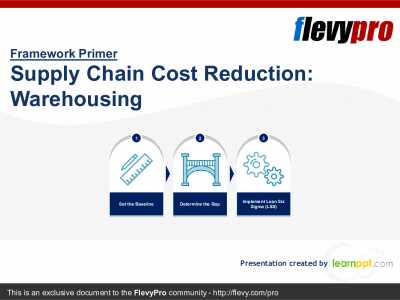
Companies are constantly looking to improve efficiency and reduce costs. One area that has a significant potential for achieving both is the Supply Chain.
Companies generally neglect Supply Chain simply because they do not consider it their core competency. Warehousing and Transportation in [read more]
Do You Want to Implement Business Best Practices?
You can download in-depth presentations on Warehouse Management and 100s of management topics from the FlevyPro Library. FlevyPro is trusted and utilized by 1000s of management consultants and corporate executives.
For even more best practices available on Flevy, have a look at our top 100 lists:
These best practices are of the same as those leveraged by top-tier management consulting firms, like McKinsey, BCG, Bain, and Accenture. Improve the growth and efficiency of your organization by utilizing these best practice frameworks, templates, and tools. Most were developed by seasoned executives and consultants with over 20+ years of experience.
Readers of This Article Are Interested in These Resources
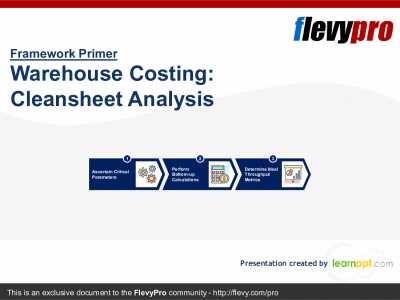
The Leadership at many Warehousing companies globally understands that they should spend less on Warehousing Operations, but is not aware of the real costs associated with it. In the same vein, most leaders are unable to tell how much is their human resources cost per facility.
Lack of [read more]
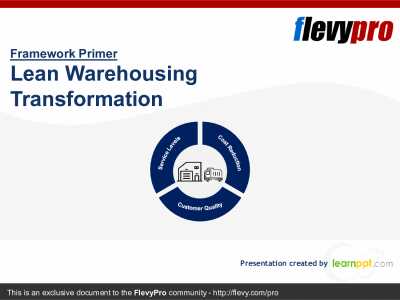
As the last decisive step in customer service, a warehouse ensures cost effective distribution. Latest technological innovation has turned Warehousing into a Competitive Advantage. It offers untapped potential for improvement.
However, Warehousing is a hugely neglected part of global Supply [read more]
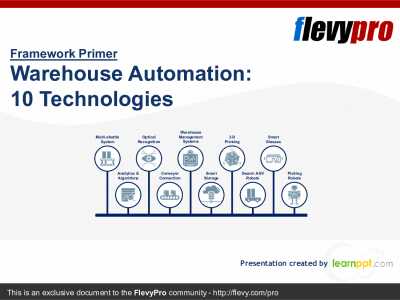
Shortage of labor, intensified demand from e-tailers (online retailers), and technological disruption is forcing many organizations in the Logistics and Warehousing sectors to embrace technology, particularly Automation.
Automation is facilitating Warehouse operations predominantly by [read more]
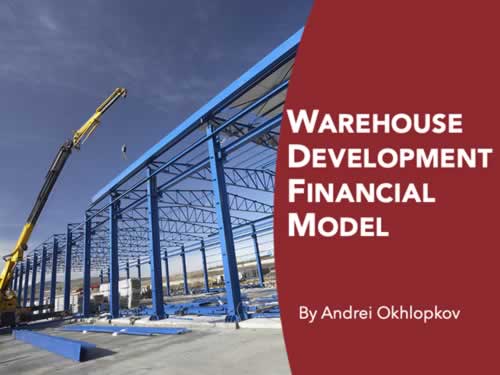
This is a detailed, well-structured and transparent cash flow model for a development of a warehouse (industrial) building. The model features clear navigation, color-codes, error checks and includes the following investment stages:
1. Acquisition. This can be e.g. an initial purchase of a [read more]
 The term palletization means putting and packaging products on pallets. The latter is always of a pre-determined size and layout. This process appeared at the beginning of the 20th century and became more widespread during World War II. It was the best way to store goods in a warehouse and transport them between companies or even countries.