 Every few years, a new approach to managing money gains traction by promising faster debt payoff, greater control, and stronger long-term returns. Two that come up often among entrepreneurs and business owners, particularly those who would rather finance their own growth than depend on external lenders, are velocity banking and infinite banking.
At first glance they can sound similar, since both focus on using cash flow more efficiently and reducing reliance on traditional banks. In practice, they operate very differently and rest on entirely different financial principles.
Understanding what velocity banking vs infinite banking strategies actually mean is essential before deciding whether either one fits into your financial plan.
What Is Velocity Banking?
Velocity banking is a cash flow strategy centered around using a line of credit—often a home equity line of credit (HELOC)—to accelerate debt repayment, such as a mortgage or business loan.
The core idea is simple:
- You deposit your income into a line of credit
- You pay your expenses from that same line of credit
- Any surplus cash flow reduces the balance more quickly
Over time, this approach can reduce interest costs and shorten the timeline for paying off a loan.
How It Works in Practice
Instead of keeping money in a traditional checking account, your income is directed into the credit line. Because interest is calculated daily on the outstanding balance, reducing that balance—even temporarily—can lower the total interest paid.
Proponents often highlight:
- Faster debt payoff timelines
- Reduced interest expenses
- More active control over cash flow
However, the effectiveness of velocity banking depends heavily on disciplined cash flow management and consistent income.
What Is Infinite Banking?
Infinite banking—sometimes called privatized banking—takes a very different approach. Rather than focusing on debt acceleration, it centers on building a pool of capital you control using a specially structured whole life insurance policy.
Here’s the basic concept:
- You store your savings within a policy that builds cash value
- That cash value grows over time
- You can access it through policy loans when needed
The goal is to create a system where you can finance your own expenses or investments, rather than relying on external lenders.
How It Works in Practice
As cash value accumulates, it becomes a financial resource you can draw from while still allowing the underlying balance to grow.
Supporters of this strategy emphasize:
- Long-term capital accumulation
- Predictable growth
- Access to funds without traditional lending approval
This approach is typically positioned as a long-term system rather than a short-term tactic.
The Key Difference: Where Your Money Lives
One of the most important distinctions between these strategies is where your money is stored.
- Velocity banking directs cash flow into home equity
- Infinite banking directs cash flow into cash value within a policy
This difference has implications for:
- Liquidity (how easily you can access funds)
- Stability (how predictable the value is over time)
- Flexibility (how the money can be used)
Understanding this distinction helps clarify why the two strategies are not interchangeable.
Liquidity and Access to Funds
Liquidity refers to how quickly and easily you can access your money when needed.
With velocity banking, access to funds depends on:
- The availability of your credit line
- Lending conditions
- Your financial profile (credit score, income, etc.)
While a HELOC can provide flexibility, access is not always guaranteed indefinitely.
With infinite banking, access typically comes through:
- Policy loans or withdrawals
- Terms defined within the policy itself
Each approach offers access in different ways, and both come with conditions that should be clearly understood.
Risk and Stability Considerations
Every financial strategy involves trade-offs, and these two are no exception.
Velocity Banking Risks
- Reliance on credit structures
- Sensitivity to changes in interest rates
- Exposure to fluctuations in property value
Infinite Banking Considerations
- Requires long-term commitment
- Growth may be gradual in early years
- Depends on proper policy design and management
Rather than viewing one as universally “better,” it’s more accurate to evaluate how each aligns with your financial situation and goals.
Cash Flow Is the Real Driver
Despite their differences, both strategies rest on the same foundation: cash flow management. For anyone who runs a business, this will feel familiar, because it is the same discipline that determines whether a company funds its own growth or borrows to survive.
Neither approach works effectively without:
- Consistent income or revenue
- Spending discipline
- Clear financial priorities
In fact, many of the results attributed to these strategies come from sharper cash flow awareness rather than the tools themselves.
The takeaway is the same one that holds in business: no structure replaces the need for strong financial habits.
Which Strategy Is Right for You?
The answer depends on your objectives, much as it would when allocating capital in a business.
You might consider velocity banking if your primary goal is:
- Accelerating debt repayment
- Reducing interest on existing liabilities
- Actively managing cash flow through credit tools
You might explore infinite banking if your focus is:
- Building long-term capital reserves
- Creating a flexible, self-directed source of funds
- Developing a system for financing future investments
As with most capital decisions, many people end up combining elements of both rather than relying on a single approach.
The Importance of Understanding before Implementing
Both velocity banking and infinite banking are often discussed in simplified or promotional terms. However, each involves nuances that can significantly impact outcomes.
Before implementing either strategy, it’s important to:
- Understand how it works in detail
- Evaluate the assumptions behind it
- Consider your specific financial circumstances
- Seek guidance if needed
Financial strategies are not one-size-fits-all. What works well in one situation may not be suitable for another.
Final Thoughts
Velocity banking and infinite banking represent two different ways of thinking about capital. One focuses on accelerating debt reduction, the other on building and controlling reserves over time.
While both aim to improve financial efficiency, they do so through very different mechanisms, and each carries its own trade-offs in liquidity, risk, and time horizon.
By applying the same rigor you would bring to any capital decision in your business, you can evaluate how each strategy works and choose the approach that aligns with your goals, risk tolerance, and long-term vision.
Because in finance, as in business, clarity is far more valuable than complexity.
Do You Want to Implement Business Best Practices?
You can download in-depth presentations on Cash Flow Management and 100s of management topics from the FlevyPro Library. FlevyPro is trusted and utilized by 1000s of management consultants and corporate executives.
For even more best practices available on Flevy, have a look at our top 100 lists:
These best practices are of the same as those leveraged by top-tier management consulting firms, like McKinsey, BCG, Bain, and Accenture. Improve the growth and efficiency of your organization by utilizing these best practice frameworks, templates, and tools. Most were developed by seasoned executives and consultants with over 20+ years of experience.
Readers of This Article Are Interested in These Resources
105-slide PowerPoint presentation
Cash flow management is a critical aspect of running a successful business, as it directly impacts a company's ability to pay bills, invest in growth opportunities, and weather financial challenges. Both internal and external factors can affect a business's cash flow, making it essential to
[read more]
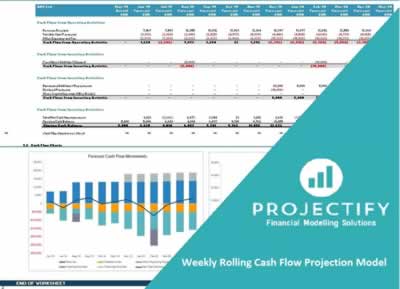
Excel workbook
Monthly Rolling Cash Flow Projection is crucial for businesses as it offers a real-time view of their financial health. By forecasting incoming and outgoing cash, it enables proactive management of liquidity, preventing potential crises. This tool helps in identifying trends, anticipating
[read more]

33-slide PowerPoint presentation
According to McKinsey, when the COVID-19 crisis began to affect companies worldwide, the preliminary response of CEOs and CFOs was all about survival: freeing up cash and resources to keep the lights on and the doors open. The liquidity crisis triggered by the sharp disruption in economic
[read more]
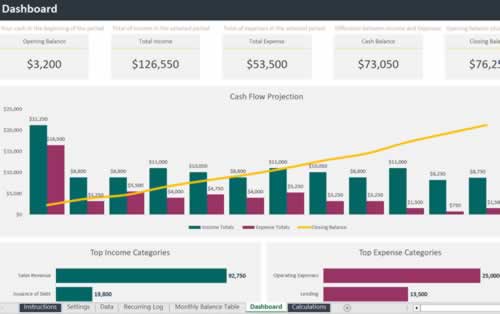
Excel workbook
Take control of your finances with our Cash Flow Planner Template--a user-friendly tool designed to help you track, plan, and visualize your cash flow with ease. Perfect for individuals, small businesses, or anyone looking to manage their income and expenses over time, this template offers a
[read more]