Editor's Note: Take a look at our featured best practice, HR Strategy: Job Leveling (26-slide PowerPoint presentation). Job Leveling is a disciplined approach to gauge the value of work for individual positions across the organization. It entails ascertaining the nature of work done by each position, authority levels, and the effect of each job on business results.
Jobs that are configured inadequately bread [read more]
Also, if you are interested in becoming an expert on Human Resource Management (HRM), take a look at Flevy's Human Resource Management (HRM) Frameworks offering here. This is a curated collection of best practice frameworks based on the thought leadership of leading consulting firms, academics, and recognized subject matter experts. By learning and applying these concepts, you can you stay ahead of the curve. Full details here.
* * * *
 Employee engagement is more than just job satisfaction—it’s about creating a motivated, committed, and high-performing workforce. Engaged employees bring energy and enthusiasm to their roles, leading to better productivity, innovation, and overall workplace morale.
However, building an engaged workforce requires intentional strategies that go beyond traditional incentives. From fostering open communication to investing in professional development, businesses can implement practical steps to empower their teams.
Creating a Culture of Purpose and Motivation
Employees are more engaged when they understand how their work contributes to a larger purpose. Organizations that clearly communicate their mission and values create a sense of belonging and motivation among their workforce. A strategy in public relations helps reinforce this sense of purpose externally, ensuring that the company’s mission resonates both inside and outside the organization, strengthening its public image and employee engagement.
Sustainability initiatives can also play a role in engagement. Companies investing in green energy solutions, such as solar battery systems for office spaces, demonstrate a commitment to environmental responsibility. Employees who align with these values are more likely to feel inspired and connected to their workplace.
Encouraging Open Communication and Feedback
A culture of open communication helps employees feel valued and heard. For example, you could set up regular check-ins, team meetings, and provide employees with the option to leave anonymous feedback to give them a platform to share their ideas and concerns.
In addition, managers should actively listen and respond to feedback to show that employee voices matter. Transparency in decision-making builds trust and encourages a collaborative work environment.
Investing in Professional Growth and Development
Employees are more likely to stay engaged when they see opportunities for growth. Providing them with access to training, mentorship, and career development programs helps employees build new skills and advance within the company.
Encouraging continuous learning also benefits businesses by creating a more skilled and adaptable workforce. Supporting professional development shows employees that their contributions are valued and their future is a priority.
Recognizing and Rewarding Contributions
Acknowledging employee efforts boosts morale and reinforces positive behaviors. Recognition can be as simple as a thank-you note, public praise in a meeting, or a structured rewards program.
Beyond any financial incentives, offering meaningful benefits to employees such as flexible work arrangements, wellness programs, and additional paid time off can help to enhance engagement. Employees who feel appreciated are more likely to stay motivated and committed to their work.
Supporting Work-Life Balance and Well-Being
Burnout and stress can lead to disengagement, reducing overall workplace performance. Encouraging a healthy work-life balance helps employees maintain motivation and job satisfaction.
Offering remote work options, mental health resources, and reasonable workloads shows that a company values employee well-being. When employees feel supported both professionally and personally, they are more likely to remain engaged.
Looking Toward a More Engaged Workforce
Building an engaged workforce is not something that happens in a day. It’s an ongoing effort that requires commitment from leadership. Companies that prioritize communication, recognition, and employee well-being help to create an environment where people feel more empowered and motivated.
By fostering a workplace culture that values growth and purpose, businesses can develop stronger, more dedicated teams ready to drive long-term success.
17-slide PowerPoint presentation
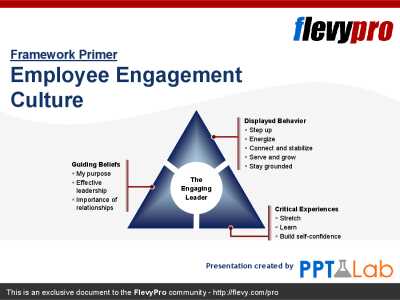
Improving Employee Engagement is a priority in most Talent and HR Strategies. This presentation provides a 5-step approach to building a culture of Employee Engagement. This processed was developed by Aon Hewitt based on the Aon Hewitt Top Companies for Leaders study.
Best practices from the
[read more]
Want to Achieve Excellence in Human Resource Management (HRM)?
Gain the knowledge and develop the expertise to become an expert in Human Resource Management (HRM). Our frameworks are based on the thought leadership of leading consulting firms, academics, and recognized subject matter experts. Click here for full details.
The purpose of Human Resources (HR) is to ensure our organization achieves success through our people. Without the right people in place—at all levels of the organization—we will never be able to execute our Strategy effectively.
This begs the question: Does your organization view HR as a support function or a strategic one? Research shows leading organizations leverage HR as a strategic function, one that both supports and drives the organization's Strategy. In fact, having strong HRM capabilities is a source of Competitive Advantage.
This has never been more true than right now in the Digital Age, as organizations must compete for specialized talent to drive forward their Digital Transformation Strategies. Beyond just hiring and selection, HR also plays the critical role in retaining talent—by keeping people engaged, motivated, and happy.
Learn about our Human Resource Management (HRM) Best Practice Frameworks here.
Readers of This Article Are Interested in These Resources
32-slide PowerPoint presentation
This guide is a basic introduction to performance management, the process, setting objectives, providing feedback, the performance discussion between manager and employee. It is geared to small and mid-sized companies who want to provide a process that is clear and easy to use for managers.
This
[read more]
24-slide PowerPoint presentation
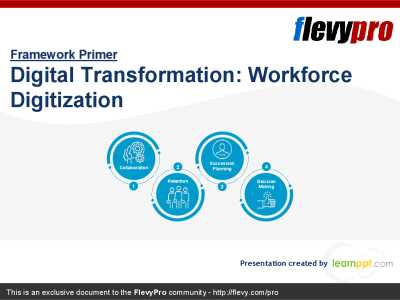
The approaching Age of Automation, together with the impending penetration of digital technology into the labor force, threatens to destabilize crucial aspects of how employees work by. It undermines the stability companies depend on to be agile.
Executives can re-solidify their companies even
[read more]
Excel workbook
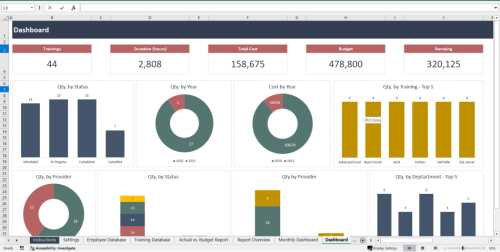
The Employee Training Tracker is a professionally designed Excel spreadsheet tailored to help organizations manage and monitor employee training programs with ease. This all-in-one tool not only keeps a record of individual and departmental training activities but also allows for efficient tracking
[read more]
37-slide PowerPoint presentation
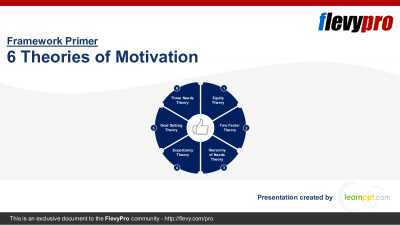
Interpreting the human psyche is a difficult undertaking. Determining what encourages and drives people to achieve their objectives isn't easy to figure out for Leaders and Human Capital experts. This is where research and insights gathered from the various Theories of Motivation comes to play.
[read more]