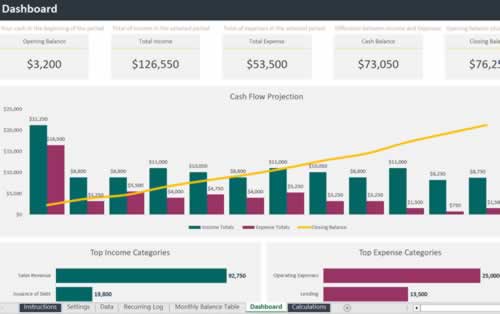
Editor's Note: Take a look at our featured best practice, 13-Week Cash Flow Forecast Template (Excel workbook). This comprehensive and user-friendly template is designed to help businesses efficiently manage their cash flow with accuracy and flexibility. Ideal for SMEs, the template provides tools to forecast, track, and analyze cash flow over a 13-week horizon.
Key Features:
Customizable Settings: [read more]
* * * *
Money independence is not only about having a large income. Executives and consultants often earn well above average, yet many remain financially fragile, tied to a single employer, a single client base, or a lifestyle that consumes every raise. True independence means having enough control over your finances that your long-term goals and career choices are not ruled by financial pressure. For some, that means retiring early. For others, it means leaving debt behind, building savings, investing steadily, or creating enough passive income to reduce dependence on a paycheck.
Online platforms have made this goal more practical. Budgeting apps, investment tools, banking dashboards, learning platforms, and digital marketplaces now give individuals access to resources that once required advisors, brokers, or a lot of manual work. Still, tools alone do not create financial freedom. A clear plan does, the same way a clear strategy, not the tools, drives results in business.
This guide explains how to use online platforms in a structured way so you can move from financial uncertainty toward greater independence, applying the same discipline you bring to managing a P&L.
Start with a Clear Definition of Money Independence
Before using any financial tool, you need to define what money independence means for you. A vague goal such as “I want to be rich” is difficult to measure. Like any corporate objective, a personal financial goal needs to be specific and measurable to be tracked.
Financial independence may mean having six months of expenses saved. It may mean paying off all high-interest debt. It may mean building an investment portfolio that covers part of your monthly costs. Or it may mean creating several income sources so you are not relying on one employer.
Write down your version of the goal. Include numbers. For example, you might decide that you need $4,000 per month to cover your lifestyle without stress. You may also decide that you want $25,000 in emergency savings and no credit card debt. These details give your financial roadmap a real shape.
Online calculators can help at this stage. Retirement calculators, debt payoff calculators, and savings goal tools can show how much you need and how long it may take. They are not perfect predictions, but they give you a starting point.
Review Your Current Financial Position
Once your destination is clear, look at where you are now. This step can feel uncomfortable, but it is necessary. Just as no consultant would build a transformation roadmap without a current-state assessment, you cannot build a useful financial roadmap without knowing your starting point.
Begin with four basic numbers: income, expenses, debt, and assets. Your income includes your salary, freelance work, business earnings, interest, dividends, or any other regular source of money. Your expenses include housing, food, transport, insurance, subscriptions, utilities, and personal spending. Your debt includes credit cards, student loans, car loans, personal loans, and any other balances. Your assets include savings, investments, property, and valuable items you could realistically sell if needed.
Budgeting apps and online banking platforms can make this process faster. Many tools connect to your accounts and sort transactions into categories. Review those categories carefully. Automation is helpful, but it is not always accurate.
Look for patterns. Are you spending more than you thought on delivering food? Are subscriptions quietly draining your account? Are debt payments taking a large share of your income? Small leaks matter. Large leaks matter more.
This review gives you a practical financial snapshot. From there, you can make better decisions.
Build a Budget That Supports Your Main Goal
A budget is not just a restriction. It is a plan for directing money toward what matters most.
A strong budget should cover your needs, allow some room for wants, and steadily fund your future. Many people use simple frameworks, such as dividing income into essentials, savings, debt payments, and flexible spending. The exact percentages can vary. What matters is consistency.
Online budgeting platforms can help by showing your spending in real time. This makes it easier to adjust before the end of the month instead of wondering where your money went after it is gone.
Start by identifying your fixed costs. These are expenses such as rent, mortgage payments, insurance, loan payments, and utilities. Then review variable costs, such as groceries, entertainment, shopping, travel, and dining out. Variable costs are often where you can make quicker changes.
A useful budget should not be so strict that you abandon it after two weeks. It should be realistic. If you enjoy eating out, include it. But set a limit. If you want to travel, create a separate savings category for it. A budget works best when it reflects real life while still moving you toward financial independence.
Create an Emergency Fund before Taking Bigger Risks
An emergency fund protects your plan from unexpected problems. Car repairs, medical bills, job loss, home repairs, and family emergencies can happen without warning. Without savings, these events often lead to debt.
A common goal is to save three to six months of essential expenses. Some people need more, especially if they have irregular income, dependents, or higher financial responsibilities. Start with a smaller target if needed. Even $500 or $1,000 can reduce stress and prevent minor setbacks from becoming major problems.
Use an online savings account if it offers easy access and clear tracking. Many banking platforms let you create separate savings buckets for different goals. This can help you keep emergency money separate from vacation savings or daily spending.
Do not invest your emergency fund in risky assets. Its purpose is safety and access, not growth. The money should be available when you need it.
For general investor education and fraud awareness, Investor is a useful website because it is run by the U.S. Securities and Exchange Commission and provides plain-language resources for individuals.
Use Digital Tools to Manage Debt Strategically
Debt can slow your progress toward money independence, especially when it carries high interest. Credit card balances, payday loans, and some personal loans can grow quickly if they are not managed.
Online debt payoff tools can help you compare strategies. Two common methods are the snowball method and the avalanche method. The snowball method focuses on paying the smallest balance first, which can build motivation. The avalanche method focuses on paying the highest-interest debt first, which can save more money over time.
Choose the method you are most likely to follow. The best strategy is the one you can sustain.
You can also use digital alerts to avoid late payments. Set reminders before due dates. Use autopay for minimum payments where appropriate. Track balances monthly. Seeing debt shrink can be encouraging, and it also keeps you honest.
If debt feels overwhelming, online tools can help you organize the numbers, but professional advice may still be necessary. Nonprofit credit counseling agencies may be useful for people dealing with serious debt problems.
Start Investing with a Long-Term Mindset
After you have a basic safety net and a debt plan, investing can become a key part of your financial independence roadmap. Saving money is important, but investing gives your money the opportunity to grow over time.
Modern online platforms make investing more accessible. You can research funds, compare fees, track portfolios, and automate contributions. Some platforms offer retirement accounts, brokerage accounts, robo-advisors, educational materials, and risk assessment tools.
This is also the stage where some people open an online trading account to buy and manage investments through a digital platform. Before doing so, understand the basics. Know what you are buying. Learn the difference between stocks, bonds, index funds, exchange-traded funds, and other assets. Pay attention to fees. Avoid making decisions based only on hype or short-term price movements.
Long-term investing usually depends on patience. Markets rise and fall. A thoughtful plan helps you avoid emotional decisions during market swings.
Automation can be helpful here. Setting up regular contributions, even small ones, builds discipline. Over time, consistent investing can become one of the strongest drivers of wealth building.
Increase Your Income through Online Opportunities
Reducing expenses is useful, but there is a limit to how much you can cut. Increasing income can speed up your journey.
Online platforms have created many ways to earn more. Freelance marketplaces, remote job boards, e-commerce tools, content platforms, digital product marketplaces, and online teaching platforms can all create opportunities. Not every opportunity is worth pursuing. Some are low-paying or unreliable. Others require skills, time, and patience before they produce meaningful income.
Start with your current skills. Can you consult independently, advise startups, write, design, code, or teach? Can you sell a product or service? For many executives and consultants, the highest-leverage option is turning professional knowledge into a course, guide, framework, or template that can be sold repeatedly.
The goal is not to chase every trend. The goal is to build income streams that fit your abilities and schedule.
Extra income should have a purpose. Decide in advance where it will go. You might use it to pay off debt faster, build savings, invest, or fund a business idea. Without a plan, extra income often disappears into extra spending.
Final Thoughts
Money independence is built through repeated decisions, not one dramatic move. In that sense, it works like any successful business transformation: online platforms can make the process easier, faster, and more organized, but they only deliver results when connected to a clear plan.
Start by defining your goal. Understand your current position. Build a realistic budget. Save for emergencies. Manage debt. Invest carefully. Look for ways to grow income. Review your progress often, the same way you would review any strategic initiative against its KPIs.
The path may take time. That is normal. What matters is steady movement in the right direction. With the right tools and a practical roadmap, financial independence becomes less abstract and more achievable, for you personally just as much as for the organizations you lead.
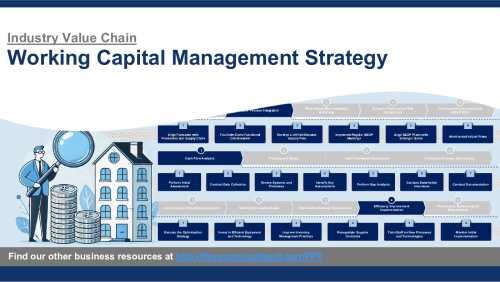
Working Capital Management (WCM) refers to the administration of an organization's short-term assets and liabilities to ensure its ongoing operational efficiency and financial stability. Effective WCM is crucial for maintaining liquidity, optimizing cash flow, and ensuring the organization can [read more]
Do You Want to Implement Business Best Practices?
You can download in-depth presentations on Cash Flow Management and 100s of management topics from the FlevyPro Library. FlevyPro is trusted and utilized by 1000s of management consultants and corporate executives.
For even more best practices available on Flevy, have a look at our top 100 lists:
These best practices are of the same as those leveraged by top-tier management consulting firms, like McKinsey, BCG, Bain, and Accenture. Improve the growth and efficiency of your organization by utilizing these best practice frameworks, templates, and tools. Most were developed by seasoned executives and consultants with over 20+ years of experience.
Readers of This Article Are Interested in These Resources
Cash flow management is a critical aspect of running a successful business, as it directly impacts a company's ability to pay bills, invest in growth opportunities, and weather financial challenges. Both internal and external factors can affect a business's cash flow, making it essential to [read more]
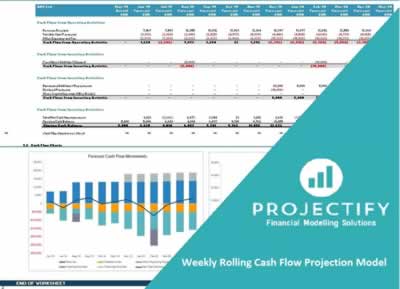
Monthly Rolling Cash Flow Projection is crucial for businesses as it offers a real-time view of their financial health. By forecasting incoming and outgoing cash, it enables proactive management of liquidity, preventing potential crises. This tool helps in identifying trends, anticipating [read more]
According to McKinsey, when the COVID-19 crisis began to affect companies worldwide, the preliminary response of CEOs and CFOs was all about survival: freeing up cash and resources to keep the lights on and the doors open. The liquidity crisis triggered by the sharp disruption in economic [read more]
Take control of your finances with our Cash Flow Planner Template--a user-friendly tool designed to help you track, plan, and visualize your cash flow with ease. Perfect for individuals, small businesses, or anyone looking to manage their income and expenses over time, this template offers a [read more]
 Money independence is not only about having a large income. Executives and consultants often earn well above average, yet many remain financially fragile, tied to a single employer, a single client base, or a lifestyle that consumes every raise. True independence means having enough control over your finances that your long-term goals and career choices are not ruled by financial pressure. For some, that means retiring early. For others, it means leaving debt behind, building savings, investing steadily, or creating enough passive income to reduce dependence on a paycheck.