Editor's Note: Take a look at our featured best practice, Capability Maturity Model (CMM) - Enterprise Architecture (24-slide PowerPoint presentation). The Capability Maturity Model (CMM) is an organizational model that describes 5 evolutionary stages (or levels), in which the business processes in an organization are managed. The term "maturity" relates to the degree of formality and optimization of processes, from ad hoc practices, to formally [read more]
* * * *
Organizations today face increasing pressure to deliver exceptional customer experiences while simultaneously managing Operational Excellence, Digital Transformation, and continuous Innovation. Customer expectations evolve rapidly, competitive boundaries are becoming less defined, and technology continues to reshape how value is created and delivered. Despite substantial investments in Customer Experience initiatives, many organizations struggle to translate customer insights into sustainable business outcomes.
The challenge is rarely a lack of vision. Most organizations understand what customers want. The difficulty lies in connecting customer-centered aspirations with the operational capabilities, governance structures, technologies, and resources required to deliver those experiences consistently at scale. As a result, many transformation initiatives remain fragmented, producing isolated improvements rather than enterprise-wide impact.
The Experience Architecture Implementation framework was developed to address this execution gap. By integrating the principles of Design Thinking with the discipline of Enterprise Architecture, the framework creates a structured approach for transforming customer insights into operational reality. It enables organizations to align strategy, services, processes, technology, and resources around a common vision. Rather than treating Customer Experience as a standalone initiative, Experience Architecture positions it as an enterprise capability that drives Strategic Alignment, Organizational Agility, Innovation, and long-term Value Creation.
The 7 Phases of Experience Architecture Implementation
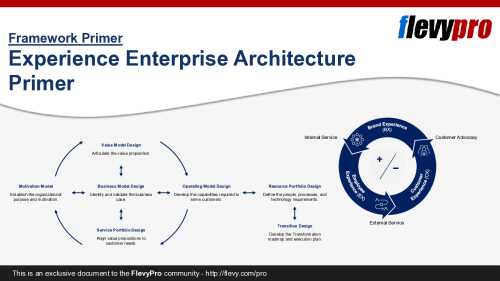
Experience Architecture implementation unfolds through seven interconnected phases that progressively translate strategy into execution.
Motivation Model
Business Model Design
Value Model Design
Service Portfolio Design
Operating Model Design
Resource Portfolio Design
Transition Design
Together, these phases create a comprehensive pathway from customer-centered ambition to enterprise-wide execution.
Strategic Benefits of Experience Architecture
Organizations that successfully implement Experience Architecture realize benefits that extend far beyond improving Customer Experience. By aligning customer needs with enterprise capabilities, the framework strengthens Strategic Alignment and ensures that transformation initiatives remain connected to a clear organizational purpose and vision. It improves Customer Experience consistency by coordinating services, processes, technology, and capabilities around customer expectations. The framework also accelerates Innovation by combining customer-centered design principles with structured execution disciplines, enabling organizations to move ideas from concept to implementation more effectively.
Experience Architecture enhances Organizational Agility by creating stronger alignment between strategy, operations, and technology investments, allowing organizations to respond more rapidly to changing market conditions. It also reduces transformation risk by identifying capability gaps, resource constraints, and execution challenges early in the planning process. Most importantly, it strengthens Brand Trust and long-term stakeholder confidence by ensuring that customer promises can be delivered consistently across every interaction. Organizations that fail to establish this alignment often experience fragmented initiatives, inconsistent service delivery, operational inefficiencies, and diminished customer loyalty.
Motivation Model
The Motivation Model serves as the foundation of Experience Architecture implementation. This phase answers the most fundamental question in any transformation effort: Why does this work matter? Many transformation programs begin with technology, process redesign, or organizational restructuring.
The Motivation Model begins with purpose. It establishes a clear understanding of why change is necessary, what future state the organization seeks to achieve, and how that vision creates value for customers, employees, and stakeholders. Purpose provides direction during periods of uncertainty. It creates alignment across leadership teams and serves as a reference point for difficult decisions throughout the transformation journey.
The Motivation Model defines the desired future vision and identifies the practical pathways required to achieve it. Rather than producing lengthy strategy documents, the model is designed to be concise, shareable, and easily understood across all levels of the organization. This simplicity is important. Transformation initiatives often lose momentum when employees cannot understand how their work contributes to broader objectives. A well-designed Motivation Model provides clarity, reinforces commitment, and strengthens organizational engagement.
Every subsequent phase of Experience Architecture depends on the quality of this foundation. When purpose is unclear, transformation efforts become reactive and fragmented. When purpose is clearly defined, organizations maintain alignment even as conditions evolve. The Motivation Model therefore functions as both a strategic compass and a cultural anchor throughout the transformation process.
Business Model Design
Once purpose and vision are established, organizations must determine how they will create, deliver, and capture value. This is the role of Business Model Design. Traditional Strategic Planning often assumes that existing business models will remain relevant. Experience Architecture challenges this assumption by encouraging organizations to actively test alternative configurations and explore new opportunities.
Business Model Design applies Strategic Scenario Planning to evaluate different ways of serving customers, generating revenue, building partnerships, and creating competitive advantage. The objective is not simply optimization. The objective is discovery.
Organizations examine how existing business model elements can be rearranged, enhanced, or replaced to unlock new value opportunities. Existing assumptions about markets, customers, competitors, and ecosystem relationships are challenged and tested.
This process frequently reveals opportunities that traditional planning approaches overlook. New partnerships may emerge. New channels may become viable. Existing capabilities may be deployed in entirely different ways. Competitive advantages may be created through configuration rather than invention.
The most disruptive organizations often succeed not because they develop entirely new ideas but because they combine existing elements in innovative ways. Business Model Design provides the structured environment needed to explore these possibilities before major investments are made. By validating assumptions early and testing alternatives rigorously, organizations reduce strategic risk while increasing their capacity for Innovation.
Case Study
A large telecommunications organization faced declining customer satisfaction despite substantial investments in Digital Transformation initiatives. Leadership teams had launched multiple customer-focused projects, yet customer complaints continued to increase. Internal assessments revealed a common problem. Teams were optimizing individual processes without a shared understanding of the overall customer experience vision.
The organization initiated an Experience Architecture program beginning with a comprehensive Motivation Model. Leaders aligned around a single purpose: simplifying customer interactions across every touchpoint. This purpose was translated into a clear vision that guided all future decision-making.
The organization then entered the Business Model Design phase. Existing assumptions regarding service delivery, channel strategy, and customer engagement were challenged. Several new partnership opportunities were identified, and digital self-service models were redesigned.
Within 18 months, customer satisfaction scores improved significantly. Operational complexity declined. Employee engagement increased due to greater clarity regarding organizational priorities. The transformation succeeded because the organization addressed purpose and business model alignment before redesigning services and technology.
FAQs
What is Experience Architecture?
Experience Architecture is the integration of Design Thinking and Enterprise Architecture to align customer-centered design with enterprise execution capabilities.
Why do Customer Experience transformations often fail?
Many fail because organizations focus on designing experiences without building the operational capabilities required to deliver them consistently.
Why is the Motivation Model important?
The Motivation Model establishes purpose, vision, and alignment, ensuring every subsequent transformation activity remains strategically connected.
How does Business Model Design support Innovation?
It challenges existing assumptions and explores alternative ways of creating, delivering, and capturing value through structured experimentation.
Can Experience Architecture be applied outside Customer Experience initiatives?
Yes. The framework can support Enterprise Transformation, Digital Transformation, Service Design, Organizational Change, and Strategic Planning initiatives.
Closing Thoughts
Customer Experience excellence cannot be achieved through Design Thinking alone. Great ideas create potential value. Sustainable execution creates realized value. Experience Architecture bridges this gap by combining customer-centered innovation with enterprise-wide execution discipline.
The 7-phase implementation framework provides a structured pathway from purpose to delivery. It ensures that customer aspirations, strategic objectives, operational capabilities, and transformation investments remain aligned throughout the journey.
The first two phases, Motivation Model and Business Model Design, establish the foundation. They define why transformation matters and how value will be created. Without these foundations, later investments in services, technology, and operations often become disconnected from strategic intent.
Organizations that master Experience Architecture create more than better customer experiences. They build the capability to consistently transform vision into reality, strengthening Customer Loyalty, Organizational Agility, and long-term competitive advantage.
You can download in-depth presentations on this and hundreds of similar business frameworks from the FlevyPro Library. FlevyPro is trusted and utilized by 1000s of management consultants and corporate executives.
For even more best practices available on Flevy, have a look at our top 100 lists:
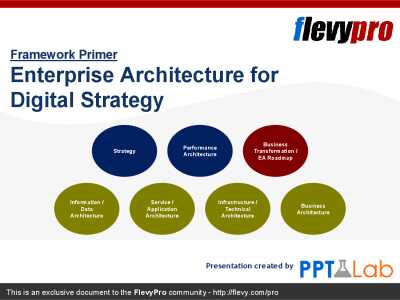
Enterprise Architecture (EA) is a well-defined framework for conducting enterprise analysis, design, planning, and implementation for the successful development and execution of strategy. Practitioners of EA, known as Enterprise Architects, are often called upon to draw conclusions from the [read more]
Readers of This Article Are Interested in These Resources
Today's digital-native customers have raised the stakes for every organization competing for their loyalty. They demand human-centered engagement, hyper-personalized offerings, and seamless experiences consistently aligned with their evolving preferences.
Forward-thinking organizations [read more]
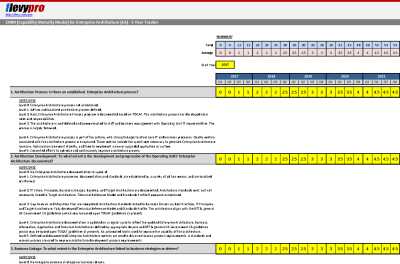
This Excel spreadsheet evaluates and records targets of the CMM (Capability Maturity Model) level for Enterprise Architecture (EA) over a 5-year period.
The following criteria/questions around EA are evaluated:
1. Architecture Process: Is there an established Enterprise Architecture [read more]
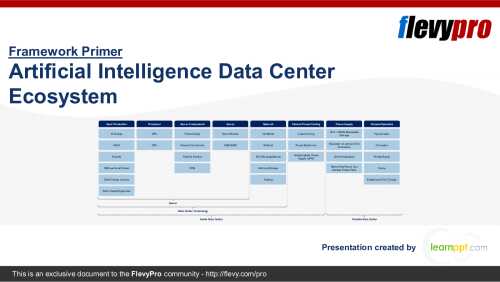
This surge in AI usage stems from its ability to process vast amounts of data and derive insights that can significantly improve efficiency, innovation, and competitiveness.
Critical data center infrastructure plays a foundational role in the deployment and scaling of AI applications. The [read more]
Application Portfolio Management (APM) is the disciplined inventory and assessment of every application, platform, capability, and service that supports organizational Strategy. APM establishes a single source of truth, assigns ownership, and ties each asset to cost, risk, and business [read more]
 Organizations today face increasing pressure to deliver exceptional customer experiences while simultaneously managing