
Capability Maturity Model (CMM) - Enterprise Architecture   24-slide PPT PowerPoint presentation slide deck (PPT)
$29.00

Capability Maturity Model (CMM) - Enterprise Architecture (24-slide PPT PowerPoint presentation slide deck (PPT)) Preview Image
Log in to unlock full preview.
Capability Maturity Model (CMM) - Enterprise Architecture (24-slide PPT PowerPoint presentation slide deck (PPT)) Preview Image
Arrow   Click main image to view in full screen.

Capability Maturity Model (CMM) - Enterprise Architecture (PowerPoint PPT Slide Deck)

PowerPoint (PPT) 24 Slides FlevyPro Document

#1 in CMMI $29.00
FlevyPro price: FREE (included in subscription)
This framework is developed by a team of former McKinsey and Big 4 consultants. The presentation follows the headline-body-bumper slide format used by global consulting firms.
Add to Cart


Immediate download
Free lifetime updates

MIS PPT DESCRIPTION

Editor Summary The Capability Maturity Model (CMM) - Enterprise Architecture is a 24-slide PowerPoint by LearnPPT Consulting that adapts the CMM to EA, defining an initial "No Enterprise Architecture" phase plus the 5 standard maturity stages and evaluating nine EA areas adapted from TOGAF. Read more

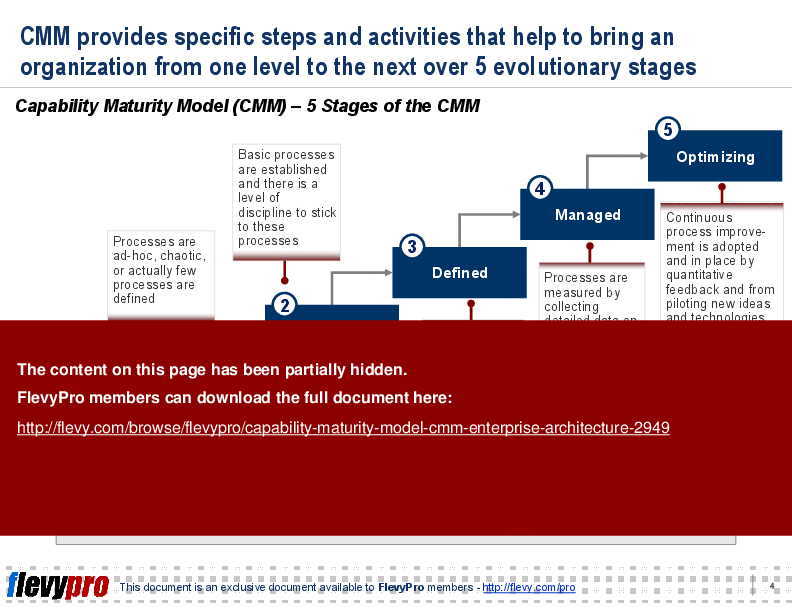
The Capability Maturity Model (CMM) is an organizational model that describes 5 evolutionary stages (or levels), in which the business processes in an organization are managed. The term "maturity" relates to the degree of formality and optimization of processes, from ad hoc practices, to formally defined steps, to managed result metrics, to active optimization of the processes.

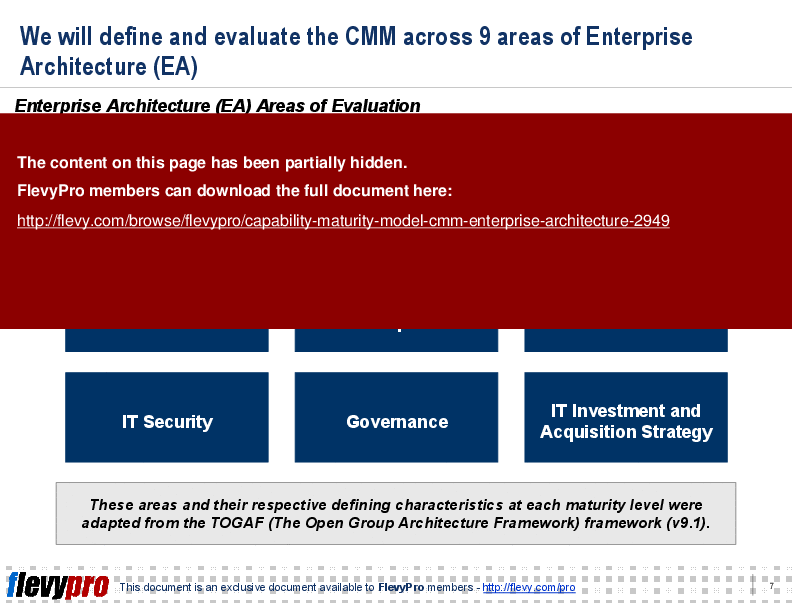
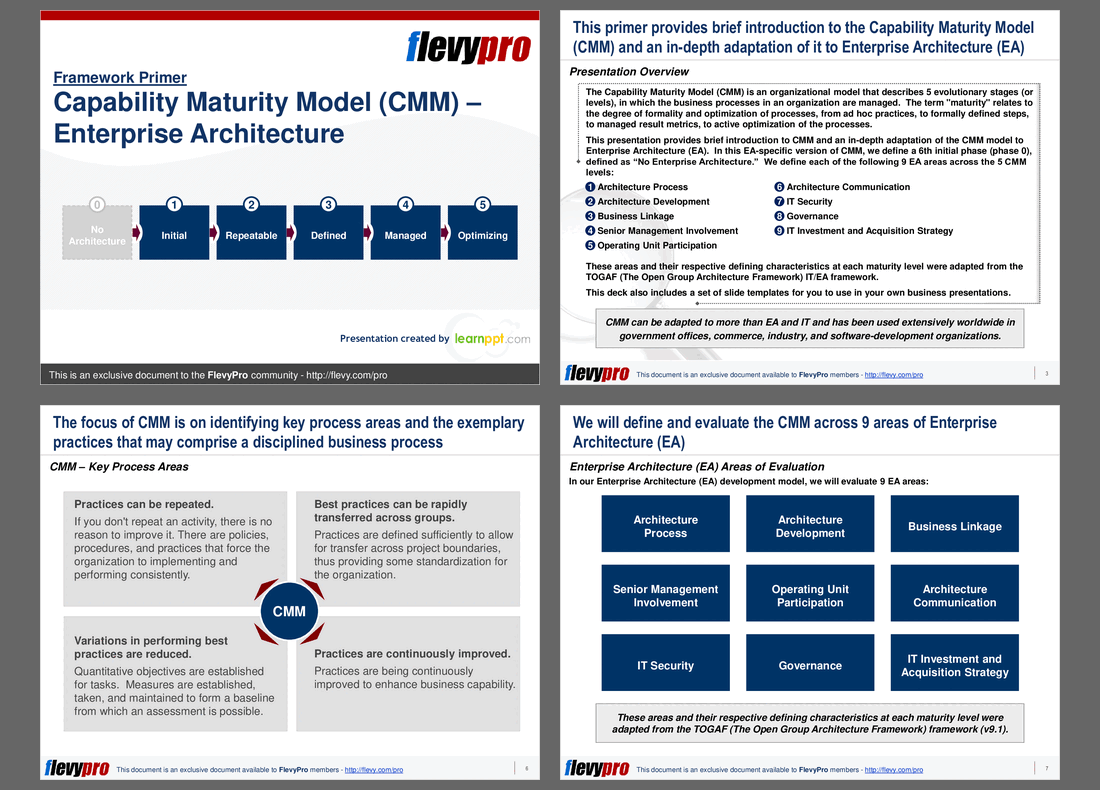
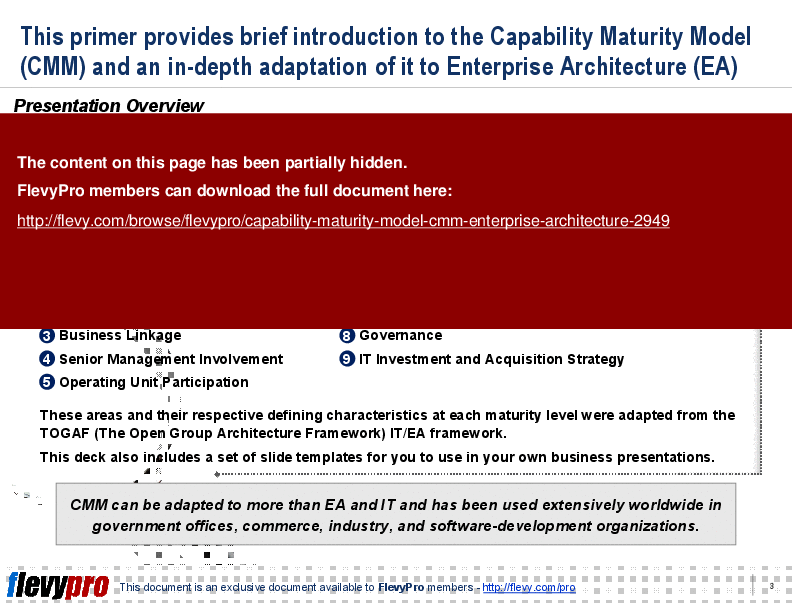
This presentation provides brief introduction to CMM and an in-depth adaptation of the CMM model to Enterprise Architecture (EA). In this EA-specific version of CMM, we define a 6th initial phase (phase 0), defined as "No Enterprise Architecture." We define each of the following 9 EA areas across the 5 CMM levels:

1. Architecture Process
2. Architecture Development
3. Business Linkage
4. Senior Management Involvement
5. Operating Unit Participation
6. Architecture Communication
7. IT Security
8. Governance
9. IT Investment and Acquisition Strategy

These areas and their respective defining characteristics at each maturity level were adapted from the TOGAF (The Open Group Architecture Framework) IT/EA framework. CMM can also be adapted to more than EA and IT and has been used extensively worldwide in government offices, commerce, industry, and software-development organizations.

This deck also includes a set of slide templates for you to use in your own business presentations.

The Capability Maturity Model (CMM) – Enterprise Architecture presentation offers a comprehensive roadmap for organizations aiming to elevate their Enterprise Architecture (EA) maturity. It meticulously outlines the five stages of CMM, from chaotic, ad-hoc processes to a state of continuous improvement and optimization. Each stage is detailed with specific steps and activities, providing a clear path for organizations to follow.

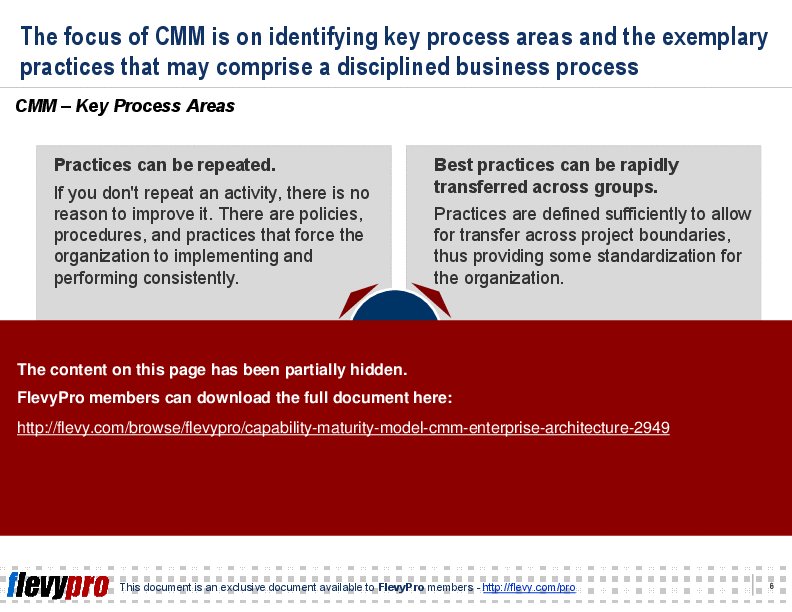
This PPT also delves into the key process areas essential for a disciplined business process. It emphasizes the importance of repeatable practices and the rapid transfer of best practices across groups. The evaluation of EA areas such as IT Security, Governance, and IT Investment Strategy ensures that all facets of the organization's architecture are scrutinized and optimized. This presentation is an invaluable tool for C-level executives seeking to enhance their enterprise's architectural capabilities and achieve operational excellence.

Got a question about this document? Email us at flevypro@flevy.com.

MARCUS OVERVIEW

This synopsis was written by Marcus [?] based on the analysis of the full 24-slide presentation.


Executive Summary
The Capability Maturity Model (CMM) for Enterprise Architecture (EA) presentation provides a structured framework for assessing and enhancing the maturity of an organization’s EA practices. Developed by experienced consultants, this presentation outlines the 5 evolutionary stages of CMM, from "No Architecture" to "Optimizing," and introduces a sixth initial phase. It details nine critical areas of evaluation, adapted from the TOGAF framework, to help organizations identify their current maturity level and plan actionable steps for improvement. This presentation is designed to empower corporate executives and integration leaders to establish a robust EA process that aligns with business objectives.

Who This Is For and When to Use
•  Corporate executives overseeing enterprise architecture initiatives
•  Integration leaders responsible for aligning IT and business strategies
•  Consultants advising organizations on maturity assessments and process improvements
•  IT governance teams focused on establishing standards and best practices

Best-fit moments to use this deck:
•  During strategic planning sessions to evaluate current EA maturity
•  For workshops aimed at developing or refining EA processes
•  When assessing the impact of EA on business objectives and IT investments

Learning Objectives
•  Define the Capability Maturity Model and its relevance to Enterprise Architecture
•  Identify the nine areas of evaluation within the CMM framework
•  Assess the current maturity level of an organization’s EA practices
•  Develop a roadmap for advancing EA maturity through defined stages
•  Establish governance structures that support continuous improvement in EA
•  Integrate EA with business strategies and IT investment decisions

Table of Contents
•  Overview (page 3)
•  CMM and EA Process Areas (page 6)
•  EA Areas of Evaluation (page 7)
•  Templates (page 19)

Primary Topics Covered
•  Capability Maturity Model (CMM) - A structured framework describing 5 stages of process maturity, from ad hoc practices to optimized processes.
•  Enterprise Architecture (EA) Areas of Evaluation - Nine specific areas, including Architecture Process, Business Linkage, and IT Security, evaluated across the CMM levels.
•  Stages of Maturity - Detailed descriptions of each maturity stage, including characteristics and requirements for advancement.
•  Governance and Best Practices - Emphasis on the importance of governance structures in supporting EA processes and ensuring alignment with business goals.
•  Continuous Improvement - Strategies for leveraging metrics and feedback to drive ongoing enhancements in EA practices.

Deliverables, Templates, and Tools
•  CMM assessment template for evaluating current EA maturity
•  EA process documentation templates for standardization
•  Governance framework examples for establishing EA oversight
•  Best practices checklist for continuous improvement in EA
•  Roadmap template for advancing through CMM stages

Slide Highlights
•  Overview of the Capability Maturity Model and its significance in EA
•  Detailed breakdown of the nine areas of evaluation within EA
•  Visual representation of the 5 stages of CMM, illustrating the progression from "No Architecture" to "Optimizing"
•  Examples of governance structures that support effective EA practices
•  Case studies demonstrating the impact of mature EA on business outcomes

Potential Workshop Agenda
Introduction to CMM and EA (60 minutes)
•  Overview of the Capability Maturity Model
•  Discussion on the importance of EA in organizational success
•  Introduction to the nine areas of evaluation

CMM Assessment and Roadmap Development (90 minutes)
•  Conduct a maturity assessment using the provided templates
•  Identify gaps and opportunities for improvement
•  Develop a roadmap for advancing EA maturity

Governance and Continuous Improvement (60 minutes)
•  Establish governance structures for EA
•  Discuss best practices for continuous improvement
•  Review metrics for tracking progress and success

Customization Guidance
•  Tailor the assessment templates to reflect specific organizational contexts and needs
•  Adjust the governance framework examples to align with existing organizational structures
•  Incorporate industry-specific metrics and benchmarks for evaluating EA effectiveness

Secondary Topics Covered
•  Integration of IT Security within the EA framework
•  The role of senior management in supporting EA initiatives
•  Strategies for aligning EA with business strategies and objectives
•  Best practices for communication and documentation in EA processes

Topic FAQ

What are the stages of a Capability Maturity Model for Enterprise Architecture?

A CMM for EA typically includes an initial phase labeled "No Enterprise Architecture" followed by 5 evolutionary maturity stages ranging from ad hoc to optimizing; this deck treats those as 6 phases in total, with the initial phase plus 5 standard maturity levels.

Which EA areas should I evaluate when measuring EA maturity?

Commonly evaluated EA areas include Architecture Process, Architecture Development, Business Linkage, Senior Management Involvement, Operating Unit Participation, Architecture Communication, IT Security, Governance, and IT Investment and Acquisition Strategy—nine areas in total.

How do I assess my organization’s current EA maturity in practice?

Assessments are performed by scoring each of the nine EA areas against the defined maturity levels, using structured assessment templates and criteria to identify gaps and draft a roadmap; the Capability Maturity Model (CMM) - Enterprise Architecture includes assessment templates.

How often should an organization reassess its EA maturity?

The material recommends conducting regular maturity reassessments to ensure alignment and continuous improvement, with a suggested cadence of annual or bi‑annual reviews to track progress and update roadmaps annually or bi-annually.

What should I look for when choosing an EA maturity assessment toolkit?

Choose a toolkit that defines clear maturity stages, covers the core EA areas (such as the nine adapted from TOGAF), provides assessment and roadmap templates, and includes governance examples; look specifically for a CMM assessment template as a key deliverable.

How much time and structure is typical for an EA maturity workshop?

A practical workshop agenda in the deck recommends 3 sessions: a 60-minute introduction to CMM and EA, a 90-minute assessment and roadmap development session, and a 60-minute governance and continuous improvement session—three sessions totaling 210 minutes.

We’re merging 2 companies; how can a CMM-based EA assessment help during integration?

A CMM-based EA assessment provides a structured way to score each of the nine EA areas, identify integration gaps in architecture, governance, and IT investment alignment, and produce a prioritized roadmap using the provided roadmap template.

What role does governance play in improving EA maturity?

Governance establishes accountability, standards, and decision-making processes that align EA with business objectives, supports compliance and stakeholder involvement, and is addressed in the deck through governance framework examples as part of maturity advancement.

Document FAQ
These are questions addressed within this presentation.

What is the Capability Maturity Model?
The Capability Maturity Model is a framework that outlines 5 stages of process maturity, helping organizations assess and improve their practices systematically.

How can this presentation help my organization?
This presentation provides a structured approach to evaluate your current EA maturity, identify gaps, and develop a roadmap for improvement.

What are the nine areas of evaluation in EA?
The nine areas include Architecture Process, Architecture Development, Business Linkage, Senior Management Involvement, Operating Unit Participation, Architecture Communication, IT Security, Governance, and IT Investment and Acquisition Strategy.

How do I assess my organization’s current EA maturity?
Utilize the assessment templates provided in the presentation to evaluate each of the nine areas against the CMM stages.

What role does governance play in EA?
Governance ensures that EA practices align with business objectives, establishes accountability, and supports continuous improvement.

Can this framework be applied to other areas beyond EA?
Yes, the CMM framework can be adapted to various organizational processes beyond just Enterprise Architecture.

How often should we reassess our EA maturity?
Regular assessments should be conducted annually or bi-annually to ensure continuous improvement and alignment with business goals.

What metrics should we track for EA effectiveness?
Metrics may include process efficiency, alignment with business objectives, stakeholder satisfaction, and compliance with governance standards.

Glossary
•  Capability Maturity Model (CMM) - A framework for assessing and improving organizational processes.
•  Enterprise Architecture (EA) - A strategic framework that aligns IT and business goals.
•  Governance - The framework for overseeing and guiding EA practices.
•  Best Practices - Established methods that lead to superior results in EA processes.
•  Metrics - Quantitative measures used to assess performance and effectiveness.
•  Continuous Improvement - Ongoing efforts to enhance processes and practices.
•  Architecture Process - The structured approach to developing and managing EA.
•  Business Linkage - The alignment of EA with business strategies and objectives.
•  IT Security - The measures taken to protect information systems within EA.
•  Senior Management Involvement - The engagement of leadership in EA initiatives.
•  Operating Unit Participation - The involvement of various business units in the EA process.
•  Architecture Communication - The dissemination of EA information within the organization.
•  IT Investment and Acquisition Strategy - The approach to aligning IT investments with EA goals.
•  Templates - Pre-designed documents to facilitate EA processes.
•  Assessment - The evaluation of current EA maturity against defined criteria.
•  Roadmap - A strategic plan outlining steps to achieve desired EA maturity.
•  Feedback - Information used to inform and improve EA practices.
•  Documentation - The written records of EA processes and standards.
•  Framework - A structured approach to organizing and managing EA.
•  Stakeholders - Individuals or groups with an interest in the EA process.
•  Alignment - The degree to which EA supports business goals and strategies.

MIS PPT SLIDES

Assessing EA's Role in IT Investment Maturity

Assessing Maturity Levels of Enterprise Architecture Processes

Evaluating Enterprise Architecture: Key Areas of Focus

Assessing Operating Unit Engagement in Enterprise Architecture

Source: Best Practices in Maturity Model, IT Strategy, Enterprise Architecture, Capability Maturity Model PowerPoint Slides: Capability Maturity Model (CMM) - Enterprise Architecture PowerPoint (PPT) Presentation Slide Deck, LearnPPT Consulting


$29.00
FlevyPro price: FREE (included in subscription)
This framework is developed by a team of former McKinsey and Big 4 consultants. The presentation follows the headline-body-bumper slide format used by global consulting firms.
Add to Cart
  

Did you need more documents?

Consider a FlevyPro subscription from $39/month. View plans here.

For $10.00 more, you can download this document plus 2 more FlevyPro documents. That's just $13 each.

ABOUT FLEVYPRO

This document is part of the FlevyPro Library, a curated knowledge base of documents for our FlevyPro subscribers.

FlevyPro is a subscription service for on-demand business frameworks and analysis tools. FlevyPro subscribers receive access to an exclusive library of curated business documents—business framework primers, presentation templates, Lean Six Sigma tools, and more—among other exclusive benefits.

Click here to learn more about FlevyPro and its benefits.

Did you know?
The average daily rate of a McKinsey consultant is $6,625 (not including expenses). The average price of a Flevy document is $65.


Trusted by over 10,000+ Client Organizations
Since 2012, we have provided business templates to over 10,000 businesses and organizations of all sizes, from startups and small businesses to the Fortune 100, in over 130 countries.
AT&T GE Cisco Intel IBM Coke Dell Toyota HP Nike Samsung Microsoft Astrazeneca JP Morgan KPMG Walgreens Walmart 3M Kaiser Oracle SAP Google E&Y Volvo Bosch Merck Fedex Shell Amgen Eli Lilly Roche AIG Abbott Amazon PwC T-Mobile Broadcom Bayer Pearson Titleist ConEd Pfizer NTT Data Schwab


Read Customer Testimonials

 
"As a small business owner, the resource material available from FlevyPro has proven to be invaluable. The ability to search for material on demand based our project events and client requirements was great for me and proved very beneficial to my clients. Importantly, being able to easily edit and tailor "

– Michael Duff, Managing Director at Change Strategy (UK)
 
"As a niche strategic consulting firm, Flevy and FlevyPro frameworks and documents are an on-going reference to help us structure our findings and recommendations to our clients as well as improve their clarity, strength, and visual power. For us, it is an invaluable resource to increase our impact and value."

– David Coloma, Consulting Area Manager at Cynertia Consulting
 
"If you are looking for great resources to save time with your business presentations, Flevy is truly a value-added resource. Flevy has done all the work for you and we will continue to utilize Flevy as a source to extract up-to-date information and data for our virtual and onsite presentations!"

– Debbi Saffo, President at The NiKhar Group
 
"I have found Flevy to be an amazing resource and library of useful presentations for lean sigma, change management and so many other topics. This has reduced the time I need to spend on preparing for my performance consultation. The library is easily accessible and updates are regularly provided. A wealth of great information."

– Cynthia Howard RN, PhD, Executive Coach at Ei Leadership
 
"Flevy is our 'go to' resource for management material, at an affordable cost. The Flevy library is comprehensive and the content deep, and typically provides a great foundation for us to further develop and tailor our own service offer."

– Chris McCann, Founder at Resilient.World
 
"[Flevy] produces some great work that has been/continues to be of immense help not only to myself, but as I seek to provide professional services to my clients, it gives me a large "tool box" of resources that are critical to provide them with the quality of service and outcomes they are expecting."

– Royston Knowles, Executive with 50+ Years of Board Level Experience
 
"As an Independent Management Consultant, I find Flevy to add great value as a source of best practices, templates and information on new trends. Flevy has matured and the quality and quantity of the library is excellent. Lastly the price charged is reasonable, creating a win-win value for "

– Jim Schoen, Principal at FRC Group
 
"Flevy.com has proven to be an invaluable resource library to our Independent Management Consultancy, supporting and enabling us to better serve our enterprise clients.

The value derived from our [FlevyPro] subscription in terms of the business it has helped to gain far exceeds the investment made, making a subscription a no-brainer for any growing consultancy – or in-house strategy team."

– Dean Carlton, Chief Transformation Officer, Global Village Transformations Pty Ltd.


Customers Also Bought These Documents


Customers Also Like These Documents

Explore Templates on Related Management Topics


Your Recently Viewed Documents
Download our FREE Digital Transformation Templates

Download our free compilation of 50+ Digital Transformation slides and templates. DX concepts covered include Digital Leadership, Digital Maturity, Digital Value Chain, Customer Experience, Customer Journey, RPA, etc.