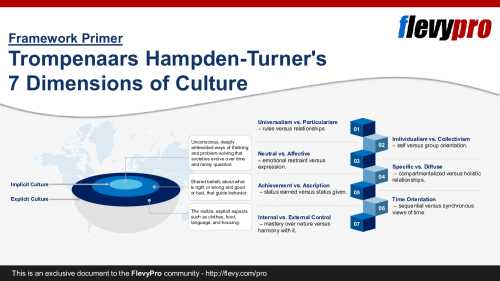
Editor's Note: Take a look at our featured best practice, Hofstede's 6 Dimensions of National Cultures (35-slide PowerPoint presentation). Cultural differences can act as a barrier to communication. This could affect our organization's ability to build connections and motivate people. While we may be excited with the opportunities that global connectedness has brought forth, yet we are cautious of making cross-cultural faux [read more]
* * * *
For organizations entering the Ukrainian market, relocating executives, or staffing local operations, the residence permit process is a critical path item. A delayed or refused application can stall a market entry plan, postpone a director appointment, or leave a key hire unable to work.
The State Migration Service (DMS) follows clear rules set by the Law of Ukraine “On the Legal Status of Foreigners, and Stateless Persons” No. 3773-VI and several Cabinet of Ministers resolutions, but the devil hides in the procedural details. Below, we unpack the five errors that derail applications most often in 2026 and how your organization can avoid them.
Before You File: Why Professional Guidance Matters
Navigating any bureaucracy in a second language is tough; doing it in Ukrainian, where a single mistranslated word can void a document, is tougher. That is why many organizations engage an immigration attorney in Ukraine rather than leaving relocating employees to manage the process solo. The attorney-led team at Bimaris, for example, has handled more than 2,000 successful cases and maintains a 99.7% client-satisfaction rate across Kyiv, Lviv, and Tallinn. Their lawyers walk clients through every requirement, from the first D-type visa to address registration, and they keep an eye on renewal deadlines so nothing slips through the cracks.
Mistake 1 – Applying Without a Clearly Defined Legal Ground
A residence permit is not a “natural next step” just because an assignment is underway; it is a status that must rest on a legally valid ground. Article 4 of Law 3773-VI lists those grounds, and the DMS will reject any file that cannot be tied to one of them. In practice, the most common bases for a temporary residence permit (TRP) in 2026 are:
Employment – backed by a work permit, company director appointment, or representative-office accreditation (usually valid one to three years).
Family reunification – marriage to a Ukrainian citizen or to a foreigner who already holds a TRP/PRP (one to three years).
Full-time study, research, volunteering, clergy, or cultural projects – for the official duration of the program.
Investment of €100,000 + into a Ukrainian company (up to three years).
Applicants who “mix and match” grounds, e.g., submit an employment contract when the primary intent is study, confuse the migration officer and invite a refusal. Clarify your basis first, gather only the documents related to that basis, and state it consistently on every form.
Quick Reality Check
If your executive spent the past year in Ukraine on a visa-free stamp and now wants to “upgrade,” pause. Unless you return home (or to a third country) for a D-type visa, the DMS will not process a TRP. More on that in Mistake 3.
Mistake 2 – Submitting Incomplete or Incorrect Documents
Document preparation torpedoes more applications than any other issue. The standard DMS checklist in 2026 looks straightforward: passport, application form in Ukrainian, medical insurance, state-fee receipt, and notarized translation of the passport, but the “gotchas” lurk in the fine print:
Translation errors: A single letter off in a patronymic or a non-notarized translation is grounds for rejection. Always use a sworn translator and check passports, marriage certificates, and name-change documents line by line.
Apostille/legalization gaps: Any foreign-issued document must be apostilled or fully legalized, depending on whether your home state is party to the Hague Convention. Self-prints of an apostille confirmation page are not accepted.
Ground-specific annexes:
Employment = original work permit.
Marriage = certified marriage certificate plus spouse’s passport/ID and, if the spouse is a TRP holder, their residence card.
Study = university admission letter and the school’s license copy.
Investment = bank certificate and notarized statement of capital contribution of at least €100,000.
Correcting those items often costs more in courier fees and lost time than hiring counsel from the start.
Mistake 3 – Skipping the Mandatory D-Type Visa
A startling number of relocating professionals still land in Kyiv on a visa-free stamp or a short-term C-visa and assume they can walk into a DMS office to file a TRP. Under current rules, the only foreigners exempt from the D-visa prerequisite are those who held a valid Ukrainian residence status that expired less than a month earlier and never left the country. Everyone else must secure a D-type visa at a Ukrainian consulate abroad.
Key 2026 facts:
Processing time: 5-10 business days (express options may shorten this to three).
Validity: 90 days single entry, during which the TRP file must be lodged.
Paper trail: original invitation or work permit, bank statements, health insurance, and consular fee receipt.
Arriving without the D-visa usually backs the assignee into two bad options: overstay penalties or a last-minute flight out and back in, burning weeks of productivity and delaying the engagement. Bimaris therefore bundles D-visa support into every TRP engagement and tracks consulate appointment slots in real time.
Mistake 4 – Missing Renewal or Address-Registration Deadlines
Securing the plastic residence card is only half the battle; staying compliant is the other half.
Renewal window
A TRP must be renewed no later than 15 business days before its expiration date. If you file even one day late, you must restart from scratch, including a new D visa if you left Ukraine.
30-day address rule
After you pick up the permit, you have 30 calendar days to register your address at the Center for Administrative Services (CNAP). Failure to register violates Article 203 of the Administrative Code, triggering a UAH 1,700 to 5,100 fine and potentially blocking future renewals.
180-day abroad limit
Article 12 of Law 3773-VI lets the DMS revoke a permit if you spend over 180 consecutive days outside Ukraine in a calendar year, unless you prove study or medical treatment abroad. Airlines do not track this for you; keep boarding passes and entry stamps as evidence.
Professional firms use CRM systems to ping clients 60, 30, and 15 days before each milestone. If you handle the process yourself, set redundant reminders in multiple calendars, because the DMS will not alert you.
Mistake 5 – Relying on Forum Advice and “Friend-of-a-Friend” Stories
Online expat groups are great for restaurant tips, not for corporate mobility strategy. The migration landscape evolves quickly: DMS introduced biometric residence cards back in 2018, raised state fees in 2025, and strictly demands e-queue bookings. Procedures also vary as local branches interpret regulations differently.
Two examples from 2026:
Biometric fingerprints. Kyiv DMS collects fingerprints during submission; Lviv takes them at card pickup. If you copy the wrong timeline, you might leave town too early and miss your appointment.
Insurance policies. Some offices accept online policies printed at home, others insist on an embossed original from a Ukrainian insurer.
Authoritative information lives in the official DMS communiqués and in Cabinet of Ministers Resolution No.322 . When those texts are opaque, consult a licensed lawyer. What worked for “John from Telegram” last summer may earn you a refusal today.
Cost Snapshot for 2026
Item
Typical Range (USD)
Notes
DMS state fee
40-60
Paid at the bank or e-terminal
Medical insurance (1 year)
40-50
Must cover inpatient care
Legal support
From 400
Full cycle incl. D-visa & translation
Translation & notarization
8-12 per page
Depends on the language pair
Bimaris processes roughly 300 residence permits each year with a 30- to 40-day timeline door to door (visa appointment to card issuance). Their multilingual staff serves clients in English, Ukrainian, Russian, Turkish, and Arabic, a lifesaver for founders managing teams across multiple jurisdictions.
Final Thoughts: Turn Mistakes into Milestones
Ukraine’s residence-permit system is rules-based and, despite the paperwork, remarkably transparent. Nearly every refusal stems from one of the five mistakes above: vague legal grounds, sloppy documents, missing the D-visa, blowing a deadline, or trusting anecdotal advice. Treat the process like any other strategic initiative – define the legal basis, assemble certified paperwork, follow the timeline, and verify each step against the latest DMS guidance. For organizations, the stakes extend beyond the individual application: a single refused permit can delay a market entry, an executive appointment, or a client engagement by months. If in doubt, let an experienced attorney handle the heavy lifting so your leadership team can focus on building the business in Ukraine without bureaucratic dramas.
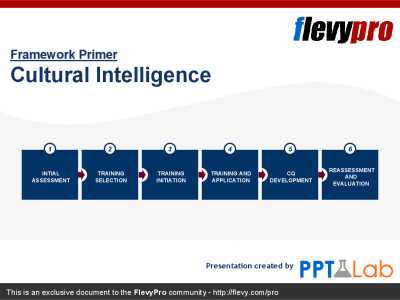
Cultural Intelligence (CQ) is a model that ability to cope with national, corporate, and vocational cultures. It was developed by Christopher Earley and Elaine Mosakowski, based on a study of 2,000 managers across 60 countries. CQ is the ability to understand unfamiliar contexts, and then to [read more]
Do You Want to Implement Business Best Practices?
You can download in-depth presentations on Local Culture and 100s of management topics from the FlevyPro Library. FlevyPro is trusted and utilized by 1000s of management consultants and corporate executives.
For even more best practices available on Flevy, have a look at our top 100 lists:
These best practices are of the same as those leveraged by top-tier management consulting firms, like McKinsey, BCG, Bain, and Accenture. Improve the growth and efficiency of your organization by utilizing these best practice frameworks, templates, and tools. Most were developed by seasoned executives and consultants with over 20+ years of experience.
Readers of This Article Are Interested in These Resources
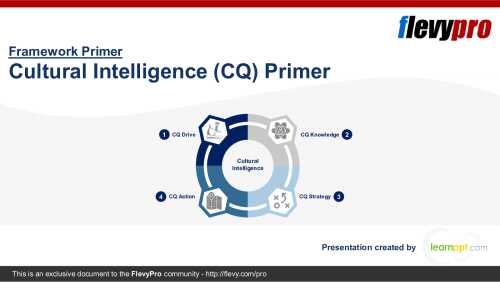
Today's business environment demands more than just market knowledge and technical expertise. It calls for Cultural Intelligence (CQ)--the ability to cross boundaries and thrive in multiple cultures.
In this PowerPoint presentation, we will explore the essence of CQ, focusing on its 4 core [read more]
In today's modern era driven by Technology and Innovation, organizations can only survive if they are swift and agile; and have the capability of learning and adjusting rapidly.
Organizations have become cognizant of this and have introduced Agile methodologies in their Operations to allow them [read more]
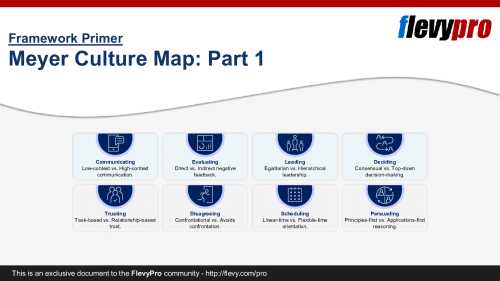
As organizations operate across increasingly complex international environments, cultural friction remains a persistent leadership challenge to navigate. Cultural differences weaken collaboration, disrupt trust, and create hidden operational drag.
This PPT presentation discusses the Meyer [read more]
Societal Culture shapes how organizations and societies define problems, make decisions, and pursue goals. It evolves over time through internal innovation and external influences. Differences in culture across geographies often lead to miscommunications, misalignment, and conflict.
This PPT [read more]
 For organizations entering the Ukrainian market, relocating executives, or staffing local operations, the residence permit process is a critical path item. A delayed or refused application can stall a market entry plan, postpone a director appointment, or leave a key hire unable to work.