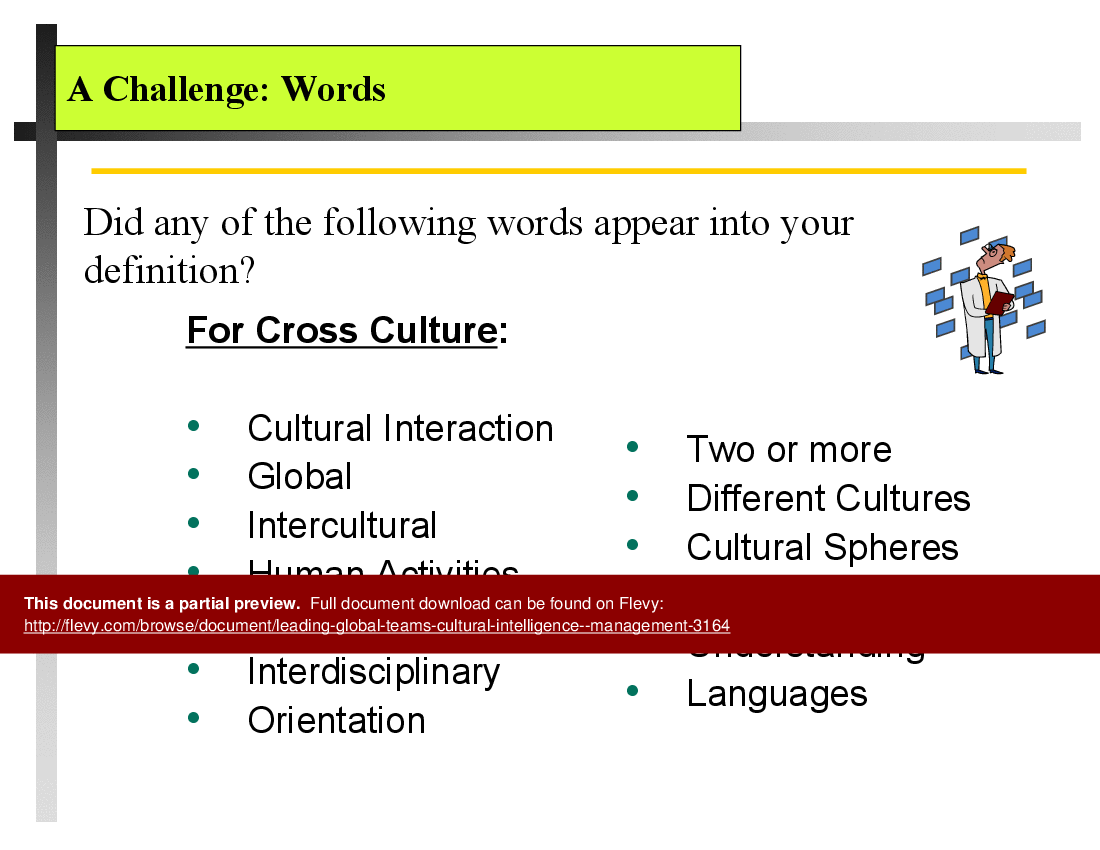
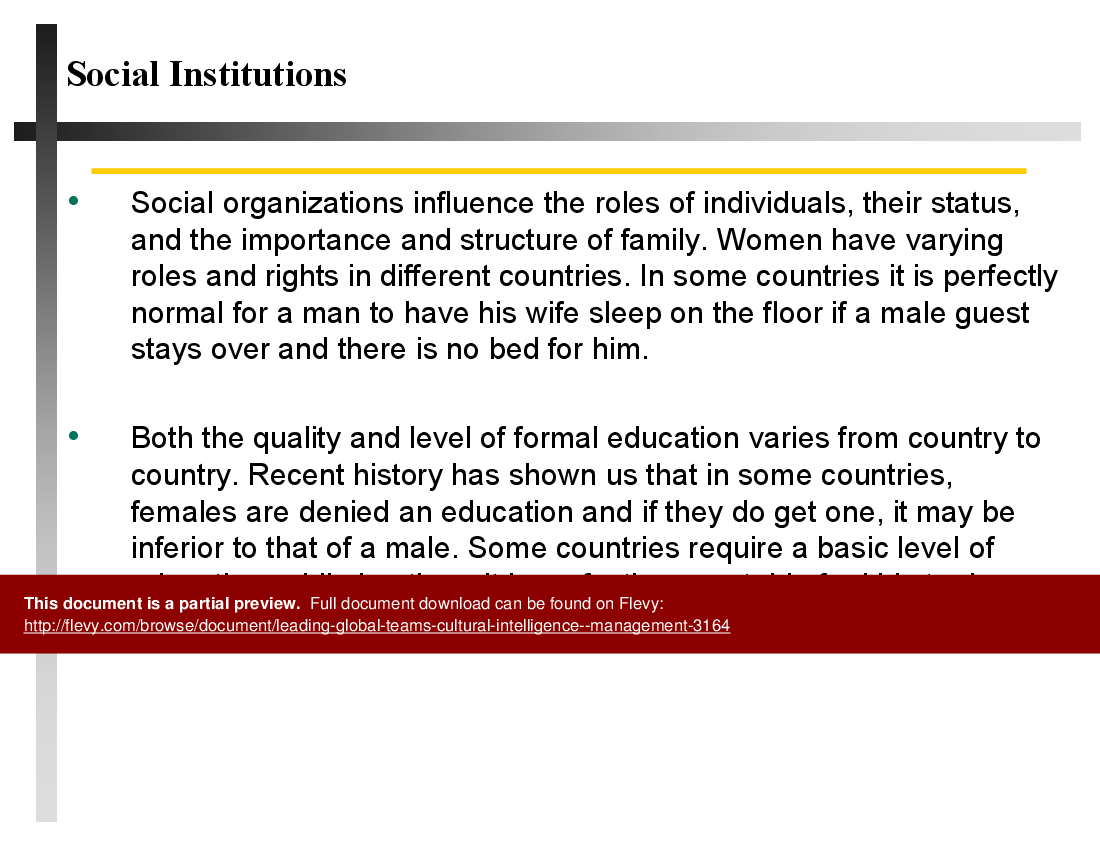
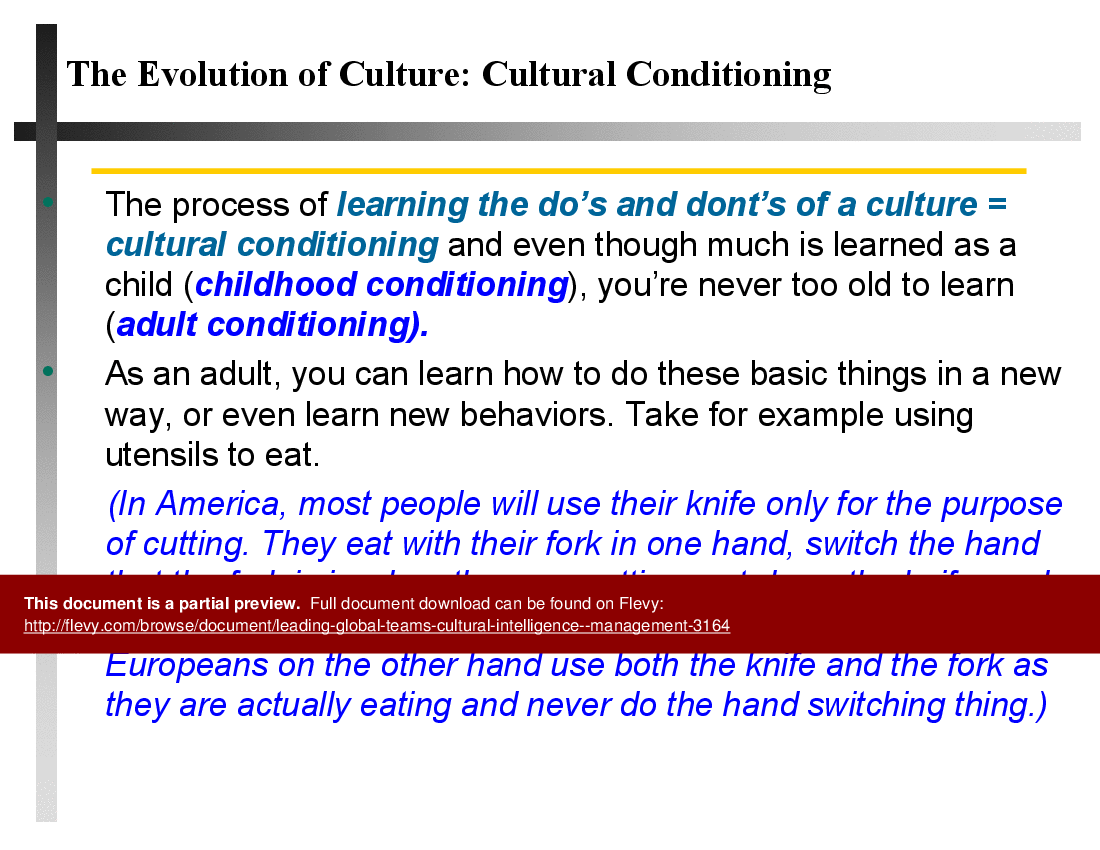
The Cultural Intelligence training provides leaders with the knowledge to enhance communication skills and organization management inside multicultural contest and create awareness of own as well as others' assumptions and behaviors based on the values of otherness.
The contents offers the culture intelligence (CQ) fundamentals:
• The Complexity of Differences
• The Individual and Cultural Differences Understanding and Managing Diversity
• Getting in Shape for Working with Differences – Analyzing Cultural Differences for Working
Effectively Across Countries | Using Hofstede dimensions model
• The Cultural ADAPT Cycle
• Intercultural communication and its impact on organization, management and business
Got a question about the product? Email us at support@flevy.com or ask the author directly by using the "Ask the Author a Question" form. If you cannot view the preview above this document description, go here to view the large preview instead.
Executive Summary
The "Leading Global Teams" presentation focuses on enhancing cultural intelligence (CQ) and effective management strategies for global teams. It provides insights into cultural dimensions, particularly Hofstede’s model, and offers practical approaches to overcoming communication barriers in diverse business environments. This deck equips corporate executives and consultants with the knowledge to navigate cross-cultural challenges, fostering better collaboration and leadership across global teams.
Who This Is For and When to Use
• Corporate executives managing international teams
• Integration leaders overseeing cross-cultural projects
• HR professionals focused on diversity and inclusion
• Consultants advising on global business strategies
Best-fit moments to use this deck:
• During international team formation or restructuring
• When addressing cultural challenges in global projects
• In training sessions focused on intercultural communication
Learning Objectives
• Define cultural intelligence and its importance in global leadership
• Analyze Hofstede’s cultural dimensions and their impact on management
• Identify barriers to effective intercultural communication
• Develop strategies to overcome culture shock in global teams
• Enhance team collaboration through understanding cultural differences
• Implement best practices for managing virtual teams across cultures
Table of Contents
• Introduction to Cultural Intelligence (page 1)
• Understanding Culture and Values (page 2)
• Hofstede’s Cultural Dimensions (page 3)
• Communication Barriers in Global Business (page 4)
• Addressing Culture Shock (page 5)
• Conclusions and Recommendations (page 6)
Primary Topics Covered
• Cultural Intelligence (CQ) - CQ is the capability to relate and work effectively across cultures, essential for global leadership.
• Hofstede’s Cultural Dimensions - This framework includes Power Distance, Individualism vs. Collectivism, Masculinity vs. Femininity, Uncertainty Avoidance, and Long-Term Orientation, providing insights into cultural differences.
• Communication Barriers - Identifying verbal and non-verbal communication challenges that arise in cross-cultural interactions.
• Culture Shock - Understanding the stages of culture shock and strategies to mitigate its effects on individuals and teams.
• Team Dynamics - Exploring how cultural backgrounds influence teamwork and collaboration in diverse environments.
• Virtual Team Management - Best practices for managing remote teams across different cultures, emphasizing communication and relationship-building.
Deliverables, Templates, and Tools
• Cultural intelligence assessment template for evaluating team members
• Hofstede’s dimensions chart for quick reference
• Communication strategy framework for global teams
• Culture shock coping strategies guide
• Team dynamics assessment tool
• Virtual team management checklist
Slide Highlights
• Overview of Hofstede’s cultural dimensions with visual representations
• Case studies illustrating successful cross-cultural team management
• Interactive exercises for assessing cultural intelligence
• Strategies for effective communication in diverse teams
• Visual aids depicting the stages of culture shock
Potential Workshop Agenda
Cultural Intelligence Overview (60 minutes)
• Introduction to cultural intelligence and its significance
• Discussion on Hofstede’s cultural dimensions
Communication Strategies (90 minutes)
• Identifying communication barriers in global teams
• Developing effective communication plans
Culture Shock Management (60 minutes)
• Understanding the stages of culture shock
• Strategies for overcoming culture shock in teams
Customization Guidance
• Tailor the cultural dimensions examples to specific regions relevant to your organization.
• Adjust the communication strategies based on the team's unique cultural backgrounds.
• Incorporate case studies from your industry to enhance relatability.
Secondary Topics Covered
• The impact of cultural values on leadership styles
• Differences in decision-making processes across cultures
• The role of language in intercultural communication
• Strategies for fostering inclusivity in global teams
• Best practices for conflict resolution in diverse environments
Topic FAQ
Document FAQ
These are questions addressed within this presentation.
What is cultural intelligence?
Cultural intelligence is the ability to understand and effectively interact with people from different cultural backgrounds, crucial for successful global leadership.
How does Hofstede’s model help in managing global teams?
Hofstede’s model provides a framework for understanding cultural differences, enabling leaders to adapt their management styles to fit diverse team dynamics.
What are common barriers to communication in global teams?
Barriers include language differences, varying communication styles, and cultural misunderstandings that can lead to misinterpretation.
How can culture shock affect team performance?
Culture shock can lead to decreased morale, misunderstandings, and reduced productivity, making it essential to address it proactively.
What strategies can be used to overcome culture shock?
Strategies include learning the local language, joining community groups, and seeking support from colleagues who understand the cultural context.
How can virtual teams effectively communicate across cultures?
Establishing clear communication protocols, using collaborative tools, and fostering a culture of openness can enhance virtual team interactions.
What role does leadership play in managing cultural diversity?
Leaders must be culturally aware, adaptable, and supportive, promoting inclusivity and understanding within diverse teams.
How can organizations assess cultural intelligence within their teams?
Organizations can use assessment tools and surveys to evaluate team members' cultural intelligence and identify areas for development.
Glossary
• Cultural Intelligence (CQ) - The capability to function effectively in culturally diverse settings.
• Hofstede’s Dimensions - A framework for understanding cultural differences across 5 dimensions.
• Culture Shock - The feeling of disorientation experienced when encountering a different culture.
• Power Distance - The extent to which less powerful members of society accept unequal power distribution.
• Individualism vs. Collectivism - The degree to which individuals prioritize personal goals over group goals.
• Masculinity vs. Femininity - The value placed on traditionally masculine traits versus nurturing and quality-of-life traits.
• Uncertainty Avoidance - The level of comfort with ambiguity and uncertainty in a culture.
• Long-Term Orientation - The focus on long-term planning and respect for tradition versus short-term results.
• Non-Verbal Communication - Communication without words, including gestures, body language, and facial expressions.
• Team Dynamics - The behavioral relationships between members of a team.
• Virtual Teams - Teams that collaborate remotely using technology.
• Cultural Values - The core principles and ideals upon which an entire community exists.
• Intercultural Communication - Communication between people from different cultural backgrounds.
• Conflict Resolution - The process of resolving a dispute or a conflict.
• Inclusivity - The practice of ensuring that people feel a sense of belonging and support within a group.
• Cultural Awareness - Understanding and being sensitive to the cultural differences and similarities in a global context.
• Cultural Norms - The rules and expectations by which a society guides the behavior of its members.
• Cultural Adaptation - The process of adjusting to a new culture.
• Cross-Cultural Management - The management of people and organizations in a global context.
• Diversity and Inclusion - The practice of ensuring that individuals from diverse backgrounds are included and valued in an organization.
• Cultural Competence - The ability to interact effectively with people of different cultures.
Source: Best Practices in Leadership, Globalization, Local Culture PowerPoint Slides: Leading Global Teams (Cultural Intelligence | Management) PowerPoint (PPT) Presentation Slide Deck, paulbrad
|
Download our FREE Organization, Change, & Culture, Templates
Download our free compilation of 50+ slides and templates on Organizational Design, Change Management, and Corporate Culture. Methodologies include ADKAR, Burke-Litwin Change Model, McKinsey 7-S, Competing Values Framework, etc. |