
Cultural differences can act as a barrier to communication. This could affect our organization's ability to build connections and motivate people. While we may be excited with the opportunities that global connectedness has brought forth, yet we are cautious of making cross-cultural faux pas.
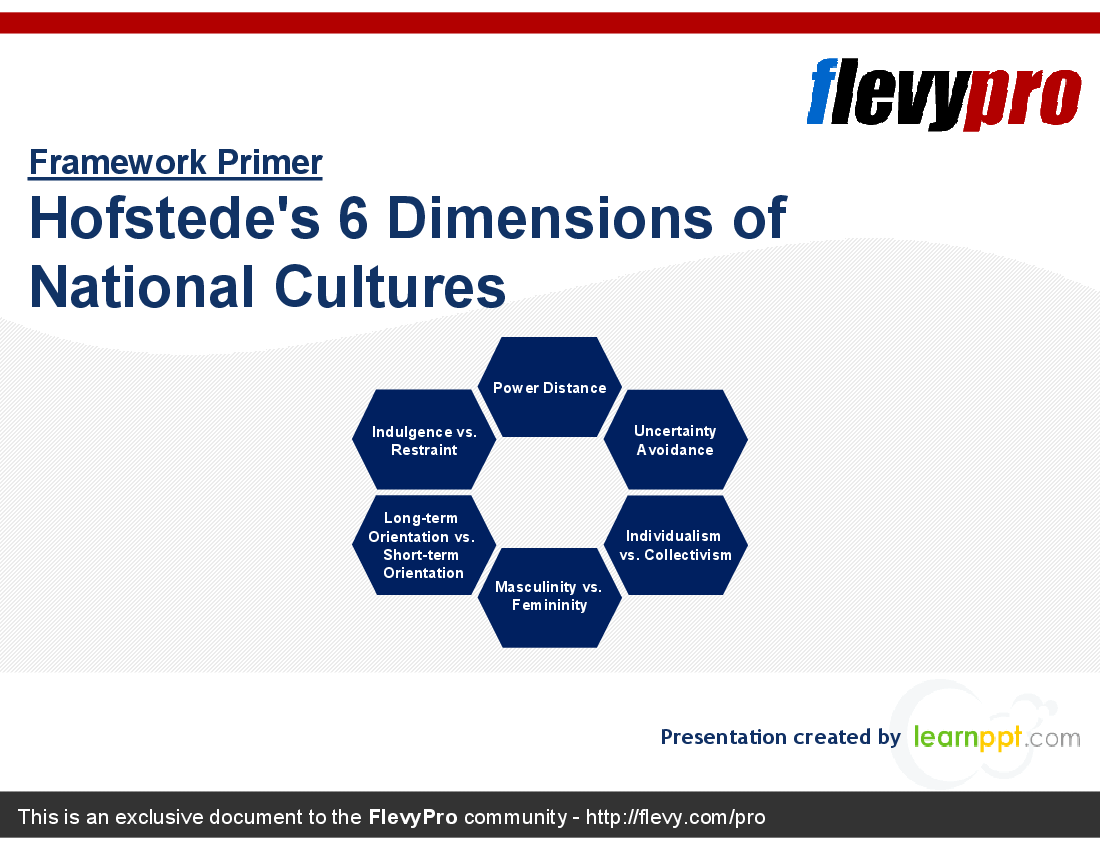
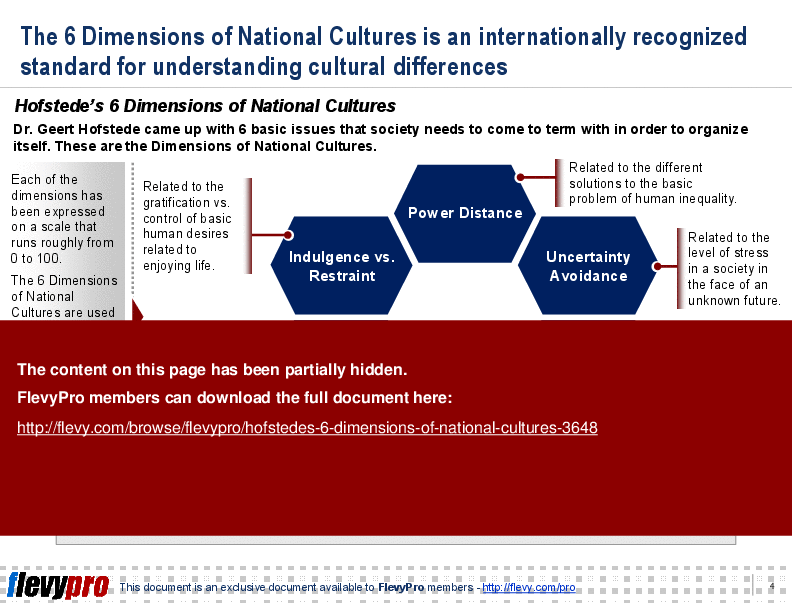
Hofstede's 6 Dimensions of National Cultures is an internationally recognized standard for understanding cultural differences. It describes the effect of a society's or an organization's culture on the values of its members, and how these values relate to behavior.
By understanding the cultural dimension of a specific country, our organization can better strategize our collaborative approach that is in synch with their cultural dimension. When this happens, the barriers to communication are broken down and understanding takes effect. Organizational growth then follows.
This presentation clearly discusses Hofstede's 6 Dimensions of National Cultures as the framework for understanding cultural differences.
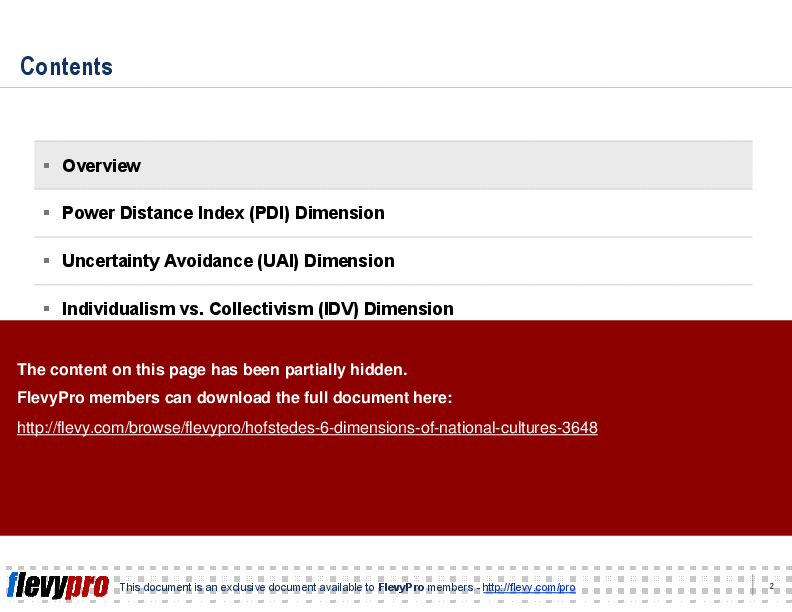
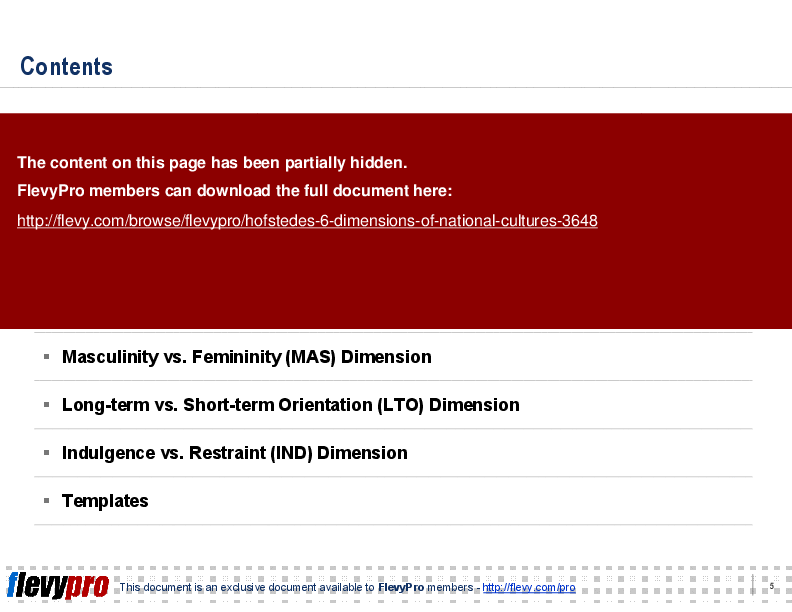
1. Power Distance Index (PDI) Dimension
2. Uncertainty Avoidance (UAI) Dimension
3. Individualism vs. Collectivism (IDV) Dimension
4. Masculinity vs. Femininity (MAS) Dimension
5. Long-term vs. Short-term Orientation (LTO) Dimension
6. Indulgence vs. Restraint (IND) Dimension
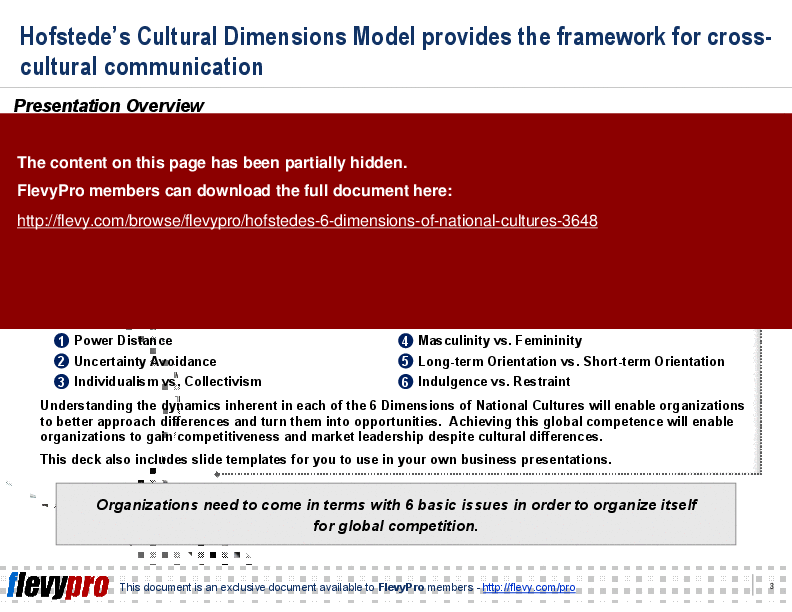
Understanding the dynamics inherent in each of the 6 Dimensions of National Cultures will enable organizations to better approach differences and turn them into opportunities. Organizations need to come in terms with 6 basic issues in order to organize itself for global competition. Achieving this global competence will enable organizations to gain competitiveness and market leadership despite cultural differences.
This deck also includes slide templates for you to use in your own business presentations.
This comprehensive presentation on Hofstede's 6 Dimensions of National Cultures includes detailed comparisons and world maps for each dimension, providing a visual and analytical understanding of cultural variances. The Power Distance Index (PDI) and Uncertainty Avoidance (UAI) dimensions are thoroughly examined, highlighting societal hierarchies and tolerance for ambiguity. The Individualism vs. Collectivism (IDV) and Masculinity vs. Femininity (MAS) dimensions delve into the social fabric and gender roles within different cultures. Long-term vs. Short-term Orientation (LTO) and Indulgence vs. Restraint (IND) dimensions offer insights into temporal perspectives and gratification control. This deck is a vital tool for any organization aiming to navigate and leverage cultural differences for strategic advantage.
Got a question about this document? Email us at flevypro@flevy.com.
Executive Summary
Hofstede's 6 Dimensions of National Cultures presentation provides a comprehensive framework for understanding cultural differences that impact global business interactions. Developed by Dr. Geert Hofstede, this model identifies 6 key dimensions—Power Distance, Uncertainty Avoidance, Individualism vs. Collectivism, Masculinity vs. Femininity, Long-term vs. Short-term Orientation, and Indulgence vs. Restraint. This presentation equips corporate executives and consultants with the insights needed to navigate cultural complexities, enhance communication, and foster collaboration across diverse teams. By leveraging this framework, organizations can strategically align their operations with cultural values, ultimately driving growth and competitive advantage in the global marketplace.
Who This Is For and When to Use
• Corporate executives looking to enhance global strategy and communication.
• Integration leaders managing cross-cultural teams.
• Consultants advising organizations on cultural competence.
• HR professionals involved in international talent management.
• Project managers overseeing global initiatives.
Best-fit moments to use this deck:
• During international expansion planning to understand cultural nuances.
• In cross-cultural training sessions to improve team dynamics.
• When developing marketing strategies tailored to specific cultural contexts.
• In negotiations with international partners to foster mutual understanding.
Learning Objectives
• Define Hofstede’s 6 Dimensions of National Cultures and their relevance to global business.
• Analyze the impact of cultural dimensions on organizational behavior and communication.
• Develop strategies for effective cross-cultural collaboration.
• Identify cultural barriers and how to overcome them in business settings.
• Apply the cultural dimensions framework to enhance organizational strategy.
• Create actionable plans for integrating cultural insights into business practices.
Table of Contents
• Overview (page 3)
• Power Distance Index (PDI) Dimension (page 6)
• Uncertainty Avoidance (UAI) Dimension (page 10)
• Individualism vs. Collectivism (IDV) Dimension (page 14)
• Masculinity vs. Femininity (MAS) Dimension (page 18)
• Long-term vs. Short-term Orientation (LTO) Dimension (page 22)
• Indulgence vs. Restraint (IND) Dimension (page 26)
• Templates (page 30)
Primary Topics Covered
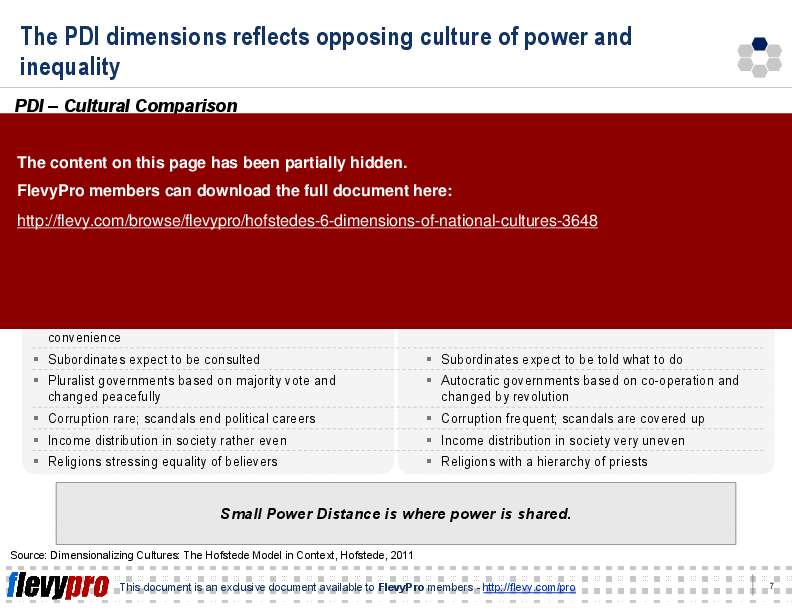
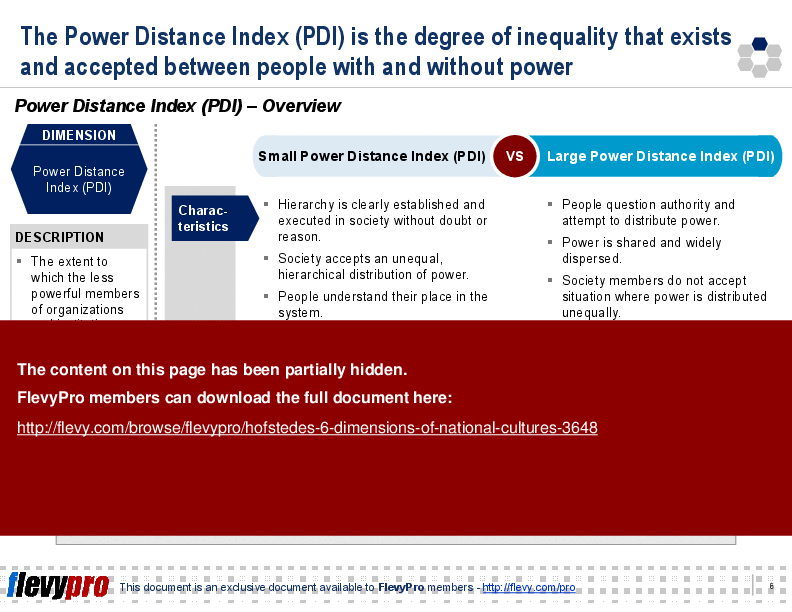
• Power Distance - This dimension measures the acceptance of unequal power distribution within organizations and societies, influencing hierarchy and authority dynamics.
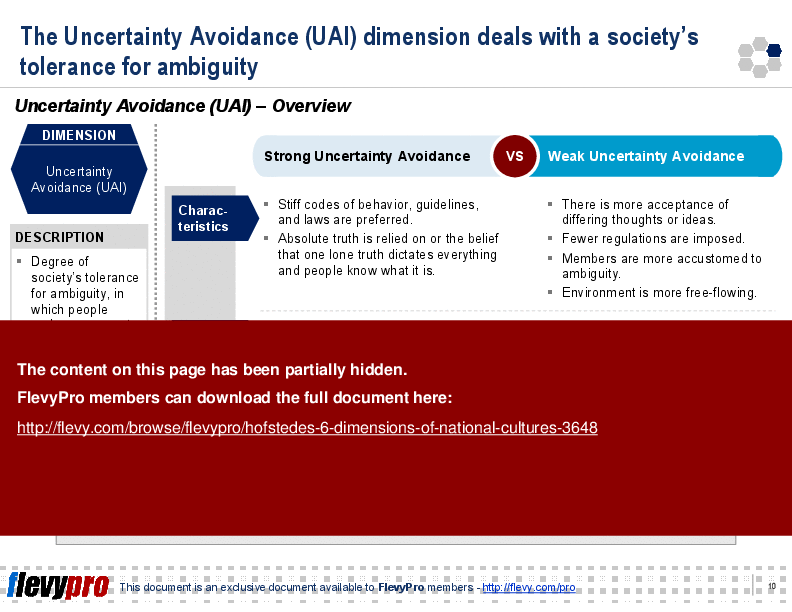
• Uncertainty Avoidance - Reflects how cultures handle ambiguity and uncertainty, impacting decision-making and risk management approaches.
• Individualism vs. Collectivism - Examines the degree of interdependence in societies, highlighting differences in personal versus group orientation.
• Masculinity vs. Femininity - Addresses the distribution of emotional roles between genders, affecting workplace dynamics and values.
• Long-term vs. Short-term Orientation - Relates to how cultures prioritize future planning versus immediate results, influencing strategic decision-making.
• Indulgence vs. Restraint - Measures the extent to which societies allow gratification of desires, impacting overall happiness and social norms.
Deliverables, Templates, and Tools
• Presentation slides detailing each of Hofstede’s 6 Dimensions.
• Cultural assessment templates for evaluating organizational alignment with cultural dimensions.
• Case studies illustrating the application of cultural dimensions in real-world scenarios.
• Guidelines for conducting cross-cultural training sessions.
• Worksheets for developing culturally informed business strategies.
• Visual aids for understanding cultural differences in team settings.
Slide Highlights
• Overview slide summarizing Hofstede’s 6 Dimensions and their significance.
• Detailed comparison slides for each dimension, illustrating cultural contrasts.
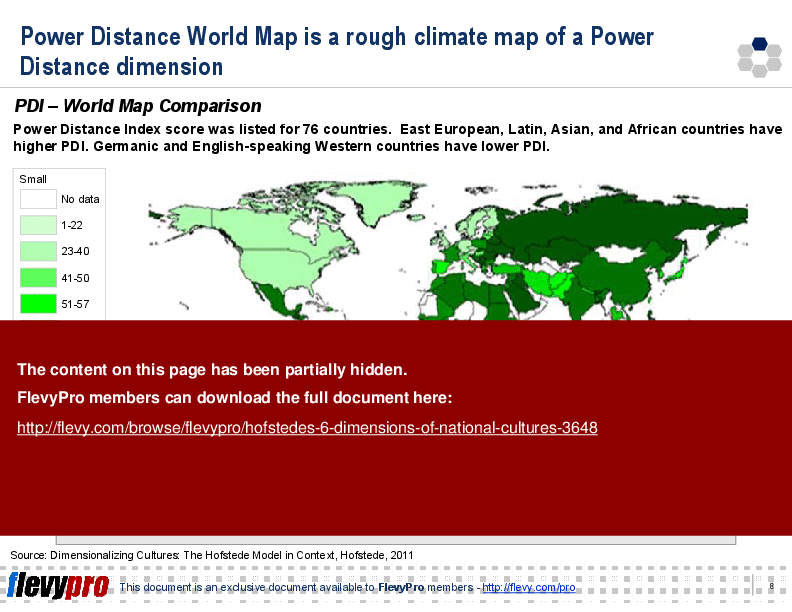
• World maps depicting the distribution of cultural dimensions across countries.
• Practical examples of how cultural dimensions influence business practices.
• Templates for integrating cultural insights into organizational strategies.
Potential Workshop Agenda
Understanding Cultural Dimensions Workshop (90 minutes)
• Introduction to Hofstede’s 6 Dimensions and their relevance
• Group discussions on cultural experiences and challenges
• Case study analysis of cross-cultural business interactions
Application of Cultural Insights (60 minutes)
• Breakout sessions to develop culturally informed strategies
• Presentation of group findings and feedback
Customization Guidance
• Tailor the presentation content to reflect specific cultural contexts relevant to your organization.
• Adjust case studies to align with industries or markets pertinent to your audience.
• Incorporate local examples and scenarios to enhance relatability and engagement.
Secondary Topics Covered
• The role of cultural intelligence in global business success.
• Strategies for managing cultural diversity in teams.
• The impact of globalization on cultural practices.
• Best practices for cross-cultural communication.
Topic FAQ
Document FAQ
These are questions addressed within this presentation.
What are Hofstede’s 6 Dimensions of National Cultures?
Hofstede’s 6 Dimensions are Power Distance, Uncertainty Avoidance, Individualism vs. Collectivism, Masculinity vs. Femininity, Long-term vs. Short-term Orientation, and Indulgence vs. Restraint, which help understand cultural differences.
How can this framework improve communication in global teams?
By understanding cultural dimensions, teams can tailor their communication styles to align with the values and expectations of diverse members, reducing misunderstandings.
What is the significance of Power Distance in organizations?
Power Distance indicates how power is distributed and accepted within a culture, influencing organizational hierarchy and employee engagement.
How does Uncertainty Avoidance affect decision-making?
Cultures with high Uncertainty Avoidance prefer structured environments and clear guidelines, impacting how decisions are made and risks are approached.
What are the implications of Individualism vs. Collectivism in teamwork?
Individualistic cultures emphasize personal achievement, while collectivist cultures prioritize group harmony, affecting collaboration and conflict resolution.
How can organizations apply the Masculinity vs. Femininity dimension?
Understanding this dimension helps organizations create inclusive environments that respect diverse gender roles and values.
What strategies can enhance Long-term Orientation in business?
Organizations can focus on sustainable practices, long-term planning, and adaptability to foster a culture that values future-oriented thinking.
Why is the Indulgence vs. Restraint dimension important?
This dimension reflects societal attitudes toward gratification and happiness, influencing employee satisfaction and workplace culture.
Glossary
• Power Distance - The degree to which less powerful members of a society accept and expect unequal power distribution.
• Uncertainty Avoidance - The extent to which members of a culture feel threatened by ambiguous situations.
• Individualism - A cultural orientation emphasizing personal independence and self-reliance.
• Collectivism - A cultural orientation prioritizing group goals and interdependence.
• Masculinity - A cultural preference for achievement, assertiveness, and material success.
• Femininity - A cultural preference for cooperation, modesty, and quality of life.
• Long-term Orientation - A cultural focus on future rewards and perseverance.
• Short-term Orientation - A cultural focus on immediate results and respect for tradition.
• Indulgence - A cultural tendency to allow free gratification of basic and natural human desires.
• Restraint - A cultural tendency to control gratification of needs and regulate it through strict social norms.
• Cultural Intelligence - The ability to relate and work effectively across cultures.
• Cross-Cultural Communication - The process of exchanging meaningful information across different cultures.
Source: Best Practices in Corporate Culture, HR Strategy, Hofstede, Local Culture PowerPoint Slides: Hofstede's 6 Dimensions of National Cultures PowerPoint (PPTX) Presentation Slide Deck, LearnPPT Consulting
Did you need more documents?
Consider a FlevyPro subscription from $39/month. View plans here.
For $10.00 more, you can download this document plus 2 more FlevyPro documents. That's just $13 each.
|
Download our FREE Organization, Change, & Culture, Templates
Download our free compilation of 50+ slides and templates on Organizational Design, Change Management, and Corporate Culture. Methodologies include ADKAR, Burke-Litwin Change Model, McKinsey 7-S, Competing Values Framework, etc. |