Editor's Note: Take a look at our featured best practice, GenAI Roadmap Design (30-slide PowerPoint presentation). Organizations worldwide are embracing GenAI for its ability to generate actionable insights, predict outcomes, personalize at scale, and process natural language with human-like fluency.
Leading organizations already deploy GenAI in AI-assisted software development, workflow automation, [read more]
* * * *
Generative AI adoption is accelerating faster than the governance models designed to control it. Organizations across industries are investing aggressively in AI-powered capabilities to improve productivity, accelerate Innovation, enhance customer engagement, and automate knowledge-intensive work. The opportunities are substantial. The risks are equally significant.
Many organizations approach Generative AI deployment in a fragmented manner. Individual functions implement tools independently, business units experiment without oversight, and technology teams focus primarily on deployment speed rather than governance maturity. This decentralized approach often delivers short-term gains.
It also creates long-term exposure. Hallucinations, misinformation, data leakage, model bias, regulatory non-compliance, and security vulnerabilities are frequently treated as isolated technical concerns. In reality, they are enterprise-wide Governance and Risk Management challenges. As AI adoption expands, these risks become increasingly difficult to manage without a structured Operating Model.
The Trusted GenAI Framework addresses this challenge by establishing a comprehensive governance structure that embeds trust into every stage of the AI lifecycle. Rather than treating trust as an afterthought, the framework positions trust as a prerequisite for sustainable AI adoption.
The framework consists of 7 dimensions that collectively enable responsible and scalable AI deployment:
Privacy
Accountability
Transparency
Robustness
Fairness
Safety
Reliability
Together, these dimensions create a foundation for balancing Innovation with Governance, Operational Excellence, Risk Management, and stakeholder confidence.
Organizations that fail to establish this foundation frequently experience fragmented ownership, inconsistent controls, and growing operational instability as AI initiatives scale.
Strategic Benefits of Trusted GenAI
Organizations that operationalize Trusted GenAI governance achieve several measurable benefits. They strengthen stakeholder confidence in AI-enabled decisions. They reduce regulatory, operational, and reputational risk exposure. They improve consistency and quality across AI-generated outputs. They accelerate Digital Transformation while maintaining Governance discipline. They strengthen Cybersecurity and data protection capabilities. They improve Organizational Resilience during periods of rapid technological change. They create scalable foundations for future AI Innovation. Organizations lacking governance maturity experience the opposite outcome. AI initiatives become fragmented. Trust declines. Compliance challenges increase. Operational inefficiencies multiply.
Privacy
Privacy is the cornerstone of Trusted GenAI. Generative AI systems often rely on large volumes of information for training, testing, fine-tuning, and operational use. This information frequently includes customer records, employee data, proprietary intellectual property, strategic documents, financial information, and confidential communications. Without effective privacy controls, organizations expose themselves to significant operational and regulatory risk.
Privacy failures can result in legal penalties, customer attrition, intellectual property loss, and long-term reputational damage. More importantly, they erode stakeholder confidence. Once trust is lost, rebuilding it can take years. Organizations must therefore establish privacy safeguards throughout the AI lifecycle. Sensitive information should be anonymized wherever possible. Personal information should be minimized. Access controls should limit exposure to authorized users. Employees must understand which data can and cannot be entered into AI systems.
Privacy governance should also extend beyond internal operations. Third-party vendors, technology partners, customers, and contractors all represent potential sources of exposure. Effective organizations establish privacy standards across the entire ecosystem. Intellectual property governance presents an additional challenge. AI-generated content often raises questions regarding ownership, copyright, attribution, and commercial usage rights. Clear policies are required to address these issues proactively. Privacy cannot remain solely the responsibility of Legal or Information Security functions. It must become embedded into Organizational Culture, Leadership practices, Technology Governance, and Risk Management frameworks.
Accountability
Accountability ensures that organizations retain responsibility for AI outcomes. Generative AI systems can generate content, recommendations, analyses, forecasts, and customer interactions at unprecedented scale. However, responsibility for those outputs cannot be delegated to algorithms. Organizations remain accountable for the consequences of AI-generated decisions regardless of how autonomous the underlying technology becomes.
This principle is fundamental to sustainable AI governance. Trusted GenAI requires clearly defined governance structures, decision rights, escalation pathways, and oversight responsibilities. Leadership teams must establish ownership for model selection, deployment, monitoring, validation, compliance, incident response, and remediation activities. Human oversight should exist throughout the AI lifecycle.
Outputs generated by AI systems should undergo review processes aligned with organizational risk tolerance and regulatory obligations. High-impact decisions require additional scrutiny and approval mechanisms. Persistent AI agents create particularly significant accountability challenges. AI-powered customer service representatives, virtual assistants, automated advisors, and AI-generated public communications all have the potential to create reputational or regulatory consequences.
Organizations must ensure that human supervisors retain ultimate authority over these systems. Effective accountability also requires rapid response mechanisms capable of identifying, correcting, and communicating errors. Without clear accountability structures, organizations cannot sustain trust in AI-driven operations.
Case Study
A global financial services organization accelerated Generative AI adoption across multiple functions, including customer service, marketing, compliance support, and internal analytics. Different departments selected AI tools independently and implemented them without centralized oversight. Employees entered customer information into external AI platforms. Marketing teams published AI-generated content without review protocols. Governance responsibilities remained unclear. Initial productivity gains appeared impressive.
Customer response times improved. Content creation accelerated. Internal reporting became more efficient. Within months, governance failures began to emerge. Sensitive customer information was exposed through third-party systems. AI-generated communications contained factual inaccuracies. Internal audits identified inconsistent approval processes and weak accountability structures.
The organization responded by implementing the Trusted GenAI Framework. An enterprise AI Governance Council was established. Privacy standards were integrated into workflows. Accountability roles were clarified across Technology, Compliance, Risk Management, Legal, and Operations teams. Human review requirements were introduced for high-risk outputs. Vendor oversight procedures were strengthened. Employee training programs improved AI literacy and governance awareness.
Within eighteen months, compliance exposure declined significantly. Stakeholder confidence improved. AI adoption expanded under a disciplined governance structure. The organization learned a critical lesson. Sustainable AI adoption depends less on deployment speed and more on governance maturity.
FAQs
Why is governance essential for Generative AI?
Governance ensures AI systems operate responsibly, securely, and consistently while reducing operational, compliance, and reputational risk.
Why is Privacy considered foundational?
Trust deteriorates rapidly when organizations fail to protect sensitive information. Privacy establishes the baseline for stakeholder confidence.
Why must humans remain accountable?
AI systems cannot assume ethical, legal, or organizational responsibility. Accountability must remain with human decision makers.
Does governance slow Innovation?
No. Effective governance accelerates sustainable Innovation by reducing operational instability and risk exposure.
What is the greatest risk of fragmented AI adoption?
Fragmented adoption creates inconsistent controls, weak accountability, security vulnerabilities, and loss of stakeholder trust.
Closing Thoughts
Trusted GenAI is not primarily a technology initiative. It is an enterprise Governance capability. Organizations that deploy AI without disciplined oversight expose themselves to operational, regulatory, ethical, and reputational risk. Organizations that integrate governance into AI adoption create stronger resilience, sustainable Innovation capability, and long-term stakeholder confidence.
The Trusted GenAI Framework provides a structured path for balancing Innovation with Accountability, Privacy, Risk Management, and Operational Excellence. The organizations that lead successfully in the AI era will not be those that deploy AI the fastest. They will be those that deploy AI responsibly, consistently, and sustainably.
You can download in-depth presentations on this and hundreds of similar business frameworks from the FlevyPro Library. FlevyPro is trusted and utilized by 1000s of management consultants and corporate executives.
For even more best practices available on Flevy, have a look at our top 100 lists:
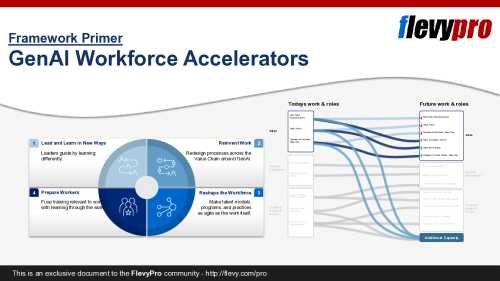
Generative AI (GenAI) is the most significant shift to work since the industrial revolution--and the Trifecta of Opportunities it unlocks (the economic, business, and people upsides) is the strategic objective. This presentation moves from the opportunity to the path: how leaders capture [read more]
Readers of This Article Are Interested in These Resources
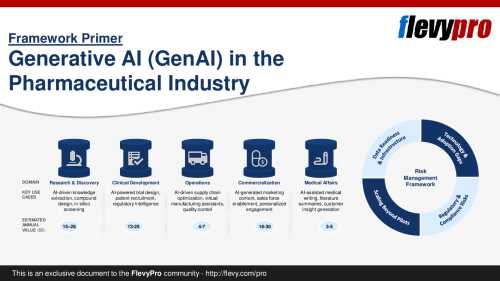
Pharmaceutical companies recognize the immense potential of Generative AI (GenAI) to accelerate drug discovery, improve clinical trials, and optimize commercial operations. Yet, capturing real value requires moving beyond hype to structured implementation strategies.
The McKinsey Global [read more]
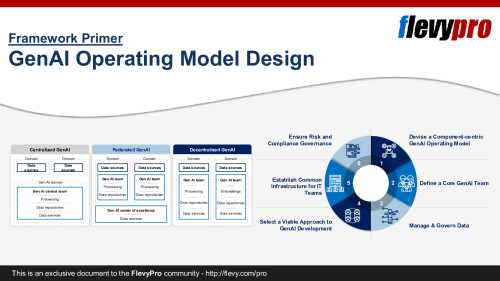
GenAI use is rising globally. Many organizations set GenAI strategies and launch pilots across functions. Yet most stall at the proof-of-concept stage and never show measurable financial or operational results.
This PPT presentation outlines the missing piece: an effective GenAI Operating [read more]
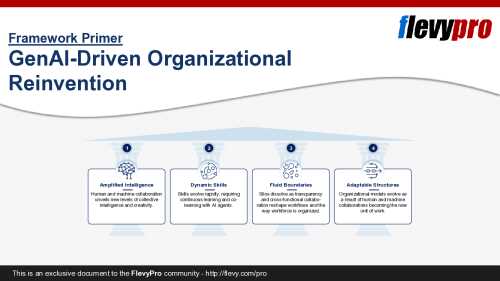
Generative AI (GenAI) marks a turning point in how organizations function and compete today. Similar to how the industrial revolution reshaped production, this wave of GenAI forces leaders to reimagine operating models, workforce design, and decision‑making at unprecedented speed.
This [read more]
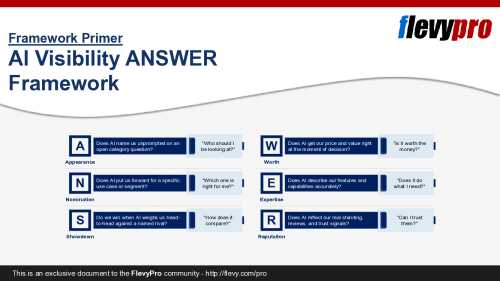
A fast-growing share of buyers now open an AI answer engine--ChatGPT, Perplexity, Google's AI answers, Claude, or Copilot--instead of a search engine, asking for an answer rather than a page of links. The engine names a few options, recommends one, and passes judgment on price and trust. [read more]
 Generative AI adoption is accelerating faster than the governance models designed to control it. Organizations across industries are investing aggressively in AI-powered capabilities to improve productivity, accelerate Innovation, enhance customer engagement, and automate knowledge-intensive work. The opportunities are substantial. The risks are equally significant.