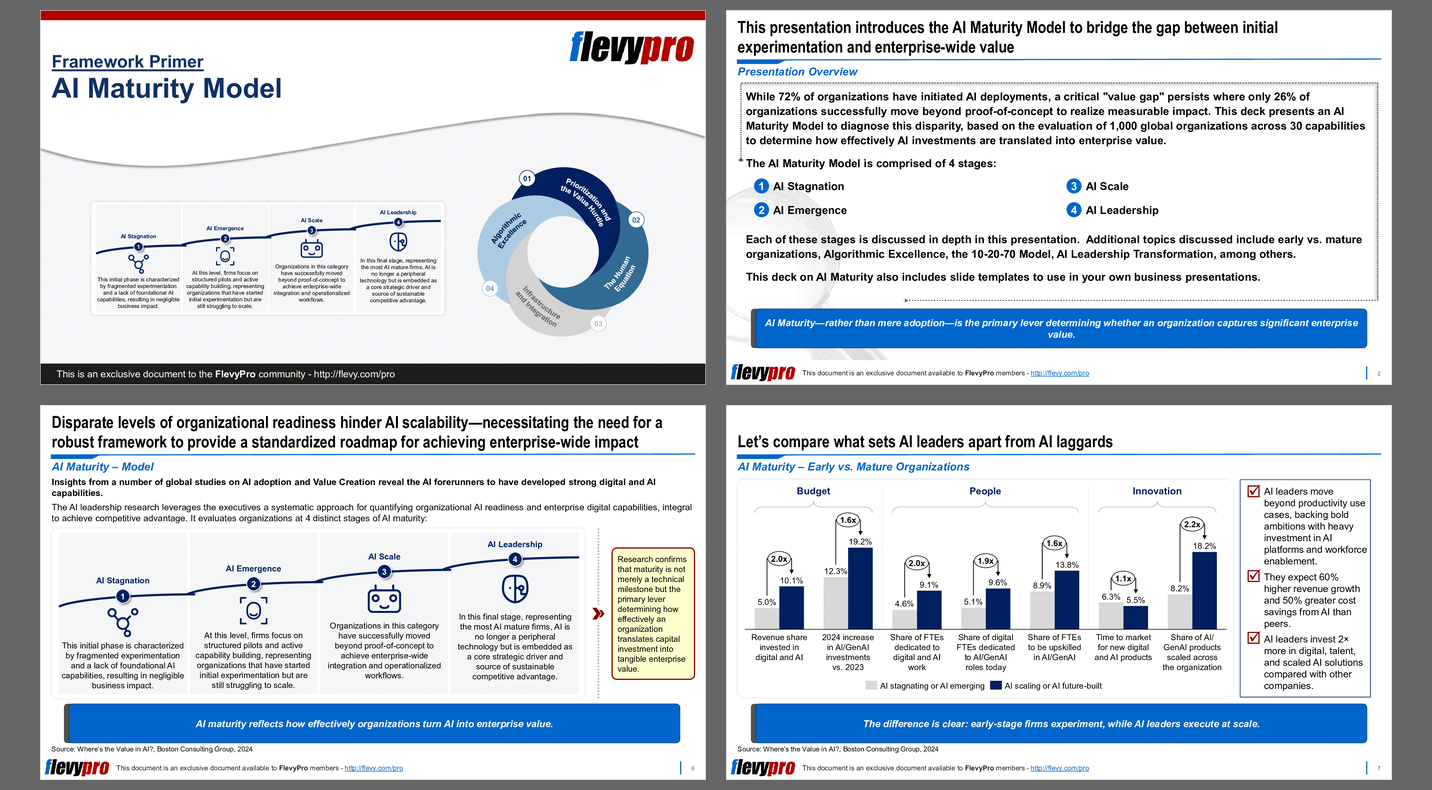
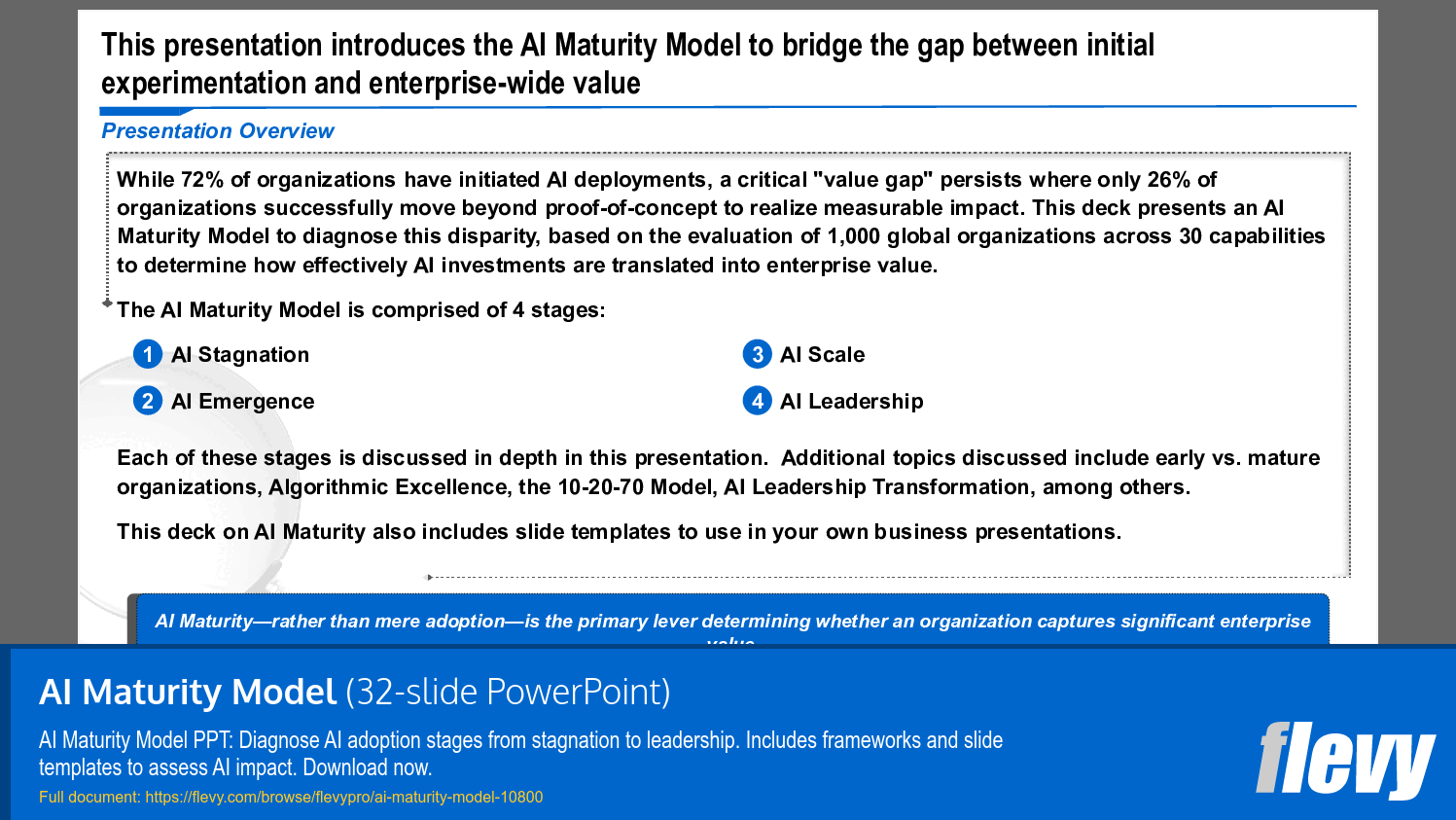

While 72% of organizations have initiated AI deployments, a critical "value gap" persists where only 26% of organizations successfully move beyond proof-of-concept to realize measurable impact. This deck presents an AI Maturity Model to diagnose this disparity, based on the evaluation of 1,000 global organizations across 30 capabilities to determine how effectively AI investments are translated into enterprise value.
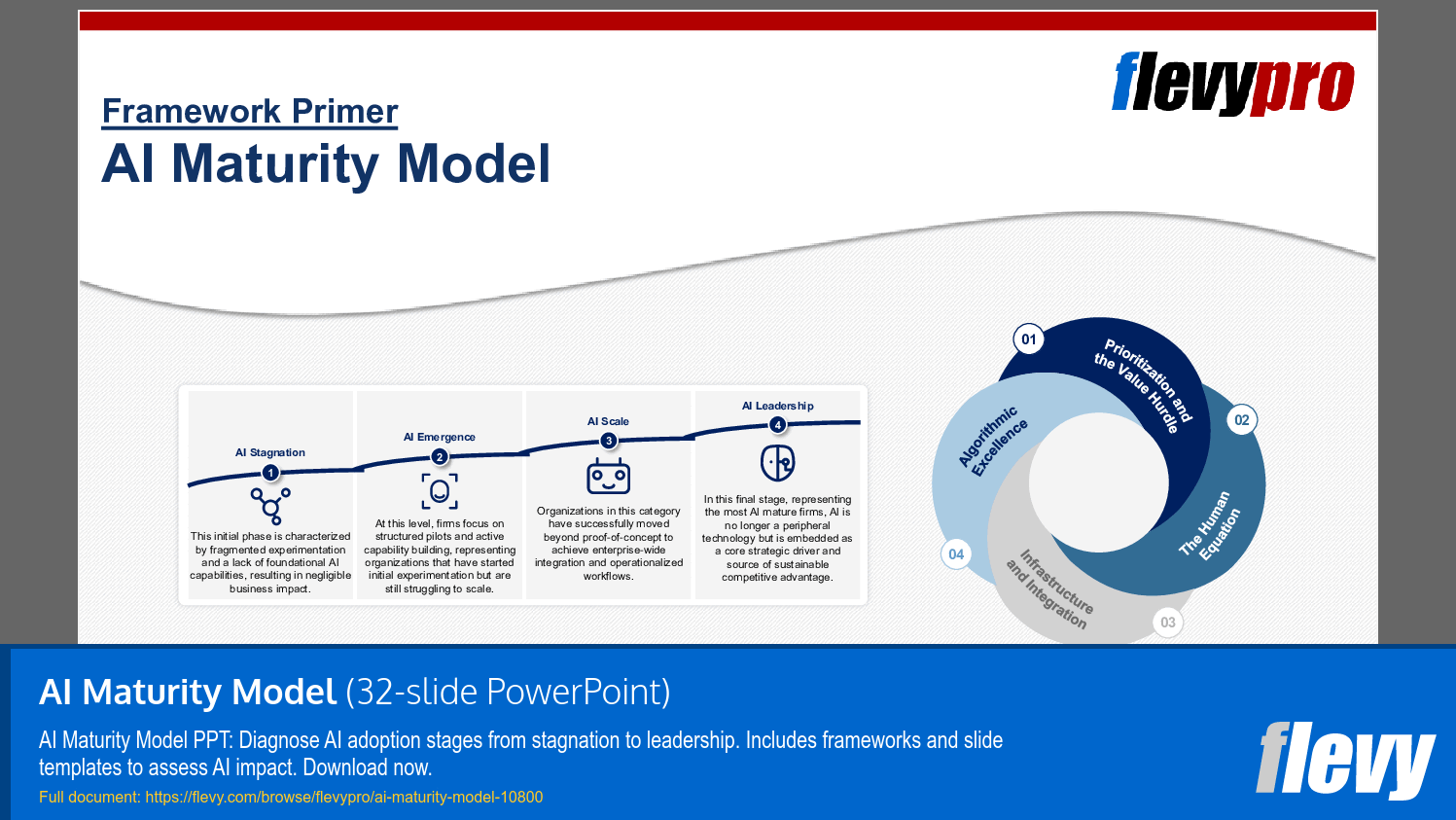
The AI Maturity Model discussed in this PowerPoint presentation is comprised of 4 stages:
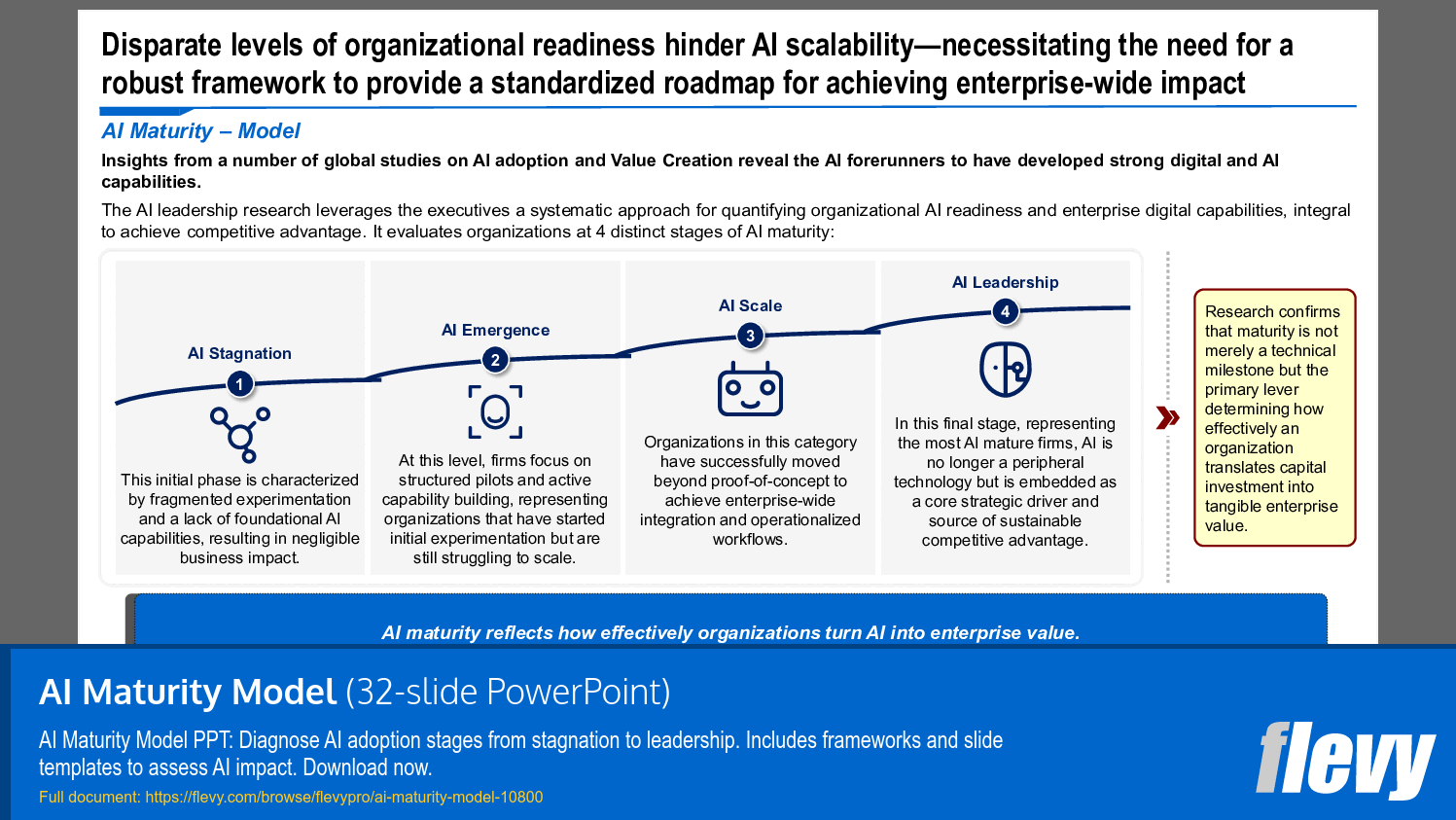
1. AI Stagnation – This initial phase is characterized by fragmented experimentation and a lack of foundational AI capabilities, resulting in negligible business impact.
2. AI Emergence – At this level, firms focus on structured pilots and active capability building, representing organizations that have started initial experimentation but are still struggling to scale.
3. AI Scale – Organizations in this category have successfully moved beyond proof-of-concept to achieve enterprise-wide integration and operationalized workflows.
4. AI Leadership – In this final stage, representing the most AI mature firms, AI is no longer a peripheral technology but is embedded as a core strategic driver and source of sustainable competitive advantage.
Each of these stages is discussed in depth in this presentation. Additional topics discussed include early vs. mature organizations, Algorithmic Excellence, the 10-20-70 Model, AI Leadership Transformation, among others.
AI Maturity—rather than mere adoption—is the primary lever determining whether an organization captures significant enterprise value.
This deck on AI Maturity also includes slide templates to use in your own business presentations.
Got a question about this document? Email us at flevypro@flevy.com.
Executive Summary
The AI Maturity Model presentation equips organizations with a structured framework to assess their AI adoption journey. This model identifies 4 distinct stages: AI Stagnation, AI Emergence, AI Scale, and AI Leadership. By diagnosing their current maturity level, organizations can strategically plan their AI initiatives to bridge the gap between initial experimentation and enterprise-wide value realization. This deck includes comprehensive frameworks and slide templates designed for executives and consultants to effectively communicate their AI strategy and execution plans.
Who This Is For and When to Use
• Corporate executives overseeing digital transformation initiatives
• AI integration leaders responsible for scaling AI capabilities
• Consultants guiding organizations through AI maturity assessments
• Business analysts evaluating the impact of AI on operational efficiency
Best-fit moments to use this deck:
• During strategic planning sessions focused on AI implementation
• When assessing current AI capabilities and identifying gaps
• For workshops aimed at aligning stakeholders on AI maturity objectives
Learning Objectives
• Define the 4 stages of AI maturity and their implications for business strategy
• Diagnose organizational readiness for AI adoption and identify key improvement areas
• Develop actionable plans to transition from one maturity stage to the next
• Establish governance frameworks to ensure effective AI integration
• Foster a culture of AI literacy and continuous improvement within the organization
• Measure and track the impact of AI initiatives on business outcomes
Table of Contents
• Overview (page 2)
• AI Maturity (page 3)
• AI Maturity Model (page 6)
• AI Maturity Execution (page 16)
• Slide Design Structure & Templates (page 19)
Primary Topics Covered
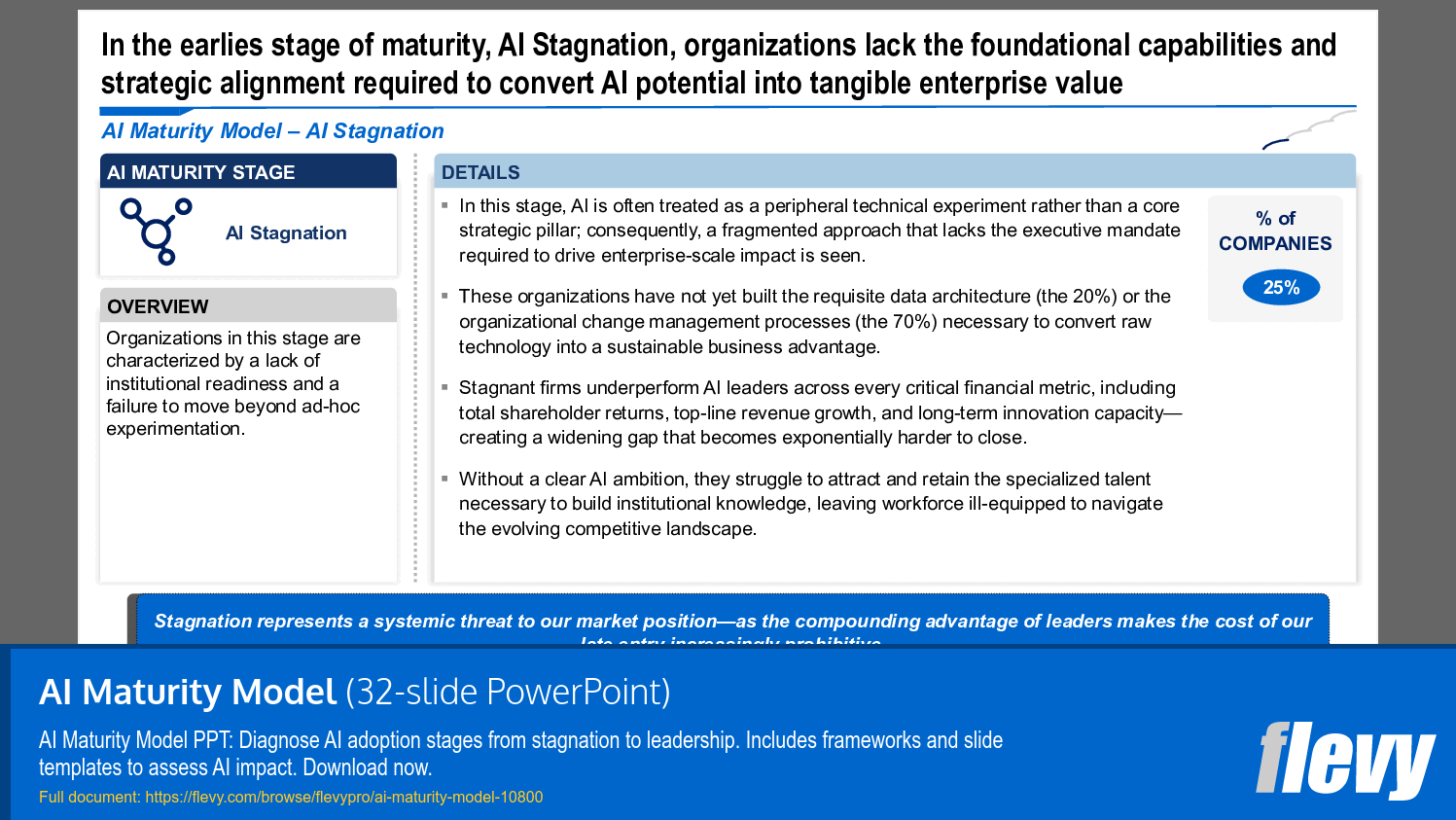
• AI Stagnation - Organizations in this stage struggle with fragmented experimentation and lack foundational AI capabilities, resulting in negligible business impact.
• AI Emergence - Firms begin to establish initial AI capabilities, but often face challenges in scaling these efforts across the enterprise.
• AI Scale - At this level, organizations successfully integrate AI into core business processes, realizing measurable business impact.
• AI Leadership - Leaders leverage AI as a strategic driver, achieving superior financial returns and transforming business models for sustained competitive advantage.
Deliverables, Templates, and Tools
• AI maturity assessment framework for diagnosing current capabilities
• Slide templates for presenting AI maturity findings and recommendations
• Governance framework for overseeing AI initiatives and ensuring alignment
• Action plan templates for transitioning between AI maturity stages
• Metrics dashboard for tracking AI performance and business impact
Slide Highlights
• Visual representation of the AI Maturity Model, illustrating the 4 stages
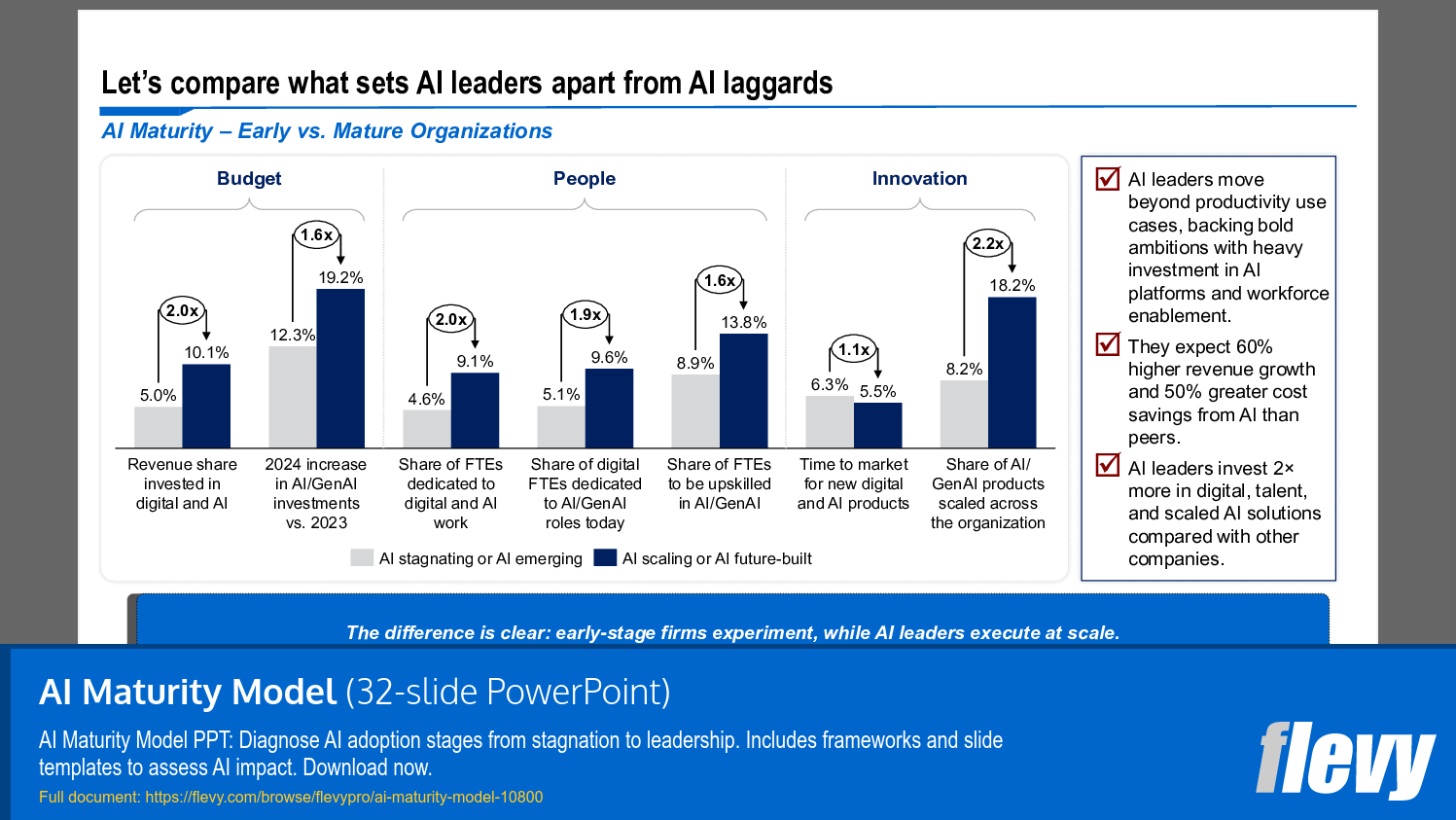
• Comparative analysis of early-stage firms versus AI leaders
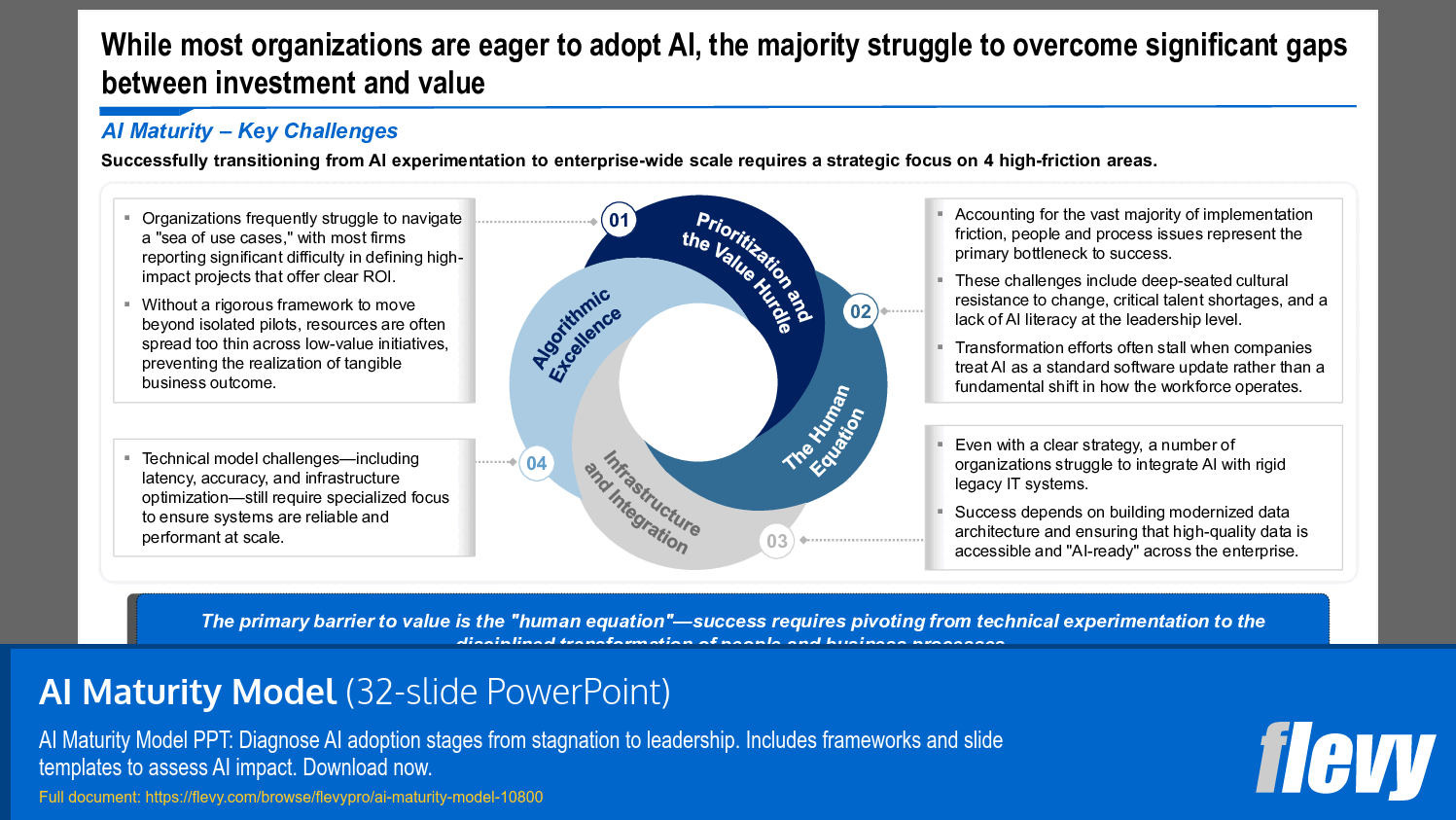
• Key challenges to AI maturity, highlighting the human equation and infrastructure needs
• Transformation roadmap detailing the steps to achieve AI leadership
Potential Workshop Agenda
AI Maturity Assessment Workshop (90 minutes)
• Introduce the AI Maturity Model and its relevance
• Conduct a group assessment of current AI capabilities
• Identify key gaps and prioritize action items
Strategic Planning Session (120 minutes)
• Discuss the implications of AI maturity on business strategy
• Develop a roadmap for transitioning to the next maturity stage
• Establish governance structures to support AI initiatives
Customization Guidance
• Tailor the AI maturity assessment framework to reflect specific organizational contexts
• Adjust slide templates to incorporate company branding and terminology
• Update action plans with relevant timelines and resource allocations
Secondary Topics Covered
• The role of organizational culture in AI adoption
• Strategies for overcoming resistance to AI integration
• Best practices for measuring AI impact on business performance
• Case studies of successful AI implementations across industries
Topic FAQ
Document FAQ
These are questions addressed within this presentation.
What is the AI Maturity Model?
The AI Maturity Model is a framework that categorizes organizations into 4 stages based on their AI capabilities and integration efforts, helping them identify areas for improvement.
How can this model help my organization?
By diagnosing your current maturity level, the model provides a roadmap for enhancing AI capabilities and maximizing enterprise value from AI investments.
What are the key challenges organizations face in AI adoption?
Common challenges include fragmented experimentation, lack of executive support, and difficulties in integrating AI with existing workflows and systems.
How do I measure AI maturity?
AI maturity can be assessed through a structured evaluation of capabilities across various dimensions, including technology, people, and processes.
Can this model be customized for my organization?
Yes, the frameworks and templates provided in the deck can be tailored to fit the specific context and needs of your organization.
What resources are included in the presentation?
The presentation includes assessment frameworks, slide templates, governance structures, and action plan templates to facilitate effective AI strategy execution.
How do I ensure successful AI integration?
Focus on building a culture of AI literacy, establishing clear governance, and prioritizing high-impact initiatives that align with business objectives.
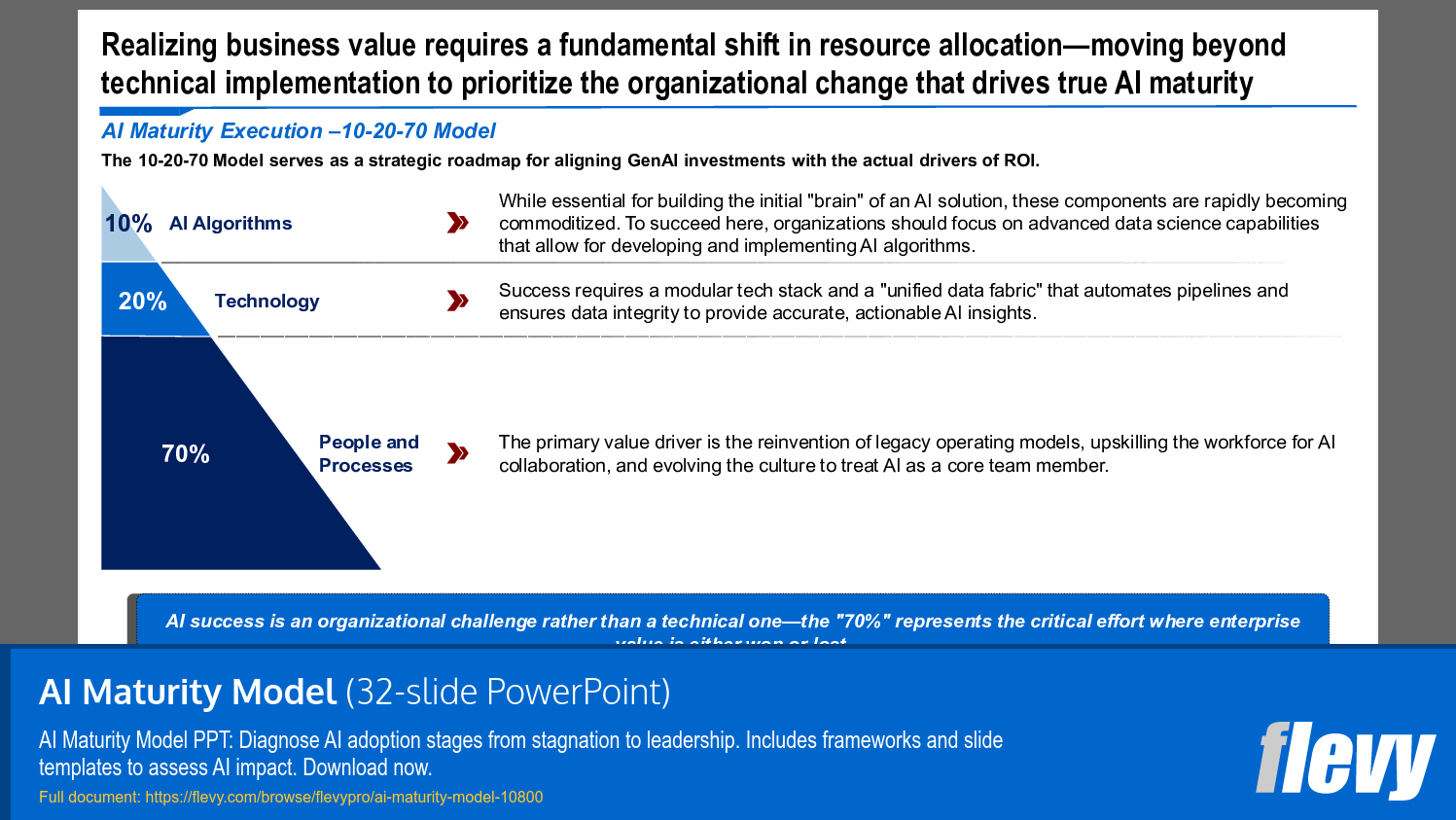
What is the 10-20-70 model?
The 10-20-70 model emphasizes that successful AI transformation requires 10% focus on algorithms, 20% on technology, and 70% on people and processes.
Glossary
• AI Stagnation - The initial phase of AI maturity characterized by fragmented experimentation.
• AI Emergence - The stage where organizations establish foundational AI capabilities, but struggle to scale.
• AI Scale - The phase where organizations successfully integrate AI into core processes, realizing measurable impact.
• AI Leadership - The final stage where AI is a core strategic driver, leading to superior financial performance.
• Governance Framework - A structure for overseeing AI initiatives and ensuring alignment with business objectives.
• MLOps - Machine Learning Operations, a set of practices for deploying and maintaining machine learning models.
• AI Literacy - The understanding and ability to effectively use AI technologies within an organization.
• Transformation Roadmap - A strategic plan outlining the steps necessary to transition from one maturity stage to another.
• Value Gap - The disparity between AI investment and the actual business value realized.
• Algorithmic Excellence - The ability to develop and implement advanced AI algorithms effectively.
• Cultural Resistance - The pushback against changes in workflows and processes associated with AI adoption.
• Data Architecture - The framework for managing data assets to ensure high-quality, accessible data for AI initiatives.
Source: Best Practices in Maturity Model, Artificial Intelligence, GenAI PowerPoint Slides: AI Maturity Model PowerPoint (PPTX) Presentation Slide Deck, LearnPPT Consulting
Did you need more documents?
Consider a FlevyPro subscription from $39/month. View plans here.
For $10.00 more, you can download this document plus 2 more FlevyPro documents. That's just $13 each.
|
Download our FREE Organization, Change, & Culture, Templates
Download our free compilation of 50+ slides and templates on Organizational Design, Change Management, and Corporate Culture. Methodologies include ADKAR, Burke-Litwin Change Model, McKinsey 7-S, Competing Values Framework, etc. |