
Agentic AI Primer   32-slide PPT PowerPoint presentation slide deck (PPTX)
$29.00

Agentic AI Primer (32-slide PPT PowerPoint presentation slide deck (PPTX)) Preview Image
Log in to unlock full preview.
Agentic AI Primer (32-slide PPT PowerPoint presentation slide deck (PPTX)) Preview Image
Arrow   Click main image to view in full screen.

Agentic AI Primer (PowerPoint PPTX Slide Deck)

PowerPoint (PPTX) 32 Slides FlevyPro Document

$29.00
FlevyPro price: FREE (included in subscription)
This framework is developed by a team of former McKinsey and Big 4 consultants. The presentation follows the headline-body-bumper slide format used by global consulting firms.
Add to Cart


Immediate download
Free lifetime updates

ARTIFICIAL INTELLIGENCE PPT DESCRIPTION

Editor Summary Agentic AI Primer is a 32-slide PPTX strategic presentation developed by former consultants from McKinsey and Big 4 firms that explains how to evolve isolated AI models into interconnected Agentic AI systems. Read more

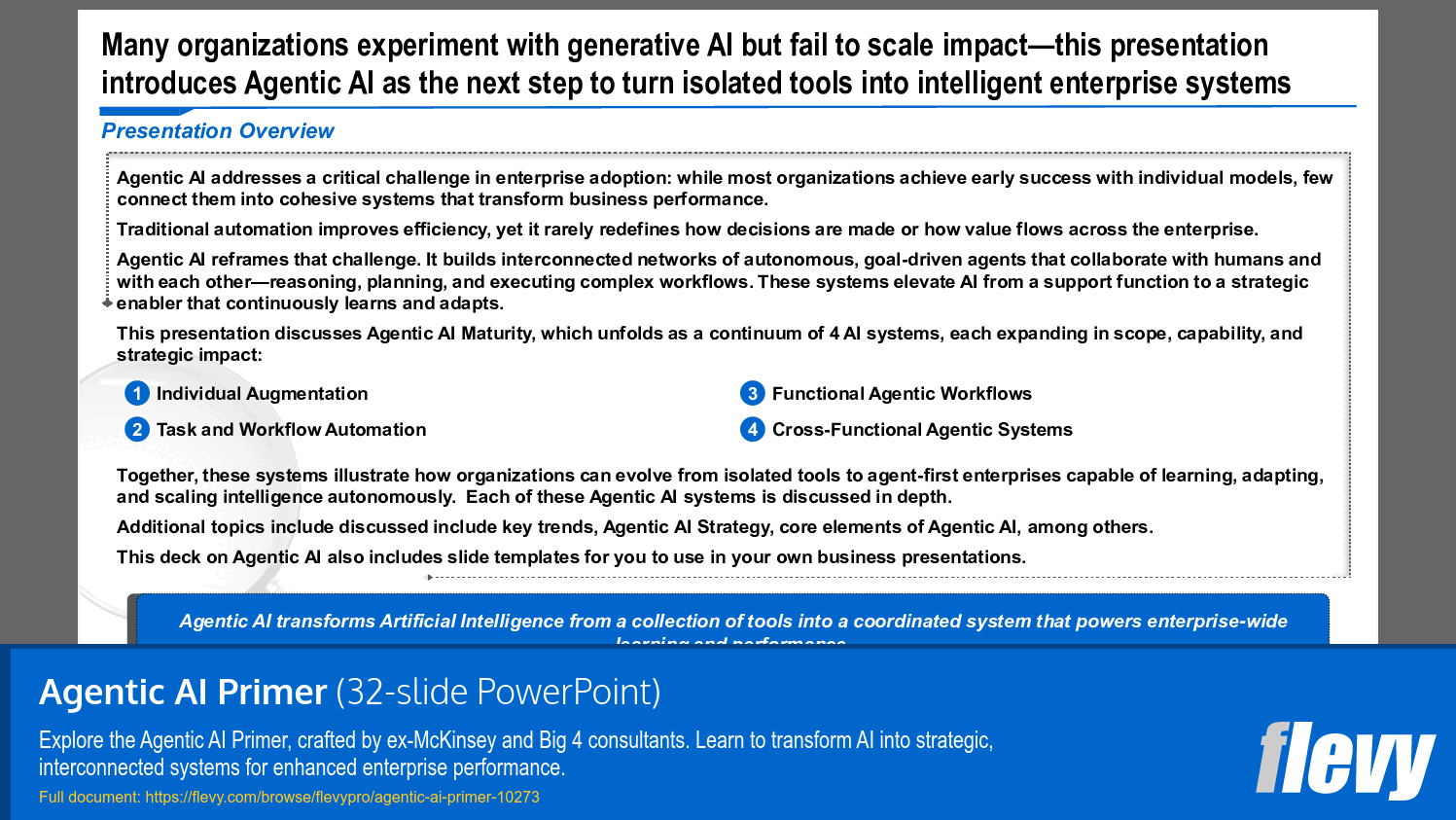
Agentic AI addresses a critical challenge in enterprise adoption: while most organizations achieve early success with individual models, few connect them into cohesive systems that transform business performance.

Traditional automation improves efficiency, yet it rarely redefines how decisions are made or how value flows across the enterprise.

Agentic AI reframes that challenge. It builds interconnected networks of autonomous, goal-driven agents that collaborate with humans and with each other—reasoning, planning, and executing complex workflows. These systems elevate AI from a support function to a strategic enabler that continuously learns and adapts. Agentic AI transforms Artificial Intelligence from a collection of tools into a coordinated system that powers enterprise-wide learning and performance.

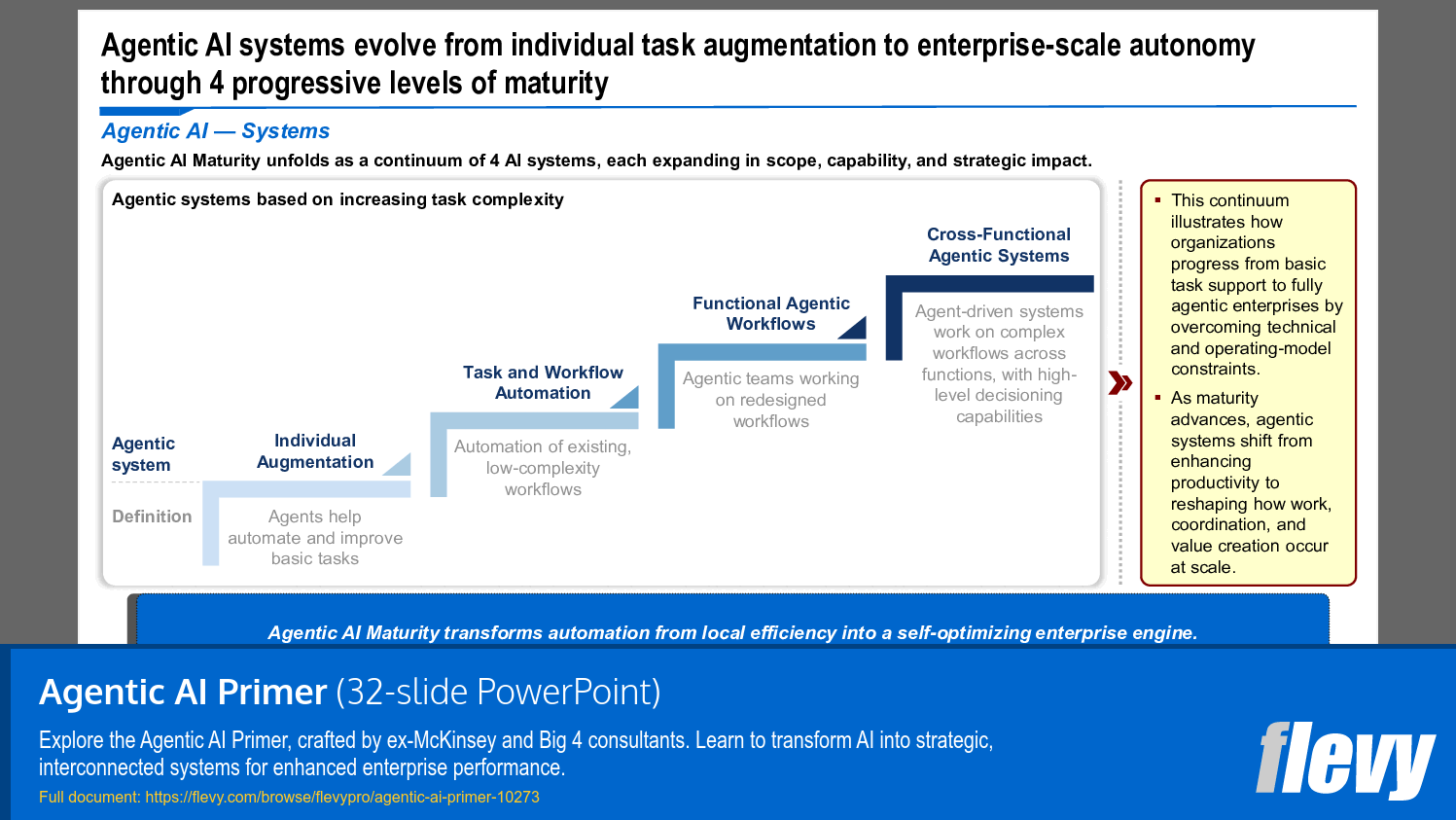
This PPT presentation discusses Agentic AI Maturity, which unfolds as a continuum of 4 AI systems, each expanding in scope, capability, and strategic impact:

1. Individual Augmentation
2. Task and Workflow Automation
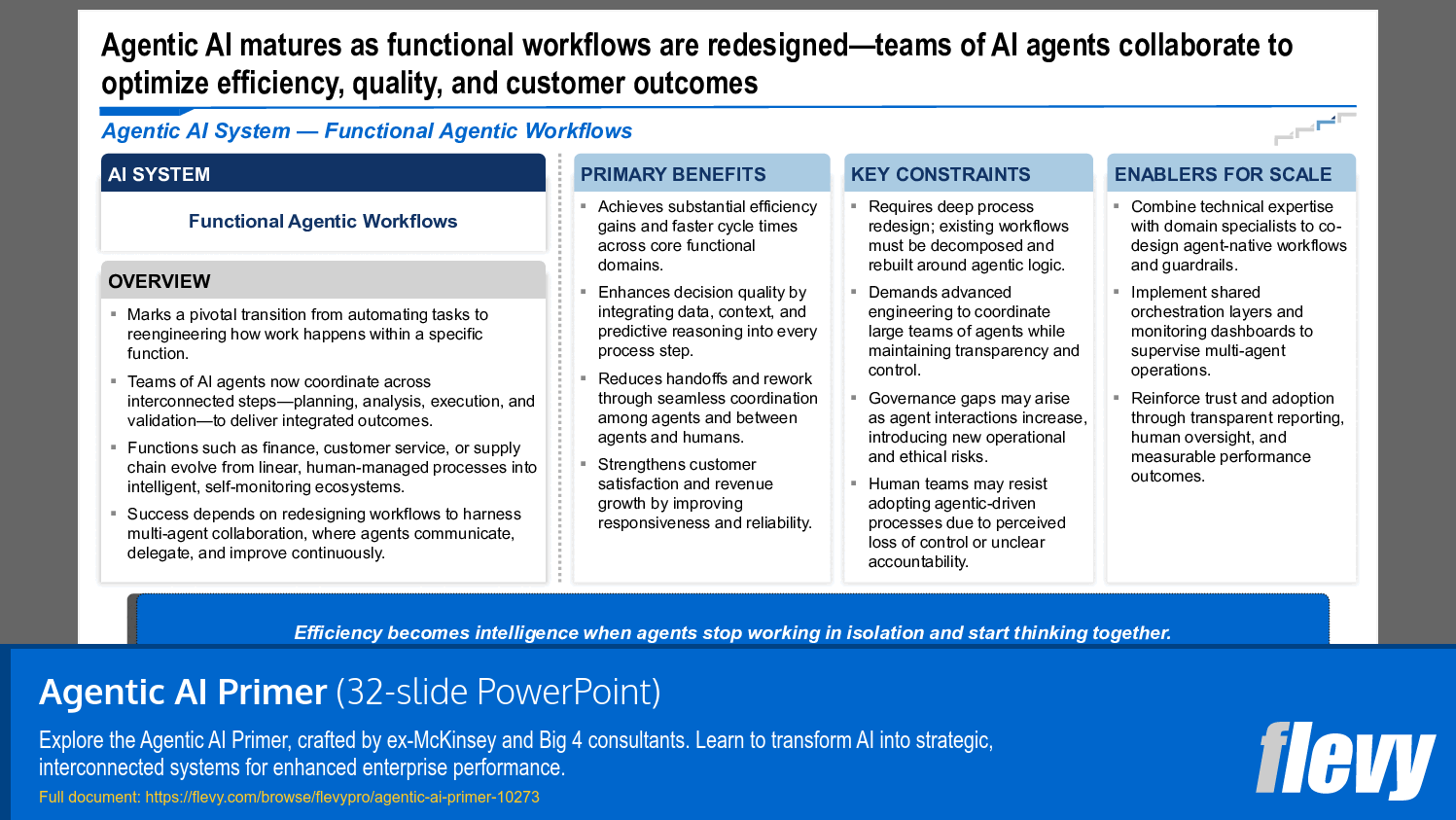
3. Functional Agentic Workflows
4. Cross-Functional Agentic Systems

Together, these systems illustrate how organizations can evolve from isolated tools to agent-first enterprises capable of learning, adapting, and scaling intelligence autonomously. Each of these Agentic AI systems is discussed in depth.

Additional topics include discussed include key trends, Agentic AI Strategy, core elements of Agentic AI, among others.

This deck on Agentic AI also includes slide templates for you to use in your own business presentations.

Got a question about this document? Email us at flevypro@flevy.com.

MARCUS OVERVIEW

This synopsis was written by Marcus [?] based on the analysis of the full 32-slide presentation.


Executive Summary
The Agentic AI Primer is a strategic presentation designed to guide organizations in transforming artificial intelligence from isolated tools into interconnected systems that enhance enterprise performance. Developed by former consultants from McKinsey and Big 4 firms, this deck outlines the evolution of AI into Agentic AI, emphasizing its role in automating complex workflows and improving decision-making processes. By leveraging Agentic AI, organizations can achieve significant operational efficiencies, foster innovation, and drive sustainable growth.

Who This Is For and When to Use
•  Corporate executives seeking to integrate AI into their strategic vision
•  Integration leaders responsible for implementing AI-driven workflows
•  Consultants advising organizations on digital transformation initiatives
•  Project managers overseeing AI adoption and implementation efforts

Best-fit moments to use this deck:
•  During strategic planning sessions focused on AI integration
•  When assessing current AI capabilities and identifying gaps
•  For workshops aimed at designing AI-driven workflows and systems
•  In discussions about scaling AI initiatives across the organization

Learning Objectives
•  Define Agentic AI and its significance in modern enterprises
•  Build a roadmap for implementing Agentic AI systems
•  Establish governance frameworks to support AI initiatives
•  Identify key trends and challenges in AI adoption
•  Design workflows that leverage Agentic AI for enhanced efficiency
•  Create a culture of continuous learning and adaptation in AI practices

Table of Contents
•  Overview (page 2)
•  Agentic AI (page 4)
•  Agentic AI System (page 10)
•  Additional Considerations (page 15)
•  Slide Design Structure & Templates (page 19)

Primary Topics Covered
•  Agentic AI Overview - An introduction to Agentic AI, highlighting its capabilities and impact on various industries.
•  Agentic AI Evolution - A discussion on the progression from traditional AI to advanced Agentic AI systems.
•  Core Elements of Agentic AI - Six foundational elements that enable autonomy and intelligent decision-making in AI systems.
•  Agentic AI Systems - A detailed exploration of the 4 levels of Agentic AI maturity: Individual Augmentation, Task and Workflow Automation, Functional Agentic Workflows, and Cross-Functional Agentic Systems.
•  Key Trends in Agentic AI - Insights into the driving forces behind the adoption and development of Agentic AI.
•  Agentic AI Strategy - A five-phase roadmap for scaling Agentic AI within organizations.

Deliverables, Templates, and Tools
•  Framework for assessing current AI capabilities and identifying gaps
•  Roadmap template for implementing Agentic AI systems
•  Governance model for overseeing AI initiatives
•  Workflow design templates for integrating Agentic AI into business processes
•  Presentation templates for communicating AI strategies to stakeholders

Slide Highlights
•  Overview of Agentic AI and its transformative potential
•  Evolution of AI showcasing the transition to Agentic systems
•  Core elements of Agentic AI illustrated with practical examples
•  Maturity model depicting the progression from individual augmentation to cross-functional systems
•  Key trends driving the adoption of Agentic AI in various industries

Potential Workshop Agenda
Introduction to Agentic AI (30 minutes)
•  Overview of Agentic AI and its significance
•  Discussion on current AI capabilities and gaps

Designing Agentic Workflows (60 minutes)
•  Workshop on creating workflows that leverage Agentic AI
•  Group activities to identify potential use cases

Governance and Strategy Alignment (45 minutes)
•  Establishing governance frameworks for AI initiatives
•  Aligning AI strategies with organizational goals

Customization Guidance
•  Tailor the roadmap to reflect specific organizational goals and timelines
•  Adjust the governance model to fit existing organizational structures
•  Incorporate industry-specific examples to enhance relevance

Secondary Topics Covered
•  Ethical considerations in AI implementation
•  Change management strategies for AI adoption
•  Case studies of successful Agentic AI implementations
•  Metrics for measuring AI success and impact

Topic FAQ

What is Agentic AI and how does it operate in an enterprise context?

Agentic AI refers to systems capable of autonomous decision-making and goal-directed actions that interact with environments and other agents. In enterprises, Agentic AI connects models into networks that plan, reason, and execute workflows with human collaboration. The concept is framed around 6 core elements in the Primer.

How does Agentic AI differ from traditional AI approaches used in companies today?

Traditional AI often supports tasks with predefined rules or single-model inference. Agentic AI adds autonomy, multi-agent interaction, and continuous learning to coordinate complex workflows and decisions across functions, evolving through a maturity model that spans 4 levels from augmentation to cross-functional systems.

What are the typical foundational elements that enable Agentic AI systems?

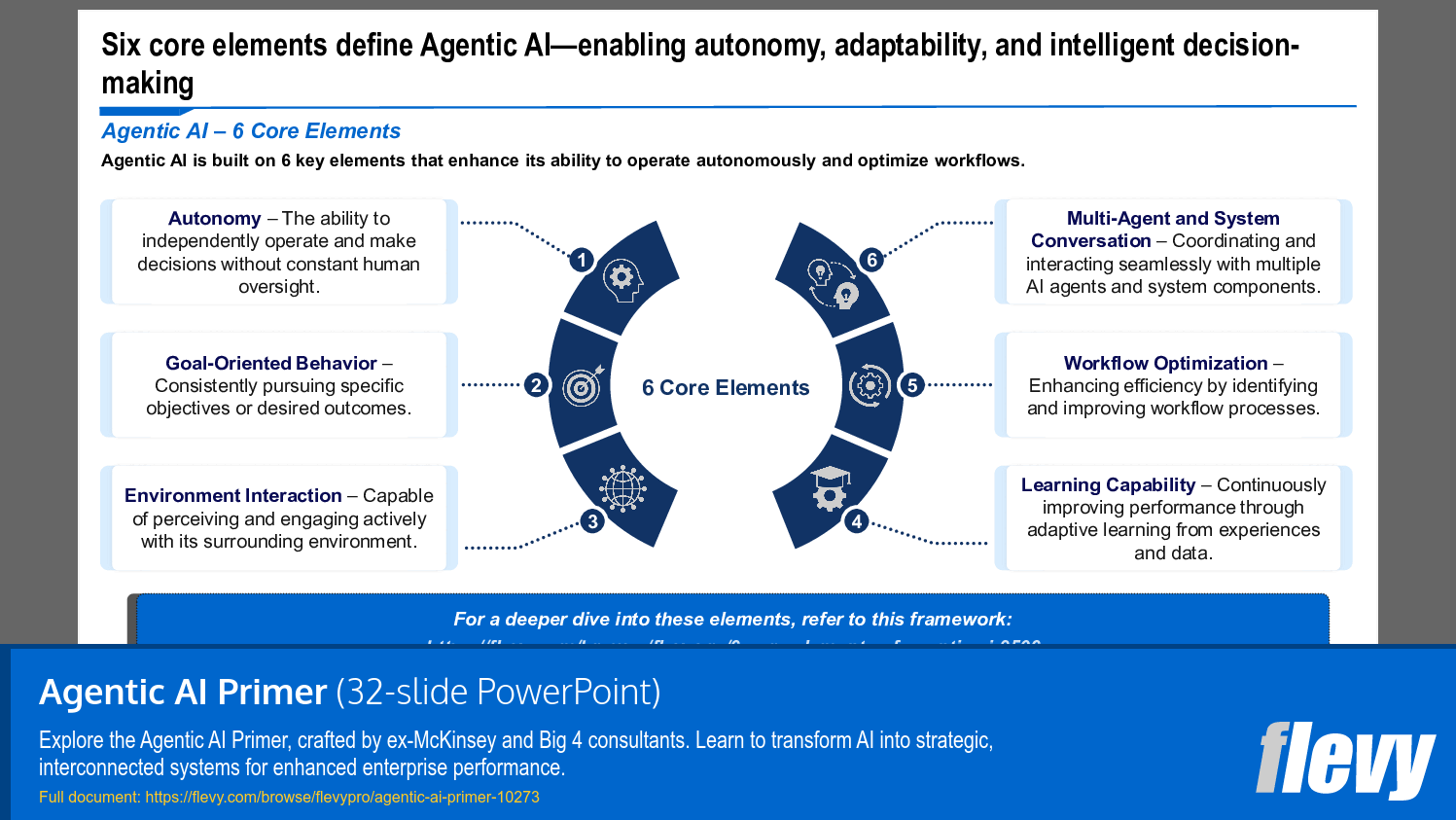
Foundational elements commonly cited include autonomy, goal-oriented behavior, environment interaction, multi-agent conversation, workflow optimization, and learning capability. These elements enable agents to plan, execute, and improve over time, and are described as the 6 core elements in the Primer.

What stages comprise an Agentic AI maturity model and what do they represent?

A typical Agentic AI maturity continuum includes Individual Augmentation, Task and Workflow Automation, Functional Agentic Workflows, and Cross-Functional Agentic Systems. Each stage expands scope, capability, and strategic impact as organizations connect isolated models into coordinated systems across 4 maturity levels.

How should an organization start building a roadmap for Agentic AI adoption?

Begin by defining an Agentic North Star, assess current capabilities and gaps, then architect an enablement stack before launching pilots and scaling. The approach should include governance and leadership development; Flevy's Agentic AI Primer presents a five-phase roadmap to structure these activities into actionable phases.

What governance and ethical practices are recommended for Agentic AI deployments?

Governance should embed Responsible AI principles such as auditing, traceability, human oversight, and accountability to build trust and ensure compliance. Practical governance models align oversight with operational roles and monitoring processes to enable auditability, traceability, and human oversight.

Which metrics are useful for measuring the success of Agentic AI initiatives?

Success metrics focus on operational outcomes such as efficiency gains, cost reductions, and improvements in decision-making quality. Measurement frameworks should track these business outcomes alongside model performance and governance indicators; Flevy's Agentic AI Primer discusses metrics for efficiency, cost, and decision-making.

What should buyers look for when evaluating Agentic AI frameworks or toolkits?

Look for resources that provide a maturity model, a phased implementation roadmap, governance templates, workflow design templates, and presentation slides you can adapt to stakeholders. Prioritize materials that are customizable to your organization’s structure and include roadmap and governance templates.

Document FAQ
These are questions addressed within this presentation.

What is Agentic AI?
Agentic AI refers to AI systems capable of making autonomous decisions and taking actions to achieve specific goals with minimal human intervention.

How does Agentic AI differ from traditional AI?
Unlike traditional AI, which often relies on predefined rules, Agentic AI integrates advanced reasoning and interaction capabilities, allowing for more dynamic and adaptive workflows.

What are the core elements of Agentic AI?
The 6 core elements include autonomy, goal-oriented behavior, environment interaction, multi-agent conversation, workflow optimization, and learning capability.

What is the significance of the Agentic AI maturity model?
The maturity model illustrates the progression from basic task support to fully autonomous, cross-functional systems, highlighting the increasing complexity and capability of Agentic AI.

How can organizations ensure ethical AI implementation?
Organizations should embed Responsible AI principles, including auditing, traceability, and human oversight, to build trust and ensure compliance.

What are the key trends driving Agentic AI adoption?
Key trends include rapid innovation cycles, massive capital investment in AI infrastructure, and the emergence of systems with human-like reasoning capabilities.

What is the roadmap for scaling Agentic AI?
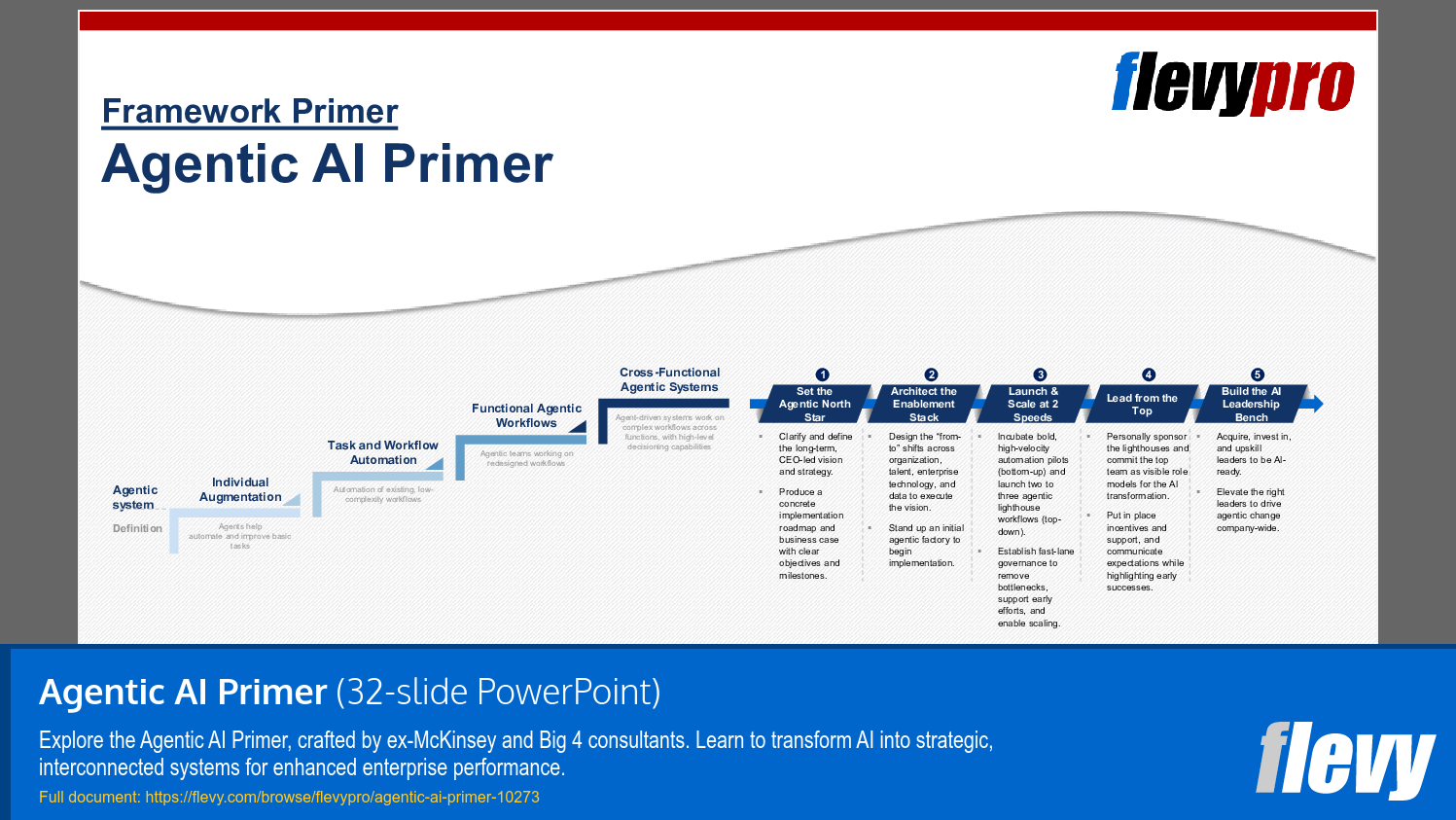
The roadmap consists of 5 phases: setting the Agentic North Star, architecting the enablement stack, launching and scaling at 2 speeds, leading from the top, and building the AI leadership bench.

How can organizations measure the success of their AI initiatives?
Success can be measured through defined metrics that assess efficiency gains, cost reductions, and improvements in decision-making quality.

Glossary
•  Agentic AI - AI systems capable of autonomous decision-making and actions.
•  Maturity Model - A framework illustrating the progression of AI capabilities.
•  Responsible AI - Principles ensuring ethical and transparent AI practices.
•  Governance Framework - A structure for overseeing AI initiatives and ensuring compliance.
•  Workflow Optimization - The process of improving efficiency in business operations through AI.
•  Multi-Agent Systems - AI systems where multiple agents collaborate to achieve complex tasks.
•  Change Management - Strategies for managing the transition to AI-driven processes.
•  Learning Capability - The ability of AI systems to improve performance through experience.
•  Goal-Oriented Behavior - The pursuit of specific objectives by AI systems.
•  Environment Interaction - The capacity of AI to engage with its surroundings.
•  Data-Driven Insights - Insights derived from analyzing data to inform decision-making.
•  Ethical AI - AI practices that prioritize fairness, accountability, and transparency.
•  AI Leadership Bench - A group of leaders equipped to drive AI initiatives within an organization.

ARTIFICIAL INTELLIGENCE PPT SLIDES

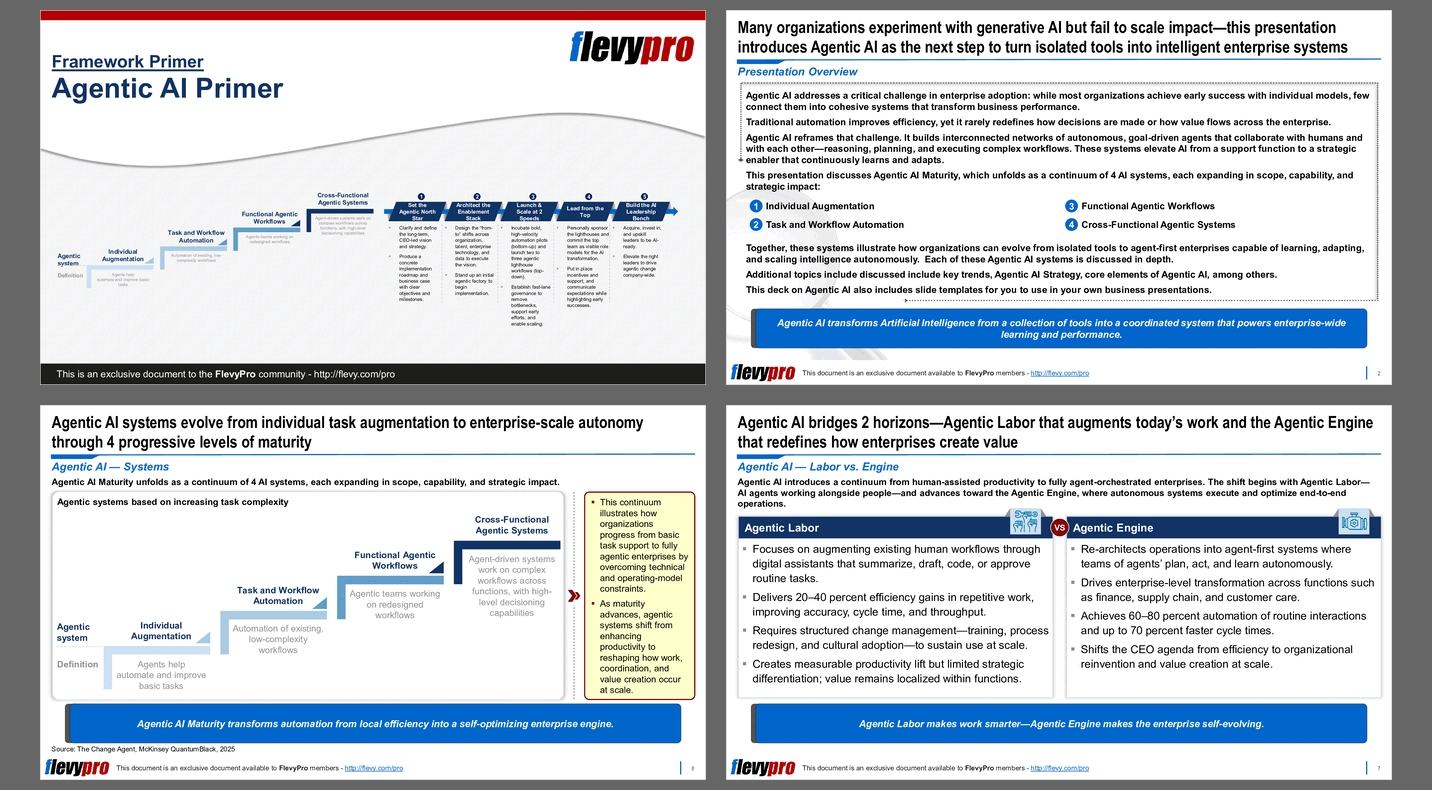
Stages of AI System Maturity from Task Support to Enterprise Autonomy

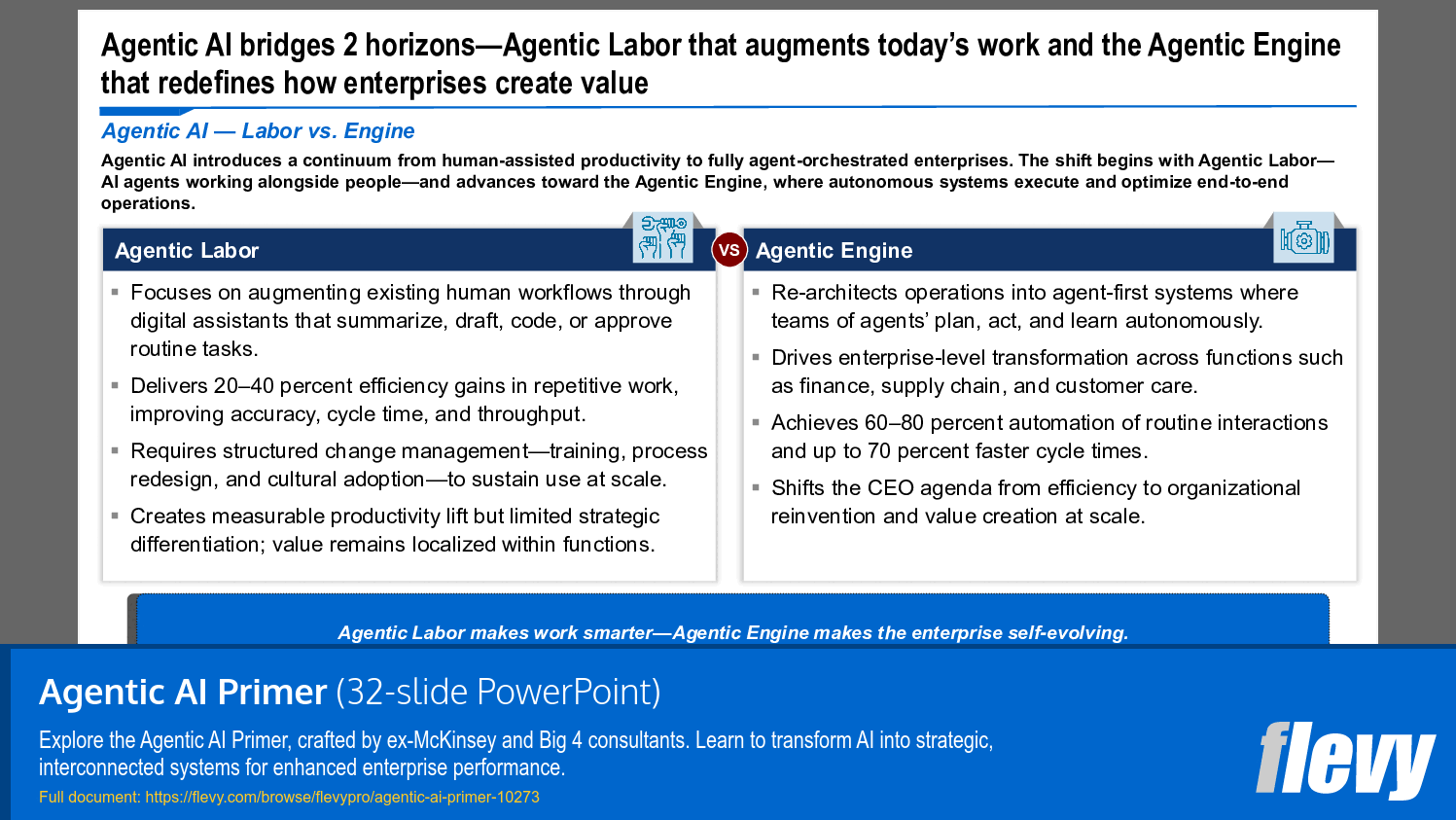
Bridging Human Work and Autonomous Enterprise Systems

Evolution of Functional AI Workflows for Enterprise Optimization

Source: Best Practices in Artificial Intelligence, Automation, Agentic AI, GenAI PowerPoint Slides: Agentic AI Primer PowerPoint (PPTX) Presentation Slide Deck, LearnPPT Consulting


$29.00
FlevyPro price: FREE (included in subscription)
This framework is developed by a team of former McKinsey and Big 4 consultants. The presentation follows the headline-body-bumper slide format used by global consulting firms.
Add to Cart
  

Did you need more documents?

Consider a FlevyPro subscription from $39/month. View plans here.

For $10.00 more, you can download this document plus 2 more FlevyPro documents. That's just $13 each.

ABOUT FLEVYPRO

This document is part of the FlevyPro Library, a curated knowledge base of documents for our FlevyPro subscribers.

FlevyPro is a subscription service for on-demand business frameworks and analysis tools. FlevyPro subscribers receive access to an exclusive library of curated business documents—business framework primers, presentation templates, Lean Six Sigma tools, and more—among other exclusive benefits.

Click here to learn more about FlevyPro and its benefits.

Did you know?
The average daily rate of a McKinsey consultant is $6,625 (not including expenses). The average price of a Flevy document is $65.


Trusted by over 10,000+ Client Organizations
Since 2012, we have provided business templates to over 10,000 businesses and organizations of all sizes, from startups and small businesses to the Fortune 100, in over 130 countries.
AT&T GE Cisco Intel IBM Coke Dell Toyota HP Nike Samsung Microsoft Astrazeneca JP Morgan KPMG Walgreens Walmart 3M Kaiser Oracle SAP Google E&Y Volvo Bosch Merck Fedex Shell Amgen Eli Lilly Roche AIG Abbott Amazon PwC T-Mobile Broadcom Bayer Pearson Titleist ConEd Pfizer NTT Data Schwab


Read Customer Testimonials

 
"I am extremely grateful for the proactiveness and eagerness to help and I would gladly recommend the Flevy team if you are looking for data and toolkits to help you work through business solutions."

– Trevor Booth, Partner, Fast Forward Consulting
 
"One of the great discoveries that I have made for my business is the Flevy library of training materials.

As a Lean Transformation Expert, I am always making presentations to clients on a variety of topics: Training, Transformation, Total Productive Maintenance, Culture, Coaching, Tools, Leadership Behavior, etc. Flevy "

– Ed Kemmerling, Senior Lean Transformation Expert at PMG
 
"Flevy is our 'go to' resource for management material, at an affordable cost. The Flevy library is comprehensive and the content deep, and typically provides a great foundation for us to further develop and tailor our own service offer."

– Chris McCann, Founder at Resilient.World
 
"[Flevy] produces some great work that has been/continues to be of immense help not only to myself, but as I seek to provide professional services to my clients, it gives me a large "tool box" of resources that are critical to provide them with the quality of service and outcomes they are expecting."

– Royston Knowles, Executive with 50+ Years of Board Level Experience
 
"The wide selection of frameworks is very useful to me as an independent consultant. In fact, it rivals what I had at my disposal at Big 4 Consulting firms in terms of efficacy and organization."

– Julia T., Consulting Firm Owner (Former Manager at Deloitte and Capgemini)
 
"As a consulting firm, we had been creating subject matter training materials for our people and found the excellent materials on Flevy, which saved us 100's of hours of re-creating what already exists on the Flevy materials we purchased."

– Michael Evans, Managing Director at Newport LLC
 
"As a consultant requiring up to date and professional material that will be of value and use to my clients, I find Flevy a very reliable resource.

The variety and quality of material available through Flevy offers a very useful and commanding source for information. Using Flevy saves me time, enhances my expertise and ends up being a good decision."

– Dennis Gershowitz, Principal at DG Associates
 
"Flevy is now a part of my business routine. I visit Flevy at least 3 times each month.

Flevy has become my preferred learning source, because what it provides is practical, current, and useful in this era where the business world is being rewritten.

In today's environment where there are so "

– Omar Hernán Montes Parra, CEO at Quantum SFE


Customers Also Bought These Documents


Customers Also Like These Documents

Explore Templates on Related Management Topics


Your Recently Viewed Documents
Download our FREE Digital Transformation Templates

Download our free compilation of 50+ Digital Transformation slides and templates. DX concepts covered include Digital Leadership, Digital Maturity, Digital Value Chain, Customer Experience, Customer Journey, RPA, etc.