Even if you are the only owner, a single-member LLC operating agreement is what proves your business is a separate legal entity, and banks and partners increasingly ask to see one. The fastest way to get it right is to start from an LLC operating agreement template and adapt the clauses to your situation. Here is what the document does and what it should contain.
What Is a Single-Member LLC Operating Agreement?
An operating agreement is the internal governing document of an LLC. It sets out who owns the company, how it is managed, how money moves in and out, and what happens if the owner leaves, sells, or dies. In a single-member LLC, where one person (the member) owns the entire company, the agreement is essentially a contract you make between yourself and your business, formalizing how the entity operates.
That is the core of what an LLC operating agreement is: not a government form, but a private document you keep in your own records. Most states do not require you to file it with anyone, and a handful, including California and New York, technically require LLCs to have one. Even where the law is silent, though, the document carries real legal and practical weight. It is also distinct from your articles of organization, which is the public formation paperwork you file with the state. The articles create the LLC; the operating agreement governs how it runs. Think of it as the difference between a birth certificate and a set of house rules: one proves the entity exists, the other dictates how it behaves day to day.
Why a Single-Member LLC Still Needs One
It is tempting to skip the agreement when you are the only owner. That is a mistake, for several concrete reasons.
The biggest is liability protection. The entire point of an LLC is to separate your personal assets from the business. If you are ever sued, a court may look at whether you actually treated the LLC as a distinct entity or simply ran personal finances through it. A signed operating agreement is a key piece of evidence that the separation is real, which helps preserve your liability shield and guard against a “piercing the corporate veil” argument.
Banks are the next reason. Many will ask to see your operating agreement before opening a business account or extending credit, alongside your EIN and articles of organization. The same goes for investors, landlords, payment processors, and eventual buyers, who increasingly expect even a one-owner LLC to have its governance documented.
Finally, there is clarity and continuity. Writing down how the business handles contributions, distributions, and succession forces you to think it through, and it tells anyone who later steps in, such as an accountant, an executor, or a future co-owner, exactly how the company is meant to operate.
Setting Up the LLC first: Formation and Costs
Before you draft the agreement, the LLC itself has to exist: you file articles of organization with your state and appoint a registered agent. Budget matters here, since the cost of forming an LLC varies widely from one state to another.
Once the state approves your filing, get an EIN from the IRS. This free federal tax ID lets you open a business bank account, hire if you need to, and file taxes, and it keeps your business identity separate from your personal Social Security number. You can apply directly on the IRS website in a few minutes. For the surrounding steps, the SBA’s guide to registering a business is a useful checklist. With the entity formed, the registered agent named, and the EIN in hand, you are ready to put the operating agreement in place.
Key Clauses to Include
When deciding what to include in an operating agreement, these are the clauses that matter most for a single-member LLC:
- Company and member information: the legal name of the LLC, its principal address, the member’s name, and the effective date. This establishes the identity of the entity and its sole owner.
- Ownership and capital contribution: state that you own 100 percent of the LLC and record your initial capital contribution, whether cash, equipment, or property. This documents what you actually put into the business.
- Management structure: specify whether the LLC is member-managed (you run it directly) or manager-managed, and what authority that role has to sign contracts and bind the company.
- Profit distribution and taxes: how profits and losses flow to you, and how the LLC is taxed. By default, a single-member LLC is a disregarded entity for federal tax, reported on your personal return, unless you elect otherwise.
- Liability and indemnification: language reinforcing that the member is not personally liable for company debts, which supports the very separation the LLC is meant to create.
- Transfer, succession, and dissolution: what happens to the business if you sell it, become incapacitated, or pass away, plus the steps to wind down and dissolve the LLC if you ever close it.
Even as a single member, spelling these out turns a vague “I own a business” into a documented entity that a bank, a court, or a buyer can rely on.
Common Mistakes to Avoid
A few errors undercut the whole point of the document:
- Not having an operating agreement at all, on the assumption that a sole owner does not need one.
- Writing it once and never updating it after you change managers, add capital, or bring on a second member.
- Treating it as a formality and then ignoring it in practice, for example by commingling personal and business funds anyway.
- Copying a generic template without adapting the clauses, state rules, and tax treatment to your actual situation.
- Storing it somewhere you cannot find it. Keep a signed copy with your formation records.
The agreement only protects you if it reflects how the business truly operates and you can produce it when someone asks.
A single-member LLC operating agreement is one of the cheapest forms of insurance a founder can buy: an afternoon of work that strengthens your liability shield, satisfies your bank, and removes ambiguity about how the business is owned and run. Draft it early, keep it current, and store it where you can find it. The version you put in place today is the one a court, a lender, or a buyer will read later.
Frequently Asked Questions
Is an operating agreement required for a single-member LLC?
In most states, no, it is not legally required, though a handful, including California and New York, do require LLCs to have one. Either way, banks, investors, and courts often expect to see it, so the practical answer is that you should have one regardless of whether your state mandates it.
Do I need a lawyer to write a single-member LLC operating agreement?
Not necessarily. Many single-member owners start from a solid template and adapt it, which is enough for a straightforward business. If your situation is more complex, with significant assets, outside investment, or unusual tax elections, having an attorney review the document is a worthwhile investment. This article is general information, not legal advice for your specific circumstances.
What is the difference between articles of organization and an operating agreement?
Your articles of organization are the public document you file with the state to create the LLC. The operating agreement is the private internal document that governs how the LLC runs. You file the first with the state and keep the second in your own records.
Do You Want to Implement Business Best Practices?
You can download in-depth presentations on Small Business and 100s of management topics from the FlevyPro Library. FlevyPro is trusted and utilized by 1000s of management consultants and corporate executives.
For even more best practices available on Flevy, have a look at our top 100 lists:
These best practices are of the same as those leveraged by top-tier management consulting firms, like McKinsey, BCG, Bain, and Accenture. Improve the growth and efficiency of your organization by utilizing these best practice frameworks, templates, and tools. Most were developed by seasoned executives and consultants with over 20+ years of experience.
Readers of This Article Are Interested in These Resources
28-slide PowerPoint presentation
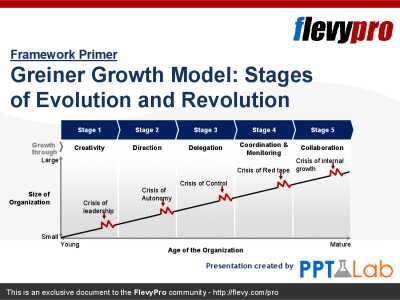
The Greiner Growth Model (Stages of Evolution and Revolution), developed by Larry Greiner, is a maturity model describing how organizations evolve through 5 stages of growth. Each stage requires appropriate strategies and structures to cope. The Greiner Growth Model is a descriptive framework
[read more]
24-page Word document
This financial policy manual is suitable for a small business. This manual aims to provide guidance :
1. By ensuring that all staff are aware of finance transactions with the business; and
2. Is a way for finance staff to make consistent decisions.
The aim of this manual is to assist in
[read more]
50-slide PowerPoint presentation
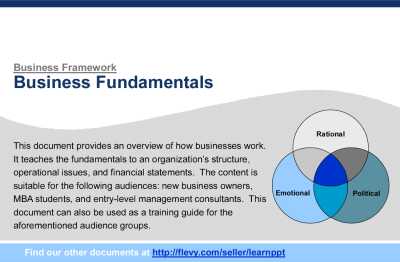
This presentation provides an overview of how businesses work. It teaches the fundamentals to understanding how modern businesses work, covering the business topics of Organizational Structures, Operational Issues, and Financial Statements.
The content is suitable for the following audiences:
[read more]
66-slide PowerPoint presentation
Introducing the Ultimate Business Exit Strategy Framework: Achieve Seamless Transition and Maximize Your Returns
Are you a business owner or entrepreneur looking to ensure a smooth and profitable transition out of your current venture? The world of business exits can be complex and daunting, but
[read more]