Editor's Note: Take a look at our featured best practice, Digital Marketing Plan (34-slide PowerPoint presentation). Introducing our new and improved digital marketing template plan designed to capture your audience's attention, generate interest, create desire, and prompt action (AIDA model).
This template is not just for a one-time campaign but for ongoing business activity. It's perfect for [read more]
* * * *
Roughly 21% of legitimate marketing emails never reach the inbox. Not opened later. Not ignored. Never arrived. They got filtered out somewhere between “send” and the recipient. And the wild part is, the brands losing the most to this rarely have a clue.
You’d think with all the dashboards and analytics platforms we have, this would be obvious. But it’s not. Most marketers are flying half-blind, optimizing the wrong things and wondering why their numbers look stuck.
1. The Invisible Number Running Your Show
Sender reputation is a trust score mailbox providers assign to your sending domain and IP address. Gmail has its own internal version. Outlook has theirs. Third parties like SenderScore exist, too, giving you a window into how the bigger ecosystem sees you.
The score is built from real behavior over time. Spam complaints. Bounces. How fast do people delete your emails? How often they engage versus ignore. Whether you’ve been authenticated. Even if your unsubscribe handling is.
Here’s the kicker. You don’t actually get to see the most important score (the one Gmail keeps to itself). You only see the effects: dropping open rates, weird engagement dips and campaigns underperforming for no reason. That’s the silent damage of a sliding reputation.
2. Why Marketing Performance Gets Tied to It?
Let’s be real. You can have the best-written email in the history of email marketing. Killer offer. Beautiful design. Subject line that sings. Doesn’t matter if it lands in spam. Nobody’s reading it.
That’s where sender reputation completely changes the game. The brands hitting 30%+ open rates aren’t necessarily better copywriters. They’re just landing in the inbox while competitors are stuck in promotions or junk. That’s the whole secret most folks miss.
On top of that, reputation is cumulative. A bad week doesn’t tank you. But a bad month? Or a pattern of careless sending over a quarter? That catches up. And once you’ve slipped, climbing back is genuinely painful. Way harder than just maintaining it.
This is why a free SPF record generator is one of the smartest first stops for anyone serious about deliverability. SPF tells mailbox providers which servers are allowed to send mail on your behalf. Without it set up right, you look suspicious from message one. Skip this, and you’re starting in the hole.
3. How Engagement Loops Back into Reputation?
What’s interesting about modern spam filtering is how much weight engagement carries now. Used to be, content filtering and keyword spotting did most of the work. Now, mailbox providers care way more about behavior. Yours, and your subscribers’.
Replies are the gold standard. When someone replies to a marketing email, Gmail goes, “Okay, this person wants this conversation; give the sender the benefit of the doubt.” Same with stars, importance flags, and dragging emails out of spam.
The opposite is just as true. Deleting without opening hurts. Spam complaints hurt a ton. Even people letting your emails sit unread builds up a kind of dust on your reputation.
I’ve watched brands triple their click-through rates by doing something almost too simple: cutting unengaged subscribers from their list. They didn’t change a single subject line. They just stopped sending to people who weren’t paying attention.
Engagement jumped, reputation lifted, and folks who actually wanted the emails started seeing better placement too. Compound effect.
4. DMARC and the Authentication Stack Most Skip
Beyond SPF, the other pillar of authentication is DMARC (Domain-based Message Authentication, Reporting, and Conformance). It tells mailbox providers what to do when an email claiming to be from your domain fails SPF or DKIM checks. Reject it? Quarantine it? Just monitor for now?
Using a DMARC generator makes this whole setup way less intimidating than it sounds. Answer a few questions, drop the record into your DNS, and you’ve got proper authentication plus useful reporting on who’s trying to spoof your domain.
Since Google and Yahoo tightened their 2024 sender rules, having DMARC isn’t optional for anyone sending in volume. Skip this, and you’re waving a red flag in every inbox provider’s face. They will not give you the benefit of the doubt.
5. What Tanking Reputation Looks Like in the Wild?
Here’s the tricky part. The signs of a sender reputation problem look like other marketing problems. Open rates drift down. You blame the subject lines. Click-through rates slip.
You assume the offer needs refreshing. Conversion rates dip. You start fiddling with the landing page.
Meanwhile, the actual cause is invisible. Your emails are landing in promotions or spam at a higher rate than before, and no amount of copywriting fixes that.
Take a hypothetical. A brand sends a campaign to 50,000 people. Six months ago, it pulled $40,000. Same audience, same offer, same copy today, $24,000. Did the audience get worse? Probably not. Inbox placement probably did.
6. What You Can Actually Do about It
So what works? Honestly, the boring stuff. Set up authentication properly (SPF, DKIM, DMARC, the trifecta). Clean your list ruthlessly. Send consistently rather than sporadically. Make unsubscribing easy, way easier than most brands do.
Watch your spam complaint rate. Anything above 0.1% is a red flag worth investigating. Watch your bounce rate. Over 2% means something’s broken.
Don’t buy lists. Just don’t. The deliverability hit from one bought list can take six months to recover from, and it’s not worth whatever short-term subscriber number bump you think you’re getting.
Wrapping This Up
Marketing performance and sender reputation are basically the same conversation in 2026. You can’t separate them. The brands quietly winning aren’t the ones with the cleverest tactics. They’re the ones treating their reputation like the asset it is.
Lockdown authentication. Earn engagement. Protect the inbox you’ve already earned. Everything else is just noise.
The process of implementing digital marketing strategies can be overwhelming as there are many different components that must interact with one another.
The purpose of this guide is to provide an approach on how to evaluate your current digital presence, identify areas where you need to improve [read more]
Do You Want to Implement Business Best Practices?
You can download in-depth presentations on Digital Marketing Strategy and 100s of management topics from the FlevyPro Library. FlevyPro is trusted and utilized by 1000s of management consultants and corporate executives.
For even more best practices available on Flevy, have a look at our top 100 lists:
These best practices are of the same as those leveraged by top-tier management consulting firms, like McKinsey, BCG, Bain, and Accenture. Improve the growth and efficiency of your organization by utilizing these best practice frameworks, templates, and tools. Most were developed by seasoned executives and consultants with over 20+ years of experience.
Readers of This Article Are Interested in These Resources
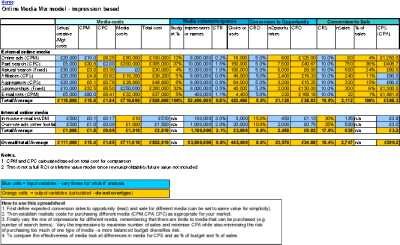
The document will assist in creating a budget model for campaigns or annual planning. It provides a platform for conducting a "what-if" analysis, which enables you to simulate the impact of different levels of investment in digital media on leads, sales, and return on investment. By inputting [read more]
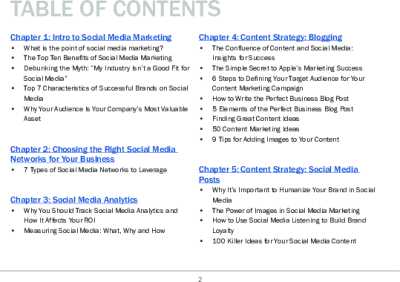
This Guide to Social Media Marketing is designed to help you understand what it takes to create an effective social media campaign. Whether you're starting from scratch or looking to improve your existing campaign, this guide will provide you with the knowledge and tools you need to attract [read more]
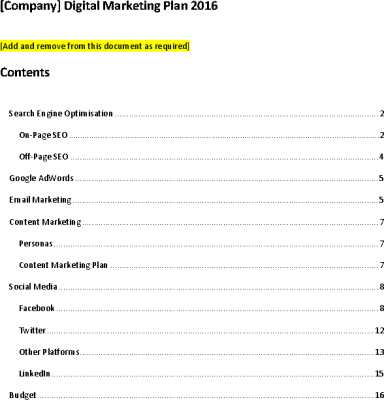
This is a Smart Insights template on taking steps to improve your digital strategy! Very useful when creating or refining your plans to make more better use of the fantastic opportunities available from digital marketing. It\'s a sample of our actionable advice for marketers including key Steps [read more]
Business owners dedicate a significant amount of time and effort to attracting new customers. A well-executed digital marketing plan is the key to achieving this goal.
To ensure success, one successful company developed a comprehensive quarterly and yearly marketing plan to track its progress [read more]
 Roughly 21% of legitimate marketing emails never reach the inbox. Not opened later. Not ignored. Never arrived. They got filtered out somewhere between “send” and the recipient. And the wild part is, the brands losing the most to this rarely have a clue.
 Beyond SPF, the other pillar of authentication is DMARC (Domain-based Message Authentication, Reporting, and Conformance). It tells mailbox providers what to do when an email claiming to be from your domain fails SPF or DKIM checks. Reject it? Quarantine it? Just monitor for now?