Editor's Note: Take a look at our featured best practice, Digital Marketing Plan (34-slide PowerPoint presentation). Introducing our new and improved digital marketing template plan designed to capture your audience's attention, generate interest, create desire, and prompt action (AIDA model).
This template is not just for a one-time campaign but for ongoing business activity. It's perfect for [read more]
* * * *
Keeping a growing roster of clients happy, profitable, and compliant is no small feat for an agency. Juggling dozens of domains, segmenting hundreds of thousands of contacts, and merging data from PPC, SEO, and paid-social programs demands email software that is both iron-clad and flexible. In this guide, you will find six solutions that have proven, in real-world agency environments, to deliver dependable results without crushing margins.
Below, we compare their pricing, partner programs, and technical depth so you can decide which tool deserves a test in your own stack.
Why the Right Platform Is a Game-Changer for Agencies
The average mid-size agency touches between 12 and 20 distinct martech systems for every client campaign. When even one of those tools misfires, launch timelines slip, and performance reporting breaks. That is why email marketing software for agencies must do more than pump messages out of an SMTP server. It has to integrate, automate, and scale while still letting your team white-label deliverables and protect client data.
Think about the core realities that separate an agency environment from in-house marketing:
Multi-tenant account architecture with strict data partitions;
Fast onboarding for junior staff who switch between ten client brands in a single morning.
Relying on a kludged-together tech stack or a consumer-grade tool magnifies hidden labor costs and stalls growth. It is worth noting another key scenario many firms face: startups often look to the same agency for their first serious email service for startups. A platform that can support early-stage volume today and enterprise throughput tomorrow allows you to keep that client under your roof as they scale.
Below are the six contenders that consistently rank at the top of agency shortlists in 2026.
The Platforms Agencies Depend On
1. UniOne – Infrastructure-First Sending Power
UniOne positions itself as the low-friction backbone behind large, mission-critical mailing streams. The dual delivery architecture – 16,666 emails per second through Web API plus a steady SMTP relay – makes it a true marketing platform for agencies that handle flash-sale announcements one minute and patient reminder emails the next.
What stands out for agencies is UniOne’s economics: a four-month free trial with 6,000 emails per month, then an entry plan of $6 for 10k sends, with all features included, and a predictable $0.75 per extra 1,000. That predictability simplifies client billing. On the compliance side, native GDPR alignment and HIPAA-readiness matter when you serve healthcare, finance, or EU clients.
From a developer’s chair, three template engines (Simple, Velocity, Liquid) plus a custom header mechanism for JSON personalization via SMTP remove the usual tug-of-war between creative and engineering teams. Meanwhile, the Smart Email Validation API pre-cleans lists, shielding every client domain you manage from blocklists. In other words, UniOne lets agencies promise “always on” deliverability without renting a separate hygiene tool.
Use-case sweet spot: agencies with at least one high-volume SaaS or marketplace client sending real-time transactional and marketing traffic through the same pipe, an ideal illustration of email marketing for agencies that thrive on operational efficiency.
Brevo (formerly Sendinblue) understands that agencies want better margins as much as better features. Its three-tier Agency Partner Program pays up to 25 percent recurring revenue share for two years, effectively subsidizing your service fees. That turns Brevo into both a toolkit and a profit center.
Technically, it is more than an email engine; SMS, WhatsApp, and web push live in the same dashboard. Deliverability monitoring flows directly into AgencyAnalytics, so your PPC and SEO metrics sit alongside email KPIs in a single branded report. Entry plans start at $9, yet the 99 percent API delivery SLA and inbound email parsing are enterprise-grade.
Brevo becomes a marketing platform for agencies that need omnichannel orchestration without hiring a second developer to glue on separate SMS or push vendors. Blend that with its generous partner economics, and you have a platform that funds its own seat licenses.
3. ActiveCampaign – Automation Royalty and White-Label Power
If your core service promise revolves around behavior-based journeys or ABM playbooks, ActiveCampaign belongs on your shortlist of the best email marketing software for agencies. The “Active Intelligence” layer lets you drag-and-drop complex logic like “if a contact visits the pricing page twice, pause the nurture stream, and hand them to sales” without touching code.
The White Label Agency Partner program is the headline. Swap logos, domains, and even system fonts and present the interface as your proprietary technology. Wholesale SaaS discounts (25-55 percent) let you resell at healthy mark-ups or fold the cost into a retainer. For B2B agencies chasing stickier retainers, that white-labeling plus SSO cements ActiveCampaign as a standout marketing platform for agencies that want to look like software companies themselves. Pricing starts at $15; almost every automation bell and whistle is available from day one.
4. Mailchimp – Familiarity Breeds Fast Wins
Mailchimp’s place in the lineup is simple: it is the most recognized brand your SMB or creator clients will ask for by name. The Mailchimp & Co portal allows account hopping without password swaps, and its drag-and-drop builder is still the benchmark for intuitive design.
Artificial Intelligence shows up in clever ways: historically top-performing subject lines auto-populate, and content blocks tune themselves based on past campaign CTR. That shaves hours off each build, which matters in an agency world priced on deliverables. While deeper CRM features require manual workarounds, the learning curve is gentle, making it the best email marketing software for agencies serving cafés today and craft influencers tomorrow.
A/B tests, 98 percent deliverability, and entry pricing at $13 for 500 contacts keep small clients on the roster until they outgrow the interface.
5. HubSpot – The Full-Funnel Enterprise Bulldog
HubSpot’s value to agencies is less about individual messages and more about connecting the dots across marketing, sales, and service data. By sitting on top of the same CRM that tracks every call, deal stage, and support ticket, HubSpot allows agencies to trigger a hyper-specific nurturing email the moment a rep logs a “Pricing objection” call outcome. That depth is why many firms label HubSpot the best email marketing platforms for agencies that manage Fortune-1000 retainer accounts.
The Solutions Partner Program weeds out dabblers by rewarding certified agencies with co-marketing dollars and inbound lead routing. Large organizations often shortlist partners directly from HubSpot’s directory, meaning the platform itself becomes your sales rep.
Starting at $15 and scaling quickly, HubSpot is a heavy lift for tiny clients, but its 2025 launch of AI prospecting and customer agents turned it into an enterprise Swiss Army knife. If your team already lives in HubSpot for sales enablement, keeping email under the same roof slashes integration headaches and consolidates vendor sprawl.
6. Klaviyo – E-Commerce Predictive Revenue Engine
In the e-commerce vertical, Klaviyo owns the space where first-party data meets revenue attribution. Its machine learning layer predicts the next purchase date, ideal send-time, and lifetime value, then syncs that intelligence into email, SMS, and push. For a Shopify-heavy portfolio, Klaviyo may well be the best email marketing platform for agencies focused on cart recovery and average-order-value lifts.
Partner benefits go beyond commission; premier agencies get early feature access and co-lab case studies that add serious social proof. Compliance tools for SMS (opt-in capture, time-zone throttling) reduce legal risk, and revenue dashboards pinpoint which flow made which dollar – critical when your contract ties fees to performance.
The trade-off: pricing is strictly volume-based, so a runaway DTC client can rack up four-figure monthly bills. Smart agencies bake those variable costs into their rev-share or performance fee models.
Bonus
7. EmailOctopus – Lean, Transparent Value for Growing Rosters
EmailOctopus is built on a refreshingly simple premise: delivering highly effective email campaigns without the margin-crushing complexities or bloated price tags of legacy platforms. Operating out of London since 2015, this UK-born contender has earned a stellar 4.5 Trustpilot rating by stripping away the noise and focusing on pure operational efficiency for cost-conscious creators and growing brands.
For agencies, EmailOctopus solves a classic operational headache: unpredictable billing tiers. Instead of confusing, feature-gated plans, its pricing model scales strictly by list size—starting at an approachable $9 and climbing predictably. A generous free tier supporting up to 2,500 contacts and 10,000 monthly sends offers a low-stakes sandbox for early-stage clients or quick concept proofs, while the Pro plan unlocks total control over performance analytics and deep template customization.
Technically, it strikes a deliberate balance between power and simplicity. It foregoes complex, enterprise-level CRM logic in favor of a lightweight, agile toolkit: an intuitive drag-and-drop editor, visual workflow automation, native landing page builders, and custom signup forms. Crucially for firms managing international portfolios, all data is stored and routed via AWS within the European Union, offering out-of-the-box alignment with strict GDPR compliance frameworks.
Use-case sweet spot: Agencies serving newsletters, content creators, and scaling SMBs that prioritize straightforward interface usability, robust list hygiene, and highly predictable month-to-month software overhead.
Feature-by-Feature Comparison
Deliverability is table stakes, but the way each contender approaches it differs. UniOne’s tri-engine template system targets developers who dream in JSON, while Mailchimp bets on AI suggestions to help designers crank out campaigns before lunch. ActiveCampaign and HubSpot dive deepest into CRM events, turning email into one node of a larger revenue machine.
When it comes to account management – the real pain point in email marketing for agencies – Brevo, Mailchimp, and HubSpot offer built-in portals that let team members jump between brands without logout gymnastics. UniOne and Klaviyo rely on API-first principles, expecting the agency to pipe data into an external dashboard or BI layer. Neither approach is wrong; it simply reflects whether your agency operates more like a dev shop or a creative studio.
Pricing philosophies also diverge. Brevo and UniOne publish low starting prices with clean overage billing. HubSpot and Klaviyo climb fast but trade that for built-in revenue attribution and advanced AI tools. ActiveCampaign sits in the middle: slightly higher base cost, but the wholesale discounts rebalance the equation if you resell licenses.
Ultimately, the ideal marketing platform for agencies is the one whose economic model echoes your own. If you bill on performance, Klaviyo’s attributable revenue panes pay for themselves. If you bill fixed retainers, UniOne’s capped overages keep margins predictable.
How to Choose the Right Fit
Selecting a platform usually comes down to four primary decision points. Understanding each will keep internal debate short and focused.
Map Client Archetypes
Segment your accounts: B2B SaaS, local SMB, enterprise, or DTC e-commerce. Each category favors different workflows. Matching a platform to 80 percent of your roster prevents tool sprawl.
Audit Workflow Bottlenecks
Is your team burning time on multi-step integrations, list hygiene, or reporting? A platform like UniOne that validates addresses in real time or Brevo that feeds AgencyAnalytics may free hours you can resell.
Evaluate Partner Upside
Revenue share, wholesale margins, or co-marketing leads can turn software spend into a profit line. For example, Brevo’s 25 percent recurring share offsets service fees, while HubSpot’s leads kick open enterprise doors.
Insist on Support SLAs
Around Black Friday or Cyber Monday, downtime is fatal. 24/7 live chat or phone support is non-negotiable. UniOne and ActiveCampaign score highly here; budget tiers of other tools may limit immediate human help.
Working through these four checkpoints with your leadership and ops team ensures you pick a platform that aligns with financial goals, staffing realities, and client mix. That alignment is at the heart of scalable email marketing for agencies.
Real-World Performance Benchmarks
Before signing a multi-year software agreement, ground shiny feature lists in hard numbers your CFO respects. Independent research helps you validate vendor claims and set accurate performance expectations.
Deliverability. Validity’s definitive global benchmark report verified that the average inbox placement rate sat at 87.2% in 2025. While most API platforms boast deliverability numbers north of 98%, they are actually reporting delivery rates (meaning the message didn’t bounce at the server level), not actual inbox placement. Because of this massive discrepancy between hitting the server and reaching the primary tab, independent external seed-list monitoring must remain a mandatory part of your infrastructure onboarding. Test for a few weeks for better judgement, as initial delivery rates for servers newly added to your SPF record may be lower.
Production Efficiency. According to Litmus workflow data, over 50% of marketing teams traditionally require more than two weeks to produce a single email. Agencies adopting modular, no-code builders bypass this bottleneck, significantly accelerating production and turning the labor delta into a profit lever.
Revenue Influence. Impact on revenue. Bloomreach’s enterprise omnichannel data shows that customers who get both SMS and email messages at the same time have a 126.9% higher conversion rate than those who only get email. When agency pay is based on ROAS, smoothly connecting these channels leads to clear benefits.
These real-world tips help cut through the hype and keep the selection process fair.
Conclusion: Match Platform Strength to Agency Strategy
No vendor is equally good for any type of business. UniOne and Brevo are the best when keeping costs down and raw throughput are the most important things. ActiveCampaign is a must-have when personalized automation is the norm. Mailchimp keeps early-stage clients satisfied without heavy training. HubSpot consolidates enterprise data, and Klaviyo monetizes e-commerce intent signals.
Choosing the best email marketing software for agencies is therefore less about chasing the newest AI feature and more about aligning tool capabilities with your current client mix and revenue plan. Keep a sharp eye on partner economics, support guarantees, and real integration work because adding features your team never uses is the fastest way to erode margin.
By pairing one (or two, for extra redundancy) of the platforms above with disciplined onboarding SOPs, your agency will deliver campaigns that hit inboxes, delight clients, and grow profits, exactly the trifecta modern marketers demand.
The process of implementing digital marketing strategies can be overwhelming as there are many different components that must interact with one another.
The purpose of this guide is to provide an approach on how to evaluate your current digital presence, identify areas where you need to improve [read more]
Do You Want to Implement Business Best Practices?
You can download in-depth presentations on Digital Marketing Strategy and 100s of management topics from the FlevyPro Library. FlevyPro is trusted and utilized by 1000s of management consultants and corporate executives.
For even more best practices available on Flevy, have a look at our top 100 lists:
These best practices are of the same as those leveraged by top-tier management consulting firms, like McKinsey, BCG, Bain, and Accenture. Improve the growth and efficiency of your organization by utilizing these best practice frameworks, templates, and tools. Most were developed by seasoned executives and consultants with over 20+ years of experience.
Readers of This Article Are Interested in These Resources
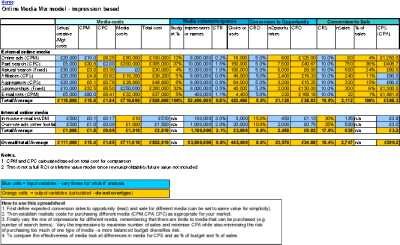
The document will assist in creating a budget model for campaigns or annual planning. It provides a platform for conducting a "what-if" analysis, which enables you to simulate the impact of different levels of investment in digital media on leads, sales, and return on investment. By inputting [read more]
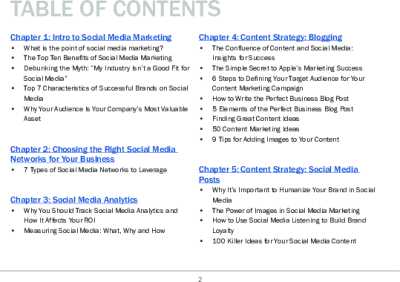
This Guide to Social Media Marketing is designed to help you understand what it takes to create an effective social media campaign. Whether you're starting from scratch or looking to improve your existing campaign, this guide will provide you with the knowledge and tools you need to attract [read more]
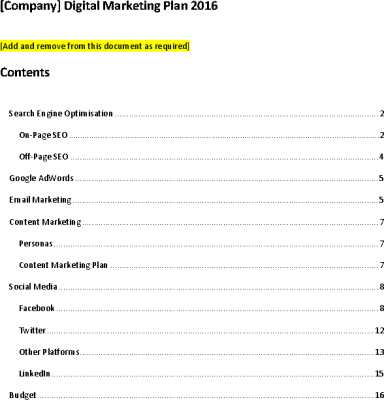
This is a Smart Insights template on taking steps to improve your digital strategy! Very useful when creating or refining your plans to make more better use of the fantastic opportunities available from digital marketing. It\'s a sample of our actionable advice for marketers including key Steps [read more]
Business owners dedicate a significant amount of time and effort to attracting new customers. A well-executed digital marketing plan is the key to achieving this goal.
To ensure success, one successful company developed a comprehensive quarterly and yearly marketing plan to track its progress [read more]
 1. UniOne – Infrastructure-First Sending Power
 Selecting a platform usually comes down to four primary decision points. Understanding each will keep internal debate short and focused.