Editor's Note: Take a look at our featured best practice, Human-centered Design (HCD) (18-slide PowerPoint presentation). Human-centered design (HCD) is a management framework that takes into account the human perspective in all steps of the problem-solving process. When applied to business, HCD means to reshape the entire organization and its capabilities system around the Customer Experience. This includes [read more]
* * * *
Brands spend millions tracking customer data, yet most design products around internal assumptions rather than observed user behavior. The disconnect between what companies think customers want and what people actually need creates friction at every touchpoint.
Human-centered solutions bridge this divide by prioritizing evidence over opinions. Partnering with a UX design agency experienced in this methodology helps brands move from guessing to knowing, replacing assumption-driven design with user-validated decisions that drive measurable business growth.
Why Do Traditional Brand Strategies Miss the Mark?
Most brands build backward. Teams brainstorm features, review competitor offerings, then launch products, hoping users will adapt. This inside-out thinking ignores how people actually behave.
Feature bloat exemplifies the problem perfectly. A SaaS company adds dashboard customization because competitors offer it, not because users requested it. Development resources go toward complexity nobody wanted, while actual pain points remain unaddressed.
The research problem compounds these mistakes. Surveys ask what users prefer, but stated intentions rarely match actual behavior. Someone claims they’d use a mobile app daily, then never downloads it. Focus groups generate ideas that sound appealing in conference rooms but fail in real contexts where distractions, time pressure, and competing priorities shape decisions.
Companies measure website traffic and conversion rates without knowing why the numbers move. Analytics show users abandoning a signup form, but not which specific field causes confusion or what alternative path they’d prefer. Surface-level metrics identify symptoms without diagnosing root causes, leading to solutions that miss the mark entirely.
What Are the Key Human-Centered Solutions for Modern Brands?
Specific practices separate human-centered brands from those operating on assumptions. These solutions work together to create experiences grounded in observed reality.
Behavioral Research That Reveals True Needs
Watching users in their actual environments uncovers problems they’d never articulate in surveys. A healthcare app team discovered that elderly patients struggled with tiny touch targets and low-contrast text that made the interface physically difficult to use, not with technology adoption itself.
Contextual observation reveals workarounds users create to compensate for poor design. When someone photographs a screen to reference information later, that signals a missing feature they genuinely need. These unspoken pain points only surface through watching what people do, not asking what they want.
Research moves beyond demographics to explore motivations. Two users might share the same age and income, but approach your product with completely different goals. One seeks speed, another prioritizes accuracy. Generic personas miss these behavioral distinctions that shape how design should accommodate varying needs.
Rapid Prototyping for Early Validation
Testing concepts before full development prevents expensive mistakes. A fintech startup built three different onboarding flows as clickable prototypes, testing each with target users. The version internal stakeholders preferred performed worst in actual testing.
Low-fidelity experiments accelerate learning. Paper sketches and wireframes cost hours to produce, letting teams test multiple approaches quickly. This iteration happens when changes are cheap, not after development investment makes modifications painful.
Real user feedback replaces stakeholder opinions. Executives might love a feature that confuses customers, or dismiss something users desperately need. Prototyping lets evidence settle debates that would otherwise devolve into hierarchical decision-making divorced from user reality.
Journey Mapping That Identifies Friction Points
Complete user journeys span multiple touchpoints, revealing where brand assumptions diverge from customer experience. An ecommerce company mapped their checkout process only to discover that customers received conflicting shipping estimates between product pages, cart, and confirmation emails.
Visualizing end-to-end flows exposes where users get stuck, backtrack, or abandon entirely. These friction points often occur between departments. Marketing promises one thing, the product delivers another, and support doesn’t know how to resolve the resulting confusion.
Behavior patterns show which problems impact the most users. Not every friction point deserves immediate attention. Mapping reveals priorities by showing where effort should focus first based on actual user impact.
Accessibility-First Design That Expands Reach
Building for diverse abilities from inception serves everyone better. Clear headings help screen reader users navigate but also help sighted users scan content quickly. Keyboard navigation assists people with motor impairments and power users who prefer not lifting their hands from keyboards.
Simplified language benefits users with cognitive differences and non-native speakers while also serving time-pressed professionals skimming during meetings. Large touch targets accommodate tremor or limited dexterity, plus they reduce mis-taps on bumpy train rides.
Accessible design expands addressable markets without creating separate experiences. One well-designed interface serves more people than two mediocre versions. Companies capturing this broader audience gain a competitive advantage from inclusive thinking rather than minimum compliance.
What Business Advantages Come from Human-Centered Solutions?
These practices deliver measurable returns that justify investment.
1. Reduced acquisition costs emerge when products work intuitively.
Users who accomplish goals easily recommend the product organically, generating word-of-mouth that marketing budgets can’t buy. Forrester research indicates customers are 16.6% more likely to refer others after positive experiences, turning existing users into acquisition channels.
2. Lower support burden follows naturally from well-designed experiences.
When interfaces prevent confusion rather than requiring explanation afterward, support tickets plummet. Properly designed onboarding can reduce first-contact support requests by significant margins.
3. Faster product development results from catching problems during research rather than post-launch.
Early validation prevents costly rework that delays launches and drains budgets. Testing with prototypes before development investment allows teams to iterate when changes are still inexpensive.
4. Increased customer lifetime value compounds when users accomplish goals effortlessly.
They return more frequently, explore additional features, and upgrade to premium tiers. Forrester research shows companies prioritizing user experience see customer retention rates 15.8% higher than competitors, directly boosting revenue per customer.
5. Competitive differentiation becomes sustainable when built on deep user knowledge rather than easily copied features.
Competitors can replicate your pricing or match your feature list, but they can’t quickly duplicate insights gained from systematic user research and iterative refinement based on observed behavior patterns.
How Can Brands Implement Human-Centered Solutions Effectively?
Successful implementation requires strategic focus rather than attempting everything simultaneously.
Identify High-Impact Friction Points First
Start with opportunities where many users encounter clear friction. Analyze support tickets, session recordings, and abandonment data to identify patterns. Look for specific problems affecting substantial user segments rather than edge cases that consume resources without delivering proportional value.
Align Teams around User Needs
Build cross-functional alignment by framing user needs in business terms that each department values. Show marketing how better onboarding increases conversion. Demonstrate to finance how reduced support costs offset research investment. Help product teams see validation as risk reduction rather than a schedule impediment.
Create Continuous Feedback Loops
Establish ongoing feedback mechanisms beyond one-off research projects. Monthly usability testing with small user groups surfaces emerging issues before they become widespread problems. Continuous learning beats sporadic deep dives that grow stale between studies and leave teams operating on outdated assumptions.
Balance Quick Wins with Long-Term Strategy
Small improvements like clearer error messages or simplified forms build momentum and demonstrate value. These visible successes create organizational support for larger initiatives requiring sustained effort and resources. Show results early to earn trust for bigger transformations.
Track User-Focused Metrics alongside Business KPIs
Measure progress with user-focused metrics that complement business goals. Track task completion rates, time-on-task, and satisfaction scores alongside conversion and retention. When both user and business metrics improve together, you’ve found genuine solutions rather than short-term optimizations that sacrifice experience for immediate revenue.
What Mistakes Do Brands Make When Adopting Human-Centered Solutions?
Common pitfalls undermine even well-intentioned efforts.
Treating it as a one-time project rather than ongoing practice dooms long-term success. User needs change, technology capabilities expand, and competitive landscapes shift. Brands conducting research once during a redesign, then ignoring users for extended periods, make decisions blindly.
Gathering feedback but dismissing contradictory findings wastes research investment entirely. When data reveals that users struggle with a feature executives love, confirmation bias leads teams to question methodology rather than reconsider assumptions.
Copying solutions from successful brands without validating them against your specific context explains why borrowed patterns often fail. What works for one audience may not transfer to yours. Test before adopting.
Waiting for perfect research creates paralysis. Some teams endlessly debate methodology instead of learning iteratively. Quick tests with small groups provide directional insights sufficient for most decisions.
Separating research from implementation ensures findings gather dust. When user insights don’t influence actual design decisions, teams waste resources generating reports nobody acts on.
Moving Forward with User-Centered Thinking
Human-centered solutions succeed because they address real problems people face rather than imagined needs. Brands building on evidence instead of assumptions create experiences customers actually want to use.
Digital experiences grow increasingly complex as channels multiply and user expectations rise. Brands truly knowing their users will distinguish themselves from those following trends without questioning whether borrowed solutions fit their unique context. Building these capabilities requires continuous investment. The brands earning lasting loyalty today began by taking concrete steps toward systematic learning rather than waiting for perfect conditions.
"We don't redesign humans; We redesign the system within which humans work"
Various industries including aviation sector have realized the need of understating in human factors and utilization and application of the understanding in order to protect human and properties and enhance productivities [read more]
Do You Want to Implement Business Best Practices?
You can download in-depth presentations on Human-centered Design and 100s of management topics from the FlevyPro Library. FlevyPro is trusted and utilized by 1000s of management consultants and corporate executives.
For even more best practices available on Flevy, have a look at our top 100 lists:
These best practices are of the same as those leveraged by top-tier management consulting firms, like McKinsey, BCG, Bain, and Accenture. Improve the growth and efficiency of your organization by utilizing these best practice frameworks, templates, and tools. Most were developed by seasoned executives and consultants with over 20+ years of experience.
Readers of This Article Are Interested in These Resources
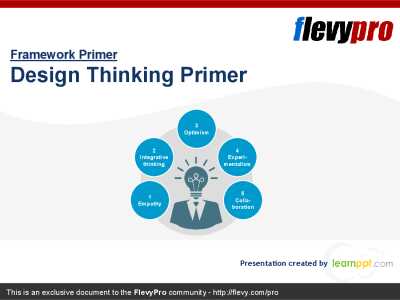
Thomas Edison represents what many of us think of as a golden age of American innovation. It is a time when new ideas transformed every aspect of our lives. Today, the need for transformation is greater than before.
A human-centered, creative, iterative, and practical approach is necessary to [read more]
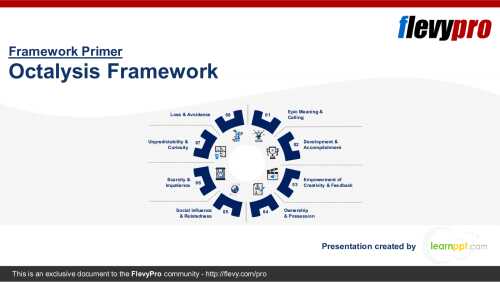
In today's digital landscape, where user engagement and motivation are crucial for organizational success, organizations across sectors such as e-commerce, education, and software face significant challenges in capturing and maintaining audience interest.
This challenge has led experts to [read more]
Curated by McKinsey-trained Executives
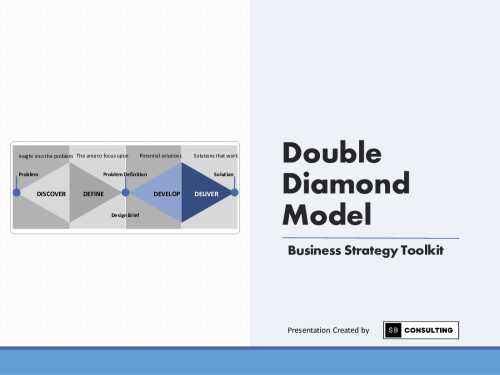
Unlocking Innovation: The Complete Double Diamond Model Business Toolkit
In the ever-evolving landscape of business, staying competitive and relevant requires continuous innovation and user-centric design. The Double Diamond Model Business Toolkit is [read more]
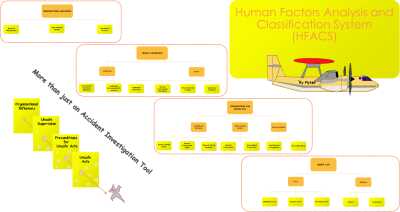
Various industries including aviation sector have realized the need of understating in human factors and utilization and application of the understanding in order to protect human and properties and enhance productivities through maximizing efficiency in workplace.
The Reason model, also known [read more]
 Brands spend millions tracking customer data, yet most design products around internal assumptions rather than observed user behavior. The disconnect between what companies think customers want and what people actually need creates friction at every touchpoint.
 Rapid Prototyping for Early Validation
 Successful implementation requires strategic focus rather than attempting everything simultaneously.
 Human-centered solutions succeed because they address real problems people face rather than imagined needs. Brands building on evidence instead of assumptions create experiences customers actually want to use.