
Human Factors - The "Dirty Dozen"   92-slide PPT PowerPoint presentation slide deck (PPTX)
$65.00

Human Factors - The "Dirty Dozen" (92-slide PPT PowerPoint presentation slide deck (PPTX)) Preview Image
Log in to unlock full preview.
Human Factors - The "Dirty Dozen" (92-slide PPT PowerPoint presentation slide deck (PPTX)) Preview Image
Arrow   Click main image to view in full screen.

Human Factors - The "Dirty Dozen" (PowerPoint PPTX Slide Deck)

PowerPoint (PPTX) 92 Slides

#2 in Workplace Safety $65.00
Developed by a team of experts with global consulting experience at McKinsey, Deloitte, and Capgemini.
Add to Cart


Immediate download
Fully editable PowerPoint
Free lifetime updates

WORKPLACE SAFETY PPT DESCRIPTION

Editor Summary Human Factors - The "Dirty Dozen" is a 92-slide PowerPoint presentation that explains the twelve human error causes (lack of communication, complacency, lack of knowledge, distraction, lack of teamwork, fatigue, lack of resources, pressure, lack of assertiveness, stress, lack of awareness, norms) and introduces SHELL and PEAR models. Read more

"We don't redesign humans; We redesign the system within which humans work"
Various industries including aviation sector have realized the need of understating in human factors and utilization and application of the understanding in order to protect human and properties and enhance productivities through maximizing efficiency in workplace

Industry has made great progress managing process related hazards and preventive strategies to protect workers, property, and environment

Focus on managing process major hazards through the design and incorporation of more complex equipment and systems

Non-process related major hazards are well understood but receive less focus than the process hazards during design and fabrication

Challenges of industry continue and require multi-disciplinary and cross functional collaboration internal/external to the organizations even when manpower and resources are stretched

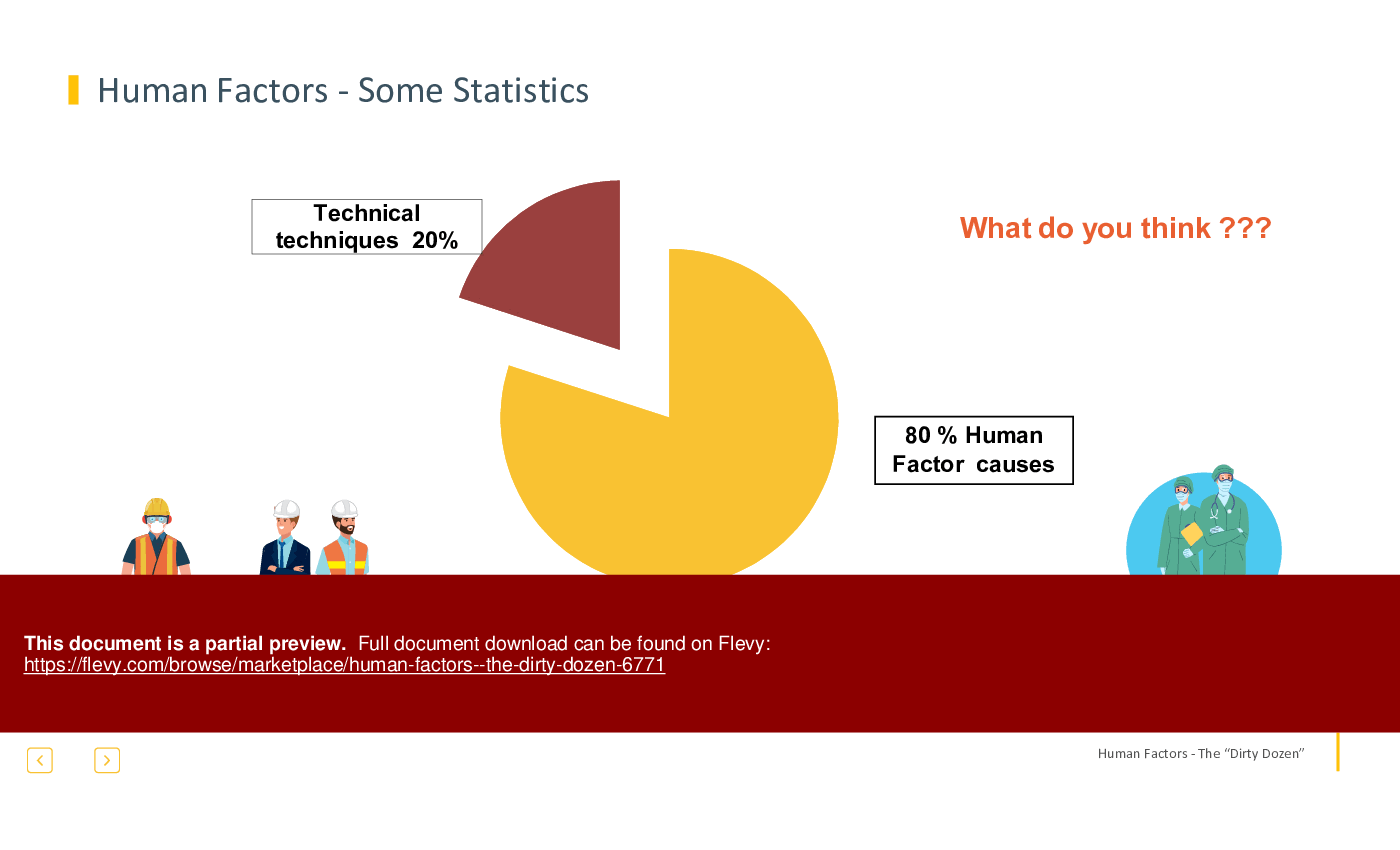
Accidents continue to happen and the majority can be linked to a human error or inadequate human performance

Industry needs to raise the bar using predictive analytic data to improve human performance, reduce risk, limit liability, sustain productivity, and meet regulatory obligations

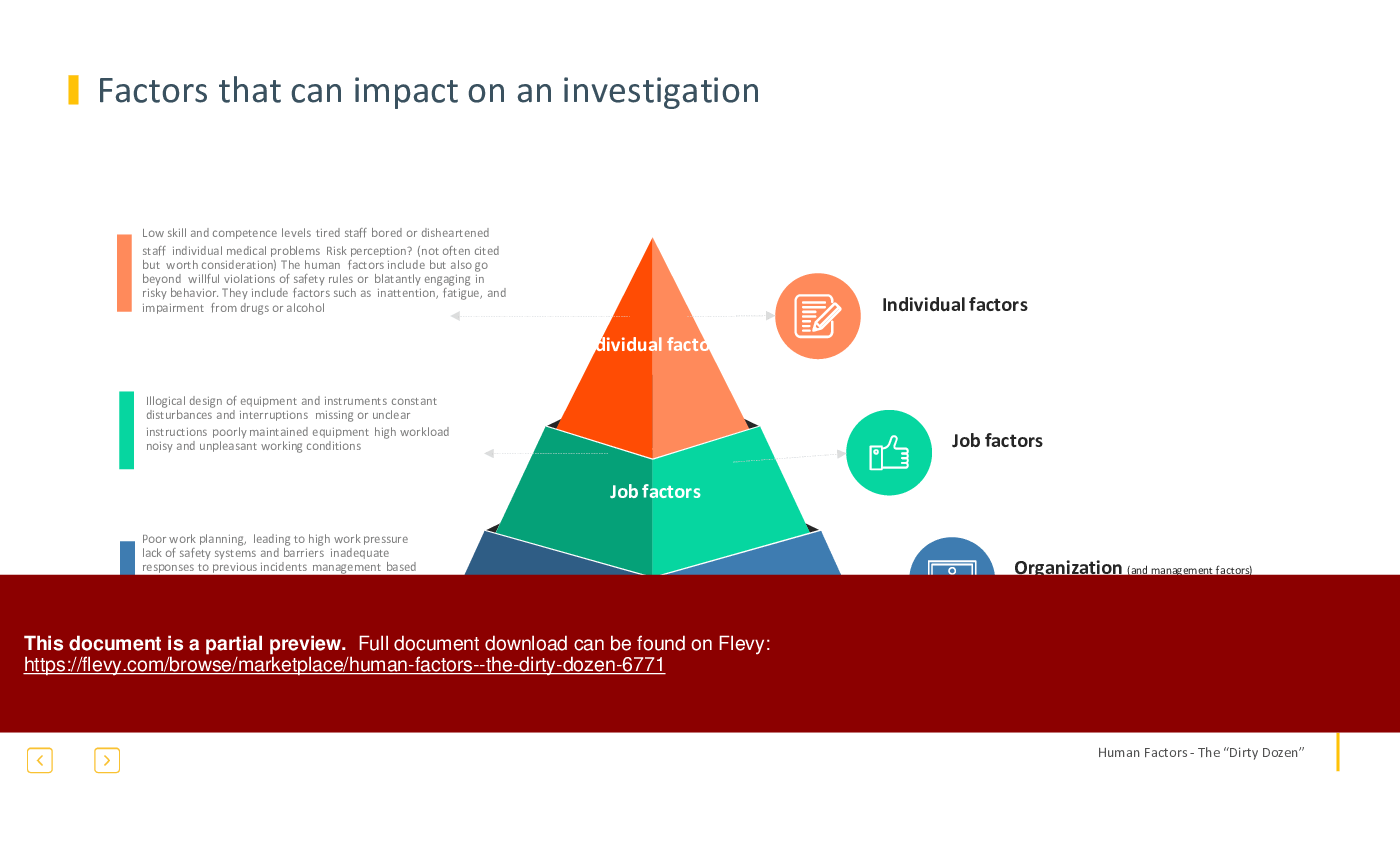
Due to a large number of maintenance-related aviation accidents and incidents that occurred in the late 1980s and early 1990s, Transport Canada identified twelve human factors that degrade people's ability to perform effectively and safely, which could lead to maintenance errors. These twelve factors, known as the "dirty dozen," were eventually adopted by the aviation industry as a straight forward means to discuss human error in maintenance. It is important to know the dirty dozen, how to recognize their symptoms, and most importantly, know how to avoid or contain errors produced by the dirty dozen. Understanding the interaction between organizational, work group, and individual factors that may lead to errors and accidents, Aviation Maintenance Technicians can learn to prevent or manage them proactively in the future.
1-LACK OF COMMUNICATION
2-COMPLACENCY
3-LACK OF KNOWLEDGE
4-DISTRACTION
5-LACK OF TEAMWORK
6-FATIGUE
7-LACK OF RESOURCES
8-PRESSURE
9-LACK OF ASSERTIVENESS
10-STRESS
11-LACK OF AWARENESS
12-NORMS
For each element on The Dirty Dozen we can list typical countermeasures designed to reduce the possibility of any human error from causing or developing into a problem, accident or incident.
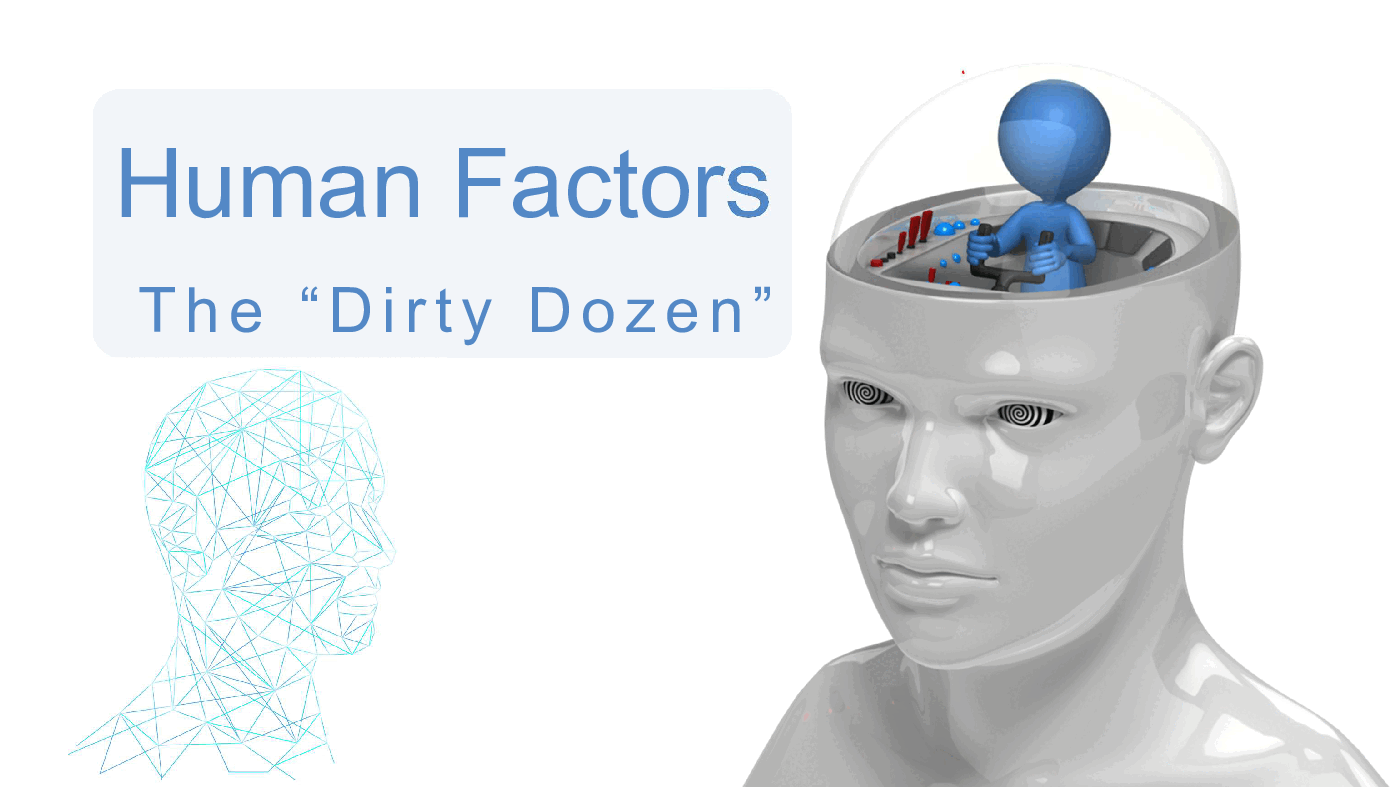
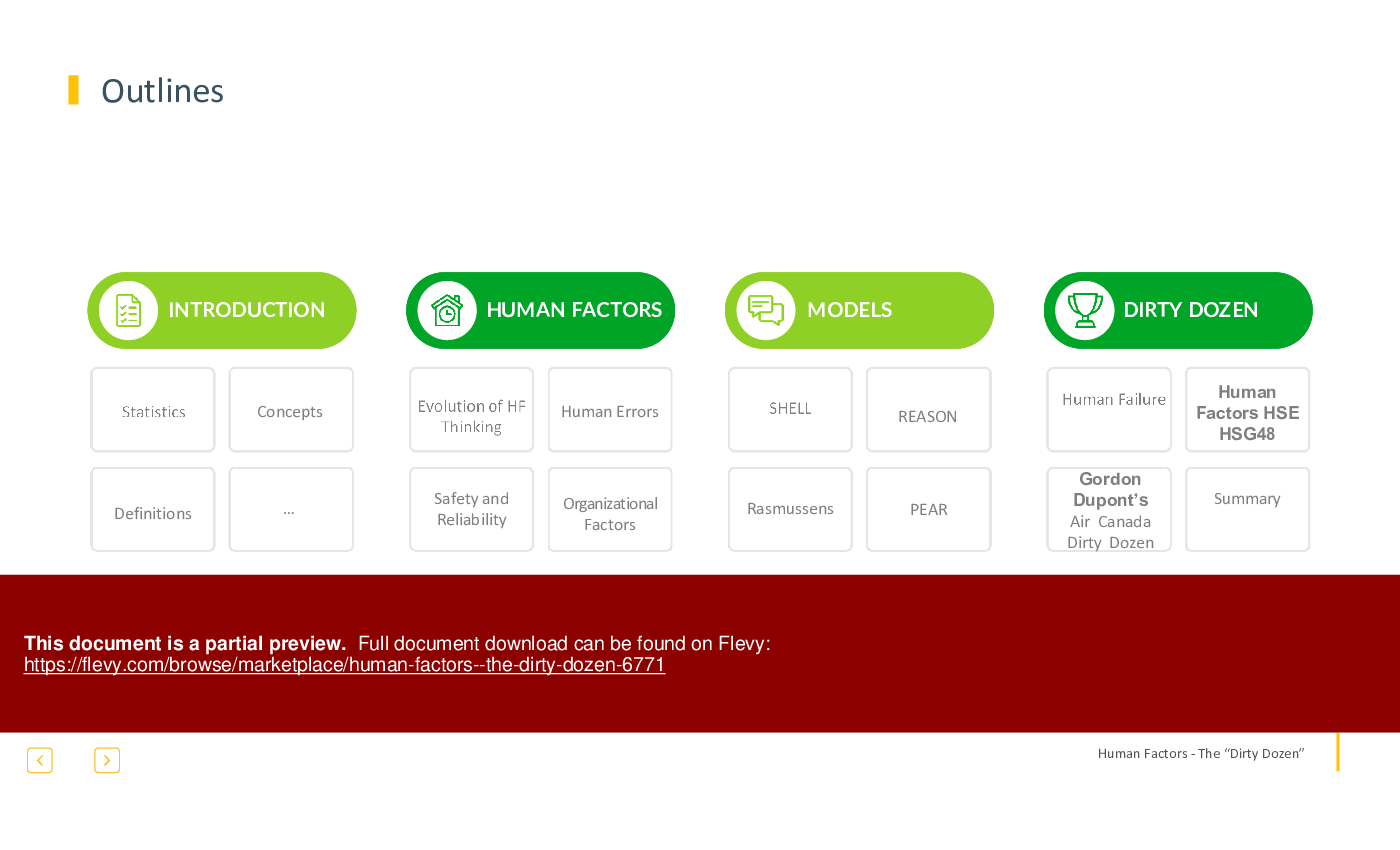
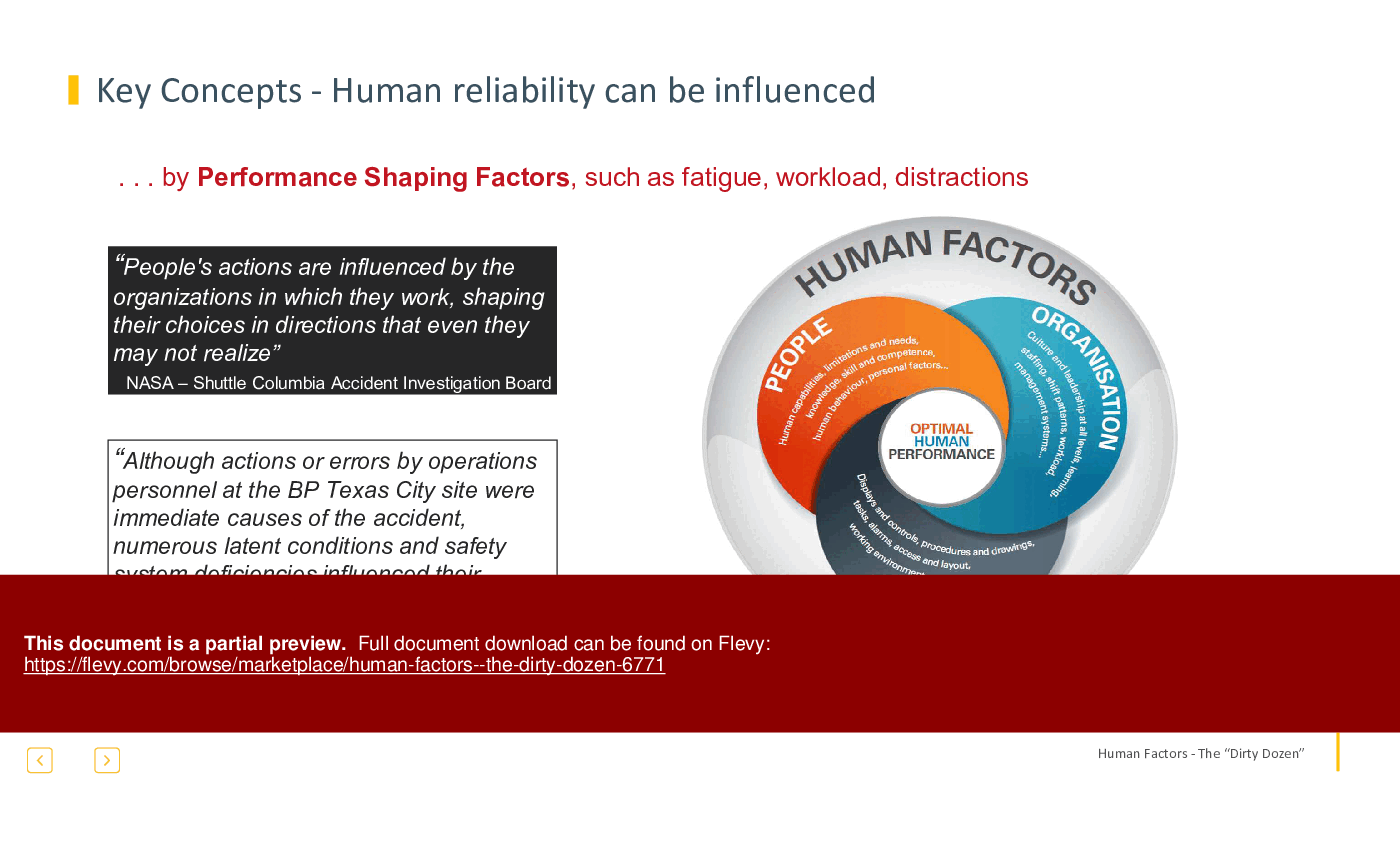
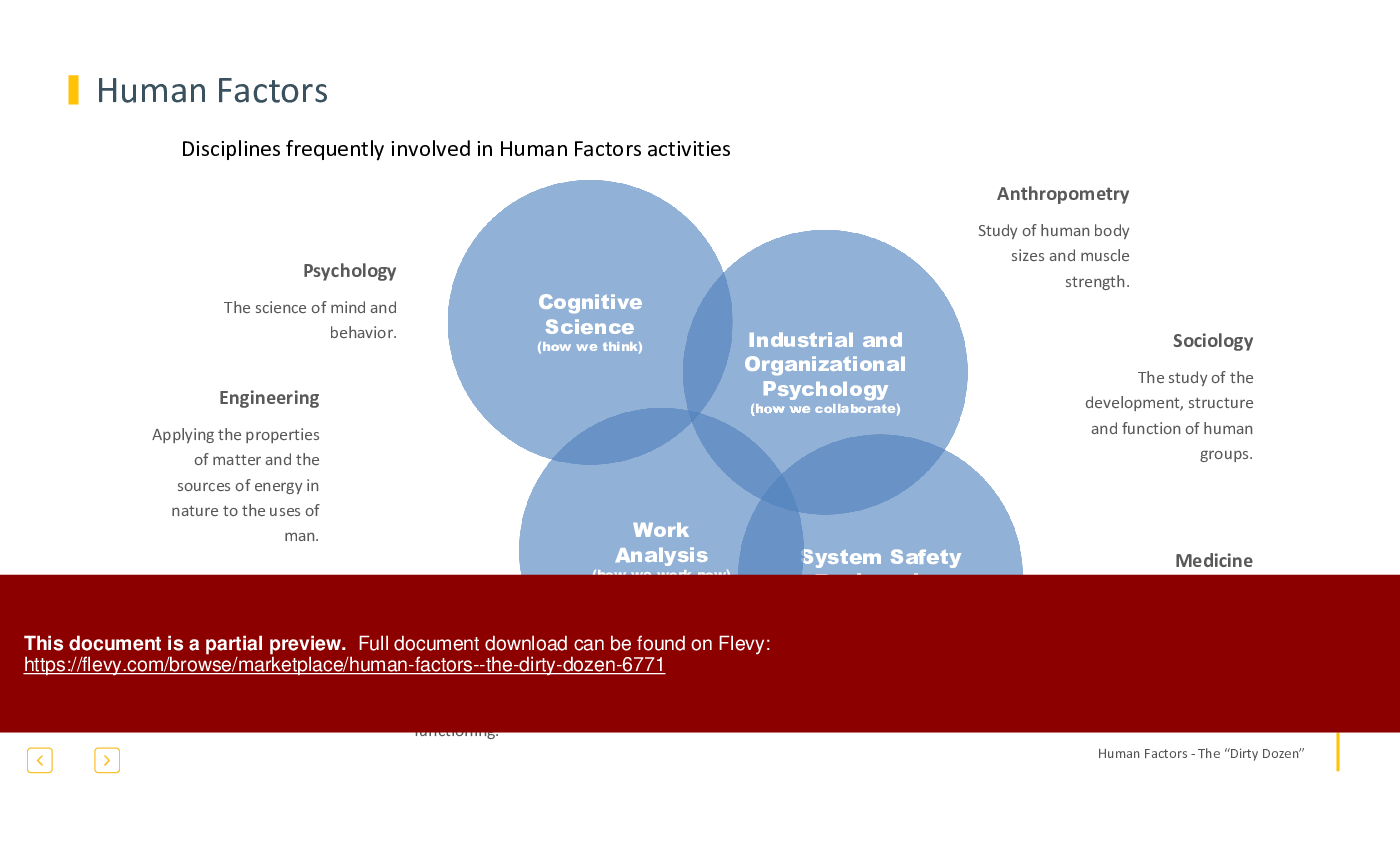
The 92-slides PowerPoint document gives you an effective overview of Human Factors Theory and explains with relevant examples the twelve most known human factors the "Dirty Dozen" and their respective safety Nets.

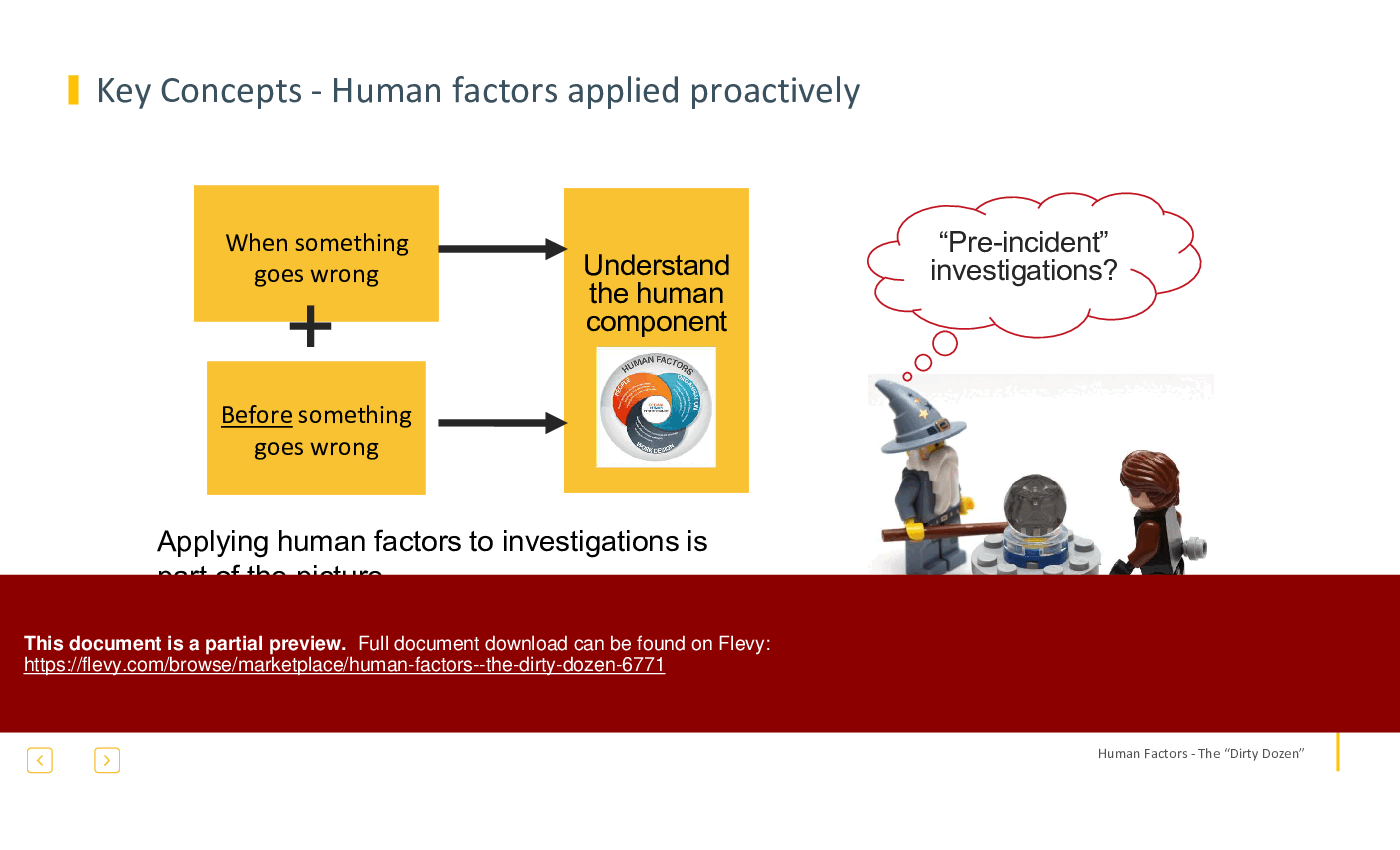
The presentation also delves into key models such as SHELL and PEAR, providing a comprehensive framework for understanding human error. It includes practical strategies for applying human factors proactively to prevent incidents.

Got a question about the product? Email us at support@flevy.com or ask the author directly by using the "Ask the Author a Question" form. If you cannot view the preview above this document description, go here to view the large preview instead.

MARCUS OVERVIEW

This synopsis was written by Marcus [?] based on the analysis of the full 92-slide presentation.


Executive Summary
The "Human Factors - The Dirty Dozen" presentation provides a comprehensive exploration of the twelve critical human error causes that impact safety and productivity across various industries, particularly aviation. Developed by a team of experts with extensive consulting backgrounds at McKinsey, Deloitte, and Capgemini, this presentation aims to enhance understanding of human factors and their application in organizational settings. Users will learn to identify these factors, implement preventive measures, and foster a culture of safety and efficiency in the workplace.

Who This Is For and When to Use
•  Safety managers and compliance officers overseeing operational safety protocols
•  Human resources professionals focused on employee training and development
•  Operational leaders in aviation, manufacturing, and healthcare sectors
•  Risk management teams assessing human error impacts on safety
•  Organizational development consultants working on culture and behavior change

Best-fit moments to use this deck:
•  During safety training sessions for frontline staff and management
•  In workshops aimed at improving organizational safety culture
•  When conducting incident investigations to identify human error factors
•  For developing continuous improvement programs focused on human reliability

Learning Objectives
•  Define the concept of human factors and their relevance to workplace safety
•  Identify the twelve human error causes known as the Dirty Dozen
•  Analyze case studies illustrating the impact of human factors on safety incidents
•  Develop strategies to mitigate human error through training and organizational changes
•  Foster a culture of awareness and proactive communication regarding human factors
•  Implement the SHELL and PEAR models to enhance human performance in operations

Table of Contents
•  Introduction (page 3)
•  Human Factors Models (page 5)
•  The Dirty Dozen (page 10)
•  Statistics and Concepts (page 15)
•  Definitions and Evolution of Human Factors Thinking (page 20)
•  Safety and Reliability (page 25)
•  Organizational Factors (page 30)
•  Summary (page 35)

Primary Topics Covered
•  Human Factors Models - Overview of various models that explain human interactions within systems, including SHELL and PEAR.
•  The Dirty Dozen - Detailed examination of the twelve common human error causes, including lack of communication and complacency.
•  Statistics and Concepts - Presentation of data illustrating the prevalence of human factors in accidents and incidents across industries.
•  Safety and Reliability - Discussion on the relationship between human factors, safety, and organizational reliability.
•  Organizational Factors - Exploration of how organizational culture and structure influence human performance and error.

Deliverables, Templates, and Tools
•  Presentation slides summarizing key human factors concepts and models
•  Case study templates for analyzing incidents related to human error
•  Checklists for identifying and mitigating the Dirty Dozen factors in operations
•  Training materials for enhancing awareness of human factors among staff
•  Guidelines for implementing effective communication strategies in teams

Slide Highlights
•  Overview of the Dirty Dozen with real-world examples of human error
•  Statistical graphs showing the impact of human factors on aviation safety
•  Visual representation of the SHELL model illustrating human-system interactions
•  Case studies detailing incidents caused by human error and lessons learned
•  Frameworks for assessing organizational factors affecting human reliability

Potential Workshop Agenda
Introduction to Human Factors (30 minutes)
•  Overview of human factors and their significance
•  Discussion of the Dirty Dozen and their implications

Case Study Analysis (60 minutes)
•  Group work on analyzing incidents related to human error
•  Identification of contributing factors and potential preventive measures

Developing Mitigation Strategies (45 minutes)
•  Brainstorming session on implementing changes to reduce human error
•  Presentation of strategies and action plans by each group

Customization Guidance
•  Tailor the presentation to reflect specific organizational contexts and industry challenges
•  Incorporate relevant case studies from the organization’s own incident history
•  Adjust terminology and examples to resonate with the audience’s experiences and knowledge

Secondary Topics Covered
•  The evolution of safety thinking and its impact on human factors
•  The role of organizational culture in shaping human behavior
•  Techniques for enhancing communication and teamwork in high-risk environments
•  The importance of continuous training and development in mitigating human error

Topic FAQ

What are the Dirty Dozen human factors and why were they developed?

The Dirty Dozen are twelve human error preconditions identified after maintenance-related aviation accidents in the late 1980s and early 1990s; they were developed to help discuss and mitigate maintenance errors. Typical factors include lack of communication, complacency, fatigue, and norms, totaling 12 factors.

How do the SHELL and PEAR models help analyze human error?

The SHELL model explains interactions between people and system components to reveal mismatch points, while the PEAR model focuses on people, environment, actions, and resources to identify operational constraints. Both are presented as frameworks for diagnosing human-system interaction issues using the SHELL and PEAR models.

How does organizational culture influence human factors in safety programs?

Organizational culture shapes behaviors, norms, and attitudes toward safety, which affects how employees perceive and respond to risks; culture can increase or reduce the prevalence of Dirty Dozen factors such as complacency and lack of assertiveness in the workplace, influencing overall safety outcomes.

What should I look for in a human factors training deck for aviation maintenance?

Choose a deck that explains the Dirty Dozen list, includes system models like SHELL and PEAR, provides real-world case studies, and supplies practical tools such as case study templates, checklists, and training materials for classroom and workshop use, including checklists and templates.

How long will it take to run a workshop using a ready-made Dirty Dozen agenda?

The product provides a sample workshop agenda with timed modules: a 30-minute introduction, a 60-minute case study analysis, and a 45-minute mitigation session, totaling approximately 135 minutes and supported by a 92-slide PowerPoint deck.

I need to investigate a recent incident—how can the Dirty Dozen framework guide the analysis?

Use the Dirty Dozen checklist to identify likely human-factor contributors (e.g., lack of communication, distraction), apply the SHELL/PEAR lenses to map system interactions, and document findings using case study templates and checklists provided in the Human Factors - The "Dirty Dozen" deck.

How can organizations measure the effectiveness of their human factors interventions?

Effectiveness can be tracked through incident reports, employee feedback, formal safety audits, and operational performance metrics; these measurement approaches are cited in the presentation as ways to assess human factors initiatives using incident reporting and safety audits.

What countermeasures are suggested for elements of the Dirty Dozen?

Typical countermeasures include targeted training, communication protocols, fatigue-management and resource-allocation practices, assertiveness and teamwork exercises, and documentation standards; the presentation links these countermeasures to practical tools such as checklists, training materials, and implementation guidelines.

Document FAQ
These are questions addressed within this presentation.

What is the Dirty Dozen?
The Dirty Dozen refers to twelve common human error preconditions that can lead to accidents or incidents, highlighting the need for awareness and mitigation strategies.

How can organizations apply the Dirty Dozen concept?
Organizations can use the Dirty Dozen as a framework for training, incident analysis, and developing proactive safety measures to reduce human error.

What are some examples of human factors in aviation?
Examples include lack of communication during handovers, complacency in routine tasks, and distractions that lead to oversight.

How does organizational culture influence human factors?
Organizational culture shapes behaviors, norms, and attitudes towards safety, impacting how employees perceive and respond to risks.

What models are used to understand human factors?
Key models include the SHELL model, which focuses on the interaction between humans and system components, and the PEAR model, which emphasizes people, environment, actions, and resources.

How can training improve awareness of human factors?
Training can enhance understanding of human factors, promote communication, and develop skills to recognize and mitigate potential errors in the workplace.

What role does leadership play in addressing human factors?
Leadership is crucial in fostering a culture of safety, encouraging open communication, and ensuring that human factors are prioritized in decision-making processes.

How can organizations measure the effectiveness of their human factors initiatives?
Effectiveness can be measured through incident reports, employee feedback, safety audits, and improvements in operational performance metrics.

Glossary
•  Human Factors - The study of how humans interact with systems and the impact of those interactions on safety and performance.
•  Dirty Dozen - A list of twelve common human error causes that can lead to incidents.
•  SHELL Model - A framework for understanding the interactions between humans and system components.
•  PEAR Model - A mnemonic for considering people, environment, actions, and resources in human factors programs.
•  Complacency - A state of self-satisfaction that can lead to a lack of awareness of potential dangers.
•  Fatigue - Physical or mental exhaustion that can impair performance and decision-making.
•  Distraction - Anything that diverts attention from the task at hand, increasing the likelihood of errors.
•  Teamwork - Collaborative efforts among individuals to achieve a shared goal, essential for safety and efficiency.
•  Assertiveness - The ability to express concerns and opinions in a positive and productive manner.
•  Stress - A physical, chemical, or emotional factor that can affect performance and decision-making.
•  Norms - Unwritten rules of behavior that can influence workplace practices and safety.
•  Organizational Culture - The shared values, beliefs, and behaviors that shape how work is done within an organization.

Source: Best Practices in Workplace Safety, HCD PowerPoint Slides: Human Factors - The "Dirty Dozen" PowerPoint (PPTX) Presentation Slide Deck, RadVector Consulting


$65.00
Developed by a team of experts with global consulting experience at McKinsey, Deloitte, and Capgemini.
Add to Cart
  

ABOUT THE AUTHOR

Additional documents from author: 183

We are a group of aviation experts & specialists (PhDs, Engineers, Pilots, Navigators, ...), leaders in helping organizations to transform their business performance using Methodologies and Principles of Lean, Agile, Six Sigma, and Innovation.

Ask the Author a Question

You must be logged in to contact the author.

Click here to log in Click here register

Did you know?
The average daily rate of a McKinsey consultant is $6,625 (not including expenses). The average price of a Flevy document is $65.


Trusted by over 10,000+ Client Organizations
Since 2012, we have provided business templates to over 10,000 businesses and organizations of all sizes, from startups and small businesses to the Fortune 100, in over 130 countries.
AT&T GE Cisco Intel IBM Coke Dell Toyota HP Nike Samsung Microsoft Astrazeneca JP Morgan KPMG Walgreens Walmart 3M Kaiser Oracle SAP Google E&Y Volvo Bosch Merck Fedex Shell Amgen Eli Lilly Roche AIG Abbott Amazon PwC T-Mobile Broadcom Bayer Pearson Titleist ConEd Pfizer NTT Data Schwab


Read Customer Testimonials

 
"I have used FlevyPro for several business applications. It is a great complement to working with expensive consultants. The quality and effectiveness of the tools are of the highest standards."

– Moritz Bernhoerster, Global Sourcing Director at Fortune 500
 
"Last Sunday morning, I was diligently working on an important presentation for a client and found myself in need of additional content and suitable templates for various types of graphics. Flevy.com proved to be a treasure trove for both content and design at a reasonable price, considering the time I "

– M. E., Chief Commercial Officer, International Logistics Service Provider
 
"Flevy.com has proven to be an invaluable resource library to our Independent Management Consultancy, supporting and enabling us to better serve our enterprise clients.

The value derived from our [FlevyPro] subscription in terms of the business it has helped to gain far exceeds the investment made, making a subscription a no-brainer for any growing consultancy – or in-house strategy team."

– Dean Carlton, Chief Transformation Officer, Global Village Transformations Pty Ltd.
 
"One of the great discoveries that I have made for my business is the Flevy library of training materials.

As a Lean Transformation Expert, I am always making presentations to clients on a variety of topics: Training, Transformation, Total Productive Maintenance, Culture, Coaching, Tools, Leadership Behavior, etc. Flevy "

– Ed Kemmerling, Senior Lean Transformation Expert at PMG
 
"Flevy is our 'go to' resource for management material, at an affordable cost. The Flevy library is comprehensive and the content deep, and typically provides a great foundation for us to further develop and tailor our own service offer."

– Chris McCann, Founder at Resilient.World
 
"As a niche strategic consulting firm, Flevy and FlevyPro frameworks and documents are an on-going reference to help us structure our findings and recommendations to our clients as well as improve their clarity, strength, and visual power. For us, it is an invaluable resource to increase our impact and value."

– David Coloma, Consulting Area Manager at Cynertia Consulting
 
"As a consulting firm, we had been creating subject matter training materials for our people and found the excellent materials on Flevy, which saved us 100's of hours of re-creating what already exists on the Flevy materials we purchased."

– Michael Evans, Managing Director at Newport LLC
 
"As a young consulting firm, requests for input from clients vary and it's sometimes impossible to provide expert solutions across a broad spectrum of requirements. That was before I discovered Flevy.com.

Through subscription to this invaluable site of a plethora of topics that are key and crucial to consulting, I "

– Nishi Singh, Strategist and MD at NSP Consultants


Customers Also Bought These Documents


Customers Also Like These Documents

Explore Templates on Related Management Topics


Your Recently Viewed Documents
Receive our FREE presentation on Operational Excellence

This 50-slide presentation provides a high-level introduction to the 4 Building Blocks of Operational Excellence. Achieving OpEx requires the implementation of a Business Execution System that integrates these 4 building blocks.