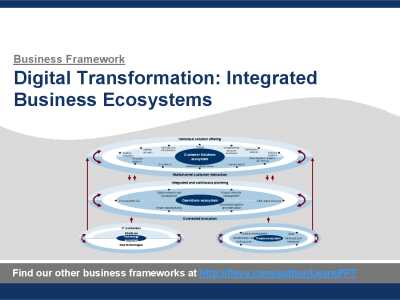
Editor's Note: Take a look at our featured best practice, Digital Transformation Strategy (145-slide PowerPoint presentation). Digital Transformation is being embraced by organizations across most industries, as the role of technology shifts from being a business enabler to a business driver. This has only been accelerated by the COVID-19 global pandemic. Thus, to remain competitive and outcompete in today's fast paced, [read more]
* * * *
AI programs do not fail because models underperform. AI programs fail because leadership treats AI like an interesting side project instead of a Management System. Real AI maturity shows up as an intentional shift in Investment Discipline, Operating Model design, and Value Creation accountability. Leaders stop asking, “What can AI do?” and start asking, “Which enterprise outcomes will AI be accountable for this year?”
A practical framework helps because it forces choices. Consulting teams love frameworks for a reason: they keep everyone honest when priorities collide. Use this as a template to move from scattered experiments to scaled, repeatable value.
As defined in this AI Leadership framework, mature AI organizations demonstrate 6 strategic traits, in order:
Use AI in Core and Support Functions
Aim Higher
Invest in Prioritized Initiatives
Leverage AI to Drive Cost Efficiencies and Generate Top line Revenue Growth
Concentrate on Talent and Processes
Adopt GenAI
GenAI Moves from Novelty to Operating Model
GenAI has turned “good enough” automation into a board level agenda item. Customer Service, Sales enablement, Product development, Risk Management, and Knowledge Management all have credible GenAI use cases now. The organizations winning are not chasing hundreds of use cases. They are industrializing a smaller number of outcomes, then scaling through shared platforms, shared governance, and consistent Change Management.
AI maturity is not a Technology milestone. AI maturity is Strategy Development plus execution muscle.
Brief Summary of the Framework
The framework separates leaders from dabblers through six behaviors. Leaders embed AI into revenue producing work, set targets that force structural redesign, focus investment on fewer high potential initiatives, balance cost and growth impacts, over invest in Talent and Process redesign, and operationalize GenAI quickly with guardrails.
Why This Framework Is Useful
Executives struggle with AI because it sits in the messy middle between Technology and the Operating Model. Product teams want features. Data teams want models. Finance wants ROI. Legal wants control. Everyone is right, which means nothing ships. This framework provides a shared language for prioritization, governance, and accountability across functions.
Executives also struggle because AI benefits compound. One scaled solution changes data quality expectations, process design, decision rights, and workforce skills. Fragmented pilots never create those compounding effects. The framework pushes leadership to treat scaling as the primary objective, not experimentation.
Portfolio sprawl kills AI programs. Too many pilots create “proof fatigue,” weak sponsorship, and shallow learning. The framework enforces Investment Discipline and makes tradeoffs explicit. Fewer initiatives, higher funding, stronger talent allocation, and clearer success metrics.
GenAI adds urgency and risk at the same time. Speed without control creates compliance exposure and reputational risk. Control without speed creates irrelevance. The framework includes both, which is the point. A CEO needs a single approach that balances Innovation with Risk Management.
Deeper Dive: The First 2 Traits
Use AI in Core and Support Functions
AI value concentrates in the core. Core work means revenue generating processes, product delivery, customer interactions, pricing, underwriting, supply chain decisions, and frontline execution. Support work matters, but support work rarely moves the market position needle.
Leadership action looks simple, but it is not easy:
Require every major Line of Business to nominate core process use cases tied to P and L outcomes
Treat support automation as table stakes, not the headline
Embed AI into workflow ownership, not just into dashboards
Assign Business Process Owners, not only Product Owners
A CEO question that exposes the truth: “Which core process will run differently next quarter because of AI, and who owns the outcome?” Silence usually means the program is still trapped in IT.
Aim Higher
Incremental targets create incremental behavior. Aggressive targets force redesign. High ambition also flushes out weak assumptions. A target like “reduce handle time by 5 percent” invites local optimization. A target like “rebuild Customer Service into an AI assisted service model with 30 percent cost reduction and higher NPS” forces changes in routing, knowledge, training, QA, and escalation design.
Aiming higher does not mean fantasy numbers. It means setting outcomes that justify scaling investment:
Tie AI targets to enterprise KPIs, not model metrics
Fund the Operating Model changes required to hit the target
Make ambition visible in Performance Management, not just in slideware
Leadership should treat ambition as a forcing function. The organization either builds the capability to deliver, or it admits the initiative is not strategic. Either outcome is better than endless pilots.
Case Study: Retail Bank
A retail bank launched dozens of AI proofs of concept across marketing, contact centers, and credit. Results looked promising, then stalled. Leadership reset using the six trait framework. Core and Support focus came first.
The bank selected 2 core processes: credit decisioning and customer retention. Support automation continued in parallel, but executive attention stayed on core outcomes. Ambition shifted from “assist underwriters” to “rebuild credit workflows with AI driven decision support and faster approvals.” Investment narrowed to a small portfolio with dedicated squads. Cost and growth became a dual mandate. Cost savings from contact center automation funded retention offers and personalized outbound campaigns. Talent and process redesign received real funding, including training for frontline managers and redesigned decision rights. GenAI went live through a controlled enterprise platform to avoid shadow usage.
Results showed up in cycle time, approval consistency, and retention lift. Leadership also gained something more valuable: a repeatable scaling engine.
FAQ
What blocks AI scaling most often?
Weak ownership of core process outcomes. Model performance rarely causes the stall. Governance and decision rights usually do.
How many initiatives should an organization run?
A smaller number than current enthusiasm suggests. Portfolio focus matters more than volume.
What does “Aim Higher” mean in practice?
Targets that require workflow redesign, not only task automation. Ambition should force cross functional execution.
Where should GenAI start?
Workflows with high knowledge intensity and measurable outcomes, deployed on a controlled platform with clear Risk Management.
What should a CEO ask every month?
Questions include: Which AI solutions shipped, which scaled, which moved a core KPI, and what decisions did leadership make to unblock adoption?
Closing Remarks
Leadership should treat AI like a new management discipline, not a new toolset. Strategic Planning should include AI capability building the same way it includes capital allocation and talent strategy. A program that cannot explain its scaling path is not a program, it is a hobby.
Executives also need to embrace an uncomfortable truth. AI makes process ambiguity visible. Teams cannot hide behind “that is how we have always done it” when a model highlights exceptions, rework, and inconsistent decisions. That discomfort is not a risk. That discomfort is the signal that value is close.
The winners will not be the organizations with the most advanced models. The winners will be the organizations with the highest coherence between Strategy Development, Investment Discipline, Change Management, and platform execution. AI maturity is not magic. AI maturity is management.
You can download in-depth presentations on this and hundreds of similar business frameworks from the FlevyPro Library. FlevyPro is trusted and utilized by 1000s of management consultants and corporate executives.
For even more best practices available on Flevy, have a look at our top 100 lists:
This is again a "new improved" A Comprehensive Guide to Digital Transformation. What was one 173 slides has now increased to 206 because I have added a number of latest slides to the deck about Why People are the Critical Factor. The Value of Change Management. The deck is not intended to provide [read more]
Readers of This Article Are Interested in These Resources
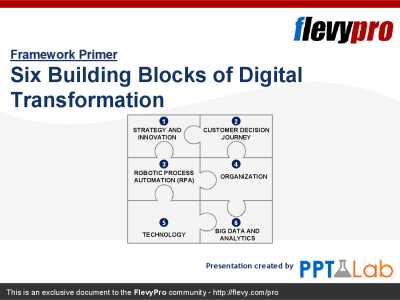
Digital Transformation touches practically every function in the entire organization. This thus requires an unprecedented amount of coordination among people, process, and technologies throughout the organization, leading to a difficult Transformation program.
The Six Building Blocks of [read more]
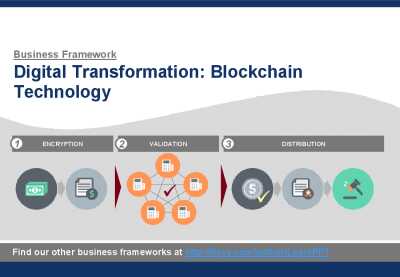
Blockchain Technology is an emerging database technology that has gained widespread appeal across many industries, mostly driven by the rise of cryptocurrencies--most notably Bitcoin. It provides numerous process benefits, including efficiency, security, transparency/openness, low cost, data [read more]
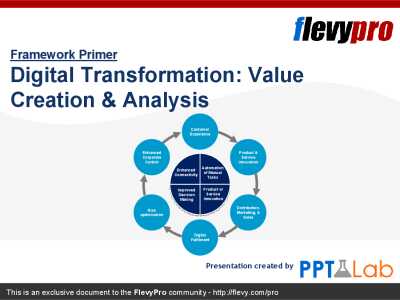
Most organizations recognize the significant potential in creating value through Digital Transformation. However, they may struggle with the question of exactly how much value they can create and where within the organization the value will come from. This presentation deals with the various [read more]
We are living in the Digital Age. For organizations to remain competitive, they must develop and execute robust Digital Transformation Strategies.
Organizations that have excelled in Digital Transformation distinguish themselves through their mastery of the 4 critical Business Ecosystems. [read more]
 AI programs do not fail because models underperform. AI programs fail because leadership treats AI like an interesting side project instead of a Management System. Real AI maturity shows up as an intentional shift in Investment Discipline, Operating Model design, and Value Creation accountability. Leaders stop asking, “What can AI do?” and start asking, “Which enterprise outcomes will AI be accountable for this year?”