
This framework is developed by a team of former McKinsey and Big 4 consultants. The presentation follows the headline-body-bumper slide format used by global consulting firms.
5 Stages of Management Evolution PPT: Learn organizational design & development with Laloux’s Red, Amber, Orange, Green, and Teal management models. Download now. 5 Stages of Management Evolution is a 29-slide PPT PowerPoint presentation template (PPTX) available for immediate download upon purchase.
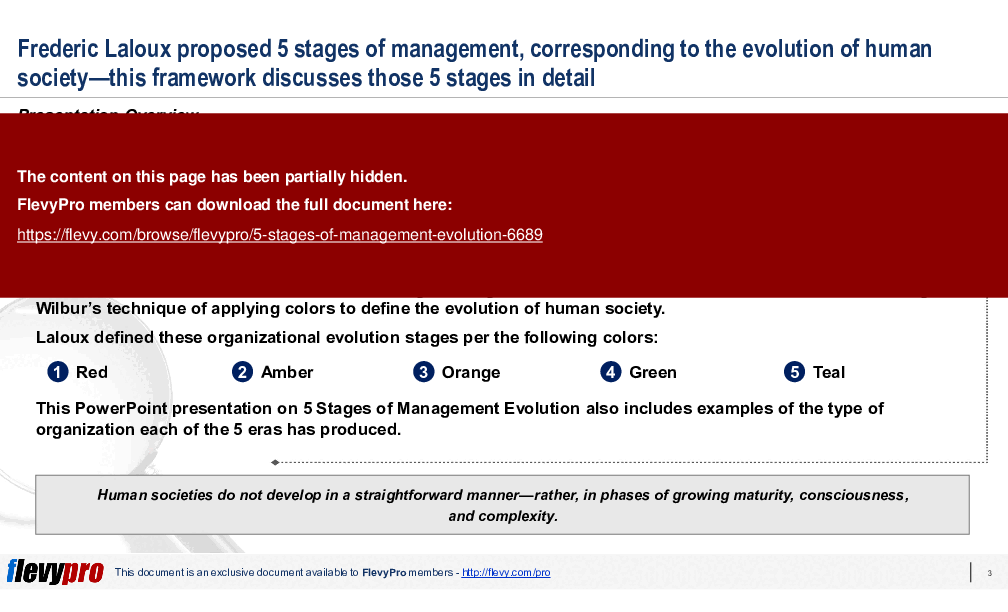
Organizational Development has matured hand in hand with the stages of human societal development. Human societies do not develop in a straightforward manner—rather, in phases of growing maturity, consciousness, and complexity. This development has been described in several ways by different experts.
Frederic Laloux, in 2014, started analyzing emerging organizations that were setting themselves apart from the established organizations in their style of management. Laloux examined a large number of organizations and then concentrated on 10. Selected organizations were the ones that were the most progressive in regenerating management structures and practices.
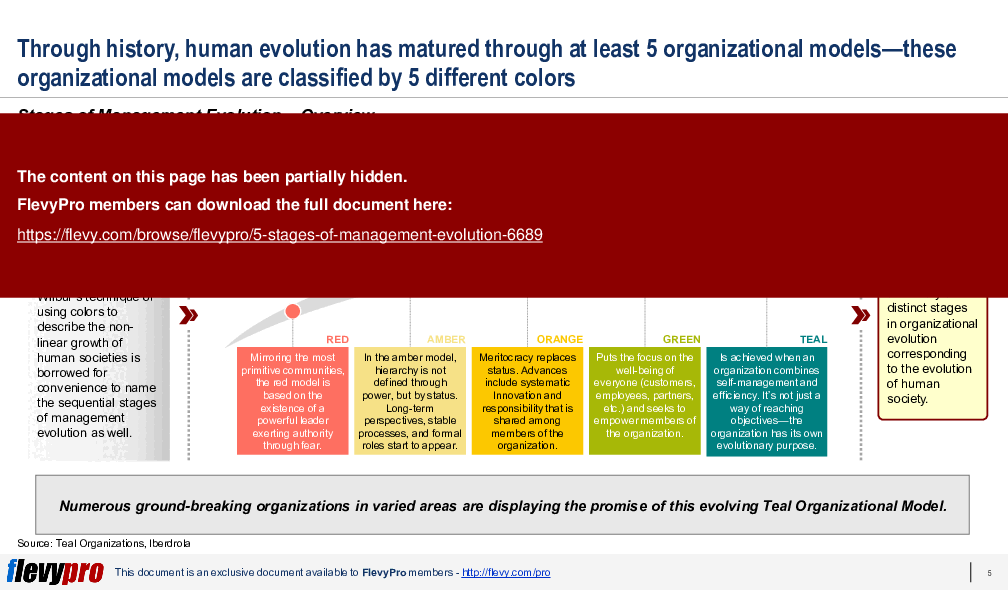
This PowerPoint presentation on the evolution of management summarizes the 5 distinct stages in organizational evolution, which Laloux described utilizing Ken Wilbur's technique of applying colors to define the evolution of human society.
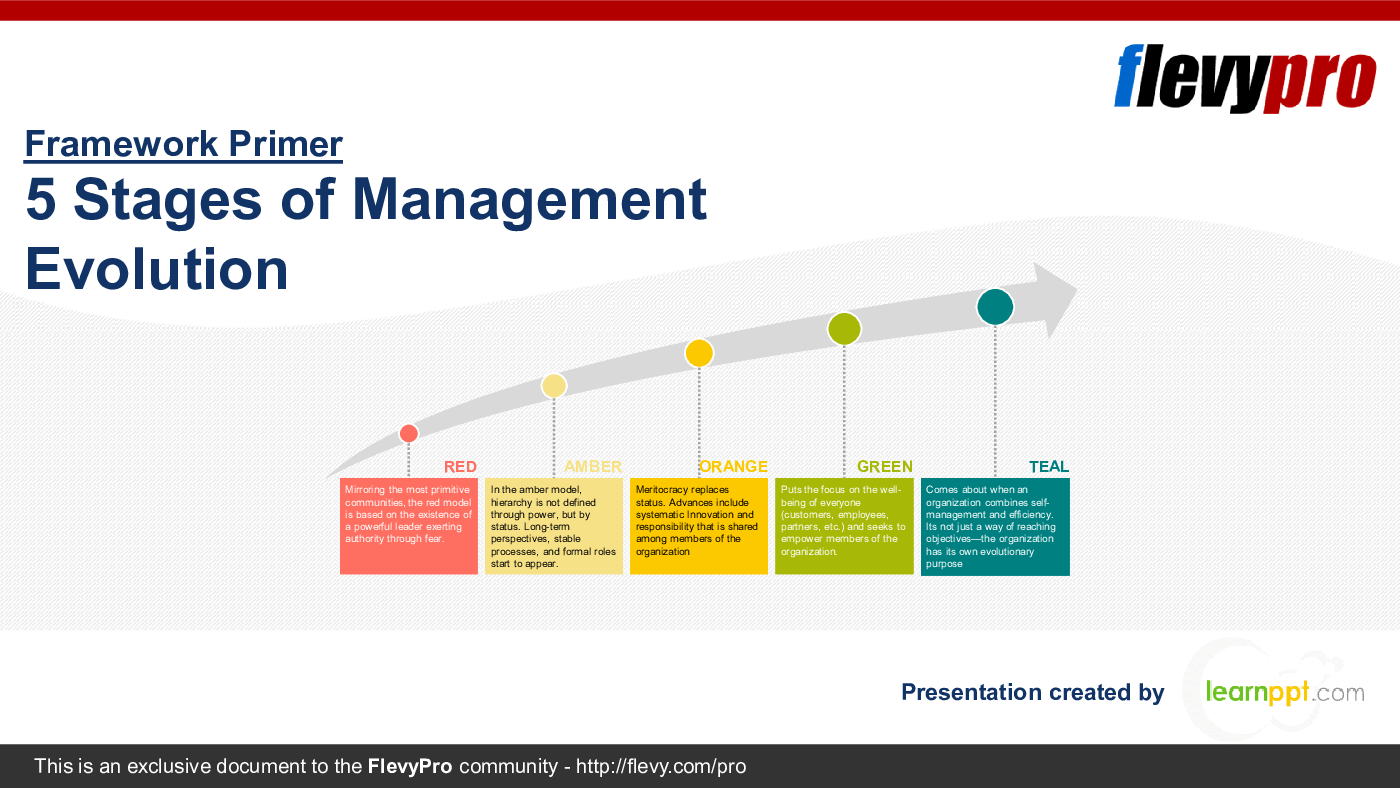
Laloux defined these organizational evolution stages per the following colors:
1. Red – Mirroring the most primitive communities, the red model is based on the existence of a powerful leader exerting authority through fear.
2. Amber – In the amber model, hierarchy is not defined through power, but by status. Long-term perspectives, stable processes, and formal roles start to appear.
3. Orange – Meritocracy replaces status. Advances include systematic Innovation and responsibility that is shared among members of the organization.
4. Green – Puts the focus on the well-being of everyone (customers, employees, partners, etc.) and seeks to empower members of the organization.
5. Teal – Is achieved when an organization combines self-management and efficiency. It's not just a way of reaching objectives—the organization has its own evolutionary purpose.
This framework on the 5 Stages of Management Evolution dives deep into each stage, providing contemporary examples and identifying important innovations. It further delineates the key breakthroughs and advantages of the most mature stage of Teal Management.
This PowerPoint presentation on also includes slide templates you can use in your own business presentations.
This presentation also includes detailed templates for each stage, facilitating easy integration into your own strategic planning sessions. Leverage these insights to drive your organization toward the most progressive management practices.
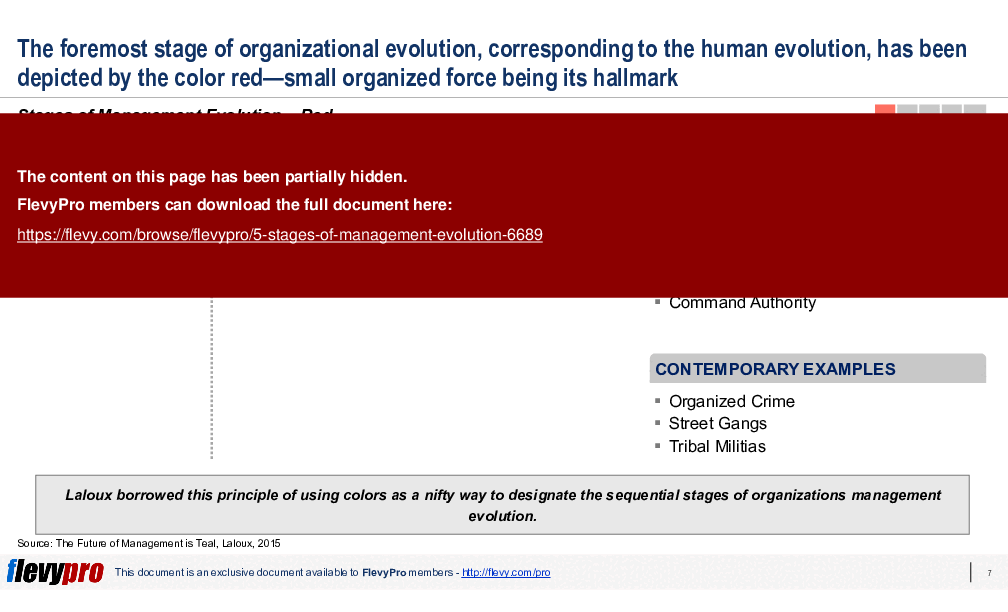
The "Red" stage of management evolution marks humanity's first organizational attempts, characterized by power dynamics and authority. During this phase, Chiefdoms and Proto-empires emerged, shifting from individual survival to structured social systems. A key development was the purposeful distribution of labor, enhancing task management and laying the groundwork for future organizational structures. Early organizations, such as Tribal Militias and Street Gangs, reflected a rudimentary governance style focused on strength and dominance. The chief's role involved maintaining control through fear, indicating a leadership style prioritizing authority over collaboration. Key concepts established during this stage include Division of Labor and Command Authority, foundational elements in management theory.
The initial stage of organizational evolution, represented by red, features a leader exerting power to maintain order among "foot soldiers" in a reactive environment focused on immediate challenges. This management style thrives in chaotic settings requiring quick decision-making. The "Wolf Pack" allegory illustrates leadership dynamics and group behavior, emphasizing hierarchy and authority. Key innovations include division of labor and command authority, which establish structured roles and clear directives. Contemporary examples, such as organized crime, street gangs, and tribal militias, demonstrate the persistence of this management style today. These cases highlight the relevance of reactive management and strong leadership in shaping organizational behavior in less structured scenarios.
Teal management emphasizes 3 core areas: the Human Factor, an Integrated View of Success, and Learning. The Human Factor highlights employee engagement and motivation through decision-making autonomy based on real-time insights, enhancing productivity. The Integrated View of Success aligns individual development with organizational goals, encouraging leaders to prioritize collective objectives over personal ambitions, ensuring responsiveness to external demands. Learning is a continuous process in Teal organizations, promoting roles that require decision-making skills, high-level listening, effective meeting techniques, and constructive feedback. This culture of continuous learning fosters informal knowledge sharing, strengthening internal networks and enhancing decision-making capabilities across the organization.
The Amber stage in management practices features a formalized organizational structure with defined roles and hierarchies, reflecting a societal shift towards structured governance. This era is linked to agriculture, state bureaucracies, and organized religion. Key developments include self-discipline and self-control, essential for managing agricultural complexities. The transition from chaotic, pack-like organizations to structured, pyramid-like hierarchies marked a significant evolution. The establishment of proper roles and scalable hierarchies enabled stable, replicable processes crucial for large bureaucratic organizations. Notable examples include the Catholic Church, military organizations, and government departments, which relied on these principles for order and efficiency.
The "Red" stage of management evolution marks humanity's first organizational attempts, characterized by power dynamics and authority. During this phase, Chiefdoms and Proto-empires emerged, shifting from individual survival to structured social systems. A key development was the purposeful distribution of labor, enhancing task management and laying the groundwork for future organizational structures. Early organizations, such as Tribal Militias and Street Gangs, reflected a rudimentary governance style focused on strength and dominance. The chief's role involved maintaining control through fear, indicating a leadership style prioritizing authority over collaboration. Key concepts established during this stage include Division of Labor and Command Authority, foundational elements in management theory.
The initial stage of organizational evolution, represented by red, features a leader exerting power to maintain order among "foot soldiers" in a reactive environment focused on immediate challenges. This management style thrives in chaotic settings requiring quick decision-making. The "Wolf Pack" allegory illustrates leadership dynamics and group behavior, emphasizing hierarchy and authority. Key innovations include division of labor and command authority, which establish structured roles and clear directives. Contemporary examples, such as organized crime, street gangs, and tribal militias, demonstrate the persistence of this management style today. These cases highlight the relevance of reactive management and strong leadership in shaping organizational behavior in less structured scenarios.
Teal management emphasizes 3 core areas: the Human Factor, an Integrated View of Success, and Learning. The Human Factor highlights employee engagement and motivation through decision-making autonomy based on real-time insights, enhancing productivity. The Integrated View of Success aligns individual development with organizational goals, encouraging leaders to prioritize collective objectives over personal ambitions, ensuring responsiveness to external demands. Learning is a continuous process in Teal organizations, promoting roles that require decision-making skills, high-level listening, effective meeting techniques, and constructive feedback. This culture of continuous learning fosters informal knowledge sharing, strengthening internal networks and enhancing decision-making capabilities across the organization.
The Amber stage in management practices features a formalized organizational structure with defined roles and hierarchies, reflecting a societal shift towards structured governance. This era is linked to agriculture, state bureaucracies, and organized religion. Key developments include self-discipline and self-control, essential for managing agricultural complexities. The transition from chaotic, pack-like organizations to structured, pyramid-like hierarchies marked a significant evolution. The establishment of proper roles and scalable hierarchies enabled stable, replicable processes crucial for large bureaucratic organizations. Notable examples include the Catholic Church, military organizations, and government departments, which relied on these principles for order and efficiency.
Source: Best Practices in Organizational Design, Organizational Structure, Organizational Development, Teal Management PowerPoint Slides: 5 Stages of Management Evolution PowerPoint (PPTX) Presentation Slide Deck, LearnPPT Consulting
This framework is developed by a team of former McKinsey and Big 4 consultants. The presentation follows the headline-body-bumper slide format used by global consulting firms.
For $10.00 more, you can download this document plus 2 more FlevyPro documents. That's just $13 each.
ABOUT FLEVYPRO
This document is part of the FlevyPro Library, a curated knowledge base of documents for our FlevyPro subscribers.
FlevyPro is a subscription service for on-demand business frameworks and analysis tools. FlevyPro subscribers receive access to an exclusive library of curated business documents—business framework primers, presentation templates, Lean Six Sigma tools, and more—among other exclusive benefits.
The average daily rate of a McKinsey consultant is $6,625 (not including expenses). The average price of a Flevy document is $65.
Trusted by over 10,000+ Client Organizations
Since 2012, we have provided business templates to over 10,000 businesses and organizations of all sizes, from startups and small businesses to the Fortune 100, in over 130 countries.
"My FlevyPro subscription provides me with the most popular frameworks and decks in demand in today’s market. They not only augment my existing consulting and coaching offerings and delivery, but also keep me abreast of the latest trends, inspire new products and service offerings for my practice, and educate me
in a fraction of the time and money of other solutions. I strongly recommend FlevyPro to any consultant serious about success.
"
– Bill Branson, Founder at Strategic Business Architects
"I have found Flevy to be an amazing resource and library of useful presentations for lean sigma, change management and so many other topics. This has reduced the time I need to spend on preparing for my performance consultation. The library is easily accessible and updates are regularly provided. A wealth of great information."
– Cynthia Howard RN, PhD, Executive Coach at Ei Leadership
"As an Independent Management Consultant, I find Flevy to add great value as a source of best practices, templates and information on new trends. Flevy has matured and the quality and quantity of the library is excellent. Lastly the price charged is reasonable, creating a win-win value for
the customer, Flevy and the various authors. This is truly a service that benefits the consulting industry and associated clients. Thanks for providing this service.
"
– Jim Schoen, Principal at FRC Group
"I am extremely grateful for the proactiveness and eagerness to help and I would gladly recommend the Flevy team if you are looking for data and toolkits to help you work through business solutions."
– Trevor Booth, Partner, Fast Forward Consulting
"Flevy is our 'go to' resource for management material, at an affordable cost. The Flevy library is comprehensive and the content deep, and typically provides a great foundation for us to further develop and tailor our own service offer."
– Chris McCann, Founder at Resilient.World
"Flevy is now a part of my business routine. I visit Flevy at least 3 times each month.
Flevy has become my preferred learning source, because what it provides is practical, current, and useful in this era where the business world is being rewritten.

many challenges and there is the need to make the right decisions in a short time, with so much scattered information, we are fortunate to have Flevy. Flevy investigates, selects, and puts at our disposal the best of the best to help us be successful in our work.
"
– Omar Hernán Montes Parra, CEO at Quantum SFE
"The wide selection of frameworks is very useful to me as an independent consultant. In fact, it rivals what I had at my disposal at Big 4 Consulting firms in terms of efficacy and organization."
– Julia T., Consulting Firm Owner (Former Manager at Deloitte and Capgemini)
"FlevyPro provides business frameworks from many of the global giants in management consulting that allow you to provide best in class solutions for your clients."
– David Harris, Managing Director at Futures Strategy
Download our free compilation of 50+ slides and templates on Organizational Design, Change Management, and Corporate Culture. Methodologies include ADKAR, Burke-Litwin Change Model, McKinsey 7-S, Competing Values Framework, etc.