Editor's Note: Take a look at our featured best practice, Digital Transformation Strategy (145-slide PowerPoint presentation). Digital Transformation is being embraced by organizations across most industries, as the role of technology shifts from being a business enabler to a business driver. This has only been accelerated by the COVID-19 global pandemic. Thus, to remain competitive and outcompete in today's fast paced, [read more]
* * * *
Domestic and family violence is not only a social issue—it is increasingly a workplace and workforce issue. Many multinational organizations employ expatriates, sponsored employees, and partners of globally mobile staff who rely on partner visas for residency. When a relationship becomes unsafe, visa dependency can create significant personal and legal risk.
For HR leaders, global mobility teams, and corporate professionals responsible for employee well-being and compliance, understanding how family violence provisions within partner visa frameworks operate is essential. These provisions are designed to protect vulnerable applicants by allowing them to maintain residency status independently of an abusive sponsor. This article outlines how the framework works, what protections are available, and the broader implications for organizations supporting affected employees and their families.
Organizational Risk and Duty of Care Considerations
For organizations employing internationally mobile talent, family violence provisions within partner visa frameworks are not merely legal technicalities — they intersect directly with workforce risk management, compliance obligations, and employee well-being responsibilities.
When an employee’s spouse or partner holds residency status that is dependent on the employee’s visa sponsorship, relationship instability can quickly become a legal and operational issue. Without awareness of available protections, affected individuals may remain in unsafe environments due to fears of losing residency, work authorization, or financial security. This can lead to increased absenteeism, reduced performance, mental health strain, and potential reputational risk if situations escalate.
Corporate HR and Global Mobility teams should understand that family violence provisions are designed to prevent immigration dependency from being used as leverage in abusive situations. In certain jurisdictions, eligible applicants may continue their residency application independently if a relationship ends due to documented violence.
From a governance perspective, awareness of these protections supports:
Duty of care commitments to employees and their families
ESG and DEI objectives related to safeguarding vulnerable individuals
Compliance with immigration and employment regulations
Risk mitigation in cross-border assignments
By incorporating knowledge of these frameworks into mobility policies and HR protocols, organizations strengthen both employee support mechanisms and overall corporate resilience.
Partner Visas And Family Violence
Partner visas permit spouses or de facto partners of citizens or permanent residents to reside in another country. At times, the victim is the person supported on a partner visa. This ultimately makes exiting a dangerous environment difficult due to fears concerning losing home residency or being placed in a vulnerable situation where further harm may occur. Immigration authorities have family violence partner visa policies in place to assist individuals who are at risk.
Eligibility for Protection
In the visa application process, those who are seeking protection under family violence provisions must show that the violence has caused them harm. For example, police reports, medical records, or statements from social workers must be provided as evidence. Authorities are aware that not everyone has access to formal documentation. They will usually take your word for it and accept statutory declarations or statements from support organizations. This allows more people to access safety without having to jump through hoops.
Maintaining Independence from the Sponsor
These provisions are intended to ensure that sponsors do not control workers through their visa status. If the relationship ends due to violence, the applicant may apply for a visa alone. It is important to know that applicants don’t have to stay with their sponsor to keep their residency application. This provision allows applicants to maintain their residency without relying on a relationship, alleviating the fear of losing their status if the relationship becomes unsafe.
How Authorities Assess Claims
Authorities evaluate each claim individually, considering the applicant’s situation. They search for convincing proof of harm. An application is backed with various types of evidence, such as written corroboration, expert opinions, and records from service providers. Safety, privacy, and well-being of the applicant are other factors that authorities consider while assessing an application.
Coverage for Children and Other Dependents
Partner visa policies relating to family violence also cover children and other dependents. These actions keep young members of the family out of harm. Authorities pay particular attention to the needs of vulnerable children when assessing claims. Doing so helps support cycle-breaking over generations.
Support Services for Applicants
Numerous organizations support candidates throughout the entire association process. These could include legal advice, counselling, and accommodation. Connecting victims to support services ensures that those seeking to leave such relationships are able to rebuild their lives safely. Having access to these resources increases the probability of a successful result.
Confidentiality and Privacy
Those making claims undoubtedly desire the protection of their confidentiality. Authorities take multiple steps to safeguard personal information. Sensitive information is only shared with those responsible for assessing the application. This method guarantees the applicants’ safety and dignity.
Challenges Applicants May Face
Regardless of these protections, applicants can experience capture. Gathering evidence can be challenging if you are isolated or if the person you’re with has limited access to services. Fear of retaliation and language barriers often restrict people from seeking help. Support organizations can bridge these gaps and advocate for the rights of the applicants during the process.
Encouraging Safety and Empowerment
The family violence partner visa system allows people to take care of themselves. These public policies eliminate the deterrent fear of losing one’s residency and allow applicants to access services and exit dangerous environments. It reassures applicants that their safety and future matter.
Conclusion
Family violence provisions within partner visa frameworks represent an important intersection of immigration policy, employee protection, and corporate responsibility. Organizations employing internationally mobile talent should ensure that HR and compliance teams understand these protections. Awareness not only supports affected individuals but also strengthens organizational risk management and duty of care standards.
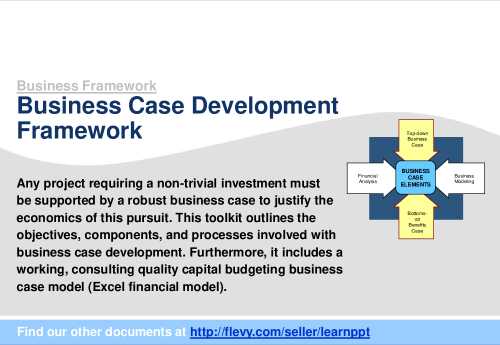
The Business Case is an instrumental tool in both justifying a project (requiring a capital budgeting decision), as well as measuring the project's success. The Business Case model typically takes the form of an Excel spreadsheet and quantifies the financial components of the project, [read more]
Do You Want to Implement Business Best Practices?
You can download in-depth presentations on 100s of management topics from the FlevyPro Library. FlevyPro is trusted and utilized by 1000s of management consultants and corporate executives.
For even more best practices available on Flevy, have a look at our top 100 lists:
These best practices are of the same as those leveraged by top-tier management consulting firms, like McKinsey, BCG, Bain, and Accenture. Improve the growth and efficiency of your organization by utilizing these best practice frameworks, templates, and tools. Most were developed by seasoned executives and consultants with over 20+ years of experience.
Readers of This Article Are Interested in These Resources
This is a very comprehensive document with over 400+ slides--covering 58 common management consulting frameworks and methodologies (listed below in alphabetical order). A detailed summary is provided for each business framework. The frameworks in this deck span across Corporate Strategy, [read more]
Recent McKinsey research surveyed a large set of global executives and suggests that many companies, these days, are in a nearly permanent state of organizational flux. A rise in efforts in Organizational Design is attributed to the accelerating pace of structural change generated by market [read more]
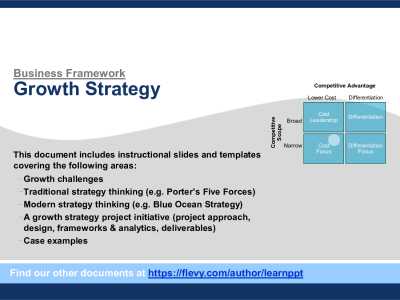
The reality is: all businesses face the challenge of achieving sustainable Growth. They need viable Growth Strategies.
So, what is Growth Strategy?
It is the organization's high-level Corporate Strategy Plan that outlines everything the organization needs to do to achieve its goals for [read more]
This presentation is a comprehensive collection of over 1100 fully editable consulting diagrams, templates, graphics and icons to enhance your PowerPoint presentations, increase productivity and create visual impact. Simply copy and paste, resize or change the color according to your preference. [read more]
 Domestic and family violence is not only a social issue—it is increasingly a workplace and workforce issue. Many multinational organizations employ expatriates, sponsored employees, and partners of globally mobile staff who rely on partner visas for residency. When a relationship becomes unsafe, visa dependency can create significant personal and legal risk.