Editor's Note: Take a look at our featured best practice, Cost Segregation Study: Multiple Property Class Analysis (Excel workbook). Accountants, accounting firms, and real estate property owners can all benefit from this cost segregation study (CSS) template. It makes the estimated benefit easy to figure out and has flexible assumptions for high level or detailed segregation analysis. You get a summary of cost allocations [read more]
* * * *
 Commercial real estate has a way of humbling even experienced investors. A deal looks strong at closing. The rent roll checks out. The projections look safe. Then, six months in, the gaps show. Expenses run higher than expected. A tenant pushes for concessions. Debt feels heavier.
The difference comes down to how you think about the deal before you buy. Strong operators don’t merely chase good properties. They think like capital allocators. They look at how each decision affects cash flow and leverage. They treat every asset as part of a larger system. That shift in thinking separates stable returns from constant surprises.
Want to be sure you get outstanding ROI for your commercial real estate assets? Here are six strategies to maximize returns.
1. Diversify Asset Types and Locations
A portfolio can look strong when one area is doing well. Maybe your office properties are fully leased. Or you’re investing in a city that’s booming. But then, something shifts. Demand slows in that sector. A local market cools off. Suddenly, your income depends on one moving piece. This can happen if your real estate investment business leans too heavily on one thing that’s currently working.
Diversification doesn’t mean spreading out randomly. It’s about balancing exposure. Different property types respond to different pressures. Industrial demand doesn’t move like retail. A regional city won’t follow the same cycle as a major business hub. Consider expanding into areas that behave differently. That way, your portfolio stays steady through changes. Returns feel more controlled. Growth becomes easier to manage.
2. Target Properties with Structural Upside
Some properties perform because they’re set up to win. It all sits in their structure. Layout. Zoning flexibility. Tenant mix potential. Many investors overlook these factors because they’re harder to quantify. But the more flexible the property, the more lucrative it can become.
You’re not just buying a building. You think about how it can evolve. Can the space be reconfigured for higher-paying tenants? Can underused areas generate new income? Look for assets with optionality built in. That’s why having an integrated real estate strategy that involves you from start to finish often pays off. It gives you room to act. Not just plan once. Over time, these properties tend to outperform static ones that rely only on market appreciation.
3. Optimize Capital with Strategic Financing
Most investors focus only on the purchase price. Fewer spend the same energy on how the deal is financed. That’s a missed opportunity. Financing shapes your returns long after the deal closes. A slightly better rate. More flexible terms. Better alignment with cash flow. These change the entire performance profile of an asset. They also improve how much income you keep.
One approach is to craft a smart DSCR loan strategy for properties that fit. These loans base approval on the property’s income. Not personal earnings. That shifts the focus to how well the asset performs on its own.
For investors, this can unlock higher leverage on strong cash-flow deals. It also preserves personal capital for other opportunities. That combo accelerates portfolio growth and lifts overall returns. When used well, it allows you to scale faster. All while keeping risk tied to actual property performance. Not external factors.
4. Prioritize High-Credit Tenants
Not all tenants carry the same weight. A full building means little if the income behind it feels uncertain. Payment delays. Early exits. Constant renegotiations. These issues are draining. Many investors learn this the hard way. Usually after chasing occupancy over quality.
For stable returns, focus on attracting high-quality tenants from the start. Strong tenants bring consistency. They stay longer. They create fewer operational issues. In competitive markets, this also helps you dominate your market over time.
Invest in spaces that appeal to established businesses. Think premium office spaces if your target is a regional headquarters with long-term plans. Offer lease terms that reward stability. Not short-term occupancy. Keep the property well-managed. Be selective during leasing. It may take longer to fill the space. But it pays off in smoother cash flow and fewer disruptions.
5. Monetize Ancillary Revenue Streams
Rent is a property’s primary source of income. So, it often gets all the attention. But many assets have other opportunities sitting in plain sight. Unused spaces. Underpriced services. Features that tenants would pay for if offered.
Start looking at your property like a platform. Not just a lease. Can parking be priced more strategically? Can storage spaces be leased separately? Are there signage opportunities? Even small additions can boost income. They lift overall returns. All without requiring major capital investment.
6. Stress-Test Regularly
A portfolio can look strong and still carry hidden risk. Stable tenants today may not stay forever. Interest rates can shift. Expenses can rise unexpectedly. These scenarios don’t always show up in standard projections. If you don’t account for them, they can erode your returns.
That’s why stress-testing your portfolio matters. Run scenarios where income drops. Model higher vacancy. Adjust for rising debt costs. See how each property holds up under pressure. Use these insights to guide your purchase decisions. Look for properties that perform well even under stress. Rebalance where needed. Invest in stronger assets to balance out weaker ones. This approach helps you buy smarter. It keeps returns more reliable.
Conclusion
The patterns are clear. Strong returns follow strong structure. Diversified assets hold up better under pressure. High-credit tenants smooth out cash flow. Prioritize them if you want maximum impact from your investments.
Take a closer look at how your current deals are set up. Where does the cash flow feel tight? Where does the risk sit? Refine those areas. In your next deals, your portfolio will behave differently. It gets calmer. More predictable. And most importantly, a lot more lucrative.
Excel workbook
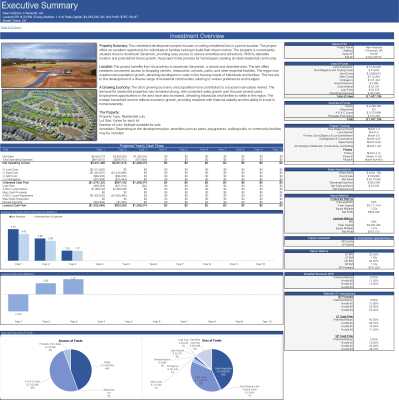
Real Estate - Multiphase Lot Development
The Raw Land Development Model is an Excel-based analysis tool designed to assist in the financial analysis of a land development project.
It provides a comprehensive overview of the project's financial performance and allows for the evaluation of
[read more]
Do You Want to Implement Business Best Practices?
You can download in-depth presentations on Real Estate and 100s of management topics from the FlevyPro Library. FlevyPro is trusted and utilized by 1000s of management consultants and corporate executives.
For even more best practices available on Flevy, have a look at our top 100 lists:
These best practices are of the same as those leveraged by top-tier management consulting firms, like McKinsey, BCG, Bain, and Accenture. Improve the growth and efficiency of your organization by utilizing these best practice frameworks, templates, and tools. Most were developed by seasoned executives and consultants with over 20+ years of experience.
Readers of This Article Are Interested in These Resources
Excel workbook
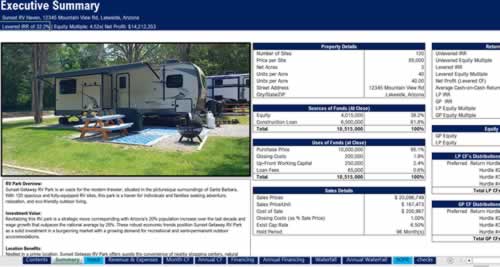
This Excel template is a specialized tool for assessing RV park acquisitions' feasibility. Developed with the precision needed for real estate investment decision-making, this dynamic financial model simplifies the evaluation process for purchasing, operating, and selling an RV park property. It
[read more]
Excel workbook
An Excel-based analysis tool for the ground-up development, operation, and ultimate disposition of a single- or multi-tenant Industrial/retail property with or without streams.
The model is monthly in nature, and it is a 100% unlocked Excel file with fully transparent formulas that can be
[read more]
Excel workbook
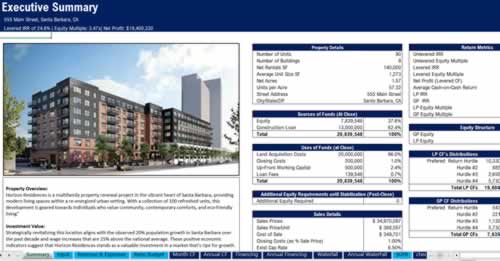
This Excel template is an intuitive and comprehensive solution tailored for evaluating the financial viability of multifamily property investments. Crafted with institutional-grade precision, it features a dynamic financial model streamlining the analysis of multifamily acquisitions for
[read more]
Excel workbook
REAL ESTATE - FIX AND FLIP PRO-FORMA MODEL
This meticulously crafted Financial Model for Analyzing Fix and Flip Deals is a powerful yet user-friendly template designed to provide you with all the essential metrics you need for successful house-flipping ventures.
KEY FEATURES
Property
[read more]