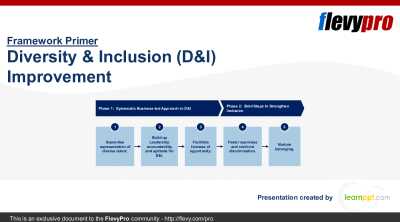
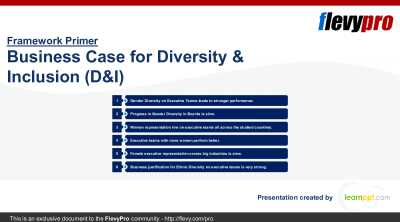
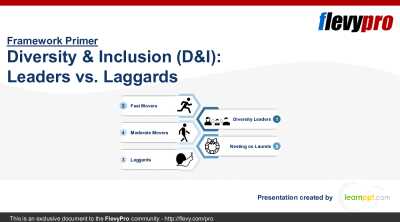
Editor's Note: Take a look at our featured best practice, Core Indicators of Inclusion (25-slide PowerPoint presentation). Diversity and Inclusion (D&I) involve actions beyond policies, programs, or headcounts. When looking at D&I superficially at an organizational aggregate level, organizations may appear to have strong Diversity representation. However, if we look more closely, we see issues of Inclusion.
For [read more]
Also, if you are interested in becoming an expert on Human Resource Management (HRM), take a look at Flevy's Human Resource Management (HRM) Frameworks offering here. This is a curated collection of best practice frameworks based on the thought leadership of leading consulting firms, academics, and recognized subject matter experts. By learning and applying these concepts, you can you stay ahead of the curve. Full details here.
* * * *
As ESG, inclusion, and stakeholder responsibility continue to rise in importance, LGBTQ asylum applications in Australia represent an issue that business leaders, nonprofit partners, and policy-minded executives may increasingly need to understand. While asylum claims are highly personal for applicants, they also raise broader questions around human rights, institutional support, confidentiality, and trauma-informed engagement. This article outlines 10 key facts about LGBTQ asylum seekers in Australia, helping readers better understand how these applications are assessed, where the main challenges arise, and why support systems matter.
Definition of LGBTQ Asylum Seekers
LGBTQ asylum seekers are those who are afraid for their lives or face mistreatment in their countries because of their sexual orientation or sexuality. Such people are often discriminated against, even killed, and imprisoned in many places simply because of who they are. And that fear of being persecuted can lead many to apply for LGBTQ asylum in Australia or seek asylum in another nation.
Grounds for Protection
Australia’s asylum system is designed to protect people from serious harm. And if someone is assaulted for being a gay person or trans person, that may be seen as a legitimate basis for refugee protection. Asylum laws uphold a right to live free from fear and persecution based on identity.
Importance of Credibility
A strong applicant narrative is vital in the decision-making process. Decision-makers frequently consider personal narratives, corroboration, and statement congruity. Full and honest explanations always bolster an application; any discrepancy will cause everyone to have doubts about the integrity of the application.
Evidence Can Be Difficult to Provide
Barriers faced by asylum seekers make it challenging to gather supporting evidence for claims. In such countries, same-sex relationships and diverse gender identities are often criminalized and may not be on the public record, or at least not available through official sources. In such cases, personal testimonies or statements from friends, community members, or social media activity related to harassment they endured can help.
Privacy and Confidentiality
In Australia, asylum claims must be dealt with in a confidential manner. The identities of applicants, such as their sexual orientation or gender identity, are kept confidential throughout the entire process. In this way, information does not get passed to anyone in particular in the home country of the applicant.
The Role of Interviews
The asylum assessment is primarily composed of interviews. Applicants tell their stories in these meetings and explain why they would not be safe on their return to their homeland. With that said, if you have a solid example prepared beforehand, interviewers are likely to dive into details to get a complete picture of the situation in which they found themselves.
Risks of Internal Relocation
Authorities ask if an applicant could be safely accommodated in another part of their home country. Protection may be more likely if the applicant will still face prejudice or harm in other parts of the country. An applicant can only seek a nationwide remedy if the danger is present nationwide.
Psychological Impact
Applying for asylum can be stressful, especially for LGBTQ individuals who have experienced trauma. Psychological distress, anxiety, and uncertainty are common during the waiting period. Accessing support groups and mental health services can help applicants manage these challenges.
The Importance of Legal Advice
Having a legal professional representing you could be the difference between success and failure in your asylum case. Seasoned advisors already know what’s legally necessary and how best to tell an applicant’s story. Having proper guidance in the beginning greatly sets one up to succeed and avoid the most common pitfalls.
Community Support Matters
Being supported by LGBTQ organizations and networks can become extremely helpful. These groups provide not only emotional but also practical resources and housing assistance. The isolation most asylum seekers endure can be alleviated by associating with others living through comparable experiences.
Conclusion
LGBTQ asylum applications in Australia sit at the intersection of legal protection, personal safety, and institutional responsibility. For corporate executives and other organizational leaders, understanding this process is less about legal interpretation and more about building informed awareness of the risks, sensitivities, and support needs involved. Viewed through the lens of ESG, inclusion, and responsible leadership, this topic underscores the value of empathy, credible information, and effective support ecosystems. In that context, a stronger understanding can help organizations engage more thoughtfully with employees, communities, and partners affected by these issues.
Modern organizations recognize that to be leaders in their industry, they need a workforce that represents the society in which it exists. But while many companies are putting their best efforts into recruiting a more diverse workforce, it's the experience created for employees that will ultimately [read more]
Want to Achieve Excellence in Human Resource Management (HRM)?
Gain the knowledge and develop the expertise to become an expert in Human Resource Management (HRM). Our frameworks are based on the thought leadership of leading consulting firms, academics, and recognized subject matter experts. Click here for full details.
The purpose of Human Resources (HR) is to ensure our organization achieves success through our people. Without the right people in place—at all levels of the organization—we will never be able to execute our Strategy effectively.
This begs the question: Does your organization view HR as a support function or a strategic one? Research shows leading organizations leverage HR as a strategic function, one that both supports and drives the organization's Strategy. In fact, having strong HRM capabilities is a source of Competitive Advantage.
This has never been more true than right now in the Digital Age, as organizations must compete for specialized talent to drive forward their Digital Transformation Strategies. Beyond just hiring and selection, HR also plays the critical role in retaining talent—by keeping people engaged, motivated, and happy.
Diversity pertains to representation of races, ethnicities, and other minority groups in an entity or, in other words, the make-up of an organization. Inclusion, on the other hand, represents the degree of value given to inputs, existence, and viewpoints of various groups of people and the extent [read more]
Diversity and Inclusion (D&I) are 2 sides of the same coin--each with its unique effect, yet they are inseparable and have to be considered together.
D&I involves actions beyond policies, programs, or headcounts. Diversity pertains to representation of races, ethnicities, and other minority [read more]
Diversity and Inclusion (D&I) are 2 sides of the same coin--each with its unique effect, yet they are inseparable and have to be considered together.
D&I involves actions beyond policies, programs, or headcounts. Diversity pertains to representation of races, ethnicities, and other minority [read more]
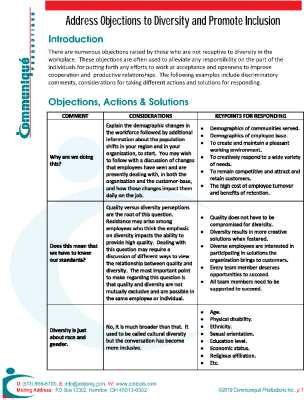
There are numerous objections raised by those who are not receptive to diversity in the workplace. These objections are often used to alleviate any responsibility on the part of the individuals for putting forth any efforts to work at acceptance and openness to improve cooperation and productive [read more]
 As ESG, inclusion, and stakeholder responsibility continue to rise in importance, LGBTQ asylum applications in Australia represent an issue that business leaders, nonprofit partners, and policy-minded executives may increasingly need to understand. While asylum claims are highly personal for applicants, they also raise broader questions around human rights, institutional support, confidentiality, and trauma-informed engagement. This article outlines 10 key facts about LGBTQ asylum seekers in Australia, helping readers better understand how these applications are assessed, where the main challenges arise, and why support systems matter.