
This deck is a training presentation of a leading consulting firm for new hire regarding industry analysis.
The contents include:
• Industry analysis in the context of corporate strategy
• Starting point: Key questions/issue tree/research plan
• Determine relevant industry metrics and aspects
• Collect data and present them graphically
• Apply key analysis models/framework
• Evaluate implications and derive insights
• Industry analysis case examples (insurance, consumer products, retail)
See also "Competitive Analysis"
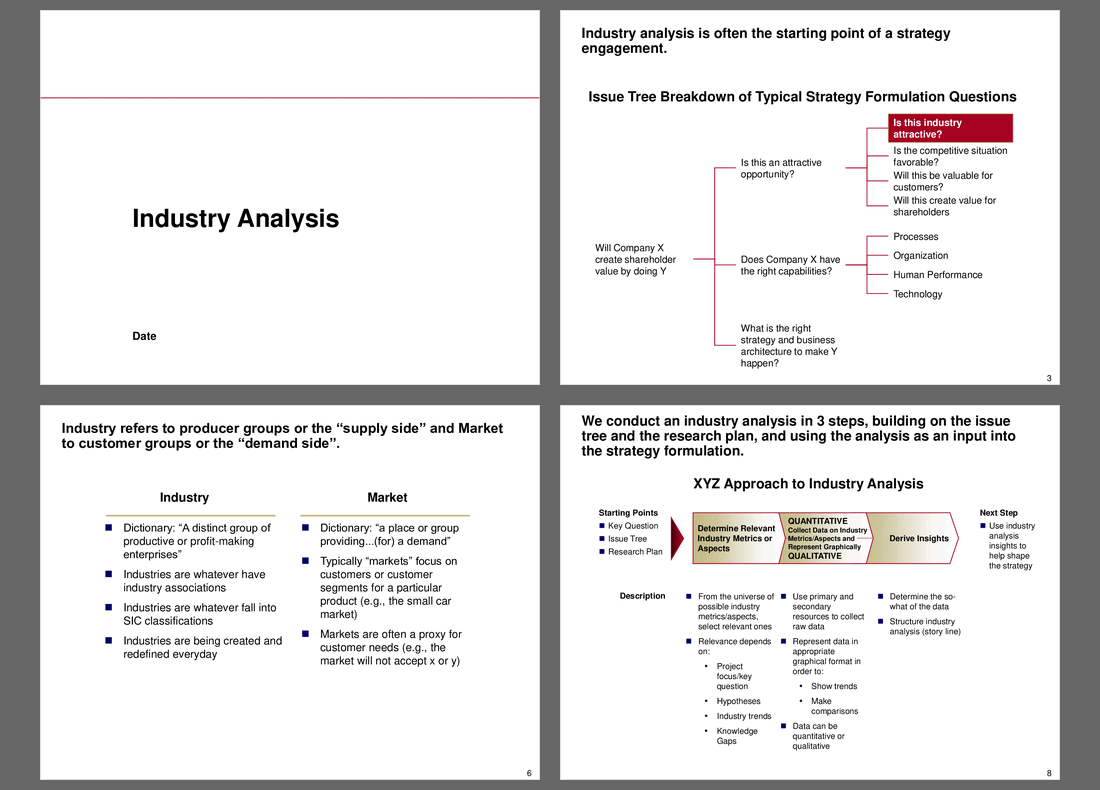
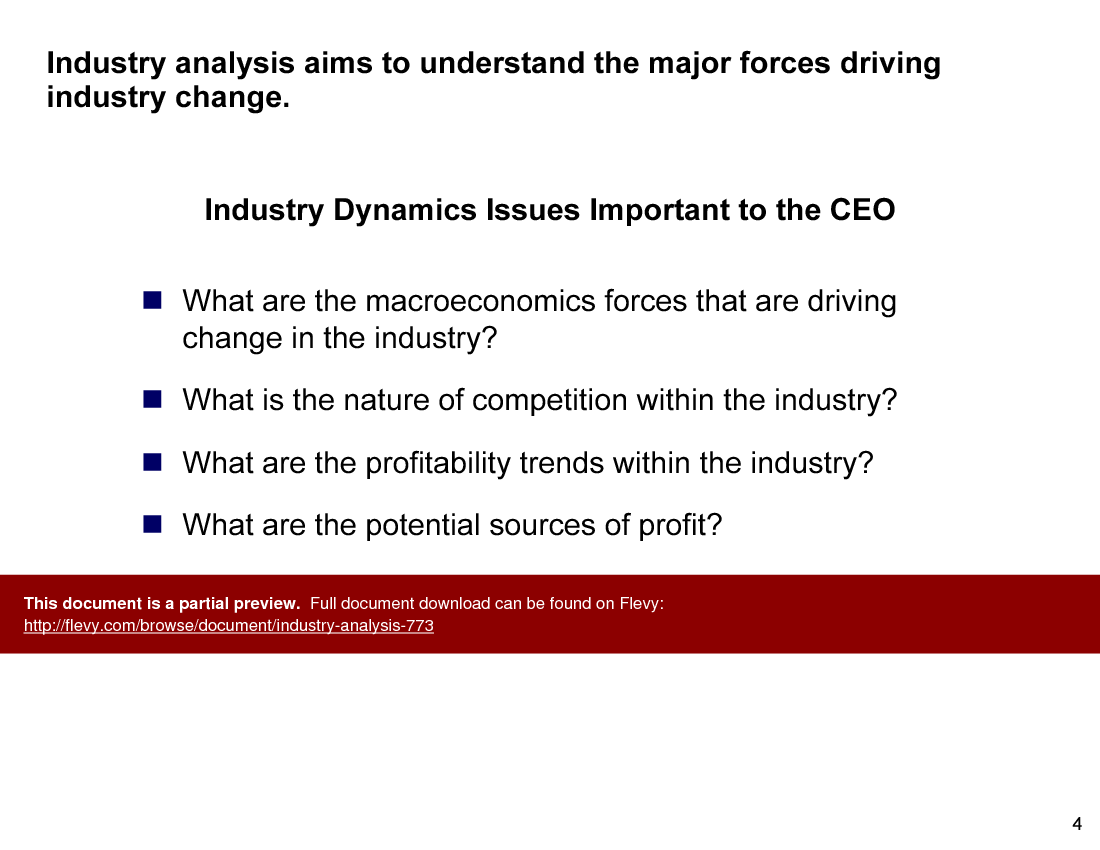
This presentation provides a comprehensive approach to understanding the major forces driving industry change. It covers essential industry dynamics issues that are crucial for CEOs, such as macroeconomic forces, competition nature, profitability trends, and potential profit sources. The deck also delves into the XYZ approach to industry analysis, offering a structured methodology for evaluating industry metrics and aspects.
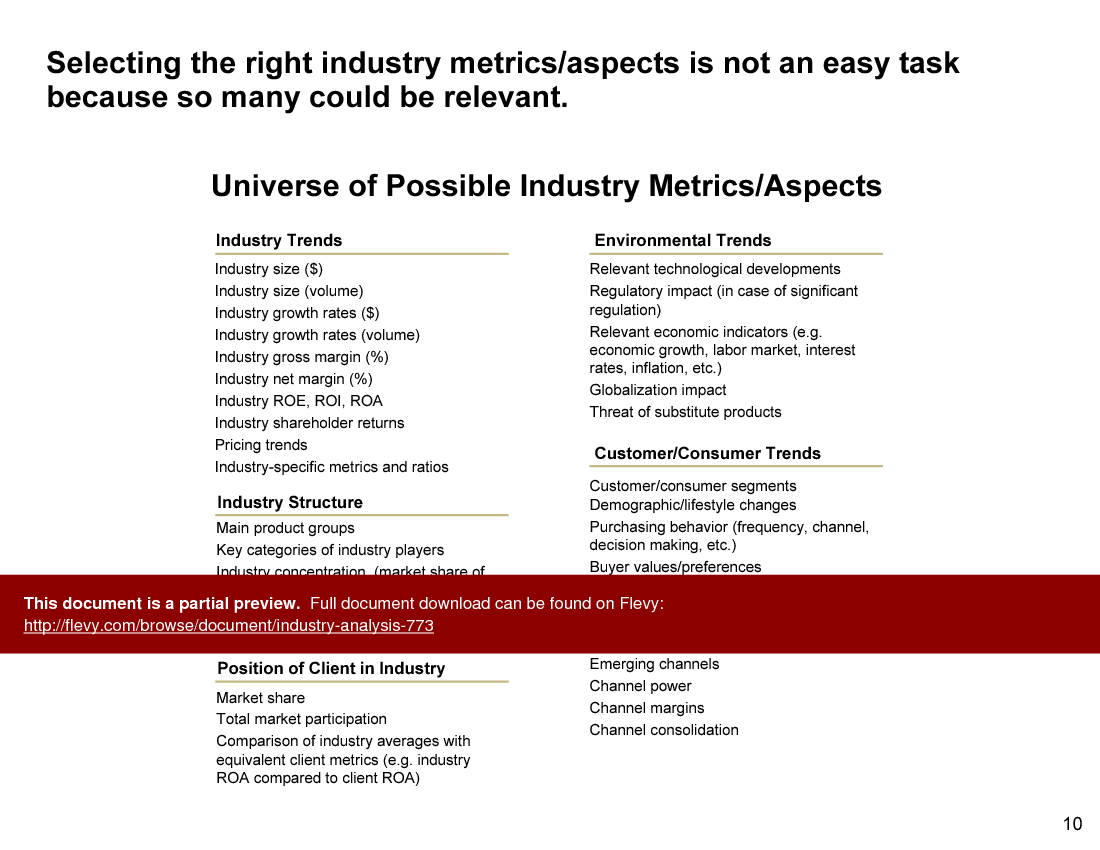
Choosing the right industry metrics is a challenging task due to the vast number of relevant factors. The presentation outlines a universe of possible industry metrics and aspects, including industry trends, environmental trends, customer/consumer trends, and the position of the client in the industry. This ensures a thorough analysis that captures all critical dimensions of the industry landscape.
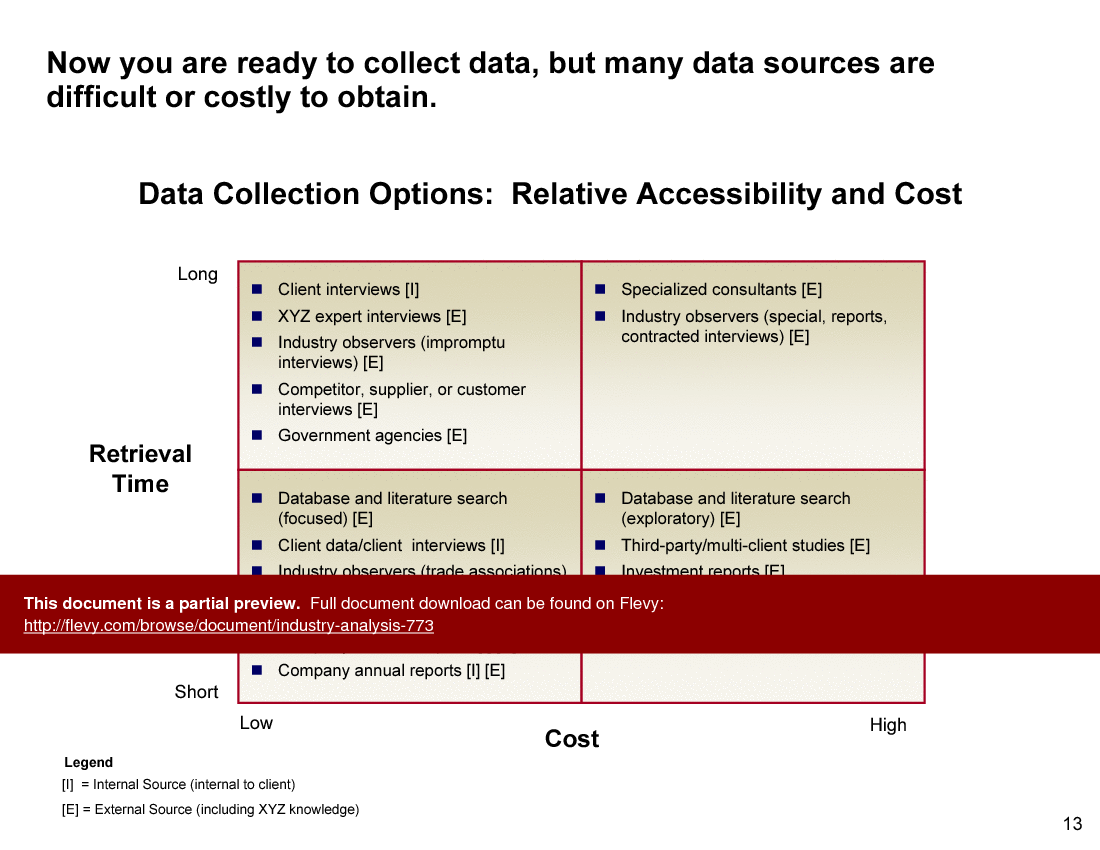
Once the relevant metrics are determined, the next step is data collection. The presentation highlights various data collection options, considering relative accessibility and cost. It emphasizes the importance of using both internal and external sources, such as client interviews, expert interviews, and government agencies, to gather comprehensive data.
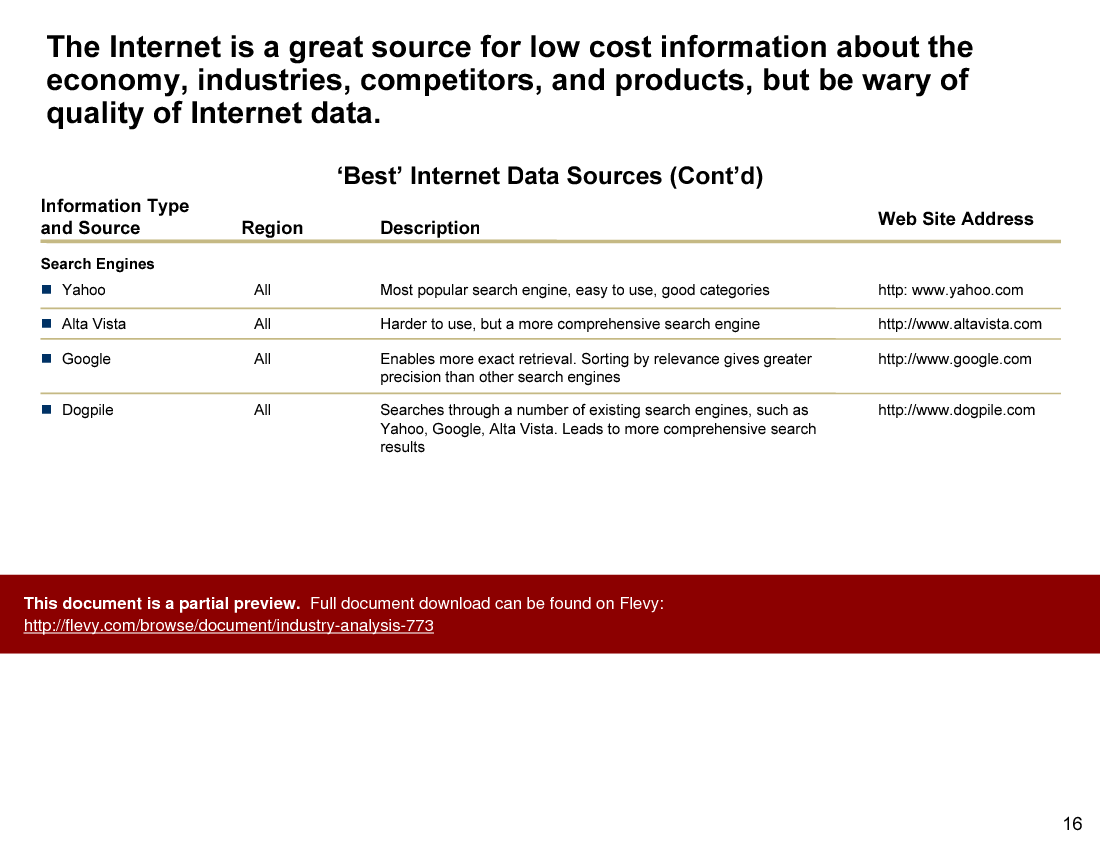
The presentation also addresses the use of the Internet as a valuable source for low-cost information about the economy, industries, competitors, and products. However, it cautions against the quality of Internet data and provides a list of the best Internet data sources, including search engines like Yahoo, Alta Vista, Google, and Dogpile, to ensure reliable and relevant information.
Got a question about the product? Email us at support@flevy.com or ask the author directly by using the "Ask the Author a Question" form. If you cannot view the preview above this document description, go here to view the large preview instead.
Executive Summary
The Industry Analysis PPT provides a structured approach to understanding industry dynamics, competitor landscapes, and market opportunities, designed with the rigor expected from a McKinsey, Bain, or BCG-quality presentation (consulting-grade; not affiliated). This presentation equips corporate executives and consultants with the tools needed to conduct thorough industry analyses, enabling them to identify key drivers of change, assess competitive positioning, and formulate actionable strategies. Users will gain insights into industry metrics, competitive forces, and market trends, allowing for informed decision-making that drives shareholder value.
Who This Is For and When to Use
• Corporate executives seeking to evaluate market opportunities and competitive threats
• Strategy consultants conducting industry assessments for clients
• Business development teams exploring new market entries
• Product managers analyzing market trends and customer needs
Best-fit moments to use this deck:
• During strategic planning sessions to inform decision-making
• When assessing the viability of entering new markets or launching new products
• For competitive benchmarking and performance evaluation
• In workshops focused on identifying growth opportunities and risks
Learning Objectives
• Define key industry metrics and their relevance to strategic decision-making
• Analyze competitive dynamics using established frameworks
• Identify macroeconomic forces impacting industry trends
• Develop actionable insights from qualitative and quantitative data
• Articulate the implications of industry analysis on strategic options
• Utilize graphical representations to communicate findings effectively
Table of Contents
• Introduction to Industry Analysis (page 2)
• XYZ Approach to Industry Analysis (page 3)
• Industry Dynamics Issues Important to the CEO (page 4)
• Defining Industry vs. Market (page 5)
• Steps in Conducting Industry Analysis (page 8)
• Selecting Relevant Industry Metrics (page 10)
• Data Collection Options (page 13)
• Graphical Representation of Data (page 17)
• Industry Case Examples (page 33)
Primary Topics Covered
• Industry Dynamics - Understanding the major forces driving change within an industry, including macroeconomic factors and competitive pressures.
• Competitive Analysis Frameworks - Utilizing models such as Porter’s Five Forces to assess industry structure and competitive intensity.
• Data Collection Techniques - Identifying primary and secondary sources for gathering relevant industry data.
• Graphical Data Representation - Techniques for visually presenting quantitative and qualitative data to enhance understanding.
• Market Segmentation - Analyzing customer segments and their evolving needs to inform product and service strategies.
• Regulatory Impact - Evaluating how regulations affect industry operations and competitive dynamics.
Deliverables, Templates, and Tools
• Industry analysis framework template for structuring assessments
• Competitive landscape assessment model to evaluate market players
• Data collection checklist for identifying relevant sources
• Graphical representation templates for visualizing industry metrics
• Case study examples for practical application of industry analysis
• Insights derivation guide to articulate findings and implications
Slide Highlights
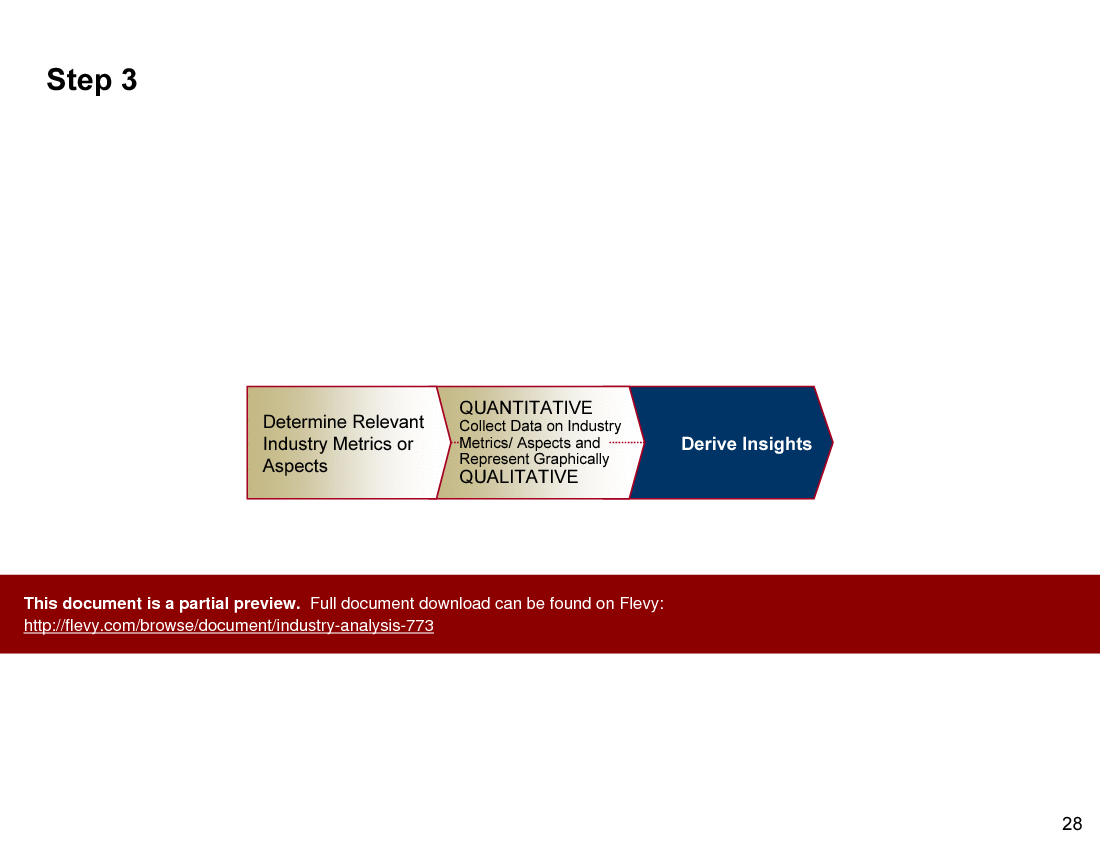
• Overview of the XYZ approach to industry analysis, detailing the three-step process.
• Graphical representation of industry dynamics and competitive forces using the Five Forces model.
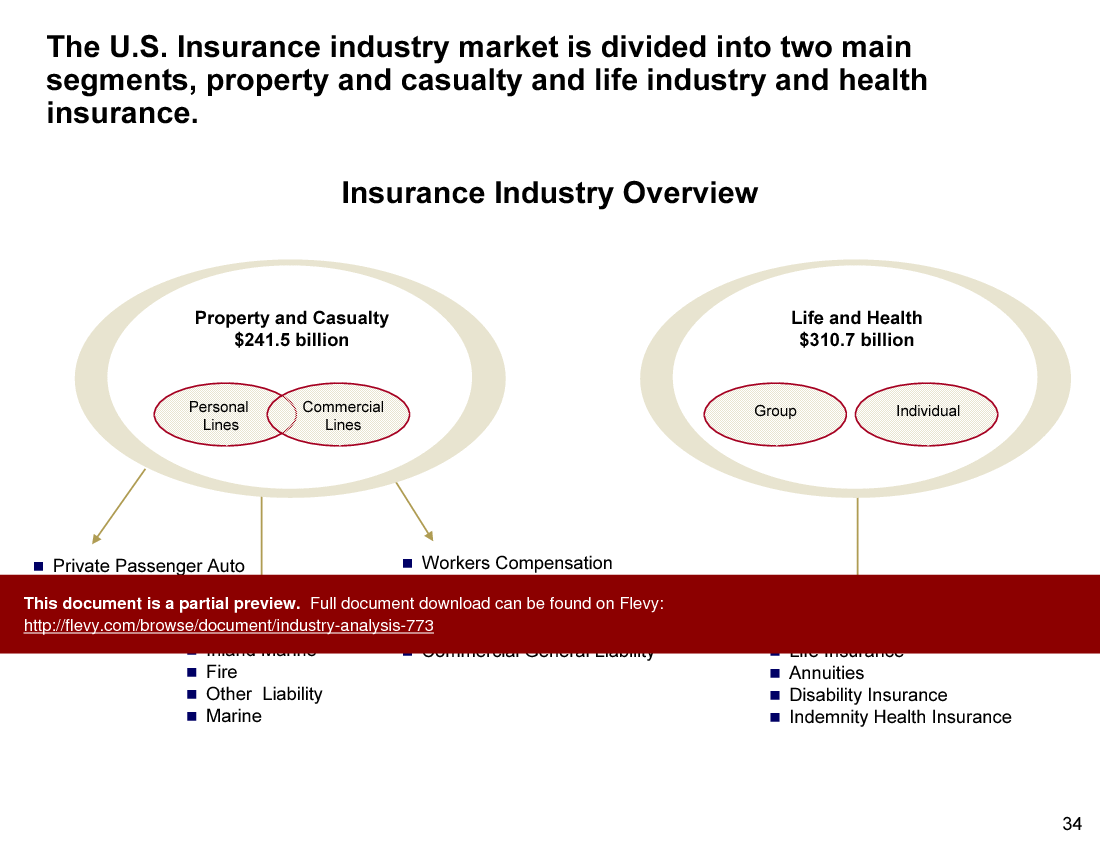
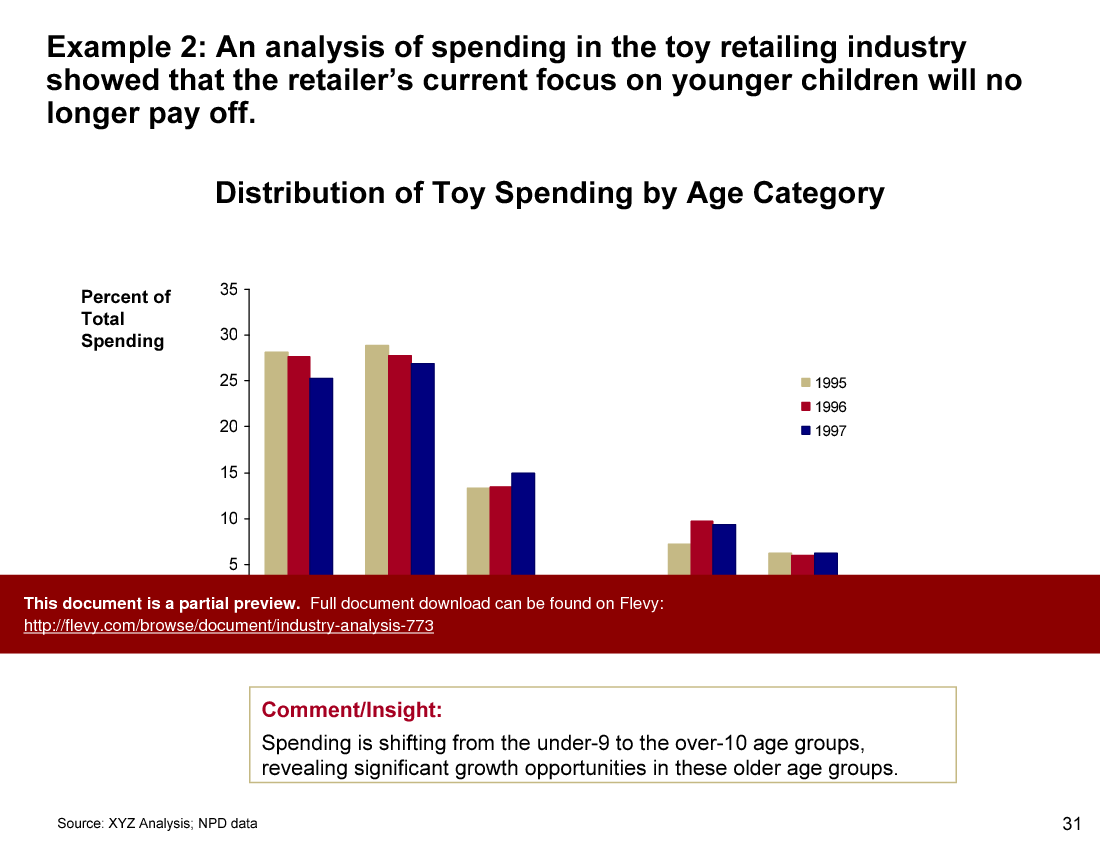
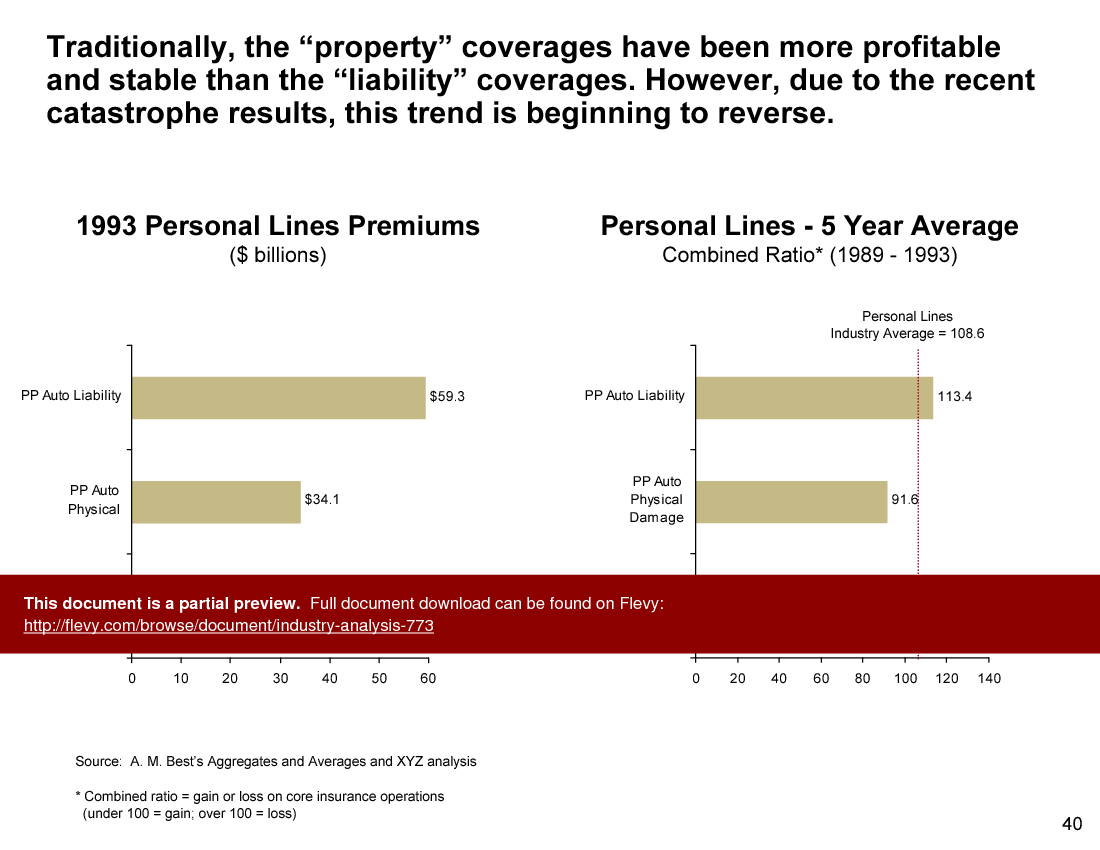
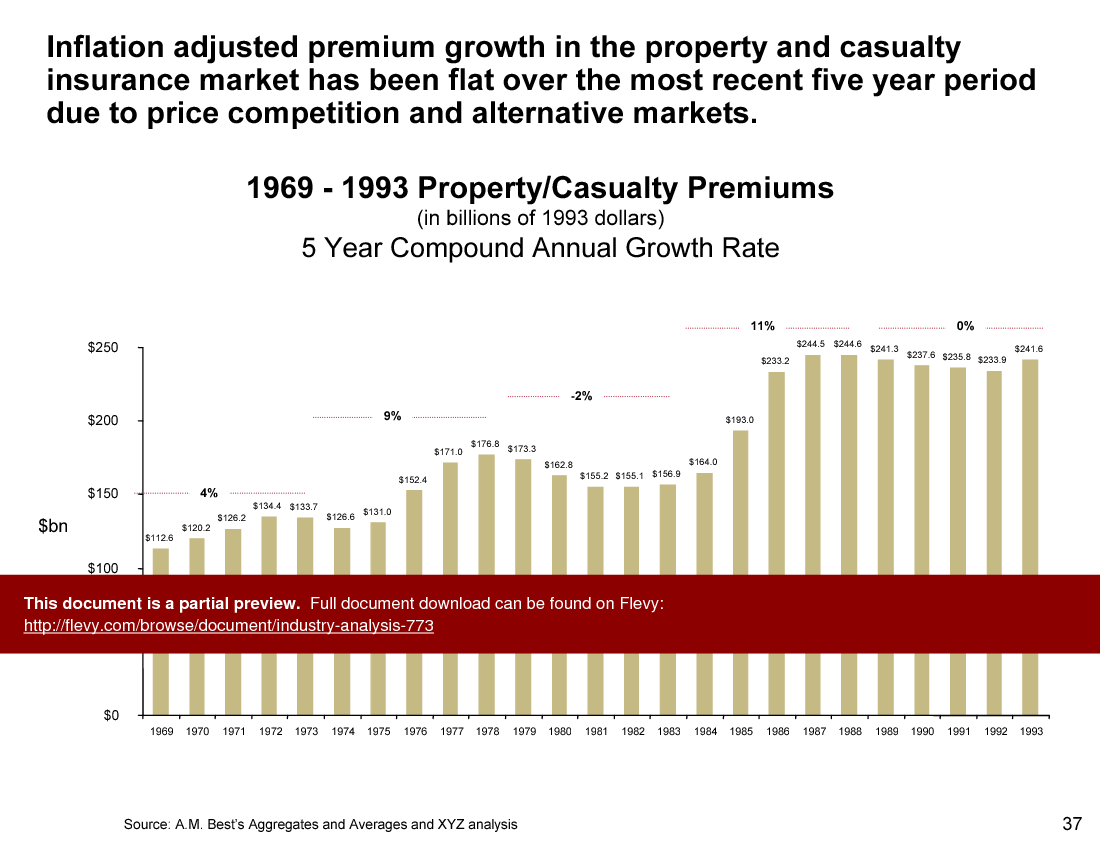
• Case examples illustrating industry analysis applications in various sectors, including insurance and consumer products.
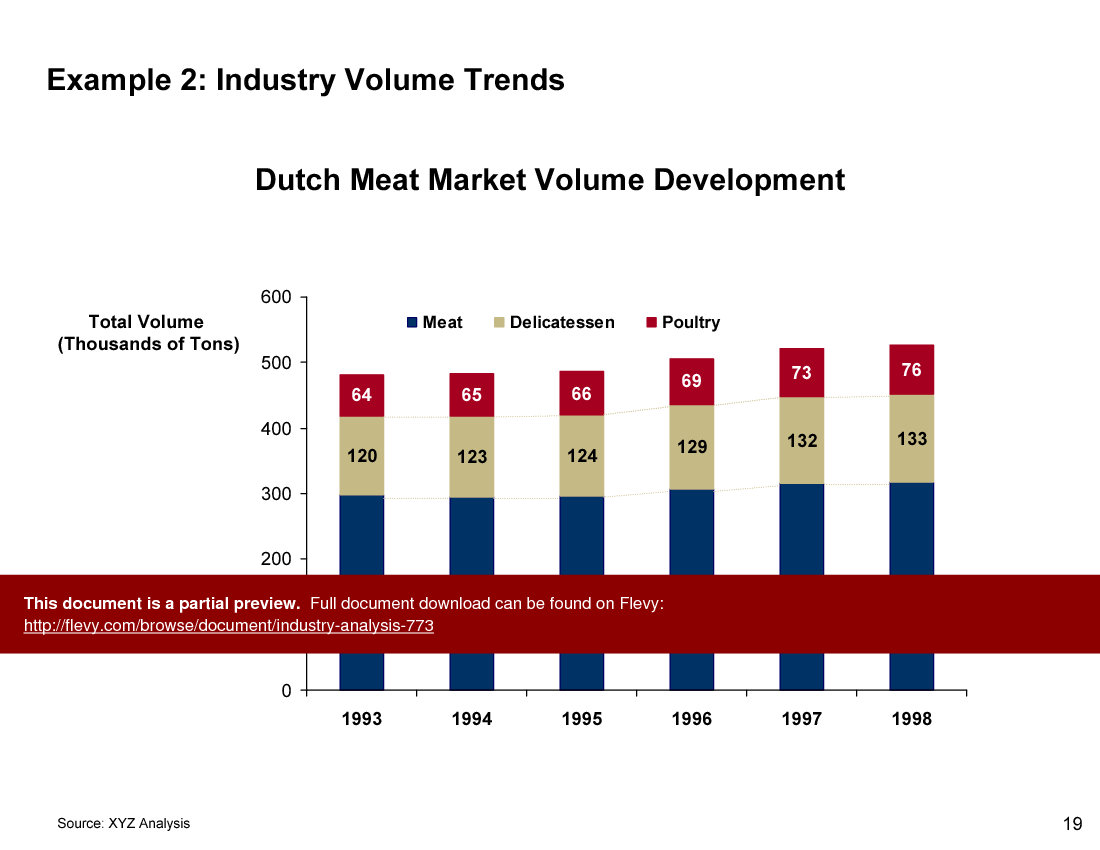
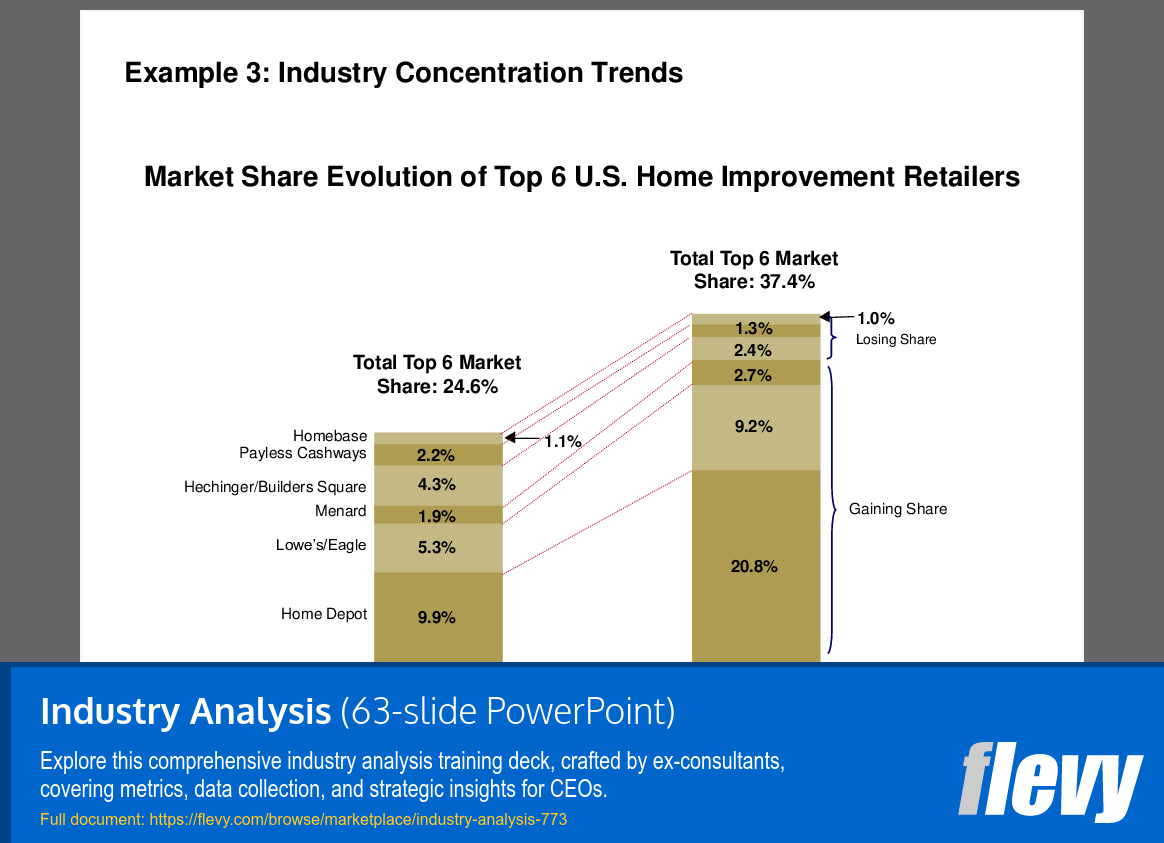
• Visuals depicting market share evolution and industry concentration trends.
• Insights derived from qualitative data analysis and implications for strategic planning.
Potential Workshop Agenda
Introduction to Industry Analysis (30 minutes)
• Overview of the importance of industry analysis
• Discussion of key industry dynamics and competitive forces
Data Collection Techniques (45 minutes)
• Review of primary and secondary data sources
• Group exercise on identifying relevant metrics
Graphical Data Representation (30 minutes)
• Techniques for visualizing industry data
• Hands-on practice with graphical templates
Insights Derivation and Application (60 minutes)
• Analyzing case studies to derive actionable insights
• Group discussion on implications for strategic options
Customization Guidance
• Tailor the industry metrics and aspects based on specific project focus and hypotheses.
• Adjust the graphical representation templates to align with client branding and presentation standards.
• Incorporate client-specific data and case studies to enhance relevance and applicability.
Secondary Topics Covered
• Market share analysis and competitive positioning
• Trends in consumer behavior and purchasing patterns
• Impact of technological advancements on industry dynamics
• Economic indicators influencing market conditions
• Regulatory changes affecting industry operations
FAQ
What is the purpose of industry analysis?
Industry analysis aims to understand the competitive landscape and market dynamics, enabling organizations to make informed strategic decisions.
How do I select relevant industry metrics?
Choose metrics based on project focus, hypotheses, and knowledge gaps to ensure a targeted analysis.
What data sources should I consider for industry analysis?
Utilize a mix of primary sources (client interviews, expert insights) and secondary sources (industry reports, government data) for comprehensive data collection.
How can graphical representation enhance my analysis?
Visuals can simplify complex data, highlight trends, and facilitate clearer communication of insights to stakeholders.
What frameworks can I use for competitive analysis?
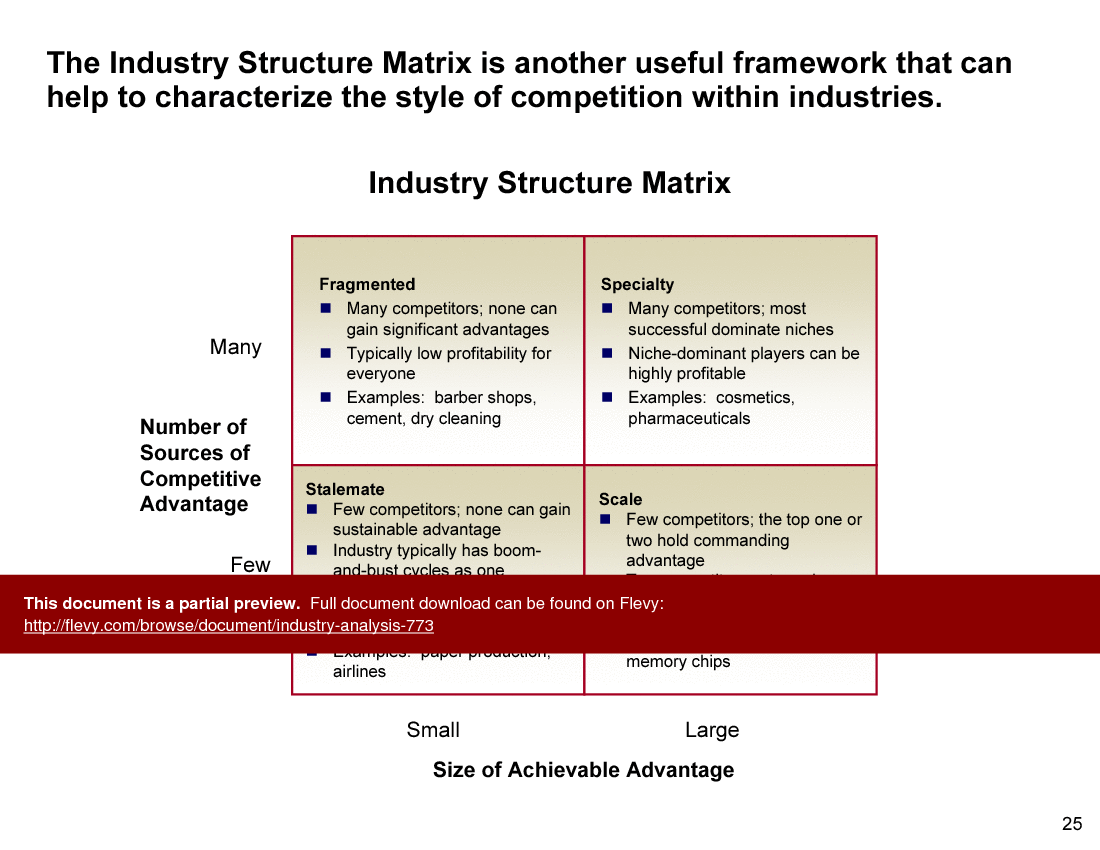
Porter’s Five Forces model and the Industry Structure Matrix are effective tools for assessing competitive dynamics and market positioning.
How do I derive actionable insights from my analysis?
Focus on identifying trends, implications for strategy, and opportunities or threats that arise from the data.
Can I customize the templates provided in the deck?
Yes, templates can be tailored to fit specific client needs, branding, and project requirements.
What are the key challenges in conducting industry analysis?
Challenges include data accessibility, ensuring data quality, and selecting the most relevant metrics for analysis.
How often should industry analysis be conducted?
Regular analysis is recommended to stay updated on market trends, competitive dynamics, and changing consumer needs.
What role does regulation play in industry analysis?
Regulatory factors can significantly impact industry operations, competitive dynamics, and market opportunities, making them crucial for analysis.
Glossary
• Industry Dynamics - The forces and trends that shape the competitive landscape within an industry.
• Competitive Analysis - The assessment of competitors to understand their strengths, weaknesses, and market positioning.
• Market Segmentation - The process of dividing a market into distinct groups of buyers with different needs or characteristics.
• Data Collection - The systematic gathering of information from various sources to inform analysis.
• Graphical Representation - The visual display of data to enhance understanding and communication of insights.
• Porter’s Five Forces - A framework for analyzing the competitive forces within an industry.
• Regulatory Impact - The effects of laws and regulations on industry operations and competitive dynamics.
• Insights Derivation - The process of extracting meaningful conclusions from data analysis.
• Market Share - The portion of a market controlled by a particular company or product.
• Economic Indicators - Statistics that provide information about the economic performance of a country or region.
• Consumer Behavior - The study of how individuals make decisions to spend their available resources.
• Industry Structure Matrix - A tool used to characterize the style of competition within industries.
• Underwriting Gain/Loss - The difference between premiums collected and claims paid in the insurance industry.
• Investment Income - Earnings generated from investments, crucial for insurance companies due to underwriting volatility.
• Market Concentration - The extent to which a small number of firms dominate total sales in a market.
• CAGR - Compound Annual Growth Rate; a useful measure of growth over multiple time periods.
• Value Chain - The full range of activities that businesses engage in to bring a product or service to market.
• Market Trends - Patterns and tendencies observed in the market over time.
• Customer Needs - The requirements and desires of consumers that drive their purchasing decisions.
• Competitive Forces - The various pressures that affect the competitive environment of an industry.
Source: Best Practices in Industry Analysis, Environmental Analysis PowerPoint Slides: Industry Analysis PowerPoint (PPT) Presentation Slide Deck, Documents & Files
This document is available as part of the following discounted bundle(s):
Save %!
Essential Consulting Knowledge Builder
This bundle contains 21 total documents. See all the documents to the right.
|
Download our FREE Strategy & Transformation Framework Templates
Download our free compilation of 50+ Strategy & Transformation slides and templates. Frameworks include McKinsey 7-S, Balanced Scorecard, Disruptive Innovation, BCG Curve, and many more. |