
Editor Summary
Industry Analysis is a 63-slide PowerPoint training presentation that provides a structured approach to assessing industry dynamics, competitor landscapes, and market opportunities, developed as a training deck by a leading consulting firm and presented at a consulting-grade level (McKinsey/Bain/BCG-quality).
Read moreCovers a three-step XYZ approach, Porter’s Five Forces, the Industry Structure Matrix, and includes 6 deliverables/templates (industry framework, competitive landscape model, data collection checklist, graphical templates, case studies, insights guide). Sold as a digital download on Flevy with immediate digital download.
Use this deck when leadership or project teams must evaluate market entry, competitive threats, or strategic positioning during planning cycles, product launches, or business development reviews.
Corporate executives mapping market opportunities by comparing industry metrics, regulatory impact, and profitability trends to inform strategy decisions.
Strategy consultants building an industry assessment and competitive intensity analysis using Porter’s Five Forces and the Industry Structure Matrix.
Business development teams sizing target markets and assessing market concentration and share evolution for prioritizing entry targets.
Product managers analyzing customer segments and market trends to refine product-market fit and go-to-market tactics.
The XYZ three-step approach and explicit use of Porter’s Five Forces reflect the structured consulting problem-solving methods associated with McKinsey, Bain, and BCG.
This deck is a training presentation of a leading consulting firm for new hire regarding industry analysis.
The contents include:
• Industry analysis in the context of corporate strategy
• Starting point: Key questions/issue tree/research plan
• Determine relevant industry metrics and aspects
• Collect data and present them graphically
• Apply key analysis models/framework
• Evaluate implications and derive insights
• Industry analysis case examples (insurance, consumer products, retail)
See also "Competitive Analysis"
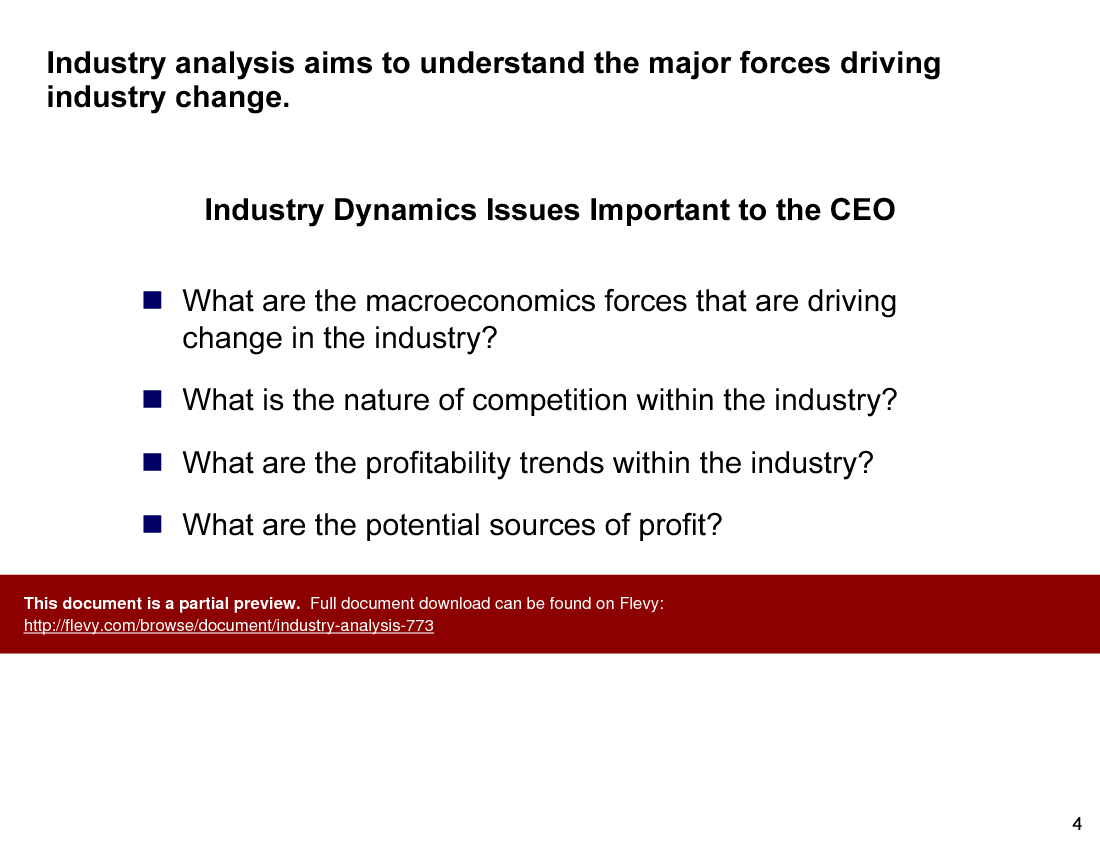
This presentation provides a comprehensive approach to understanding the major forces driving industry change. It covers essential industry dynamics issues that are crucial for CEOs, such as macroeconomic forces, competition nature, profitability trends, and potential profit sources. The deck also delves into the XYZ approach to industry analysis, offering a structured methodology for evaluating industry metrics and aspects.
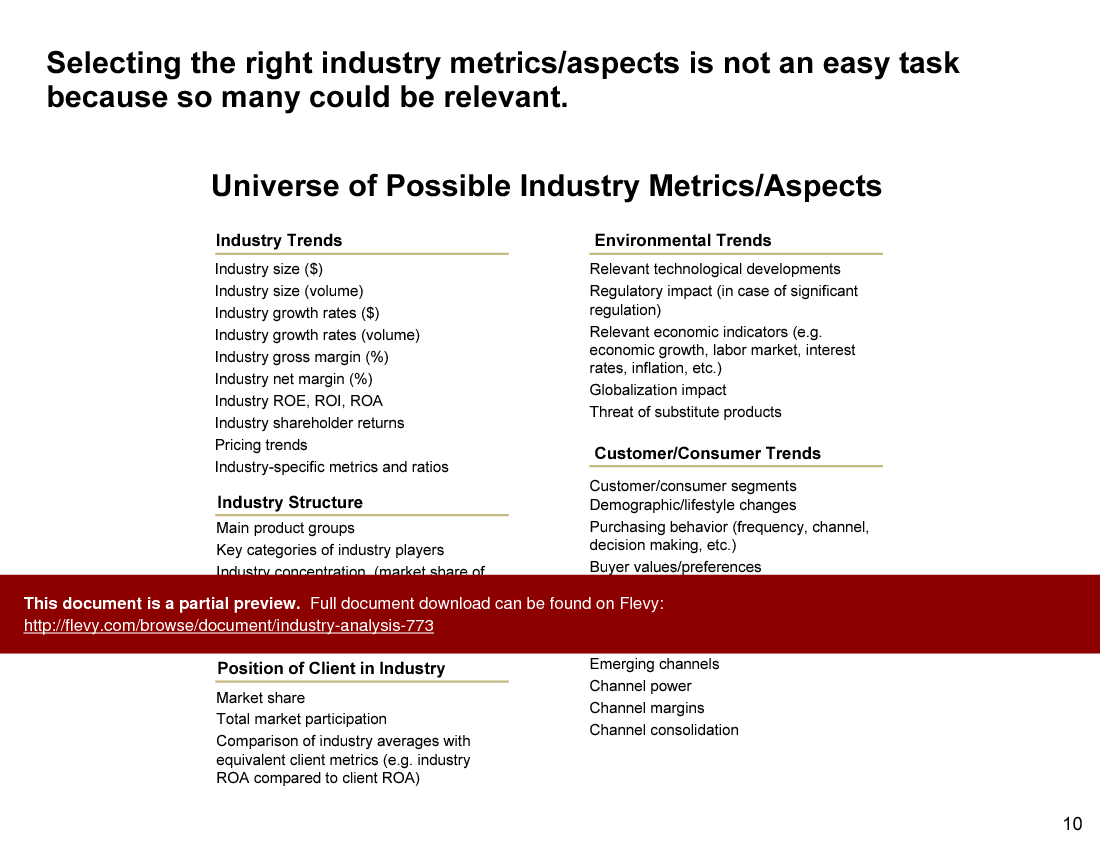
Choosing the right industry metrics is a challenging task due to the vast number of relevant factors. The presentation outlines a universe of possible industry metrics and aspects, including industry trends, environmental trends, customer/consumer trends, and the position of the client in the industry. This ensures a thorough analysis that captures all critical dimensions of the industry landscape.
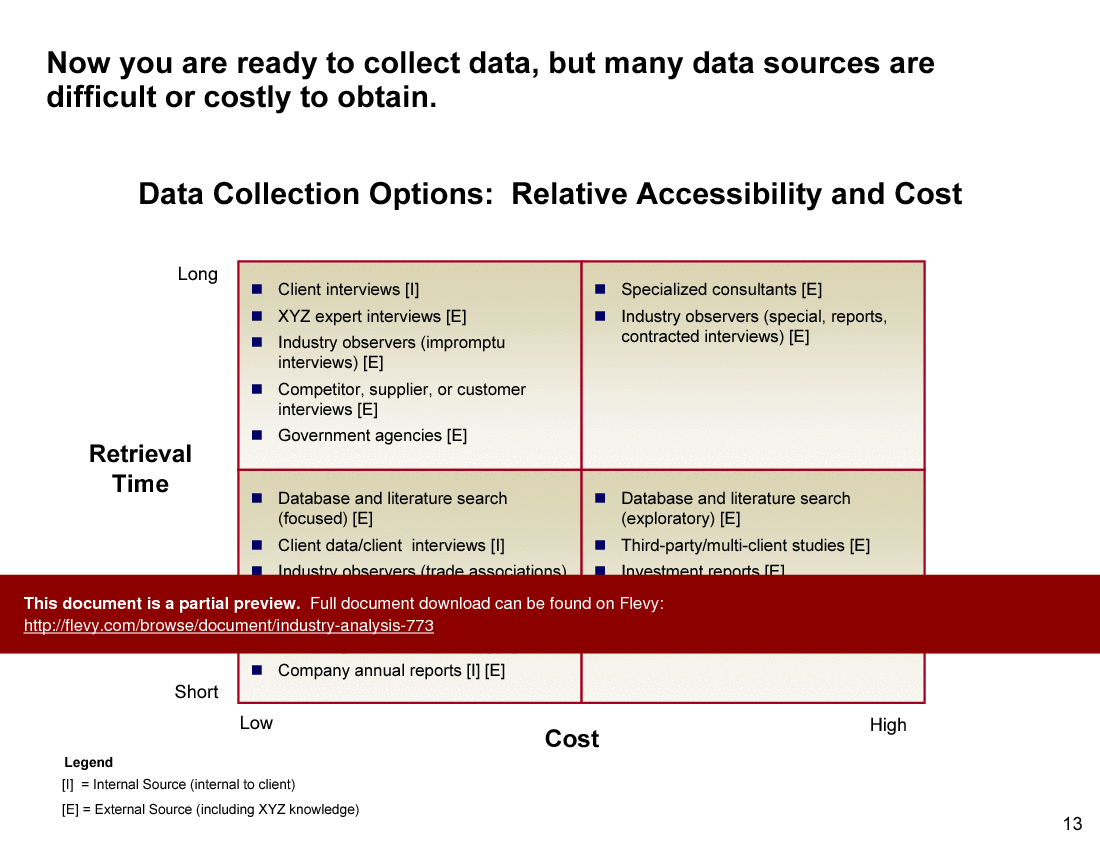
Once the relevant metrics are determined, the next step is data collection. The presentation highlights various data collection options, considering relative accessibility and cost. It emphasizes the importance of using both internal and external sources, such as client interviews, expert interviews, and government agencies, to gather comprehensive data.
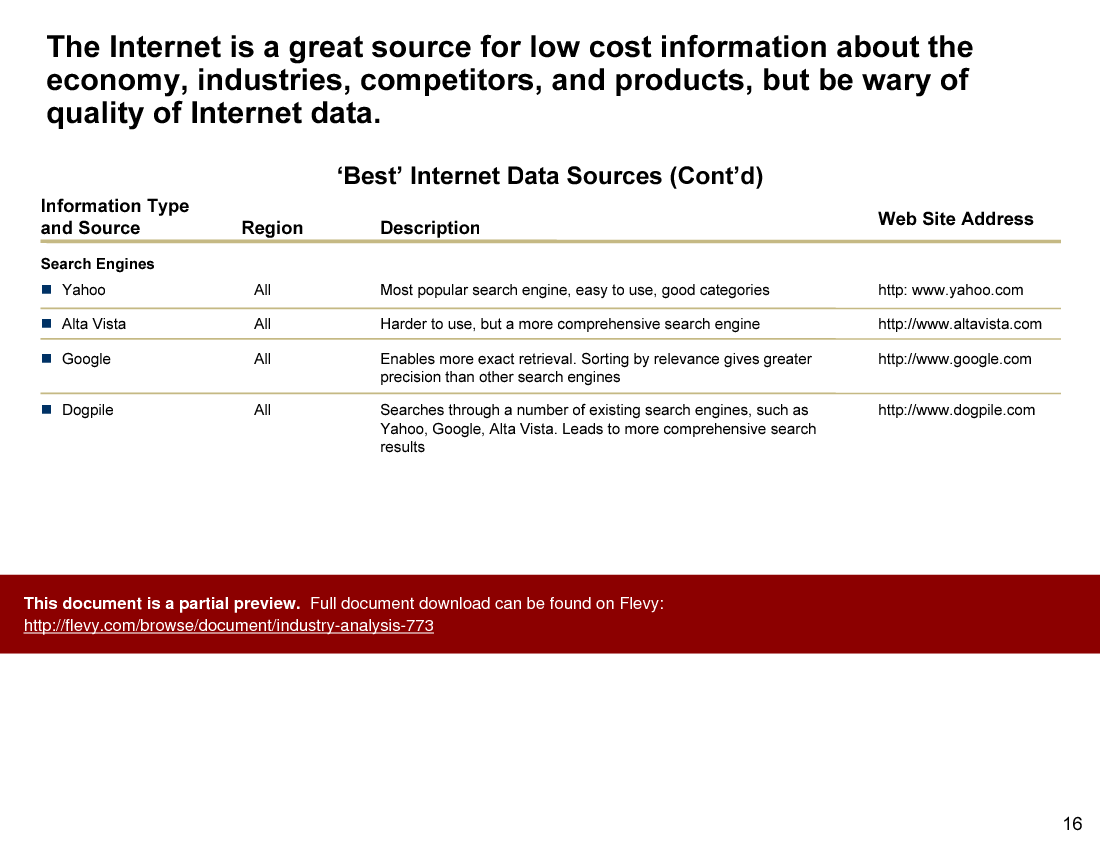
The presentation also addresses the use of the Internet as a valuable source for low-cost information about the economy, industries, competitors, and products. However, it cautions against the quality of Internet data and provides a list of the best Internet data sources, including search engines like Yahoo, Alta Vista, Google, and Dogpile, to ensure reliable and relevant information.
Got a question about the product? Email us at support@flevy.com or ask the author directly by using the "Ask the Author a Question" form. If you cannot view the preview above this document description, go here to view the large preview instead.
MARCUS OVERVIEW
This synopsis was written by Marcus [?] based on the analysis of the full 63-slide presentation.
Executive Summary
The Industry Analysis PPT provides a structured approach to understanding industry dynamics, competitor landscapes, and market opportunities, designed with the rigor expected from a McKinsey, Bain, or BCG-quality presentation (consulting-grade; not affiliated). This presentation equips corporate executives and consultants with the tools needed to conduct thorough industry analyses, enabling them to identify key drivers of change, assess competitive positioning, and formulate actionable strategies. Users will gain insights into industry metrics, competitive forces, and market trends, allowing for informed decision-making that drives shareholder value.
Who This Is For and When to Use
• Corporate executives seeking to evaluate market opportunities and competitive threats
• Strategy consultants conducting industry assessments for clients
• Business development teams exploring new market entries
• Product managers analyzing market trends and customer needs
Best-fit moments to use this deck:
• During strategic planning sessions to inform decision-making
• When assessing the viability of entering new markets or launching new products
• For competitive benchmarking and performance evaluation
• In workshops focused on identifying growth opportunities and risks
Learning Objectives
• Define key industry metrics and their relevance to strategic decision-making
• Analyze competitive dynamics using established frameworks
• Identify macroeconomic forces impacting industry trends
• Develop actionable insights from qualitative and quantitative data
• Articulate the implications of industry analysis on strategic options
• Utilize graphical representations to communicate findings effectively
Table of Contents
• Introduction to Industry Analysis (page 2)
• XYZ Approach to Industry Analysis (page 3)
• Industry Dynamics Issues Important to the CEO (page 4)
• Defining Industry vs. Market (page 5)
• Steps in Conducting Industry Analysis (page 8)
• Selecting Relevant Industry Metrics (page 10)
• Data Collection Options (page 13)
• Graphical Representation of Data (page 17)
• Industry Case Examples (page 33)
Primary Topics Covered
• Industry Dynamics - Understanding the major forces driving change within an industry, including macroeconomic factors and competitive pressures.
• Competitive Analysis Frameworks - Utilizing models such as Porter’s Five Forces to assess industry structure and competitive intensity.
• Data Collection Techniques - Identifying primary and secondary sources for gathering relevant industry data.
• Graphical Data Representation - Techniques for visually presenting quantitative and qualitative data to enhance understanding.
• Market Segmentation - Analyzing customer segments and their evolving needs to inform product and service strategies.
• Regulatory Impact - Evaluating how regulations affect industry operations and competitive dynamics.
Deliverables, Templates, and Tools
• Industry analysis framework template for structuring assessments
• Competitive landscape assessment model to evaluate market players
• Data collection checklist for identifying relevant sources
• Graphical representation templates for visualizing industry metrics
• Case study examples for practical application of industry analysis
• Insights derivation guide to articulate findings and implications
Slide Highlights
• Overview of the XYZ approach to industry analysis, detailing the three-step process.
• Graphical representation of industry dynamics and competitive forces using the Five Forces model.
• Case examples illustrating industry analysis applications in various sectors, including insurance and consumer products.
• Visuals depicting market share evolution and industry concentration trends.
• Insights derived from qualitative data analysis and implications for strategic planning.
Potential Workshop Agenda
Introduction to Industry Analysis (30 minutes)
• Overview of the importance of industry analysis
• Discussion of key industry dynamics and competitive forces
Data Collection Techniques (45 minutes)
• Review of primary and secondary data sources
• Group exercise on identifying relevant metrics
Graphical Data Representation (30 minutes)
• Techniques for visualizing industry data
• Hands-on practice with graphical templates
Insights Derivation and Application (60 minutes)
• Analyzing case studies to derive actionable insights
• Group discussion on implications for strategic options
Customization Guidance
• Tailor the industry metrics and aspects based on specific project focus and hypotheses.
• Adjust the graphical representation templates to align with client branding and presentation standards.
• Incorporate client-specific data and case studies to enhance relevance and applicability.
Secondary Topics Covered
• Market share analysis and competitive positioning
• Trends in consumer behavior and purchasing patterns
• Impact of technological advancements on industry dynamics
• Economic indicators influencing market conditions
• Regulatory changes affecting industry operations
Topic FAQ
What are the typical phases of an industry analysis project?
A standard industry analysis flows from defining scope and key questions (issue tree/research plan), to selecting relevant industry metrics, collecting primary and secondary data, applying competitive frameworks, and deriving strategic implications. The deck frames these stages around its XYZ three-step approach and stepwise analysis process.
How should I choose which industry metrics to track for a project?
Choose metrics driven by your project focus, hypotheses, and knowledge gaps; consider industry trends, environmental and customer trends, and the client’s position in the industry. The presentation outlines a universe of possible metrics and advises tailoring selections to the project hypotheses and client position.
Which competitive analysis frameworks are most useful in industry studies?
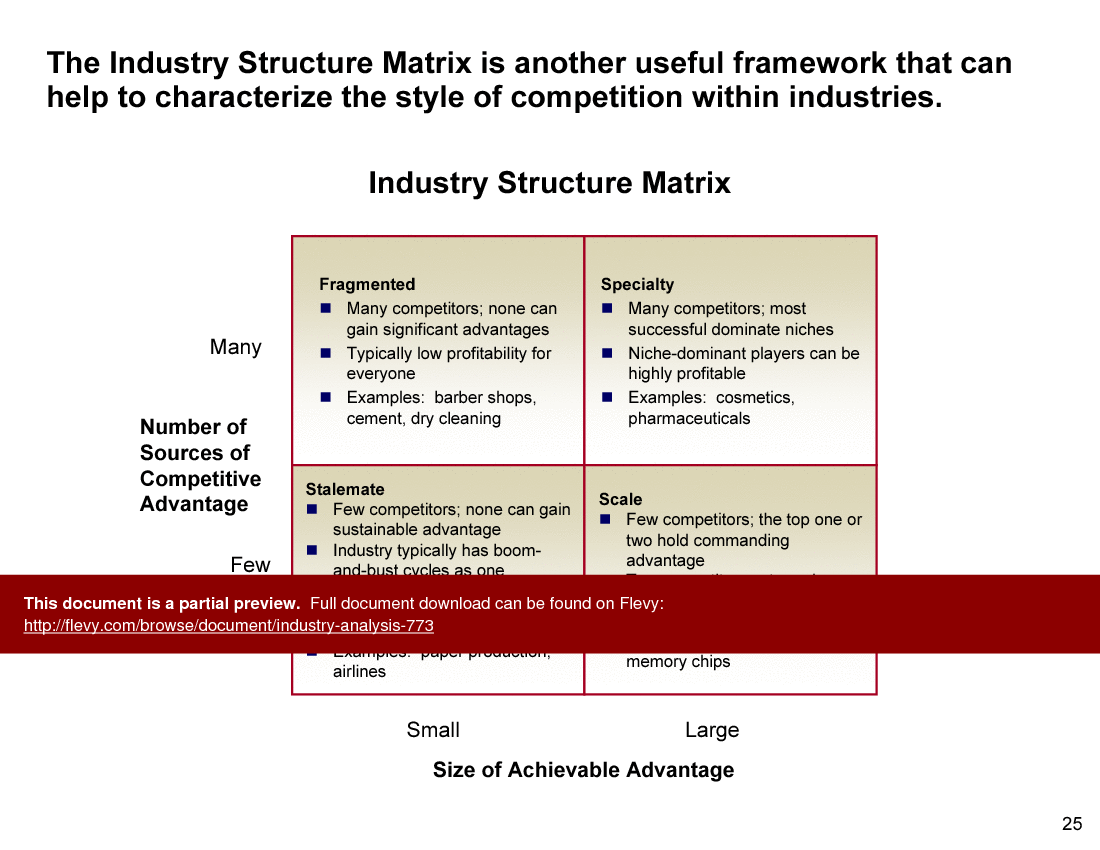
Commonly used frameworks cited in the material include Porter’s Five Forces to assess competitive intensity and the Industry Structure Matrix to characterize competition style; both are presented as primary tools for evaluating industry structure and competitive dynamics.
What should I look for when buying an industry analysis PowerPoint or template?
Look for a clear structured approach for scoping analysis, templates for frameworks, a data collection checklist, graphical representation templates, case examples, and guidance on customization. Flevy’s Industry Analysis lists these elements, including a data collection checklist and graphical templates.
What data sources and collection methods should teams plan for in industry analysis?
Plan a mix of primary sources (client and expert interviews) and secondary sources (industry reports, government data), and use internet sources cautiously due to variable quality; the deck lists accessible options and highlights trade-offs between cost and data quality, including client interviews and government data.
I need to evaluate entering a new market—what methodology should I follow?
Begin with key questions and an issue tree to define scope, select industry metrics aligned to entry hypotheses, collect primary/secondary data, apply Porter’s Five Forces and other models, then derive implications and recommendations. Flevy’s Industry Analysis illustrates this end-to-end approach and the XYZ three-step process.
How can I present industry findings so executives quickly grasp the implications?
Use concise visuals that highlight trends, market share evolution, and concentration; employ the provided graphical representation templates and case examples to simplify complex data and focus on implications for strategic options, as shown in the deck’s graphical templates and case slides.
Are prebuilt industry analysis templates a cost-effective option versus building from scratch?
Prebuilt templates provide a structured starting point—frameworks, a data collection checklist, graphical templates, and case examples—that reduce setup time, but require tailoring to client data and hypotheses. Flevy’s Industry Analysis offers these assets within its 63-slide PPT and customization guidance.
Document FAQ
These are questions addressed within this presentation.
What is the purpose of industry analysis?
Industry analysis aims to understand the competitive landscape and market dynamics, enabling organizations to make informed strategic decisions.
How do I select relevant industry metrics?
Choose metrics based on project focus, hypotheses, and knowledge gaps to ensure a targeted analysis.
What data sources should I consider for industry analysis?
Utilize a mix of primary sources (client interviews, expert insights) and secondary sources (industry reports, government data) for comprehensive data collection.
How can graphical representation enhance my analysis?
Visuals can simplify complex data, highlight trends, and facilitate clearer communication of insights to stakeholders.
What frameworks can I use for competitive analysis?
Porter’s Five Forces model and the Industry Structure Matrix are effective tools for assessing competitive dynamics and market positioning.
How do I derive actionable insights from my analysis?
Focus on identifying trends, implications for strategy, and opportunities or threats that arise from the data.
Can I customize the templates provided in the deck?
Yes, templates can be tailored to fit specific client needs, branding, and project requirements.
What are the key challenges in conducting industry analysis?
Challenges include data accessibility, ensuring data quality, and selecting the most relevant metrics for analysis.
How often should industry analysis be conducted?
Regular analysis is recommended to stay updated on market trends, competitive dynamics, and changing consumer needs.
What role does regulation play in industry analysis?
Regulatory factors can significantly impact industry operations, competitive dynamics, and market opportunities, making them crucial for analysis.
Glossary
• Industry Dynamics - The forces and trends that shape the competitive landscape within an industry.
• Competitive Analysis - The assessment of competitors to understand their strengths, weaknesses, and market positioning.
• Market Segmentation - The process of dividing a market into distinct groups of buyers with different needs or characteristics.
• Data Collection - The systematic gathering of information from various sources to inform analysis.
• Graphical Representation - The visual display of data to enhance understanding and communication of insights.
• Porter’s Five Forces - A framework for analyzing the competitive forces within an industry.
• Regulatory Impact - The effects of laws and regulations on industry operations and competitive dynamics.
• Insights Derivation - The process of extracting meaningful conclusions from data analysis.
• Market Share - The portion of a market controlled by a particular company or product.
• Economic Indicators - Statistics that provide information about the economic performance of a country or region.
• Consumer Behavior - The study of how individuals make decisions to spend their available resources.
• Industry Structure Matrix - A tool used to characterize the style of competition within industries.
• Underwriting Gain/Loss - The difference between premiums collected and claims paid in the insurance industry.
• Investment Income - Earnings generated from investments, crucial for insurance companies due to underwriting volatility.
• Market Concentration - The extent to which a small number of firms dominate total sales in a market.
• CAGR - Compound Annual Growth Rate; a useful measure of growth over multiple time periods.
• Value Chain - The full range of activities that businesses engage in to bring a product or service to market.
• Market Trends - Patterns and tendencies observed in the market over time.
• Customer Needs - The requirements and desires of consumers that drive their purchasing decisions.
• Competitive Forces - The various pressures that affect the competitive environment of an industry.
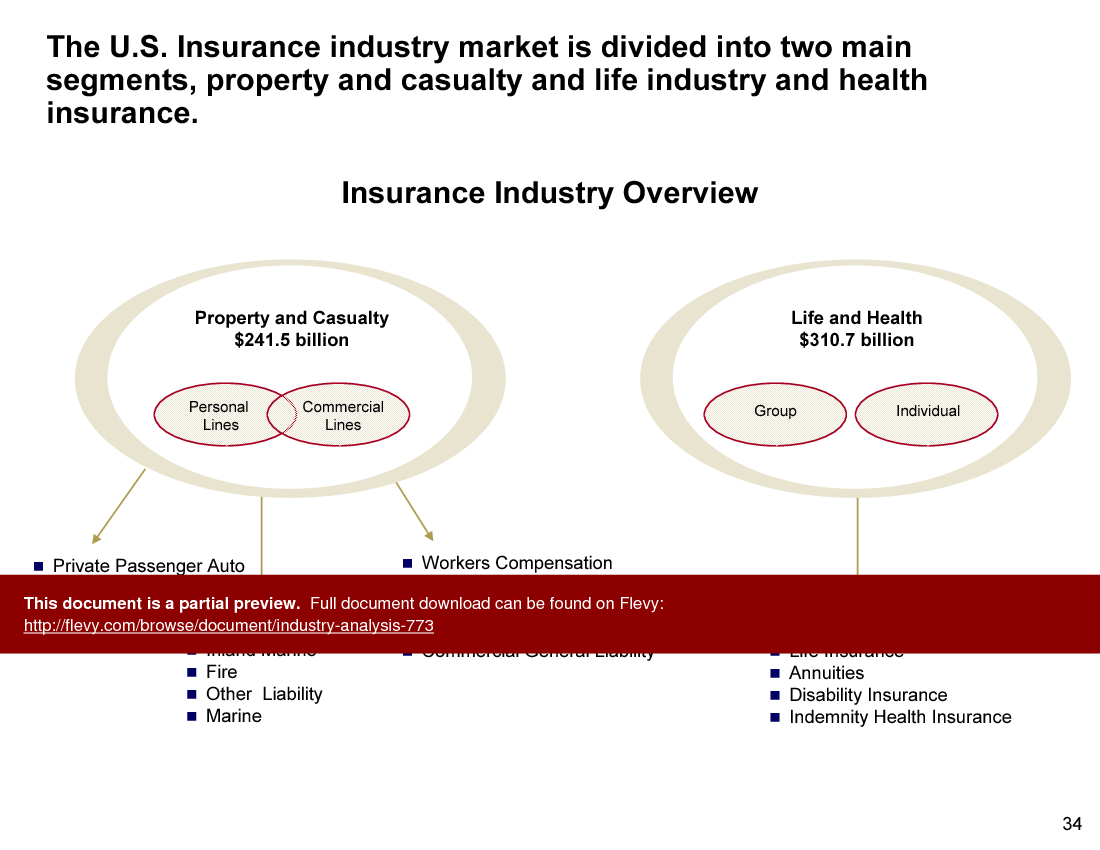
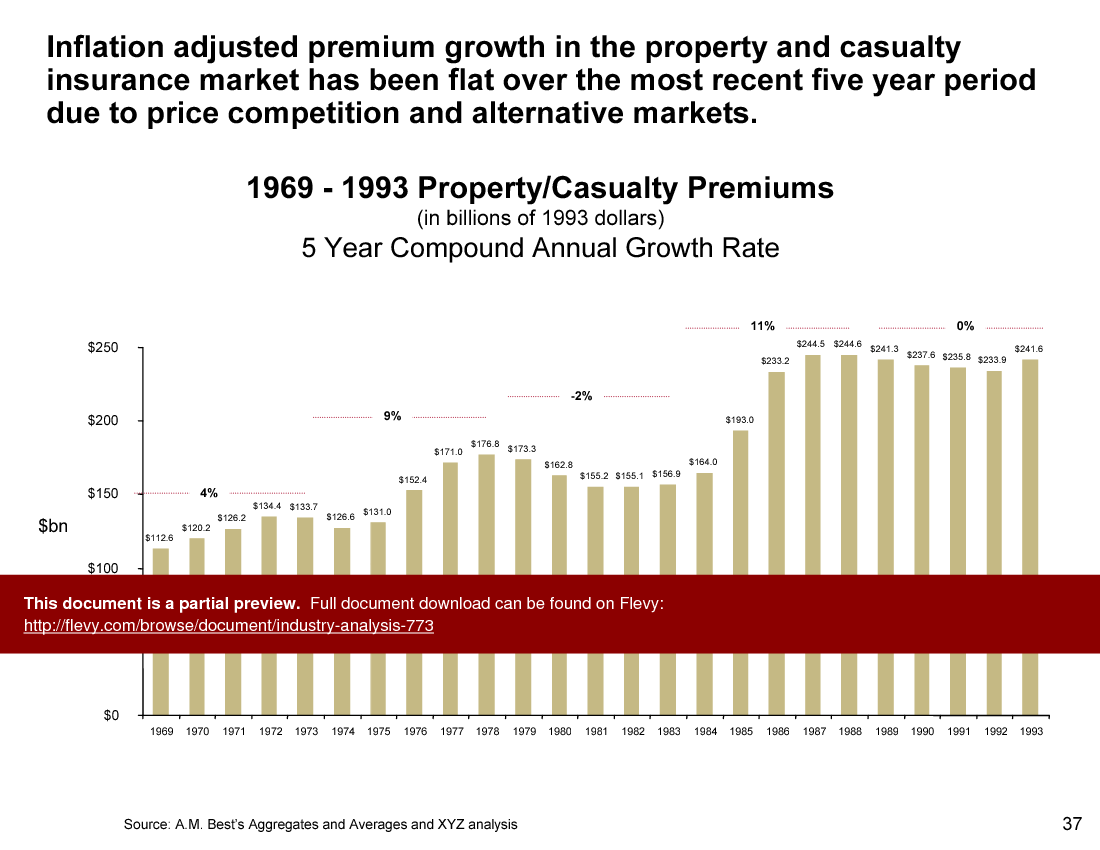
The U.S. insurance industry is categorized into 2 primary segments: property and casualty insurance, valued at $241.5 billion, and life and health insurance, valued at $310.7 billion. The property and casualty segment includes personal lines, such as private passenger auto and homeowners insurance, and commercial lines, which cover workers' compensation, commercial auto, and liability coverages. The life and health segment is divided into group insurance, covering collectives through employers, and individual insurance for single policyholders, including life insurance, annuities, and disability insurance. This structured overview highlights distinct market sizes and target markets, providing a framework for understanding insurance sector dynamics.
This PPT slide analyzes the drug retail industry using a structured matrix that categorizes the market into 4 quadrants based on competition methods and specialization levels. The "Fragmented" quadrant represents a past state with numerous small players competing on convenience and pricing, leading to inefficiencies. The "Stalemate" quadrant indicates a transitional phase where competition has plateaued, resulting in stagnation. The "Scale" quadrant projects a future with intensified price competition driving consolidation, favoring larger entities that achieve economies of scale. If current trends continue, substantial consolidation in the drug retail industry is expected, impacting strategic investments and operational adjustments.
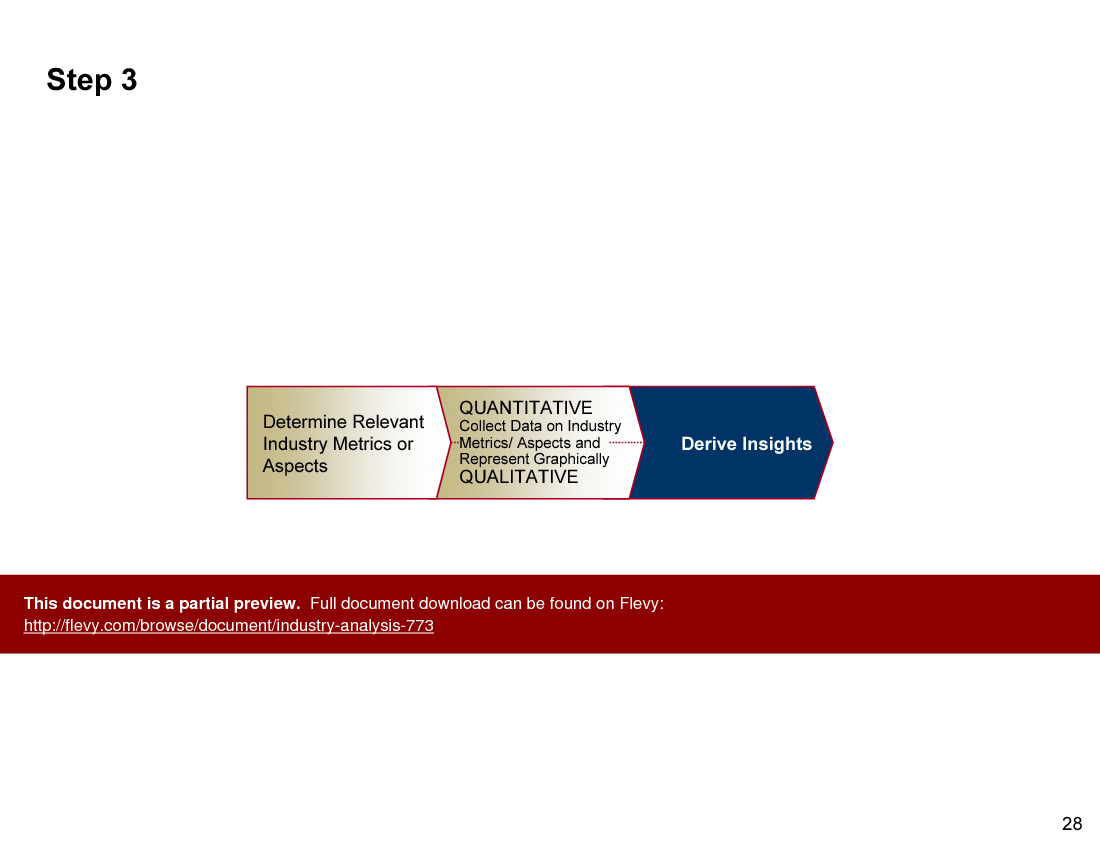
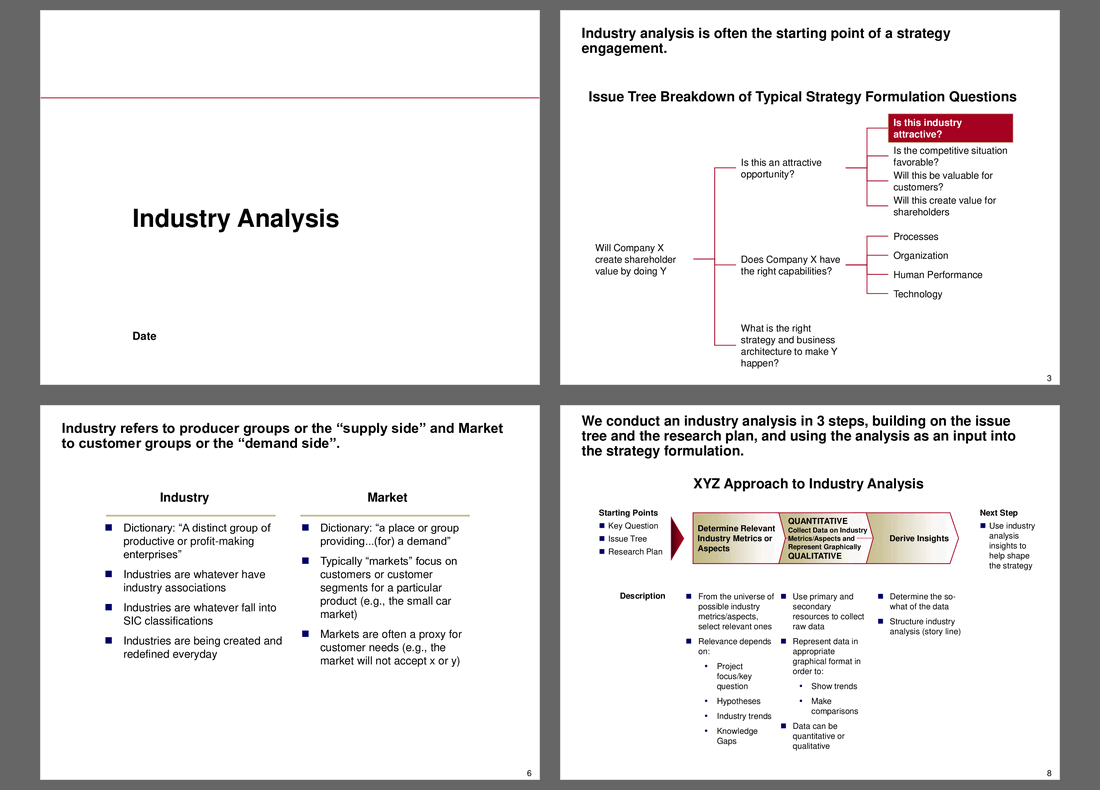
This PPT slide outlines a structured approach to industry analysis through a three-step process involving an issue tree and a research plan. The first step is identifying relevant industry metrics, guided by project focus, key questions, hypotheses, industry trends, and stakeholder needs, ensuring alignment with strategic objectives. The second step involves data collection, utilizing both quantitative methods—gathering primary and secondary data—and qualitative insights to provide context. The final step focuses on deriving insights from the data, determining their significance, and structuring them into a coherent storyline to inform strategic decisions. This methodology enhances clarity and aligns analysis with organizational goals, facilitating informed decision-making based on empirical data.
This PPT slide outlines a structured framework for selecting relevant metrics in industry analysis. The first criterion, "Project focus/key question," emphasizes aligning analysis with specific project objectives, such as prioritizing metrics related to distribution channels for channel strategy projects. The second criterion, "Hypotheses," stresses the need to formulate hypotheses about the relationships between industry trends and strategic outcomes, ensuring metrics are relevant and actionable. "Prior knowledge of key industry developments" highlights leveraging existing insights to guide analysis, directing attention to significant changes. Lastly, "Knowledge gaps" reminds teams to address areas lacking understanding, promoting a comprehensive approach that uncovers new insights while reinforcing existing knowledge.
This PPT slide delineates the distinction between "Industry" and "Market." "Industry" refers to a collective of productive enterprises characterized by profit-making capabilities, often categorized under Standard Industrial Classification (SIC) systems. Industries are dynamic, evolving with new sectors emerging due to technological advancements and changing consumer behavior. "Market" is defined as a space that meets demand, focusing on customer segments and their specific needs, critical for product development and marketing strategies. Markets are often defined by particular products, such as the small car market, serving as proxies for customer needs. Understanding the interaction between industries and markets is essential for strategic planning and decision-making in a competitive environment.
This PPT slide outlines an issue tree for strategy formulation, emphasizing industry analysis as a critical starting point. The primary question is whether the industry is attractive, branching into sub-questions about competitive situation, customer value, and potential shareholder value, which are essential for assessing investment viability. Another branch evaluates whether Company X has the necessary capabilities to succeed, linking industry attractiveness to internal strengths. The analysis prompts consideration of the right strategy, aligning company capabilities with identified opportunities. Key evaluation areas include processes, organization, human performance, and technology, which are vital for leveraging strengths and navigating industry complexities. This structured approach aids decision-making and provides a framework for evaluating strategic initiatives.
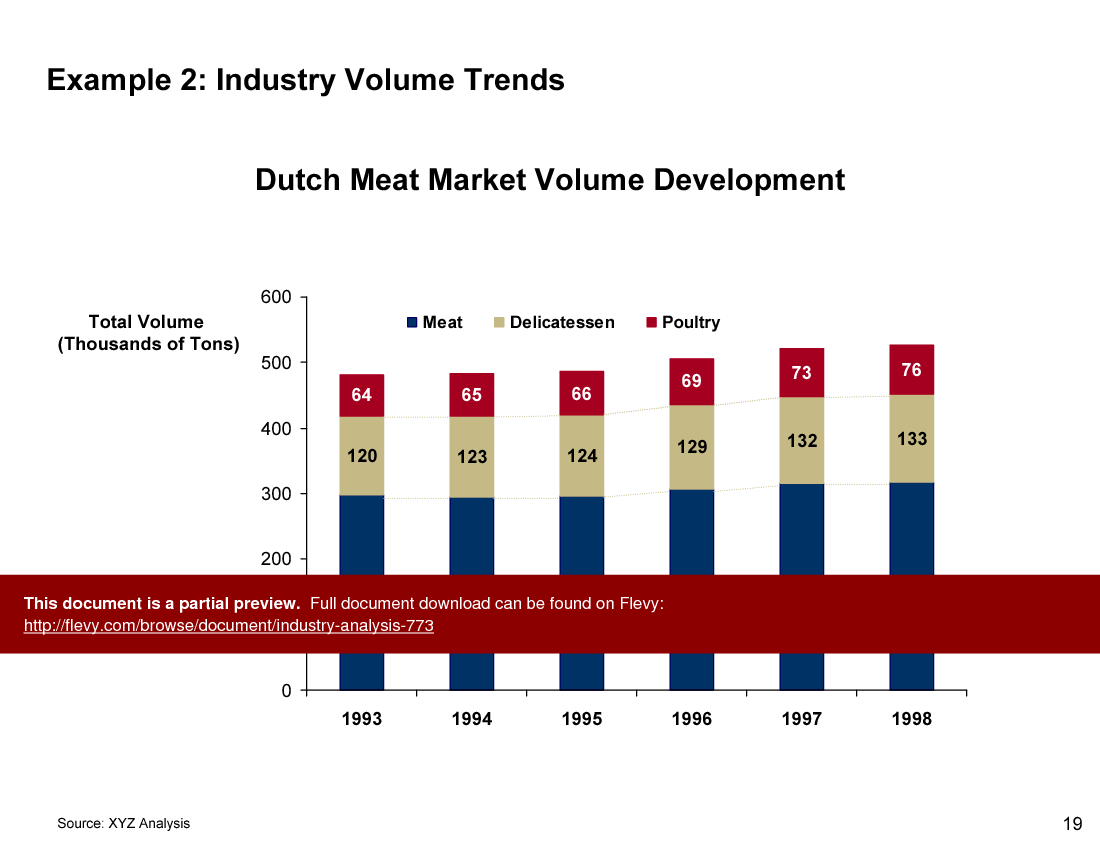
This PPT slide visually represents quantitative data through various graphical formats. The "Sales Growth" graph compares performance against the "Industry Average," indicating a positive sales trend. The "Return on Equity" (ROE) graph illustrates fluctuations in ROE between 2 industries, providing insights into financial health and investment potential. "Market Consolidation" is depicted with bar graphs showing the declining number of industry players, signaling consolidation trends that impact competitive dynamics. The "Market Concentration" section uses pie charts to display market share among top players, informing strategic decisions on partnerships and competitive positioning. These visualizations facilitate informed decision-making by making complex data accessible and actionable.
This PPT slide presents an "Industry Profitability Audit" analyzing beverage competitors' profitability metrics, including revenue in millions, margin percentages, market share, and competitive advantages. Big Drink Co. leads with $320 million in revenue and a 16% margin, leveraging economies of scale and a strong brand presence. Sparklin' All Natural Flavored Water achieves a 26% margin with a 6% market share, focusing on niche markets and cost management through outsourcing. Old-Fashioned Bellywash, Inc. reports $30 million in revenue and a 3% margin, facing resource allocation challenges due to its in-house operations. Joe's Fizz Juice, with $104 million in revenue and an 8% margin, is constrained by its subsidiary status, leading to unclear competitive strategies. This analysis highlights how these companies navigate industry dynamics and profitability strategies.
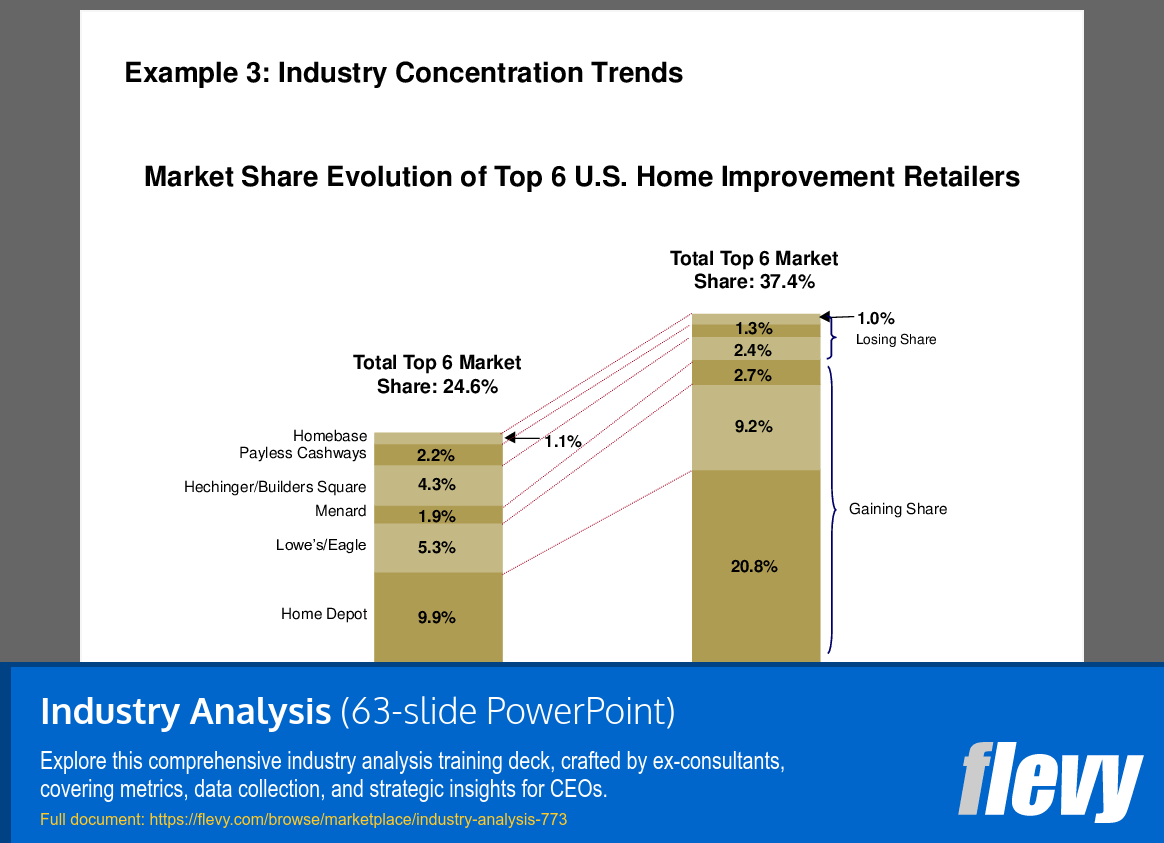
This PPT slide analyzes market share evolution among the top 6 U.S. home improvement retailers, revealing a rise from 24.6% to 37.4% in total market share, indicating increased industry concentration. Home Depot leads with 9.9% market share, followed by Lowe's/Eagle at 5.3%. The data shows competitive shifts, with one retailer losing 1.0% market share while another gains 20.8%. Visual representations with arrows illustrate these shifts, providing clarity on each retailer's standing for quick comparisons. These trends inform market entry strategies, competitive positioning, and investment decisions, highlighting the need for companies to adapt to the changing landscape.
This PPT slide categorizes distribution channels used by insurance companies, highlighting diversification beyond traditional methods. Key channels include Independent Agencies, Brokers, Exclusive Agencies, Captive Agents, and Direct Response. Independent Agencies represent multiple companies, allowing flexibility in offerings. Brokers focus on placing coverage for clients, introducing complexities in loyalty. Exclusive Agencies represent a single company, posing challenges in customer retention. Captive Agents are employee agents who maintain ownership of renewals, affecting motivation and service levels. Direct Response channels, like call centers, prioritize customer service, but face automation challenges. Each channel presents unique issues, including automation, training, and quality control, impacting service delivery and effectiveness. Understanding these dynamics is essential for informed decisions in the insurance sector.
This PPT slide presents a framework for evaluating data collection options based on accessibility and costs, categorized along 2 axes: retrieval time and cost. The vertical axis divides retrieval time into "Long" and "Short," while the horizontal axis ranges from "Low" to "High" cost. Quadrants display specific data collection methods, such as client interviews and government agency data in the "Long" category, which require more time and resources. "Short" retrieval options include database searches and company financial reports, accessible more quickly and at lower costs. Specialized consultants and industry observers are high-cost options, indicating a trade-off between information depth and resource expenditure. This matrix aids organizations in optimizing data collection strategies within budget constraints.
This PPT slide provides an overview of external forces impacting the insurance sector, identifying key stakeholders and factors shaping industry dynamics. The "Insurance Industry" is influenced by categories including Customers, Suppliers, Competitors, Workforce, Technology, Regulators, Distributors, and Catastrophe.
"Customers" reflect evolving expectations for personalized and transparent offerings. "Suppliers" emphasize specialization and efficiency, highlighting the importance of partnerships and resource management. "Competitors" face globalization and non-traditional entrants, necessitating adaptation and innovation.
The "Workforce" section underscores the competitive environment for talent acquisition. "Technology" advancements are crucial, with complexity and legacy systems posing challenges. "Regulators" introduce issues like government intervention and capital adequacy, creating strategic uncertainty.
The "Distributors" segment focuses on effective service and compensation structures for market penetration. Finally, the "Catastrophe" section raises concerns about increasing severity and exposure, stressing the need for robust risk management practices.
Source: Best Practices in Industry Analysis, Environmental Analysis PowerPoint Slides: Industry Analysis PowerPoint (PPT) Presentation Slide Deck, Documents & Files
Since 2012, we have provided business templates to over 10,000 businesses and organizations of all sizes, from startups and small businesses to the Fortune 100, in over 130 countries.
"I have used Flevy services for a number of years and have never, ever been disappointed. As a matter of fact, David and his team continue, time after time, to impress me with their willingness to assist and in the real sense of the word. I have concluded in fact
that it is not at all just a repository of documents/resources but, in the way that David and his team manage the firm, it is like dealing with consultants always ready to assist, advise and direct you to what you really need, and they always get it right.
I am an international hospitality accomplished senior executive who has worked and lived during the past 35 years in 23 countries in 5 continents and I can humbly say that I know what customer service is, trust me.
Aside from the great and professional service that Flevy's team provide, their wide variety of material is of utmost great quality, professionally put together and most current.
Well done Flevy, keep up the great work and I look forward to continue working with you in the future and to recommend you to a variety of colleagues around the world.
"
– Roberto Pelliccia, Senior Executive in International Hospitality
"I have used FlevyPro for several business applications. It is a great complement to working with expensive consultants. The quality and effectiveness of the tools are of the highest standards."
– Moritz Bernhoerster, Global Sourcing Director at Fortune 500
"As a consultant requiring up to date and professional material that will be of value and use to my clients, I find Flevy a very reliable resource.
The variety and quality of material available through Flevy offers a very useful and commanding source for information. Using Flevy saves me time, enhances my expertise and ends up being a good decision."
– Dennis Gershowitz, Principal at DG Associates
"The wide selection of frameworks is very useful to me as an independent consultant. In fact, it rivals what I had at my disposal at Big 4 Consulting firms in terms of efficacy and organization."
– Julia T., Consulting Firm Owner (Former Manager at Deloitte and Capgemini)
"I like your product. I'm frequently designing PowerPoint presentations for my company and your product has given me so many great ideas on the use of charts, layouts, tools, and frameworks. I really think the templates are a valuable asset to the job."
– Roberto Fuentes Martinez, Senior Executive Director at Technology Transformation Advisory
"One of the great discoveries that I have made for my business is the Flevy library of training materials.
As a Lean Transformation Expert, I am always making presentations to clients on a variety of topics: Training, Transformation, Total Productive Maintenance, Culture, Coaching, Tools, Leadership Behavior, etc. Flevy
It is well worth the money to purchase these presentations. Sure, I have the knowledge and information to make my point. It is another thing to create a presentation that captures what I want to say. Flevy has saved me countless hours of preparation time that is much better spent with implementation that will actually save money for my clients.
"
– Ed Kemmerling, Senior Lean Transformation Expert at PMG
"As an Independent Management Consultant, I find Flevy to add great value as a source of best practices, templates and information on new trends. Flevy has matured and the quality and quantity of the library is excellent. Lastly the price charged is reasonable, creating a win-win value for
the customer, Flevy and the various authors. This is truly a service that benefits the consulting industry and associated clients. Thanks for providing this service.
"
– Jim Schoen, Principal at FRC Group
"Flevy.com has proven to be an invaluable resource library to our Independent Management Consultancy, supporting and enabling us to better serve our enterprise clients.
The value derived from our [FlevyPro] subscription in terms of the business it has helped to gain far exceeds the investment made, making a subscription a no-brainer for any growing consultancy – or in-house strategy team."
– Dean Carlton, Chief Transformation Officer, Global Village Transformations Pty Ltd.
Save with Bundles

This document is available as part of the following discounted bundle(s):
Download our free compilation of 50+ Strategy & Transformation slides and templates. Frameworks include McKinsey 7-S, Balanced Scorecard, Disruptive Innovation, BCG Curve, and many more.