
Customer Segmentation   47-slide PPT PowerPoint presentation slide deck (PPT)
$49.99

Customer Segmentation (47-slide PPT PowerPoint presentation slide deck (PPT)) Preview Image
Log in to unlock full preview.
Customer Segmentation (47-slide PPT PowerPoint presentation slide deck (PPT)) Preview Image
Arrow   Click main image to view in full screen.

Customer Segmentation (PowerPoint PPT Slide Deck)

PowerPoint (PPT) 47 Slides

#2 in Customer Segmentation $49.99

Add to Cart


Immediate download
Free lifetime updates

CUSTOMER SEGMENTATION PPT DESCRIPTION

This product (Customer Segmentation) is a 47-slide PPT PowerPoint presentation slide deck (PPT), which you can download immediately upon purchase.

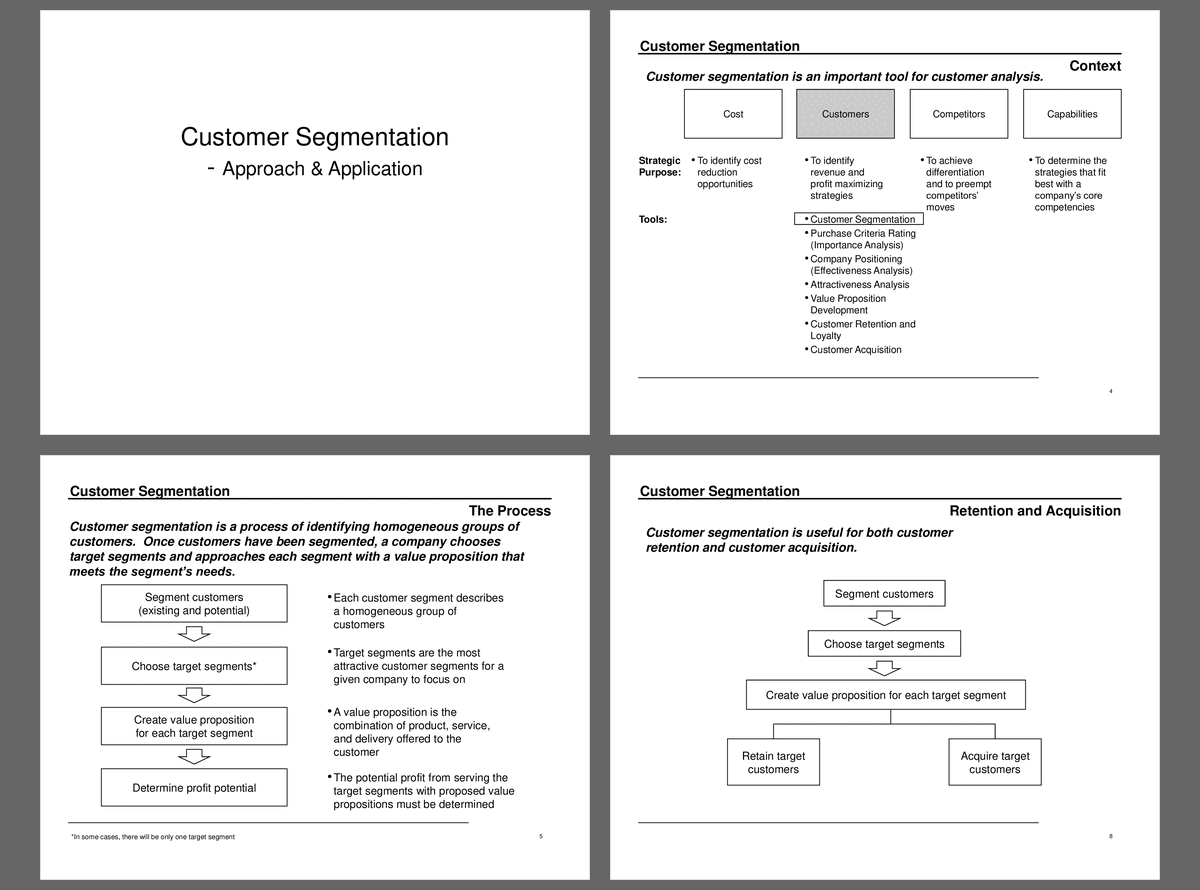
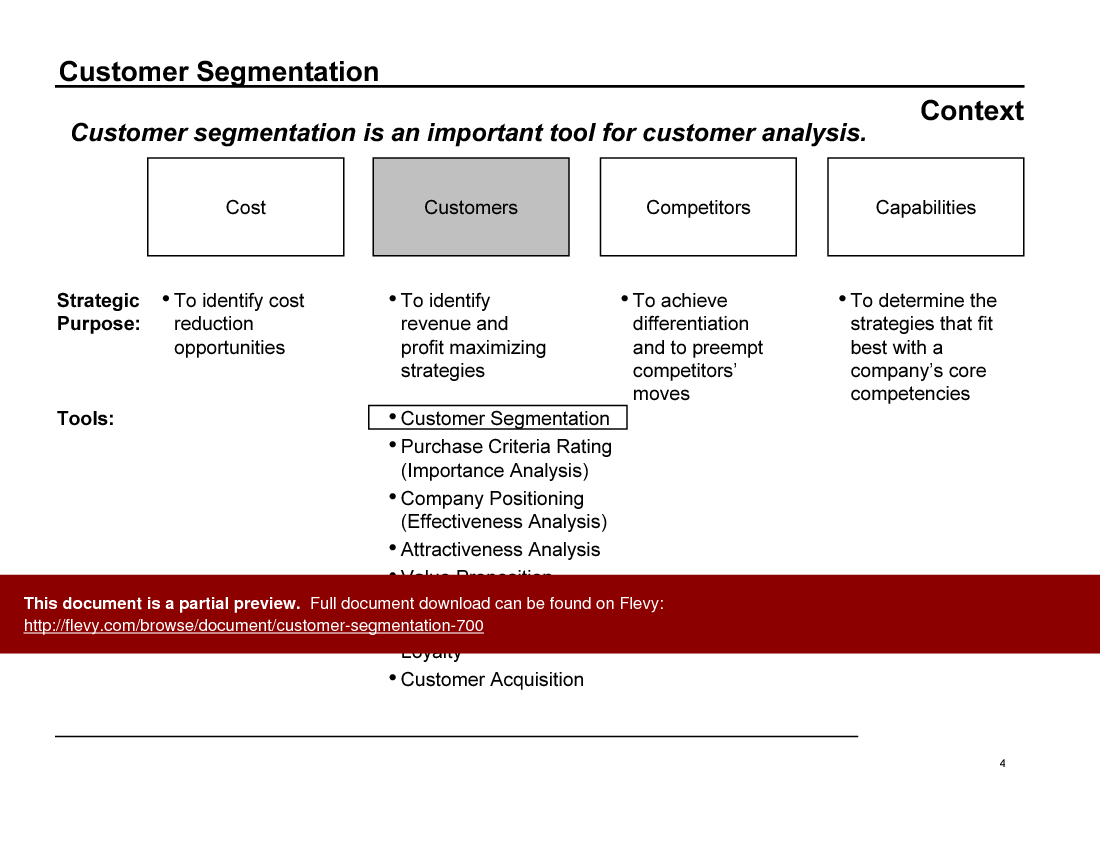
Customer segmentation is an important tool for customer analysis.
•  To identify cost reduction opportunities
•  To identify revenue and profit maximizing strategies
•  To achieve differentiation and to preempt competitors' moves
•  To determine the strategies that fit best with a company's core competencies

This presentation was developed to show how to do an effective customer segmentation excercise. It contains key concepts, approaches, and their application through some examples.

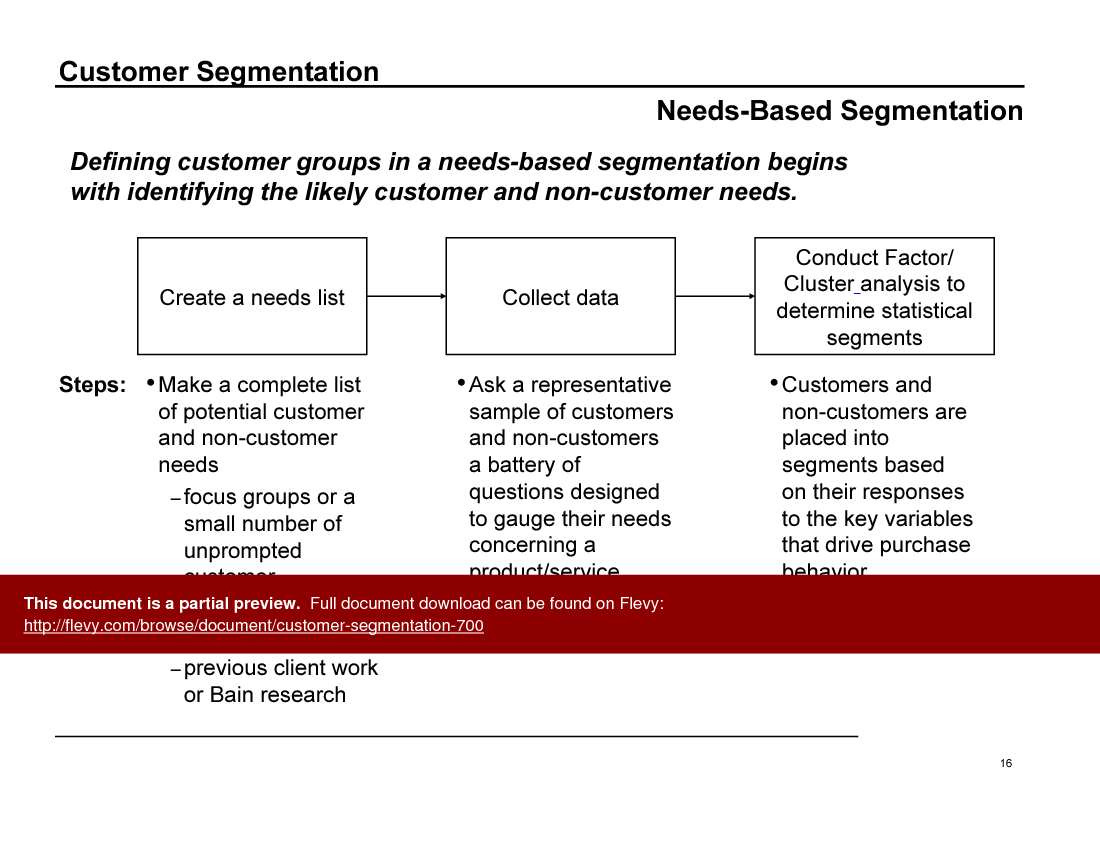
This document delves into the intricacies of customer segmentation, offering a structured approach to dividing customers into distinct groups based on their needs and behaviors. It outlines a comprehensive methodology, from creating a needs list to conducting factor and cluster analysis, ensuring that the segments are statistically robust and actionable. The presentation emphasizes the importance of aligning segmentation strategies with a company's core capabilities and market conditions.

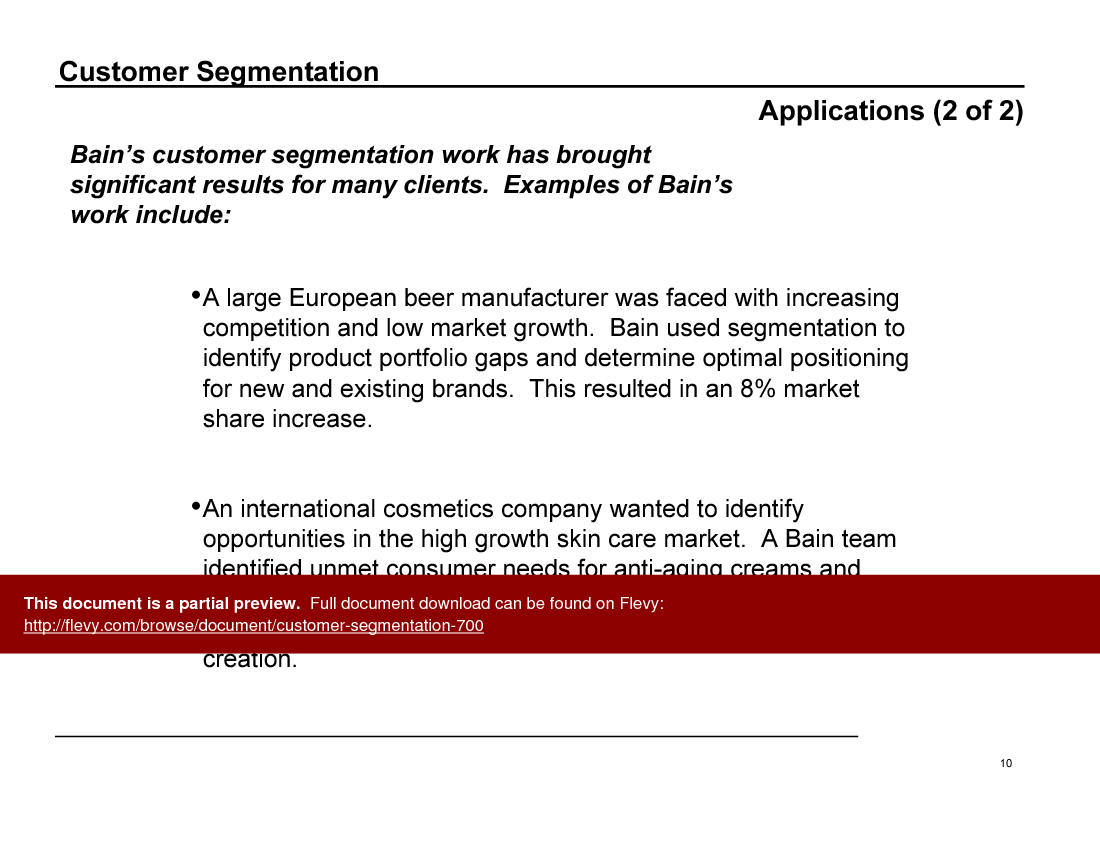
You'll find detailed examples of successful segmentation projects, including case studies from various industries. For instance, a European beer manufacturer leveraged segmentation to identify product portfolio gaps, resulting in an 8% market share increase. Another case study highlights how an international cosmetics company used segmentation to tap into the high-growth skincare market, leading to significant new product development and market penetration.

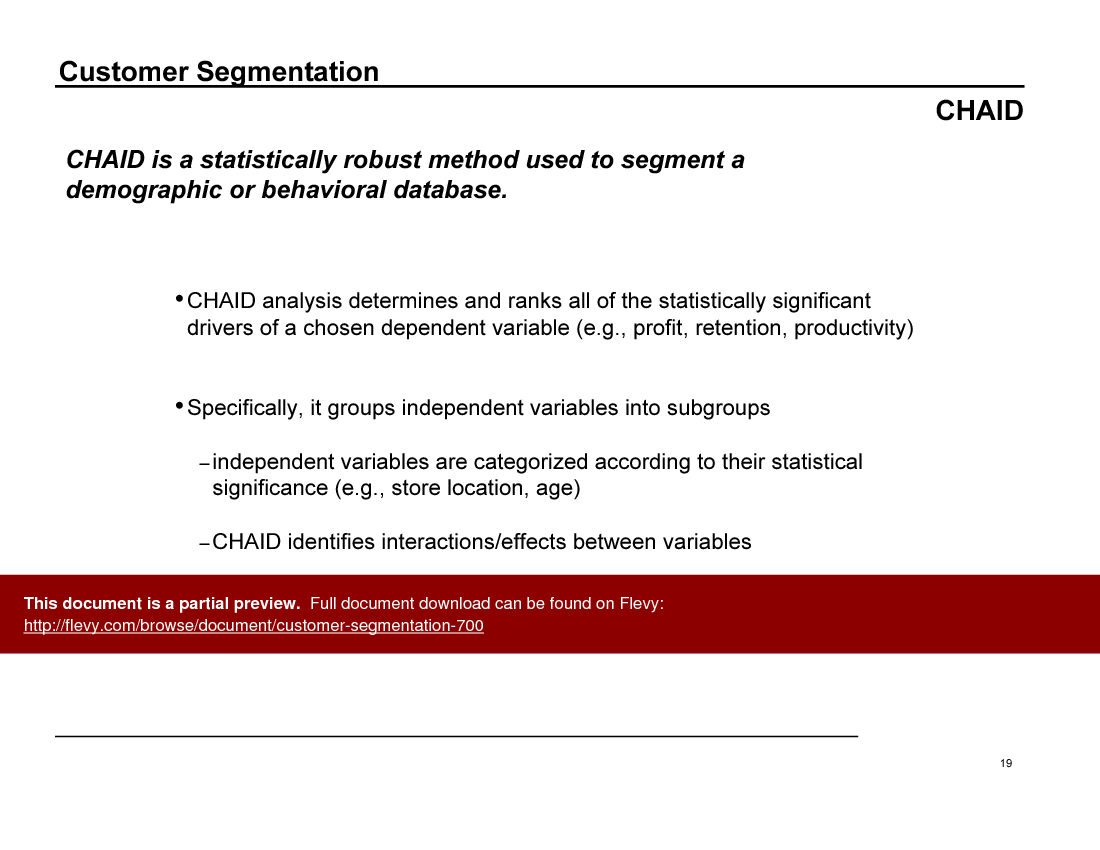
The document also covers advanced segmentation techniques like CHAID analysis, which helps in identifying key drivers of customer behavior and grouping variables into meaningful subgroups. This statistical method is crucial for companies looking to optimize their marketing strategies and improve customer targeting.

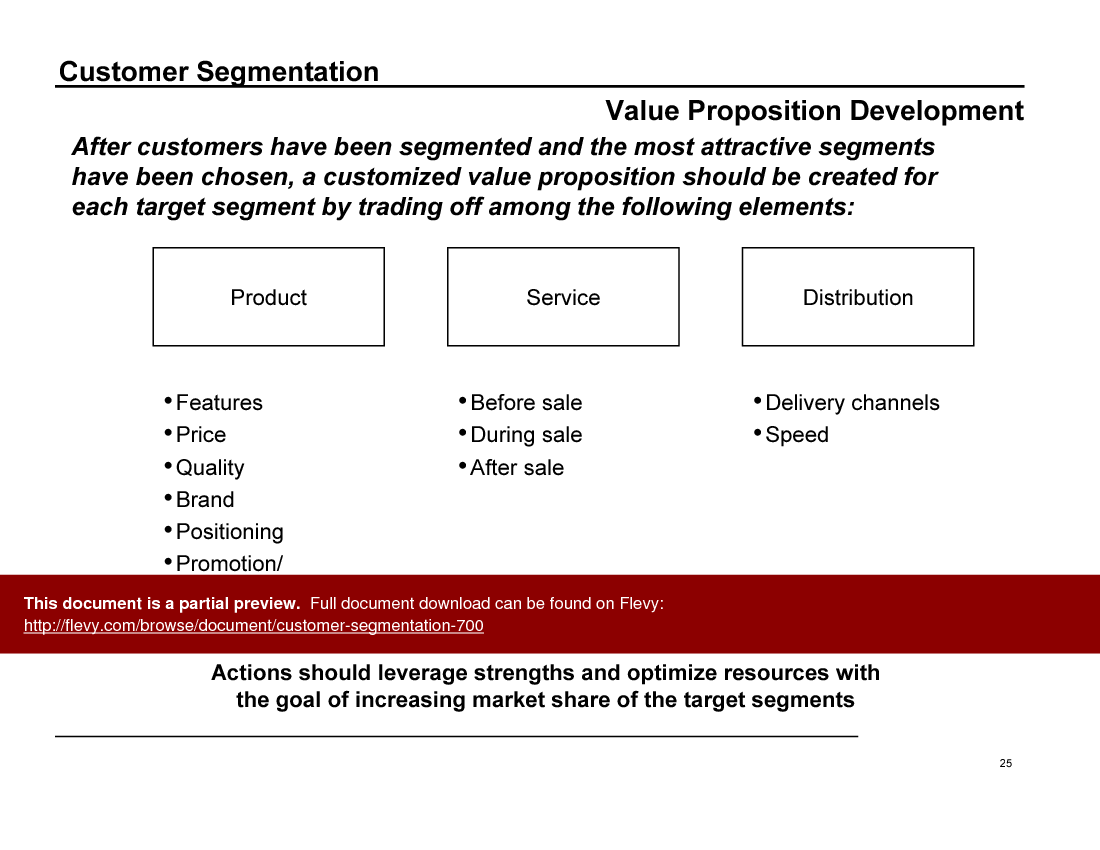
The presentation also includes practical tools and frameworks for developing value propositions tailored to each segment. By focusing on product features, service elements, and distribution channels, businesses can enhance their market share and profitability. This resource is indispensable for executives aiming to refine their customer segmentation strategies and drive business growth.

Got a question about the product? Email us at support@flevy.com or ask the author directly by using the "Ask the Author a Question" form. If you cannot view the preview above this document description, go here to view the large preview instead.

MARCUS OVERVIEW

This synopsis was written by Marcus [?] based on the analysis of the full 47-slide presentation.


Executive Summary
The Customer Segmentation PPT is a consulting-grade presentation designed to equip corporate executives and consultants with the frameworks necessary for effective customer analysis. This McKinsey, Bain, or BCG-quality resource outlines a structured approach to segmenting customers, selecting target segments, and crafting tailored value propositions. By utilizing this deck, users will be able to identify profitable customer segments, enhance customer retention, and optimize acquisition strategies, ultimately driving revenue growth.

Who This Is For and When to Use
•  Marketing executives focused on customer insights and segmentation strategies
•  Business development teams aiming to refine target market approaches
•  Consultants assisting clients in improving customer engagement and profitability
•  Product managers seeking to align offerings with customer needs

Best-fit moments to use this deck:
•  During strategic planning sessions to identify and prioritize customer segments
•  When launching new products or services that require targeted marketing strategies
•  In workshops aimed at enhancing customer retention and loyalty programs

Learning Objectives
•  Define customer segmentation and its significance in business strategy
•  Segment customers based on needs, behaviors, and demographics
•  Choose target segments that align with business capabilities and profitability
•  Create compelling value propositions tailored to each target segment
•  Determine the profit potential of serving selected customer segments
•  Apply customer segmentation insights to enhance marketing and product development

Table of Contents
•  The Customer Segmentation Concept (page 2)
•  Applications of Customer Segmentation (page 9)
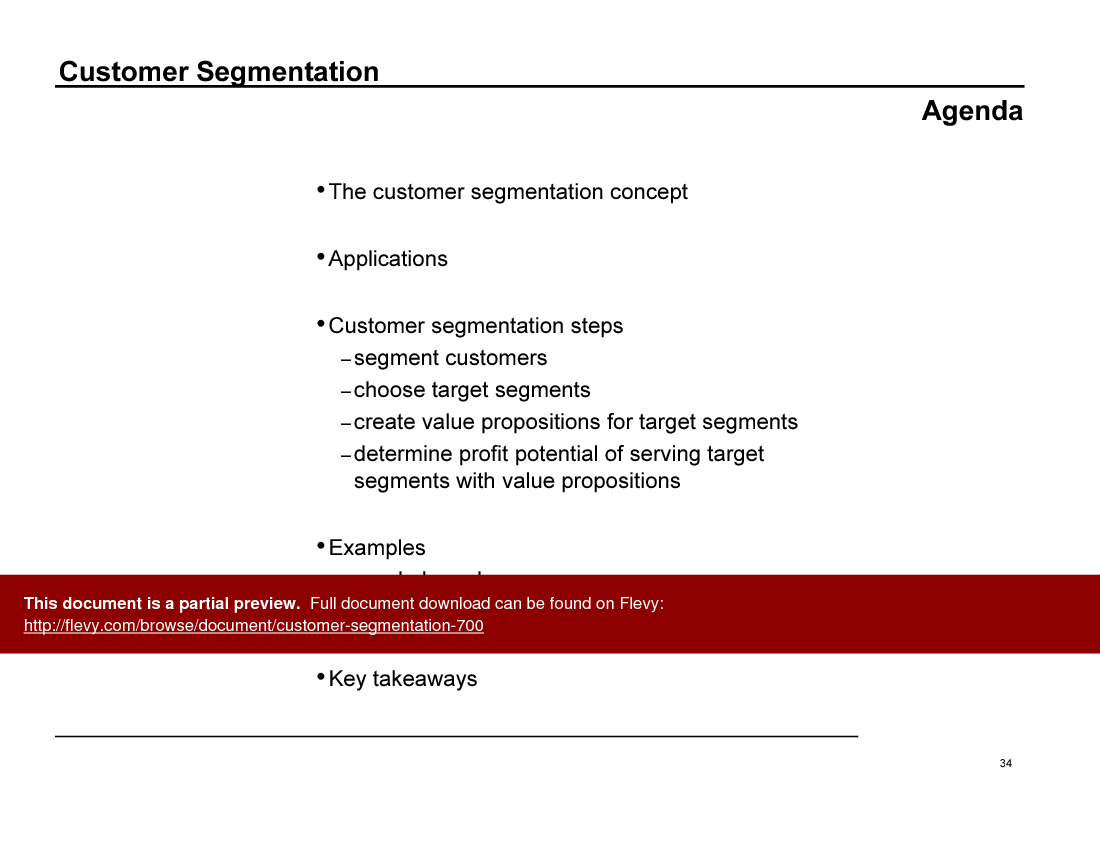
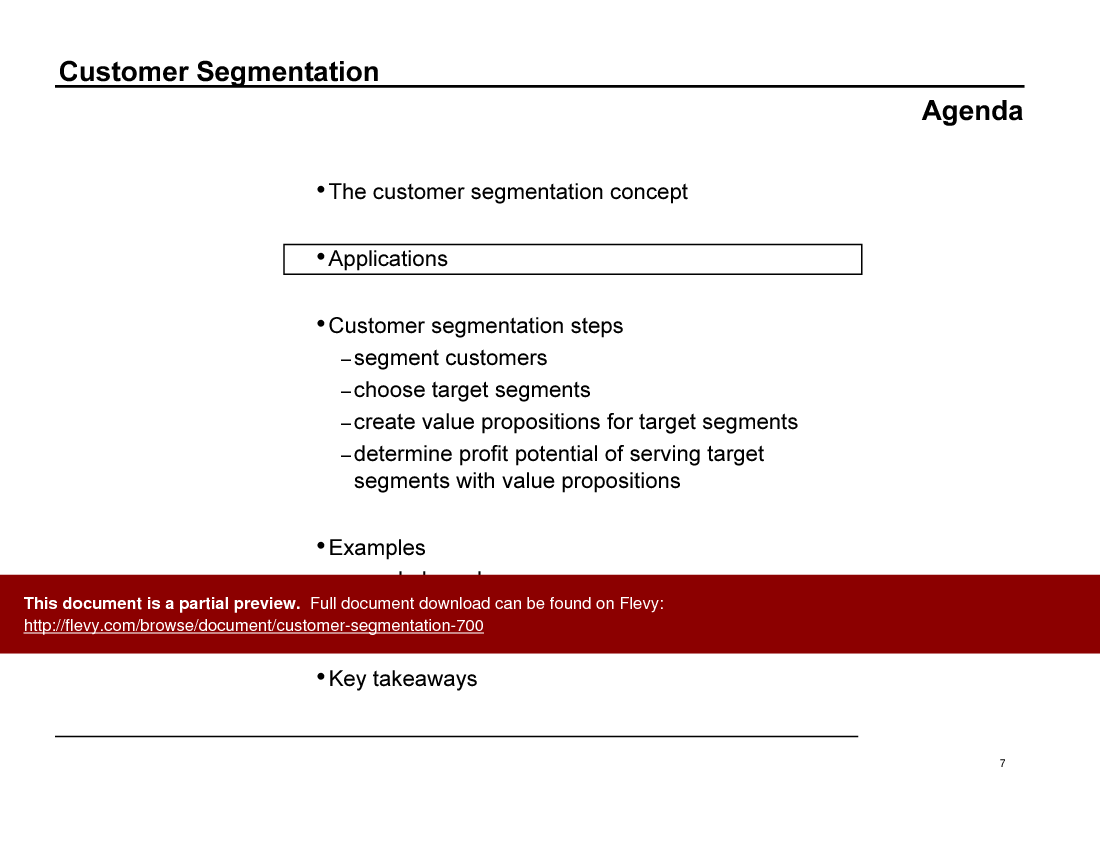
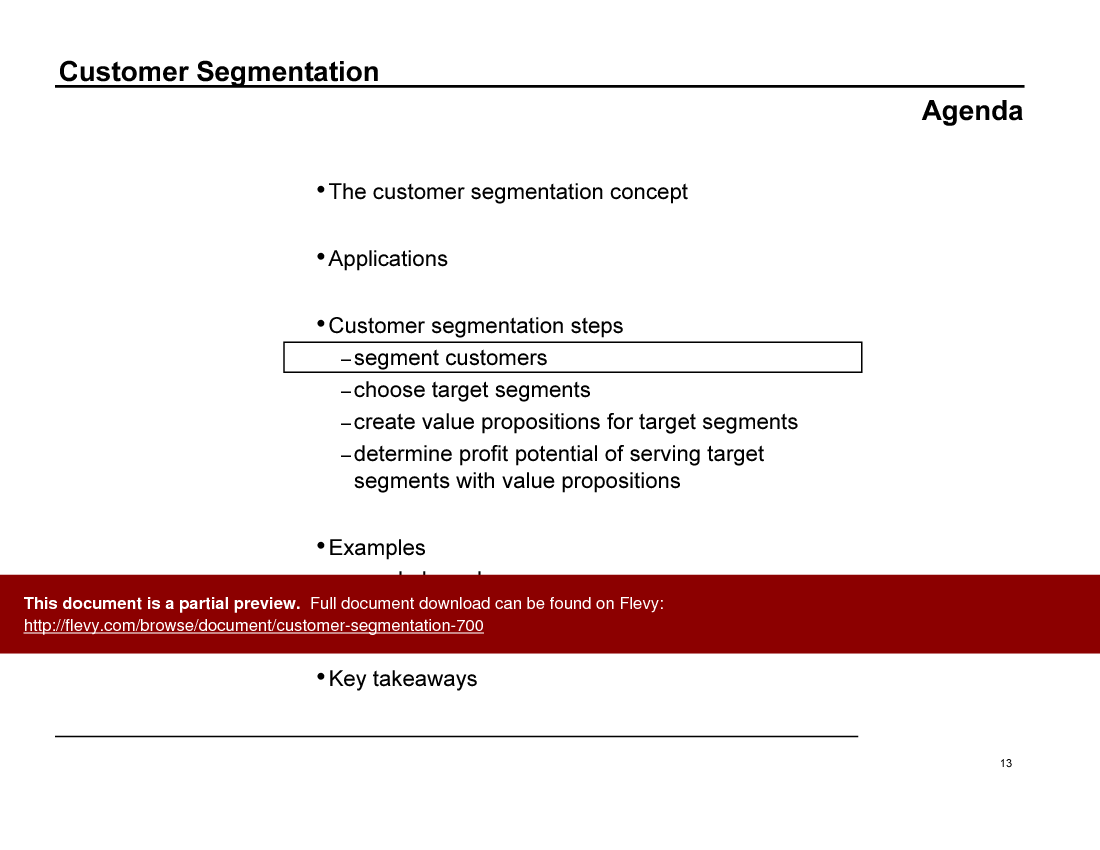
•  Customer Segmentation Steps (page 12)
•  Segmentation Methods (page 14)
•  Needs-Based Segmentation Process (page 16)
•  Behavioral and Demographic Segmentation (page 18)
•  Target Segment Selection (page 22)
•  Value Proposition Development (page 25)
•  Profit Potential Quantification (page 27)
•  Case Studies: Smith’s Fashion Center (page 29)
•  Case Studies: Highland Hotels (page 35)
•  Key Takeaways (page 43)

Primary Topics Covered
•  Customer Segmentation Concept - A framework for categorizing customers into homogeneous groups to tailor marketing strategies effectively.
•  Applications of Customer Segmentation - Practical uses in identifying product gaps, optimizing pricing, and enhancing customer acquisition and retention.
•  Customer Segmentation Steps - A structured approach involving segmentation, target selection, value proposition creation, and profit potential assessment.
•  Segmentation Methods - Overview of needs-based, behavioral, and demographic segmentation techniques.
•  Needs-Based Segmentation Process - Detailed steps for identifying customer needs and segmenting based on those insights.
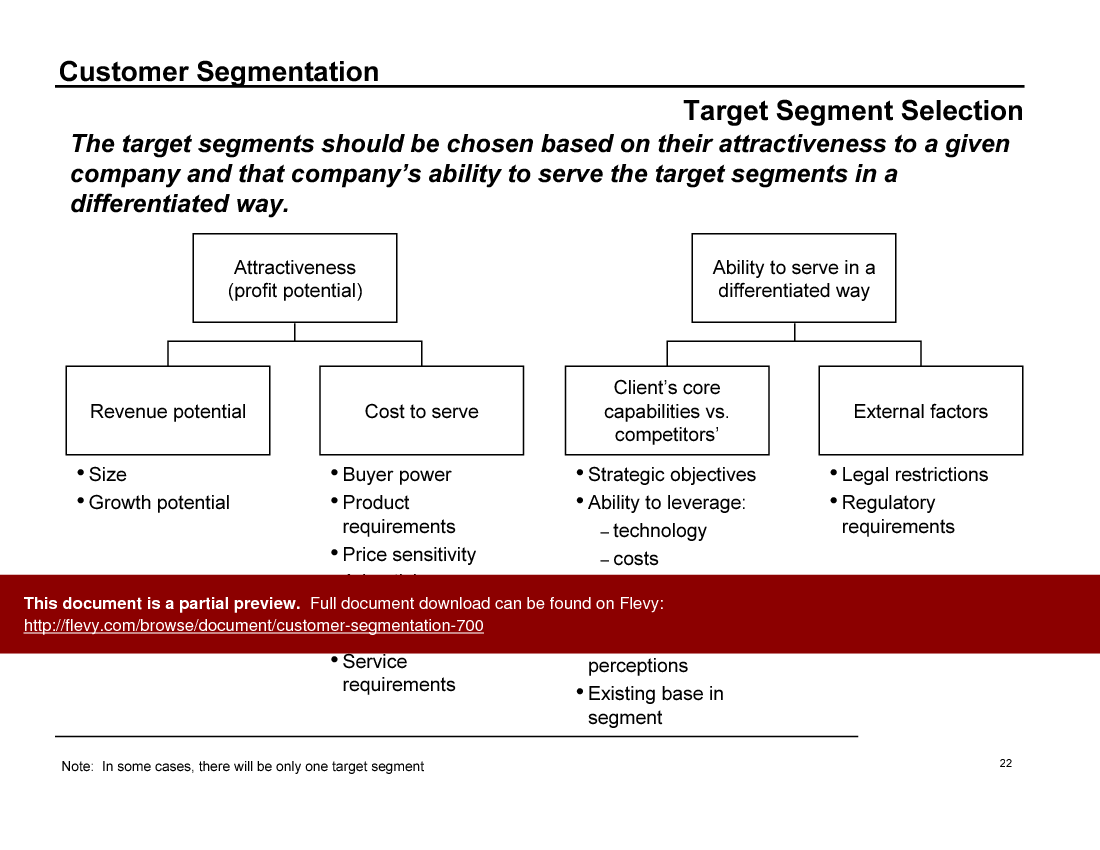
•  Target Segment Selection - Criteria for evaluating the attractiveness and serviceability of potential segments.

Deliverables, Templates, and Tools
•  Customer segmentation framework template for categorizing existing and potential customers
•  Value proposition development guide tailored to specific customer segments
•  Profit potential analysis model to quantify revenue impacts of serving target segments
•  Case study templates illustrating successful customer segmentation applications
•  Presentation slides for stakeholder engagement on segmentation strategies
•  Checklist for evaluating segment attractiveness and serviceability

Slide Highlights
•  Overview of customer segmentation concepts and their strategic importance
•  Visual representation of segmentation methods with pros and cons
•  Case studies showcasing successful applications of customer segmentation
•  Target segment selection matrix to guide decision-making
•  Profit potential quantification slide illustrating revenue and cost impacts

Potential Workshop Agenda
Customer Segmentation Overview (60 minutes)
•  Introduce the concept of customer segmentation and its importance
•  Discuss various segmentation methods and their applications
•  Review case studies demonstrating successful segmentation strategies

Hands-On Segmentation Exercise (90 minutes)
•  Break into teams to segment a hypothetical customer base
•  Develop value propositions for selected target segments
•  Present findings and receive feedback from peers

Profit Potential Analysis (60 minutes)
•  Explore methods for quantifying profit potential of target segments
•  Discuss implications for marketing and product strategies

Customization Guidance
•  Tailor segmentation methods based on specific industry needs and customer behaviors
•  Adjust value propositions to reflect unique customer preferences and market conditions
•  Incorporate company-specific metrics and KPIs in profit potential assessments

Secondary Topics Covered
•  Customer retention strategies linked to segmentation insights
•  Behavioral drivers of customer purchasing decisions
•  Market positioning based on competitive analysis
•  Importance of aligning product features with customer needs

FAQ
What is customer segmentation?
Customer segmentation is the process of dividing a customer base into distinct groups based on shared characteristics to tailor marketing strategies effectively.

Why is customer segmentation important?
It allows businesses to focus resources on the most profitable customer segments, enhancing marketing efficiency and improving customer satisfaction.

What are the main types of segmentation?
The primary types are needs-based, behavioral, and demographic segmentation, each offering unique insights into customer preferences and behaviors.

How do I determine target segments?
Evaluate segments based on their attractiveness (profit potential) and your company's ability to serve them in a differentiated way.

What is a value proposition?
A value proposition is the combination of product, service, and delivery tailored to meet the specific needs of a target customer segment.

How can I quantify profit potential?
Calculate the revenue increase and cost to serve for both current and new customers within the target segments.

What tools can assist in customer segmentation?
Tools like Factor/Cluster analysis and CHAID can help identify statistically significant customer segments based on various data points.

How can segmentation improve customer retention?
By understanding customer needs and preferences, businesses can create tailored experiences that enhance loyalty and satisfaction.

What role does primary research play in segmentation?
Primary research is crucial for needs-based segmentation to gather insights directly from customers about their preferences and behaviors.

Glossary
•  Customer Segmentation - The process of dividing customers into groups based on shared characteristics.
•  Value Proposition - The unique value offered to a customer segment through products and services.
•  Needs-Based Segmentation - A method of categorizing customers based on their specific needs and preferences.
•  Behavioral Segmentation - Dividing customers based on their purchasing behaviors and patterns.
•  Demographic Segmentation - Categorizing customers based on demographic factors such as age, income, and education.
•  Profit Potential - The estimated revenue and profit that can be generated from serving a customer segment.
•  Factor Analysis - A statistical method used to identify underlying relationships between variables in data.
•  CHAID - A statistical tool that uses the Chi-Square statistic to identify significant predictors of a dependent variable.
•  Target Segment - A specific group of customers identified as the focus for marketing and sales efforts.
•  Market Share - The portion of a market controlled by a particular company or product.
•  Customer Retention - Strategies aimed at keeping existing customers engaged and satisfied.
•  Customer Acquisition - The process of attracting and converting new customers.
•  Segmentation Requirements - Criteria that segments must meet to be considered viable for analysis.
•  MECE - Mutually Exclusive and Collectively Exhaustive; a principle for organizing information.
•  Attractiveness Analysis - Evaluating segments based on their potential profitability and market characteristics.
•  Customer Needs - The specific requirements and desires that drive customer purchasing behavior.
•  Product Positioning - The strategy of defining how a product is perceived in the minds of consumers relative to competitors.
•  Market Positioning - The process of establishing a brand or product in a specific market segment.
•  Customer Insights - Understanding customer behaviors, preferences, and motivations through data analysis.
•  Competitive Analysis - Assessing competitors to identify strengths, weaknesses, and market opportunities.
•  Strategic Objectives - Long-term goals that guide a company's direction and decision-making.
•  Customer Experience - The overall perception of a customer’s interactions with a brand or company.

CUSTOMER SEGMENTATION PPT SLIDES

Strategic Framework for Customer Retention and Acquisition

Customer Segmentation Process for Retail Expansion

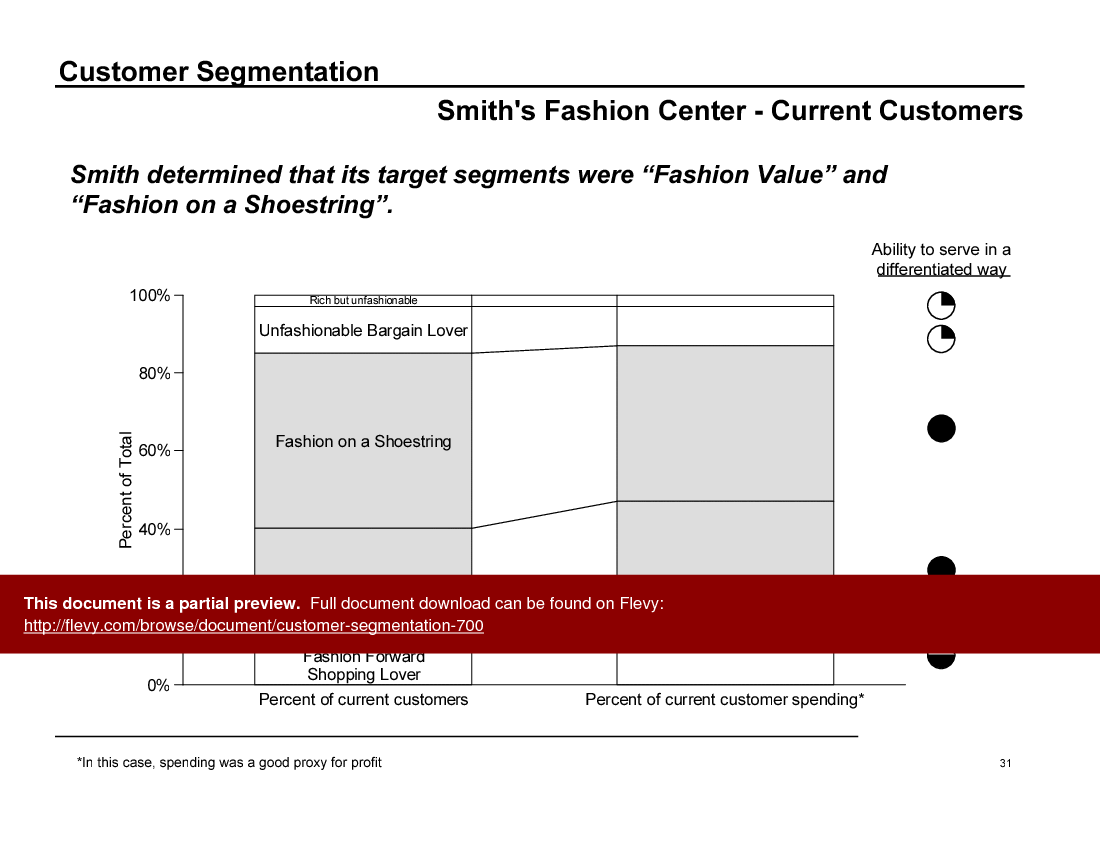
Target Customer Segmentation for Smith's Fashion Center

Evaluating Customer Segmentation Methodologies

Strategic Framework for Customer Segmentation and Value

Strategic Framework for Effective Customer Segmentation

Methodologies for Customer Segmentation Analysis

Framework for Effective Customer Segmentation Strategies

Structured Approach to Effective Customer Segmentation

Source: Best Practices in Customer Segmentation PowerPoint Slides: Customer Segmentation PowerPoint (PPT) Presentation Slide Deck, Documents & Files


$49.99

Add to Cart
  

ABOUT THE AUTHOR

Additional documents from author: 130

Ask the Author a Question

You must be logged in to contact the author.

Click here to log in Click here register

Did you know?
The average daily rate of a McKinsey consultant is $6,625 (not including expenses). The average price of a Flevy document is $65.
Bundle and save! You can save up to % with bundles!

View bundle(s)


Trusted by over 10,000+ Client Organizations
Since 2012, we have provided best practices to over 10,000 businesses and organizations of all sizes, from startups and small businesses to the Fortune 100, in over 130 countries.
AT&T GE Cisco Intel IBM Coke Dell Toyota HP Nike Samsung Microsoft Astrazeneca JP Morgan KPMG Walgreens Walmart 3M Kaiser Oracle SAP Google E&Y Volvo Bosch Merck Fedex Shell Amgen Eli Lilly Roche AIG Abbott Amazon PwC T-Mobile Broadcom Bayer Pearson Titleist ConEd Pfizer NTT Data Schwab


Read Customer Testimonials

 
"My FlevyPro subscription provides me with the most popular frameworks and decks in demand in today’s market. They not only augment my existing consulting and coaching offerings and delivery, but also keep me abreast of the latest trends, inspire new products and service offerings for my practice, and educate me "

– Bill Branson, Founder at Strategic Business Architects
 
"As a young consulting firm, requests for input from clients vary and it's sometimes impossible to provide expert solutions across a broad spectrum of requirements. That was before I discovered Flevy.com.

Through subscription to this invaluable site of a plethora of topics that are key and crucial to consulting, I "

– Nishi Singh, Strategist and MD at NSP Consultants
 
"I am extremely grateful for the proactiveness and eagerness to help and I would gladly recommend the Flevy team if you are looking for data and toolkits to help you work through business solutions."

– Trevor Booth, Partner, Fast Forward Consulting
 
"Flevy is our 'go to' resource for management material, at an affordable cost. The Flevy library is comprehensive and the content deep, and typically provides a great foundation for us to further develop and tailor our own service offer."

– Chris McCann, Founder at Resilient.World
 
"[Flevy] produces some great work that has been/continues to be of immense help not only to myself, but as I seek to provide professional services to my clients, it gives me a large "tool box" of resources that are critical to provide them with the quality of service and outcomes they are expecting."

– Royston Knowles, Executive with 50+ Years of Board Level Experience
 
"As an Independent Management Consultant, I find Flevy to add great value as a source of best practices, templates and information on new trends. Flevy has matured and the quality and quantity of the library is excellent. Lastly the price charged is reasonable, creating a win-win value for "

– Jim Schoen, Principal at FRC Group
 
"As a consulting firm, we had been creating subject matter training materials for our people and found the excellent materials on Flevy, which saved us 100's of hours of re-creating what already exists on the Flevy materials we purchased."

– Michael Evans, Managing Director at Newport LLC
 
"Last Sunday morning, I was diligently working on an important presentation for a client and found myself in need of additional content and suitable templates for various types of graphics. Flevy.com proved to be a treasure trove for both content and design at a reasonable price, considering the time I "

– M. E., Chief Commercial Officer, International Logistics Service Provider


Save with Bundles

This document is available as part of the following discounted bundle(s):

Save %!
Essential Consulting Knowledge Builder

This bundle contains 21 total documents. See all the documents to the right.

$699.99


Add Bundle & Save


Customers Also Bought These Documents


Customers Also Like These Documents

Explore Related Management Topics


Your Recently Viewed Documents
Download our FREE Strategy & Transformation Framework Templates

Download our free compilation of 50+ Strategy & Transformation slides and templates. Frameworks include McKinsey 7-S, Balanced Scorecard, Disruptive Innovation, BCG Curve, and many more.