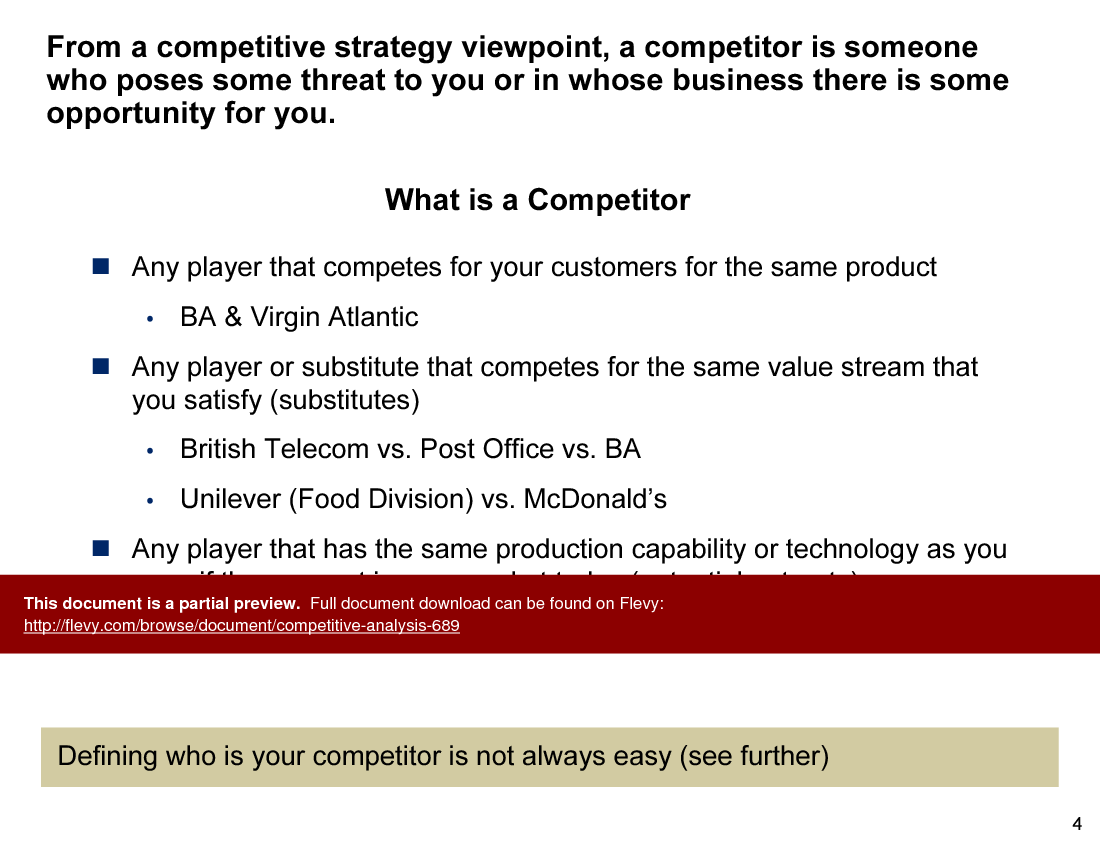

From a competitive strategy viewpoint, a competitor is someone who poses some threat to you or in whose business there is some opportunity for you.
Competitive analysis is...
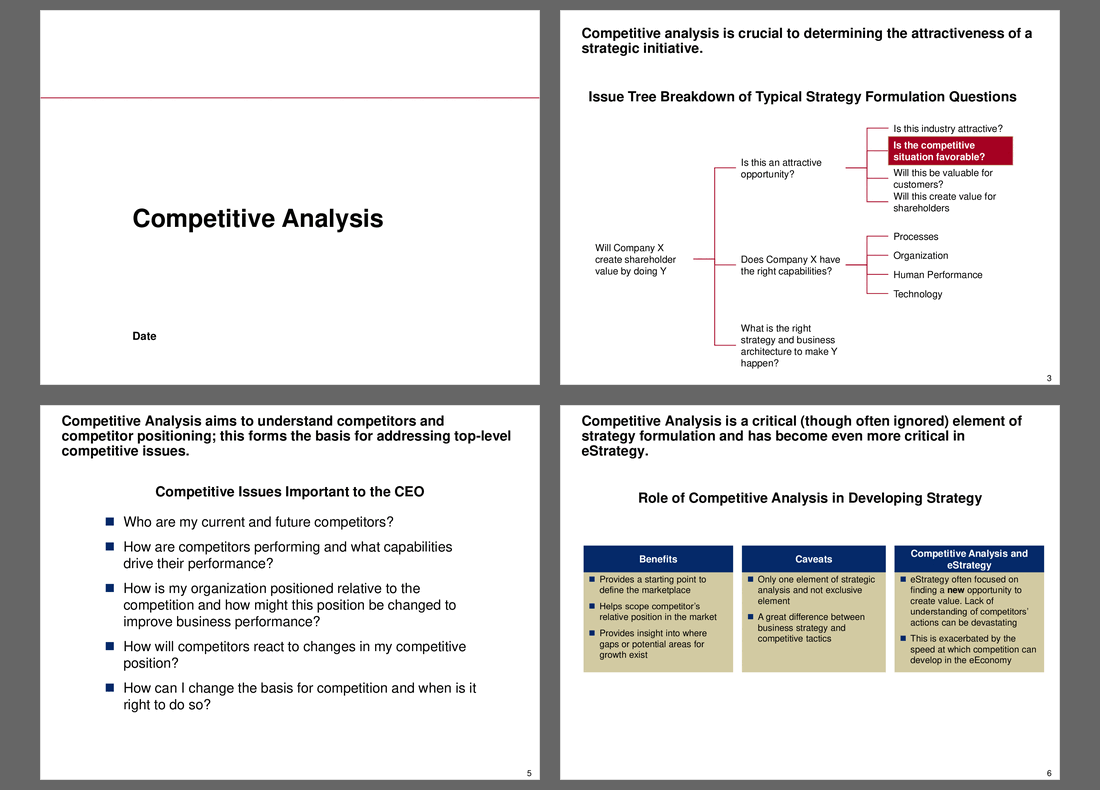
Crucial to determining the attractiveness of a strategic initiative.
Aims to understand competitors and competitor positioning; this forms the basis for addressing top-level competitive issues.
Critical (though often ignored) element of Strategy Formulation and has become even more critical in Online/Digital Strategy.
This document delves into the intricacies of defining competitors, acknowledging that it's not always straightforward. It categorizes competitors into those vying for the same product, substitutes fulfilling the same value stream, and those with comparable production capabilities. Real-world examples like BA vs. Virgin Atlantic and Unilever vs. McDonald's illustrate these distinctions, emphasizing the complexity of competitive landscapes.
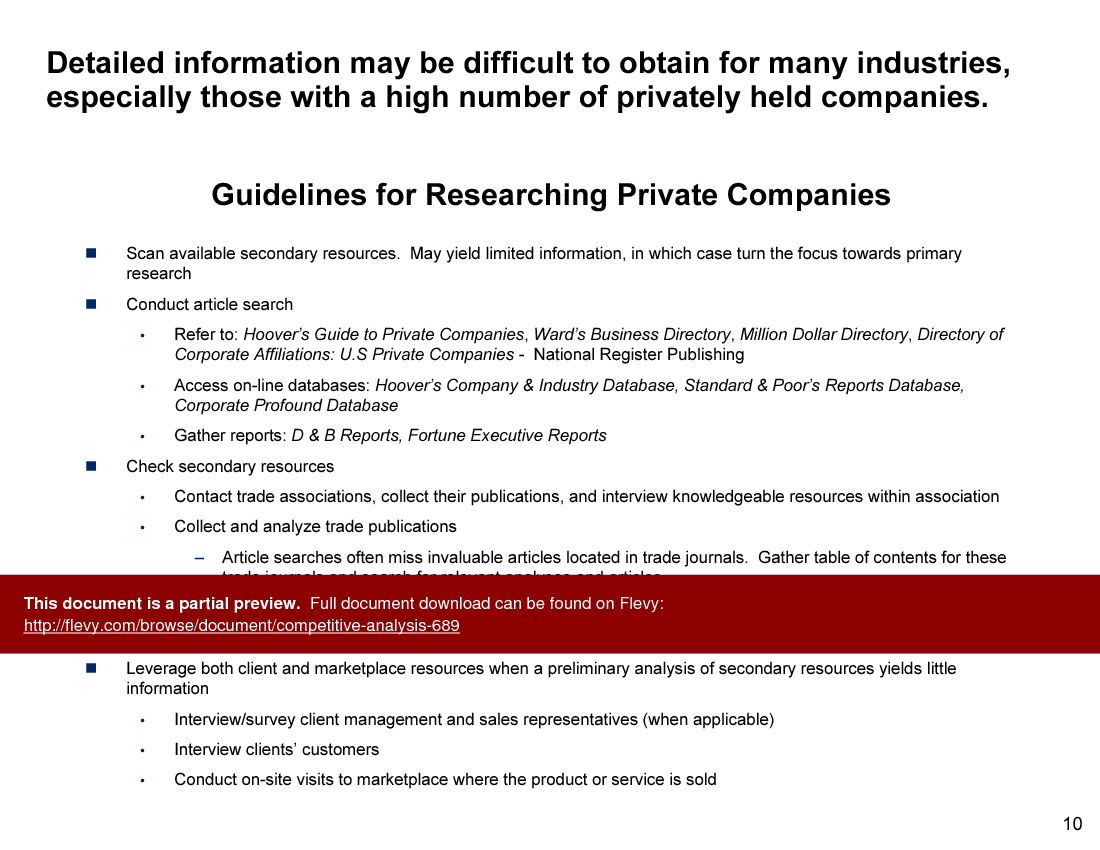
The XYZ Approach to Competitive Analysis offers a structured methodology for dissecting competitive environments. It includes comprehensive guidelines for researching private companies, leveraging both secondary and primary resources. This section is particularly valuable for industries with numerous privately held firms, where data is often scarce. The document outlines key resources like Hoover's Guide and D&B Reports, ensuring thorough and reliable research.
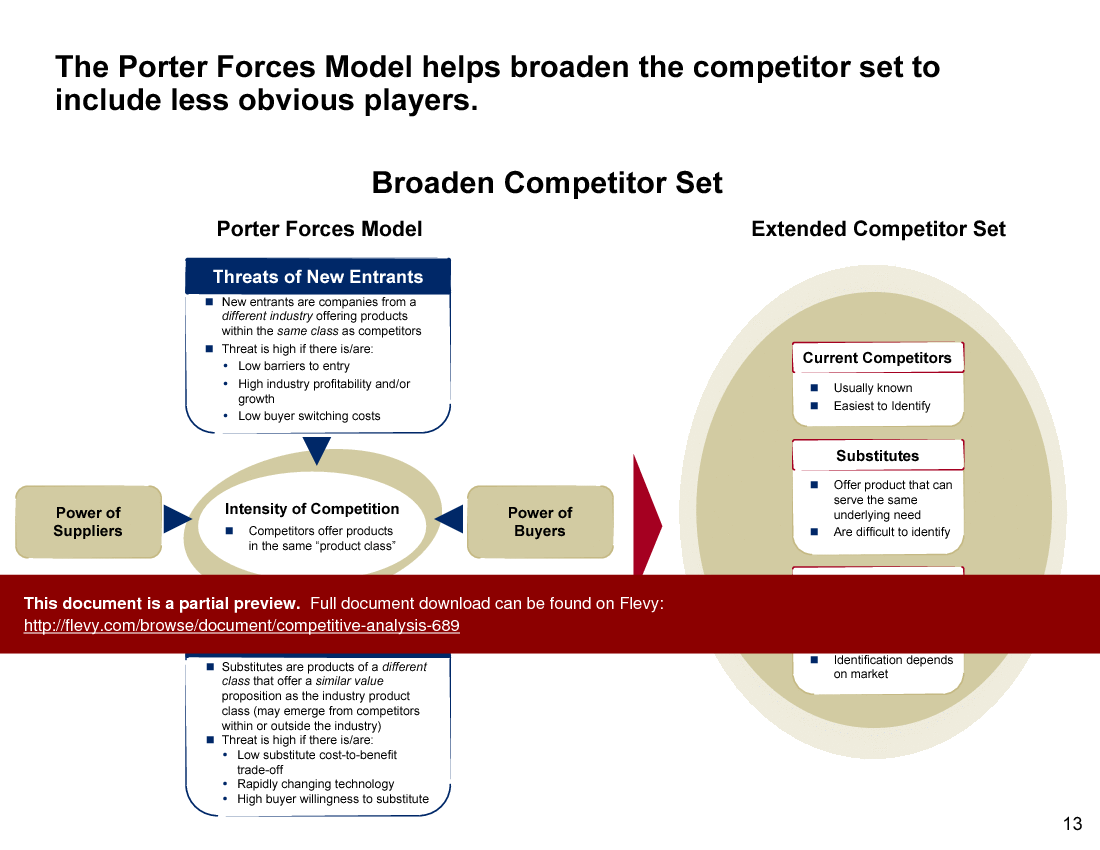
Porter's Five Forces Model is utilized to broaden the competitor set, identifying less obvious players. This model helps in understanding the threats of new entrants, the power of suppliers and buyers, and the intensity of competition. It also highlights the importance of substitutes, which can often be overlooked. This holistic view ensures a robust competitive analysis, providing insights into various market dynamics.
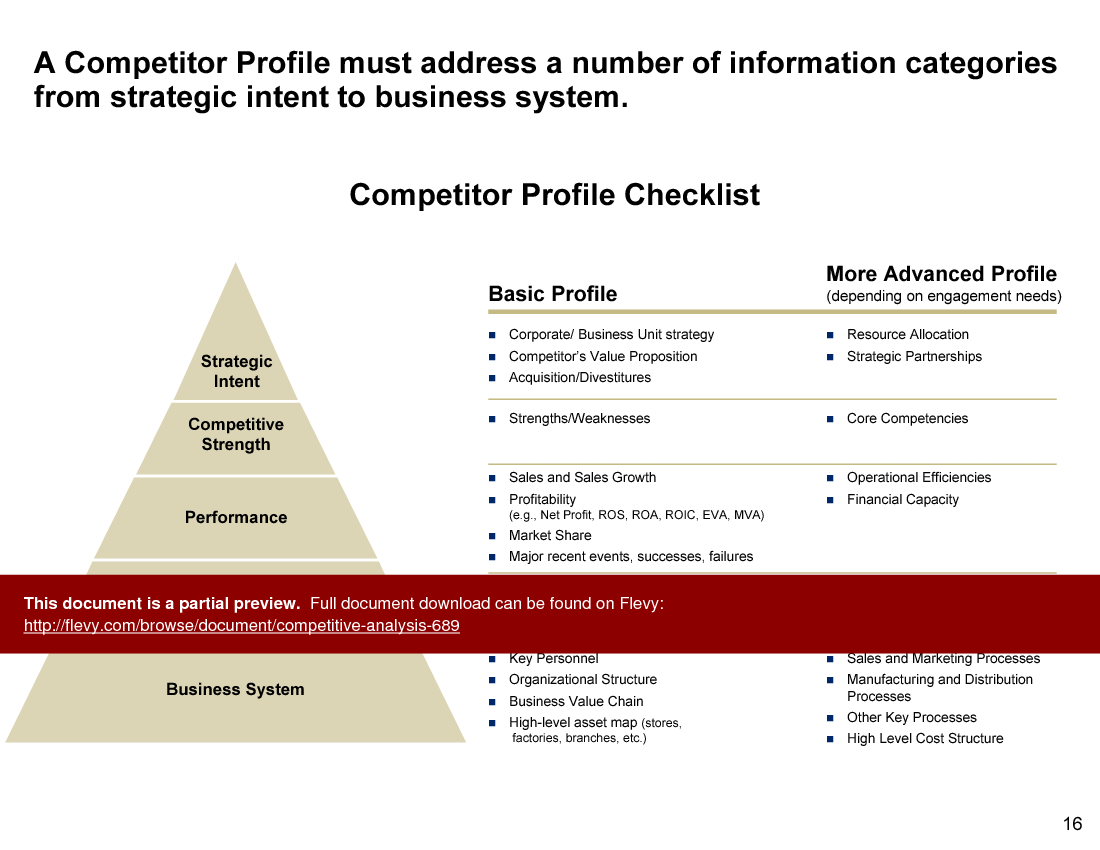
The document also includes a detailed competitor profile checklist, covering aspects from strategic intent to business systems. It emphasizes the need to gather basic and advanced profile information, such as sales growth, market share, and operational efficiencies. This comprehensive approach ensures that all critical facets of competitors are analyzed, providing a solid foundation for strategic decision-making.
Got a question about the product? Email us at support@flevy.com or ask the author directly by using the "Ask the Author a Question" form. If you cannot view the preview above this document description, go here to view the large preview instead.
Executive Summary
The Competitive Analysis PPT is a consulting-grade presentation designed to facilitate a thorough assessment of competitors within any industry. This template, structured in a McKinsey, Bain, or BCG-quality format (not affiliated), allows corporate executives and consultants to systematically evaluate competitive positioning and strategic opportunities. Users will be equipped to identify key competitors, analyze their strengths and weaknesses, and formulate actionable strategies to enhance market positioning and shareholder value.
Who This Is For and When to Use
• Corporate strategists and business development teams focused on market positioning
• Competitive intelligence analysts tasked with gathering and interpreting market data
• Senior executives seeking to understand competitive dynamics for strategic decision-making
• Consultants advising clients on market entry or competitive positioning strategies
Best-fit moments to use this deck:
• During strategic planning sessions to evaluate market opportunities
• When assessing the competitive landscape prior to launching new products or services
• In workshops aimed at refining business strategies based on competitive insights
Learning Objectives
• Define the competitive landscape and identify key players within the market
• Analyze competitors’ strengths, weaknesses, and strategic intents
• Develop a framework for ongoing competitive analysis and monitoring
• Establish actionable insights to inform strategic decision-making
• Identify potential threats and opportunities in the competitive environment
• Formulate strategies to enhance market positioning and shareholder value
Table of Contents
• Introduction to Competitive Analysis (page 2)
• Defining Competitors (page 4)
• Competitive Issues for CEOs (page 5)
• Role of Competitive Analysis in Strategy Development (page 6)
• XYZ Approach to Competitive Analysis (page 8)
• Sources of Competitor Analysis Information (page 9)
• Guidelines for Researching Private Companies (page 10)
• Competitor Profile Checklist (page 16)
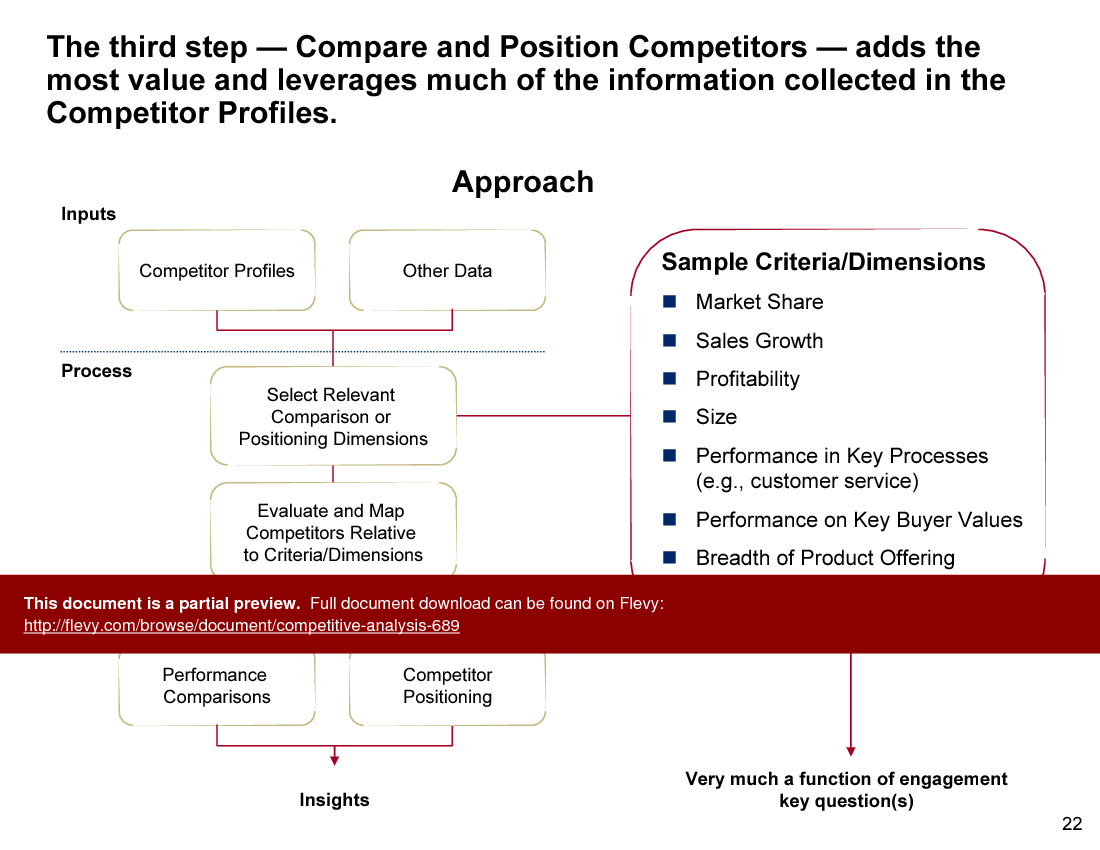
• Sample Criteria for Competitor Comparison (page 22)
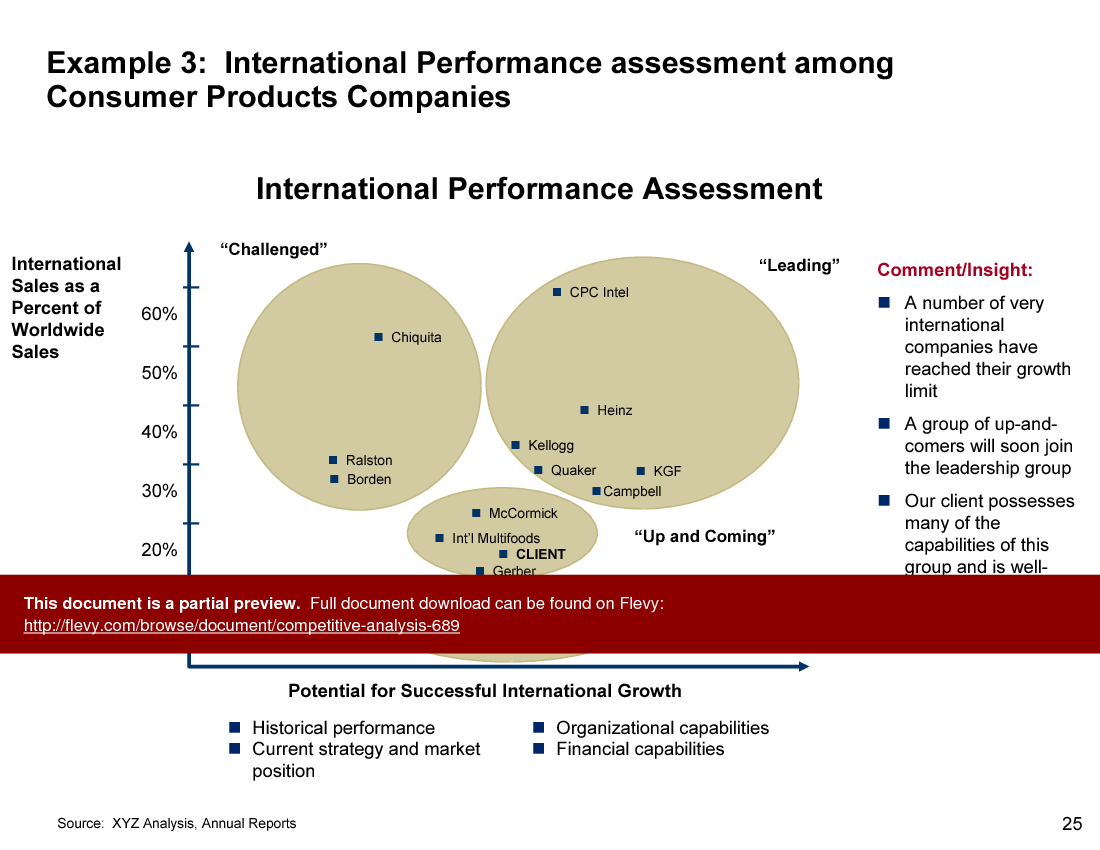
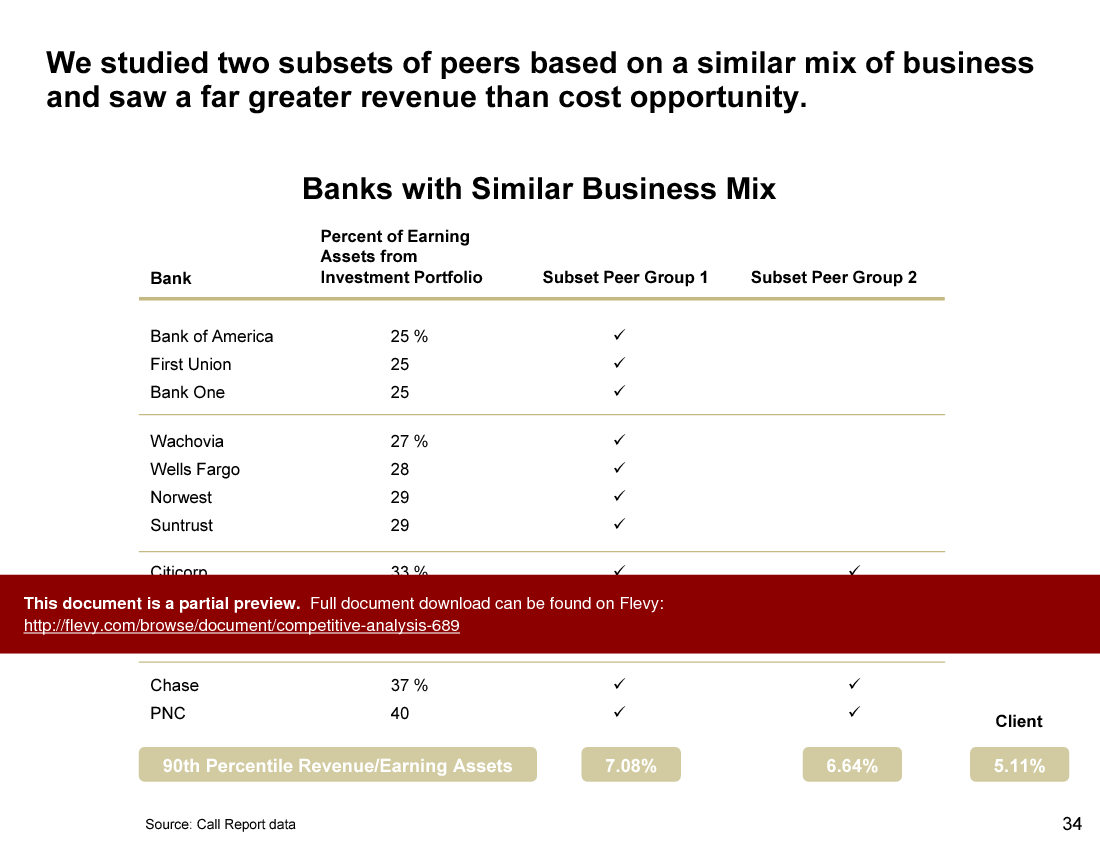
• Case Studies: Retail and Financial Services (page 26)
Primary Topics Covered
• Defining Competitors - Competitors can include direct rivals, substitutes, and potential entrants, making identification crucial for effective analysis.
• Competitive Issues for CEOs - Key questions regarding current and future competitors, performance metrics, and strategic positioning are essential for informed decision-making.
• Role of Competitive Analysis - This analysis serves as a foundation for defining market opportunities and understanding competitor dynamics.
• XYZ Approach - A structured methodology for defining, profiling, and comparing competitors to inform overall strategy formulation.
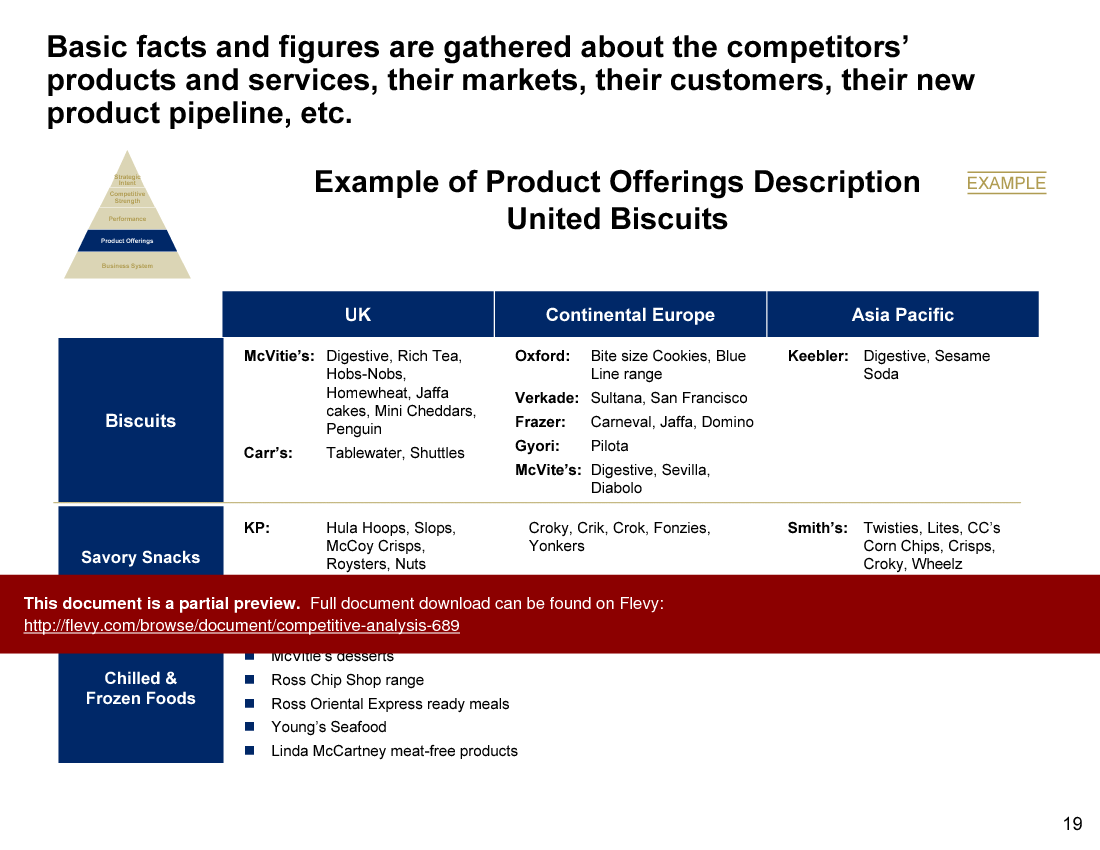
• Competitor Profile Checklist - A comprehensive framework that includes strategic intent, product offerings, and competitive strengths for effective competitor profiling.
• Case Studies - Real-world examples demonstrating the application of competitive analysis in retail and financial services sectors.
Deliverables, Templates, and Tools
• Competitor profiling template to summarize strategic intent and performance metrics
• Framework for comparative analysis across key evaluation criteria
• Guidelines for sourcing competitor information from various channels
• Case study examples illustrating practical applications of competitive analysis
• Checklist for assessing competitor strengths and weaknesses
Slide Highlights
• Overview of the competitive landscape and key players
• Issue tree breakdown of strategic formulation questions
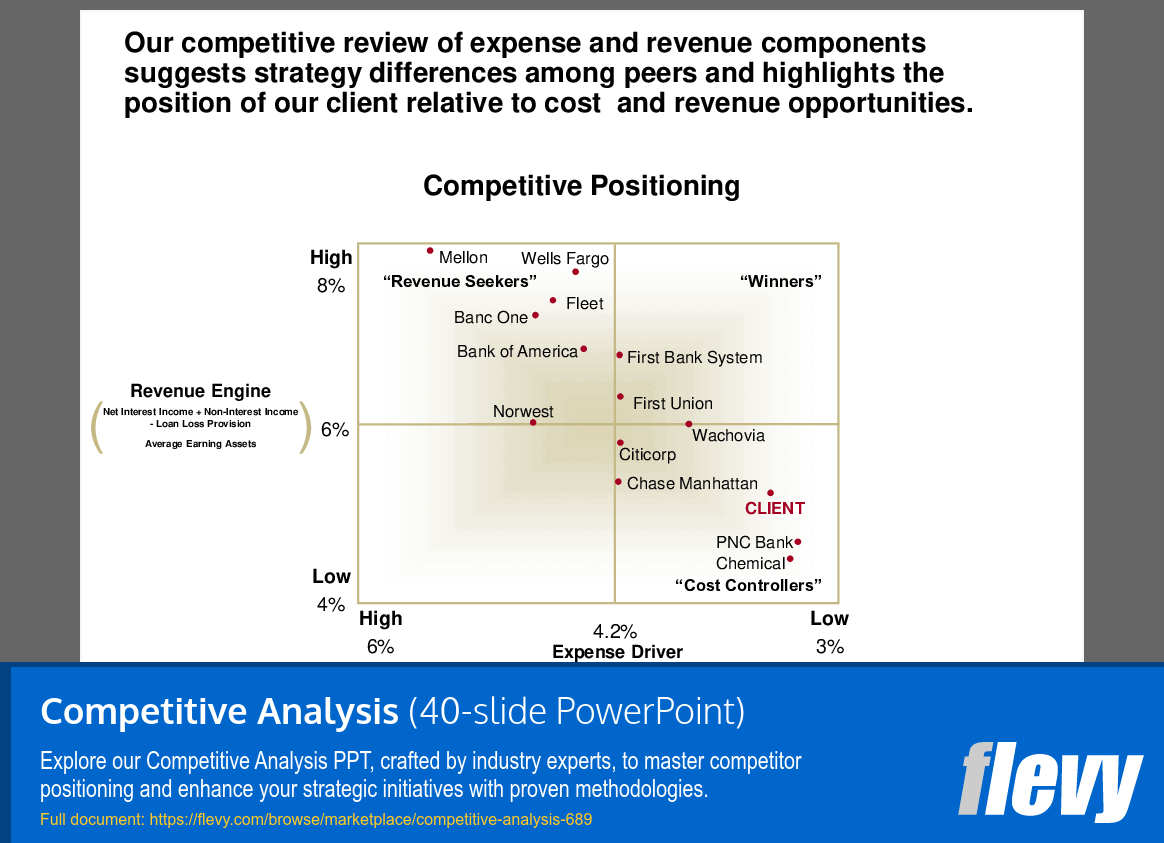
• Visual representation of competitor positioning using the Porter Forces Model
• Case study insights highlighting competitive advantages and market positioning
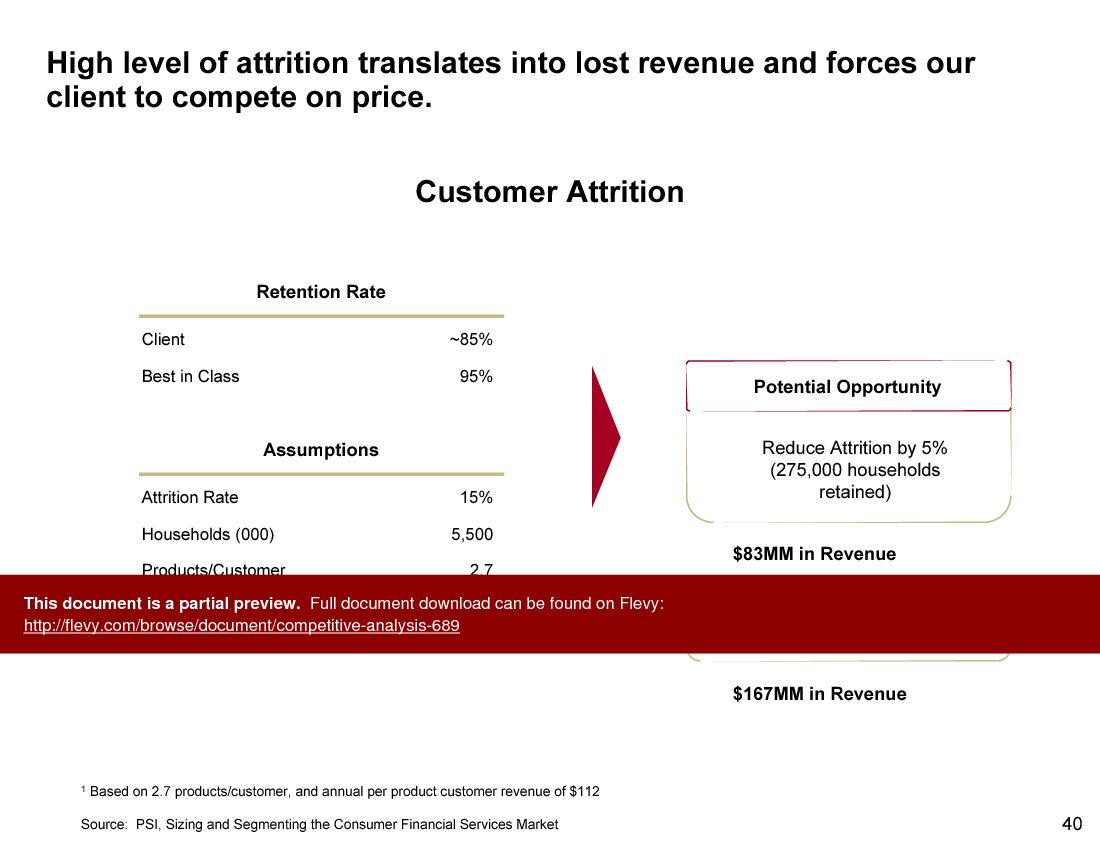
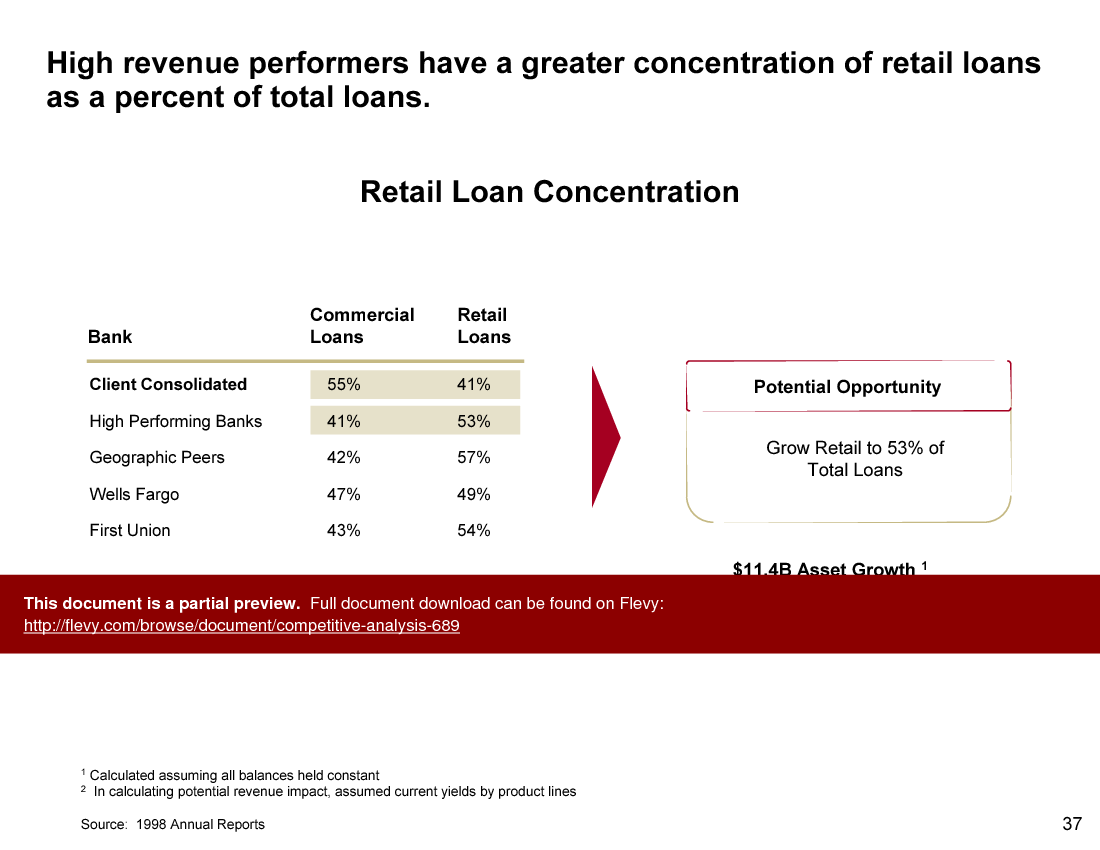
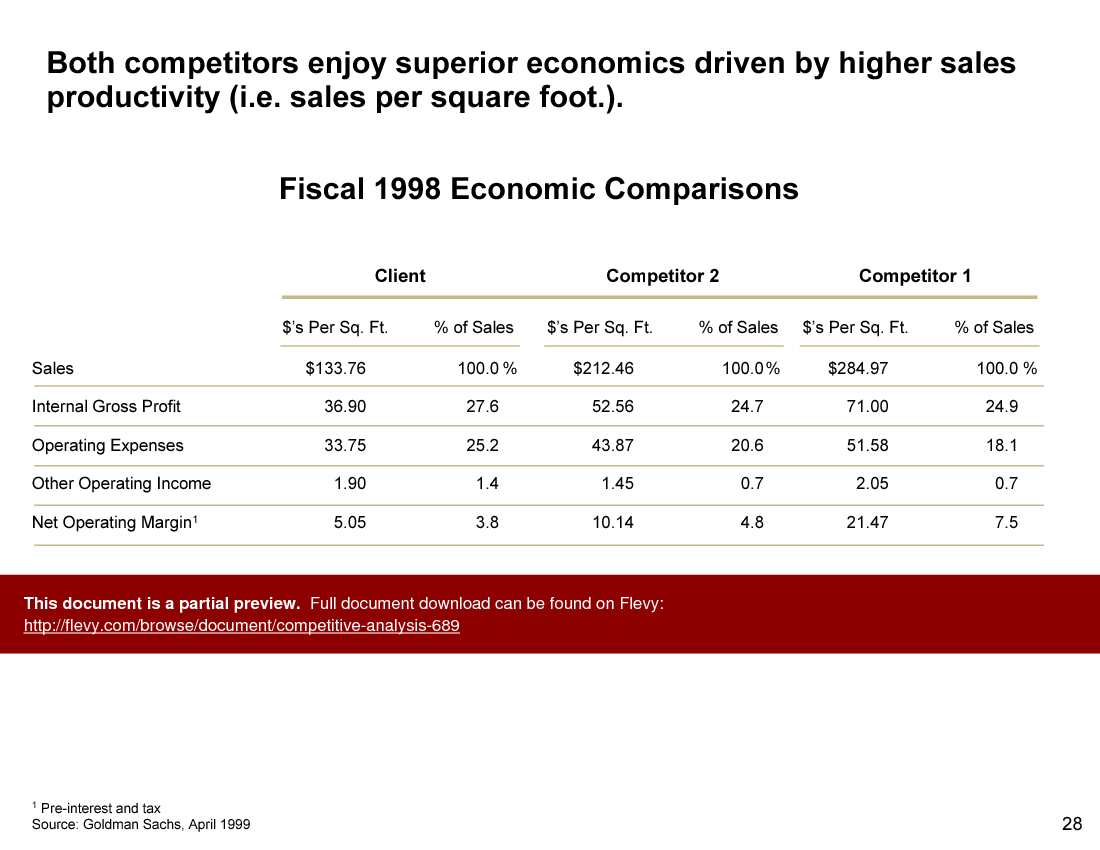
• Summary of key findings from competitor analysis in retail and financial services
Potential Workshop Agenda
Competitive Analysis Overview (60 minutes)
• Introduce the importance of competitive analysis in strategy formulation
• Discuss the XYZ approach to competitor profiling and comparison
• Review case studies to illustrate practical applications
Competitor Profiling Session (90 minutes)
• Define the relevant competitor set for the organization
• Profile key competitors using the checklist provided
• Analyze strengths, weaknesses, and strategic intents
Strategy Development Workshop (120 minutes)
• Utilize insights from competitor analysis to inform strategic decision-making
• Identify potential threats and opportunities in the competitive landscape
• Formulate actionable strategies to enhance market positioning
Customization Guidance
• Tailor the competitor set based on specific market dynamics and organizational needs
• Adjust evaluation criteria to align with strategic objectives and industry standards
• Incorporate company-specific terminology and metrics for relevance
Secondary Topics Covered
• Market share analysis and financial performance metrics
• Customer satisfaction and retention strategies
• Competitive positioning opportunities based on behavioral segmentation
• Insights from industry experts and analyst reports
FAQ
What is the purpose of competitive analysis?
Competitive analysis helps organizations understand their market position relative to competitors, identify strategic opportunities, and inform decision-making processes.
How do I define my competitors?
Competitors can be defined as any entities that pose a threat to your market share, including direct competitors, substitutes, and potential entrants.
What are the key components of a competitor profile?
A competitor profile should include strategic intent, product offerings, competitive strengths, performance metrics, and insights into their business systems.
How can I use this template for my organization?
This template can be customized to fit your organization’s specific needs by adjusting the competitor set, evaluation criteria, and terminology.
What sources can I use for competitor analysis?
Sources include management interviews, analyst reports, trade publications, and customer feedback.
How often should I conduct competitive analysis?
Regular competitive analysis is recommended, especially during strategic planning sessions, product launches, or market entry initiatives.
What are the benefits of using a structured approach to competitive analysis?
A structured approach ensures comprehensive coverage of the competitive landscape, facilitates informed decision-making, and helps identify strategic opportunities.
Can this analysis be applied to different industries?
Yes, the principles of competitive analysis can be adapted to various industries, although specific criteria and competitors may differ.
What challenges might I face in gathering competitor information?
Challenges include limited access to private company data, rapidly changing market dynamics, and the need for comprehensive analysis across multiple sources.
Glossary
• Competitive Analysis - The process of assessing competitors to understand their strengths, weaknesses, and market positioning.
• Strategic Intent - The overarching goals and objectives that guide a competitor's actions and decisions.
• Market Share - The portion of a market controlled by a particular company or product.
• Porter Forces Model - A framework for analyzing the competitive forces within an industry.
• Competitor Profile - A detailed overview of a competitor's strategic intent, strengths, weaknesses, and market position.
• Behavioral Segmentation - Dividing customers based on their behaviors and decision-making processes.
• Customer Satisfaction - A measure of how products or services meet or exceed customer expectations.
• Financial Performance Metrics - Quantitative measures used to assess a company's financial health and operational efficiency.
• Competitive Positioning - The process of establishing a brand or product in relation to competitors in the market.
• Market Dynamics - The forces that impact the supply and demand of products and services in a market.
• Strategic Opportunities - Potential avenues for growth or competitive advantage identified through analysis.
• Value Proposition - The unique value a product or service offers to customers.
• Cost Structure - The various costs incurred by a business in its operations.
• Revenue Growth - The increase in a company's sales over a specific period.
• Market Entry - The strategy or process of entering a new market with a product or service.
• Competitive Advantage - A condition or circumstance that puts a company in a favorable or superior business position.
• Operational Efficiency - The ability to deliver products or services in the most cost-effective manner without compromising quality.
• Strategic Partnerships - Collaborations between companies to achieve shared objectives.
• Customer Retention - The ability of a company to retain its customers over time.
• Market Positioning - The process of positioning a brand or product in the minds of consumers relative to competitors.
• Product Pipeline - The range of products that a company is developing or planning to launch in the future.
• Competitive Landscape - The overall environment in which competitors operate, including market trends and dynamics.
Source: Best Practices in Competitive Analysis, Positioning PowerPoint Slides: Competitive Analysis PowerPoint (PPT) Presentation Slide Deck, Documents & Files
This document is available as part of the following discounted bundle(s):
Save %!
Essential Consulting Knowledge Builder
This bundle contains 21 total documents. See all the documents to the right.
|
Download our FREE Strategy & Transformation Framework Templates
Download our free compilation of 50+ Strategy & Transformation slides and templates. Frameworks include McKinsey 7-S, Balanced Scorecard, Disruptive Innovation, BCG Curve, and many more. |