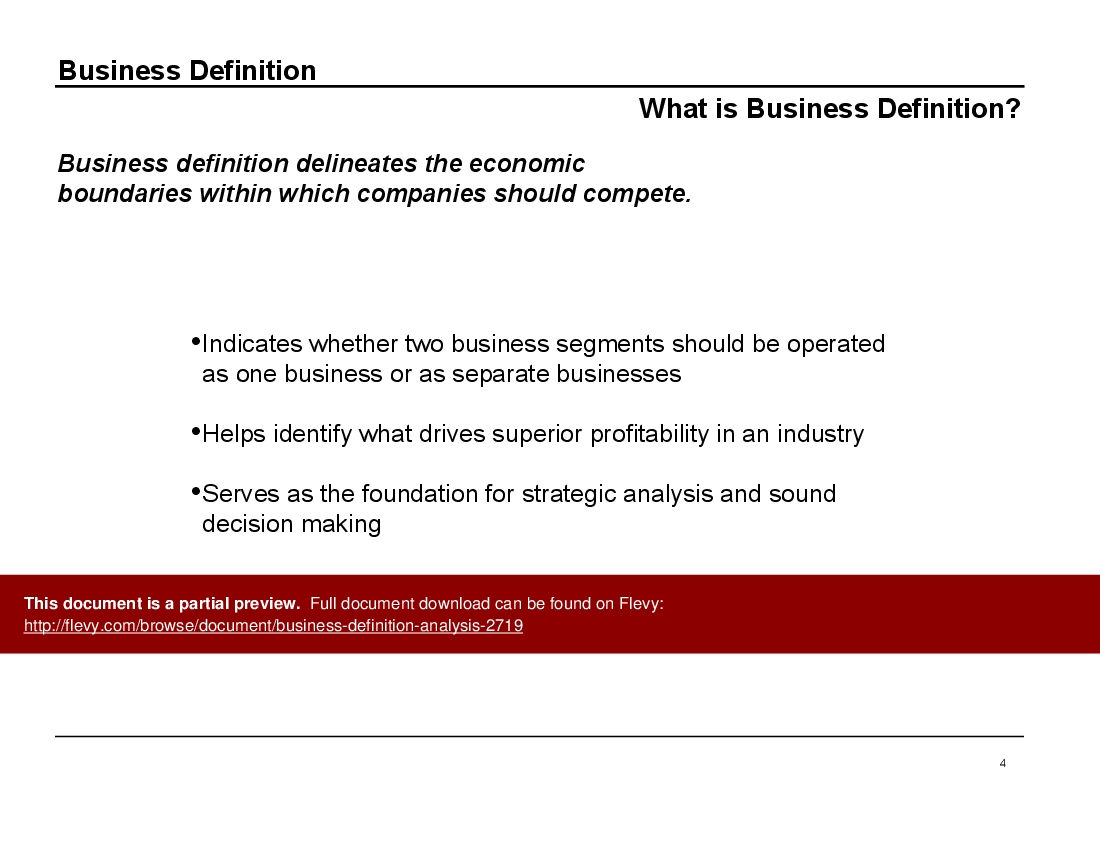

Business definition delineates the economic boundaries within which companies should compete.
• Indicates whether two business segments should be operated as one business or as separate businesses
• Helps identify what drives superior profitability in an industry
• Serves as the foundation for strategic analysis and sound decision making
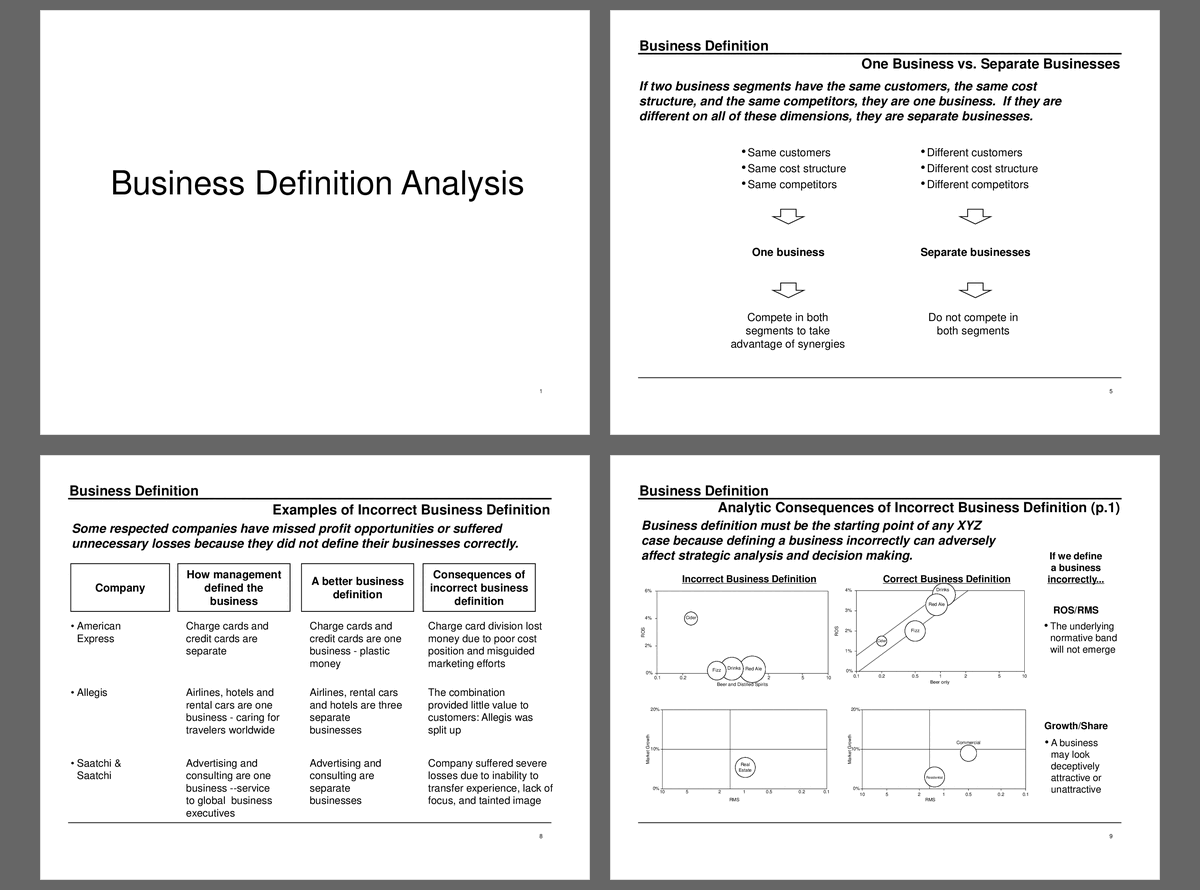
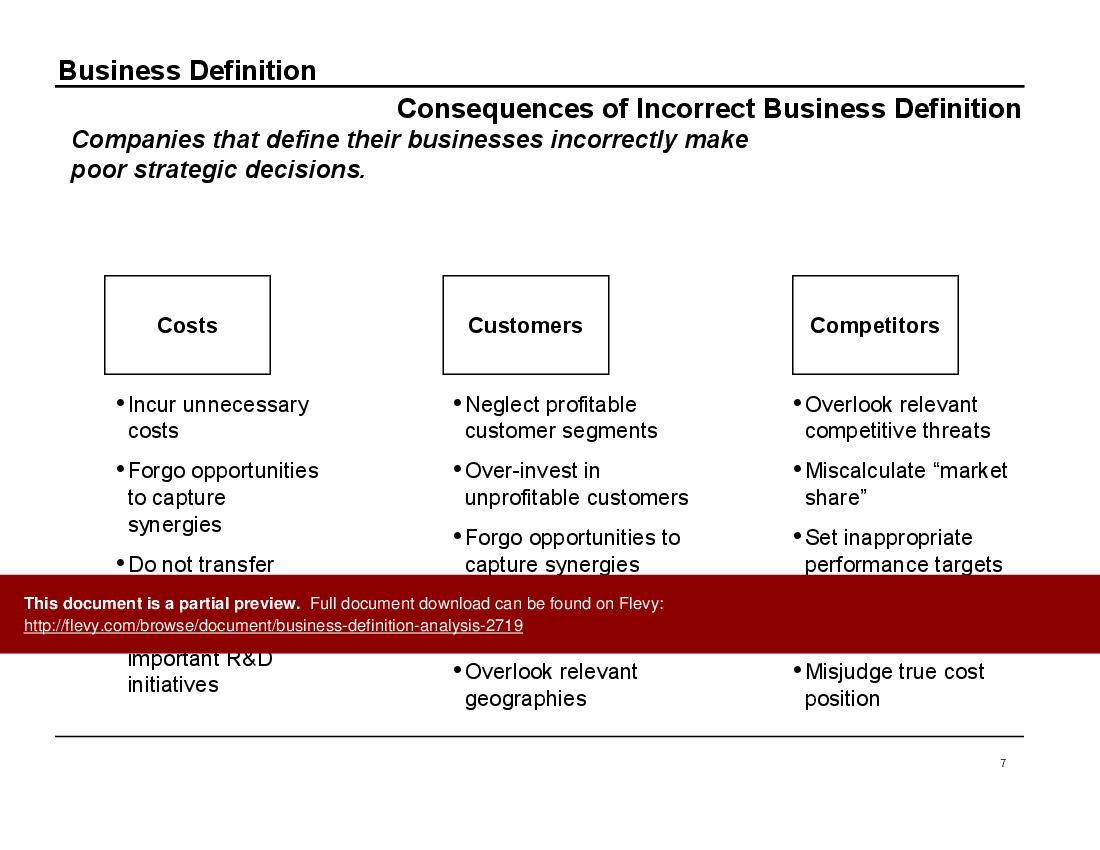
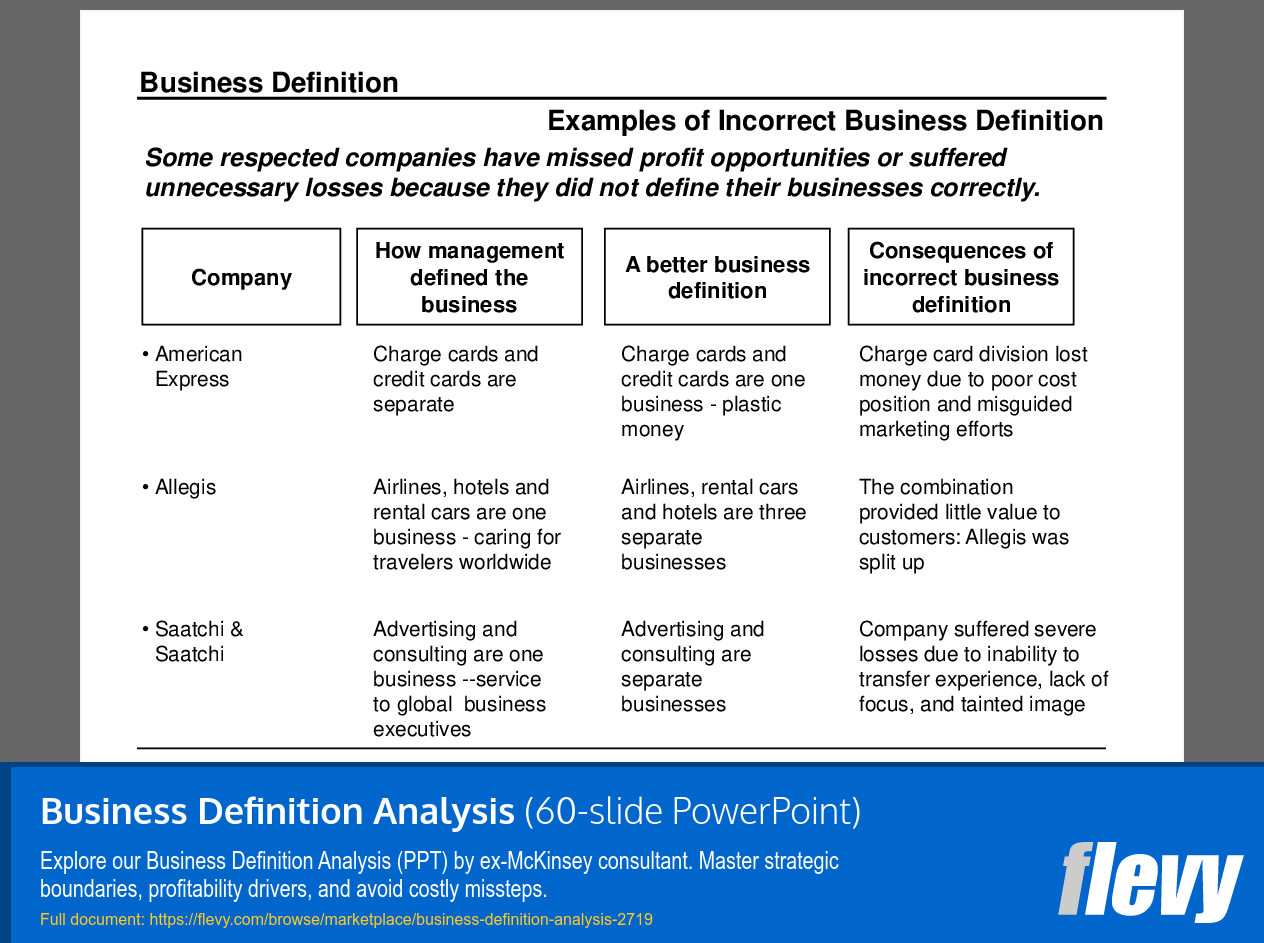
Understanding the consequences of an incorrect business definition is crucial. Missteps can lead to unnecessary costs, neglect of profitable customer segments, and overlooking competitive threats. This document outlines how to avoid these pitfalls and make informed strategic decisions.
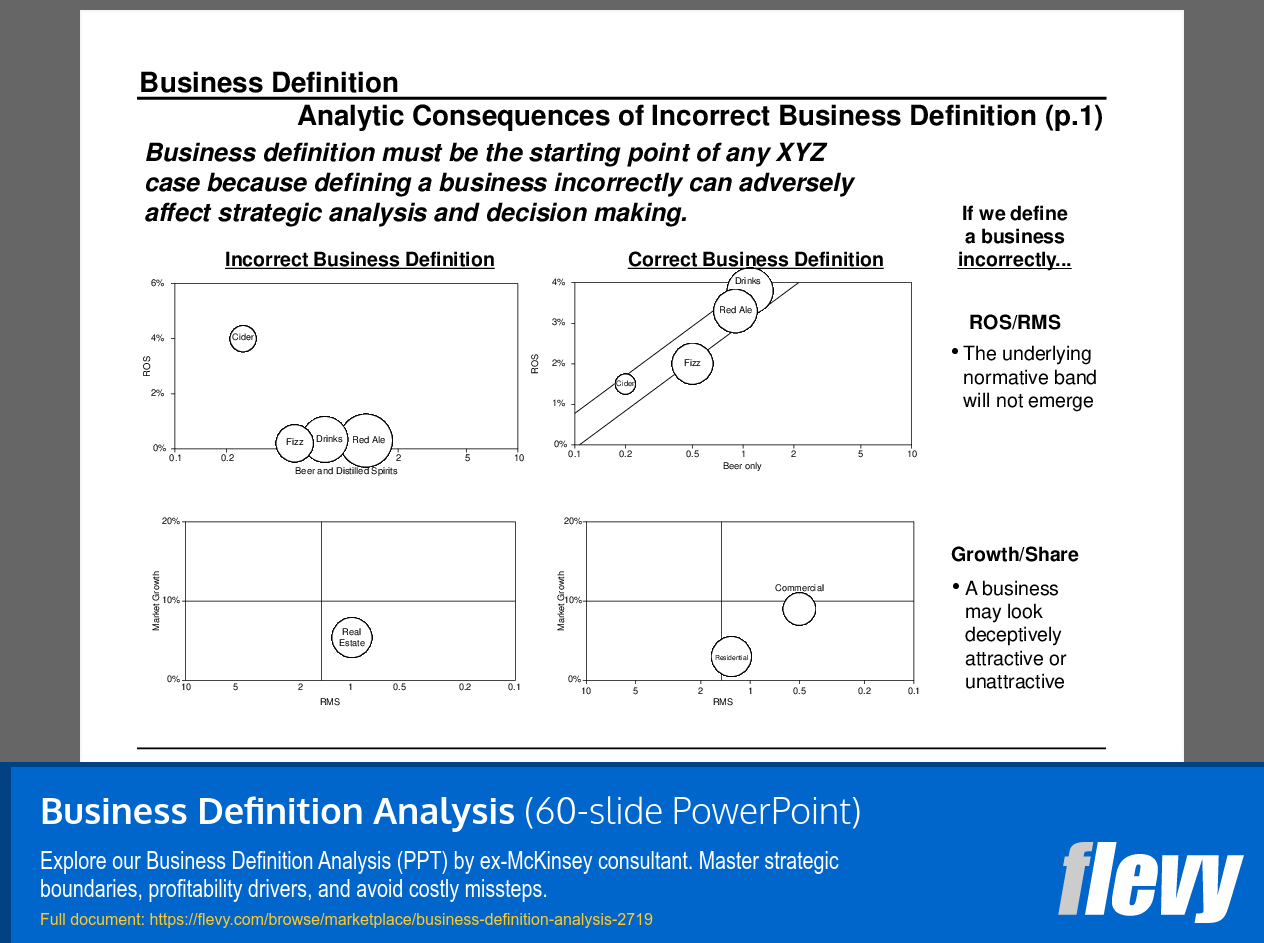
Incorrect business definitions can skew your E-Curve and RCP analysis, leading to flawed insights. This document provides a detailed comparison between incorrect and correct business definitions, highlighting the importance of accurate data interpretation.
The dynamics of business definition are ever-changing. Temporary advantages like price premiums and technology need constant reinforcement. This document discusses how to maintain these advantages by adapting to evolving market conditions and customer needs.
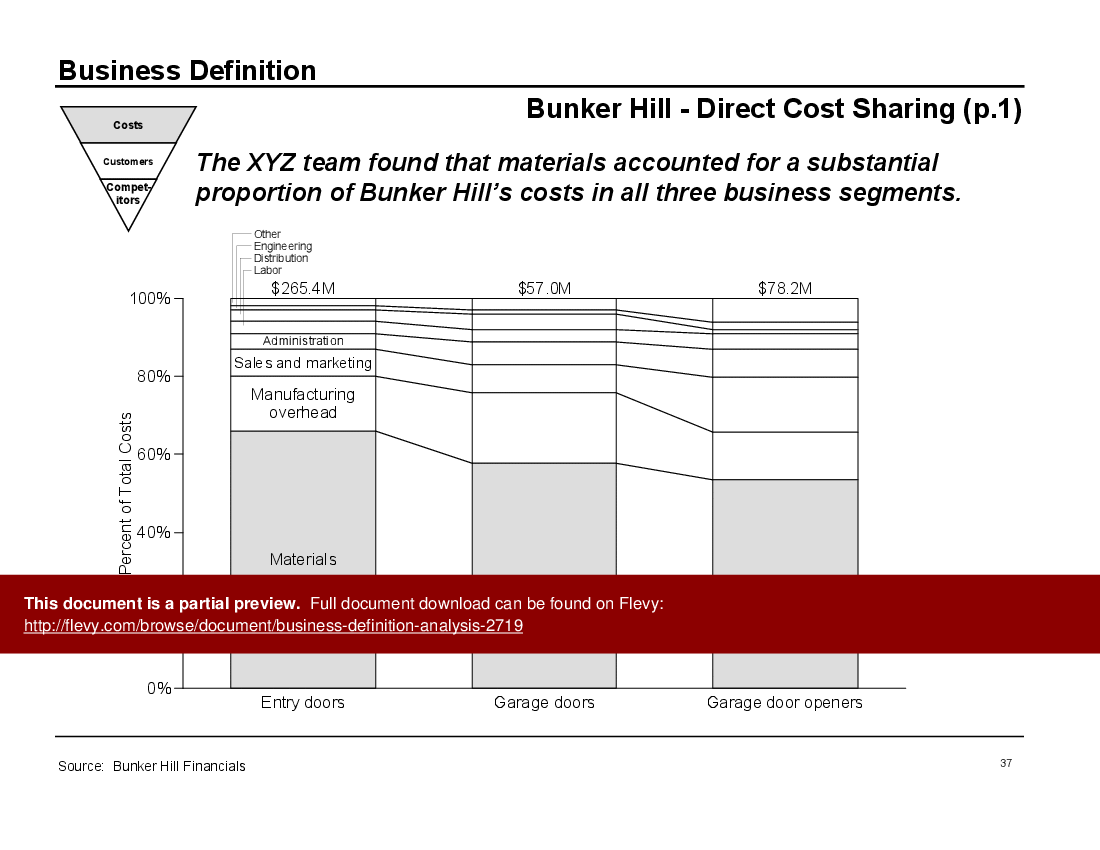
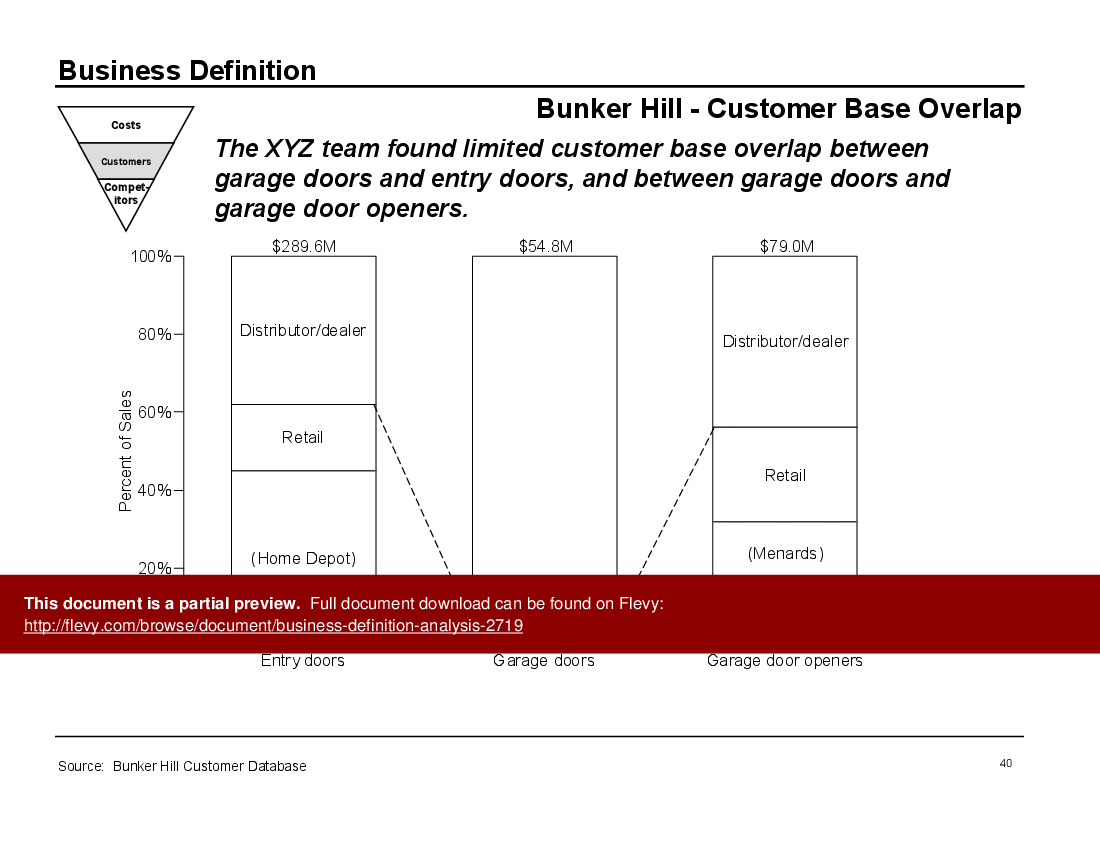
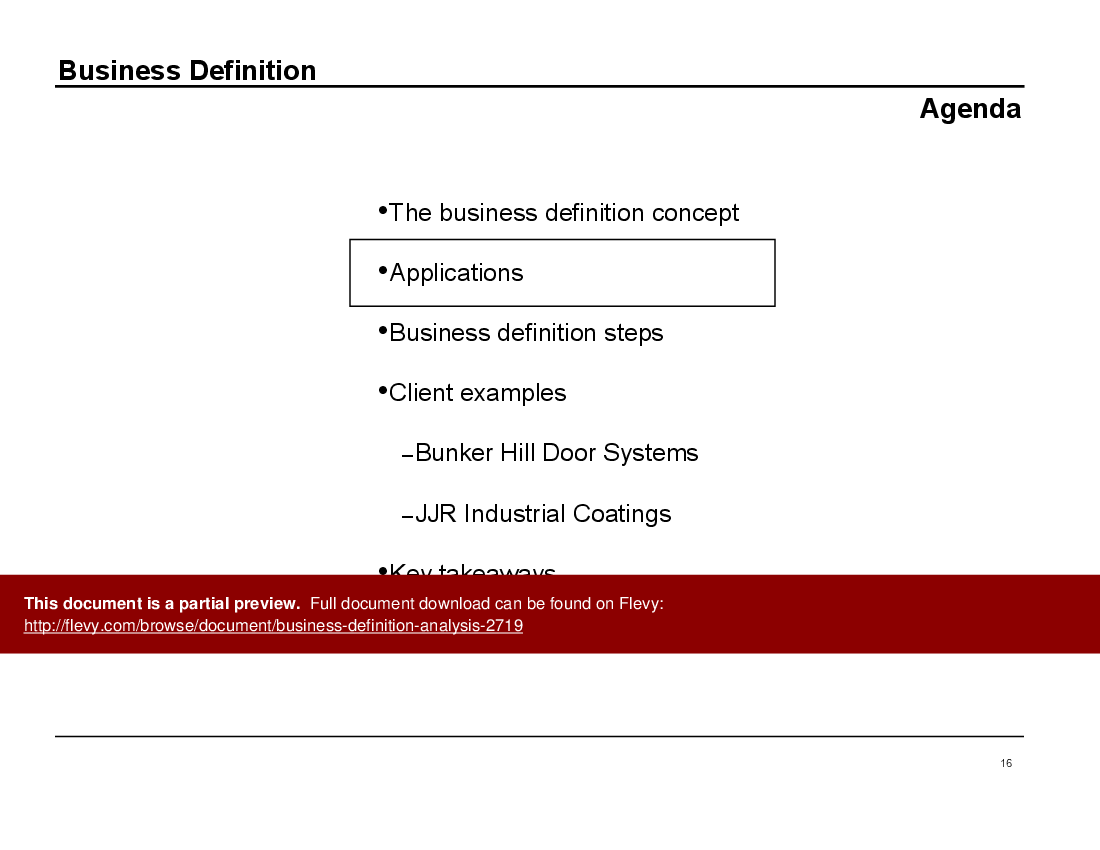
The document also includes practical applications and real-world examples, such as Bunker Hill Door Systems and JJR Industrial Coatings. These case studies illustrate how to apply the business definition concept effectively, providing valuable insights for your strategic planning.
Got a question about the product? Email us at support@flevy.com or ask the author directly by using the "Ask the Author a Question" form. If you cannot view the preview above this document description, go here to view the large preview instead.
Executive Summary
The Business Definition Analysis (PPT) is a strategic framework designed to clarify whether business segments should operate as a single entity or as separate businesses. Developed by an ex-MBB consultant, this consulting-grade presentation provides insights into profitability drivers, strategic boundaries, and the critical importance of accurate business definitions. By utilizing this framework, corporate executives and consultants can make informed decisions that enhance operational efficiency and profitability while avoiding costly missteps.
Who This Is For and When to Use
• Corporate executives seeking to refine business strategies
• Integration leaders evaluating potential mergers or acquisitions
• Consultants advising clients on market positioning and segmentation
• Business analysts focused on profitability and competitive analysis
Best-fit moments to use this deck:
• During strategic planning sessions to define business boundaries
• When assessing potential mergers, acquisitions, or divestitures
• In workshops aimed at improving operational efficiencies
• When conducting market analysis to identify competitive threats
Learning Objectives
• Define the concept of business definition and its significance in strategic analysis
• Identify the key factors that determine whether segments should operate as one or separate businesses
• Analyze case studies to understand the implications of incorrect business definitions
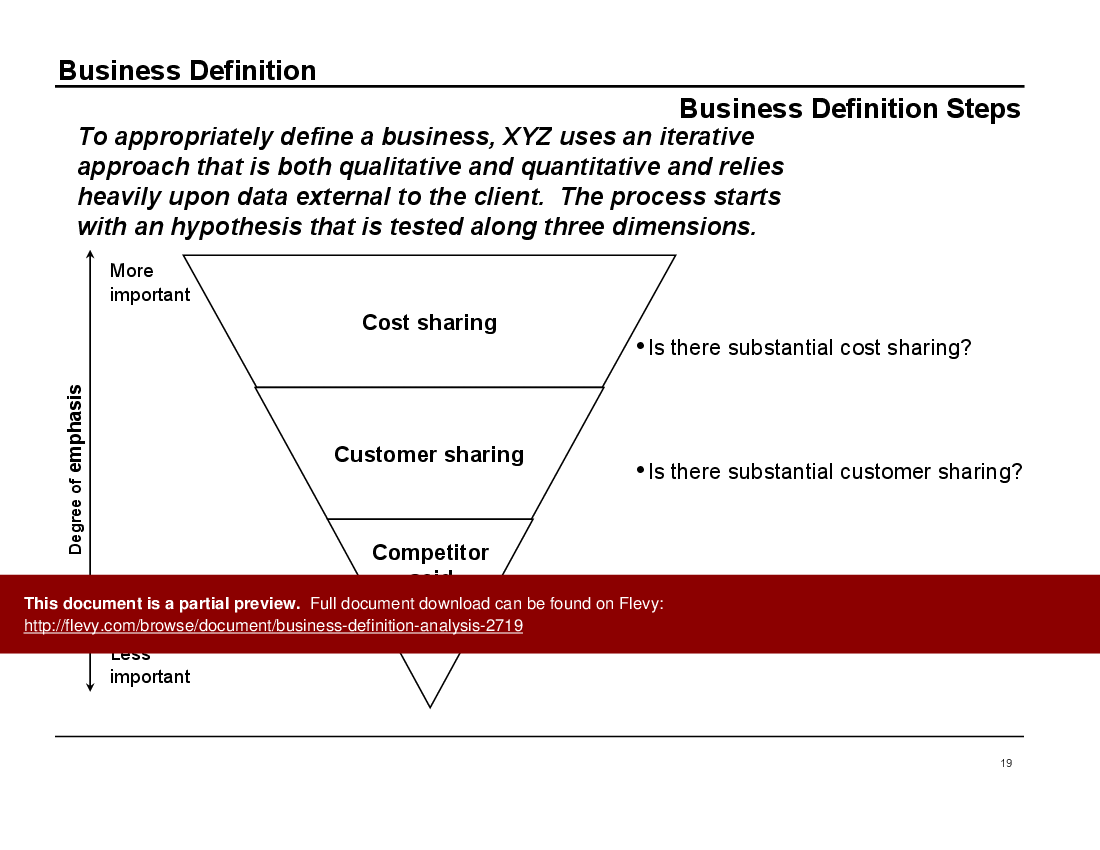
• Develop a structured approach to evaluate cost and customer sharing
• Apply the business definition matrix to real-world scenarios
• Utilize competitor acid tests to validate business definition hypotheses
Table of Contents
• Business Definition Concept (page 1)
• Applications (page 17)
• Business Definition Steps (page 19)
• Client Examples: Bunker Hill Door Systems (page 36)
• Client Examples: JJR Industrial Coatings (page 46)
• Key Takeaways (page 58)
Primary Topics Covered
• Business Definition Concept - This section outlines the importance of defining whether business segments should operate together or separately, focusing on profitability and strategic clarity.
• Applications - Real-world applications of business definition across various industries, demonstrating its relevance and utility.
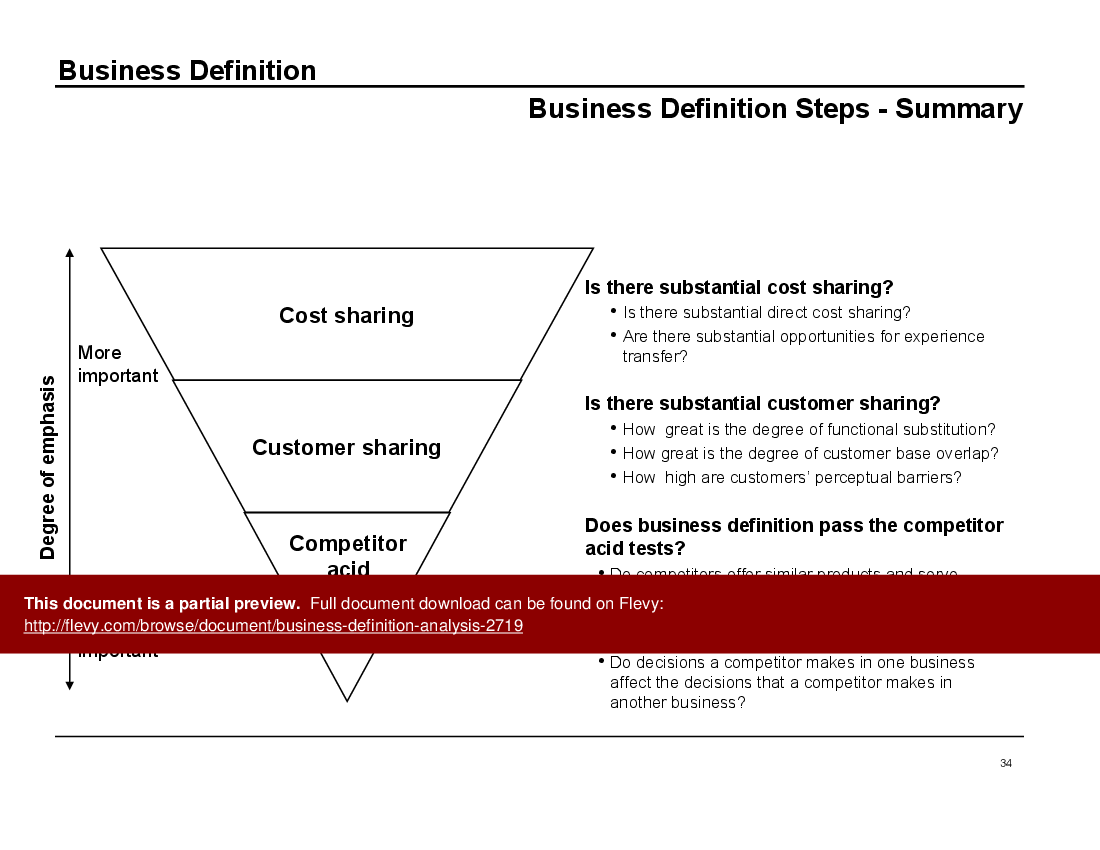
• Business Definition Steps - A structured approach for assessing business definitions through qualitative and quantitative methods.
• Client Examples - Case studies from Bunker Hill Door Systems and JJR Industrial Coatings illustrate practical applications and outcomes of the business definition analysis.
• Consequences of Incorrect Business Definition - Discusses the strategic pitfalls companies face when business definitions are inaccurately established.
• Business Definition Matrix - A visual tool to delineate economic boundaries based on cost and customer sharing.
Deliverables, Templates, and Tools
• Business definition matrix template for assessing economic boundaries
• Case study examples for practical application
• Framework for conducting competitor acid tests
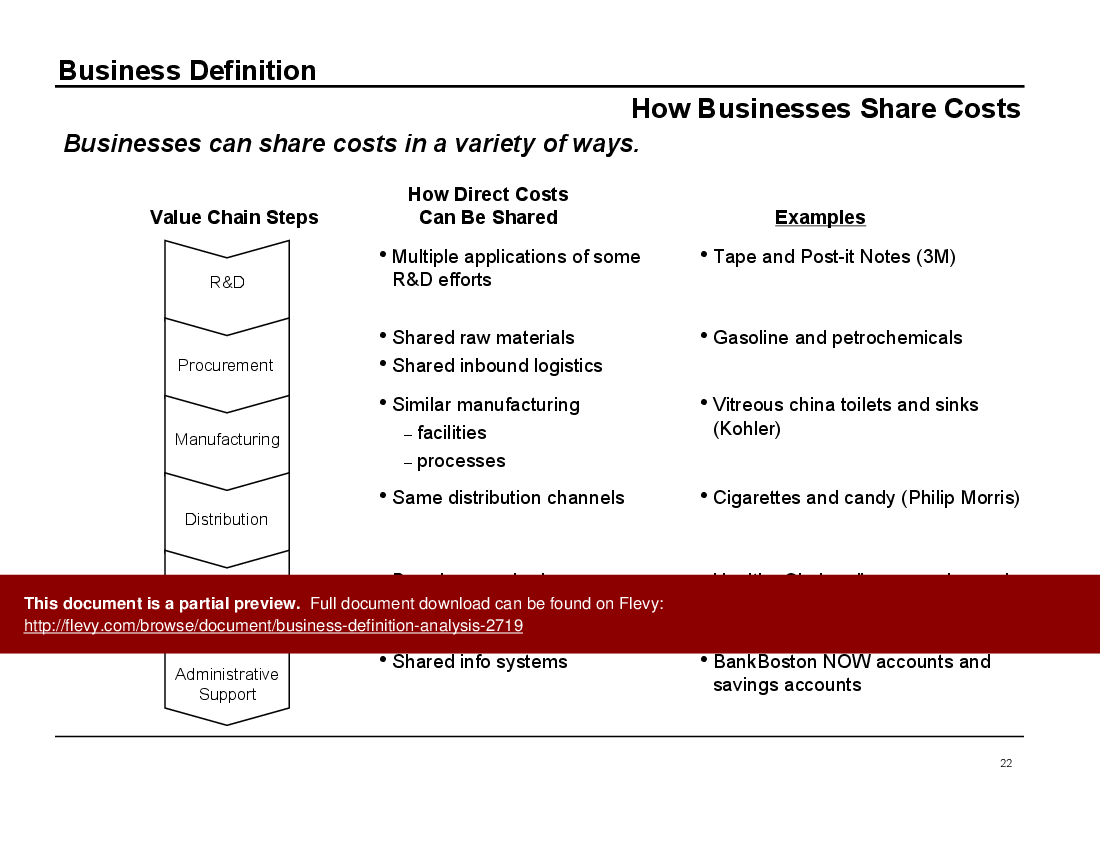
• Guidelines for evaluating cost sharing and customer sharing
• Analytical tools for assessing market dynamics and profitability
Slide Highlights
• Overview of the business definition concept and its strategic importance
• Visual representation of the business definition matrix
• Case study insights from Bunker Hill Door Systems and JJR Industrial Coatings
• Key takeaways summarizing the implications of business definitions
• Graphical analysis of the consequences of incorrect business definitions
Potential Workshop Agenda
Introduction to Business Definition (30 minutes)
Discuss Applications and Case Studies (60 minutes)
• Review Bunker Hill Door Systems
• Analyze JJR Industrial Coatings
Breakout Session: Applying the Business Definition Matrix (90 minutes)
• Group discussions on real-world scenarios
Wrap-up and Key Takeaways (30 minutes)
Customization Guidance
• Tailor case studies to reflect specific industry contexts relevant to your organization
• Adjust the business definition matrix to include unique cost and customer sharing metrics
• Incorporate company-specific examples in the competitor acid tests
• Modify the agenda to fit the time constraints and focus areas of your team
Secondary Topics Covered
• Cost sharing analysis and its implications for business strategy
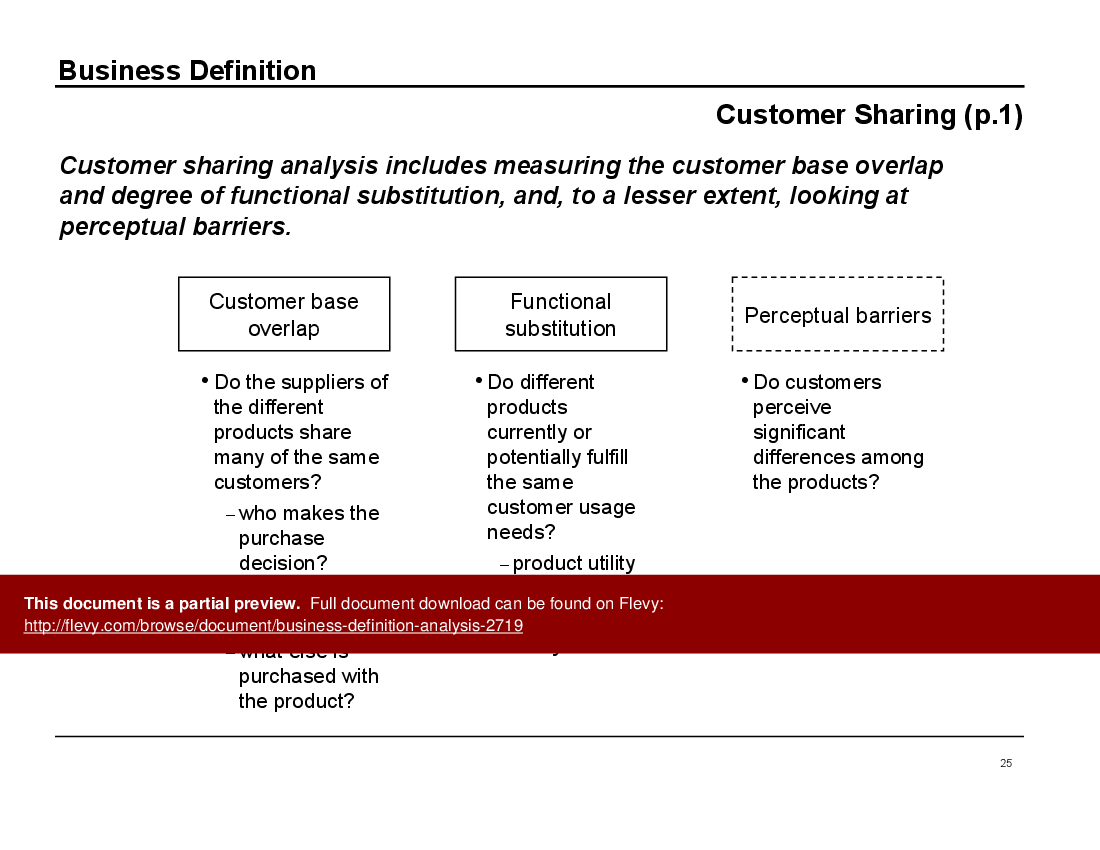
• Customer sharing and its role in defining market segments
• Competitor acid tests and their importance in validating business definitions
• Dynamic nature of business definitions and market conditions
• Examples of companies that successfully redefined their business boundaries
FAQ
What is the primary purpose of the Business Definition Analysis?
The primary purpose is to determine whether business segments should operate as one entity or separately, thereby guiding strategic decision-making.
How does the business definition matrix work?
The matrix assesses cost sharing and customer sharing to delineate economic boundaries, helping organizations understand their competitive landscape.
What are the consequences of incorrect business definitions?
Incorrect definitions can lead to poor strategic decisions, missed opportunities, and misallocation of resources, ultimately affecting profitability.
Can this framework be applied across different industries?
Yes, the principles of business definition are applicable across various sectors, as demonstrated in the case studies included in the presentation.
What are competitor acid tests?
Competitor acid tests are evaluations that assess whether business definitions align with market realities, focusing on consistency, profitability, and independent actions.
How can I customize this presentation for my organization?
You can tailor case studies, adjust metrics in the business definition matrix, and modify the agenda to suit your specific industry and strategic objectives.
What types of companies have successfully used this analysis?
Companies like Federal Express and Starbucks have successfully redefined their business boundaries, leading to significant competitive advantages.
How does customer sharing impact business definitions?
High customer sharing typically indicates that segments may operate as one business, while low sharing suggests they should remain separate.
What role does cost sharing play in defining a business?
Cost sharing helps determine whether segments can leverage economies of scale, influencing whether they should be integrated or kept separate.
Is the business definition process purely quantitative?
No, it involves both qualitative and quantitative assessments, ensuring a comprehensive understanding of market dynamics.
Glossary
• Business Definition - The delineation of economic boundaries within which companies should compete.
• Cost Sharing - The extent to which different business segments share costs, impacting their operational structure.
• Customer Sharing - The overlap of customer bases between business segments, influencing market strategy.
• Competitor Acid Tests - Evaluations to validate business definitions against market realities.
• Business Definition Matrix - A tool for assessing economic boundaries based on cost and customer sharing.
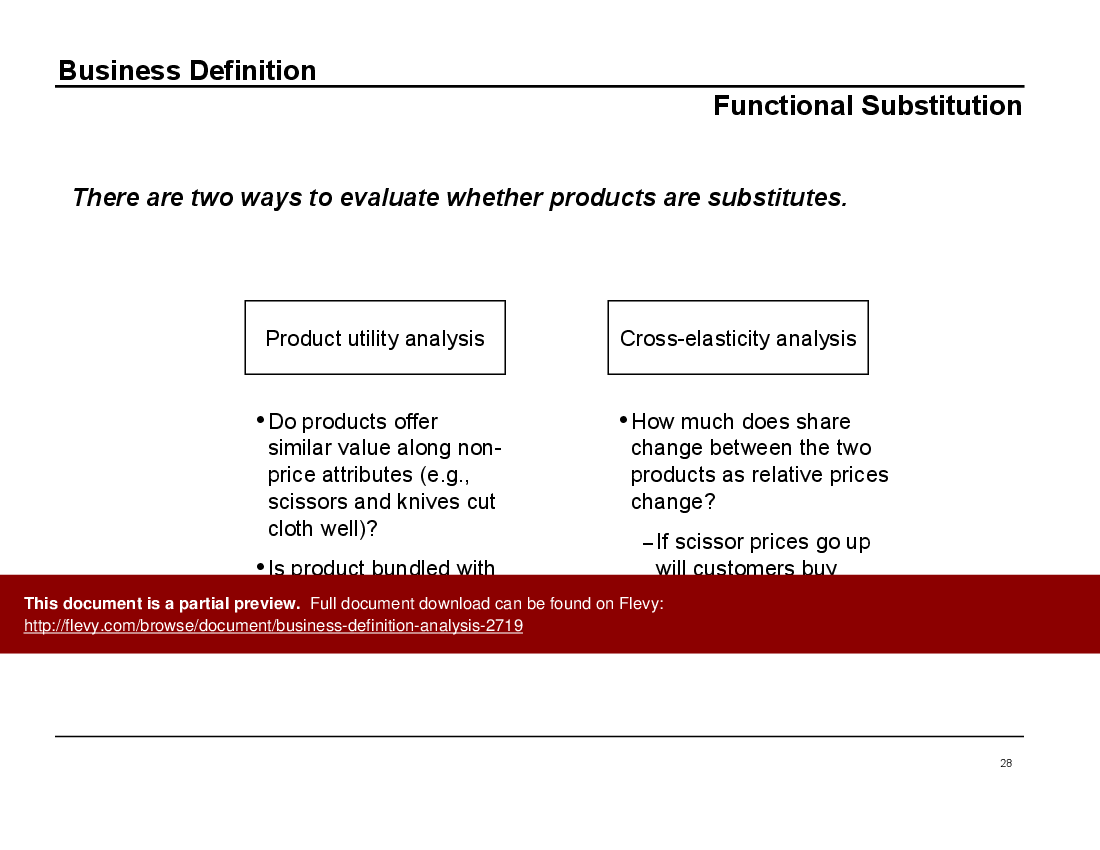
• Functional Substitution - The degree to which different products can replace one another in fulfilling customer needs.
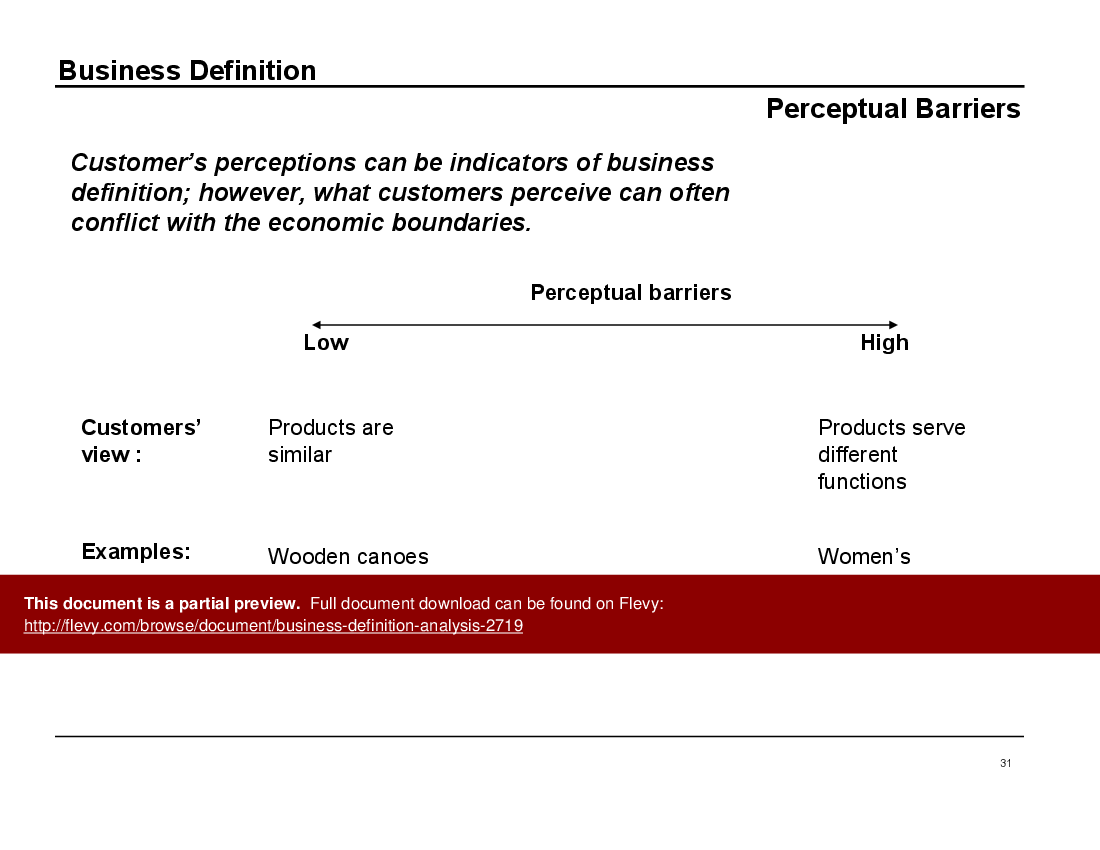
• Perceptual Barriers - Customer perceptions that may affect their willingness to consider different products as substitutes.
• Experience Transfer - The ability to apply knowledge and skills from one business segment to another.
• Market Dynamics - The factors that influence the competitive landscape and profitability of business segments.
• Strategic Insights - Key understandings that inform decision-making and strategic planning.
• Tactical Insights - Operational considerations that have strategic importance in business decisions.
• Segmentation - The process of dividing a market into distinct groups of buyers with different needs or behaviors.
• Profitability Drivers - Factors that significantly impact a company's ability to generate profit.
• Strategic Analysis - The process of evaluating a company's position in the market to inform decision-making.
• Synergies - The potential benefits that arise from combining operations or resources of different business segments.
• Market Share - The portion of a market controlled by a particular company or product.
• Competitive Landscape - The overall environment in which businesses compete, including competitors and market conditions.
• Operational Efficiency - The ability to deliver products or services in the most cost-effective manner without sacrificing quality.
• Mergers and Acquisitions - The process of consolidating companies or assets, often to achieve synergies.
• Strategic Boundaries - The limits within which a company operates to maintain competitive advantage.
• Decision Making - The process of making choices by identifying a decision, gathering information, and assessing alternative resolutions.
• Market Positioning - The process of establishing a brand or product in a specific market segment.
Source: Best Practices in Strategic Analysis PowerPoint Slides: Business Definition Analysis PowerPoint (PPT) Presentation Slide Deck, Documents & Files
This document is available as part of the following discounted bundle(s):
Save %!
Essential Consulting Knowledge Builder
This bundle contains 21 total documents. See all the documents to the right.
|
Download our FREE Strategy & Transformation Framework Templates
Download our free compilation of 50+ Strategy & Transformation slides and templates. Frameworks include McKinsey 7-S, Balanced Scorecard, Disruptive Innovation, BCG Curve, and many more. |