
Editor Summary
Value Creation Framework is a 54-slide PowerPoint deck presenting a consulting-grade approach (McKinsey, Bain, or BCG-quality; not affiliated) to link capital market performance with intrinsic value and operational value drivers.
Read moreIncludes MVA and TRS calculation templates, a DCF valuation model, value driver analysis framework, benchmarking tools, and sensitivity-analysis templates. Target users are corporate executives, financial analysts, strategy consultants, and business unit leaders; sold as a digital download on Flevy.
Use this deck when strategic planning, unit or portfolio performance assessment, or workshops are needed to align market performance with financial targets.
Corporate executives aligning financial goals with market performance during annual strategy sessions, using MVA and TRS analyses.
Financial analysts conducting firm valuation and stress-testing forecasts with a DCF model and sensitivity analysis.
Strategy consultants building prioritized value driver lists and benchmarking against peers with performance tools.
Business unit leaders identifying KPIs and testing improvement scenarios using value driver trees.
The structured linkage of capital-market metrics, DCF valuation, sensitivity testing, and benchmarking reflects consulting-grade analytical workflows used at McKinsey, Bain, and BCG.
This document introduces a Value Creation Framework that helps company managers better understand the relationship between a stock's intrinsic value and its financial and value drivers.
Managers can apply this framework to identifying value drivers to enhance the total return to shareholders. The presentation slides also contain notes for conducting a training using the material.
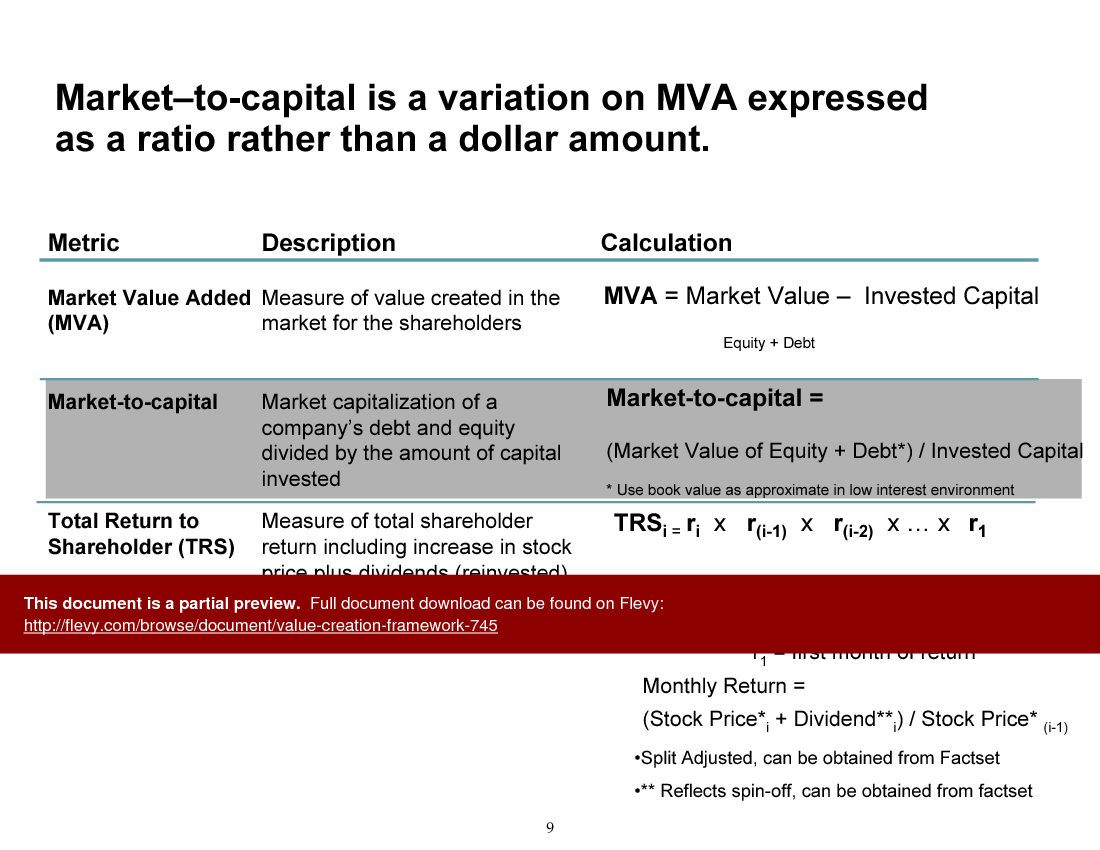
The Value Creation Framework document delves into key metrics like Market Value Added (MVA) and Total Return to Shareholder (TRS), which are crucial for assessing capital market performance. These metrics are broken down with clear definitions and calculations, making it easier for managers to grasp their significance. The document also highlights how market-to-capital ratios can offer a different perspective by expressing value as a ratio rather than a dollar amount.
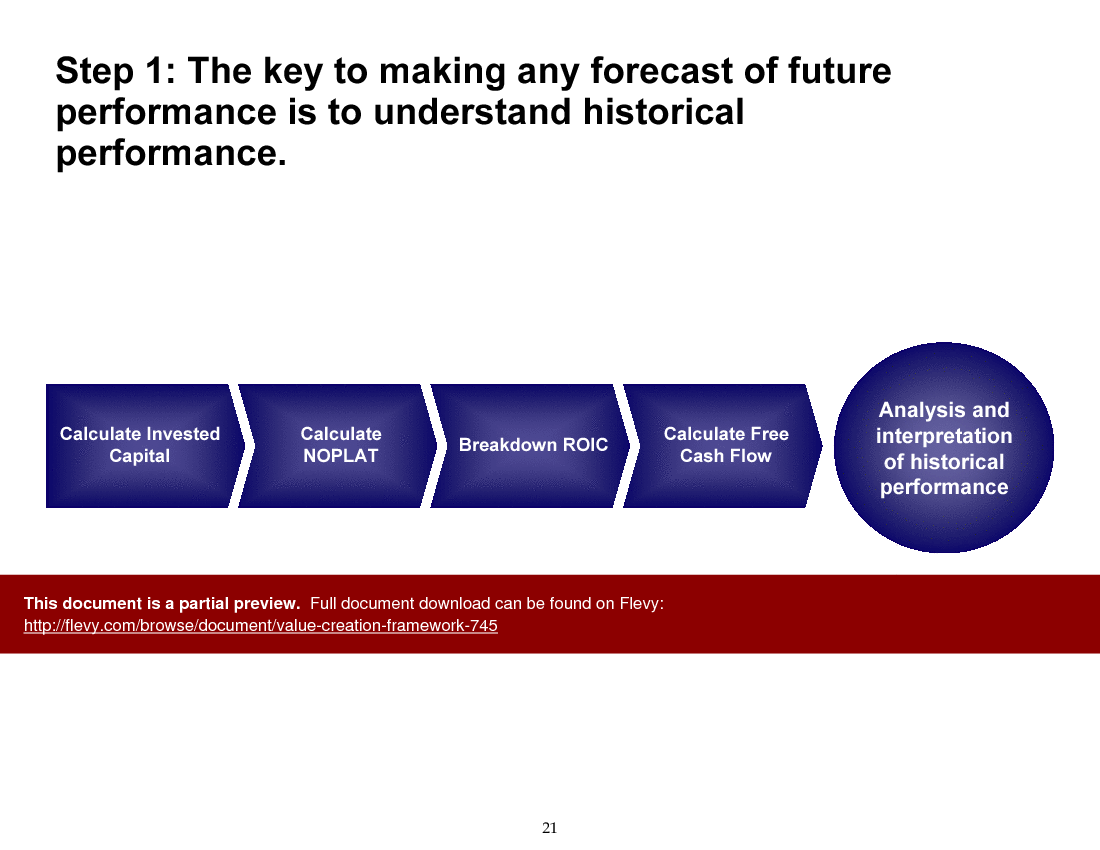
The framework emphasizes the importance of understanding historical performance to make accurate future forecasts. Steps like calculating invested capital, NOPLAT, and breaking down ROIC are meticulously outlined. This methodical approach ensures that managers can thoroughly analyze and interpret past performance to make informed decisions.
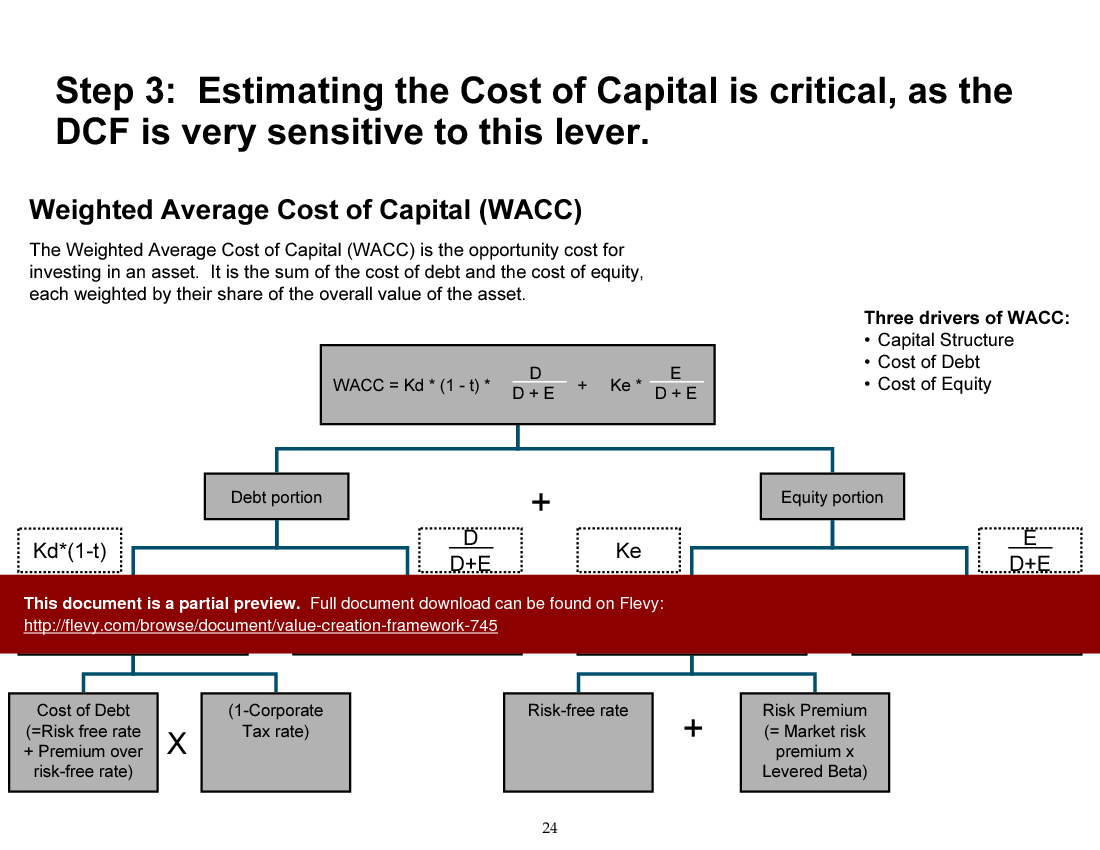
A significant portion of the document is dedicated to the Weighted Average Cost of Capital (WACC). It explains how to estimate the cost of capital and its sensitivity to various levers. The document also discusses triangulating DCF results using other valuation methods like market multiples and transaction multiples, providing a comprehensive view of a company's value.
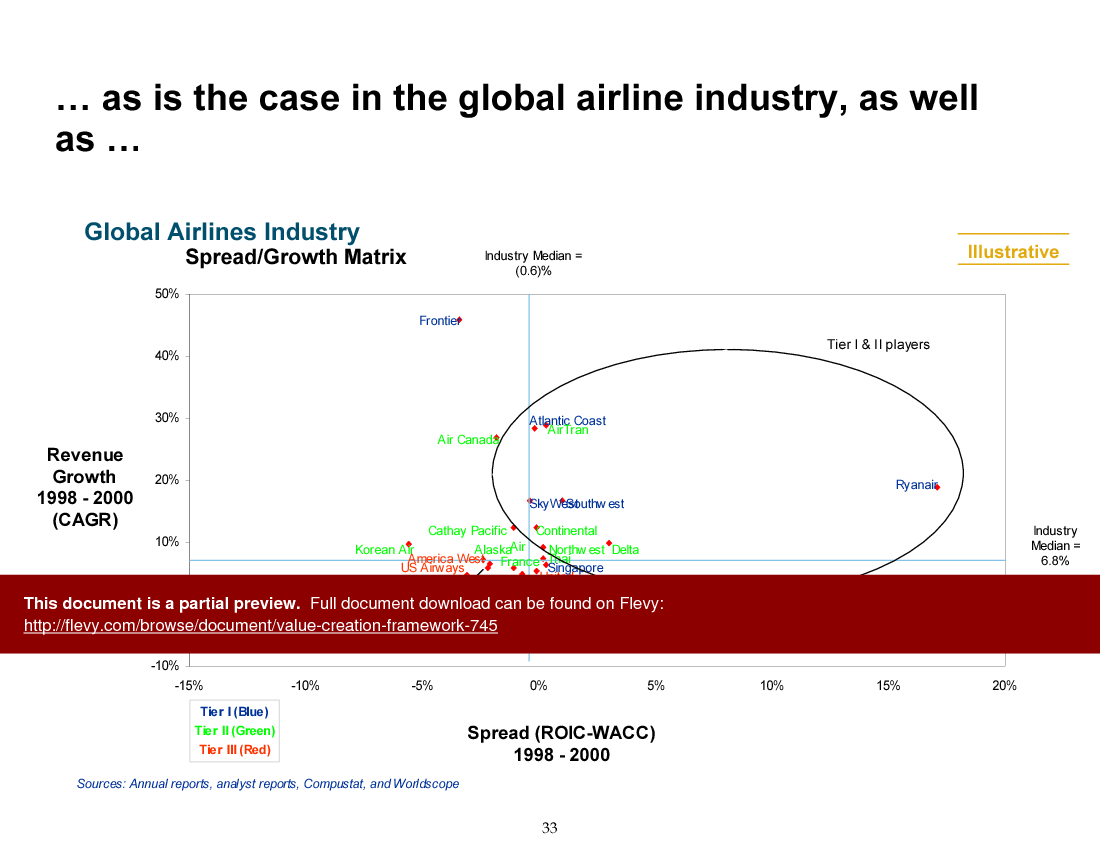
The document concludes by illustrating how value creation is driven by spread and growth, using industry-specific examples like the global airline industry. It underscores the importance of understanding Return on Invested Capital (ROIC) and disaggregating it to identify areas for improvement. This detailed, step-by-step guide is an invaluable resource for managers aiming to enhance shareholder value.
Got a question about the product? Email us at support@flevy.com or ask the author directly by using the "Ask the Author a Question" form. If you cannot view the preview above this document description, go here to view the large preview instead.
MARCUS OVERVIEW
This synopsis was written by Marcus [?] based on the analysis of the full 54-slide presentation.
Executive Summary
The Value Creation Framework presentation is designed to equip corporate executives and managers with the tools necessary to optimize shareholder value through a structured approach. This McKinsey, Bain, or BCG-quality deck (consulting-grade; not affiliated) offers insights into linking market performance with financial and value drivers. It enables users to assess capital market performance, intrinsic value, and key financial indicators, allowing for informed decision-making that enhances value creation.
Who This Is For and When to Use
• Corporate executives focused on maximizing shareholder value
• Financial analysts assessing company performance metrics
• Strategy consultants advising on value creation initiatives
• Business unit leaders responsible for operational efficiency and growth
Best-fit moments to use this deck:
• During strategic planning sessions to align financial goals with market performance
• When conducting performance assessments of business units or portfolios
• In workshops aimed at identifying key value drivers and improvement opportunities
Learning Objectives
• Define the relationship between capital market performance and intrinsic value
• Analyze financial indicators such as MVA and TRS to assess company performance
• Build a comprehensive understanding of value drivers and their impact on shareholder value
• Develop actionable strategies to enhance financial performance and market position
• Utilize the Discounted Cash Flow (DCF) method for business valuation
• Conduct sensitivity analyses to evaluate the impact of various financial metrics on value creation
Table of Contents
• Introduction to Value Creation Framework (page 3)
• Capital Market Performance Overview (page 5)
• Intrinsic Value Assessment (page 18)
• Financial Indicators and Metrics (page 29)
• Value Drivers Identification (page 49)
• Conclusion and Next Steps (page 53)
Primary Topics Covered
• Capital Market Performance - An overview of how market performance metrics like MVA and TRS are used to assess a company's financial health and shareholder value.
• Intrinsic Value - A detailed explanation of how intrinsic value is calculated using the DCF method, emphasizing the importance of future cash flows.
• Financial Indicators - Key metrics such as ROIC, EVA, and profitability ratios that drive intrinsic value and guide strategic decisions.
• Value Drivers - Identification of financial and non-financial KPIs that directly impact shareholder value and operational performance.
• Value Creation Roadmap - A structured approach to understanding how spread and growth contribute to total return to shareholders.
• Performance Benchmarking - Techniques for comparing financial performance against industry peers to identify areas for improvement.
Deliverables, Templates, and Tools
• MVA and TRS calculation templates for assessing capital market performance
• DCF valuation model for estimating intrinsic value based on future cash flows
• Value driver analysis framework to identify and prioritize key performance indicators
• Performance benchmarking tools for comparing against industry standards
• Sensitivity analysis templates to evaluate the impact of financial metrics on value creation
• Actionable insights report summarizing findings and recommendations
Slide Highlights
• Visual representation of the relationship between capital market performance and intrinsic value
• Detailed breakdown of MVA and TRS calculations with practical examples
• Comparative analysis of financial indicators across industry peers
• Value driver trees illustrating different perspectives on performance metrics
• Case studies showcasing successful value creation strategies in various sectors
Potential Workshop Agenda
Introduction to Value Creation Framework (30 minutes)
• Overview of key concepts and objectives
• Discussion on the importance of linking market performance with financial metrics
Financial Metrics Deep Dive (60 minutes)
• Detailed analysis of MVA, TRS, and DCF
• Hands-on exercises calculating these metrics using real data
Value Driver Identification Session (45 minutes)
• Group brainstorming on key value drivers for different business units
• Development of a prioritized list of KPIs for tracking performance
Conclusion and Next Steps (15 minutes)
• Summary of key takeaways
• Discussion on implementing strategies for value creation
Customization Guidance
• Tailor the financial metrics and KPIs to align with specific industry standards and company goals
• Adjust the DCF model parameters to reflect the unique risk profile and capital structure of the organization
• Incorporate company-specific case studies to enhance relevance and engagement during workshops
Secondary Topics Covered
• The role of market share and operational efficiency in value creation
• The impact of economic conditions on financial performance metrics
• Best practices for implementing value driver analysis across business units
• Techniques for conducting effective performance benchmarking
Topic FAQ
What are the main metrics used to assess shareholder value and how do they relate?
Key metrics include Market Value Added (MVA), Total Return to Shareholder (TRS), Return on Invested Capital (ROIC), Economic Value Added (EVA), profitability ratios, and free cash flow. Together they connect market performance and intrinsic value by quantifying returns, capital efficiency, and cash-generation capacity, including MVA and TRS.
How does the Discounted Cash Flow (DCF) method estimate intrinsic value?
DCF projects a company’s future free cash flows, estimates the appropriate cost of capital (often WACC), and discounts those cash flows to present value to derive intrinsic worth. The approach emphasizes forecasting future cash flows and discounting by WACC as the central calculation step.
What is Market Value Added (MVA) and how is it calculated?
MVA measures value created for shareholders and is calculated as the difference between market value and invested capital. It provides a dollar-level assessment of shareholder value by comparing current market capitalization plus debt to the capital invested in the business.
What should I look for when choosing a value-creation toolkit for corporate use?
Prioritize toolkits that include explicit calculation templates (MVA, TRS), a DCF valuation model, a value-driver analysis framework, benchmarking resources, sensitivity-analysis templates, and workshop materials. Flevy's Value Creation Framework includes these elements across a 54-slide PowerPoint.
How can I judge whether a paid value-creation template provides good value for my team?
Evaluate the slide count and depth of templates, inclusion of calculation models (DCF, MVA/TRS), benchmarking and sensitivity tools, and customization guidance for industry fit. Look for training notes or workshop agendas; the Value Creation Framework offers these features in a 54-slide deck.
I need to benchmark my company's financial performance against peers — what steps should I follow?
Collect comparable metrics (ROIC, EVA, profitability ratios, TRS), compute MVA and market-to-capital ratios, and use performance benchmarking tools to compare against industry peers. Then identify gaps and prioritize value drivers using a value driver analysis framework and benchmarking templates.
After a weak quarter, how can I identify which value drivers to prioritize to improve shareholder returns?
Break down ROIC and profitability ratios, analyze capital turnover and operating margin drivers, run sensitivity tests on cash-flow and WACC assumptions, and map impacts on intrinsic value. Use a value driver analysis framework and sensitivity-analysis templates to prioritize KPIs and initiatives.
Can market-to-capital ratios be used instead of dollar measures when assessing value, and what do they show?
Market-to-capital ratios express value as a ratio rather than a dollar amount, offering a relative perspective on market valuation versus invested capital. They complement dollar measures like MVA and are discussed as an alternative lens in the Value Creation Framework document.
Document FAQ
These are questions addressed within this presentation.
What is the Value Creation Framework?
The Value Creation Framework is a structured approach to linking market performance with financial and value drivers, enabling organizations to optimize shareholder value.
How do I calculate MVA and TRS?
MVA is calculated as the difference between market value and invested capital, while TRS measures total shareholder return, including stock price appreciation and dividends.
What is the importance of intrinsic value?
Intrinsic value provides a measure of a company's true worth based on its expected future cash flows, guiding investment and strategic decisions.
How can financial indicators drive performance?
Financial indicators such as ROIC and EVA help assess operational efficiency and profitability, informing strategies to enhance shareholder value.
What are value drivers?
Value drivers are specific financial and non-financial metrics that directly impact a company's ability to create value for shareholders.
How can I use the DCF method for valuation?
The DCF method involves forecasting future cash flows, estimating the cost of capital, and discounting those cash flows to present value to determine intrinsic value.
What role does benchmarking play in the framework?
Benchmarking allows organizations to compare their performance against industry peers, identifying areas for improvement and best practices.
How can I implement this framework in my organization?
Start by assessing current performance metrics, identifying key value drivers, and conducting workshops to align teams on value creation strategies.
Glossary
• Market Value Added (MVA) - The value created for shareholders, calculated as market value minus invested capital.
• Total Return to Shareholder (TRS) - A measure of total shareholder return including stock price appreciation and dividends.
• Discounted Cash Flow (DCF) - A valuation method that estimates the value of an investment based on its expected future cash flows.
• Return on Invested Capital (ROIC) - A measure of a company's efficiency in generating returns from its capital investments.
• Economic Value Added (EVA) - A measure of a company's financial performance based on residual wealth.
• Key Performance Indicators (KPIs) - Metrics used to evaluate the success of an organization in achieving its objectives.
• Sensitivity Analysis - A technique used to determine how different values of an independent variable affect a particular dependent variable.
• Value Driver Tree - A visual representation of the relationships between various value drivers and their impact on overall performance.
• Performance Benchmarking - The process of comparing business processes and performance metrics to industry bests or best practices from other companies.
• Capital Turnover - A measure of how efficiently a company uses its capital to generate revenue.
• Operating Margin - A measure of profitability calculated as operating income divided by revenue.
• Free Cash Flow - Cash generated by a company that is available for distribution to investors after all expenses and capital expenditures.
• Weighted Average Cost of Capital (WACC) - The average rate of return a company is expected to pay its security holders to finance its assets.
• Market Share - The portion of a market controlled by a particular company or product.
• Cost per Unit - The total cost incurred by a company to produce, store, and sell one unit of a product.
• On-Time Deliveries - A measure of the efficiency of a company's supply chain and logistics operations.
• NOPLAT - Net Operating Profit Less Adjusted Taxes, a measure of a company's profitability.
• Capital Structure - The mix of debt and equity financing used by a company to fund its operations.
• Growth Rate - The rate at which a company's revenue or earnings are expected to grow over a specific period.
• Profitability Ratio - A financial metric used to assess a company's ability to generate profit relative to its revenue, operating costs, or equity.
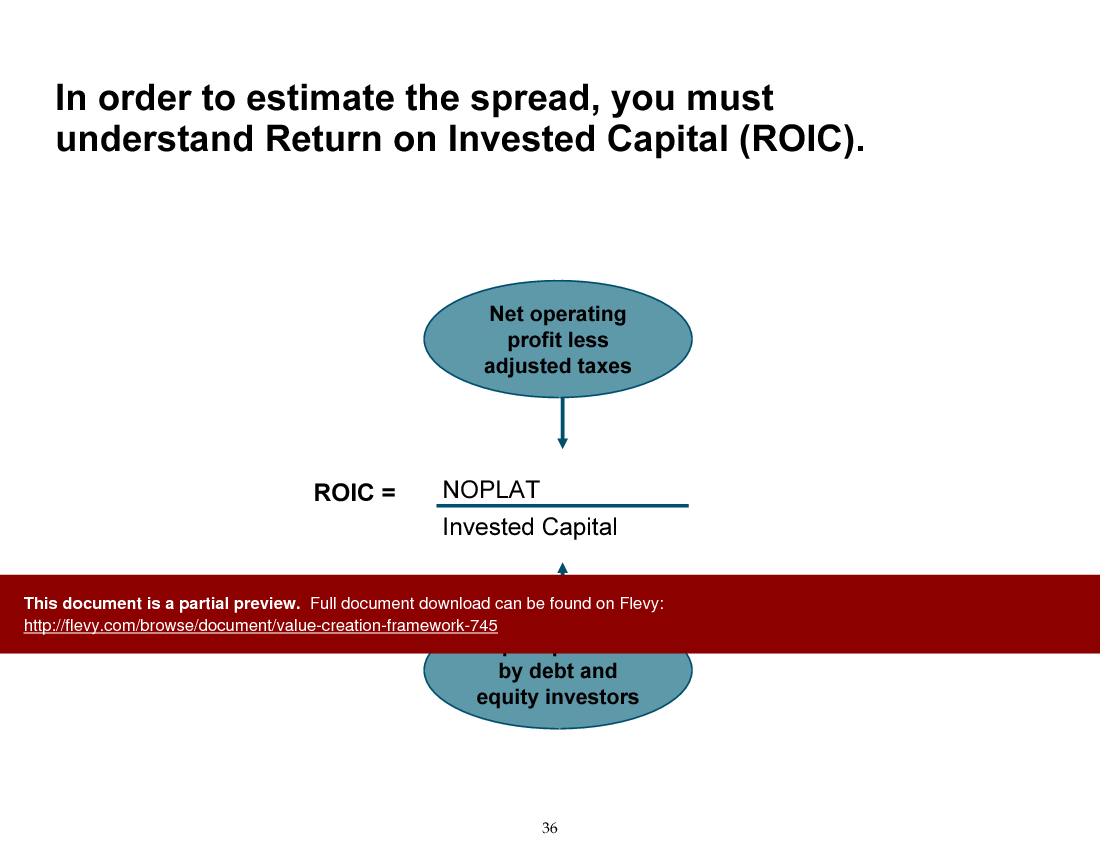
This PPT slide presents a framework for analyzing financial performance through Return on Invested Capital (ROIC). It emphasizes disaggregating ROIC into 2 primary factors: operating margin and capital turnover. Operating margin is calculated as EBITA divided by revenues, revealing profit generation efficiency. It further breaks down into 3 components: Cost of Goods Sold (COGS) as a percentage of revenues, Selling, General & Administrative (SG&A) expenses relative to revenues, and depreciation costs. Capital turnover, calculated as revenues divided by invested capital, assesses how effectively a company utilizes capital to generate sales, including metrics like Net Property, Plant, and Equipment (PP&E) over revenues and working capital relative to revenues. This ROIC disaggregation enables executives to identify areas for strategic adjustments and operational enhancements, driving better financial performance and shareholder value.
This PPT slide provides an overview of Free Cash Flow (FCF) within Discounted Cash Flow (DCF) analysis, highlighting its importance in financial assessments. FCF can be calculated via cash generated by assets or cash distributed to investors, with both methods yielding the same result. Total Cash Flow components include NOPLAT, adjusted by depreciation to determine Gross Cash Flow, which is then reduced by increases in operating working capital and capital expenditures, leading to Free Cash Flow before Goodwill. The distinction between Free Cash Flow before and after Goodwill is critical, as the latter includes non-operating cash flows. Total Financing Flows detail cash movements related to financing activities, including adjustments for marketable securities, after-tax interest, and dividends. The relationship between cash flow from operations and financing activities is essential for assessing a company's liquidity and financial health.
This PPT slide outlines the 5 essential steps in the Discounted Cash Flow (DCF) valuation process. The first step, "Analyze historical performance," involves calculating Net Operating Profits Less Adjusted Taxes (NOPLAT) and invested capital, identifying key value drivers, and interpreting historical data to set the stage for future projections. The second step, "Forecast performance," focuses on evaluating the company's strategic position and developing performance scenarios based on historical trends and market conditions. The third step, "Estimate cost of capital," requires estimating debt and equity financing costs and determining target market value weights. The fourth step, "Estimate continuing value," involves selecting the appropriate approach and forecast horizon, estimating parameters, and discounting future cash flows to present value. Finally, the "Calculate and interpret results" phase includes calculating company value and conducting scenario and sensitivity analyses for informed decision-making.
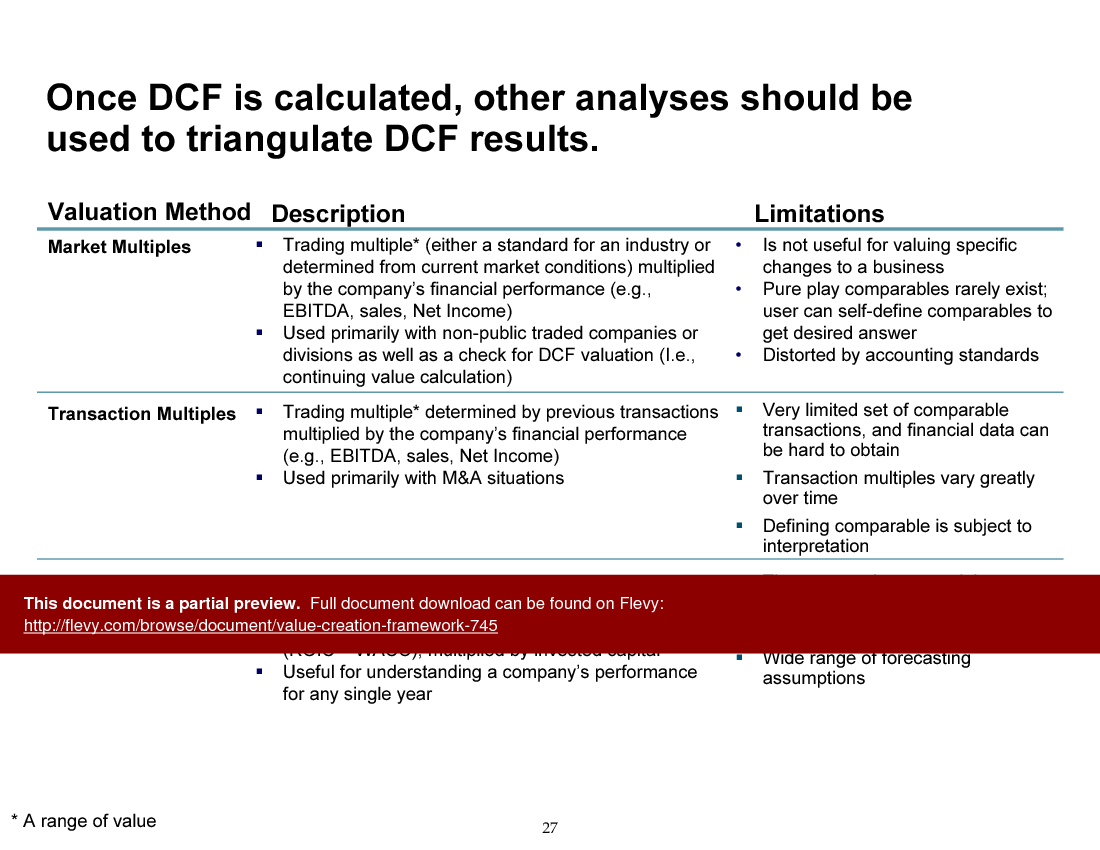
This PPT slide outlines various valuation methods that complement Discounted Cash Flow (DCF) analysis. Market Multiples use trading multiples from current market conditions applied to financial metrics like EBITDA, sales, or net income, serving as a validation tool for DCF valuations, though limited by accounting distortions. Transaction Multiples apply multiples from past transactions to financial performance indicators, primarily in merger and acquisition contexts; however, they face challenges due to limited comparable transactions and fluctuating data. Economic Profit measures value generated in a period by calculating return on invested capital minus cost of capital, providing insights into annual performance, but being sensitive to assumptions about capital costs. Using multiple valuation methods enhances understanding of a company's value and addresses each approach's limitations.
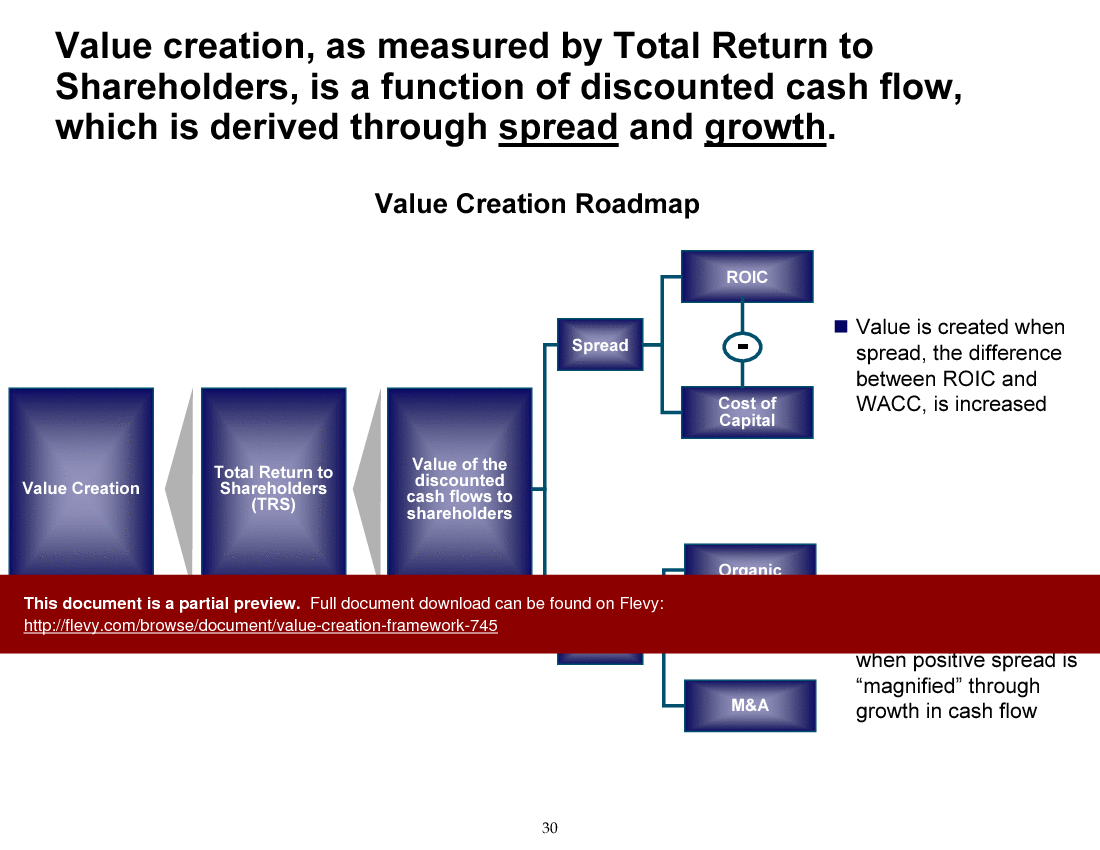
This PPT slide outlines a framework for understanding value creation in relation to Total Return to Shareholders (TRS). Value creation is linked to discounted cash flow, driven by 2 main components: spread and growth. The spread is defined as the difference between Return on Invested Capital (ROIC) and the Cost of Capital, with an increased spread crucial for value generation. Growth is differentiated into organic growth and growth through mergers and acquisitions (M&A). Value is amplified when a positive spread is combined with growth in cash flow, highlighting the strategic importance of maintaining a healthy spread while pursuing growth opportunities. This structured approach aids executives in optimizing shareholder returns and guiding capital allocation and growth strategies.
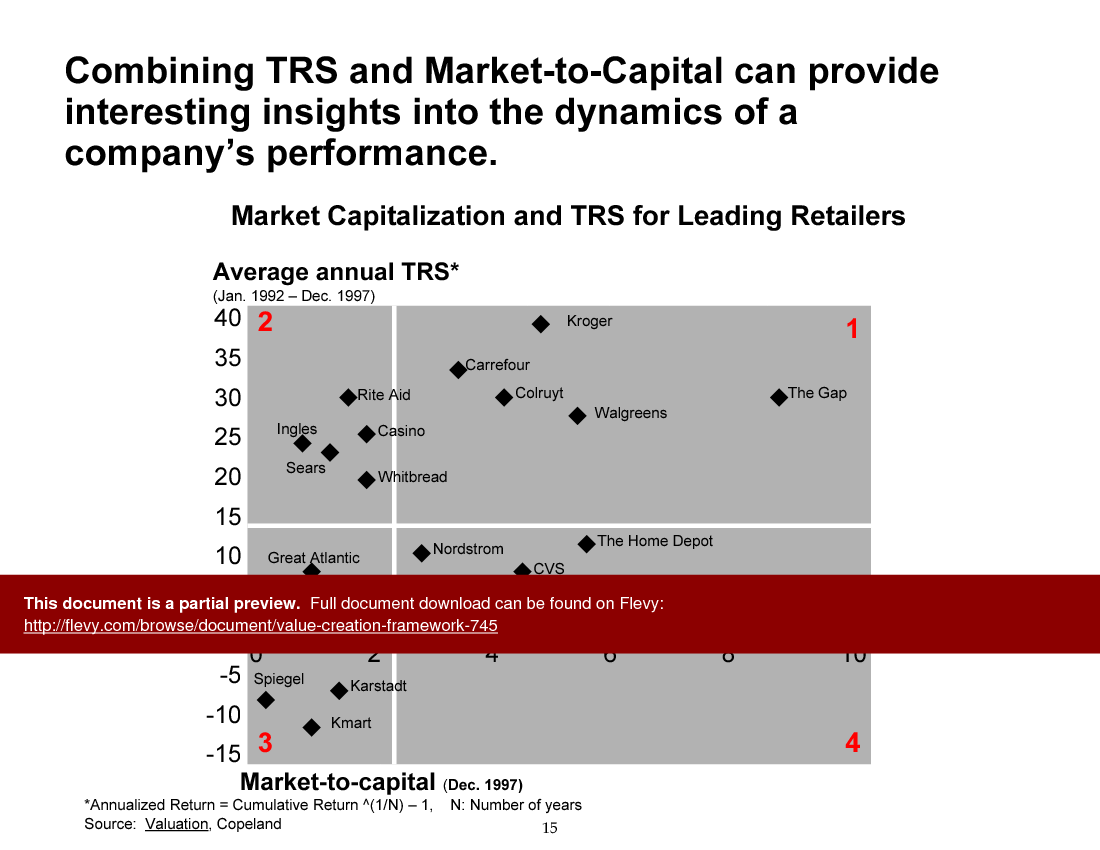
This PPT slide illustrates the relationship between Total Return to Shareholders (TRS) and Market Capitalization for leading retailers from January 1992 to December 1997. The x-axis represents average annual TRS, while the y-axis reflects market capitalization. Retailers like Kroger and Walgreens appear in the upper right quadrant, indicating high TRS and significant market capitalization, suggesting effective balance between shareholder returns and market presence. Conversely, Spiegel and Kmart are in the lower left quadrant, indicating poor performance in both metrics, signaling potential strategic issues. Combining TRS with market-to-capital analysis provides insights into operational dynamics, helping executives identify retailers maximizing shareholder value versus those lagging behind. This analysis informs strategic decisions regarding resource allocation and competitive positioning.
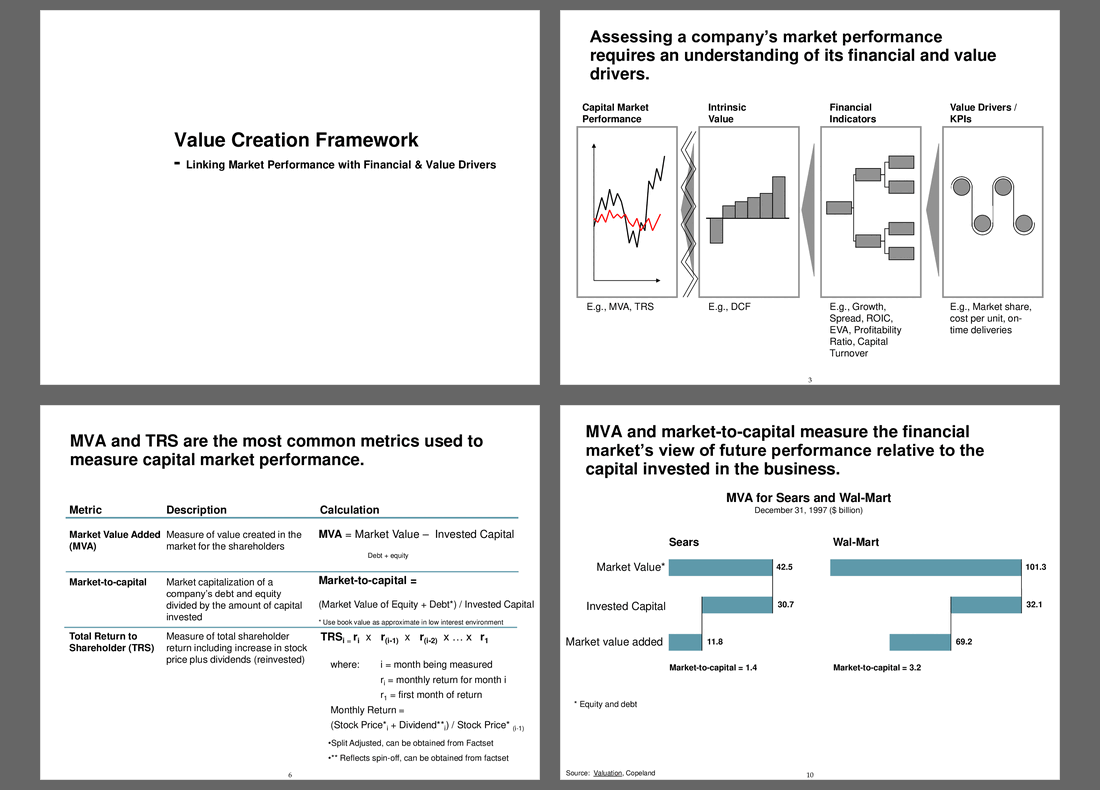
This PPT slide presents a comparative analysis of Market Value Added (MVA) and market-to-capital ratios for Sears and Wal-Mart as of December 31, 1997. Sears has a market value of $42.5 billion and invested capital of $30.7 billion, resulting in a market value added of $11.8 billion and a market-to-capital ratio of 1.4, indicating $1.40 in market value generated per dollar of invested capital. In contrast, Wal-Mart's market value is $101.3 billion with invested capital of $32.1 billion, leading to a market value added of $69.2 billion and a market-to-capital ratio of 3.2, illustrating $3.20 generated per dollar of invested capital. The differences in these metrics reflect varying levels of market confidence and perceived growth potential, providing insights into capital leverage and value creation.
This PPT slide presents a framework illustrating how different analytical perspectives lead to varied value driver trees: the Traditional “P&L tree,” the Branch value tree, and the Market segment tree. The Traditional “P&L tree” focuses on financial metrics like revenue, costs, and capital changes, linking them to Return on Invested Capital (ROIC) and ROIC growth. The Branch value tree analyzes economic profit per branch, incorporating metrics such as the number of branches, contract staff per branch, margin per staff member, and utilization rates. The Market segment tree evaluates economic profit in specific segments, detailing metrics like segment size, market share, and average margin. Each tree provides distinct insights that inform strategic positioning and operational decision-making.
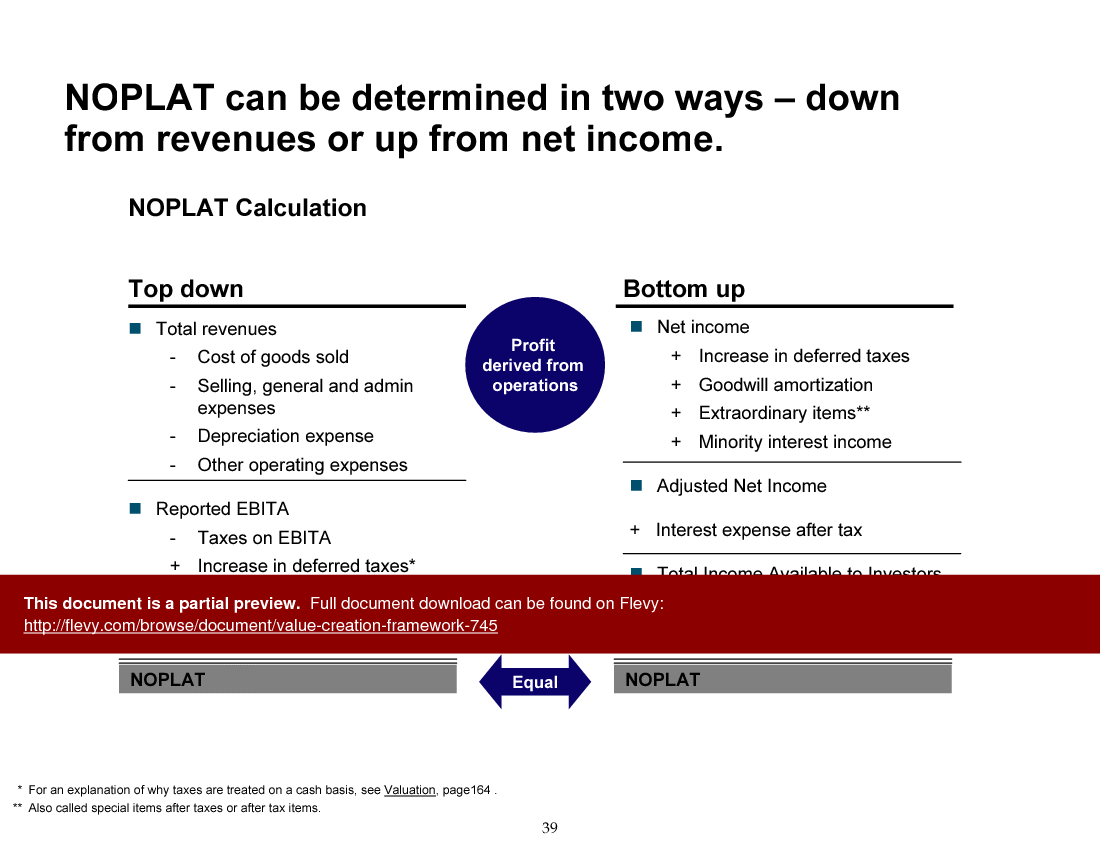
This PPT slide provides a breakdown of NOPLAT (Net Operating Profit Less Adjusted Taxes), a key measure of profitability that reflects residual returns available to debt and equity stakeholders after fulfilling obligations. It illustrates the flow of revenue from gross profit, derived by subtracting costs like wages, materials, and overhead from total revenue, through EBITA (Earnings Before Interest, Taxes, and Amortization) and operating profit, down to net income. NOPLAT accounts for cash taxes, making it a crucial indicator for investors assessing true business profitability beyond net income. Visual elements guide the viewer through financial metrics, clarifying how costs and claims impact overall profitability, which is valuable for decision-makers evaluating investment opportunities.
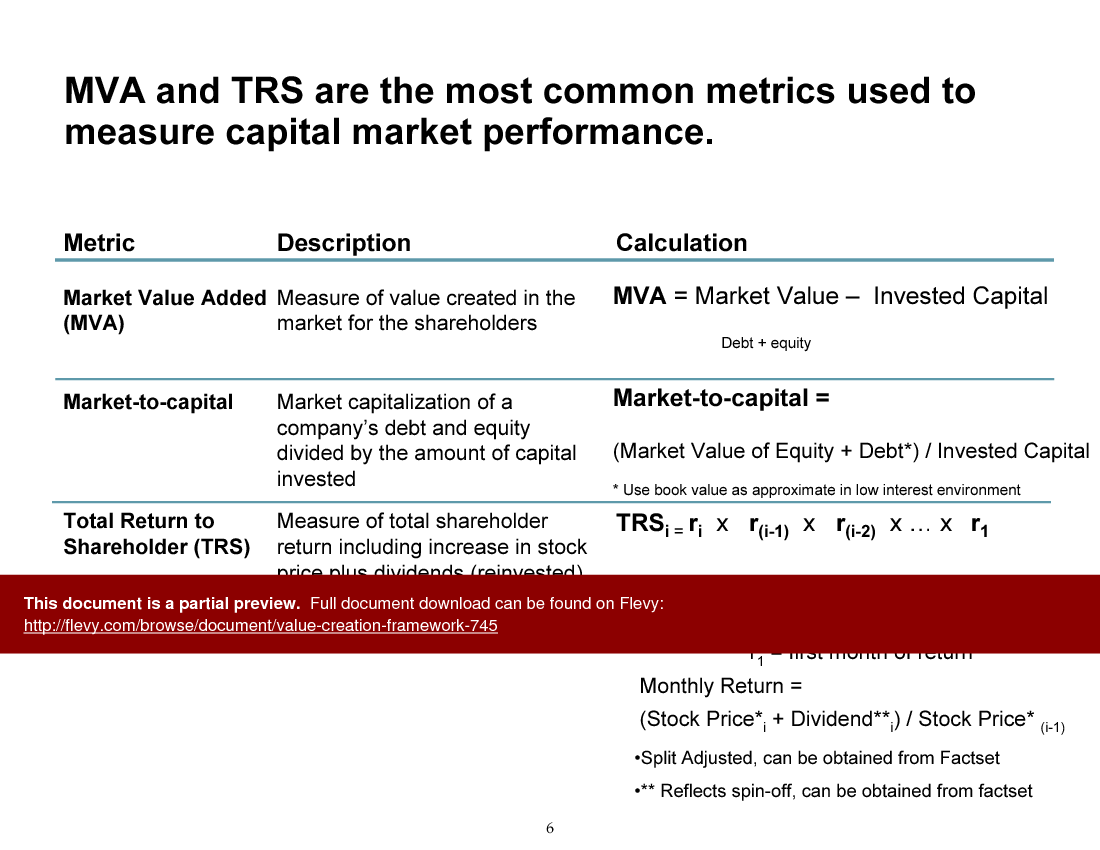
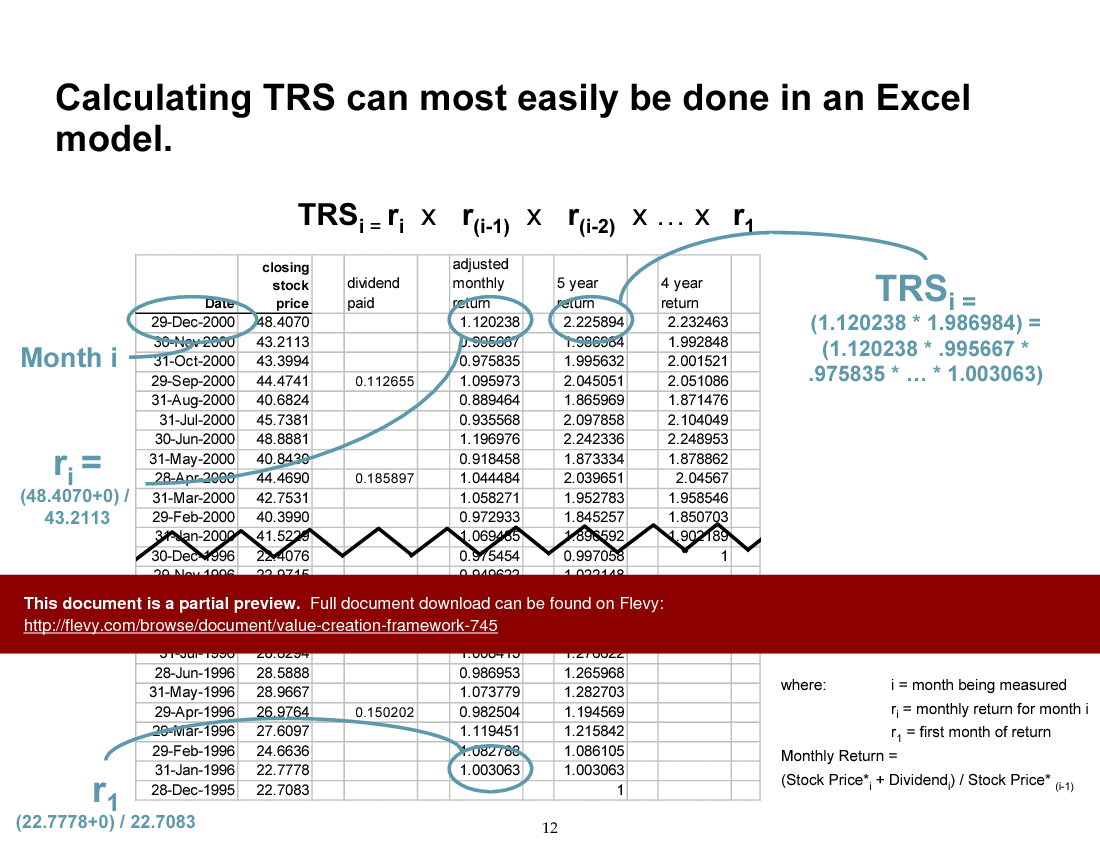
This PPT slide presents key metrics for evaluating capital market performance: Market Value Added (MVA) and Total Return to Shareholder (TRS). MVA is defined as the difference between a company's market value and its invested capital, calculated as market value minus total debt and equity. This metric indicates how effectively a company utilizes its capital to enhance shareholder wealth. The Market-to-Capital metric assesses market capitalization relative to invested capital, providing insights into market perceptions of value. TRS measures total return to shareholders, including stock price increases and dividends, calculated through compounded monthly returns over a specified period. These metrics are essential for evaluating investment opportunities and capital allocation decisions.
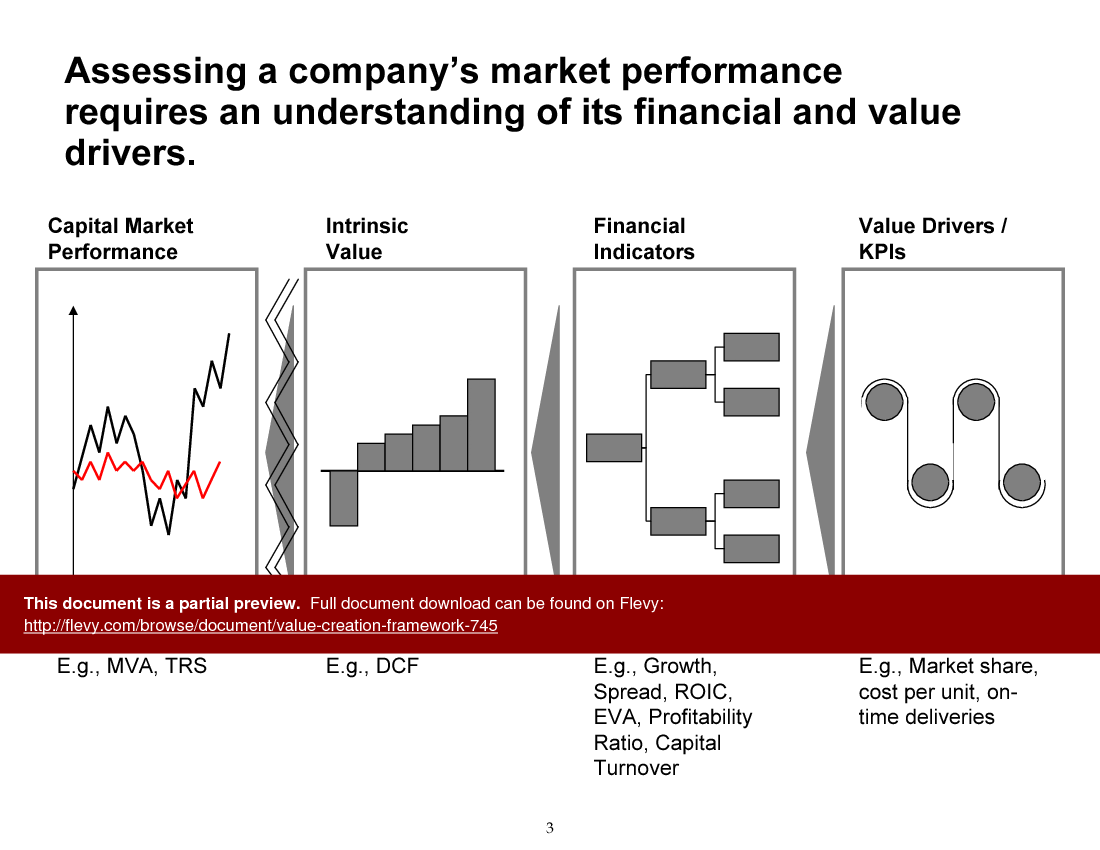
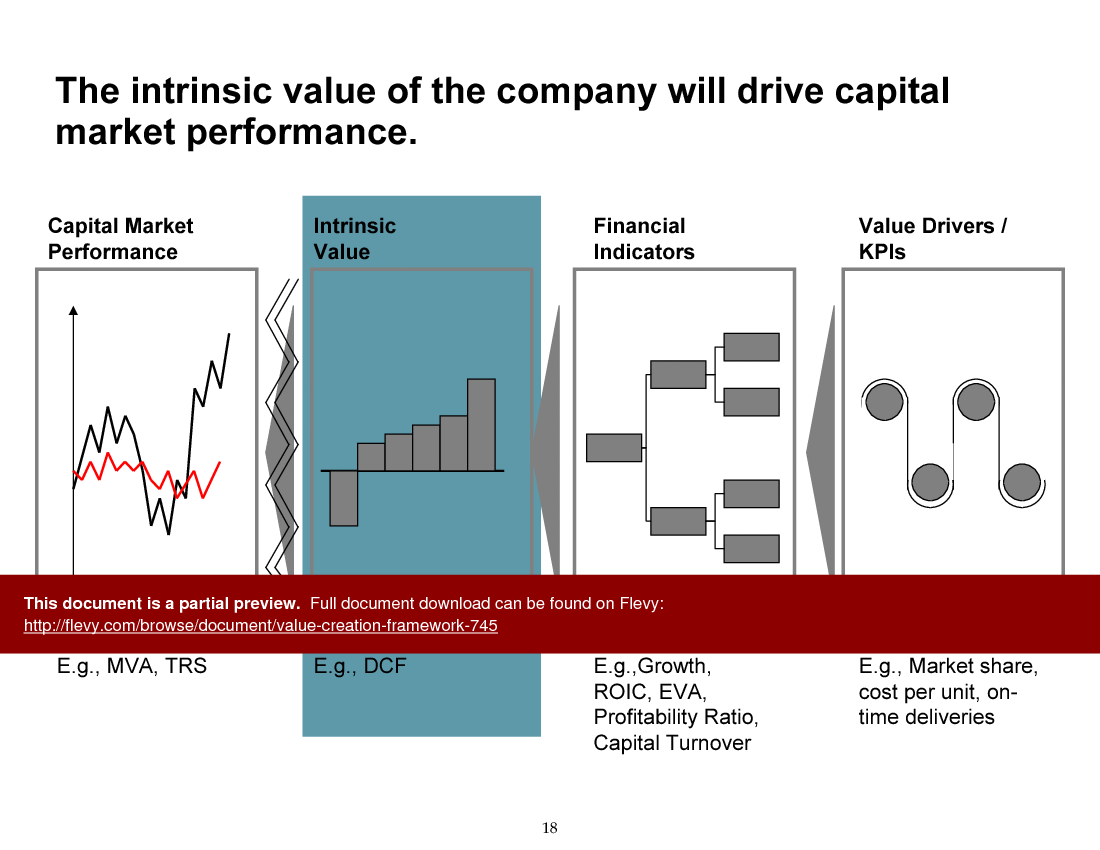
This PPT slide presents a framework for evaluating market performance, focusing on financial and value drivers. The "Capital Market Performance" section illustrates trends in market valuation using metrics like Market Value Added (MVA) and Total Return to Shareholders (TRS). "Intrinsic Value" emphasizes Discounted Cash Flow (DCF) analysis to assess true company worth beyond market perceptions. The "Financial Indicators" section highlights key metrics such as Growth, Return on Invested Capital (ROIC), Economic Value Added (EVA), and Profitability for operational efficiency assessment. Finally, "Value Drivers / KPIs" identifies performance indicators like market share, cost per unit, and on-time deliveries that influence company value and customer satisfaction. This framework integrates essential financial metrics for informed decision-making.
Source: Best Practices in Value Creation PowerPoint Slides: Value Creation Framework PowerPoint (PPT) Presentation Slide Deck, Documents & Files
Since 2012, we have provided business templates to over 10,000 businesses and organizations of all sizes, from startups and small businesses to the Fortune 100, in over 130 countries.
"One of the great discoveries that I have made for my business is the Flevy library of training materials.
As a Lean Transformation Expert, I am always making presentations to clients on a variety of topics: Training, Transformation, Total Productive Maintenance, Culture, Coaching, Tools, Leadership Behavior, etc. Flevy
It is well worth the money to purchase these presentations. Sure, I have the knowledge and information to make my point. It is another thing to create a presentation that captures what I want to say. Flevy has saved me countless hours of preparation time that is much better spent with implementation that will actually save money for my clients.
"
– Ed Kemmerling, Senior Lean Transformation Expert at PMG
"As a small business owner, the resource material available from FlevyPro has proven to be invaluable. The ability to search for material on demand based our project events and client requirements was great for me and proved very beneficial to my clients. Importantly, being able to easily edit and tailor
the material for specific purposes helped us to make presentations, knowledge sharing, and toolkit development, which formed part of the overall program collateral. While FlevyPro contains resource material that any consultancy, project or delivery firm must have, it is an essential part of a small firm or independent consultant's toolbox.
"
– Michael Duff, Managing Director at Change Strategy (UK)
"The wide selection of frameworks is very useful to me as an independent consultant. In fact, it rivals what I had at my disposal at Big 4 Consulting firms in terms of efficacy and organization."
– Julia T., Consulting Firm Owner (Former Manager at Deloitte and Capgemini)
"I am extremely grateful for the proactiveness and eagerness to help and I would gladly recommend the Flevy team if you are looking for data and toolkits to help you work through business solutions."
– Trevor Booth, Partner, Fast Forward Consulting
"I have used FlevyPro for several business applications. It is a great complement to working with expensive consultants. The quality and effectiveness of the tools are of the highest standards."
– Moritz Bernhoerster, Global Sourcing Director at Fortune 500
"FlevyPro has been a brilliant resource for me, as an independent growth consultant, to access a vast knowledge bank of presentations to support my work with clients. In terms of RoI, the value I received from the very first presentation I downloaded paid for my subscription many times over! The
quality of the decks available allows me to punch way above my weight – it's like having the resources of a Big 4 consultancy at your fingertips at a microscopic fraction of the overhead.
"
– Roderick Cameron, Founding Partner at SGFE Ltd
"FlevyPro provides business frameworks from many of the global giants in management consulting that allow you to provide best in class solutions for your clients."
– David Harris, Managing Director at Futures Strategy
"I have used Flevy services for a number of years and have never, ever been disappointed. As a matter of fact, David and his team continue, time after time, to impress me with their willingness to assist and in the real sense of the word. I have concluded in fact
that it is not at all just a repository of documents/resources but, in the way that David and his team manage the firm, it is like dealing with consultants always ready to assist, advise and direct you to what you really need, and they always get it right.
I am an international hospitality accomplished senior executive who has worked and lived during the past 35 years in 23 countries in 5 continents and I can humbly say that I know what customer service is, trust me.
Aside from the great and professional service that Flevy's team provide, their wide variety of material is of utmost great quality, professionally put together and most current.
Well done Flevy, keep up the great work and I look forward to continue working with you in the future and to recommend you to a variety of colleagues around the world.
"
– Roberto Pelliccia, Senior Executive in International Hospitality
Save with Bundles

This document is available as part of the following discounted bundle(s):
Download our free compilation of 50+ Strategy & Transformation slides and templates. Frameworks include McKinsey 7-S, Balanced Scorecard, Disruptive Innovation, BCG Curve, and many more.