Editor's Note: Take a look at our featured best practice, Digital Transformation Strategy (145-slide PowerPoint presentation). Digital Transformation is being embraced by organizations across most industries, as the role of technology shifts from being a business enabler to a business driver. This has only been accelerated by the COVID-19 global pandemic. Thus, to remain competitive and outcompete in today's fast paced, [read more]
* * * *
Digital transformation isn’t a buzzword anymore. It is a practical journey. For mid-size enterprises, the journey matters more than the hype. This text explains how to assess digital maturity, what typical gaps look like, and how to move forward. Short sentences. Long sentences. Bullet points. A few surprises. Read on.
Why Measure Maturity?
You can’t improve what you don’t measure. Assessment shows where people, processes, and technology align — or don’t. A maturity check gives leaders a clear map: priorities, risks, and quick wins. It reduces guessing. It focuses on investment. It helps set realistic timelines.
What Does “Digital Maturity” Mean Here?
Digital maturity describes how well an organization uses digital tools, data, culture, and processes to achieve business goals. It’s about more than cloud or AI. It’s also about leadership, skills, governance, and customer experience. Think of maturity as levels:
Level 1 — Ad hoc.
Level 2 — Foundational.
Level 3 — Integrated.
Level 4 — Optimized.
Level 5 — Transformative.
These levels capture both capability and outcome. Many mid-size firms sit around the lower middle of this scale. Recent studies show a concentration in beginner to intermediate levels rather than widespread transformation.
Core Dimensions to Assess
Use a multi-dimensional model. At minimum, evaluate:
Strategy & Leadership — Is digital in the boardroom or just in IT?
Technology & Data — Modern stack, cloud use, data quality.
Evidence scoring. Match facts to the maturity rubric. Example: “Automated invoicing across 3 sites = Level 3.”
Heat map & roadmap. Visualize strengths and weak spots. Then pick 3 priorities for the next 6 months.
For many organizations, running this mini-assessment takes 4–6 weeks. The exact time depends on size and available records.
Typical Findings for Mid-size Enterprises (with Numbers)
Common patterns repeat. Data from multiple recent assessments and industry reports show:
A large share of SMEs and mid-size firms remain at basic or intermediate digital stages rather than at transformative levels. This uneven distribution is visible across regions.
Many companies signal progress in digital initiatives, but the gap between investment and measurable value is significant.Benchmark reports point to growing investment but mixed outcomes.
Surveys that pool assessments often use several thousand data points; they highlight a widening gap between digital leaders and laggards. Benchmarks based on over 1,500 assessments are commonly used to set targets.
Adoption of advanced tools (like generative AI) is rising fast among SMEs, but core systems (accounting, document management, analytics) are sometimes missing; this creates a fragile foundation. One regional study found strong AI use but lacking basic digital infrastructure in many small and mid-sized firms.
National and industry monitors show incremental improvement in digital indicators (for example, composite monitor scores moving into the mid-range), yet the average enterprise score still leaves substantial room for growth.
Sample Scoring Rubric (Practical)
Score each dimension 1–5 and write one evidence line.
1 = No standard tools; manual processes dominate. Evidence: paper invoices.
2 = Basic digital tools exist but are siloed. Evidence: separate spreadsheets per department.
3 = Systems integrated across some functions; KPIs tracked. Evidence: CRM + ERP data exchange.
5 = Data-driven business model; new offerings enabled by digital. Evidence: product lines monetized via platform APIs.
Total the dimension scores. Use bands: 6–12 = Beginner, 13–18 = Developing, 19–24 = Advanced, 25–30 = Transformative.
Communications & Collaboration
Teams will use chat. That’s a fact. But tool choice should match policy. If staff ask to talk via anonymous online chat, leaders must weigh the benefits and risks. Yes, anonymous group chat apps are great for communicating with strangers. Video chat platforms likeCallMeChat help you find new connections, collect anonymous feedback, or even implement marketing plans. However, corporate chats are different – they require direct communication with a specific person or group, clear notifications, deadlines, etc. Each situation requires its own tool.
Common Gaps and Risks
Leadership alignment missing. Digital initiatives are scattered when executives don’t own the strategy.
Skills shortage. Recruiting and reskilling gaps slows projects.
Data quality issues. Bad inputs yield bad analytics.
Security & compliance blind spots. Quick wins can open risks if governance is weak.
Shiny-tool syndrome. Jumping to trendy apps — for example, new chat or AI tools — without integrating basics leads to waste. Recent reporting highlights companies adopting AI rapidly while lacking foundational systems like digital accounting or document management.
Practical Roadmap — What to Do Next (for a Mid-size Firm)
Pick 3 priorities. Do them well.
Stabilize the foundation. Cloud backup, single source of truth for finances, basic identity controls.
Build quick analytics. One dashboard that answers a vital business question. Sales conversion, cash runway, or manufacturing yield.
Create a capability plan. Train 10–20% of staff on new skills each year. Mix external hires with internal upskilling.
Govern the change. Appoint a sponsor, set quarterly KPIs, run monthly steering.
Pilot, measure, scale. Start small, measure impact, then expand.
Quick Qins (Examples)
Automate the three most repetitive tasks in finance. Save time. Reduce errors.
Standardize a cloud document folder structure. One taxonomy, agreed.
Run a one-day data quality sprint: fix the top 50 broken records. Results are immediate.
Closing: Measurement Is the Start, Not the Finish
A maturity assessment is a compass, not a magic spell. It reveals priorities, quantifies gaps, and points to the fastest path for value. Start modestly. Score honestly. Invest in the foundation before chasing the flashiest tools. Do this and the transformation becomes sustainable — not just visible.
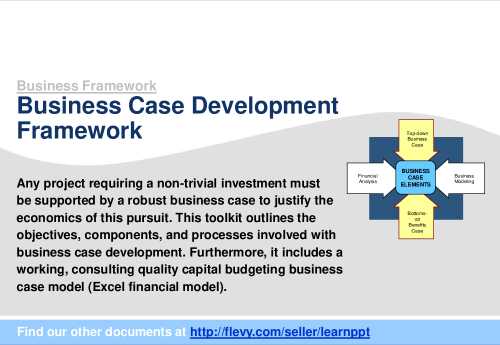
The Business Case is an instrumental tool in both justifying a project (requiring a capital budgeting decision), as well as measuring the project's success. The Business Case model typically takes the form of an Excel spreadsheet and quantifies the financial components of the project, [read more]
Do You Want to Implement Business Best Practices?
You can download in-depth presentations on 100s of management topics from the FlevyPro Library. FlevyPro is trusted and utilized by 1000s of management consultants and corporate executives.
For even more best practices available on Flevy, have a look at our top 100 lists:
These best practices are of the same as those leveraged by top-tier management consulting firms, like McKinsey, BCG, Bain, and Accenture. Improve the growth and efficiency of your organization by utilizing these best practice frameworks, templates, and tools. Most were developed by seasoned executives and consultants with over 20+ years of experience.
Readers of This Article Are Interested in These Resources
This is a very comprehensive document with over 400+ slides--covering 58 common management consulting frameworks and methodologies (listed below in alphabetical order). A detailed summary is provided for each business framework. The frameworks in this deck span across Corporate Strategy, [read more]
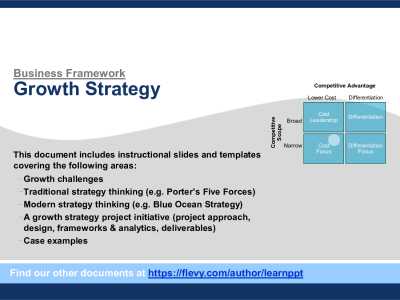
The reality is: all businesses face the challenge of achieving sustainable Growth. They need viable Growth Strategies.
So, what is Growth Strategy?
It is the organization's high-level Corporate Strategy Plan that outlines everything the organization needs to do to achieve its goals for [read more]
Recent McKinsey research surveyed a large set of global executives and suggests that many companies, these days, are in a nearly permanent state of organizational flux. A rise in efforts in Organizational Design is attributed to the accelerating pace of structural change generated by market [read more]
This document provides a holistic approach for undertaking strategic planning. While covering the traditional strategic planning approach, the document touches on adaptations that may be used in an unpredictable environment.
Contents:
1. Strategic Planning Overview
- Key questions and [read more]
 Digital transformation isn’t a buzzword anymore. It is a practical journey. For mid-size enterprises, the journey matters more than the hype. This text explains how to assess digital maturity, what typical gaps look like, and how to move forward. Short sentences. Long sentences. Bullet points. A few surprises. Read on.