Editor's Note: Take a look at our featured best practice, Account-based Marketing (ABM) Primer (21-slide PowerPoint presentation). Enterprise level sales organizations utilize Account-based Marketing (ABM), or Key Account Marketing, a conscious approach to Marketing based on selected accounts that are a good fit to buy an organization's products or services.
Once a target account has been identified, ABM demands from [read more]
* * * *
 Performance marketing measurement has moved beyond a tactical discipline into executive leadership. As revenue models become more data-driven and customer journeys more fragmented, leadership teams rely on marketing intelligence to evaluate growth quality and investment efficiency.
For many organizations, collaboration with a performance marketing agency now extends beyond campaign execution into the design of measurement systems that influence board-level decisions. Metrics shape capital allocation and portfolio prioritization, placing performance marketing at the center of enterprise value creation.
Linking Performance Marketing Metrics to Enterprise Value Creation
Executives rarely question whether marketing generates activity. The strategic question is whether that activity produces durable economic value. This requires reframing performance metrics as indicators of revenue quality, margin sustainability, and customer lifetime economics rather than as isolated operational outputs. Operational metrics such as cost per click or conversion rate support execution, but they do not explain whether marketing investments increase enterprise value.
Strategic metrics link demand generation directly to financial results. Typical examples include customer lifetime value to acquisition cost, contribution margin by segment, and revenue retention. When measurement aligns with these indicators, executives see how marketing affects cash flow stability, customer base quality, and scalability. Organizations using this approach treat marketing as an investment portfolio, where initiatives compete for capital based on long-term return, not short-term efficiency.
Integrating Account-Level Measurement into Executive Dashboards
Many executive dashboards still organize marketing performance by channel: search, social, display, or email. While this view supports operational management, it limits strategic insight. Leadership teams increasingly shift toward account-level and customer-level measurement, where performance reflects outcomes across the full revenue lifecycle.
Account-level measurement aggregates all marketing and sales interactions tied to a specific organization or buyer group. This structure supports forecasting, scenario planning, and resource allocation because it mirrors how revenue actually materializes.
It also aligns with strategic frameworks such as account-based marketing, where growth stems from deepening relationships with defined high-value accounts. Discussions around account-based marketing strategy and execution models, including this analysis on account-based marketing solutions, illustrate how measurement design directly influences execution models.
At the executive level, account-centric dashboards typically consolidate a focused set of indicators that describe revenue potential, deal progression, and post-sale performance:
- pipeline value by target account segment;
- win rate and deal velocity by account tier;
- marketing-sourced and marketing-influenced revenue;
- expansion and cross-sell revenue per account;
- retention trends and churn risk indicators.
These metrics shift leadership conversations away from traffic volume toward economic impact and enable more accurate forecasting because they reflect buyer behavior rather than channel activity.
Governance of Performance Marketing Measurement
Strategic metrics require governance. Without clear ownership, definitions, and validation processes, dashboards become negotiation tools rather than decision instruments. High-performing organizations assign joint accountability for marketing measurement to marketing leadership, sales operations, and finance.
This governance model establishes standardized definitions, approved data sources, documented calculation logic, and review cadences tied to executive planning cycles. Cross-functional alignment prevents metric fragmentation and creates a unified performance narrative.
External expertise becomes valuable when internal teams lack experience designing enterprise-grade measurement architectures. Specialists can accelerate data model design, attribution frameworks, and dashboard logic while transferring knowledge to internal stakeholders.
Conclusion
Executives should treat performance marketing metrics as part of the corporate operating model, not as a reporting layer. Strategic metrics inform capital allocation, growth prioritization, and risk management. Organizations that invest in measurement maturity understand not only what performs, but why it creates value.
A performance marketing agency such as Netpeak US can support this transition by focusing on measurable outcomes such as traffic, leads, and sales while delivering transparent reporting and systematic execution. Netpeak combines extensive experience in SEO, PPC, SMM, email marketing, and analytics with proprietary automation tools that enable faster and more accurate decisions. This structured, quality-controlled approach helps organizations transform performance data into executive-grade intelligence.
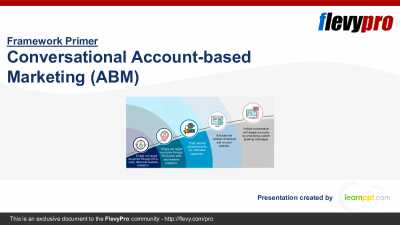
21-slide PowerPoint presentation
Traditional B2B Marketing typically involves communicating with scores of potential customers in the hopes of making a few of them to interact with your website and initiate conversation about an offering of their interest.
In contrast, Conversational Account-based Marketing (ABM) is a
[read more]
Do You Want to Implement Business Best Practices?
You can download in-depth presentations on ABM and 100s of management topics from the FlevyPro Library. FlevyPro is trusted and utilized by 1000s of management consultants and corporate executives.
For even more best practices available on Flevy, have a look at our top 100 lists:
These best practices are of the same as those leveraged by top-tier management consulting firms, like McKinsey, BCG, Bain, and Accenture. Improve the growth and efficiency of your organization by utilizing these best practice frameworks, templates, and tools. Most were developed by seasoned executives and consultants with over 20+ years of experience.
Readers of This Article Are Interested in These Resources
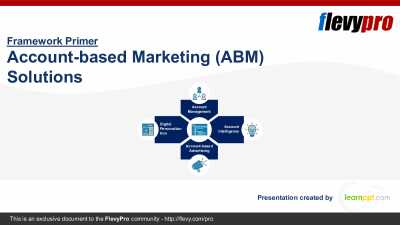
28-slide PowerPoint presentation
With Account-based-Marketing, we can mechanize and trim down the protracted process of finding target accounts and minimize the effort, time, and cost involved in courting these prospective accounts.
These ABM systems facilitate the stakeholders in creating the most qualified leads, developing
[read more]
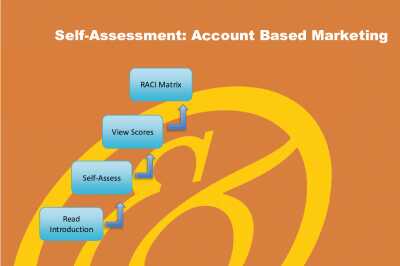
Excel workbook
The Account-Based Marketing (ABM) Implementation Toolkit includes a set of best-practice templates, step-by-step workplans, and maturity diagnostics for any Account-Based Marketing related project. Please note the above partial preview is ONLY of the Self Assessment Excel Dashboard, referenced
[read more]
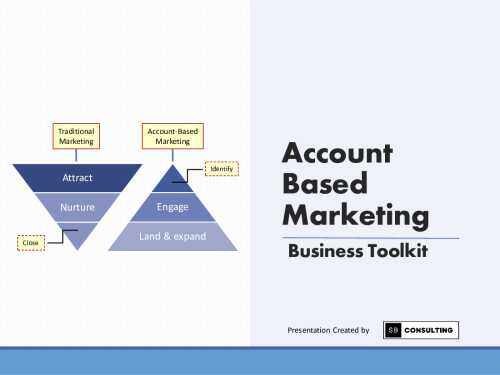
169-slide PowerPoint presentation
Curated by McKinsey-trained Executives
Unlock the Power of Account-Based Marketing with Our Complete Business Toolkit
In the ever-evolving landscape of marketing, it's essential to stay ahead of the curve and adapt to the changing demands of the industry. The Account-Based Marketing
[read more]