Editor's Note: Take a look at our featured best practice, M&A Sell-Side Process Letter - Phase I and Phase II (5-page Word document). What is the M&A process letter?
The M&A process letter is a template or example which assists transaction advisory consultants, investment bankers, and M&A practitioners with a sound basis from which to outline the proposed transaction steps in an M&A process.
As the M&A process progresses [read more]
* * * *
 Mergers and acquisitions (M&A) are transformative strategies for businesses seeking growth, diversification, or market dominance. However, the success of a business merger is far from guaranteed.
Without careful planning, companies risk operational disruption, financial loss, and cultural clashes. A structured, strategic approach to planning is critical for ensuring that the intended synergies and benefits are realized. Here are the essential steps in planning for a successful business combination.
1. Define Strategic Objectives
The foundation of any successful business combination is a clear understanding of why the merger or acquisition is being pursued. Strategic objectives may include expanding market share, entering new markets, acquiring advanced technology, or achieving cost efficiencies. Clearly defining these goals allows the management team to align efforts, establish measurable targets, and evaluate potential partners based on their ability to meet strategic requirements. A lack of clarity at this stage often leads to mismatched expectations and unsuccessful outcomes.
2. Conduct Comprehensive Due Diligence
Due diligence is one of the most critical steps in planning a business combination. This process involves a thorough examination of the target company’s financial statements, contracts, intellectual property, legal compliance, operational systems, and market positioning. Beyond the numbers, cultural and organizational assessments are equally important to identify potential integration challenges. Comprehensive due diligence mitigates the risk of overvaluation, uncovers hidden liabilities, and provides a realistic picture of the target’s strengths and weaknesses.
3. Assess Cultural and Organizational Compatibility
Cultural alignment is often overlooked in M&A planning, yet it is a decisive factor in post-merger integration. Companies with differing corporate cultures, management styles, or employee expectations may face resistance, decreased productivity, and talent attrition. Evaluating organizational compatibility early allows leaders to design integration strategies that respect both entities’ cultures, establish common values, and promote collaboration. A successful combination is not just about financial or operational synergy; it’s about uniting people under a shared vision.
4. Develop a Detailed Integration Plan
Integration planning should begin long before the deal is finalized. A well-structured integration plan outlines the steps for merging operations, aligning technology systems, harmonizing processes, and consolidating teams. Key areas include IT integration, supply chain alignment, customer communications, and human resources policies. Establishing timelines, responsibilities, and success metrics ensures accountability and keeps the process on track. This proactive approach reduces operational disruptions and accelerates the realization of synergies.
5. Plan Financial and Legal Structuring
The financial and legal framework of a business combination plays a vital role in ensuring long-term success. Structuring considerations include transaction financing, tax implications, shareholder agreements, and compliance with regulatory requirements. Working closely with merger & acquisition advisors helps identify optimal structures, minimize risk, and prevent costly mistakes. Engaging a mergers & acquisitions lawyer can help structure and negotiate definitive agreements, navigate regulatory and antitrust reviews, and manage complex issues such as IP assignment, employee transitions, and cross-border compliance. Additionally, clear communication with investors and stakeholders about the financial rationale and anticipated benefits fosters trust and support.
6. Engage Stakeholders Effectively
Successful business combinations require buy-in from all key stakeholders, including employees, investors, customers, suppliers, and regulators. Transparent communication helps manage expectations, address concerns, and build confidence in the new entity. Employees need clarity about their roles, reporting lines, and opportunities for growth, while customers and suppliers need assurance that service levels and relationships will be maintained. Early and consistent engagement reduces uncertainty and fosters a smooth transition.
7. Monitor and Adjust Post-Merger Performance
Planning does not end once the combination is executed. Continuous monitoring of post-merger performance ensures that projected synergies are realized and any unforeseen challenges are promptly addressed. Metrics should cover financial performance, operational efficiency, employee engagement, and customer satisfaction. Leaders must remain agile, willing to adjust integration strategies as needed to optimize results and ensure the long-term success of the combined organization.
Conclusion
A successful business combination is not a product of chance—it is the result of meticulous planning, strategic alignment, and careful execution. By defining objectives, conducting thorough due diligence, assessing cultural compatibility, developing an integration plan, structuring financial and legal elements effectively, engaging stakeholders, and monitoring post-merger performance, companies can significantly increase their chances of achieving a smooth and profitable combination.
Ultimately, the value of a business combination is realized not only in financial gains but also in the creation of a stronger, more resilient organization capable of thriving in a competitive marketplace.
Do You Want to Implement Business Best Practices?
You can download in-depth presentations on M&A (Mergers & Acquisitions) and 100s of management topics from the FlevyPro Library. FlevyPro is trusted and utilized by 1000s of management consultants and corporate executives.
For even more best practices available on Flevy, have a look at our top 100 lists:
These best practices are of the same as those leveraged by top-tier management consulting firms, like McKinsey, BCG, Bain, and Accenture. Improve the growth and efficiency of your organization by utilizing these best practice frameworks, templates, and tools. Most were developed by seasoned executives and consultants with over 20+ years of experience.
Readers of This Article Are Interested in These Resources
32-slide PowerPoint presentation
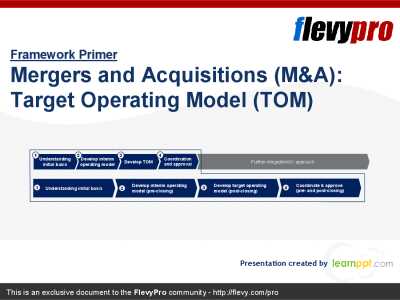
In an M&A situation, a fundamental question is what the Target Operating Model (TOM) of the resultant organization will look like. This framework addresses the topic of TOM Development in an M&A.
In formulating the Target Operating Model, there are 6 core areas that must be analyzed in an
[read more]
4-page Word document
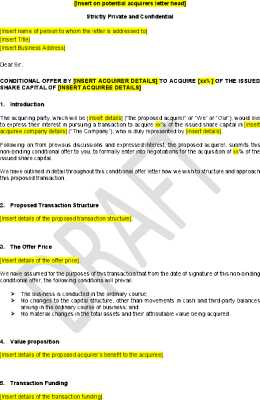
A non-binding offer letter is used in a sales process to establish the terms of a deal between the seller and the buyer. Through the document, the potential acquirer expresses an interest to acquire the target, but the document is not intended to be legally binding and therefore, it does not
[read more]
28-slide PowerPoint presentation
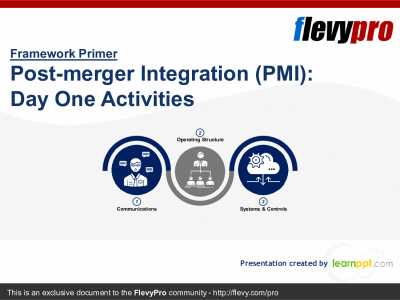
The Post-merger Integration (PMI) is a highly complex process. It requires swift action as well as running the core business activities simultaneously. There is no one-size fits all approach to a successful PMI Process. However, careful planning focusing on the strategic objectives of the deal and
[read more]
Excel workbook
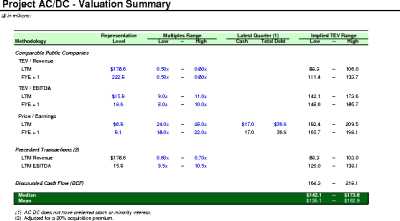
This excel provides a DCF valuation template which is a valuation method where future cash flows are discounted to present value. The valuation approach is widely used within the investment banking and private equity industry.
This DCF valuation model includes comprehensive financial metrics, such
[read more]