
This product (Mergers, Acquisitions Best Practices) is a 56-slide PPT PowerPoint presentation slide deck (PPT), which you can download immediately upon purchase.
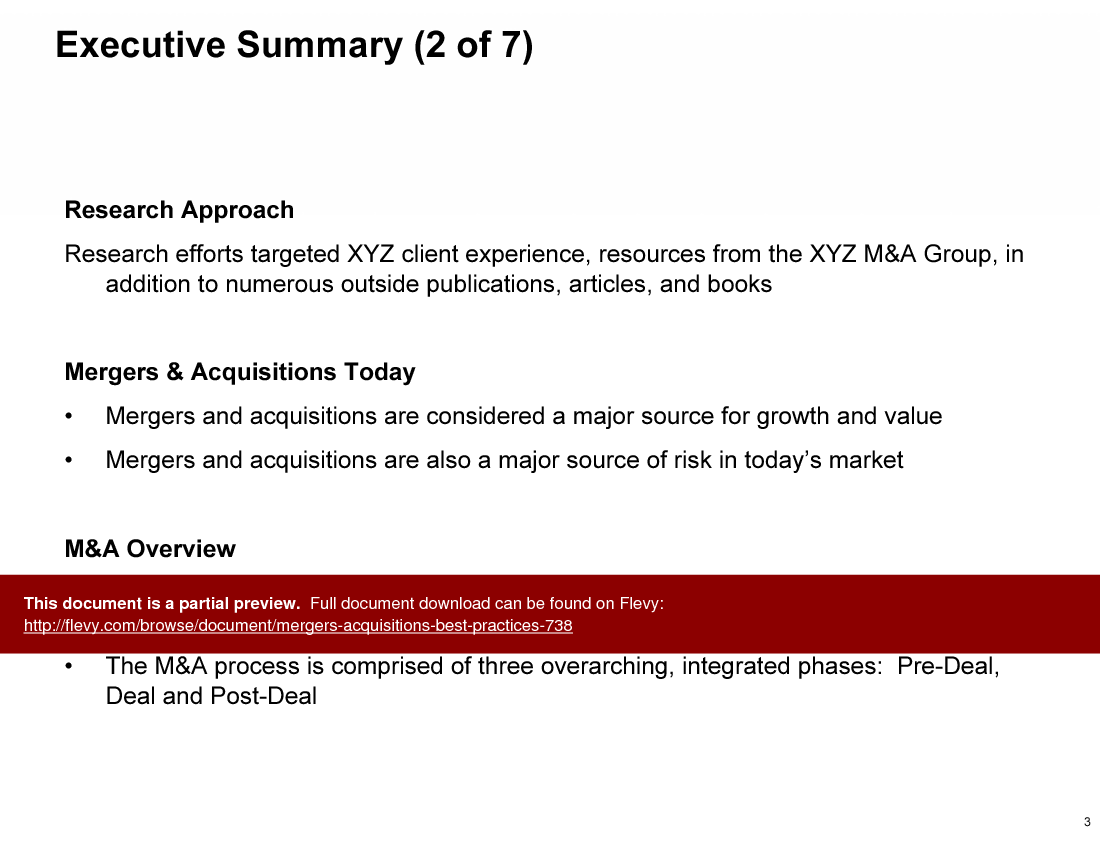
This presentation outlines some best practices during mergers and acquisitions. The best practices are discussed over a wide spectrum of the M & A process, including: pre-deal, during deal, post deal, executive teams, core team, due diligence team, integration team, Case studies are used to illustrate the best practices. The deck has 55 slides.
The document delves into the complexities of the M&A landscape, emphasizing the importance of strategic rationale and integration planning. It highlights that a significant portion of acquisitions fail to create shareholder value, often due to poor strategic fit and inadequate planning. The presentation underscores the necessity of thorough due diligence, from financial assessments to understanding the target's management and operations.
In the pre-deal phase, the focus is on aligning corporate strategy with M&A objectives, conducting rigorous target screening, and initiating integration planning early. This phase sets the foundation for a successful merger or acquisition by ensuring all potential issues are identified and addressed upfront. The document provides actionable insights on how to navigate this critical stage effectively.
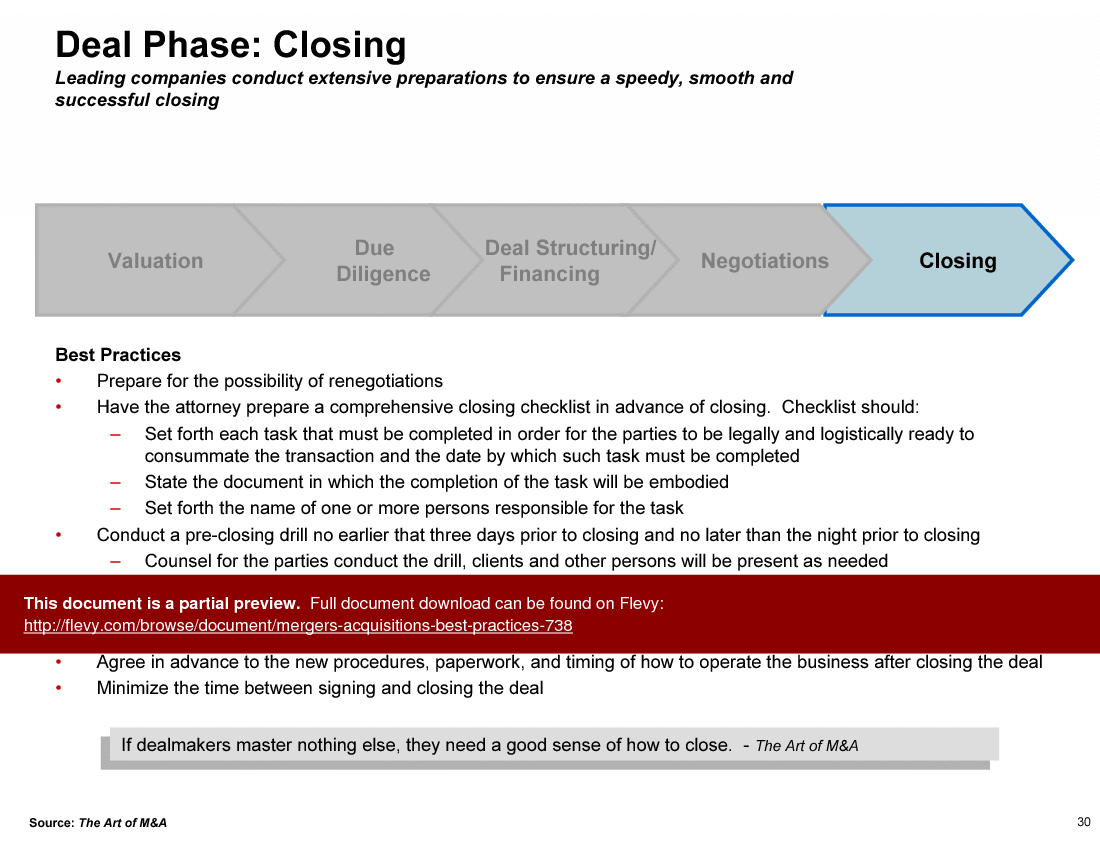
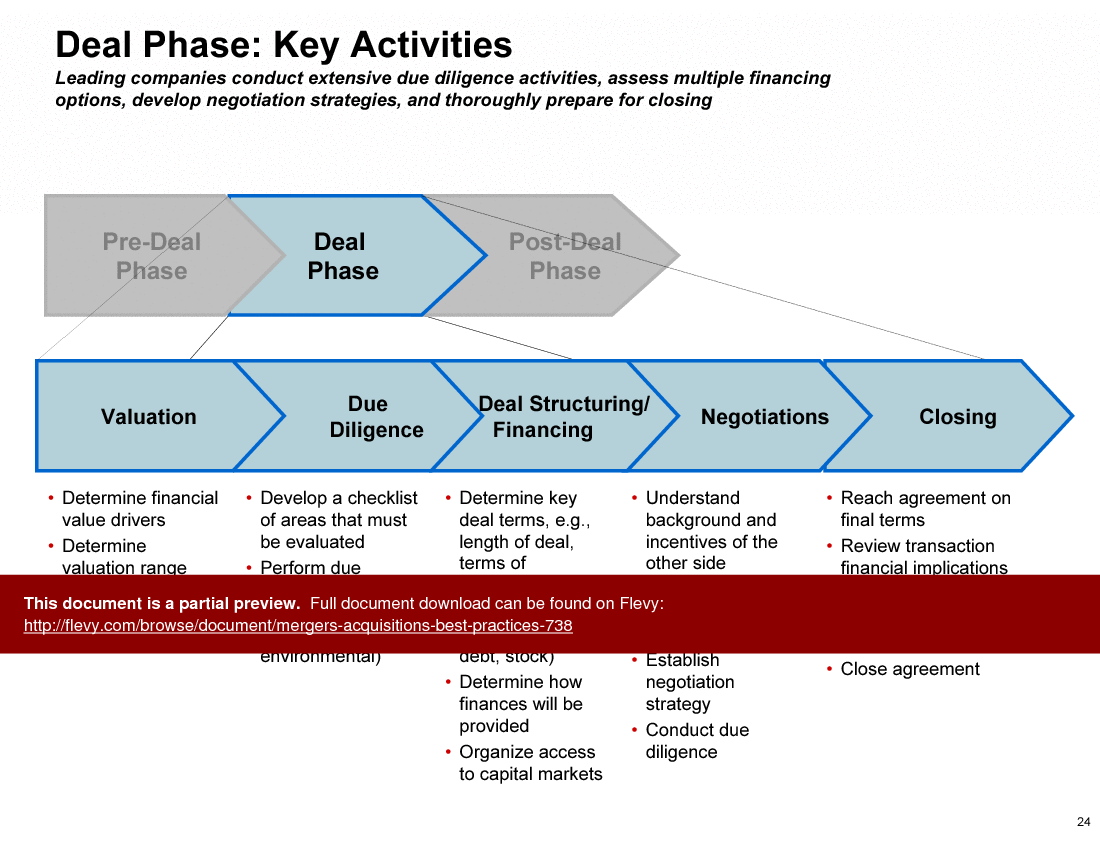
The deal phase is meticulously broken down into key activities such as valuation, due diligence, deal structuring, and negotiations. Each step is accompanied by best practices and practical tips to ensure a smooth transaction. The importance of a comprehensive closing checklist and pre-closing drills is emphasized to mitigate risks and ensure all parties are prepared for the final agreement.
Post-deal integration is another critical area covered extensively. The document outlines how leading companies manage the transition, integrate operations, and plan post-integration activities. It stresses the importance of speed, communication, and cultural alignment in achieving a seamless integration. Real-world case studies are used to illustrate successful integration strategies and the impact of effective management on the overall success of the M&A process.
Got a question about the product? Email us at support@flevy.com or ask the author directly by using the "Ask the Author a Question" form. If you cannot view the preview above this document description, go here to view the large preview instead.
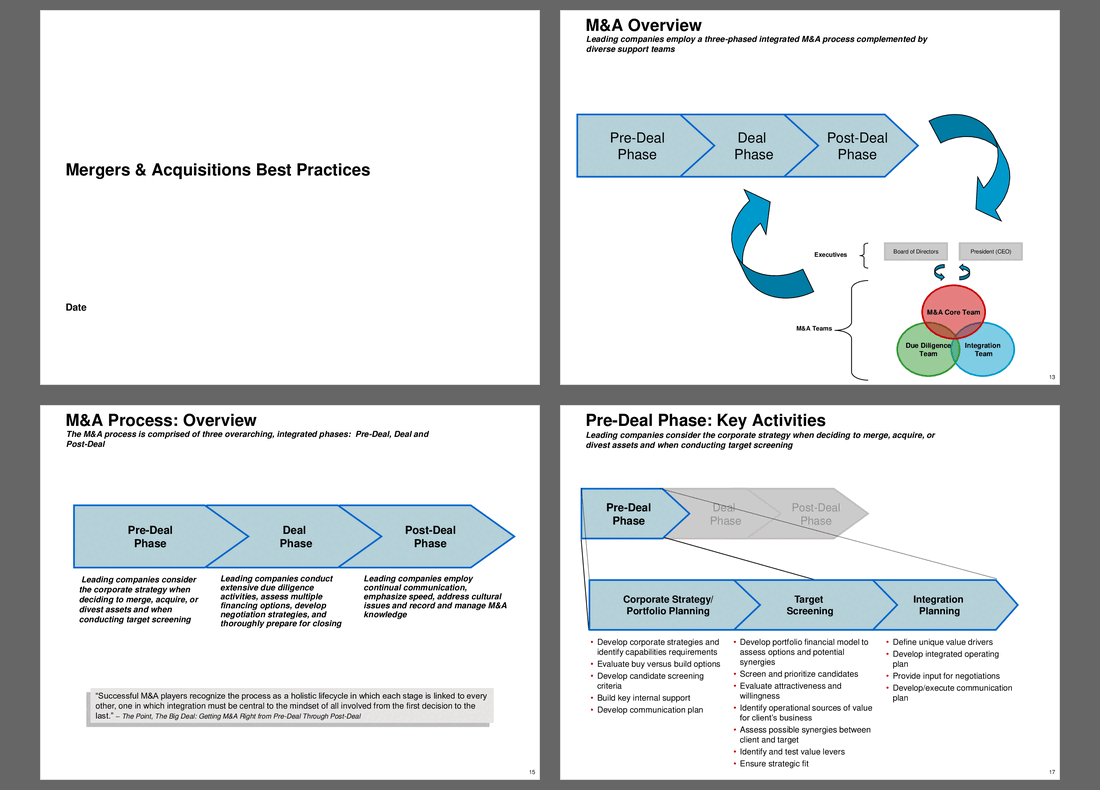
This PPT slide provides a structured overview of the M&A process, segmented into 3 key phases: Pre-Deal, Deal, and Post-Deal. Each phase outlines critical activities that leading companies undertake to ensure a successful merger or acquisition.
In the Pre-Deal phase, organizations focus on aligning their corporate strategy with potential mergers, acquisitions, or divestitures. This involves thorough target screening, where companies assess potential candidates based on strategic fit and value creation. The emphasis here is on understanding the broader implications of a deal before moving forward.
The Deal phase is characterized by rigorous due diligence. Companies assess various financing options and develop negotiation strategies to ensure favorable terms. This phase is crucial as it lays the groundwork for a successful transaction. Preparing for closing involves meticulous planning and coordination among stakeholders to address any potential challenges that may arise.
The Post-Deal phase highlights the importance of integration and communication. Leading companies prioritize continual dialogue among teams to facilitate a smooth transition. They also focus on addressing cultural issues that may impact the merger's success. Managing M&A knowledge is emphasized, ensuring that lessons learned are documented and leveraged for future transactions.
Overall, the slide encapsulates the M&A process as a holistic lifecycle. Each phase is interconnected, requiring a strategic mindset from the outset. This structured approach is vital for organizations looking to navigate the complexities of mergers and acquisitions effectively.
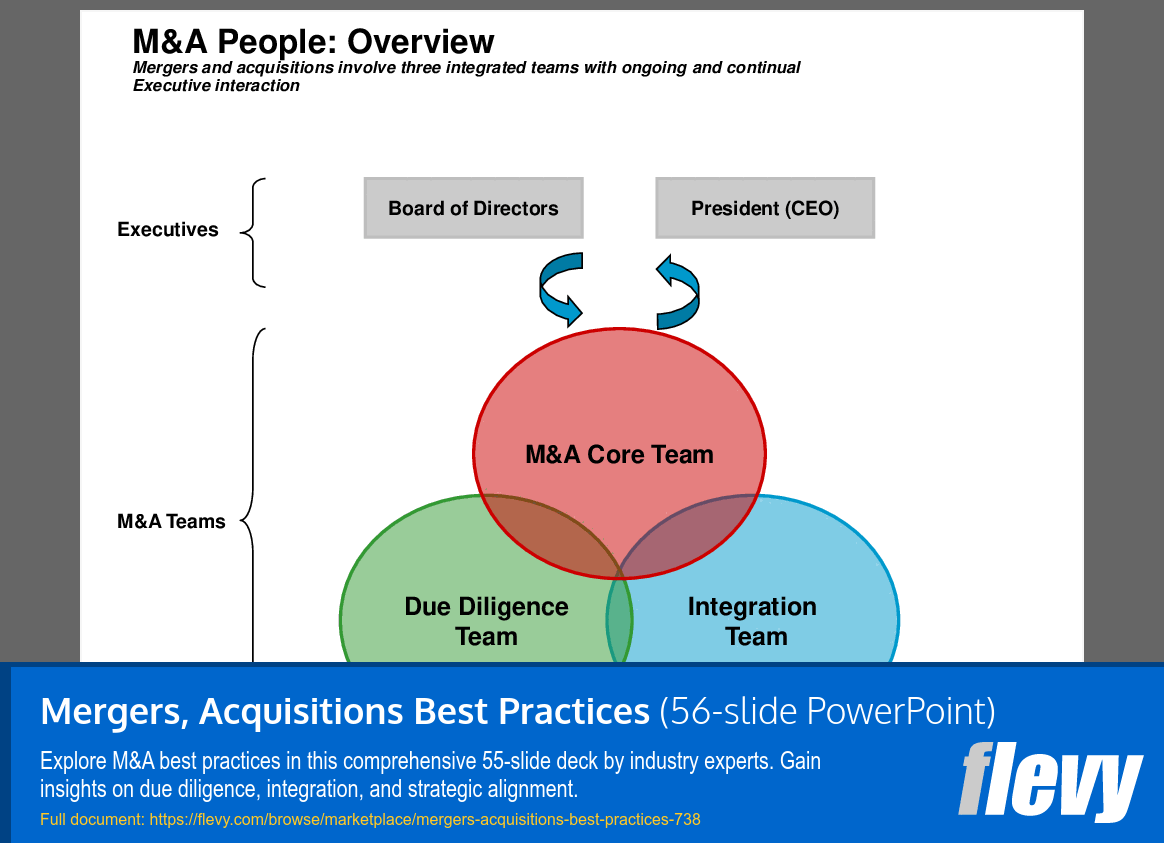
This PPT slide presents a structured overview of the personnel involved in mergers and acquisitions (M&A), highlighting the interaction between 3 key teams: the M&A Core Team, the Due Diligence Team, and the Integration Team. At the top, the Board of Directors and the President (CEO) are positioned, indicating their critical roles in overseeing and guiding the M&A process.
The M&A Core Team sits at the center of the diagram, signifying its pivotal function in coordinating the efforts of the other teams. This team likely consists of individuals with expertise in various areas essential for successful M&A execution. The overlapping circles suggest that collaboration among the teams is crucial for effective decision-making and strategy implementation.
The Due Diligence Team is represented on the left, responsible for assessing potential acquisitions. Their role involves evaluating financial, operational, and legal aspects of target companies, ensuring that informed decisions are made before proceeding with any transaction. This team’s findings directly influence the M&A Core Team's strategies.
On the right, the Integration Team focuses on merging operations post-acquisition. Their responsibilities include aligning corporate cultures, systems, and processes to ensure a smooth transition and realization of synergies. The interaction between these teams is essential for minimizing disruptions during the integration phase.
Overall, the slide emphasizes the interconnectedness of these roles and the importance of continuous interaction among executives and teams throughout the M&A process. Understanding this structure can help organizations streamline their M&A efforts and enhance overall effectiveness.
This PPT slide presents a structured overview of the M&A process, delineating it into 3 distinct phases: Pre-Deal, Deal, and Post-Deal. This segmentation highlights the systematic approach leading companies adopt to navigate mergers and acquisitions effectively. Each phase serves a critical function in ensuring the overall success of the M&A initiative.
The Pre-Deal Phase is likely focused on strategic planning, identifying potential targets, and conducting preliminary evaluations. This phase sets the groundwork for informed decision-making and risk assessment. Moving into the Deal Phase, the emphasis shifts to negotiations, due diligence, and finalizing the terms of the acquisition. This phase is crucial for aligning the interests of both parties and ensuring that all legal and financial considerations are addressed.
The Post-Deal Phase is where integration occurs. This phase is essential for realizing the intended synergies and operational efficiencies from the merger or acquisition. It often involves aligning corporate cultures, systems, and processes, which can be challenging yet vital for long-term success.
The slide also indicates the involvement of various support teams and executives throughout these phases. This suggests a collaborative approach, where diverse expertise is leveraged to enhance decision-making and execution. The presence of the Board of Directors and the CEO emphasizes the strategic importance of M&A activities, reinforcing that these decisions are not just operational, but also pivotal for the company’s future trajectory.
Overall, this slide serves as a foundational framework for understanding the M&A process, making it a valuable resource for executives considering or currently engaged in M&A activities.
This PPT slide outlines critical best practices for the negotiation phase of mergers and acquisitions. It emphasizes the importance of developing a comprehensive negotiation strategy tailored to various factors. Key considerations include the acquisition value to the acquirer, the valuation of the target from the perspective of existing owners and other potential buyers, and the financial condition of these stakeholders. Understanding the motivations of existing owners and potential acquirers is also crucial, as is assessing the potential impact of anti-takeover provisions.
The slide further delineates the need to establish a clear negotiation process. It suggests designating a single individual as the Deal Maker to streamline decision-making and communication. A timeline should be developed early in the negotiation to identify critical speed levers, ensuring that the process remains efficient. Setting a maximum reservation price is advised, along with a commitment to adhere to it throughout discussions. Limiting attendance at negotiation meetings can help maintain focus and confidentiality.
The guidance also cautions against attempting to solidify a firm agreement on price too early in the negotiation process. Instead, it advocates for maintaining limited and discreet communication to facilitate a smoother exchange of information. Keeping the deal on track and ensuring momentum is sustained throughout negotiations is highlighted as a vital element for success. This structured approach can help mitigate risks and enhance the likelihood of achieving favorable outcomes in M&A transactions.
This PPT slide outlines the key activities and roles of members within the Due Diligence and Integration Teams during M&A processes. It highlights the critical expertise required from various specialists to ensure a thorough evaluation and smooth integration of the acquired entity.
Each expert's responsibilities are clearly delineated across several categories. The Operations Expert focuses on understanding the operational realities of the target company, emphasizing the need for early involvement in the pre-deal phase. This role is crucial for uncovering the true cost-of-production dynamics and may involve multiple individuals to cover various operational aspects.
The Costing Expert is tasked with determining applicable costing methods and identifying potential cost efficiencies, particularly in the context of downsizing or post-deal cost adjustments. This role is essential for accurate financial forecasting and integration planning.
Human Resource Experts are responsible for reviewing significant personnel areas, including labor issues and compliance with statutes. Their insights are vital for assessing workforce stability and potential integration challenges.
Marketing and Sales Experts evaluate the target's market positioning and distribution strategies, ensuring alignment with strategic goals. They analyze market niches and current markets to validate the target's commercial viability.
Financial and Accounting Experts perform critical financial analyses, creating accurate financial statements that reflect the target's operational results. This role is fundamental for understanding the financial health of the target.
Federal & State Taxation Experts assess the tax implications of the acquisition, while Legal Experts ensure all legal documents are in order and provide necessary legal advice. Lastly, Insurance Experts offer insights into insurance-related issues, which can be pivotal for risk management post-acquisition.
This comprehensive approach ensures that all functional areas are covered, providing a robust framework for successful M&A transactions.
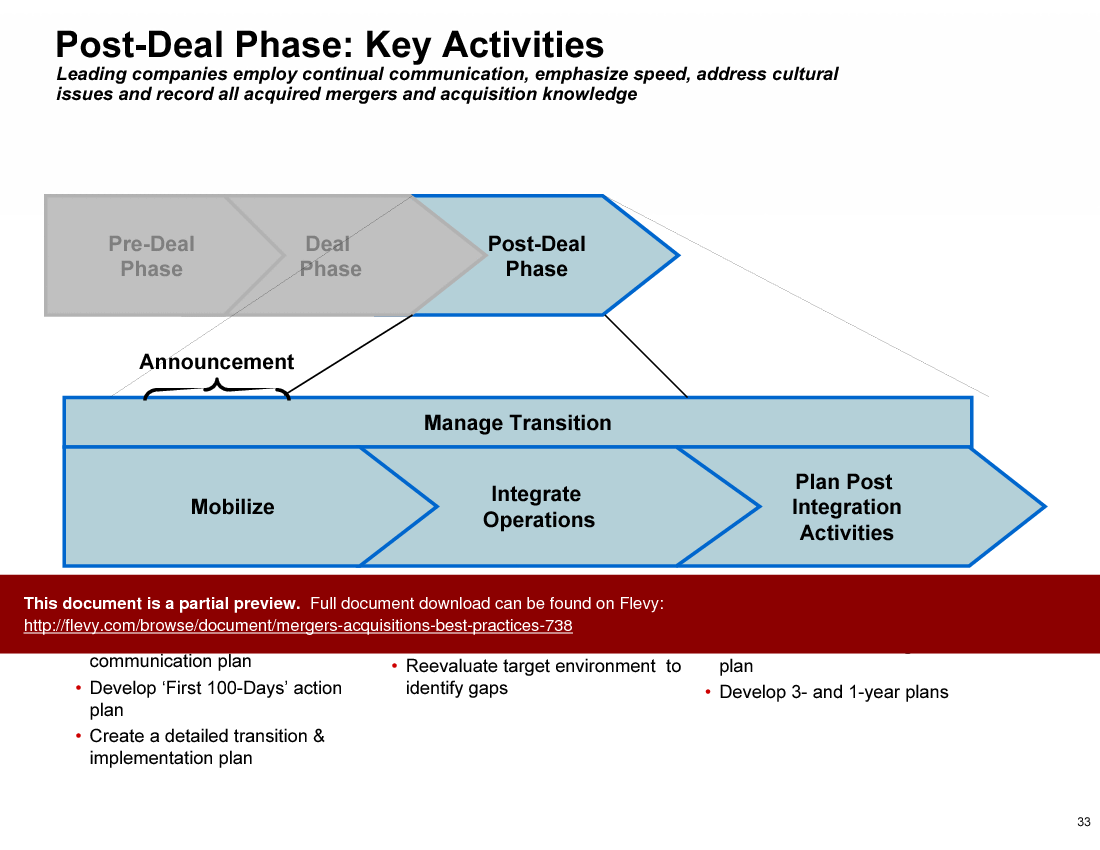
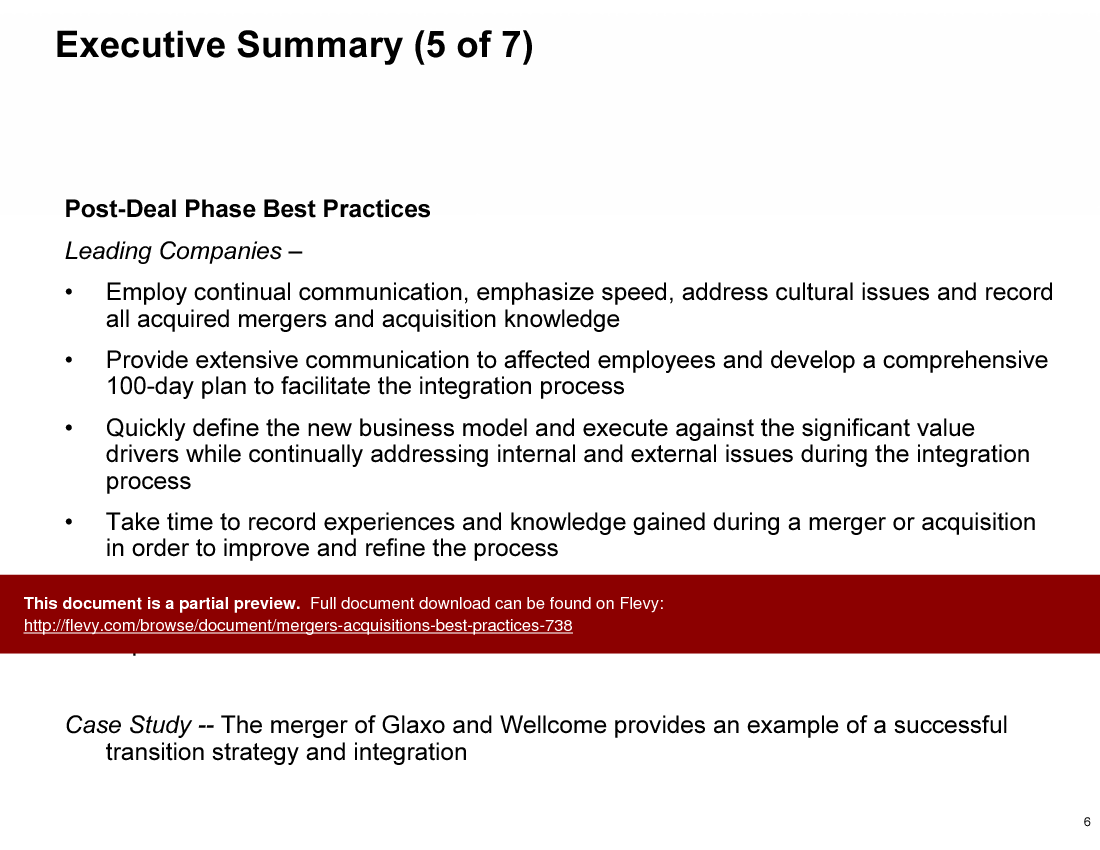
This PPT slide outlines essential activities in the post-deal phase of mergers and acquisitions. It emphasizes the importance of effective communication, speed, and cultural integration during this critical period. The structure is divided into 3 main components: Mobilize, Integrate Operations, and Plan Post Integration Activities, each with specific tasks aimed at ensuring a smooth transition.
In the Mobilize section, the focus is on preparing the organization for upcoming changes. Key actions include developing a communication plan and creating a 'First 100-Days' action plan. This initial phase is crucial for setting the tone and direction of the integration process, ensuring that all stakeholders are aligned and informed.
The Integrate Operations segment highlights the need for a well-executed transition and integration plan. It involves executing the communication strategy and continuously evaluating the target environment to identify any gaps that may arise. This ongoing assessment is vital for adapting to challenges and ensuring that integration efforts remain on track.
Lastly, the Plan Post Integration Activities section addresses the evaluation of integrated operations. It encourages defining high-priority initiatives and refining the transition and integration plan. Developing both 3- and 1-year plans is essential for long-term success, allowing organizations to set clear objectives and measure progress over time.
Overall, this slide serves as a roadmap for executives navigating the complexities of post-deal activities, providing a structured approach to managing transitions effectively. The outlined activities are designed to foster a cohesive environment that promotes successful integration and maximizes the value derived from mergers and acquisitions.
This PPT slide presents a framework that distinguishes between Mergers & Acquisitions (M&A) and Licensing & Business Development (L&BD) within the context of business development. It highlights how both M&A and L&BD contribute to growth, but operate through different mechanisms.
The horizontal axis labeled "Continuum of Control" categorizes various transaction-based business events from "Provision of Service" to "Purchase/Sell." On the left side, the slide lists several service provision models, starting with "Vendor Contract" and moving through "One-Way Licensing," "Preferred Supplier," and "Outsourcing." This section emphasizes less control and more transactional relationships.
As you move rightward, the slide transitions into more integrated forms of collaboration, such as "Strategic Alliance" and "Joint Venture," which signify increasing levels of partnership and shared control. The rightmost section culminates in "Mergers & Acquisitions," indicating the highest level of control and integration.
The slide effectively illustrates the spectrum of business development strategies, showing how companies can choose varying degrees of partnership or ownership based on their strategic objectives. The visual representation allows for quick comprehension of the relationships between different types of transactions.
Understanding this continuum is crucial for executives considering how to align their business development strategies with their overall corporate goals. It provides a roadmap for evaluating potential partnerships or acquisitions, helping to clarify the implications of each option on control and operational integration.
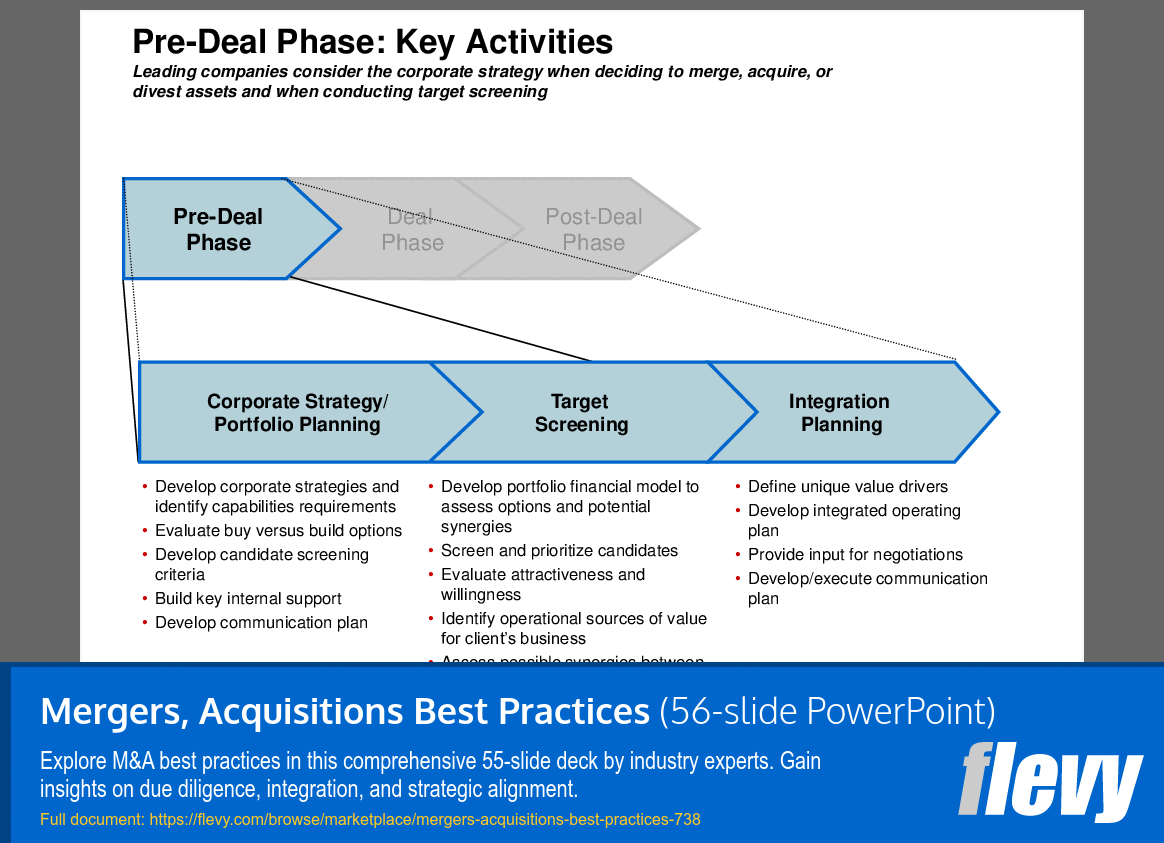
This PPT slide outlines the key activities involved in the pre-deal phase of mergers and acquisitions, emphasizing the importance of strategic planning prior to executing any transactions. It is structured into 3 primary segments: Corporate Strategy/Portfolio Planning, Target Screening, and Integration Planning. Each segment lists specific actions that organizations should undertake to ensure a successful deal.
In the Corporate Strategy/Portfolio Planning section, companies are encouraged to develop corporate strategies and identify the necessary capabilities for future growth. This involves evaluating whether to pursue acquisitions or build capabilities internally, creating criteria for screening potential candidates, and securing internal support for the initiatives. A communication plan is also essential to align stakeholders.
Moving to Target Screening, the focus shifts to financial modeling to evaluate potential acquisition targets. This includes screening and prioritizing candidates based on their attractiveness and the willingness of their owners to engage in a deal. Identifying operational sources of value for the client's business is highlighted as a critical step, along with assessing possible synergies between the entities involved.
Finally, Integration Planning emphasizes the need to define unique value drivers that will guide the integration process post-acquisition. Developing an integrated operating plan is crucial for ensuring that the merger or acquisition achieves its intended outcomes. Input for negotiations and a well-crafted communication plan are also vital components to facilitate a smooth transition.
Overall, this slide serves as a roadmap for organizations looking to navigate the complexities of mergers and acquisitions, ensuring that they are well-prepared before entering into any agreements.
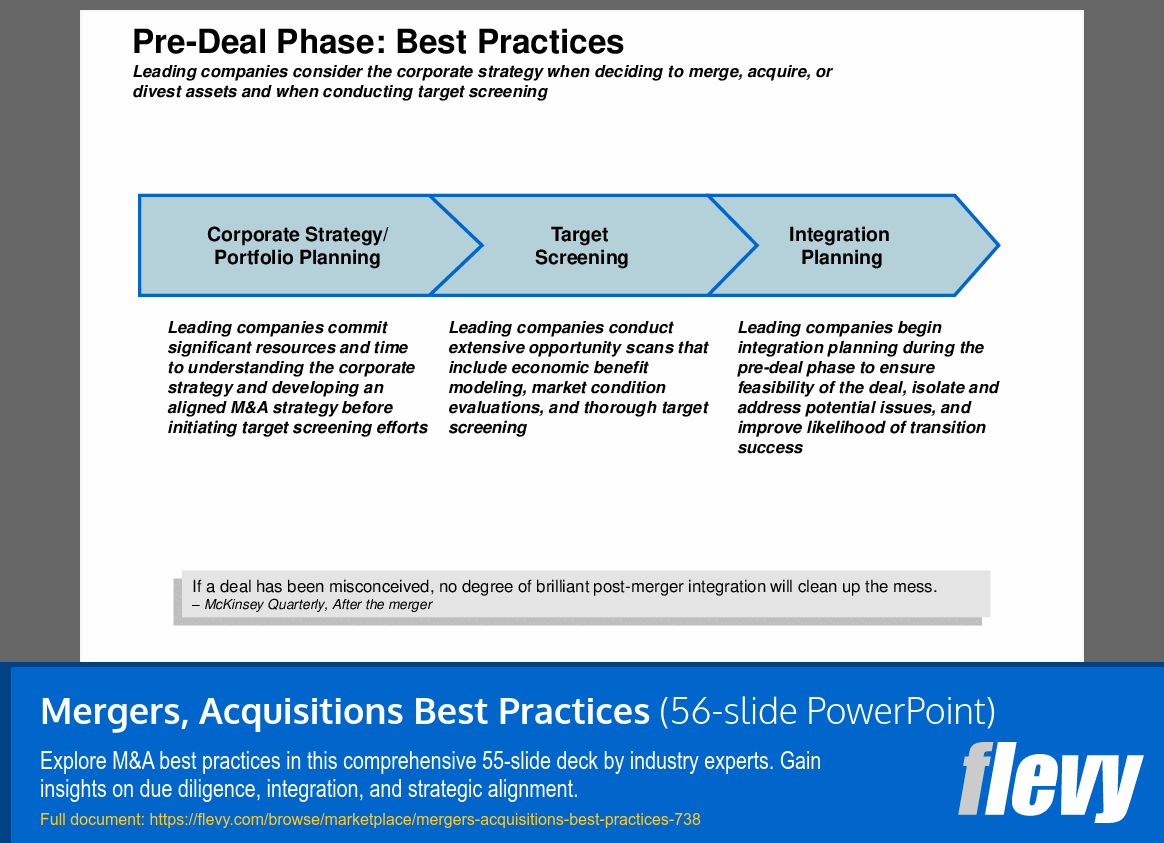
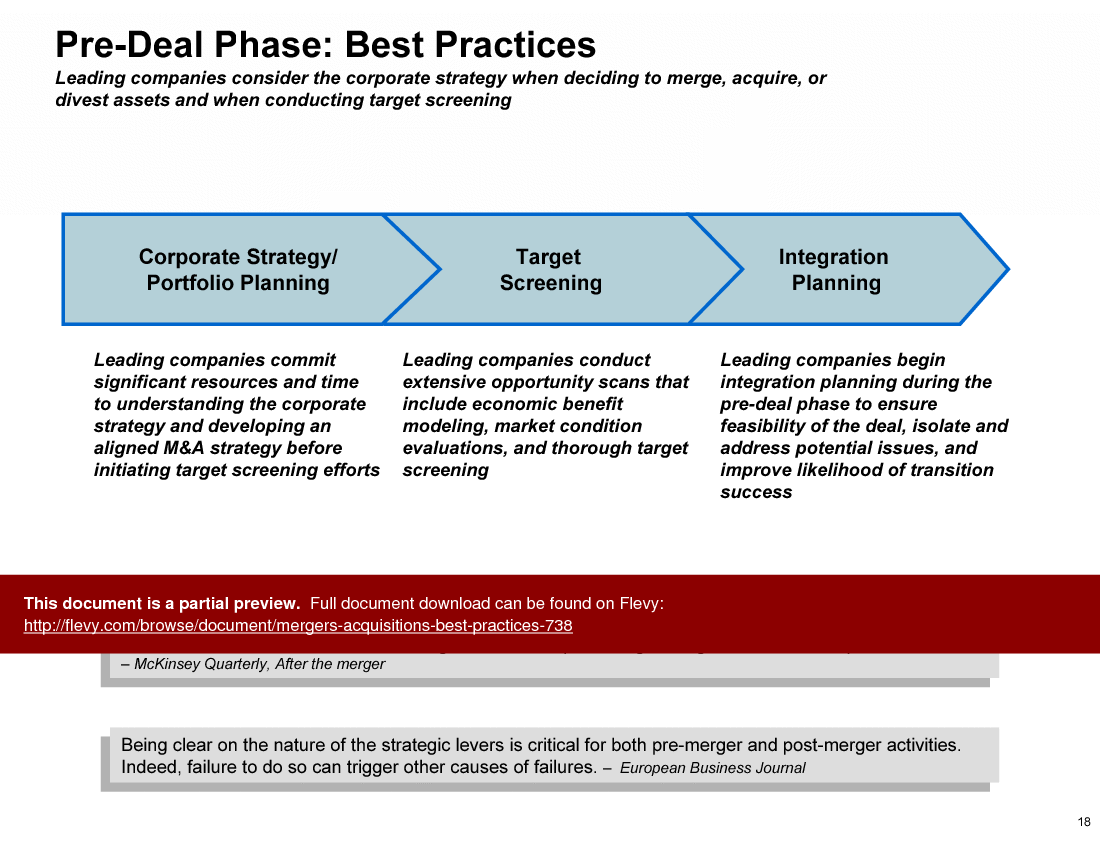
This PPT slide outlines best practices for the pre-deal phase of mergers and acquisitions, emphasizing 3 critical areas: Corporate Strategy/Portfolio Planning, Target Screening, and Integration Planning. Each section highlights the importance of thorough preparation and strategic alignment before any transaction.
In the Corporate Strategy/Portfolio Planning segment, it notes that leading companies invest substantial resources and time to grasp their corporate strategy. This foundational understanding is crucial for developing a coherent M&A strategy that aligns with overall business objectives. Without this alignment, subsequent efforts may be misdirected.
The Target Screening section stresses the necessity of conducting comprehensive opportunity scans. It mentions that leading firms utilize economic benefit modeling and market condition evaluations to inform their target selection process. This rigorous approach ensures that companies are not just reacting to market trends, but are strategically identifying targets that fit their long-term vision.
Integration Planning is highlighted as a proactive measure. Companies that begin planning for integration during the pre-deal phase can better assess the feasibility of the transaction. Identifying potential issues early on allows for a more structured approach to transition, ultimately enhancing the likelihood of success post-merger.
The slide concludes with a cautionary note, emphasizing that if a deal is poorly conceived, no amount of post-merger integration can rectify the situation. This underscores the importance of diligence in the pre-deal phase, reinforcing that thorough preparation is key to successful outcomes in M&A activities.
MARCUS OVERVIEW
This synopsis was written by Marcus [?] based on the analysis of the full 56-slide presentation.
Executive Summary
This Mergers & Acquisitions Best Practices presentation provides a comprehensive overview of effective strategies and methodologies for executing successful M&A transactions, structured in a consulting-grade format akin to McKinsey, Bain, or BCG-quality presentations (not affiliated). It equips corporate executives, integration leaders, and consultants with actionable insights into the M&A lifecycle, including pre-deal, deal, and post-deal phases. By leveraging industry best practices, this resource enables organizations to enhance their strategic objectives, mitigate risks, and maximize value during mergers and acquisitions.
Who This Is For and When to Use
• Corporate executives overseeing M&A strategy and execution
• Integration leaders responsible for post-merger integration
• Business development teams involved in target screening and evaluation
• Consultants advising on M&A processes and best practices
Best-fit moments to use this deck:
• During strategic planning sessions for upcoming mergers or acquisitions
• In integration workshops to align teams on post-deal execution
• For training sessions on M&A best practices and methodologies
Learning Objectives
• Define the integrated M&A process and its phases: Pre-Deal, Deal, and Post-Deal
• Build a robust M&A strategy aligned with corporate objectives
• Conduct thorough due diligence to assess potential targets
• Develop effective negotiation strategies and closing plans
• Implement a comprehensive integration plan to ensure smooth transitions
• Address cultural challenges and communication strategies during integration
Table of Contents
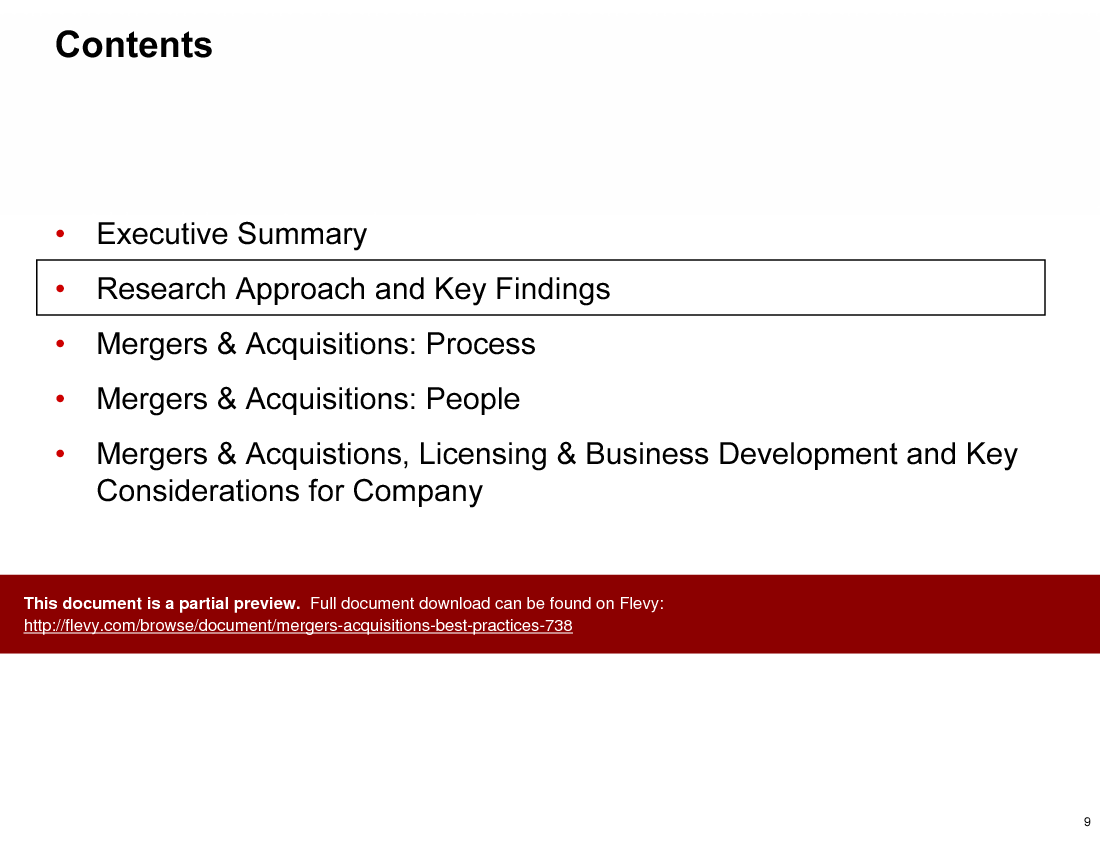
• Executive Summary (page 2)
• Research Approach and Key Findings (page 10)
• Mergers & Acquisitions: Process (page 11)
• Mergers & Acquisitions: People (page 42)
• Mergers & Acquisitions, Licensing & Business Development and Key Considerations for Company (page 50)
Primary Topics Covered
• M&A Process Overview - An integrated approach to M&A involving Pre-Deal, Deal, and Post-Deal phases, emphasizing the importance of continuous integration.
• Pre-Deal Phase Best Practices - Strategies for aligning M&A efforts with corporate strategy, conducting thorough target screening, and initiating integration planning early.
• Deal Phase Best Practices - Key activities such as due diligence, valuation techniques, and negotiation strategies to ensure successful deal closure.
• Post-Deal Phase Best Practices - Focus on communication, cultural integration, and knowledge management to enhance transition success.
• M&A Teams and Roles - The structure and responsibilities of core M&A teams, including executives, due diligence teams, and integration teams.
• Case Studies - Real-world examples illustrating the impact of strategic planning and integration on M&A outcomes.
Deliverables, Templates, and Tools
• M&A strategy framework template for aligning corporate objectives with M&A activities
• Due diligence checklist to guide evaluation of potential targets
• Negotiation strategy outline to prepare for discussions and deal closure
• Integration plan template to facilitate post-deal execution
• Communication plan template for managing stakeholder engagement during transitions
• Knowledge management framework for documenting lessons learned and best practices
Slide Highlights
• Overview of the three-phased M&A process emphasizing integration
• Best practices for pre-deal activities, including target screening and integration planning
• Key considerations during the deal phase, including due diligence and negotiation strategies
• Post-deal integration strategies focusing on communication and cultural alignment
• Case studies showcasing successful and unsuccessful M&A transactions
Due Diligence and Negotiation Workshop (120 minutes)
• Conduct a mock due diligence review of a potential target
• Develop negotiation strategies based on target valuation
• Role-play negotiation scenarios to practice skills
Post-Deal Integration Planning Session (90 minutes)
• Define the new business model and value drivers
• Develop a comprehensive 100-day action plan
• Address cultural integration strategies and communication plans
Customization Guidance
• Tailor the M&A strategy framework to align with specific corporate objectives and market conditions
• Modify the due diligence checklist to include industry-specific considerations
• Adapt the negotiation strategy outline based on the unique dynamics of each deal
• Customize the integration plan template to reflect organizational structure and culture
• Update communication plans to address stakeholder needs and concerns specific to the transaction
Secondary Topics Covered
• Differences between M&A and Licensing & Business Development (L&BD)
• Importance of integration planning in M&A versus L&BD
• Key considerations for leveraging resources between M&A and L&BD teams
• The role of corporate finance skills in M&A activities
FAQ What are the key phases of the M&A process?
The M&A process consists of 3 phases: Pre-Deal, Deal, and Post-Deal, each with distinct activities and best practices to ensure success.
How can we ensure effective integration post-acquisition?
Successful integration requires a comprehensive 100-day action plan, continual communication, and addressing cultural issues to align both organizations.
What role do executives play in the M&A process?
Executives are crucial in developing the M&A strategy, making key decisions, and maintaining oversight throughout the lifecycle of the deal.
What are common pitfalls in M&A transactions?
Common pitfalls include poor strategic rationale, inadequate due diligence, and failure to address cultural mismatches between organizations.
How can we assess potential acquisition targets?
Conduct extensive opportunity scans, evaluate financial performance, and assess strategic fit to determine the attractiveness of potential targets.
What is the importance of due diligence?
Due diligence is critical for uncovering potential risks and ensuring the acquisition aligns with shareholder interests and corporate strategy.
How should we approach negotiations during an M&A deal?
Develop a comprehensive negotiation strategy that considers the value to both parties, establishes clear processes, and maintains momentum throughout discussions.
What are the best practices for communication during the integration phase?
Implement a detailed communication plan that keeps all stakeholders informed, addresses concerns, and fosters a sense of unity between the merging organizations.
Glossary
• M&A - Mergers and Acquisitions, a strategic approach to growth through combining companies.
• Due Diligence - The process of investigating a potential acquisition to assess its value and risks.
• Integration Plan - A structured approach to merging operations, cultures, and systems post-acquisition.
• Valuation Techniques - Methods used to determine the worth of a company, including Discounted Cash Flow (DCF) and comparables.
• Core Team - A small, focused group responsible for managing the M&A process.
• Cultural Integration - The process of aligning the cultures of merging organizations to ensure smooth transitions.
• Negotiation Strategy - A plan outlining how to approach discussions and agreements during the M&A process.
• Communication Plan - A strategy for informing stakeholders about the M&A process and addressing their concerns.
• 100-Day Plan - A detailed action plan outlining key initiatives and milestones for the first 100 days post-acquisition.
• Strategic Rationale - The underlying reasons for pursuing a merger or acquisition, aligned with corporate goals.
• Stakeholders - Individuals or groups with an interest in the outcome of the M&A transaction.
• Synergies - The potential benefits and efficiencies gained from combining 2 organizations.
• Integration Manager - A designated individual responsible for overseeing the integration process post-acquisition.
• Cultural Fit - The compatibility of the organizational cultures of merging companies.
• Financial Modeling - The process of creating representations of a company's financial performance to assess potential outcomes.
• Target Screening - The process of identifying and evaluating potential acquisition candidates.
• Post-Merger Integration - The activities undertaken to combine 2 organizations after a merger or acquisition.
• Corporate Strategy - The overall plan guiding a company's direction and decision-making, including M&A activities.
• Transaction - The act of buying or merging with another company.
• Market Capitalization - The total market value of a company's outstanding shares, often used to assess its size and value.
• Shareholder Value - The financial worth that a company provides to its shareholders, often a key measure of success in M&A.
Source: Best Practices in M&A PowerPoint Slides: Mergers, Acquisitions Best Practices PowerPoint (PPT) Presentation Slide Deck, Documents & Files
Since 2012, we have provided best practices to over 10,000 businesses and organizations of all sizes, from startups and small businesses to the Fortune 100, in over 130 countries.
"Flevy is our 'go to' resource for management material, at an affordable cost. The Flevy library is comprehensive and the content deep, and typically provides a great foundation for us to further develop and tailor our own service offer."
– Chris McCann, Founder at Resilient.World
"I have used Flevy services for a number of years and have never, ever been disappointed. As a matter of fact, David and his team continue, time after time, to impress me with their willingness to assist and in the real sense of the word. I have concluded in fact
that it is not at all just a repository of documents/resources but, in the way that David and his team manage the firm, it is like dealing with consultants always ready to assist, advise and direct you to what you really need, and they always get it right.
I am an international hospitality accomplished senior executive who has worked and lived during the past 35 years in 23 countries in 5 continents and I can humbly say that I know what customer service is, trust me.
Aside from the great and professional service that Flevy's team provide, their wide variety of material is of utmost great quality, professionally put together and most current.
Well done Flevy, keep up the great work and I look forward to continue working with you in the future and to recommend you to a variety of colleagues around the world.
"
– Roberto Pelliccia, Senior Executive in International Hospitality
"As a small business owner, the resource material available from FlevyPro has proven to be invaluable. The ability to search for material on demand based our project events and client requirements was great for me and proved very beneficial to my clients. Importantly, being able to easily edit and tailor
the material for specific purposes helped us to make presentations, knowledge sharing, and toolkit development, which formed part of the overall program collateral. While FlevyPro contains resource material that any consultancy, project or delivery firm must have, it is an essential part of a small firm or independent consultant's toolbox.
"
– Michael Duff, Managing Director at Change Strategy (UK)
"I have found Flevy to be an amazing resource and library of useful presentations for lean sigma, change management and so many other topics. This has reduced the time I need to spend on preparing for my performance consultation. The library is easily accessible and updates are regularly provided. A wealth of great information."
– Cynthia Howard RN, PhD, Executive Coach at Ei Leadership
"The wide selection of frameworks is very useful to me as an independent consultant. In fact, it rivals what I had at my disposal at Big 4 Consulting firms in terms of efficacy and organization."
– Julia T., Consulting Firm Owner (Former Manager at Deloitte and Capgemini)
"[Flevy] produces some great work that has been/continues to be of immense help not only to myself, but as I seek to provide professional services to my clients, it gives me a large "tool box" of resources that are critical to provide them with the quality of service and outcomes they are expecting."
– Royston Knowles, Executive with 50+ Years of Board Level Experience
"Flevy is now a part of my business routine. I visit Flevy at least 3 times each month.
Flevy has become my preferred learning source, because what it provides is practical, current, and useful in this era where the business world is being rewritten.
many challenges and there is the need to make the right decisions in a short time, with so much scattered information, we are fortunate to have Flevy. Flevy investigates, selects, and puts at our disposal the best of the best to help us be successful in our work.
"
– Omar Hernán Montes Parra, CEO at Quantum SFE
"FlevyPro provides business frameworks from many of the global giants in management consulting that allow you to provide best in class solutions for your clients."
– David Harris, Managing Director at Futures Strategy
Save with Bundles

This document is available as part of the following discounted bundle(s):
Download our free compilation of 50+ Strategy & Transformation slides and templates. Frameworks include McKinsey 7-S, Balanced Scorecard, Disruptive Innovation, BCG Curve, and many more.