Editor's Note: Take a look at our featured best practice, Sales Force Effectiveness - Diagnosis & Correction Framework (14-slide PowerPoint presentation). Sales force effectiveness is one of the most important business levers in almost all business scenarios. This deck lists the top-10 tools & analysis used by top-tier management consultants to diagnose & improve the key improvement areas in a typical organizational landscape. The deck is structured [read more]
* * * *
Lead generation looks simple from a distance. A provider promises new conversations, the sales team expects a pipeline, and leadership wants revenue. The trouble begins when the first report arrives with impressive activity numbers but little proof of commercial value.
When executives evaluate lead generation services, the review should begin with business evidence. A strong program can demonstrate how outreach leads to qualified conversations. It can also show how those conversations progress through the sales process and how much revenue remains after the full sales process.
Qualified Pipeline Is the First Serious Test
Pipeline quality is the first metric that separates useful growth support from surface-level activity. This matters even more in a B2B sales outsourcing arrangement, where an external team may influence the earliest stages of a buyer relationship. Executives need to know that the work is creating real sales potential, not a busy calendar with weak commercial value.
The qualified pipeline shows how many legitimate opportunities were added to the forecast by the program. It gives leadership a better way to compare the provider’s output with the company’s revenue targets. It also prevents the discussion from getting stuck on lead counts that may have little connection to closed business.
The qualification standard should be defined before the campaign begins. Sales leaders need a shared view of what makes an opportunity valid. Without that agreement, the provider may count interest that the sales team would never treat as a serious opportunity.
Sales Acceptance Shows If the Leads Are Usable
A lead generation partner may deliver names that match the target market on paper. That does not mean sales can use them. Sales acceptance is where the program meets reality.
This metric tracks how many provider-sourced leads the sales team accepts as worth active pursuit. A low acceptance rate usually points to a fit problem. The targeting may be too loose, the messaging may be attracting the wrong buyer, or the handoff may lack the context sales needs.
Executives should review acceptance trends over time. Early misses can happen while the provider learns the market. A flat or declining acceptance rate after that learning period is a warning sign. It means the program is producing motion without enough precision.
Meeting Quality Matters More Than Meeting Count
Meeting count is one of the most tempting metrics in lead-generation reporting. It is also one of the easiest to misread. A full calendar can still waste sales time if the wrong people are joining the calls.
Executives should look at the percentage of meetings that convert into actual sales activity after the first conversation. This metric reveals the difference between a booked call and a useful sales event. A meeting has value when it moves the buyer closer to a decision process.
The quality review should include feedback from the sales team. If sales leaders keep hearing that prospects were confused, too junior, or not ready for a commercial discussion, the program needs adjustment. A strong provider will use that feedback to tighten targeting and improve conversation setting.
Time to Qualified Conversation Reveals Efficiency
Speed matters in lead generation, but only when it leads to the right conversation. A provider that creates early activity without qualified demand can make performance look better than it is. Executives need a metric that connects speed with fit.
Time to qualified conversation measures how long it takes for the program to produce a prospect that sales can pursue seriously. This gives leadership a practical view of ramp time. It also helps separate normal market development from poor campaign execution.
A longer timeline is not always a failure. Complex enterprise sales often require careful account work before the first serious conversation. The concern is a slow timeline with weak learning. When messaging improves and targeting sharpens, the time to a qualified conversation should begin to shorten.
Cost per Accepted Opportunity Gives Budget Clarity
Cost per lead is too shallow for executive review. It can reward cheap activity that never reaches the pipeline. Cost per accepted opportunity is more useful because it connects spend to output that sales has already validated.
This metric shows how much the company pays for an opportunity that meets its agreed standard. It helps leadership compare providers with internal sales development efforts. It also creates a more honest view of budget efficiency.
The number should be judged against deal economics. A higher cost may be acceptable for large contracts with strong margins. A lower cost may still be poor value when the opportunities rarely move forward. The metric only becomes meaningful when it is tied to the company’s sales model.
Revenue Contribution Is the Final Measure
Lead generation should eventually face the revenue test. Executives need to know how provider-sourced opportunities perform after sales accepts them. The cleanest view comes from closed-won revenue linked to the program.
This metric takes time to mature, especially in long-cycle B2B sales. Leadership should not expect final revenue proof during the first few weeks. Still, the tracking structure must be in place from the start. Otherwise, the company may spend months without knowing what the program truly produced.
Revenue contribution also reveals the quality of earlier metrics. A program with healthy acceptance, strong meeting quality, and rising pipeline should begin to show commercial impact. If that impact never appears, the company should review the fit between targeting, sales process, and offer strength.
The Best Metrics Create Better Management Decisions
Executives do not need endless dashboards to evaluate a lead generation partner. They need metrics that show how the work affects pipeline quality, sales productivity, and revenue. The goal is not more reporting. The goal is better judgment.
The strongest evaluation combines provider data with sales feedback. If the numbers look good but the sales team sees weak conversations, leadership should not ignore that tension. If sales feedback is positive but pipeline value is thin, the company needs to look harder at conversion and deal size.
Lead generation services should be judged by the business discipline they bring to growth. Activity has value only when it helps the company reach better buyers and create real sales momentum. The right metrics make that difference visible. For organizations that want to bring that discipline in house rather than outsourcing it, AI tools for lead generation like Cirrus Insight give revenue teams the same measurement framework: qualified pipeline visibility, sales acceptance tracking, and clear revenue attribution from a single platform.
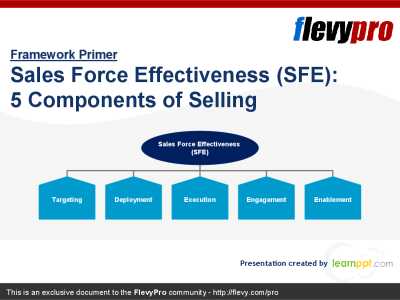
Sales Force Effectiveness (SFE) generally decreases progressively over time. To improve SFE for our organization, we should analyze the full sales end-to-end process by closely examining opportunities across the 5 critical components of selling:
1. Targeting
2. Deployment
3. Execution
4. [read more]
Do You Want to Implement Business Best Practices?
You can download in-depth presentations on Sales Force and 100s of management topics from the FlevyPro Library. FlevyPro is trusted and utilized by 1000s of management consultants and corporate executives.
For even more best practices available on Flevy, have a look at our top 100 lists:
These best practices are of the same as those leveraged by top-tier management consulting firms, like McKinsey, BCG, Bain, and Accenture. Improve the growth and efficiency of your organization by utilizing these best practice frameworks, templates, and tools. Most were developed by seasoned executives and consultants with over 20+ years of experience.
Readers of This Article Are Interested in These Resources
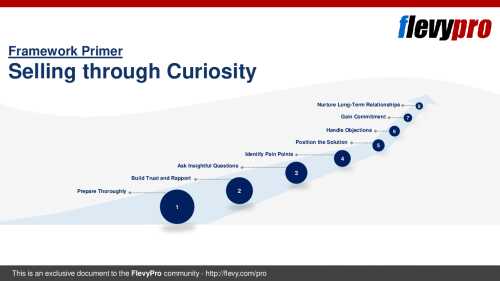
Sales teams that prioritize curiosity experience higher client retention rates, as customers feel more aligned with the tailored solutions provided. A curiosity-based sales approach can significantly enhance revenue growth by uncovering and capitalizing on previously unseen opportunities.
This [read more]
Introducing the Ultimate Salesforce Management Business Toolkit: Boost Your Sales Success!
Are you ready to take your sales game to the next level? Look no further! We are thrilled to present the most comprehensive Salesforce Management Business Toolkit, designed to empower you and your team [read more]
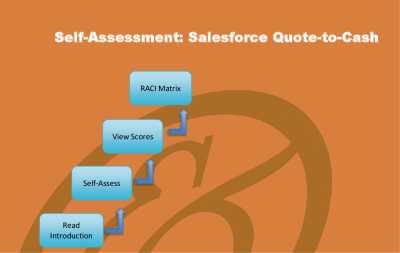
Save time, empower your teams and effectively upgrade your processes with access to this practical Salesforce Quote-to-Cash Toolkit and guide. Address common challenges with best-practice templates, step-by-step work plans and maturity diagnostics for any Salesforce Quote-to-Cash related [read more]
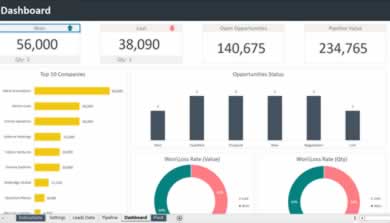
The Sales Pipeline Template is a professionally designed Excel tool that helps you manage and visualize your sales process efficiently. Whether you're a small business owner, a sales manager, or part of a growing team, this template gives you a clear picture of your entire sales [read more]
 Lead generation looks simple from a distance. A provider promises new conversations, the sales team expects a pipeline, and leadership wants revenue. The trouble begins when the first report arrives with impressive activity numbers but little proof of commercial value.