 When I talk with brokerage executives about technology, the conversation almost always starts the same way. They describe the pressure they are feeling from tech-forward competitors, the rising expectations of clients who want instant, transparent, digital-first experiences, and the growing gap between what their current systems can do and what the market now demands. What I rarely hear is a clear framework for navigating the transformation systematically. Most leaders are reacting to individual tools rather than executing a coordinated strategy.
The urgency is real. The global real estate agency and brokerage market reached $1.53 trillion in 2025 and is growing toward $1.63 trillion in 2026, according to Research and Markets. At the same time, MIT Sloan research found that only 58% of real estate companies have a formal digital strategy in place. That gap between market scale and strategic readiness is exactly where competitors are winning. This article lays out a practical framework that brokerage executives can use to lead transformation with intention rather than improvisation.
Why Digital Transformation Is No Longer Optional for Brokerage Leaders
The forces reshaping the brokerage industry are structural, not cyclical. Buyers are changing their behavior, consolidation is accelerating, and technology companies are moving into the transaction layer at scale. According to the National Association of Realtors 2025 Technology Survey, 94% of homebuyers use the internet to search for properties and 87% begin their search online before contacting any agent. That means the first impression your brokerage makes is entirely digital, long before any human conversation happens.
Consolidation is amplifying the stakes. The T3 Sixty 2026 Trends Report documents that more than a quarter of the 100 largest US brokerages from 2018 have already been acquired by larger competitors. The firms driving that consolidation are not winning on commission rates or even agent relationships alone. They are winning through platform advantages: data infrastructure, AI-powered agent tools, and transaction management systems that reduce cost per deal while improving client experience. eXp World Holdings launched an AI business assistant called Mira in late 2025 that provides agents with instant, personalized insights from live data and supports multilingual interactions. That kind of tooling creates structural advantages that are hard for smaller firms to close without deliberate investment.
The Four Pillars of a Brokerage Digital Transformation Framework
Effective transformation in a brokerage context is not about adopting the newest software category each quarter. It is about building a coordinated capability stack across four domains that reinforce one another. Here is how I structure each layer of the framework.
Pillar 1: Intelligent Lead and CRM Infrastructure
The client relationship management system is the operational core of a brokerage. In 2026, that system needs to be AI-native, not just AI-adjacent. Consulting data shows that brokerages using AI-powered CRMs have achieved 40% higher lead conversion rates within six months of proper implementation. The mechanism is lead scoring: machine learning algorithms that analyze engagement patterns, browsing behavior, price range, and search frequency to rank prospects by purchase likelihood. Agents stop wasting time on cold contacts and focus effort where the pipeline is hottest.
Beyond lead scoring, modern CRM platforms automate the follow-up sequences that agents typically forget or deprioritize. According to HousingWire reporting from 2025, 82% of real estate agents already integrate AI tools into their daily workflows, with 71% citing time savings as the primary value driver. The implication for executives is that providing inferior tools is now a retention risk, not just an efficiency cost.
Pillar 2: Transaction Management and Back-Office Automation
Commission calculations, escrow management, closing document generation, and compliance checklists represent enormous manual overhead at any brokerage operating at scale. AI-powered transaction management platforms like those built on automated data extraction can process contracts four times faster than manual review by pulling key details, contingencies, and deadlines directly from PDF documents. For brokerages managing hundreds of active transactions, that speed translates directly into reduced error rates and shorter close cycles.
Back-office automation also reduces the compliance burden around RESPA requirements, state-specific disclosure rules, and Fair Housing obligations. Brokerage executives who have treated compliance as a manual checklist process are exposing their firms to unnecessary regulatory risk as transaction volumes grow.
Pillar 3: Custom Brokerage Software and Platform Development
Off-the-shelf platforms solve generic problems. For brokerage firms with differentiated operational models – franchise structures, dual-agency workflows, custom commission splits, multi-market compliance requirements, or integrated ancillary services – a custom-built platform delivers strategic advantage that packaged software cannot replicate. This is the operational layer where executive strategy frameworks, including the kind of business transformation templates and performance management models that appear in consulting repositories like Flevy, meet engineering execution. Purpose-built real estate brokerage software development covers the full operational scope: agent portals with commission dashboards, MLS and IDX integrations, transaction management engines, client-facing search and listing platforms, and AI-powered analytics for leadership decision-making. LITSLINK, a Palo Alto-based firm with 300-plus engineers and a verified track record of delivering custom real estate platforms, rebuilt a condo marketplace that generated up to $800,000 in revenue within three months of launch and attracted 20,000-plus new visitors. For brokerage executives evaluating custom development, that outcome illustrates what a properly scoped platform investment can return in a compressed timeframe.
Pillar 4: Data Analytics and Predictive Intelligence
McKinsey research projects that the real estate industry will capture $110 billion to $180 billion in productivity gains from AI and automation, with a significant portion attributed to smarter market intelligence and decision support. For brokerage leaders, that means building analytics capability that goes beyond transaction reporting into predictive territory: which zip codes will see price appreciation in the next 90 days, which agents are trending toward attrition based on activity metrics, which client segments are most likely to transact in Q3. JLL’s October 2025 Global Real Estate Technology Survey found that real estate organizations are now selecting AI pilots based on direct business impact rather than ease of implementation, a signal that leadership teams are becoming more sophisticated about ROI expectations for technology investment.
Transformation Layer Comparison: Off-the-Shelf vs. Custom-Built
| Capability Area |
Off-the-Shelf Solution |
Custom-Built Platform |
Strategic Fit |
| CRM and Lead Management |
Broad feature sets, limited customization |
Tailored to brokerage workflows and commission models |
Custom wins at scale with complex structures |
| Transaction Management |
Standard checklists, limited AI extraction |
AI-powered document processing, RESPA-aware logic |
Custom reduces compliance risk significantly |
| MLS / IDX Integration |
Standard connectors, data normalization gaps |
Multi-MLS merge with caching and fallback logic |
Custom essential for multi-market brokerages |
| Analytics and Reporting |
Preset dashboards, limited predictive capability |
AI-driven predictive models tied to brokerage KPIs |
Custom delivers leadership-grade decision support |
| Agent-Facing Tools |
Generic UX, high training overhead |
Role-specific portals, commission visibility, mobile-first |
Custom improves agent retention and productivity |
How to Sequence the Transformation without Disrupting Production
The most common mistake I see in brokerage transformation initiatives is attempting to rebuild every system simultaneously. The result is a multi-year initiative that disrupts agent workflows, burns internal credibility, and frequently stalls before delivering meaningful ROI. A more disciplined approach sequences change across three phases.
- Phase 1 – Foundation: Audit existing technology infrastructure, data quality, and integration dependencies. Identify the two to three operational bottlenecks with the clearest productivity cost and highest remediation ROI. Commission a technology assessment before writing a single line of requirements.
- Phase 2 – Targeted Build: Deploy AI-powered CRM and lead management as the first production change. Measure lead conversion rate, agent response time, and pipeline velocity before and after. Use those results to build internal confidence and justify Phase 3 investment.
- Phase 3 – Platform Integration: Build or commission the custom brokerage platform layer. This covers transaction management, MLS integrations, agent portals, and predictive analytics. Phasing this last ensures the data model is informed by live operational experience rather than theoretical requirements.
JLL’s research supports the pilot-first approach: organizations that select AI use cases based on business impact rather than ease of implementation achieve higher ROI and broader adoption. Start with a problem that has a measurable baseline, a clear expected outcome, and a defined time horizon. Scale only after that proof point is established.
What to Evaluate in a Real Estate Technology Development Partner
Whether a brokerage is augmenting its existing stack or commissioning a ground-up platform build, the engineering partner selection decision shapes outcomes more than any other factor. The real estate domain has specific technical requirements that generic software agencies routinely underestimate.
- MLS and IDX integration experience: Multi-source data normalization, feed outage handling, and sync latency management are non-trivial engineering challenges that add significant scope for vendors without prior real estate experience.
- Compliance architecture: RESPA, Fair Housing obligations, CCPA for California-based clients, and state-specific listing disclosure rules must be built into the data model from the start, not retrofitted after launch.
- Commission and back-office logic: Dual-agency disclosures, tiered commission splits, and escrow workflows require domain knowledge that generic CRM implementations rarely carry.
- Post-launch support commitment: A platform without a defined support and evolution roadmap accumulates technical debt faster than one managed under an ongoing engineering relationship.
Vetted Resources for Brokerage Technology Strategy
The following sources provided foundational data and frameworks referenced throughout this article. I recommend them to any executive team building or pressure-testing a transformation roadmap.
- NAR 2025 Technology Survey – National Association of Realtors annual survey covering technology adoption rates, tool preferences, and digital behavior across agent and buyer segments.
- T3 Sixty 2026 Swanepoel Trends Report – Annual industry analysis covering brokerage consolidation patterns, platform-model growth, and the structural forces reshaping competition at the national level.
- JLL Global Real Estate Technology Survey, October 2025 – Survey of real estate investors and operators on AI adoption pace, pilot selection criteria, and technology investment priorities across major markets.
Turn Strategy into Execution before Your Competitors Do
The brokerage firms that will define the competitive landscape in 2027 and beyond are building their technology advantages right now. Not through incremental tool adoption, but through deliberate platform investment across the four pillars covered in this framework: intelligent CRM, transaction automation, custom platform development, and predictive analytics. The market data is unambiguous. The global real estate agency and brokerage market is growing at 6.7% annually through 2030. Firms with stronger technology infrastructure will capture a disproportionate share of that growth, while those operating on legacy systems and manual workflows will see margin compression and agent attrition accelerate.
My recommendation for any brokerage executive reading this: commission a technology audit before your next planning cycle closes. Map your current stack against the four pillars, identify the highest-cost gaps, and build a sequenced roadmap rather than a wish list. Then find engineering partners with verified real estate domain experience to execute it. The window for first-mover advantage at the platform layer is narrowing as more firms move from experimentation to production deployment.
Ready to move from framework to build? Explore what purpose-built real estate brokerage software development looks like when designed around your specific operational model.
Do You Want to Implement Business Best Practices?
You can download in-depth presentations on Real Estate and 100s of management topics from the FlevyPro Library. FlevyPro is trusted and utilized by 1000s of management consultants and corporate executives.
For even more best practices available on Flevy, have a look at our top 100 lists:
These best practices are of the same as those leveraged by top-tier management consulting firms, like McKinsey, BCG, Bain, and Accenture. Improve the growth and efficiency of your organization by utilizing these best practice frameworks, templates, and tools. Most were developed by seasoned executives and consultants with over 20+ years of experience.
Readers of This Article Are Interested in These Resources
Excel workbook
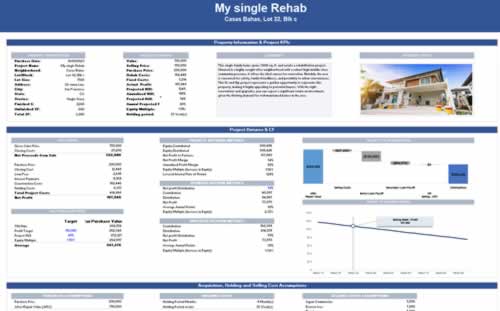
REAL ESTATE - FIX AND FLIP PRO-FORMA MODEL
This meticulously crafted Financial Model for Analyzing Fix and Flip Deals is a powerful yet user-friendly template designed to provide you with all the essential metrics you need for successful house-flipping ventures.
KEY FEATURES
Property
[read more]
Excel workbook
An Excel-based analysis tool for the ground-up development, operation, and ultimate disposition of a single- or multi-tenant Industrial/retail property with or without streams.
The model is monthly in nature, and it is a 100% unlocked Excel file with fully transparent formulas that can be
[read more]
Excel workbook
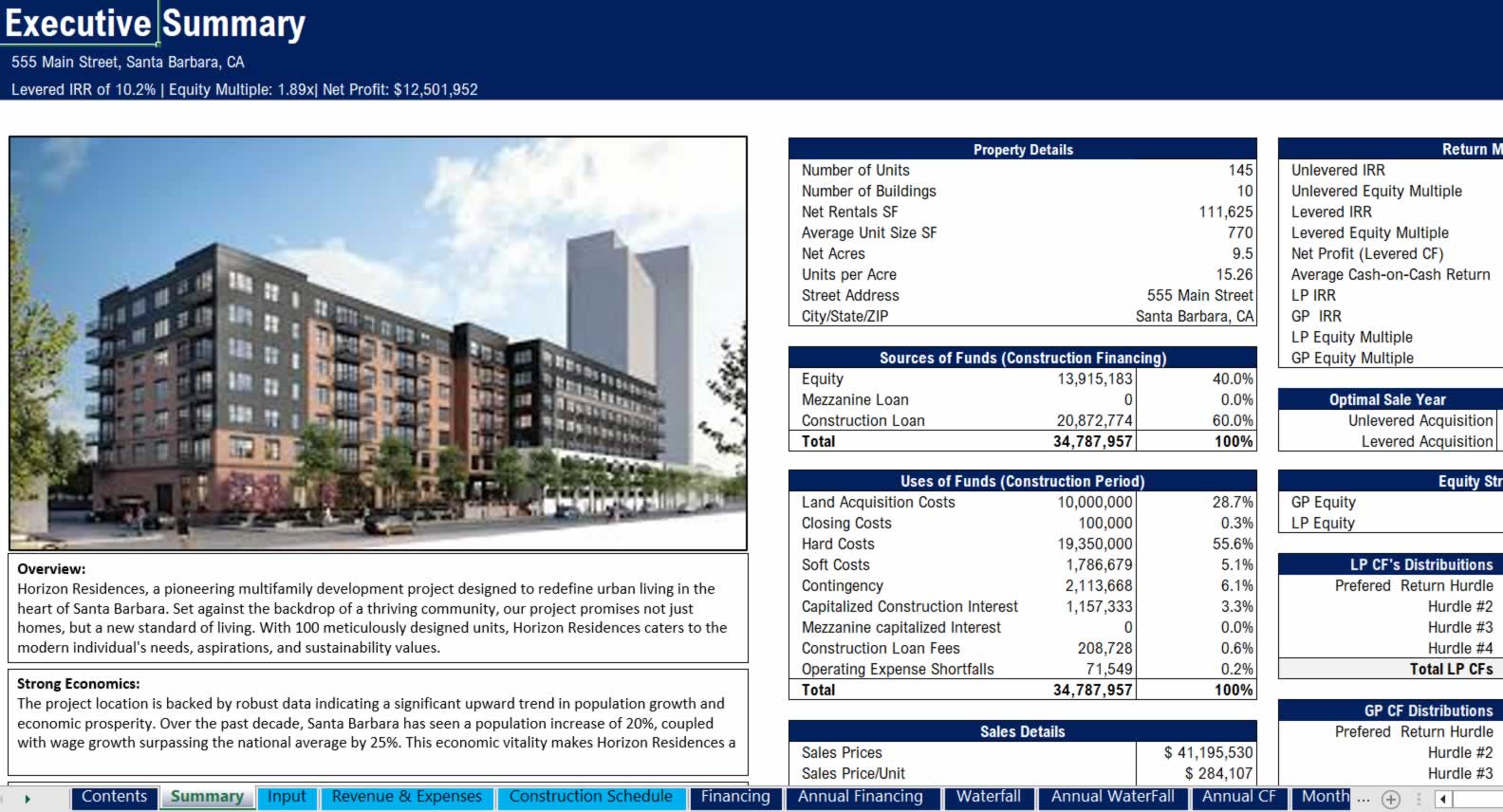
This is a detailed and user-friendly Excel spreadsheet template that provides a comprehensive and dynamic financial model for real estate development of institutional quality. It is specifically designed to evaluate the investment viability in multi-family properties with a high degree of
[read more]

Excel workbook
New Version Updates:
The model supports now up to 50 properties
Updated Acquisition, Financing and Operations Assumptions and Output Reports
New Investors Distribution Waterfall & Fund Summary
Model Description:
Real estate private equity (REPE) firms raise capital from outside
[read more]