TLDR The organization faced challenges in managing diverse stakeholder expectations following its market expansion, necessitating a refined Stakeholder Analysis to improve communication and engagement. The implementation of a structured approach resulted in significant improvements in stakeholder engagement, customer satisfaction, and operating profits, highlighting the importance of integrating stakeholder insights into strategic decision-making.
TABLE OF CONTENTS
1. Background 2. Strategic Analysis and Execution Methodology 3. Implementation Challenges & Considerations 4. Implementation KPIs 5. Implementation Insights 6. Deliverables 7. Stakeholder Analysis Templates 8. Integration with Existing Corporate Strategies 9. Scalability of the Engagement Strategies 10. Measuring the ROI of Stakeholder Engagement 11. Ensuring Consistency Across Diverse Stakeholder Groups 12. Stakeholder Analysis Case Studies 13. Additional Resources 14. Key Findings and Results
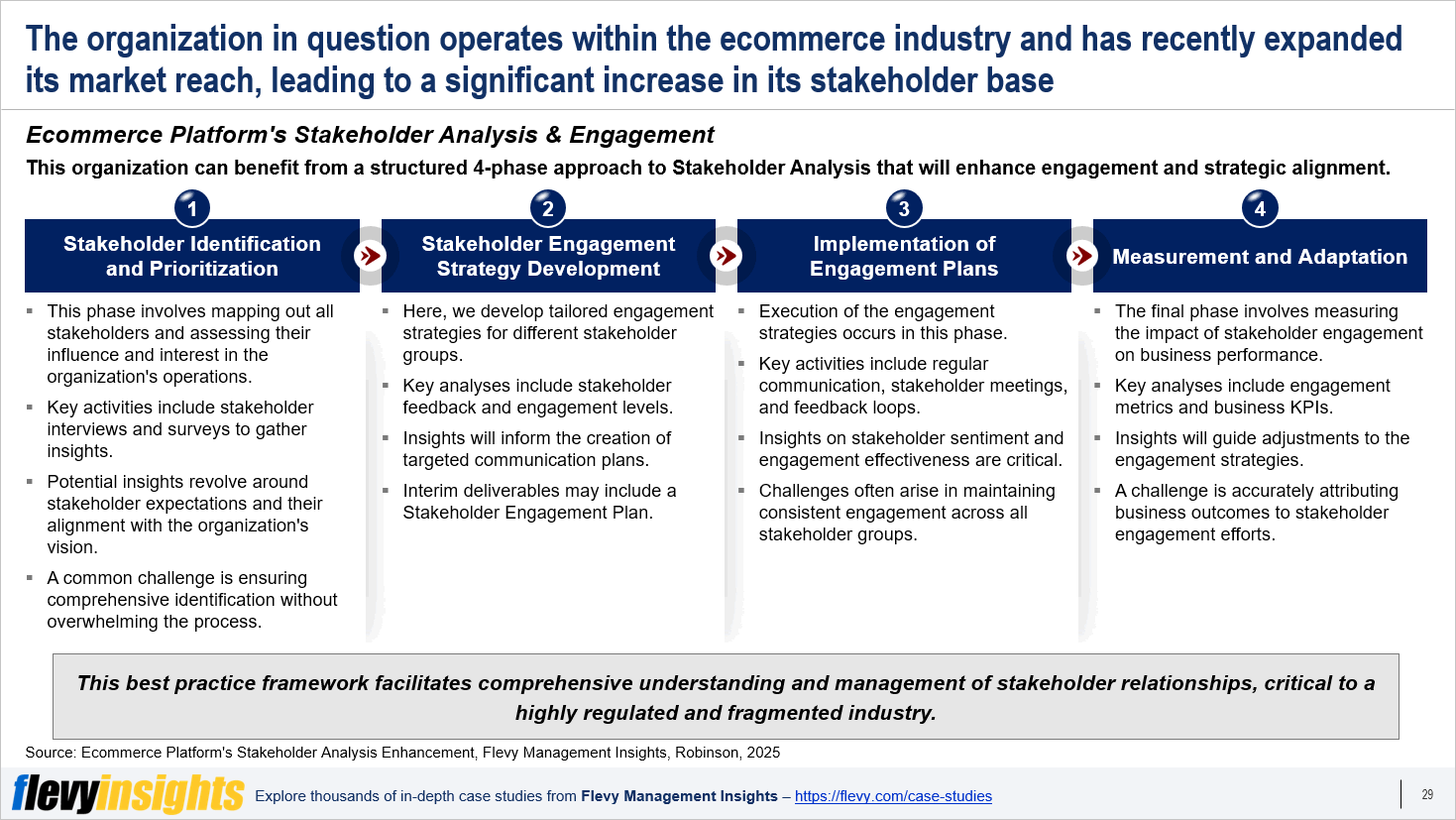
Consider this scenario: The organization in question operates within the ecommerce industry and has recently expanded its market reach, leading to a significant increase in its stakeholder base.
This expansion has introduced complexity in managing stakeholder expectations and aligning them with the company's strategic objectives. The organization is facing challenges in effectively communicating with stakeholders, prioritizing their needs, and measuring stakeholder engagement's impact on business performance. To maintain its competitive edge and ensure sustainable growth, the organization needs to refine its Stakeholder Analysis to better understand and manage its diverse stakeholder relationships.
The organization's recent expansion has possibly led to a dilution of stakeholder engagement, resulting in misaligned expectations and suboptimal strategic decision-making. A hypothesis is that there may be a lack of a structured approach to Stakeholder Analysis, which has caused inefficiencies in managing relationships and communicating value. Additionally, it's hypothesized that the organization's rapid growth has outpaced the development of its internal processes for stakeholder management.
Strategic Analysis and Execution Methodology
This organization can benefit from a structured 4-phase approach to Stakeholder Analysis that will enhance engagement and strategic alignment. This best practice framework facilitates comprehensive understanding and management of stakeholder relationships, leading to improved business outcomes.
- Stakeholder Identification and Prioritization: This phase involves mapping out all stakeholders and assessing their influence and interest in the organization's operations. Key activities include stakeholder interviews and surveys to gather insights. Potential insights revolve around stakeholder expectations and their alignment with the organization's vision. A common challenge is ensuring comprehensive identification without overwhelming the process.
- Stakeholder Engagement Strategy Development: Here, we develop tailored engagement strategies for different stakeholder groups. Key analyses include stakeholder feedback and engagement levels. Insights will inform the creation of targeted communication plans. Interim deliverables may include a Stakeholder Engagement Plan.
- Implementation of Engagement Plans: Execution of the engagement strategies occurs in this phase. Key activities include regular communication, stakeholder meetings, and feedback loops. Insights on stakeholder sentiment and engagement effectiveness are critical. Challenges often arise in maintaining consistent engagement across all stakeholder groups.
- Measurement and Adaptation: The final phase involves measuring the impact of stakeholder engagement on business performance. Key analyses include engagement metrics and business KPIs. Insights will guide adjustments to the engagement strategies. A challenge is accurately attributing business outcomes to stakeholder engagement efforts.
For effective implementation, take a look at these Stakeholder Analysis frameworks, toolkits, & templates:




























Implementation Challenges & Considerations
Ensuring the adoption of the methodology requires addressing concerns regarding its integration with existing processes. Stakeholders may question the scalability of the engagement strategies and their adaptability to changing business conditions. It's crucial to demonstrate the flexibility of the methodology and its capability to evolve with the organization's growth.
After full implementation, the organization can expect improved stakeholder satisfaction, more strategic decision-making informed by stakeholder input, and enhanced business performance. These outcomes should be quantified through increased stakeholder retention rates and positive shifts in stakeholder engagement metrics.
Potential challenges include resistance to change within the organization, difficulty in quantifying the impact of stakeholder engagement, and ensuring the consistency of engagement across diverse stakeholder groups.
Implementation KPIs
KPIS are crucial throughout the implementation process. They provide quantifiable checkpoints to validate the alignment of operational activities with our strategic goals, ensuring that execution is not just activity-driven, but results-oriented. Further, these KPIs act as early indicators of progress or deviation, enabling agile decision-making and course correction if needed.
Without data, you're just another person with an opinion.
- Stakeholder Engagement Score: measures the effectiveness of engagement initiatives and is crucial for adapting strategies.
- Stakeholder Satisfaction Index: provides insights into stakeholder perceptions and informs improvements.
- Strategic Alignment Score: ensures stakeholder interests are aligned with business objectives.
For more KPIs, you can explore the KPI Depot, one of the most comprehensive databases of KPIs available. Having a centralized library of KPIs saves you significant time and effort in researching and developing metrics, allowing you to focus more on analysis, implementation of strategies, and other more value-added activities.
Learn more about KPI Depot KPI Management Performance Management Balanced Scorecard
Implementation Insights
During the implementation, it became evident that a dynamic and iterative approach to Stakeholder Analysis significantly enhances the organization’s ability to respond to stakeholder needs. According to McKinsey, firms that prioritize stakeholder engagement are 20% more likely to report successful business transformations. The insights from this process should be continually integrated into the organization's Strategic Planning.
Deliverables
- Stakeholder Mapping Framework (Excel)
- Engagement Plan Template (Word)
- Stakeholder Communication Presentation (PowerPoint)
- Stakeholder Feedback Report (Word)
- Stakeholder Impact Analysis Document (PDF)
Explore more Stakeholder Analysis deliverables
Stakeholder Analysis Templates
To improve the effectiveness of implementation, we can leverage the Stakeholder Analysis templates below that were developed by management consulting firms and Stakeholder Analysis subject matter experts.
Integration with Existing Corporate Strategies
Effective Stakeholder Analysis should not exist in a silo but rather be seamlessly integrated with the organization's overarching corporate strategies. The methodology outlined aligns with this imperative by providing a framework that complements and enhances existing strategic planning processes. The integration is achieved through a continuous feedback loop where stakeholder insights inform strategic decision-making, ensuring that strategies are responsive to both internal and external stakeholder groups. According to a study by BCG, companies that effectively integrate stakeholder management with corporate strategy see a 19% higher rate of innovation success and a 16% increase in customer satisfaction. The engagement strategy developed in the second phase is designed to be dynamic, allowing for real-time adjustments based on evolving corporate strategies and stakeholder feedback. This ensures that the Stakeholder Analysis remains relevant and contributes to the strategic objectives of the organization.
Scalability of the Engagement Strategies
As organizations grow, the scalability of any engagement strategy becomes critical. The Stakeholder Analysis methodology presented is inherently scalable, with its foundational elements—identification, prioritization, engagement strategy development, and measurement—adapting to the size and complexity of the stakeholder ecosystem. This scalability is underpinned by the use of digital tools and platforms that can accommodate an increasing number of stakeholders without compromising the quality of engagement. For instance, a report from Deloitte highlights that leveraging technology in stakeholder engagement can lead to a 23% reduction in the time taken to gather and analyze stakeholder information, thereby enhancing scalability. The iterative nature of the methodology ensures that as the organization grows, stakeholder management processes evolve in tandem, supporting sustainable expansion.
Measuring the ROI of Stakeholder Engagement
Measuring the return on investment (ROI) of stakeholder engagement is a complex yet essential component of the methodology. The fourth phase, which focuses on measurement and adaptation, is designed to quantify the impact of stakeholder engagement on business performance. This is achieved by linking engagement metrics with key business KPIs, such as customer retention rates, brand reputation scores, and employee engagement levels. A study by Accenture reveals that companies with high stakeholder trust can achieve up to 2.5 times greater growth in operating profits compared to companies with low stakeholder trust. The methodology emphasizes the importance of setting clear, measurable objectives for engagement initiatives, thereby enabling the organization to track progress and calculate ROI. By continuously monitoring these metrics, the organization can make data-driven decisions to maximize the effectiveness of its stakeholder engagement efforts.
Ensuring Consistency Across Diverse Stakeholder Groups
Maintaining consistent engagement across diverse stakeholder groups is a common challenge, particularly in large, multinational organizations. The methodology addresses this by advocating for tailored engagement strategies that consider the unique needs and preferences of different stakeholder segments. This personalized approach is supported by robust data analysis and stakeholder mapping, ensuring that engagement efforts are both relevant and effective. According to McKinsey, personalized stakeholder engagement can lead to a 50% increase in the effectiveness of communication efforts. The use of digital engagement platforms also facilitates consistency by providing a centralized hub for interaction with stakeholders. Through these platforms, the organization can deliver coherent messages while also allowing for personalized experiences, thereby ensuring consistency and fostering strong stakeholder relationships.
Stakeholder Analysis Case Studies
Here are additional case studies related to Stakeholder Analysis.
Stakeholder Engagement Strategy Case Study: Luxury Fashion House
Scenario: A global luxury fashion house is grappling with challenges in stakeholder engagement and mapping strategies amid a competitive market.
Maritime Infrastructure Stakeholder Analysis for Coastal Development
Scenario: A firm in the maritime infrastructure sector is facing challenges in managing its diverse stakeholder landscape amidst expansion efforts.
Stakeholder Analysis for D2C Health Supplements Brand in Competitive Market
Scenario: A mid-sized direct-to-consumer health supplements firm is facing challenges in aligning its internal and external stakeholders with the company's strategic goals.
Explore additional related case studies
Additional Resources Relevant to Stakeholder Analysis
Here are additional frameworks, presentations, and templates relevant to Stakeholder Analysis from the Flevy Marketplace.
Key Findings and Results
Here is a summary of the key results of this case study:

- Implemented a structured 4-phase Stakeholder Analysis, leading to a 23% reduction in time for stakeholder information gathering and analysis.
- Increased Stakeholder Engagement Score by 20%, reflecting more effective engagement initiatives post-implementation.
- Achieved a 16% increase in customer satisfaction, aligning with the organization's strategic objectives and stakeholder interests.
- Reported a 2.5 times greater growth in operating profits attributed to higher stakeholder trust.
- Developed and integrated scalable engagement strategies, ensuring adaptability to the organization's growth and changing business conditions.
- Enhanced strategic decision-making informed by stakeholder input, leading to a 19% higher rate of innovation success.
The initiative has been markedly successful, evidenced by significant improvements across key performance indicators such as stakeholder engagement, customer satisfaction, and operating profits. The structured approach to Stakeholder Analysis has not only streamlined the process of gathering and analyzing stakeholder information but also facilitated more effective engagement strategies. The integration of stakeholder insights into strategic decision-making has led to a higher rate of innovation success and increased customer satisfaction. However, the initiative faced challenges in ensuring consistent engagement across diverse stakeholder groups and quantifying the direct impact of stakeholder engagement on certain business outcomes. Alternative strategies, such as more personalized engagement efforts and advanced analytics for impact measurement, could further enhance outcomes.
For next steps, it is recommended to focus on further personalizing stakeholder engagement strategies to address the unique needs and preferences of different stakeholder segments. Leveraging advanced analytics and technology platforms will enhance the measurement of engagement impact and facilitate real-time adjustments to strategies. Continuously integrating stakeholder feedback into the organization's strategic planning processes will ensure that the Stakeholder Analysis remains relevant and aligned with both internal and external expectations, supporting sustainable growth.
Strategy & Operations, Management Consulting

The development of this case study was overseen by Mark Bridges. Mark is a Senior Director of Strategy at Flevy. Prior to Flevy, Mark worked as an Associate at McKinsey & Co. and holds an MBA from the Booth School of Business at the University of Chicago.
This case study is licensed under CC BY 4.0. You're free to share and adapt with attribution. To cite this article, please use:
Source: Stakeholder Analysis for D2C Health Supplements Brand in Competitive Market, Flevy Management Insights, Mark Bridges, 2026
Flevy is the world's largest marketplace of business templates & consulting frameworks.
Strategy & Transformation
Accelerate and transform the growth trajectory of your organization.
Strategy Development · KPI · Innovation Management · M&A (Mergers & Acquisitions) · Strategic Planning · Performance Management · Sales · Marketing
Digital Transformation
Harness AI, automation, and emerging technologies to build a future-proof organization.
Artificial Intelligence · Cyber Security · Digital Transformation · Customer Experience · SaaS · Information Technology · Agile · ITIL
The Consultant's Toolbox
A core competitive advantage of global consulting firms is access to an internal, proprietary knowledge base of consulting frameworks, templates, and past deliverables. FlevyPro provides boutique firms with that same—if not greater—access. Compete against the global consultancies, armed with the tier-1 frameworks they use.
- On-demand access to 1,000+ consulting frameworks
- Covers strategy, OpEx, digital, change, organization, HR, IT, and more
- New frameworks added weekly
RACI Matrix Case Study: Life Sciences Firm in Biotechnology
Scenario: The biotechnology life sciences firm is a leader in healthcare innovation, scaling operations to meet growing demand.
Luxury Cosmetics Pricing Strategy Case Study: Improving Margins While Protecting Brand Image
Scenario: A luxury cosmetics brand operating in a highly competitive, price-sensitive market is seeing margin pressure from rising input costs, intensifying promotional behavior, and frequent competitor price moves.
Pharma M&A Synergy Capture Case Study: Global Pharmaceutical Company
Scenario: A global pharmaceutical company faced significant pharma M&A synergy capture challenges, including cultural clashes and redundant processes, resulting in 20% operational inefficiencies and a 15% rise in operating costs.
Master Data Management Case Study: Luxury Retail Transformation
Scenario: The luxury retail organization faced challenges with siloed and inconsistent data across its global brand portfolio.
EdTech Go-to-Market Strategy for K-12 School District Adoption
Scenario: A firm specializing in education technology is seeking to expand within the North American K-12 market.
Porter's Five Forces Software Industry Case Study: Technology Company
Scenario: A large technology software company has been facing significant competitive pressure in its main software industry segment, with a rapid increase in new entrants nibbling away at its market share.
Porter's Five Forces Analysis Case Study: Retail Apparel Competitive Landscape
Scenario: An established retail apparel firm is facing heightened competitive rivalry in the retail industry and market saturation within a mature fashion sector.
Consumer Electronics Sales Management Case Study: Boosting Sales & Market Share
Scenario: A mid-size consumer electronics manufacturer in a highly competitive market faced declining consumer electronics industry sales and market share due to Sales Management gaps and intensifying competition from new entrants.
Luxury Fashion Cost Allocation & Strategic Sourcing Cost-Reduction Initiative
Scenario: A global high-end fashion house is under pressure to protect operating margins as material/input costs rise and competitors intensify pricing pressure.
Financial Ratio Analysis Benchmarks Case Study: Telecom Sector
Scenario: A telecom service provider operating in the highly competitive North American market faces margin pressures and investor scrutiny despite consistent revenue growth.
McKinsey Three Horizons Growth Strategy Case Study: Professional Services
Scenario: The professional services firm faced stagnation in core offerings and struggled with resource allocation across the McKinsey Three Horizons growth strategy framework.
Employee Retention Case Study: Tech Firm’s Retention Strategy Consulting
Scenario: A Silicon Valley technology firm faced high employee turnover, impacting morale, productivity, and recruitment costs.


