 Click main image to view in full screen.


BENEFITS OF THIS DOWNLOADABLE PDF DOCUMENT
- Provides a framework that allows organizations to gain knowledge about how various remote work arrangements would impact their primary stakeholders and use that knowledge to make strategic decisions.
- Facilitates the development of a develop a remote work policy that both aligns the interest of primary stakeholders and create values for the organization.
STAKEHOLDER ANALYSIS PDF DESCRIPTION
From necessity to value creation, remote work is becoming a viable option for many organizations that are seeking to reposition their competitive position. First seen as temporary shift to deal with the pandemic, remote work is now increasingly becoming a means to enhance an organization's competitive position. Remote work policies, however, do not operate in a vacuum. They cannot be drafted without considering how the interests of all relevant stakeholders are impacted by incorporating remote work arrangements.
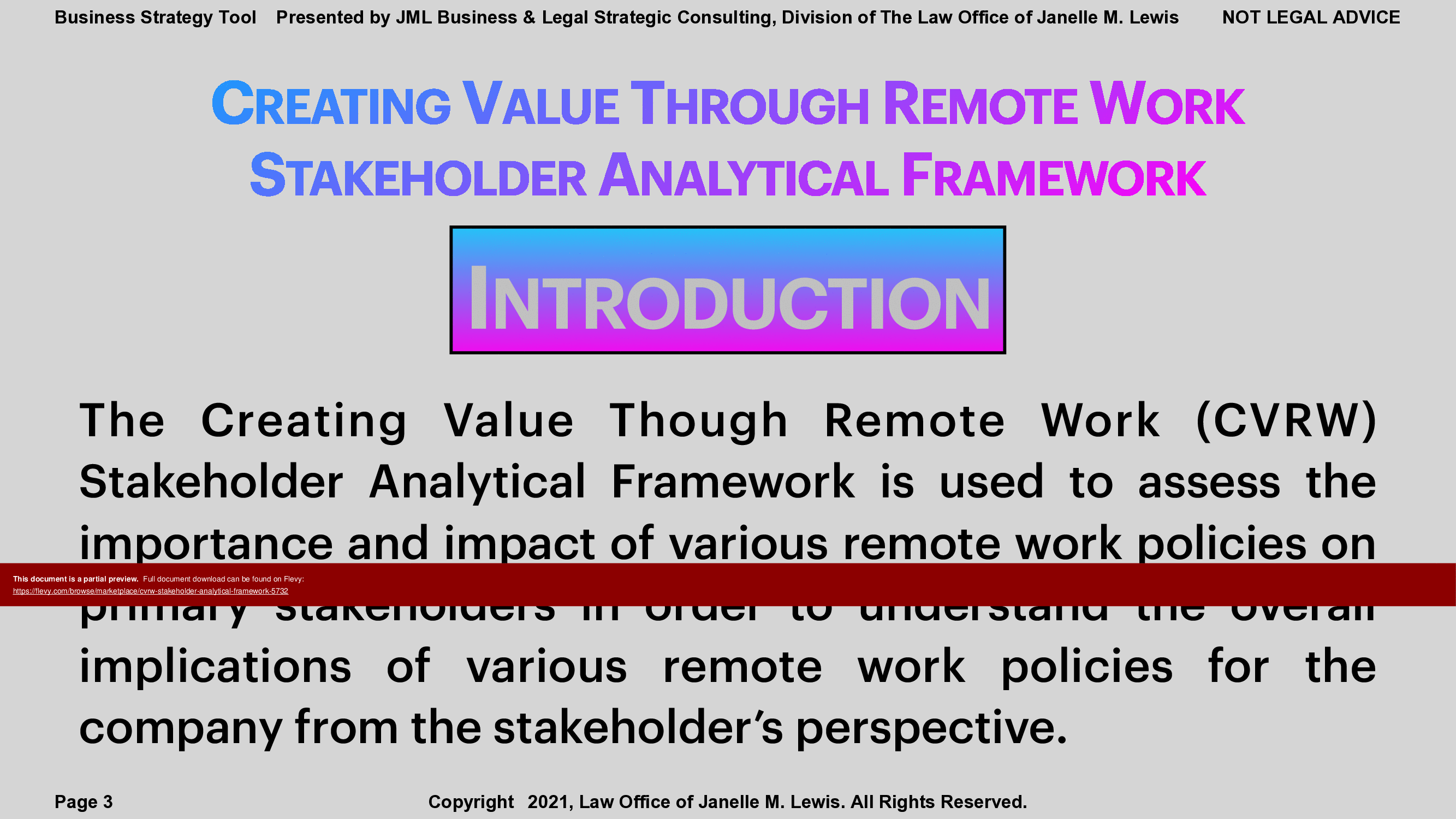
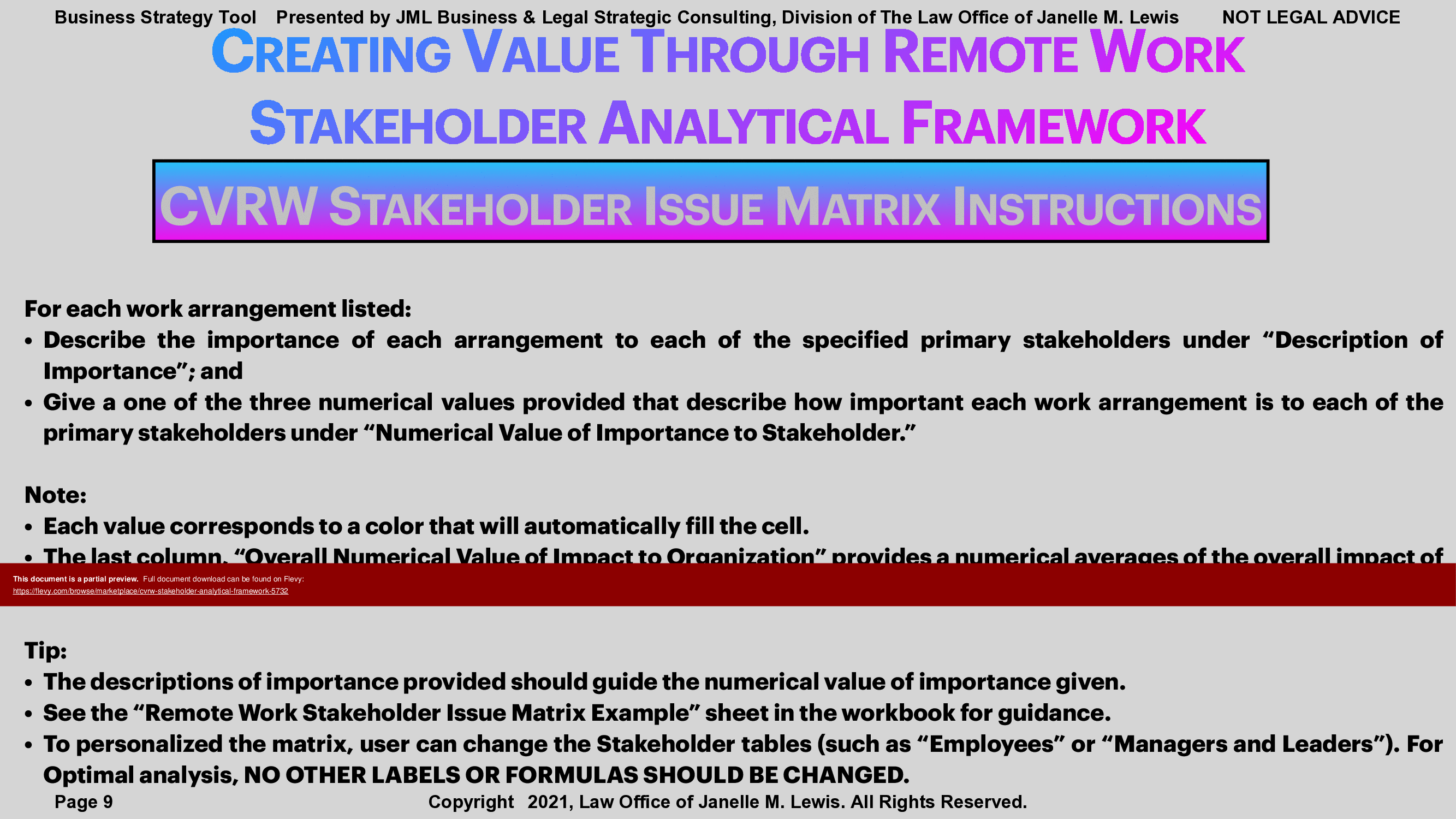
The Creating Value Through RemoteWork (CVRW) Stakeholder Analytical Framework was created to facilitate strategic decision-making about incorporating remote work arrangements. Using stakeholder issue and impact matrices, the CVRW Stakeholder Analytical Framework assesses the importance and impact of various remote work policies on primary stakeholders.
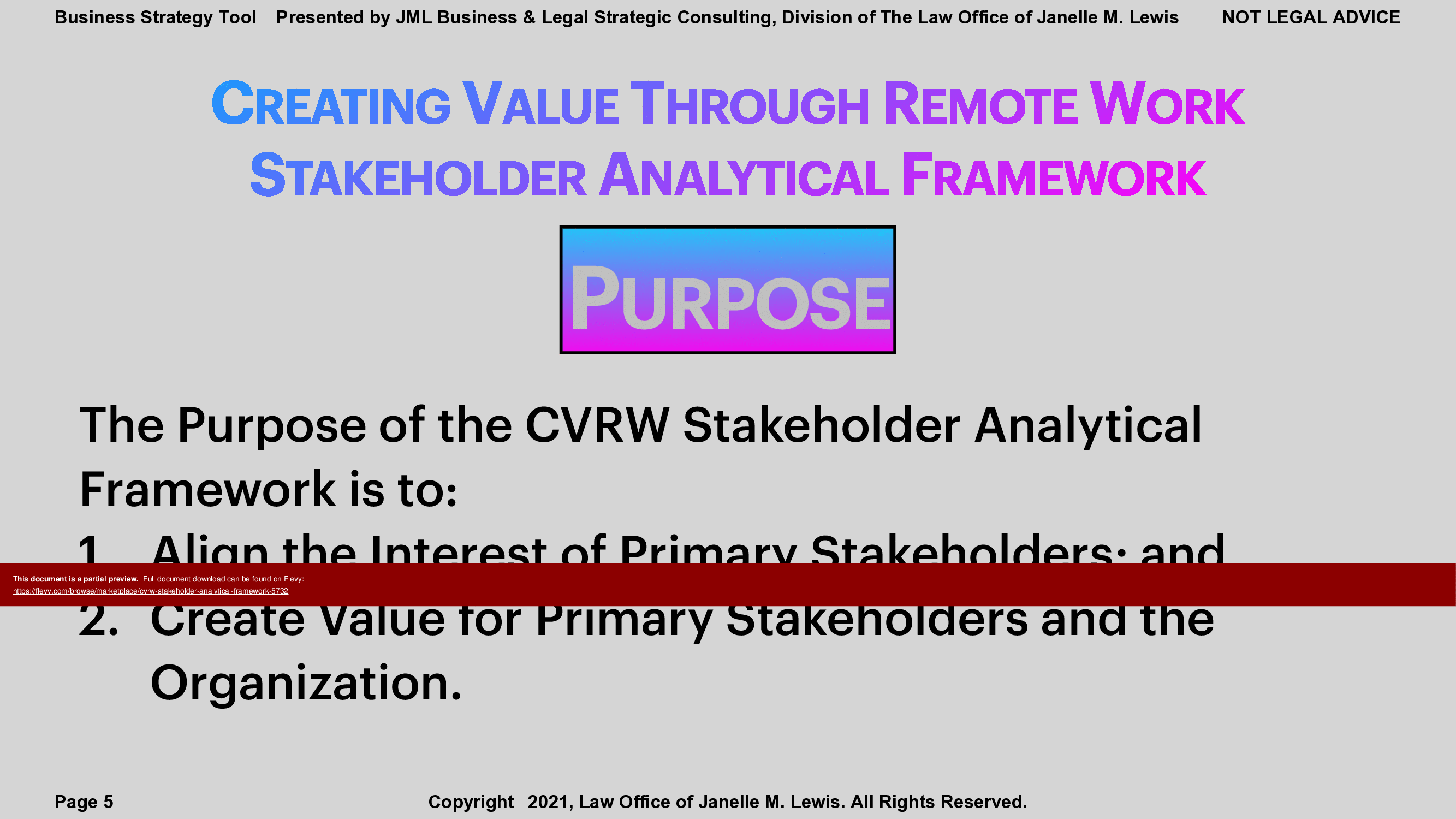
The CVRW Stakeholder Analytical Framework serves two purposes:
1) To align the Interest of primary stakeholders by helping organizations understand the importance of remote work issues created by various remote work arrangements for each stakeholder. This allows for strategic decision making regarding remote work policies that incorporate respective aligned stakeholder interests.
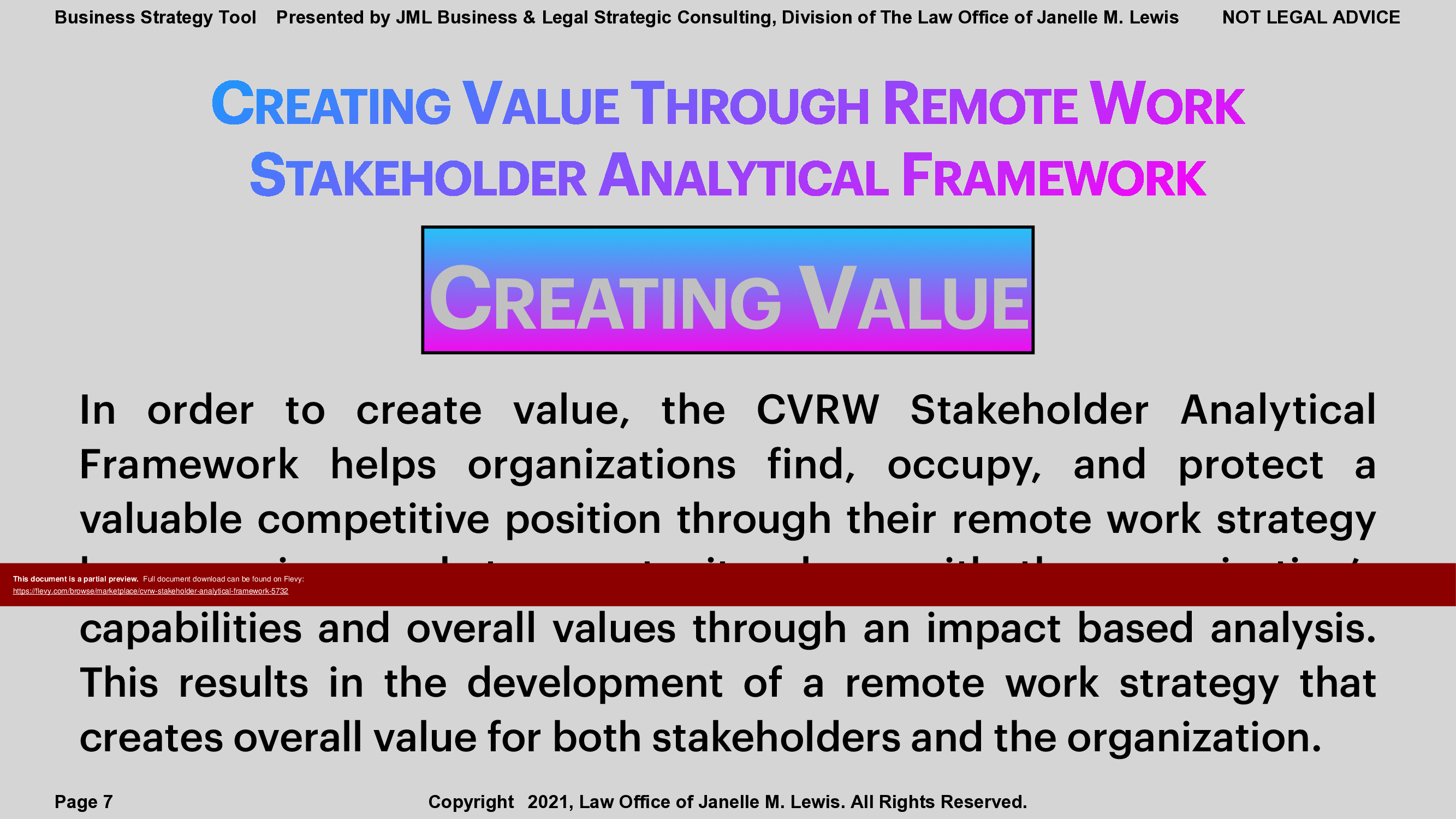
2) To create value for primary stakeholders and the organization by helping organizations find, occupy, and protect a valuable competitive position through their remote work strategy. This results in the development of a remote work strategy that creates overall value for both stakeholders and the organization.
The CVRW Stakeholder Analytical Framework is an excel workbook that includes two matrices:
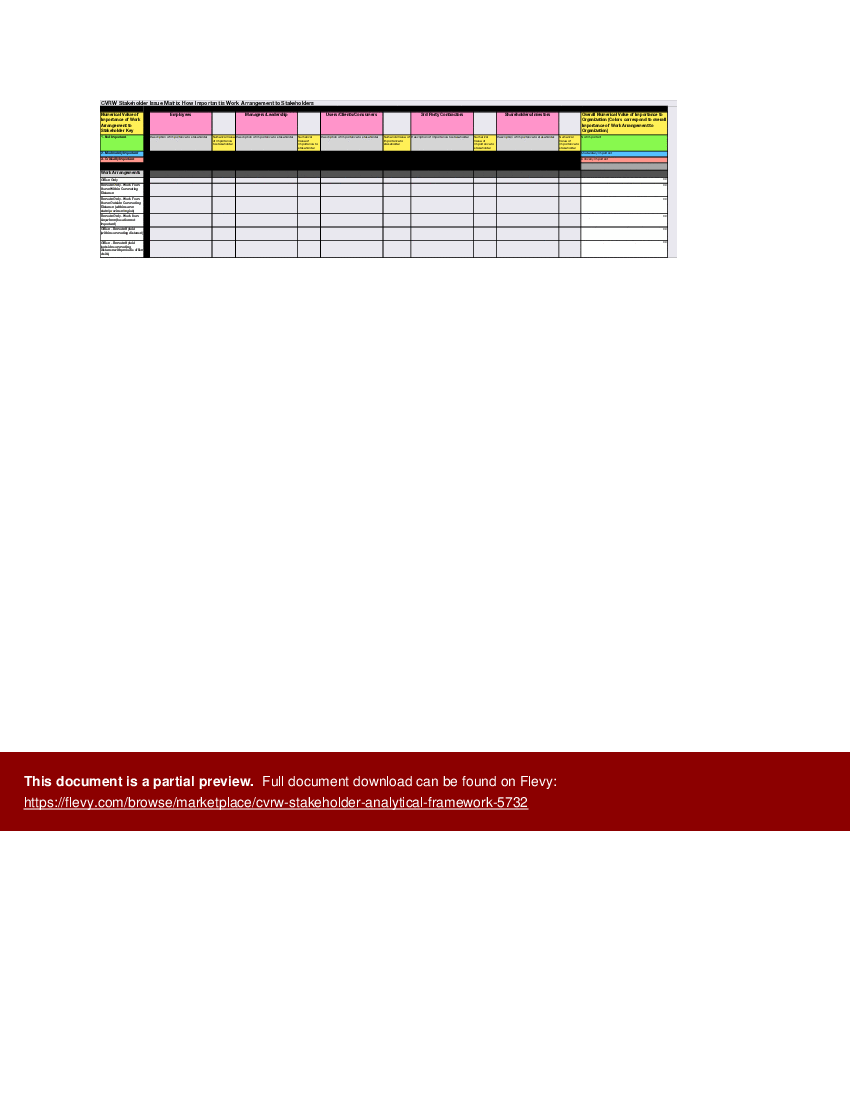
1) The "CVRW Stakeholder Issue Matrix" which is an issue-based stakeholder analytical matrix that is used to examine the importance of various remote work arrangements to the organization's primary stakeholders and the organization itself.
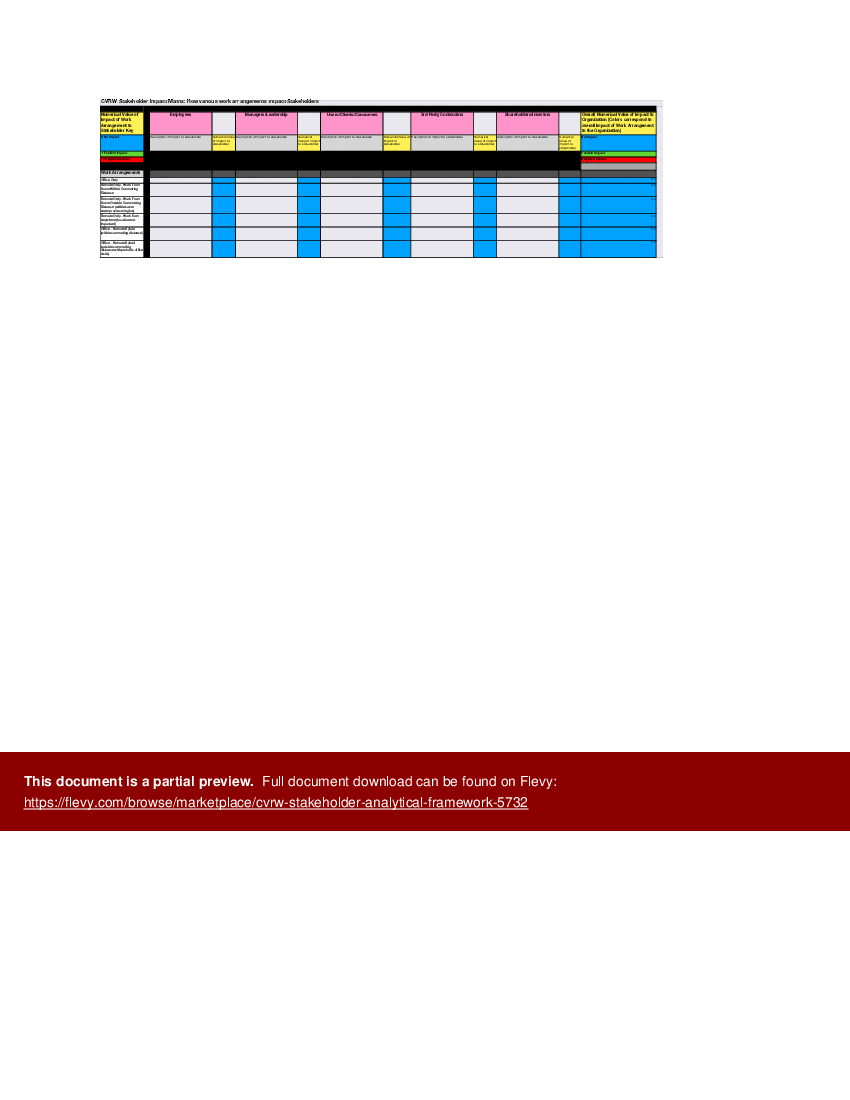
2) The "CVRW Stakeholder Impact Matrix" which is an impact-based stakeholder analysis used to examine the impact of various remote work arrangements on both the stakeholders and the organization
Got a question about the product? Email us at support@flevy.com or ask the author directly by using the "Ask the Author a Question" form. If you cannot view the preview above this document description, go here to view the large preview instead.
TOPIC FAQ
What is stakeholder analysis for remote work and why use it?
Stakeholder analysis for remote work systematically examines how different remote work arrangements affect primary stakeholders and the organization. It helps identify which issues matter most and where policies create impact, enabling strategic decisions that align interests and create value; typically implemented with 2 matrices, such as issue and impact matrices.How do issue-based and impact-based stakeholder matrices differ?
An issue-based matrix evaluates the importance of specific remote work issues to primary stakeholders and the organization, while an impact-based matrix assesses the effects of remote work arrangements on stakeholders and the organization. Together they separate importance from consequence, exemplified by the CVRW Issue and Impact Matrices.Who counts as "primary stakeholders" in remote work analysis?
The framework refers to primary stakeholders alongside the organization itself without enumerating roles; the analysis purpose is to capture stakeholder importance and impact across relevant parties so policies reflect aligned interests and organizational needs, as surfaced through the CVRW matrices.How can stakeholder analysis help create competitive value through remote work?
By identifying which remote work issues are important to stakeholders and which arrangements produce meaningful organizational impact, firms can select policies that align interests and occupy defensible positions, enabling a remote work strategy designed to create value for both stakeholders and the organization, as guided by 2 matrices.What should buyers look for in a remote-work stakeholder analysis toolkit?
Look for tools that separate issue importance from impact and that support aligning stakeholder interests with organizational strategy, enabling decision-making about policy choices; the CVRW Stakeholder Analytical Framework provides this in the form of 2 matrices in an Excel workbook.Are stakeholder analysis templates worth purchasing for policy design projects?
Templates can speed structured analysis and ensure consistent assessment of stakeholder importance and impact, supporting strategy development that aims to align interests and create value; the CVRW Stakeholder Analytical Framework offers an Excel workbook with 2 matrices to aid this process.I need to draft a remote work policy after a reorganization—what analysis should I run?
Run both an issue-based assessment to determine which remote work questions matter to primary stakeholders and an impact assessment to see how arrangements affect stakeholders and the organization; the CVRW Stakeholder Issue Matrix and CVRW Stakeholder Impact Matrix are designed for those analyses.How does a two-matrix approach fit into standard consulting practice for organizational change?
Separating issue importance and impact mirrors stakeholder-mapping and impact-assessment techniques used in strategy and organizational-change work, enabling clearer trade-offs and alignment; the CVRW approach operationalizes this with 2 distinct matrices for remote work decision-making.Source: Best Practices in Stakeholder Analysis, Remote Work PDF: CVRW Stakeholder Analytical Framework PDF (PDF) Document, JML Business & Legal Strategic Consult.




























