
Stakeholder Mapping Mind Map   20-slide PPT PowerPoint presentation slide deck (PPTX)
$29.00

Stakeholder Mapping Mind Map (20-slide PPT PowerPoint presentation slide deck (PPTX)) Preview Image
Log in to unlock full preview.
Stakeholder Mapping Mind Map (20-slide PPT PowerPoint presentation slide deck (PPTX)) Preview Image
Arrow   Click main image to view in full screen.

Stakeholder Mapping Mind Map (PowerPoint PPTX Slide Deck)

PowerPoint (PPTX) 20 Slides FlevyPro Document

$29.00
FlevyPro price: FREE (included in subscription)


Add to Cart


Immediate download
Free lifetime updates

STAKEHOLDER MANAGEMENT PPT DESCRIPTION

Editor Summary A 20-slide PowerPoint Stakeholder Mapping Mind Map that visually represents stakeholders, roles, influence, and interest across 5 phases: Stakeholder Identification, Stakeholder Categorization, Stakeholder Prioritization, Stakeholder Engagement Strategy, and Stakeholder Monitoring & Feedback. Read more

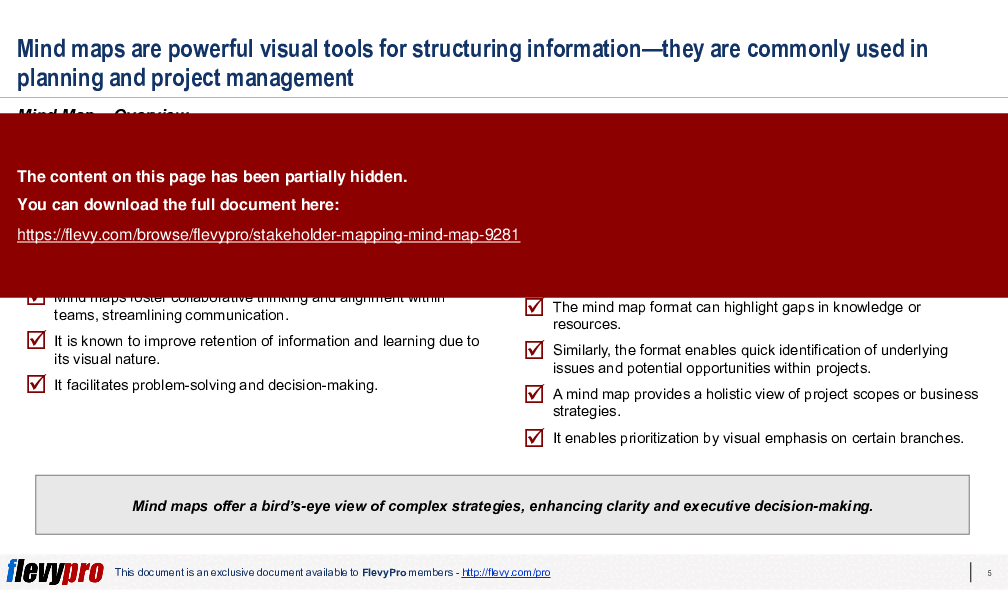
A mind map is a visual diagram that represent ideas, tasks, or other items linked to and arranged around a central key concept. It facilitates structuring information, helping users to better analyze, comprehend, and generate new ideas.

Using the mind map tool also can help reveal numerous potential insights, including:
A mind map identifies relationships and connections between different elements.
The mind map format can highlight gaps in knowledge or resources.
Similarly, the format enables quick identification of underlying issues and potential opportunities within projects.
A mind map provides a holistic view of project scopes or business strategies.
It enables prioritization by visual emphasis on certain branches.

This PowerPoint presentation includes a Stakeholder Mapping Mind Map in a number of formats for ease of use:

1. Interactive HTML
2. SVG file (for editing)
3. PDF (A3 size)
4. Markdown script (for editing)

The Markdown code allows you to easily modify the mind map in a Markdown editor, which are freely available online.

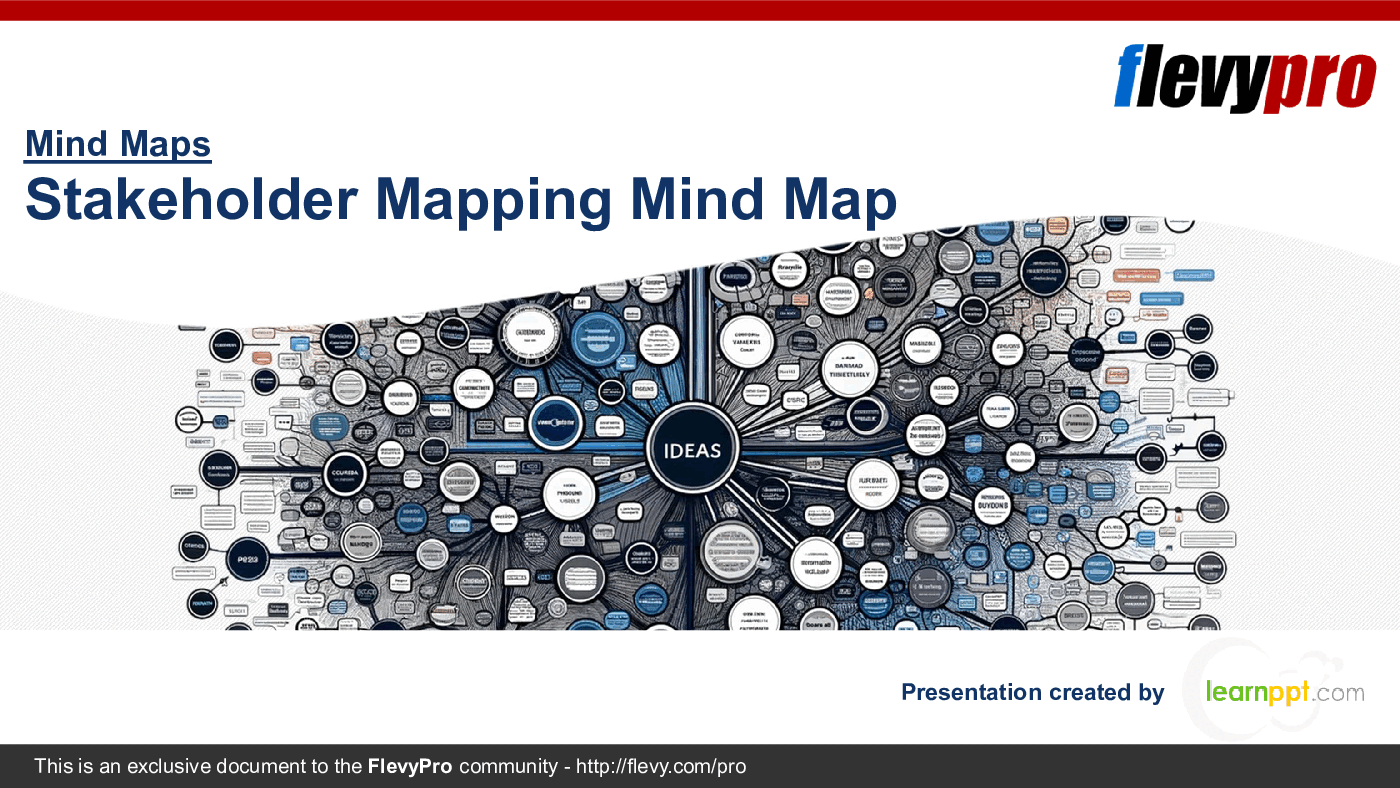
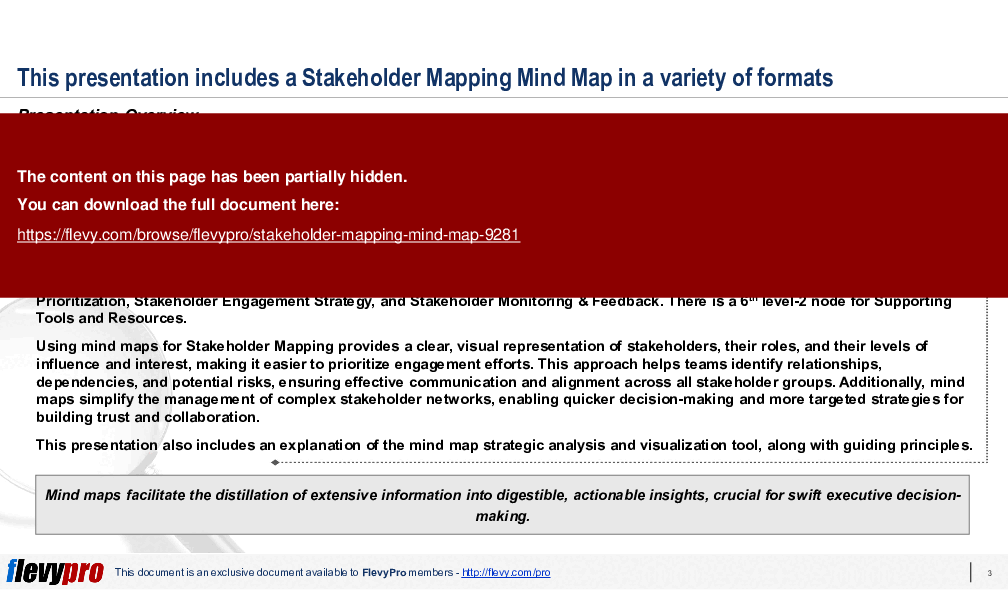
This mind map breaks down Stakeholder Mapping into 5 phases: Stakeholder Identification, Stakeholder Categorization, Stakeholder Prioritization, Stakeholder Engagement Strategy, and Stakeholder Monitoring & Feedback. There is a 6th level-2 node for Supporting Tools and Resources.

Using mind maps for Stakeholder Mapping provides a clear, visual representation of stakeholders, their roles, and their levels of influence and interest, making it easier to prioritize engagement efforts. This approach helps teams identify relationships, dependencies, and potential risks, ensuring effective communication and alignment across all stakeholder groups.

Additionally, mind maps simplify the management of complex stakeholder networks, enabling quicker decision-making and more targeted strategies for building trust and collaboration.

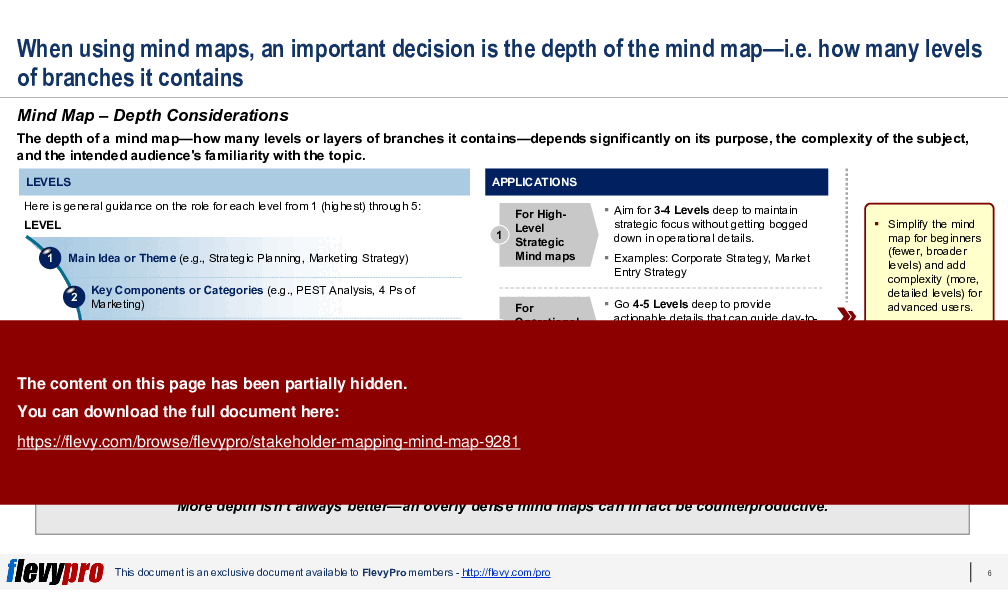
This PowerPoint presentation also includes an explanation of the mind map strategic analysis and visualization tool, along with guiding principles.

Got a question about this document? Email us at flevypro@flevy.com.

MARCUS OVERVIEW

This synopsis was written by Marcus [?] based on the analysis of the full 20-slide presentation.


Executive Summary
The Stakeholder Mapping Mind Map is a strategic tool designed to visually represent stakeholders, their roles, and levels of influence and interest. Created by experienced consultants, this mind map enhances project clarity and engagement strategies by breaking down stakeholder mapping into 5 distinct phases: Stakeholder Identification, Stakeholder Categorization, Stakeholder Prioritization, Stakeholder Engagement Strategy, and Stakeholder Monitoring & Feedback. This presentation equips users with a structured approach to managing complex stakeholder networks, facilitating effective communication and alignment across all groups.

Who This Is For and When to Use
•  Project Managers overseeing stakeholder engagement initiatives
•  Change Management Teams responsible for stakeholder communication
•  Business Analysts tasked with stakeholder analysis and prioritization
•  Executives seeking to enhance stakeholder relationships and trust
•  Consultants developing engagement strategies for clients

Best-fit moments to use this deck:
•  During project kickoff meetings to establish stakeholder engagement frameworks
•  In strategy sessions focused on stakeholder analysis and prioritization
•  When developing communication plans for stakeholder updates
•  For training sessions on stakeholder management best practices

Learning Objectives
•  Define the key phases of stakeholder mapping and their importance
•  Build a comprehensive stakeholder engagement strategy using the mind map
•  Establish criteria for stakeholder prioritization and categorization
•  Identify relationships and dependencies among stakeholders
•  Develop effective communication plans tailored to different stakeholder groups
•  Monitor and evaluate stakeholder engagement efforts for continuous improvement

Table of Contents
•  Overview (page 3)
•  Mind Map (page 4)
•  Stakeholder Mapping Mind Map (page 9)
•  Slide Design Guide (page 14)

Primary Topics Covered
•  Stakeholder Identification - Techniques for identifying stakeholders, including brainstorming sessions and SWOT analysis to evaluate strengths and weaknesses.
•  Stakeholder Categorization - Methods for categorizing stakeholders based on influence and interest, utilizing tools like the Power-Interest Grid and RACI Matrix.
•  Stakeholder Prioritization - Frameworks for prioritizing stakeholders, including scoring models and heat maps to visualize prioritization.
•  Stakeholder Engagement Strategy - Strategies for managing stakeholder relationships, including communication plans and conflict resolution techniques.
•  Stakeholder Monitoring & Feedback - Approaches for tracking stakeholder involvement and gathering feedback to inform ongoing engagement efforts.

Deliverables, Templates, and Tools
•  Stakeholder Identification Checklist for documenting stakeholder details
•  Power-Interest Grid template for mapping stakeholders by influence and interest
•  RACI Matrix template for defining roles and responsibilities
•  Communication Plan template for tailoring messages to different stakeholders
•  Feedback Mechanisms framework for assessing stakeholder satisfaction

Slide Highlights
•  Overview slide detailing the phases of stakeholder mapping
•  Visual representation of the Stakeholder Mapping Mind Map
•  Examples of stakeholder categorization tools and prioritization frameworks
•  Communication strategy slide outlining key messages for different audiences
•  Feedback mechanisms slide showcasing methods for gathering stakeholder input

Potential Workshop Agenda
Stakeholder Mapping Session (90 minutes)
•  Introduce the concept of stakeholder mapping and its importance
•  Conduct a brainstorming session to identify stakeholders
•  Categorize and prioritize stakeholders using provided frameworks

Engagement Strategy Development (60 minutes)
•  Develop tailored communication plans for prioritized stakeholders
•  Discuss potential risks and mitigation strategies for stakeholder engagement

Feedback and Monitoring Workshop (45 minutes)
•  Establish feedback mechanisms for ongoing stakeholder engagement
•  Review and refine engagement strategies based on feedback

Customization Guidance
•  Tailor the stakeholder identification checklist to include specific project stakeholders
•  Adjust the communication plan template to reflect organizational messaging standards
•  Modify the prioritization tools to align with project-specific criteria

Secondary Topics Covered
•  Relationship management techniques for effective stakeholder engagement
•  Conflict resolution strategies to address stakeholder concerns
•  Performance metrics for evaluating stakeholder involvement and satisfaction

Topic FAQ

What are the typical phases of stakeholder mapping I should follow?

Stakeholder mapping is commonly broken into 5 phases: Stakeholder Identification, Stakeholder Categorization, Stakeholder Prioritization, Stakeholder Engagement Strategy, and Stakeholder Monitoring & Feedback. These phases provide a structured sequence for analysis, prioritization, planning, and ongoing evaluation across 5 phases.

How do I prioritize stakeholders when resources are limited?

Prioritization typically assesses stakeholders by influence and interest, using scoring models, heat maps, or the Power-Interest Grid to focus effort where impact is greatest. Practical templates for this process include a Power-Interest Grid and scoring frameworks to rank stakeholders for targeted engagement.

What tools help track stakeholder engagement effectiveness over time?

Tracking uses performance metrics, feedback mechanisms, and KPI dashboards to measure involvement and satisfaction. Regular feedback loops and monitoring approaches enable adjustments to engagement plans; practical artifacts include a Feedback Mechanisms framework and engagement KPIs to monitor progress.

How does a mind map add value to stakeholder mapping versus a spreadsheet register?

A mind map provides a visual, relational view of stakeholders, highlighting connections, dependencies, gaps, and priority branches for quicker insight and decision-making. It supports holistic analysis, gap identification, and visual prioritization compared with linear lists, using the mind map visualization format.

What should I look for when buying a stakeholder mapping template?

Prefer templates that support identification, categorization, prioritization, and engagement planning, and offer editable formats (e.g., interactive HTML, SVG, PDF, Markdown). Look for included tools like a Stakeholder Identification Checklist, Power-Interest Grid, RACI Matrix, and Communication Plan template for practical use.

How much time should I allocate for stakeholder mapping workshops?

Suggested workshop modules in sample agendas include a 90-minute stakeholder mapping session, a 60-minute engagement strategy development session, and a 45-minute feedback and monitoring workshop; total timing can be adapted to project scope, but the base sessions include a 90-minute mapping session.

I’m handling post-merger integration with many stakeholders—what framework should I start with?

Start with the five-phase stakeholder mapping approach: identify stakeholders, categorize by influence/interest, prioritize with scoring or Power-Interest Grid, develop engagement and communication plans, then monitor feedback and KPIs. Templates and a mind map can support these steps across the 5 phases.

How can I customize stakeholder templates for my specific project needs?

Customization guidance recommends tailoring the stakeholder identification checklist to your project, adjusting the communication plan to organizational messaging standards, and modifying prioritization criteria or scoring models to align with project-specific factors as outlined in the customization guidance.

Document FAQ
These are questions addressed within this presentation.

What is a Stakeholder Mapping Mind Map?
A Stakeholder Mapping Mind Map is a visual tool that organizes stakeholders based on their roles, influence, and interest, facilitating effective engagement strategies.

How can I use this mind map in my projects?
Utilize the mind map to identify, categorize, and prioritize stakeholders, ensuring that engagement efforts are targeted and effective.

What formats are available for the Stakeholder Mapping Mind Map?
The mind map is available in various formats, including interactive HTML, SVG for editing, PDF (A3), and a Markdown script for customization.

Can this mind map be customized for specific projects?
Yes, the mind map can be tailored to fit the unique needs of your project, including specific stakeholder details and engagement strategies.

What are the key phases of stakeholder mapping?
The key phases include Stakeholder Identification, Stakeholder Categorization, Stakeholder Prioritization, Stakeholder Engagement Strategy, and Stakeholder Monitoring & Feedback.

How does stakeholder prioritization work?
Stakeholder prioritization involves assessing stakeholders based on their influence and interest, using tools like the Power-Interest Grid to determine engagement focus.

What tools are included for stakeholder analysis?
The presentation includes templates for stakeholder identification, categorization, and prioritization, as well as communication and feedback mechanisms.

How can I assess stakeholder engagement effectiveness?
Utilize performance metrics and feedback mechanisms to evaluate stakeholder involvement and satisfaction, adjusting strategies as necessary.

Glossary
•  Stakeholder - An individual or group with an interest in a project or initiative.
•  Power-Interest Grid - A tool for categorizing stakeholders based on their level of influence and interest.
•  RACI Matrix - A framework for defining roles and responsibilities in stakeholder engagement.
•  SWOT Analysis - A strategic planning tool for evaluating strengths, weaknesses, opportunities, and threats.
•  Feedback Mechanism - A method for gathering input from stakeholders to inform engagement strategies.
•  Engagement Strategy - A plan for managing relationships with stakeholders to ensure effective communication and collaboration.
•  Prioritization Matrix - A tool for ranking stakeholders based on their importance to the project.
•  Communication Plan - A document outlining how information will be shared with stakeholders.
•  Performance Metrics - Criteria used to evaluate the effectiveness of stakeholder engagement efforts.
•  Conflict Resolution - Techniques for addressing and resolving disputes among stakeholders.
•  Monitoring & Feedback - Ongoing assessment of stakeholder engagement and collection of input for continuous improvement.
•  Stakeholder Register - A document that records details about stakeholders, including their interests and influence.
•  Decision Matrix - A framework for evaluating options based on specific criteria.
•  Audience Segmentation - The process of dividing stakeholders into distinct groups for targeted communication.
•  Trust Building - Strategies for establishing credibility and reliability with stakeholders.
•  Scenario Planning - A method for anticipating potential future events and preparing responses.
•  Engagement KPIs - Key performance indicators used to measure stakeholder involvement.
•  Participation Metrics - Measures of the level of stakeholder engagement in a project.
•  Sentiment Analysis - The process of analyzing stakeholder feedback to gauge attitudes and opinions.
•  Early Warning Systems - Mechanisms for identifying potential risks in stakeholder engagement.
•  Stakeholder Feedback - Input gathered from stakeholders regarding their experiences and concerns.
•  KPI Dashboard - A visual representation of key performance indicators related to stakeholder engagement.

Source: Best Practices in Stakeholder Analysis, Stakeholder Management, Mind Map PowerPoint Slides: Stakeholder Mapping Mind Map PowerPoint (PPTX) Presentation Slide Deck, LearnPPT Consulting


$29.00
FlevyPro price: FREE (included in subscription)


Add to Cart
  

Did you need more documents?

Consider a FlevyPro subscription from $39/month. View plans here.

For $10.00 more, you can download this document plus 2 more FlevyPro documents. That's just $13 each.

ABOUT FLEVYPRO

This document is part of the FlevyPro Library, a curated knowledge base of documents for our FlevyPro subscribers.

FlevyPro is a subscription service for on-demand business frameworks and analysis tools. FlevyPro subscribers receive access to an exclusive library of curated business documents—business framework primers, presentation templates, Lean Six Sigma tools, and more—among other exclusive benefits.

Click here to learn more about FlevyPro and its benefits.

Did you know?
The average daily rate of a McKinsey consultant is $6,625 (not including expenses). The average price of a Flevy document is $65.


Trusted by over 10,000+ Client Organizations
Since 2012, we have provided business templates to over 10,000 businesses and organizations of all sizes, from startups and small businesses to the Fortune 100, in over 130 countries.
AT&T GE Cisco Intel IBM Coke Dell Toyota HP Nike Samsung Microsoft Astrazeneca JP Morgan KPMG Walgreens Walmart 3M Kaiser Oracle SAP Google E&Y Volvo Bosch Merck Fedex Shell Amgen Eli Lilly Roche AIG Abbott Amazon PwC T-Mobile Broadcom Bayer Pearson Titleist ConEd Pfizer NTT Data Schwab


Read Customer Testimonials

 
"Flevy is now a part of my business routine. I visit Flevy at least 3 times each month.

Flevy has become my preferred learning source, because what it provides is practical, current, and useful in this era where the business world is being rewritten.

In today's environment where there are so "

– Omar Hernán Montes Parra, CEO at Quantum SFE
 
"I have used FlevyPro for several business applications. It is a great complement to working with expensive consultants. The quality and effectiveness of the tools are of the highest standards."

– Moritz Bernhoerster, Global Sourcing Director at Fortune 500
 
"Last Sunday morning, I was diligently working on an important presentation for a client and found myself in need of additional content and suitable templates for various types of graphics. Flevy.com proved to be a treasure trove for both content and design at a reasonable price, considering the time I "

– M. E., Chief Commercial Officer, International Logistics Service Provider
 
"[Flevy] produces some great work that has been/continues to be of immense help not only to myself, but as I seek to provide professional services to my clients, it gives me a large "tool box" of resources that are critical to provide them with the quality of service and outcomes they are expecting."

– Royston Knowles, Executive with 50+ Years of Board Level Experience
 
"FlevyPro has been a brilliant resource for me, as an independent growth consultant, to access a vast knowledge bank of presentations to support my work with clients. In terms of RoI, the value I received from the very first presentation I downloaded paid for my subscription many times over! The "

– Roderick Cameron, Founding Partner at SGFE Ltd
 
"As a young consulting firm, requests for input from clients vary and it's sometimes impossible to provide expert solutions across a broad spectrum of requirements. That was before I discovered Flevy.com.

Through subscription to this invaluable site of a plethora of topics that are key and crucial to consulting, I "

– Nishi Singh, Strategist and MD at NSP Consultants
 
"The wide selection of frameworks is very useful to me as an independent consultant. In fact, it rivals what I had at my disposal at Big 4 Consulting firms in terms of efficacy and organization."

– Julia T., Consulting Firm Owner (Former Manager at Deloitte and Capgemini)
 
"As a consulting firm, we had been creating subject matter training materials for our people and found the excellent materials on Flevy, which saved us 100's of hours of re-creating what already exists on the Flevy materials we purchased."

– Michael Evans, Managing Director at Newport LLC


Customers Also Like These Documents

Explore Templates on Related Management Topics


Your Recently Viewed Documents
Download our FREE Organization, Change, & Culture, Templates

Download our free compilation of 50+ slides and templates on Organizational Design, Change Management, and Corporate Culture. Methodologies include ADKAR, Burke-Litwin Change Model, McKinsey 7-S, Competing Values Framework, etc.









