Value Chain Analysis   25-slide PPT PowerPoint presentation slide deck (PPT)
$79.99

Value Chain Analysis (25-slide PPT PowerPoint presentation slide deck (PPT)) Preview Image
Flevy is the marketplace for business best practices.
Value Chain Analysis (25-slide PPT PowerPoint presentation slide deck (PPT)) Preview Image
Arrow   Click main image to view in full screen.

Value Chain Analysis (PowerPoint PPT Slide Deck)

PowerPoint (PPT) 25 Slides

$79.99

Add to Cart


Immediate download
Free lifetime updates

COMPETITIVE ADVANTAGE PPT DESCRIPTION

Editor Summary 25-slide PowerPoint presentation Value Chain Analysis developed by ex-McKinsey consultants that provides a structured method for dis-aggregating a firm into activities to locate cost and competitive advantages. Read more

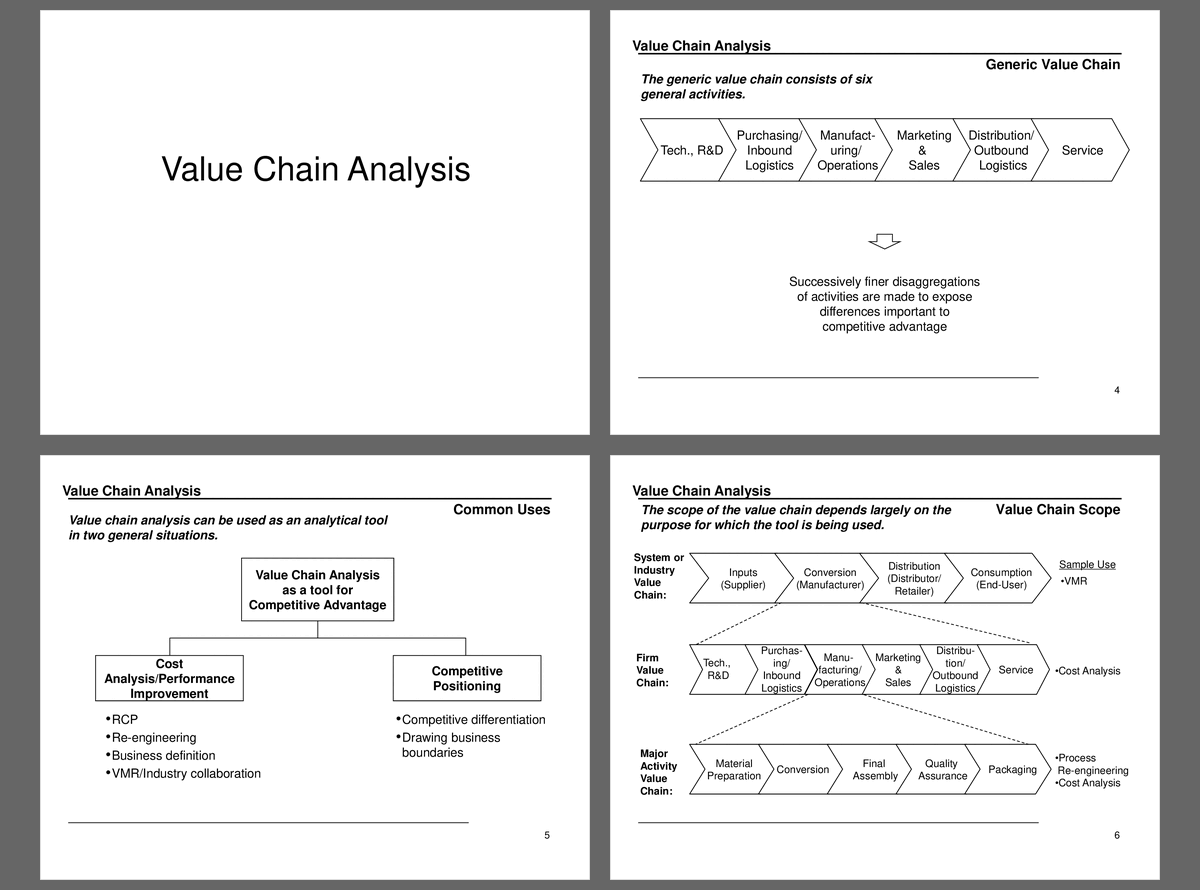
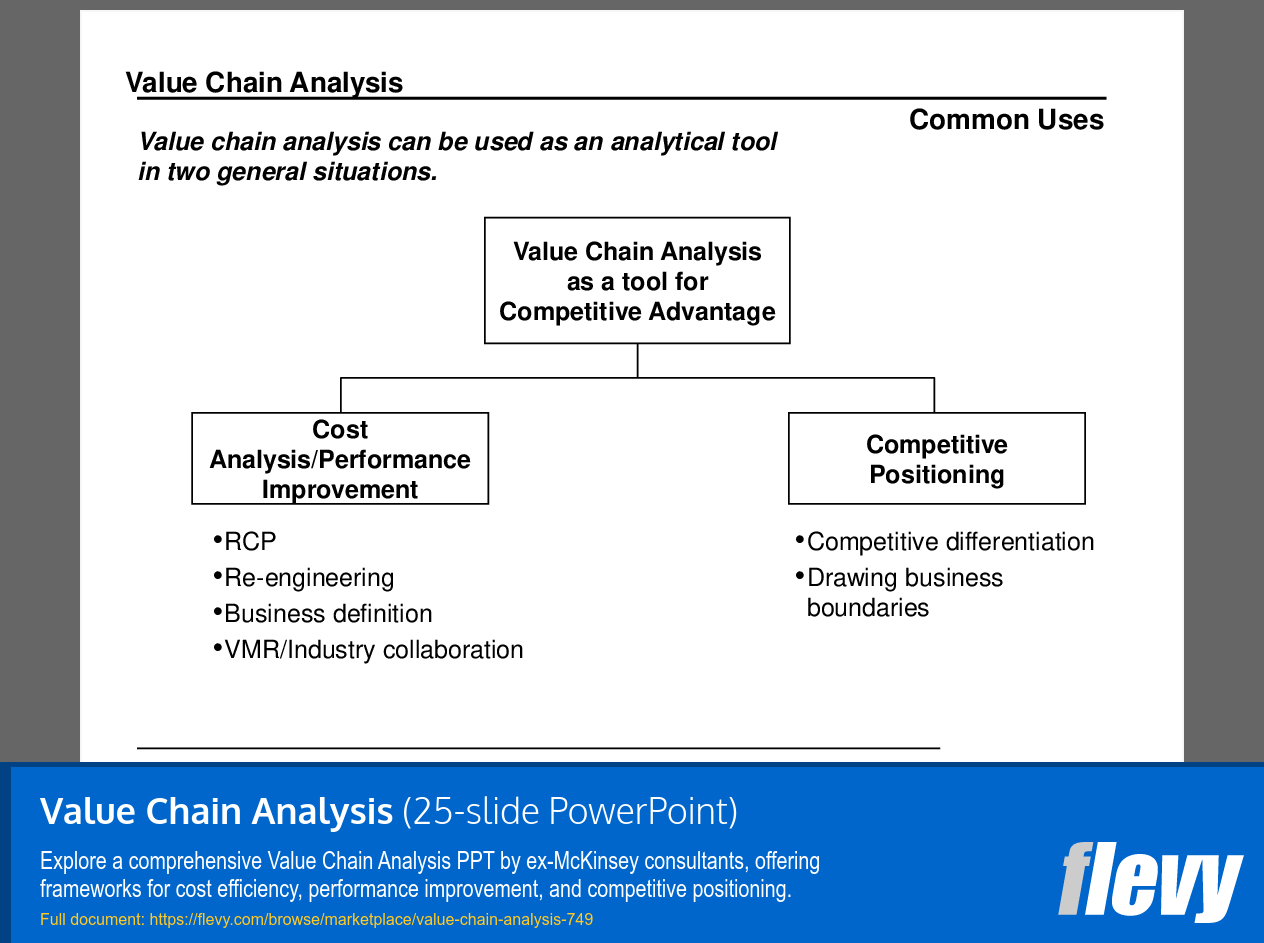
This presentation introduces a systematic method to conduct a value chain analysis. Value chain analysis is a systematic method for dis-aggregating a firm or industry into its major discrete activities to understand sources of competitive advantage. Value chain analysis can be used to identify opportunities to gain cost advantage/improve performance and increase competitive differentiation.

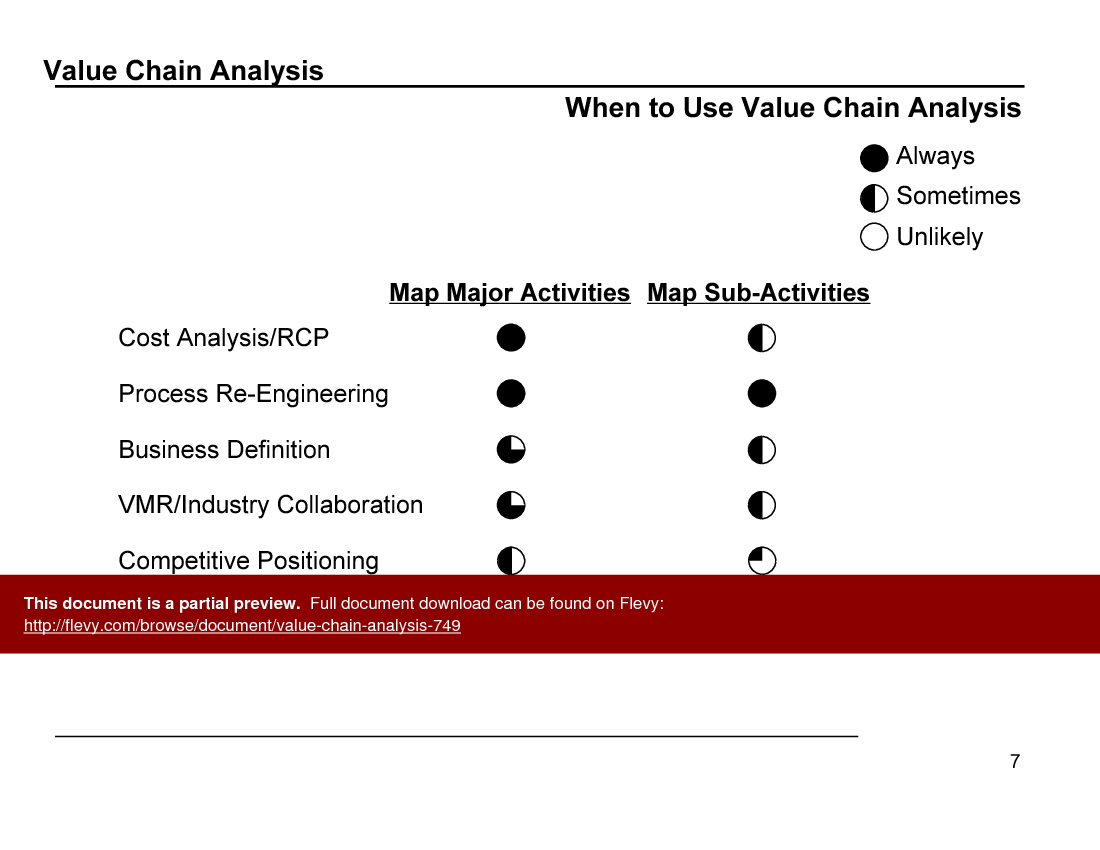
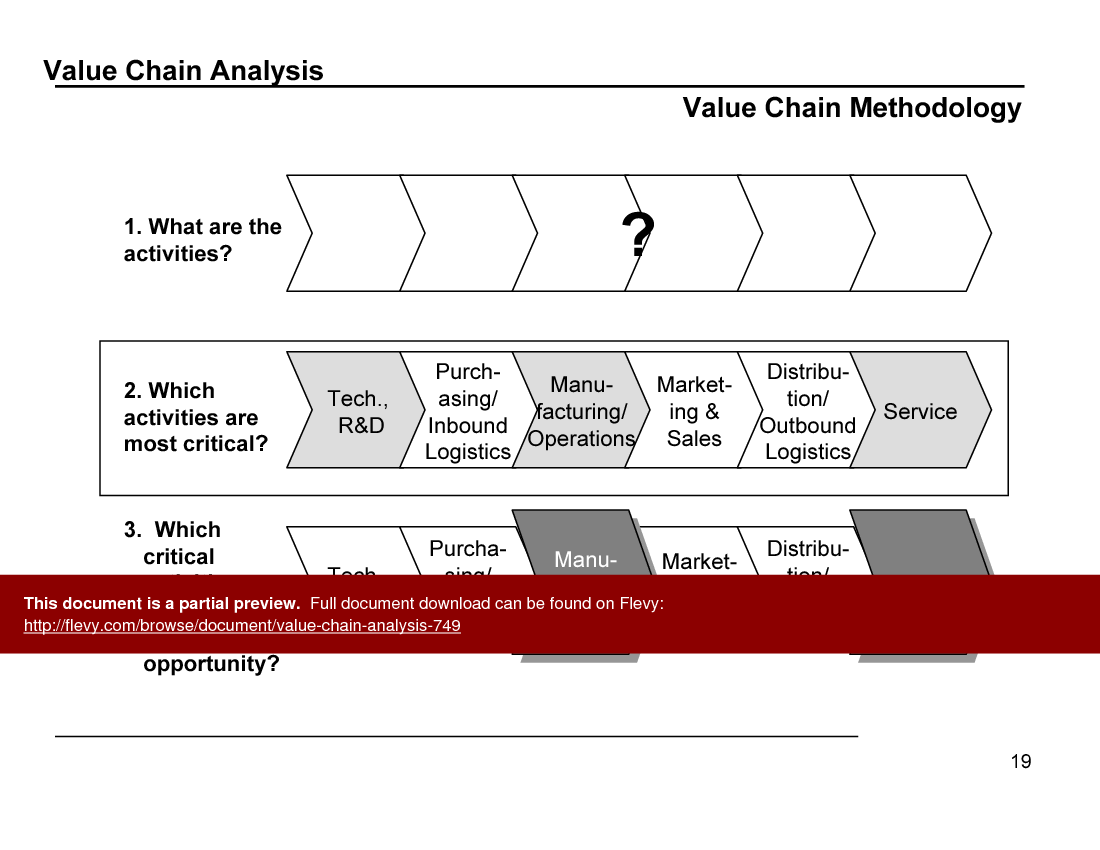
This document delves into the practical applications of value chain analysis, providing a clear framework for identifying and mapping major and sub-activities within your organization. By breaking down complex processes into manageable components, you can pinpoint inefficiencies and uncover opportunities for improvement. This is particularly useful for cost analysis, process re-engineering, and competitive positioning.

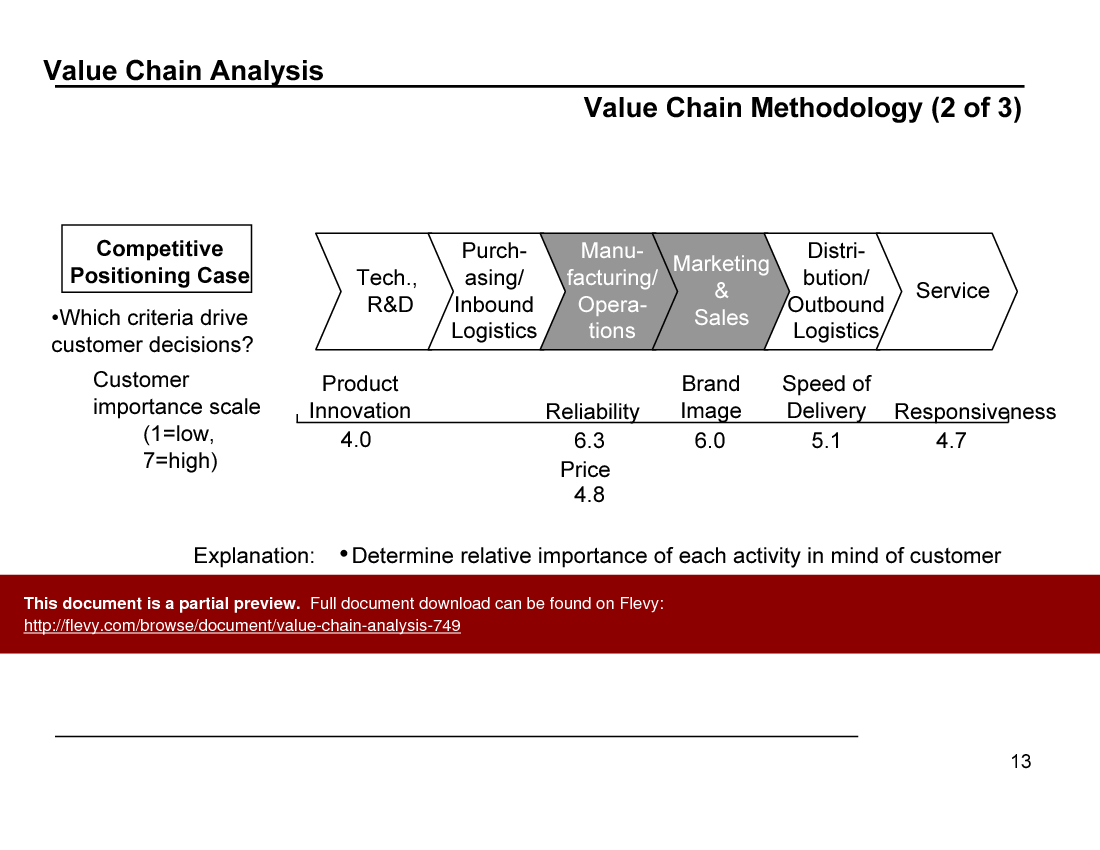
The methodology section guides you through the critical steps of determining which activities to map and how to group them based on different economics, processes, and customer perceptions. This structured approach ensures that you focus on the most impactful areas, driving significant improvements in performance and cost efficiency. The document also includes a competitive positioning case, illustrating how to evaluate customer importance across various criteria like product innovation, reliability, and speed of delivery.

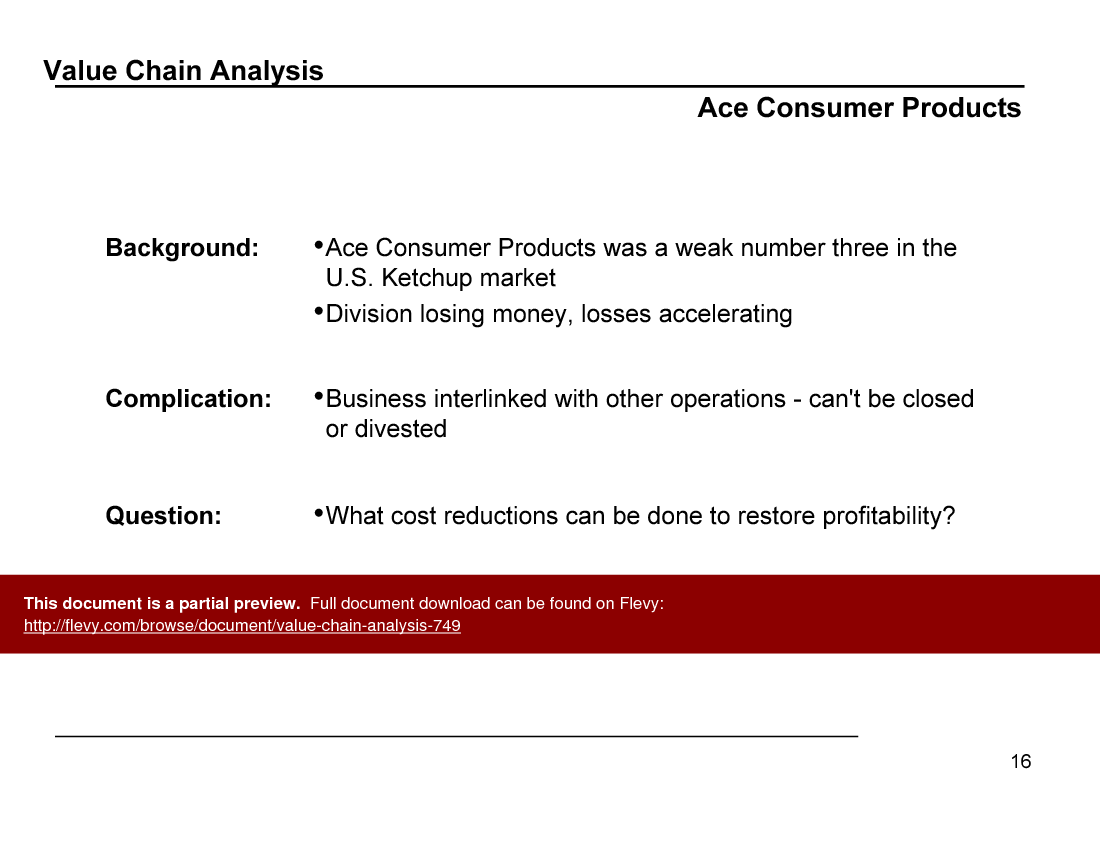
In addition, the document presents a real-world example involving Ace Consumer Products, a company facing financial challenges in the U.S. ketchup market. This case study highlights the complications of interlinked business operations and explores potential cost reduction strategies to restore profitability. The insights gained from this example can be directly applied to similar situations in your own organization.

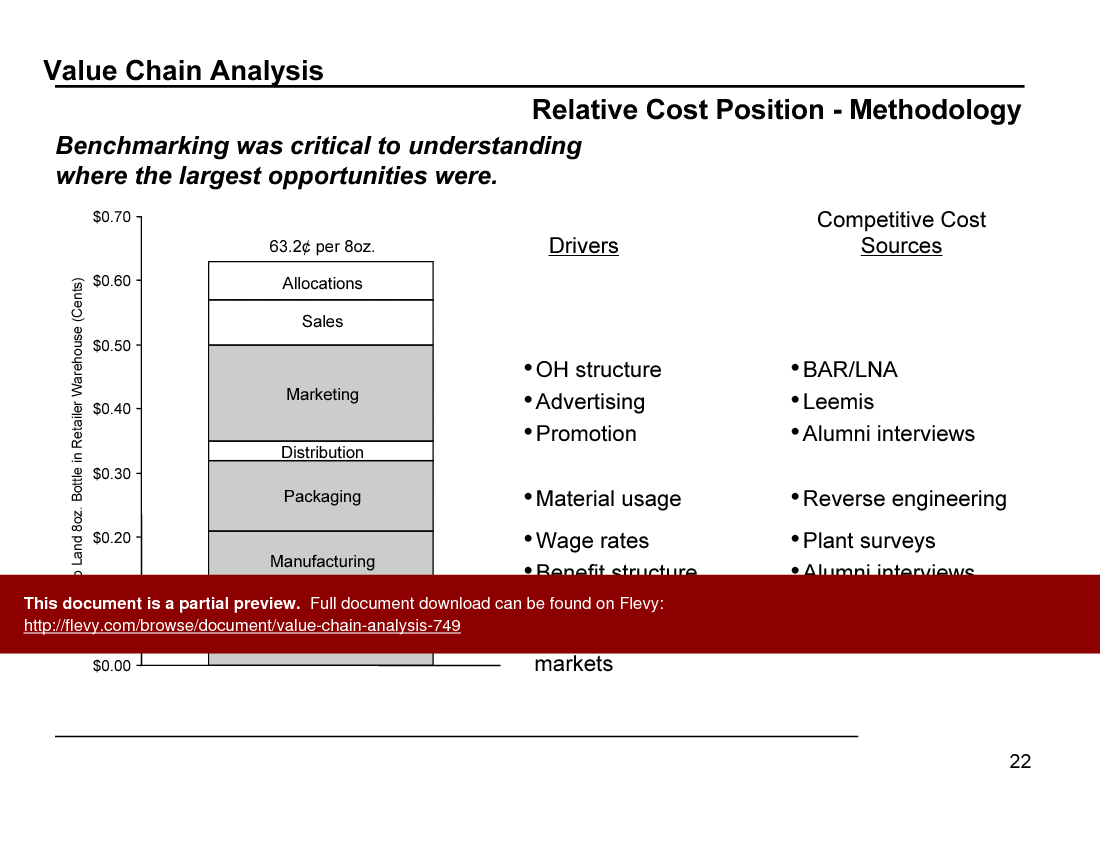
The document emphasizes the importance of benchmarking in understanding where the largest opportunities for cost savings lie. By comparing your operations against industry standards, you can identify areas for consolidation and achieve substantial savings. For instance, consolidating from six plants to four could save $3.9 million annually, demonstrating the tangible benefits of a thorough value chain analysis.

Got a question about the product? Email us at support@flevy.com or ask the author directly by using the "Ask the Author a Question" form. If you cannot view the preview above this document description, go here to view the large preview instead.

MARCUS OVERVIEW

This synopsis was written by Marcus [?] based on the analysis of the full 25-slide presentation.


Executive Summary
The Value Chain Analysis PPT provides a structured approach to dissecting a firm's activities to uncover sources of competitive advantage. Developed by ex-McKinsey consultants, this presentation equips corporate executives and consultants with the tools to identify cost reduction opportunities, enhance performance, and improve competitive positioning. By utilizing this framework, users can systematically evaluate their operations, prioritize key activities, and facilitate better decision-making for strategic initiatives.

Who This Is For and When to Use
•  Corporate executives seeking to optimize operational efficiency
•  Consultants aiming to deliver actionable insights to clients
•  Business analysts focused on performance improvement
•  Strategy teams involved in competitive positioning

Best-fit moments to use this deck:
•  During strategic planning sessions to identify operational inefficiencies
•  When conducting performance reviews to pinpoint areas for improvement
•  In workshops aimed at enhancing competitive differentiation

Learning Objectives
•  Define the components of value chain analysis and its significance
•  Identify critical activities within a firm’s operations
•  Analyze cost structures to uncover opportunities for savings
•  Evaluate competitive positioning through customer importance criteria
•  Develop actionable strategies for performance improvement
•  Facilitate client understanding of their operational landscape

Table of Contents
•  The Concept (page 3)
•  Value Chain Methodology (page 9)
•  Example: Ace Consumer Products (page 16)
•  Relative Cost Position Methodology (page 22)

Primary Topics Covered
•  Value Chain Analysis - A systematic method for breaking down a firm’s activities to identify competitive advantages and opportunities for cost efficiency.
•  Generic Value Chain - An overview of the 6 general activities that constitute a value chain, including technology, manufacturing, and service.
•  Critical Activities Identification - A process for determining which activities are most impactful on cost and performance.
•  Competitive Positioning - Strategies for differentiating a firm based on customer-driven criteria.
•  Cost Structure Analysis - Techniques for analyzing cost drivers and identifying areas for potential savings.
•  Operational Improvement Strategies - Actionable insights for enhancing performance through focused analysis of key activities.

Deliverables, Templates, and Tools
•  Value chain mapping template to visualize activities and their interconnections
•  Cost analysis framework for evaluating major activity expenses
•  Competitive positioning assessment tool to gauge customer importance
•  Performance improvement action plan based on identified opportunities

Slide Highlights
•  Overview of the value chain concept and its applications in competitive analysis
•  Detailed methodology for conducting value chain analysis, including critical activity identification
•  Case study on Ace Consumer Products illustrating practical application of the methodology
•  Visual representations of cost structures and performance metrics

Potential Workshop Agenda
Introduction to Value Chain Analysis (30 minutes)
•  Overview of value chain concepts and methodologies
•  Discussion on the importance of identifying critical activities

Hands-on Value Chain Mapping (60 minutes)
•  Group exercise to map activities relevant to participants' organizations
•  Identification of cost drivers and performance gaps

Case Study Review (45 minutes)
•  Presentation of Ace Consumer Products case
•  Group discussion on lessons learned and applicability to participants' contexts

Customization Guidance
•  Tailor the value chain mapping template to reflect specific organizational activities
•  Adjust case study examples to align with industry-specific challenges
•  Incorporate company-specific metrics and terminology for relevance

Secondary Topics Covered
•  Cost analysis techniques for operational efficiency
•  Process re-engineering strategies for performance enhancement
•  Competitive differentiation methods based on customer insights

Topic FAQ

What are the main steps in conducting a value chain analysis?

Value chain analysis involves dis-aggregating the firm into major activities, deciding which activities to map, grouping activities by economics/processes/customer perceptions, identifying critical activities that affect cost and performance, and prioritizing improvement opportunities; the document’s methodology section and Relative Cost Position Methodology on page 22 outline these steps.

What are the key components of a generic value chain?

The generic value chain covers 6 general activities that constitute a firm’s operations, commonly including technology development, manufacturing, marketing, sales, distribution, and service, and the presentation summarizes these 6 general activities in its overview section.

How do I identify which activities are critical to performance and cost?

Evaluate each activity’s impact on cost and performance, assess differences in economics and processes, and consider customer perceptions; the deck guides prioritization through critical activity identification and provides a value chain mapping template to visualize and rank activities.

How does value chain analysis inform competitive positioning?

By mapping activities against customer importance criteria—such as product innovation, reliability, and speed of delivery—organizations can identify differentiation levers; the presentation includes a competitive positioning assessment tool to gauge customer importance across criteria.

What should I look for in a value chain analysis slide deck or template?

Seek a deck that provides a clear methodology, activity-mapping templates, a cost-analysis framework, a competitive positioning assessment, a worked case study for reference, and guidance for customization—Flevy’s Value Chain Analysis is a 25-slide PowerPoint that includes an Ace Consumer Products case study.

How much time and what format work well for a value chain workshop?

The presentation suggests a structured workshop agenda totaling about 135 minutes: a 30-minute introduction, 60-minute hands-on value chain mapping exercise, and a 45-minute case study review, suitable for cross-functional teams of executives, analysts, and facilitators.

Can value chain analysis identify plant consolidation savings in manufacturing?

Yes; by analyzing cost structures, benchmarking operations, and identifying consolidation opportunities, value chain analysis can quantify savings— the document’s Ace Consumer Products example shows that consolidating from 6 plants to 4 could save $3.9 million annually.

What tangible outputs should I expect after running a value chain analysis?

Expected outputs include a mapped set of major and sub-activities, prioritized critical activities, a cost-structure analysis highlighting cost drivers, and a performance improvement action plan; Flevy’s Value Chain Analysis supplies a value chain mapping template and a performance improvement action plan.

Document FAQ
These are questions addressed within this presentation.

What is value chain analysis?
Value chain analysis is a method used to dissect a firm's activities to identify sources of competitive advantage and opportunities for cost reduction.

When should I use value chain analysis?
Use value chain analysis during strategic planning, performance reviews, or when seeking to enhance competitive positioning.

What are the key components of a value chain?
The key components include activities such as technology development, manufacturing, marketing, sales, distribution, and service.

How can value chain analysis improve performance?
By identifying critical activities and cost drivers, organizations can implement targeted strategies to enhance efficiency and effectiveness.

What is the significance of competitive positioning in value chain analysis?
Competitive positioning helps organizations understand which activities are most valued by customers, allowing for better differentiation in the market.

How do I identify critical activities within my organization?
Evaluate each activity's impact on cost and performance, and prioritize those that significantly contribute to overall success.

What tools can assist in conducting value chain analysis?
Templates for mapping activities, frameworks for cost analysis, and assessment tools for competitive positioning can facilitate the process.

How does the Ace Consumer Products case illustrate value chain analysis?
The case demonstrates practical applications of value chain analysis to identify cost reduction opportunities and improve profitability in a competitive market.

Glossary
•  Value Chain Analysis - A systematic approach to dissecting a firm's activities for competitive advantage.
•  Generic Value Chain - A framework consisting of 6 general activities that define a firm's operations.
•  Critical Activities - Key operations that significantly impact cost and performance.
•  Competitive Positioning - Strategies to differentiate a firm based on customer preferences.
•  Cost Structure - The breakdown of costs associated with various activities within a firm.
•  Operational Improvement - Strategies aimed at enhancing efficiency and effectiveness in business processes.
•  Benchmarking - Comparing business processes and performance metrics to industry bests.
•  Performance Metrics - Quantitative measures used to assess the efficiency and effectiveness of actions.
•  Process Re-engineering - The analysis and redesign of workflows within an organization.
•  Customer Importance Criteria - Factors that influence customer purchasing decisions.
•  Cost Drivers - Elements that cause costs to increase or decrease within a business.
•  Activity Mapping - Visual representation of a firm's activities and their interrelationships.
•  Strategic Planning - The process of defining an organization's direction and making decisions on allocating resources.
•  Operational Efficiency - The ability to deliver products or services in the most cost-effective manner.
•  Differentiation - The process of distinguishing a product or offering from others in the market.
•  Market Analysis - The assessment of a market within a specific industry.
•  Supply Chain Management - The management of the flow of goods and services from suppliers to customers.
•  Value Creation - The process of enhancing the worth of a product or service.
•  Cost Reduction - Strategies aimed at lowering expenses while maintaining quality.
•  Customer Satisfaction - A measure of how products or services meet or exceed customer expectations.
•  Innovation - The introduction of new ideas, products, or processes to improve efficiency or effectiveness.

COMPETITIVE ADVANTAGE PPT SLIDES

Structured Approach to Value Chain Analysis

Cost Structure Breakdown for Ace Consumer Products

Strategic Applications of Value Chain Analysis

Framework for Comprehensive Value Chain Assessment

Ketchup Production Capacity Utilization Insights

Source: Best Practices in Competitive Advantage, Value Chain Analysis PowerPoint Slides: Value Chain Analysis PowerPoint (PPT) Presentation Slide Deck, Documents & Files


$79.99

Add to Cart
  

ABOUT THE AUTHOR

Additional documents from author: 130

Ask the Author a Question

You must be logged in to contact the author.

Click here to log in Click here register

Did you know?
The average daily rate of a McKinsey consultant is $6,625 (not including expenses). The average price of a Flevy document is $65.
Bundle and save! You can save up to % with bundles!

View bundle(s)


Trusted by over 10,000+ Client Organizations
Since 2012, we have provided business templates to over 10,000 businesses and organizations of all sizes, from startups and small businesses to the Fortune 100, in over 130 countries.
AT&T GE Cisco Intel IBM Coke Dell Toyota HP Nike Samsung Microsoft Astrazeneca JP Morgan KPMG Walgreens Walmart 3M Kaiser Oracle SAP Google E&Y Volvo Bosch Merck Fedex Shell Amgen Eli Lilly Roche AIG Abbott Amazon PwC T-Mobile Broadcom Bayer Pearson Titleist ConEd Pfizer NTT Data Schwab


Read Customer Testimonials

 
"One of the great discoveries that I have made for my business is the Flevy library of training materials.

As a Lean Transformation Expert, I am always making presentations to clients on a variety of topics: Training, Transformation, Total Productive Maintenance, Culture, Coaching, Tools, Leadership Behavior, etc. Flevy "

– Ed Kemmerling, Senior Lean Transformation Expert at PMG
 
"My FlevyPro subscription provides me with the most popular frameworks and decks in demand in today’s market. They not only augment my existing consulting and coaching offerings and delivery, but also keep me abreast of the latest trends, inspire new products and service offerings for my practice, and educate me "

– Bill Branson, Founder at Strategic Business Architects
 
"I have used Flevy services for a number of years and have never, ever been disappointed. As a matter of fact, David and his team continue, time after time, to impress me with their willingness to assist and in the real sense of the word. I have concluded in fact "

– Roberto Pelliccia, Senior Executive in International Hospitality
 
"If you are looking for great resources to save time with your business presentations, Flevy is truly a value-added resource. Flevy has done all the work for you and we will continue to utilize Flevy as a source to extract up-to-date information and data for our virtual and onsite presentations!"

– Debbi Saffo, President at The NiKhar Group
 
"I have found Flevy to be an amazing resource and library of useful presentations for lean sigma, change management and so many other topics. This has reduced the time I need to spend on preparing for my performance consultation. The library is easily accessible and updates are regularly provided. A wealth of great information."

– Cynthia Howard RN, PhD, Executive Coach at Ei Leadership
 
"As a consultant requiring up to date and professional material that will be of value and use to my clients, I find Flevy a very reliable resource.

The variety and quality of material available through Flevy offers a very useful and commanding source for information. Using Flevy saves me time, enhances my expertise and ends up being a good decision."

– Dennis Gershowitz, Principal at DG Associates
 
"As a young consulting firm, requests for input from clients vary and it's sometimes impossible to provide expert solutions across a broad spectrum of requirements. That was before I discovered Flevy.com.

Through subscription to this invaluable site of a plethora of topics that are key and crucial to consulting, I "

– Nishi Singh, Strategist and MD at NSP Consultants
 
"Flevy.com has proven to be an invaluable resource library to our Independent Management Consultancy, supporting and enabling us to better serve our enterprise clients.

The value derived from our [FlevyPro] subscription in terms of the business it has helped to gain far exceeds the investment made, making a subscription a no-brainer for any growing consultancy – or in-house strategy team."

– Dean Carlton, Chief Transformation Officer, Global Village Transformations Pty Ltd.


Save with Bundles

This document is available as part of the following discounted bundle(s):

Save %!
Essential Consulting Knowledge Builder

This bundle contains 21 total documents. See all the documents to the right.

$699.99


Add Bundle & Save


Customers Also Bought These Documents


Customers Also Like These Documents

Explore Templates on Related Management Topics



Your Recently Viewed Documents
Download our FREE Strategy & Transformation Framework Templates

Download our free compilation of 50+ Strategy & Transformation slides and templates. Frameworks include McKinsey 7-S, Balanced Scorecard, Disruptive Innovation, BCG Curve, and many more.








