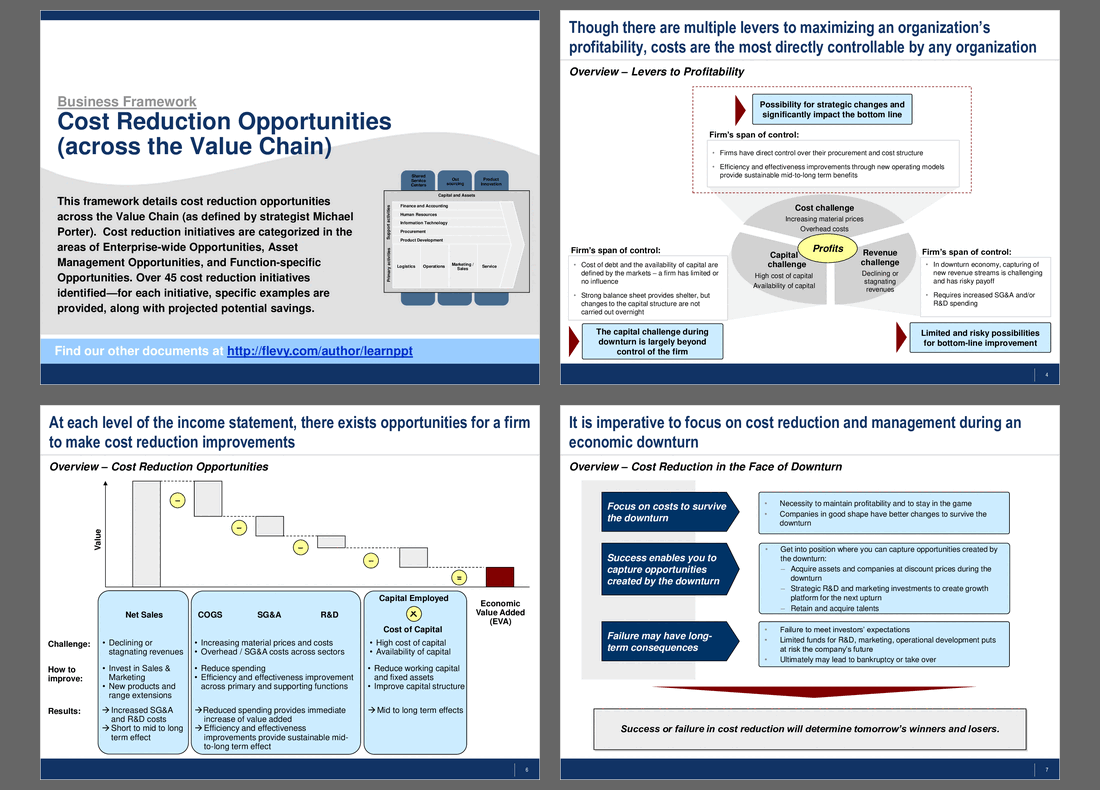
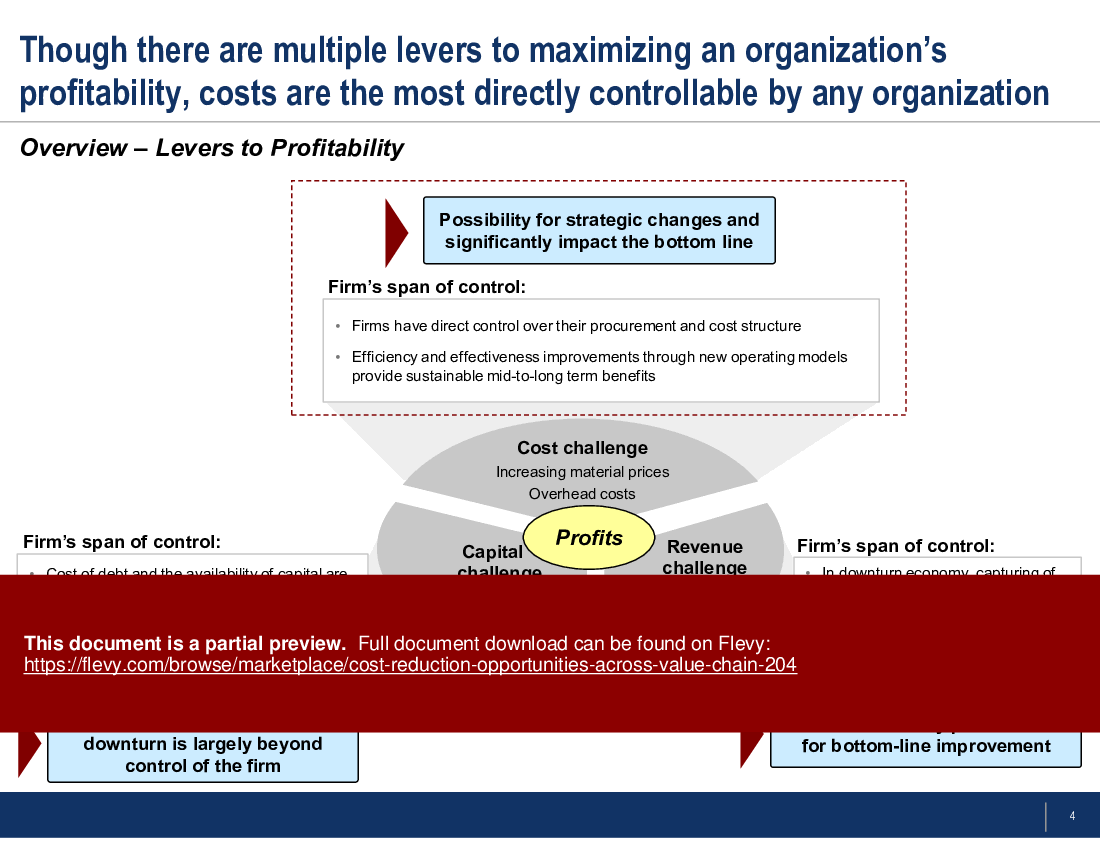

Though there are multiple levers to maximizing an organization's profitability, costs are the most directly controllable by any organization. Profitability is being challenged by increased costs, stagnated revenue growth, and increased capital costs in today's economic climate.
Therefore, a strategic focus on Cost Reduction is crucial in today's economic climate. Reasons include:
Intense market competition and globalization have increased pressure on companies to lower costs to remain competitive. Recent trends in de-globalization are adding increased cost pressures.
Economic uncertainties, such as recessions or market downturns, necessitate Cost Reduction measures to maintain profitability and financial stability.
Cost-conscious customers seek value for money, and organizations that can offer competitive prices gain a significant Competitive Advantage in attracting and retaining customers in today's economic landscape.
Success or failure in cost reduction will determine tomorrow's winners and losers.
This PowerPoint presentation details Cost Reduction opportunities across the Value Chain (as defined by strategist Michael Porter). Cost Reduction initiatives are categorized in the areas of...
• Enterprise-wide Opportunities (includes Share Services, Outsourcing, Product Innovation ideas)
• Asset Management Opportunities
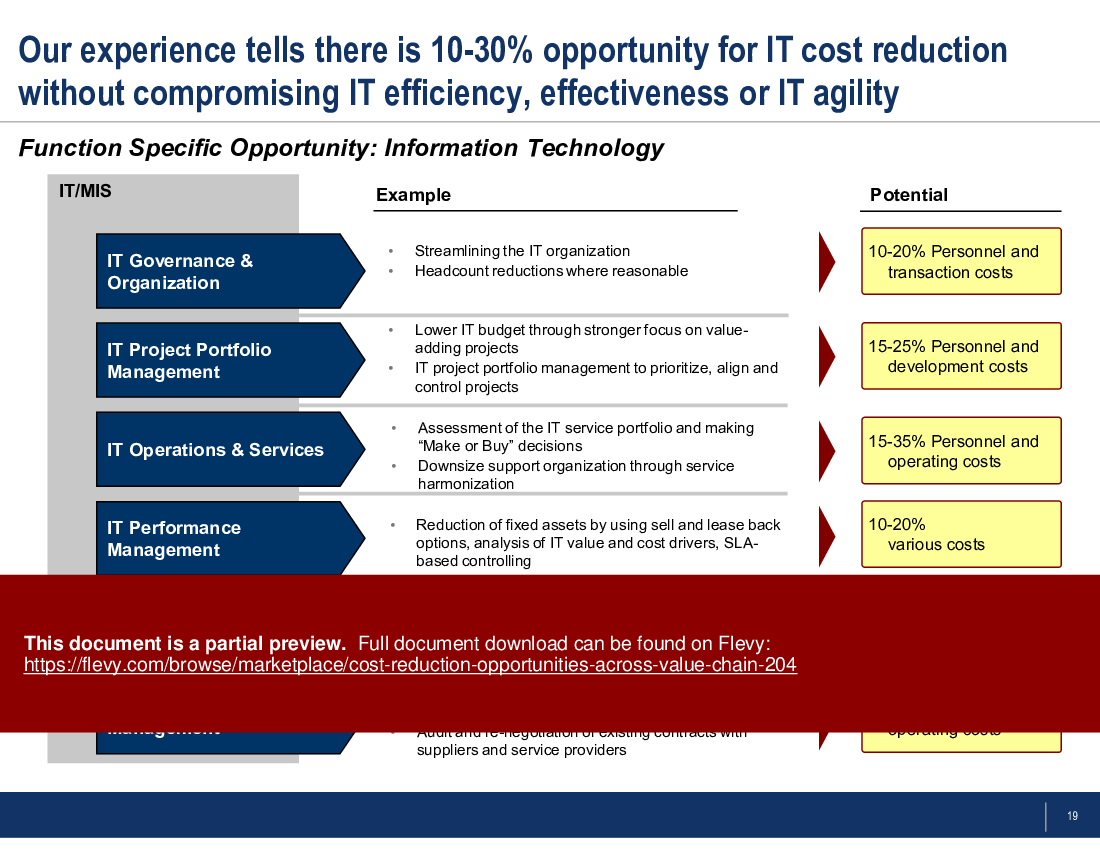
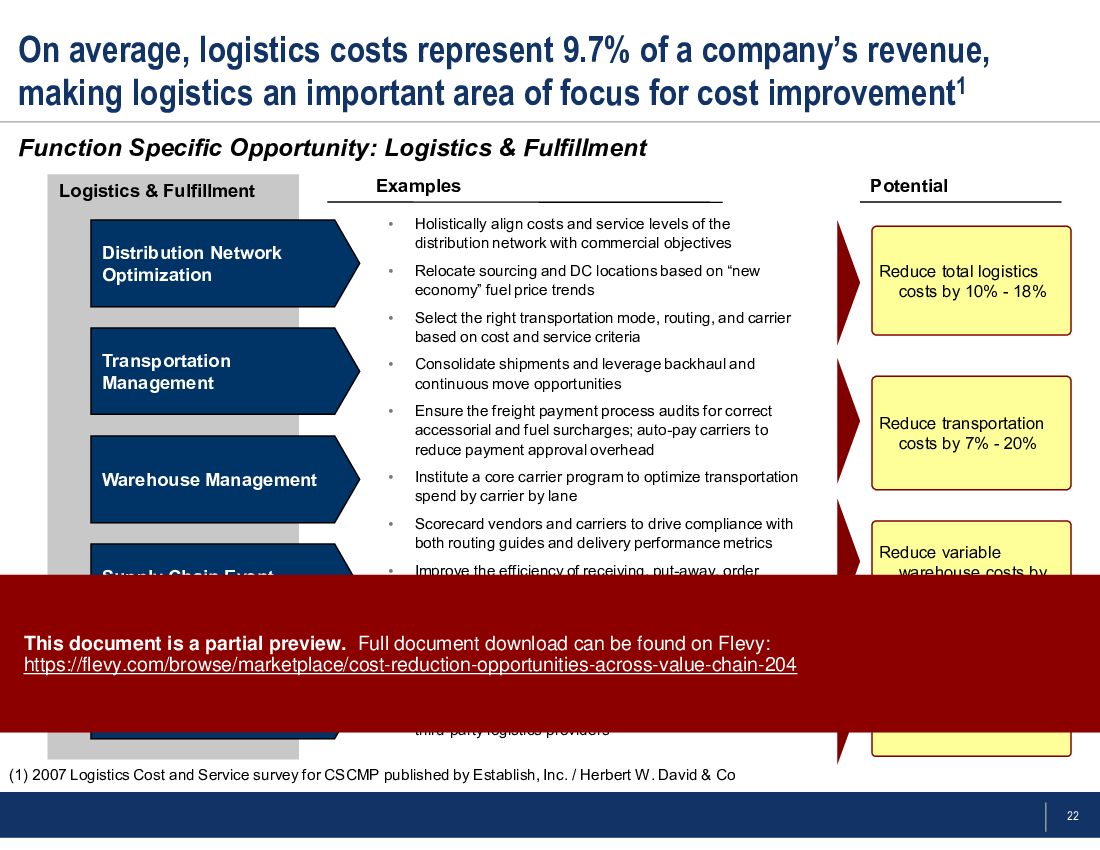
• Function Specific Opportunities (includes IT/MIS, Finance & Accounting, HR, Procurement/Sourcing, Product Development, Logistics & Fulfillment, Sales & Marketing, Operations, Services)
The Michael Porter Value Chain is a framework that identifies primary and support activities within an organization's operations. Primary activities include inbound logistics, operations, outbound logistics, marketing and sales, and customer service, while support activities include procurement, technology development, human resources, and firm infrastructure. It helps analyze an organization's activities to understand its Cost Structure and Competitive Advantage.
In this presentation, over 45 Cost Reduction initiatives have been identified across the Porter Value Chain. For each initiative, specific examples are provided, along with projected potential cost savings.
Cost Reduction allows organizations to allocate resources to innovation, technology adoption, and market expansion. Moreover, Cost Reduction can enhance efficiency, improve operational performance, and drive higher profitability.
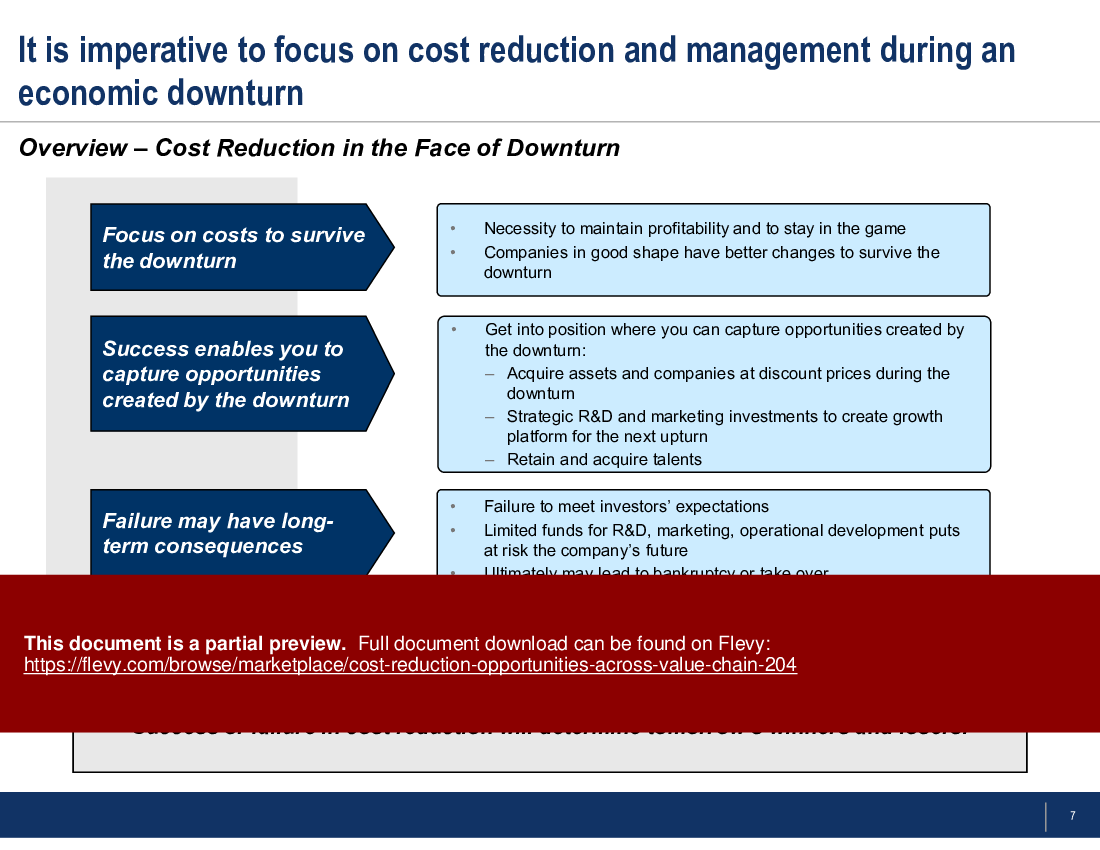
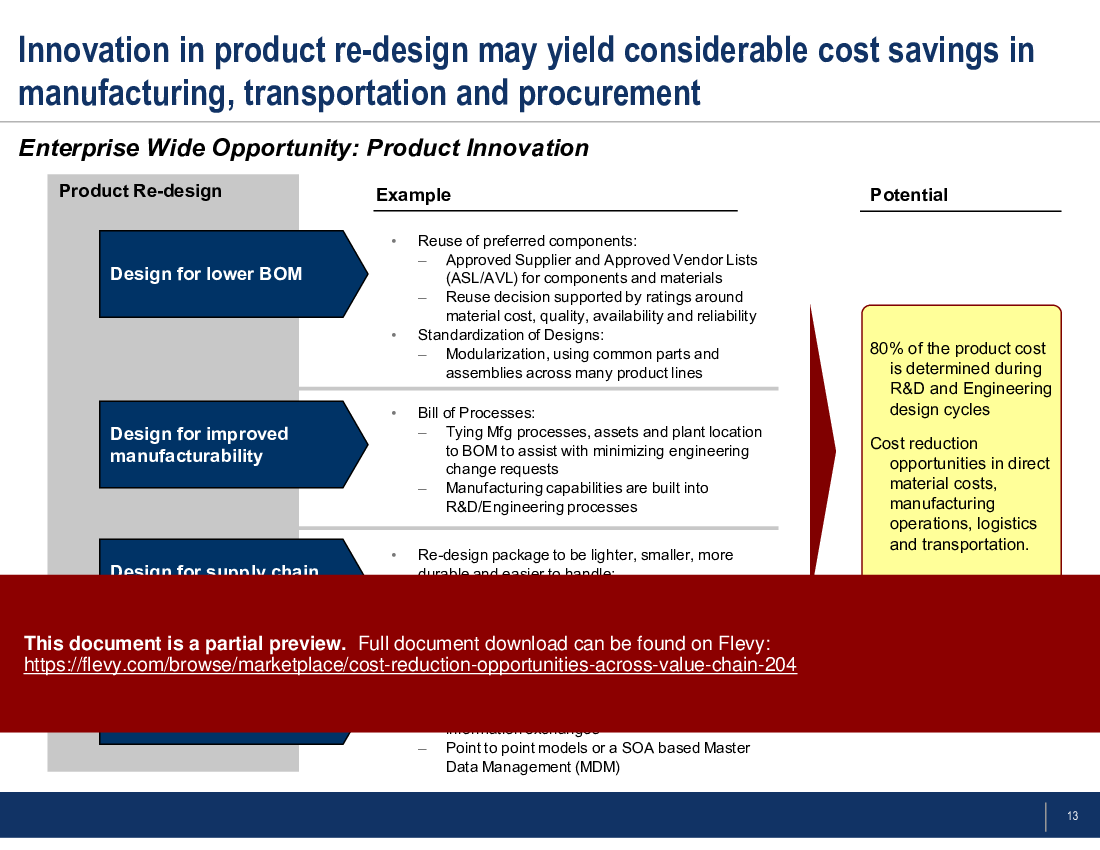
This presentation emphasizes the necessity of focusing on cost reduction to survive economic downturns, highlighting the importance of capturing opportunities created by such periods. It also details specific examples of cost reduction initiatives in areas like IT, logistics, and product innovation, with potential savings quantified.
Got a question about the product? Email us at support@flevy.com or ask the author directly by using the "Ask the Author a Question" form. If you cannot view the preview above this document description, go here to view the large preview instead.
Executive Summary
The Cost Reduction Opportunities (across Value Chain) framework is designed to help organizations identify and implement strategic cost-saving initiatives. Developed by former McKinsey, Bain, and BCG consultants, this consulting-grade presentation outlines over 45 cost reduction initiatives mapped to Michael Porter's Value Chain. It provides actionable insights across various functions, including Procurement, Human Resources, and Operations, enabling executives to drive efficiency and enhance profitability. This framework empowers leaders to pinpoint specific areas for improvement, ultimately leading to significant savings and operational excellence.
Who This Is For and When to Use
• Corporate executives focused on cost management and profitability improvement
• Integration leaders seeking to streamline operations across functions
• Consultants advising clients on cost reduction strategies
• Finance teams responsible for budget management and operational efficiency
Best-fit moments to use this deck:
• During strategic planning sessions to identify cost-saving initiatives
• When assessing operational efficiency in response to economic downturns
• In workshops aimed at cross-functional collaboration for cost management
Learning Objectives
• Define cost reduction opportunities across the value chain
• Identify enterprise-wide, asset management, and function-specific cost-saving initiatives
• Build actionable plans for implementing cost reduction strategies
• Establish metrics for measuring the impact of cost reduction efforts
• Analyze the effectiveness of procurement and asset management practices
• Create a roadmap for continuous improvement in operational efficiency
Table of Contents
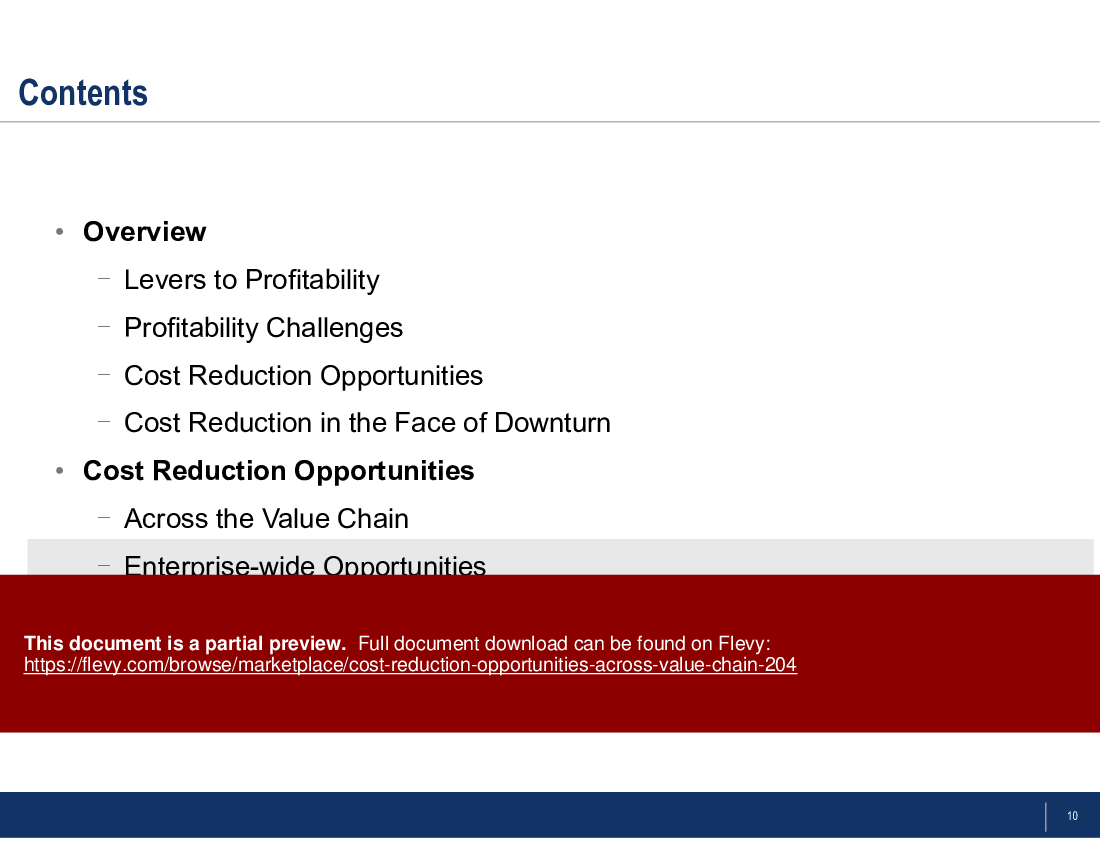
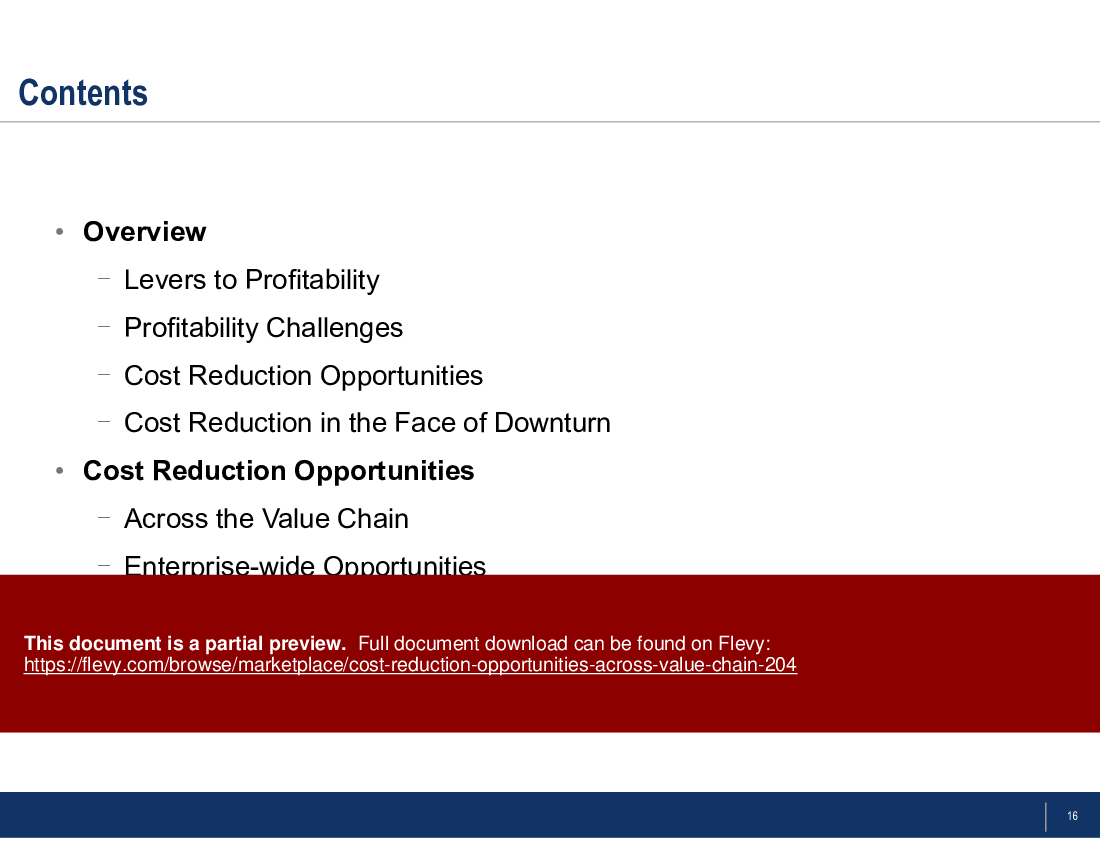
• Overview (page 3)
• Levers to Profitability (page 4)
• Profitability Challenges (page 5)
• Cost Reduction Opportunities (page 6)
• Cost Reduction in the Face of Downturn (page 7)
• Cost Reduction Opportunities (page 8)
• Across the Value Chain (page 9)
• Enterprise-wide Opportunities (page 10)
• Asset Management Opportunities (page 14)
• Function-specific Opportunities (page 16)
Primary Topics Covered
• Levers to Profitability - Identifies key areas where organizations can exert control over costs to enhance profitability.
• Profitability Challenges - Discusses the external factors affecting profitability, including rising costs and stagnant revenues.
• Cost Reduction Opportunities - Outlines various initiatives available to organizations for reducing costs across different functions.
• Cost Reduction in the Face of Downturn - Emphasizes the importance of cost management during economic downturns for long-term survival.
• Enterprise-wide Opportunities - Highlights cross-functional initiatives that can lead to significant cost savings.
• Function-specific Opportunities - Details targeted initiatives within specific functions such as Procurement, HR, and IT.
Deliverables, Templates, and Tools
• Cost reduction initiative templates for various functions
• Actionable frameworks for assessing procurement efficiency
• Metrics for evaluating asset management effectiveness
• Guidelines for implementing shared services and outsourcing strategies
• Best practices for product innovation and development cost savings
• Tools for measuring the impact of cost reduction initiatives
Slide Highlights
• Overview of profitability challenges and their impact on cost structures
• Detailed breakdown of cost reduction opportunities across the value chain
• Case studies illustrating successful cost-saving initiatives
• Visual representations of enterprise-wide and function-specific opportunities
• Frameworks for assessing the effectiveness of shared services and outsourcing
Potential Workshop Agenda
Cost Reduction Strategy Session (90 minutes)
• Review current cost structures and profitability challenges
• Identify potential cost reduction initiatives across functions
• Develop a prioritized action plan for implementation
Function-specific Deep Dive (60 minutes)
• Analyze specific cost-saving opportunities within Procurement, HR, and IT
• Discuss best practices for operational efficiency and effectiveness
Cross-functional Collaboration Workshop (90 minutes)
• Facilitate discussions among different departments to align on cost reduction goals
• Share insights and strategies for implementing initiatives effectively
Customization Guidance
• Tailor the cost reduction initiatives to align with your organization’s specific operational context
• Adjust the metrics used to measure success based on industry benchmarks
• Incorporate company-specific terminology and frameworks into the presentation
Secondary Topics Covered
• Shared services implementation and benefits
• Outsourcing strategies for non-core functions
• Asset management efficiency improvements
• Procurement process optimization
• Innovations in product development and design
FAQ
What are the primary areas for cost reduction?
The framework identifies opportunities across Procurement, Human Resources, Operations, and Asset Management, focusing on both enterprise-wide and function-specific initiatives.
How can this framework help during an economic downturn?
Focusing on cost reduction allows organizations to maintain profitability and position themselves to capture opportunities that arise during challenging economic times.
What types of deliverables are included in the framework?
The framework includes templates for cost reduction initiatives, metrics for evaluating effectiveness, and guidelines for implementing shared services and outsourcing strategies.
How can organizations measure the impact of cost reduction efforts?
Metrics can be established based on industry benchmarks and tailored to specific initiatives, allowing for ongoing evaluation of effectiveness.
What role does procurement play in cost reduction?
Procurement is crucial for managing costs effectively, and the framework outlines strategies for optimizing procurement processes to achieve significant savings.
Can the framework be customized for specific industries?
Yes, the framework can be tailored to fit the unique operational context and terminology of different industries.
What are some examples of function-specific opportunities?
Examples include streamlining HR processes, optimizing IT infrastructure, and enhancing procurement strategies to reduce costs.
How does shared services contribute to cost reduction?
Shared services can lead to immediate cost savings through increased efficiency, standardization, and economies of scale across functions.
Glossary
• Value Chain - A model that describes the full range of activities required to create a product or service.
• Cost of Goods Sold (COGS) - The direct costs attributable to the production of the goods sold by a company.
• Selling, General and Administrative (SG&A) - Expenses incurred in the selling of products and managing the business.
• Shared Services - A model for consolidating business operations that are used by multiple parts of the same organization.
• Outsourcing - The practice of hiring external firms to handle business activities or services.
• Asset Management - The systematic process of developing, operating, maintaining, and selling assets in a cost-effective manner.
• Procurement - The process of acquiring goods and services, typically for business purposes.

• Operational Efficiency - The ability to deliver products or services in the most cost-effective manner without compromising quality.
• Product Innovation - The development of new or improved products to meet customer needs and drive sales.
• Cost Reduction - Strategies and actions taken to decrease expenses and improve profitability.
• Function-specific Opportunities - Targeted initiatives within specific business functions aimed at reducing costs.
• Economic Value Added (EVA) - A measure of a company's financial performance that shows the net profit after deducting the cost of capital.
• R&D - Research and Development; activities related to the innovation and improvement of products and services.
• Logistics - The detailed coordination of complex operations involving people, facilities, and supplies.
• Service Level Agreement (SLA) - A contract that defines the level of service expected from a service provider.
• Key Performance Indicators (KPIs) - Measurable values that demonstrate how effectively a company is achieving key business objectives.
• Capital Efficiency - A measure of how effectively a company uses its capital to generate revenue.
• Supply Chain Management - The management of the flow of goods and services from raw materials to final products.
• Customer Segmentation - The process of dividing a customer base into groups of individuals that are similar in specific ways.
• Process Optimization - The discipline of adjusting a process to optimize its performance.
• Automation - The use of technology to perform tasks without human intervention.
Source: Best Practices in Cost Reduction Assessment, Value Chain Analysis PowerPoint Slides: Cost Reduction Opportunities (across Value Chain) PowerPoint (PPT) Presentation Slide Deck, LearnPPT Consulting
|
Receive our FREE presentation on Operational Excellence
This 50-slide presentation provides a high-level introduction to the 4 Building Blocks of Operational Excellence. Achieving OpEx requires the implementation of a Business Execution System that integrates these 4 building blocks. |