
This presentation is created by an expert in Strategic Planning, having been involved in the planning sessions of 3M, Gillette, Rubbermaid, Zenith, Sunbeam, and 100s of others. He's been working in Strategic Planning since the 60s.
Editor Summary
Complete Guide to Strategic Planning is a 77-slide PowerPoint presentation by Anthony Gable, MBA, presenting a structured strategic planning process that integrates situational analysis, strategic formulation, and performance measurement.
Read moreIncludes 6 templates/tools: situational analysis framework, strategic planning template, performance measurement dashboard, communication plan, risk assessment tool, and executive summary template. Target users include corporate executives, management teams, consultants, and PMOs. Intended for use in retreats, planning cycles, or plan revisions; sold as a digital download on Flevy with immediate digital download.
Use this presentation when an organization must define or renew strategy because of growth, disruption, or a scheduled planning cycle that requires a structured approach to analysis, formulation, and measurement.
Corporate executives running a strategic planning retreat to align vision, goals, and stakeholder communications.
Management teams translating situational analysis into actionable initiatives and assigning responsibilities and KPIs.
Consultants conducting industry maturity and competitive assessments to identify strategic options.
PMOs converting strategic goals into performance dashboards and implementation milestones.
The guide’s three-part approach—situational analysis, strategic formulation, and performance measurement—aligns with the structured, hypothesis-driven planning practices associated with McKinsey, Bain, and BCG.
This 77-slide PowerPoint presentation fully illustrates a comprehensive process for the formation of a Strategic Business Plan. It is intended to provide a compendium of substantive input based upon consulting market and management coaching experience and proven techniques generated from currently respected approaches. It is inclusive of both accepted new, as well as long-standing classic systems if considered compulsory today to the formation of an effective, successful strategic plan. There are several popular but currently less effective tools (eg BCG Matrix, etc.) that have not been included in this guide. We will only utilize those tools and processes that have, through our experience, proven effective for Strategic Planning formation in today's Digital Economy (please see author background below).
This unified guide is meant for executives and business owners who are responsible for creating, demonstrating the logic for, and leading the strategic planning exercise within their respective organizations.
Our purpose in this presentation is to define what is meant by strategy. It includes a historical perspective to clarify why a Strategic Management and Formulated Strategic Plan is critical to business success. We will discuss the creation, facilitation, and implementation of a strategic plan through an essential, unified process relevant to the objectives sought by the business and organization utilizing it.
In short, the purpose of this document is as follows:
1. To define strategy.
2. To explain the importance of strategy and it's necessity for success
3. To describe strategic formulating and developing of a business plan.
For more information on Strategic Plan formation, take a look at my supplemental document available on Flevy, Critical Baselines for Effective Strategic Planning.
AUTHOR BACKGROUND
Anthony Gable, MBA, is a Strategic Planning Specialist. He has been advising individual owners, executives, and profit-center (SBU) heads and their teams on the strategic planning process since 1983. Prior to that, he gained management experience from years of wide-reaching exposure in the corporate sector as a manager and executive.
Mr. Gable simplifies strategic planning through a unified process which analyzes the competitive environment, relative maturity of the industry, markets, products involved, and company objectives. Strategic options are then distilled out, clarified, and made tangible.

Mr. Gable has held executive positions with major organizations, including roles as a Corporate and Divisional Vice President, Director of Sales and Marketing, National Sales Manager, and profit-center (SBU) positions as a Product and Business Manager. Additionally, he has extensive successful executive involvement in both corporate turnarounds and trustee appointed work-out scenarios, with management and operational exposure throughout the US, Canada, and Europe in a wide variety of markets and end-use product applications. His consultative repertoire has included management Strategic Planning leadership development, coaching and team building with associated presentation and facilitation to small and mid-size companies as well as to executives and department heads in large, internationally recognized organizations.
The guide delves into the historical evolution of strategic planning, providing a comprehensive understanding of its stages. It also emphasizes the importance of defining core terms and analyzing critical market forces to formulate a robust strategic plan.
Got a question about the product? Email us at support@flevy.com or ask the author directly by using the "Ask the Author a Question" form. If you cannot view the preview above this document description, go here to view the large preview instead.
MARCUS OVERVIEW
This synopsis was written by Marcus [?] based on the analysis of the full 77-slide presentation.
Executive Summary
The "Complete Guide to Strategic Planning" presentation offers a McKinsey, Bain, or BCG-quality overview of strategic planning processes tailored for executives and organizations. This comprehensive 77-slide deck, created by Anthony Gable, MBA, synthesizes decades of consulting experience, providing actionable insights into developing effective strategic plans. Users will learn to define strategy, understand its importance, and implement a structured approach to strategic planning that integrates situational analysis, strategic formulation, and performance measurement. This guide equips executives with the tools to navigate complex market dynamics and enhance organizational effectiveness.
Who This Is For and When to Use
• Corporate executives seeking to refine strategic planning processes
• Management teams tasked with developing and implementing strategic initiatives
• Consultants focused on guiding organizations through strategic transformations
• Project Management Offices (PMOs) looking to align strategic goals with operational execution
Best-fit moments to use this deck:
• During strategic planning retreats or workshops to align leadership on vision and goals
• When initiating a new strategic planning cycle to ensure a structured approach
• For assessing and revising existing strategic plans in response to market changes
Learning Objectives
• Define the concept of strategy and its significance in organizational success
• Analyze the external environment to identify market opportunities and threats
• Formulate actionable strategic plans that align with organizational goals
• Implement performance measurement systems to track strategic progress
• Foster team commitment and communication throughout the strategic planning process
• Adapt strategies based on ongoing performance analysis and market dynamics
Primary Topics Covered
• Strategic Planning Process - A structured approach to developing and implementing strategic plans, integrating situational analysis, formulation, and performance measurement.
• Situational Analysis - An assessment of the organization's current environment, including market dynamics, competition, and internal capabilities.
• Strategic Formulation - The process of creating actionable strategies based on situational insights and organizational goals.
• Performance Measurement - Systems for tracking the effectiveness of implemented strategies and making necessary adjustments.
• Management Functions - Key roles and responsibilities in the strategic planning process, emphasizing the integration of planning, organizing, directing, and controlling.
• Market Dynamics - Understanding external factors that influence strategic decisions, including competition, customer needs, and technological advancements.
Deliverables, Templates, and Tools
• Situational analysis framework for assessing market and competitive environments
• Strategic planning template for documenting goals, actions, and responsibilities
• Performance measurement dashboard for tracking strategic progress
• Communication plan for engaging stakeholders throughout the strategic process
• Risk assessment tool for identifying and mitigating potential challenges
• Executive summary template for presenting strategic plans to stakeholders
Slide Highlights
• Overview of the strategic planning process flow diagram, illustrating key phases
• Detailed breakdown of situational analysis components, including market and competitive profiling
• Framework for strategic formulation, emphasizing critical factors like industry maturity and basis of competition
• Performance measurement metrics to evaluate the success of strategic initiatives
• Quotes from "The Art of War" emphasizing the importance of strategic foresight and planning
Potential Workshop Agenda
Strategic Planning Kickoff (90 minutes)
• Introduce the strategic planning process and its importance
• Discuss organizational vision and goals
• Begin situational analysis and market assessment
Strategic Formulation Session (120 minutes)
• Collaborate on developing actionable strategies
• Identify key performance indicators for tracking success
• Assign responsibilities for implementation
Performance Review and Adjustment (60 minutes)
• Evaluate progress against strategic goals
• Discuss necessary adjustments based on performance data
• Reinforce team commitment to the strategic plan
Customization Guidance
• Tailor the situational analysis to reflect specific industry dynamics and competitive landscapes
• Adjust strategic goals and performance metrics based on organizational priorities
• Incorporate unique organizational values and culture into the strategic planning framework
• Update templates and deliverables to align with internal processes and terminology
Secondary Topics Covered
• Historical evolution of strategic planning methodologies
• Analysis of critical market forces affecting strategic decisions
• Techniques for fostering team engagement and commitment in the planning process
• Case studies of successful strategic planning implementations
Topic FAQ
What are the main phases of a strategic planning process?
A structured strategic planning process commonly comprises situational analysis to assess the environment, strategic formulation to create actionable options aligned to goals, and performance measurement to track and adjust execution. The Complete Guide to Strategic Planning presents these 3 core phases in its framework.
How do I conduct a situational analysis for strategy work?
Conduct situational analysis by assessing market dynamics, competitor position, customer needs, and internal capabilities to identify opportunities and threats. Use structured tools to document findings and implications; Flevy's Complete Guide to Strategic Planning includes a situational analysis framework to support this work.
What performance metrics should I track for a strategic plan?
Select metrics that directly reflect strategic objectives and enable course correction, then monitor them through a centralized system. The guide provides example performance measurement metrics and a performance measurement dashboard to track progress, detailed in the Performance Measurement & Control section.
What is strategic formulation and how should industry maturity be considered?
Strategic formulation turns situational insights into concrete options and action plans, weighing factors like market position, customer needs, basis of competition, and industry maturity to prioritize choices. The guide’s formulation framework explicitly incorporates industry maturity and basis of competition as decision inputs.
How should I choose a strategic planning template for my company?
Choose a template that lets you document clear goals, actions, owners, timelines, and KPIs, and that can be tailored to your industry and terminology. The Complete Guide to Strategic Planning offers a strategic planning template designed to capture goals, actions, and responsibilities for customization.
What is a reasonable timeline and session structure for a strategic planning workshop?
A compact workshop structure in the guide includes a 90-minute kickoff, a 120-minute strategic formulation session, and a 60-minute performance review and adjustment session, totaling 270 minutes of facilitated work in one combined agenda.
I need to revise my strategic plan after market disruption — what framework should I follow?
Revisit the situational analysis to re-evaluate market dynamics and competitive threats, then reformulate strategy options and update performance measures to monitor recovery. Flevy's Complete Guide to Strategic Planning addresses this sequence with Situational Analysis (page 30) and Performance Measurement (page 65).
How much do strategy templates and dashboards typically cost, and are they worth buying?
Prices vary by vendor and scope; evaluate templates by the time they save, degree of customization required, and how well they map to your objectives. A purchasable resource like Flevy's Complete Guide to Strategic Planning bundles templates and a dashboard in a 77-slide deck.
What tools help communicate a strategic plan to stakeholders during roll-out?
Effective communication tools include a concise executive summary, a stakeholder communication plan, and tailored dashboards for different audiences. The guide includes a communication plan and an executive summary template to structure stakeholder engagement.
Document FAQ
These are questions addressed within this presentation.
What is the main purpose of this presentation?
The presentation aims to define strategy, explain its importance, and provide a structured approach to developing and implementing effective strategic plans.
Who is the author of this presentation?
Anthony Gable is a Strategic Planning Specialist with extensive experience in advising organizations on strategic planning processes.
How can this presentation help my organization?
It provides a comprehensive framework for understanding and implementing strategic planning, enabling organizations to navigate market dynamics effectively.
What are the key components of the strategic planning process?
The process includes situational analysis, strategic formulation, performance analysis, and performance measurement.
How can I customize the templates provided in this presentation?
Templates can be tailored to reflect specific organizational goals, industry dynamics, and internal processes.
What is the significance of situational analysis?
Situational analysis helps organizations assess their current market position, identify opportunities and threats, and inform strategic decision-making.
How does performance measurement fit into strategic planning?
Performance measurement allows organizations to track the effectiveness of their strategies and make necessary adjustments to achieve goals.
What are the benefits of managing by strategy?
Managing by strategy enhances market positioning, aligns organizational resources with goals, and improves team morale and communication.
How can I ensure team commitment to the strategic plan?
Engaging team members in the planning process, clearly communicating the vision, and assigning responsibilities can foster commitment.
What tools are included in this presentation?
The presentation includes templates for situational analysis, strategic planning, performance measurement, and communication plans.
Glossary
• Strategy - The approach an organization takes to achieve its goals using available resources.
• Planning - The process of creating a strategy by prioritizing resource utilization.
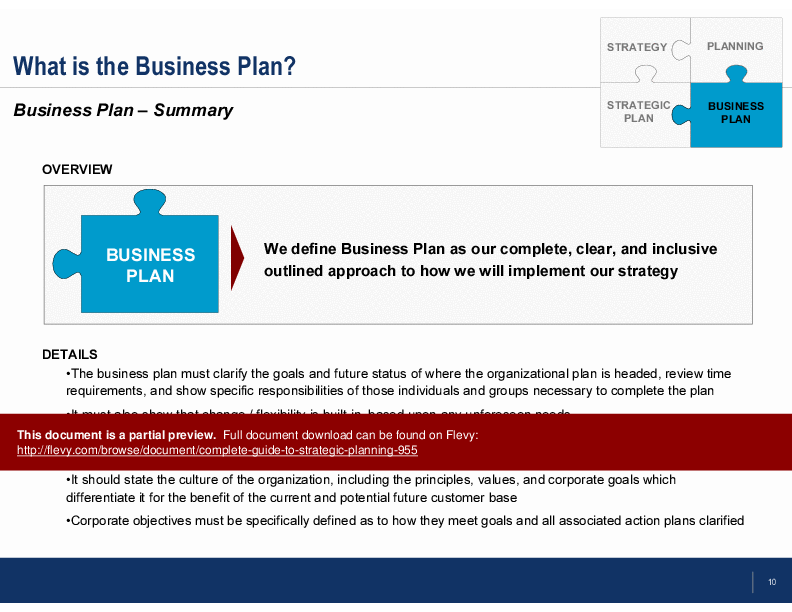
• Business Plan - A comprehensive outline of how an organization will implement its strategy.
• Situational Analysis - An assessment of the internal and external factors affecting an organization.
• Strategic Formulation - The process of developing actionable strategies based on situational insights.
• Performance Measurement - Systems for tracking the effectiveness of implemented strategies.
• Market Dynamics - The external factors influencing an organization's strategic decisions.
• SWOT Analysis - A framework for assessing strengths, weaknesses, opportunities, and threats.
• Competitive Position - An organization's standing relative to its competitors in the market.
• Maturity Curve - A model illustrating the lifecycle stages of a business or industry.
• Stakeholders - Individuals or groups with an interest in the organization's success.
• Risk Assessment - The process of identifying and evaluating potential challenges to a strategic plan.
• Executive Summary - A concise overview of the strategic plan for stakeholders.
• Action Plan - A detailed outline of steps required to implement strategies.
• Performance Indicators - Metrics used to evaluate the success of strategic initiatives.
• Organizational Culture - The shared values and practices that shape an organization's environment.
• Resource Allocation - The distribution of resources to support strategic initiatives.
• Change Management - The process of guiding an organization through transitions.
• Team Engagement - The involvement and commitment of team members in the planning process.
• Market Positioning - The strategy used to differentiate a product or service in the market.
• Strategic Goals - Specific objectives that guide an organization's strategic direction.
This PPT slide provides a structured overview of essential elements for developing a strategic plan, organized into 2 sections: a summary and a detailed table defining 6 key elements: Industry, Market, Competitors, Business, Strategy, and Program. "Industry" refers to the company and its competitors, while "Market" identifies the customer base served. "Competitors" include both direct and indirect alternatives. The "Business" section outlines necessary activities to deliver goods, and "Strategy" discusses resource allocation to support business direction at various organizational levels. "Program" encompasses activities needed for strategy implementation. Each factor is critical for informed strategic decision-making.
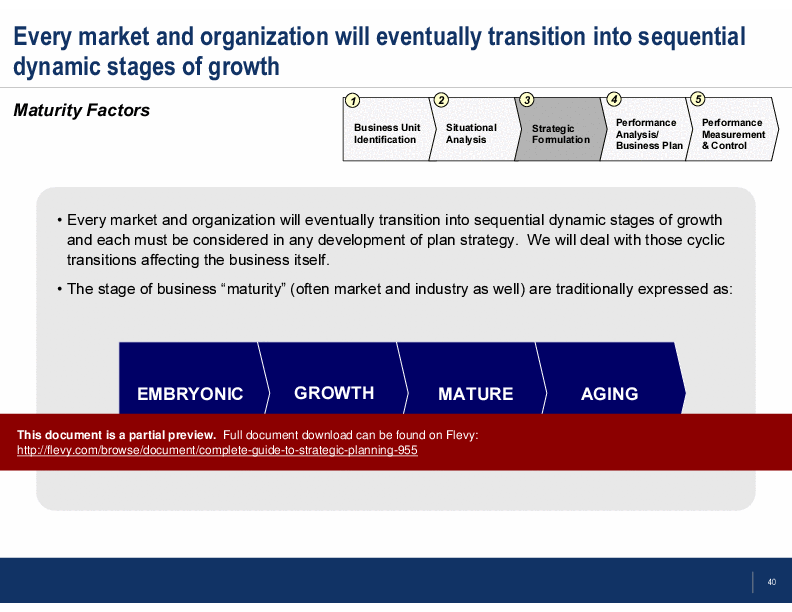
This PPT slide illustrates the business lifecycle growth curve, segmented into 4 phases: Embryonic, Growth, Maturity, and Aging. The vertical axis represents sales volume, while the horizontal axis denotes time. In the Embryonic phase, sales are low as the business establishes itself. The Growth phase sees significant sales increases due to rapid expansion and market penetration. In the Maturity phase, growth stabilizes as the business captures substantial market share,, but potential for further growth diminishes. The Aging phase marks a decline in sales, indicating challenges like market saturation or increased competition. Understanding the maturity stage is essential for developing strategic plans, as strategies differ markedly across lifecycle phases, influencing decision-making, resource allocation, and long-term planning.
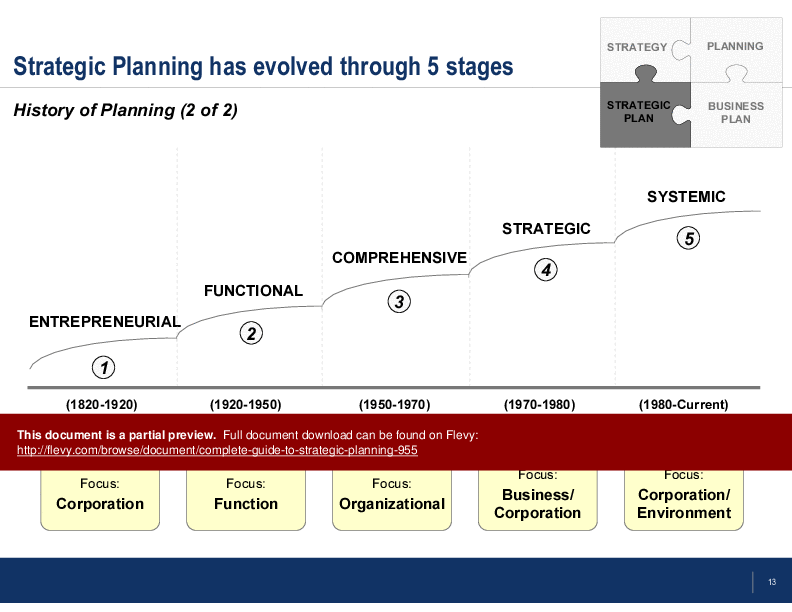
This PPT slide outlines the evolution of strategic planning through 5 stages from 1820 to the present. The "Entrepreneurial" stage (1820-1920) focuses on a corporation-centric approach shaped by individual entrepreneurs. The "Functional" stage (1920-1950) emphasizes departmental objectives and structured planning. The "Comprehensive" stage (1950-1970) integrates various functions into a cohesive planning process, reflecting organizational complexity. The "Strategic" stage (1970-1980) marks a transition to aligning business objectives with market dynamics, indicating a proactive planning approach. The current "Systemic" stage (1980-Present) integrates planning with the external environment, emphasizing adaptability and responsiveness to modern business complexities.
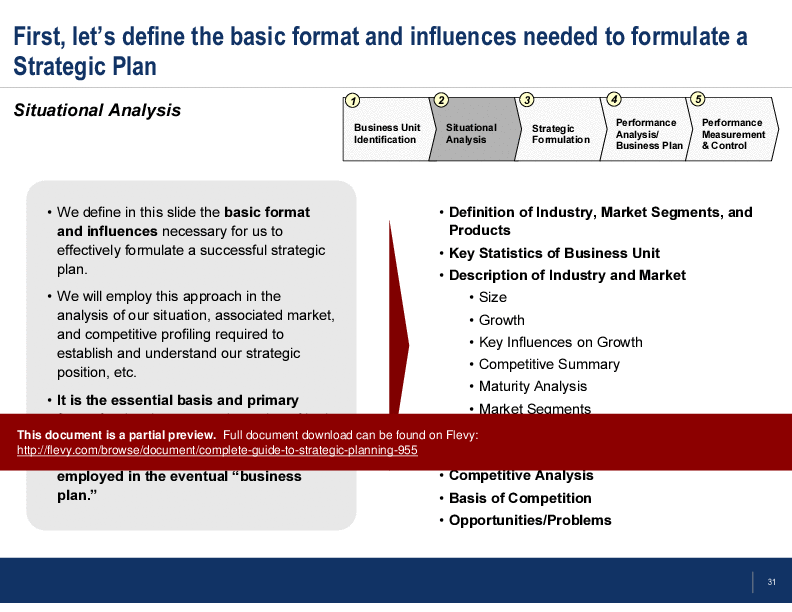
This PPT slide outlines a structured approach to developing a business plan, emphasizing situational analysis. Key components include "The Strategic Focus," which defines overarching goals and vision; "The Business," detailing organizational structure and management practices; and "The Market Analysis," which assesses external conditions and identifies opportunities or threats. Sections on "The Products" and "The Marketing" focus on product positioning and promotional strategies. The inclusion of R&D indicates a commitment to innovation, while "Manufacturing / Distribution" addresses operational considerations. "The Supply Chain" highlights logistics and resource management. Financial aspects, risk management, and corporate governance are critical for sustainability and compliance. "Investment and Use of Funds" focuses on financial strategy, while "The Strategic Action Plan" and "Future Plan Development" emphasize long-term success. This framework serves as a roadmap for executives creating or refining business plans.
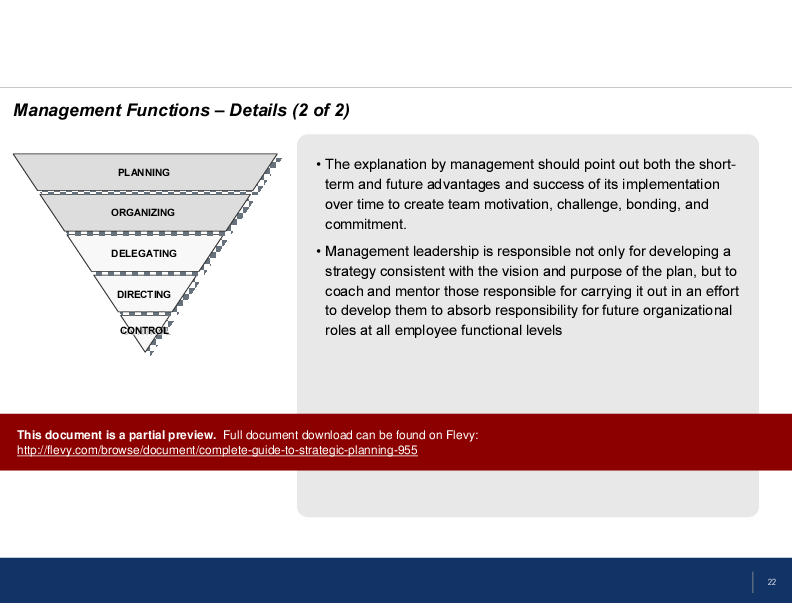
This PPT slide outlines the 5 core functions of management: Planning, Organizing, Delegating, Directing, and Control. "Planning" is the foundational function that establishes organizational goals. "Organizing" involves structuring resources and tasks to achieve these goals. "Delegating" distributes responsibilities among team members, emphasizing careful consideration of plans and structure. "Directing" focuses on guiding and motivating employees to align with strategic objectives. Finally, "Control" serves as a feedback mechanism to monitor performance and ensure alignment with goals. These functions are essential aspects of management that leaders must engage with directly to drive organizational success.
The Maturity-Competitive Position Matrix categorizes competitive positions into 5 levels: Leadership, Strong, Favorable, Tenable, and Weak, plotted against 4 stages of industry maturity: Embryonic, Growth, Maturity, and Aging. Color coding indicates competitive position status within each maturity stage: green for favorable positions, yellow/orange for moderate performance, and red for weak positions needing urgent intervention. This matrix serves as a strategic framework for assessing organizational standing relative to industry maturity, aiding in resource allocation and strategic initiatives. It emphasizes situational analysis and strategic formulation, guiding targeted strategies that align with market position and maturity stage for improved business outcomes.
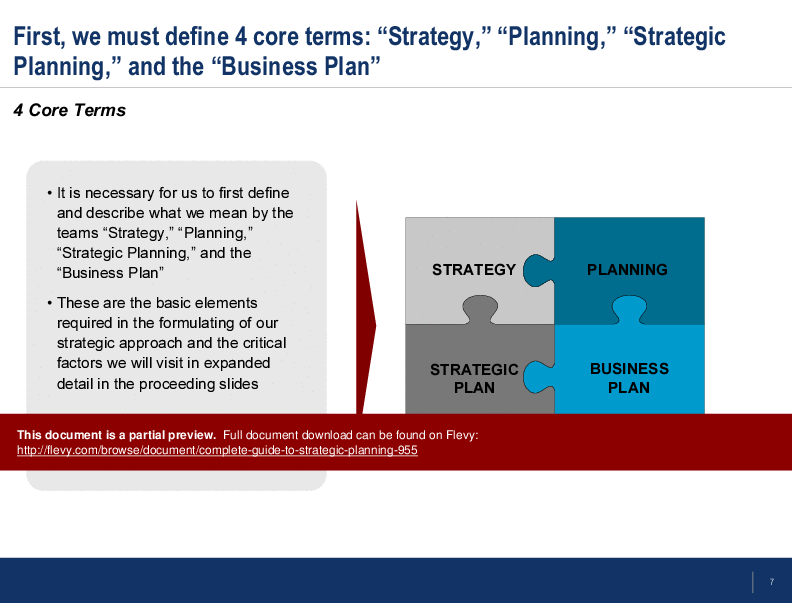
This PPT slide defines 4 core terms: "Strategy," "Planning," "Strategic Planning," and "Business Plan." Clear definitions of these terms are foundational for developing a strategic approach. The visual component features a puzzle graphic illustrating the interconnections between the terms, emphasizing their collective contribution to a cohesive framework. A structured approach to strategic planning is suggested, with subsequent slides exploring critical factors associated with these terms. Clarity in terminology is essential for effective communication and alignment among stakeholders, facilitating better strategic planning and execution.
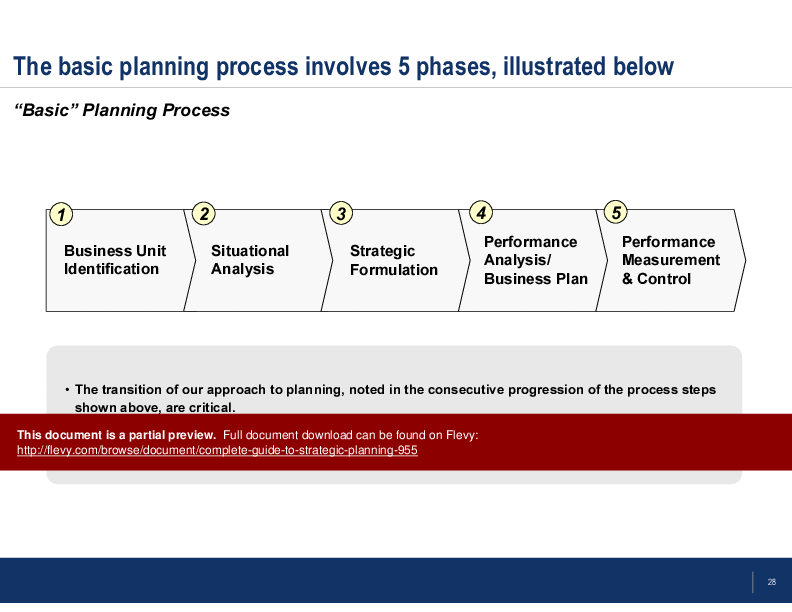
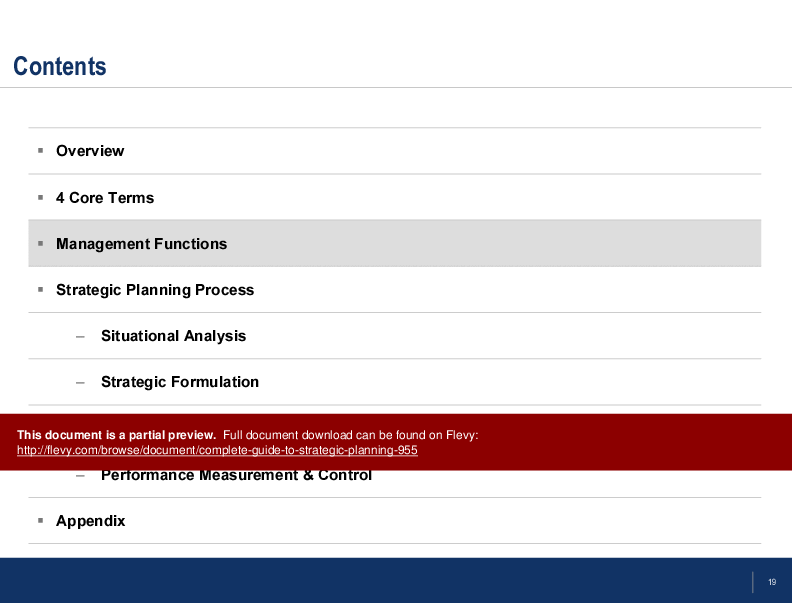
This PPT slide outlines a five-phase strategic planning process:
1. Business Unit Identification focuses on recognizing distinct organizational units requiring tailored strategies.
2. Situational Analysis assesses the current environment and internal capabilities, crucial for informed strategic decisions.
3. Strategic Formulation develops actionable strategies based on insights from previous phases.
4. Performance Analysis/Business Plan evaluates strategy effectiveness and creates a detailed business plan for implementation.
5. Performance Measurement & Control establishes metrics to monitor progress and ensure alignment with strategic goals.
The sequential execution of these phases is critical for effective planning and integration into a cohesive approach.
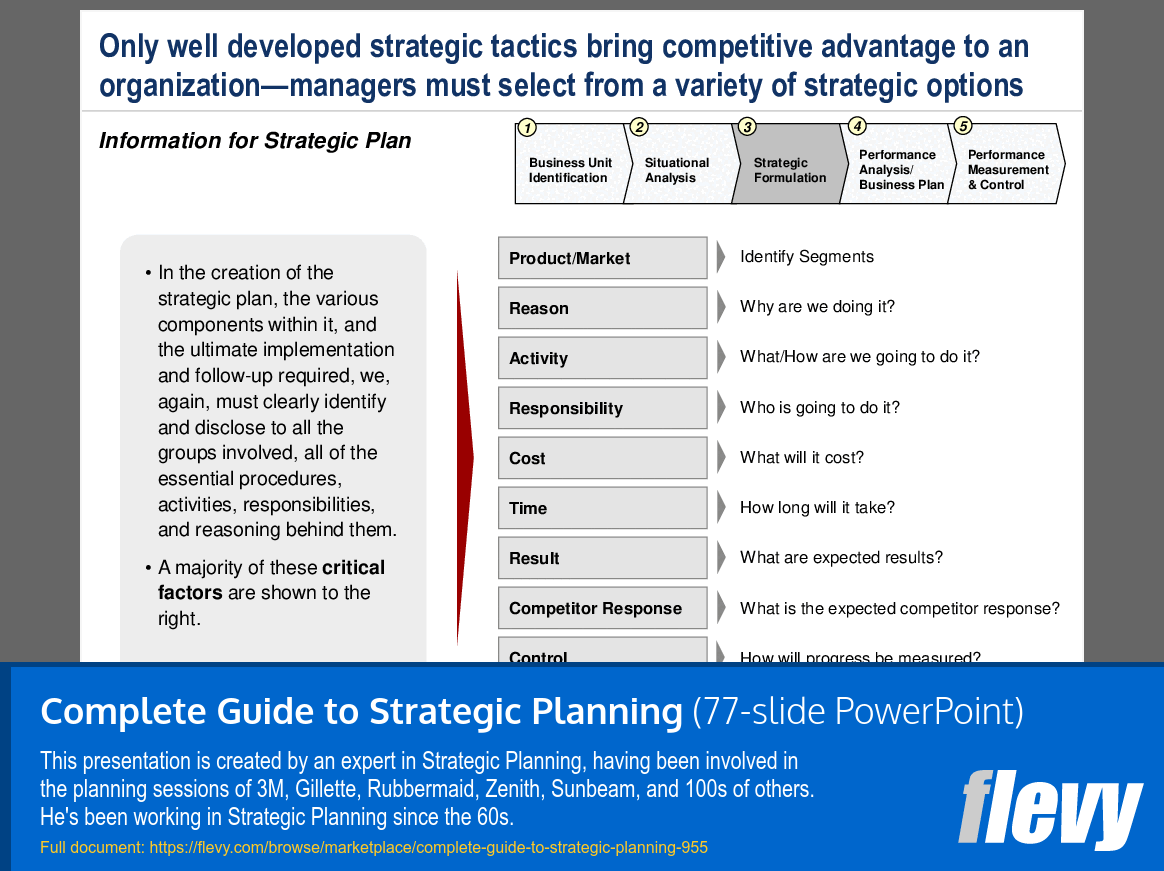
This PPT slide outlines a framework for developing a strategic plan, emphasizing well-defined tactics and the selection of strategic options for organizational effectiveness. Key components include Product/Market, Reason, Activity, Responsibility, Cost, Time, Result, Competitor Response, and Control, each paired with guiding questions for deeper analysis. For example, the Product/Market component focuses on identifying market segments, while the Reason section explores the initiative's purpose. The interconnectedness of these factors suggests that neglecting any could jeopardize the strategic plan's success. Addressing these components enables organizations to navigate the complexities of strategic planning and execution effectively.
This PPT slide outlines significant shifts in market dynamics from the early 20th century to the present, contrasting "The Way It Was" with "The Way It Is Now." The earlier market featured unlimited resources, unsaturated markets, and rapid growth, resulting in modest competition and limited regulation. In contrast, today's market is characterized by limited resources, saturated markets, and slow growth, leading to increased competitive resistance and regulation. This shift indicates a tightening of operational flexibility, requiring businesses to adapt their strategies. The evolution from a simple to a complex business environment necessitates a strategic approach to planning, as organizations must navigate increased competition and regulatory pressures. Recognizing these shifts informs decision-making and helps businesses position themselves effectively in a rapidly changing landscape.
This PPT slide evaluates financial and non-financial factors in strategic planning, categorized into Internal Processes and Financial Processes. Internal Processes include customer management, innovation approaches, and regulatory handling, which impact organizational effectiveness. Improving internal efficiency enhances service delivery and customer satisfaction, while converting intangible assets into tangible value maximizes resources for sustainability. Financial Processes focus on revenue growth and profitability, emphasizing cost reduction and expansion opportunities. This dual focus highlights the interconnectedness of financial metrics and operational capabilities in achieving strategic objectives. Internal factors must align with planning objectives and measurement to integrate both dimensions into a holistic strategy that drives profitability and operational effectiveness.
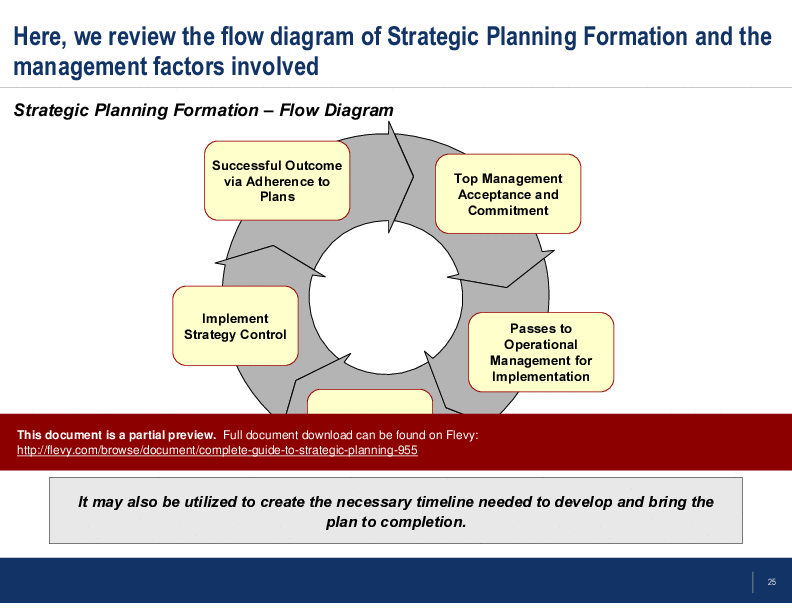
This PPT slide outlines the Strategic Planning Formation process, emphasizing its cyclical nature. The initial step, "Top Management Acceptance and Commitment," highlights the necessity of leadership buy-in for effective strategic planning. The process then transitions to "Operational Management for Implementation," where strategic goals are translated into actionable plans. The "Review Implementation" stage introduces a feedback loop to assess strategy effectiveness and identify gaps between planned objectives and actual performance. Following this, "Implement Strategy Control" indicates the need for ongoing monitoring and adjustments. The cycle culminates in "Successful Outcome via Adherence to Plans," reinforcing that consistent execution leads to desired results. The circular diagram symbolizes the iterative nature of strategic planning, fostering continuous improvement. Additionally, this framework aids in developing project timelines, enhancing practical application.
This PPT slide outlines essential conditions for increasing market share, focusing on 3 strategic options: maintaining, increasing, or relinquishing market share. Key conditions for growth include a growing market, cost advantage, and acquisition. A growing market indicates sectors with rising demand, while cost advantage allows for competitive pricing strategies through lower operational costs. Acquisition can rapidly enhance market presence via mergers or takeovers. Product differentiation is crucial for standing out in the marketplace. The note about increasing market share costing money highlights the financial implications organizations must consider when pursuing growth strategies.
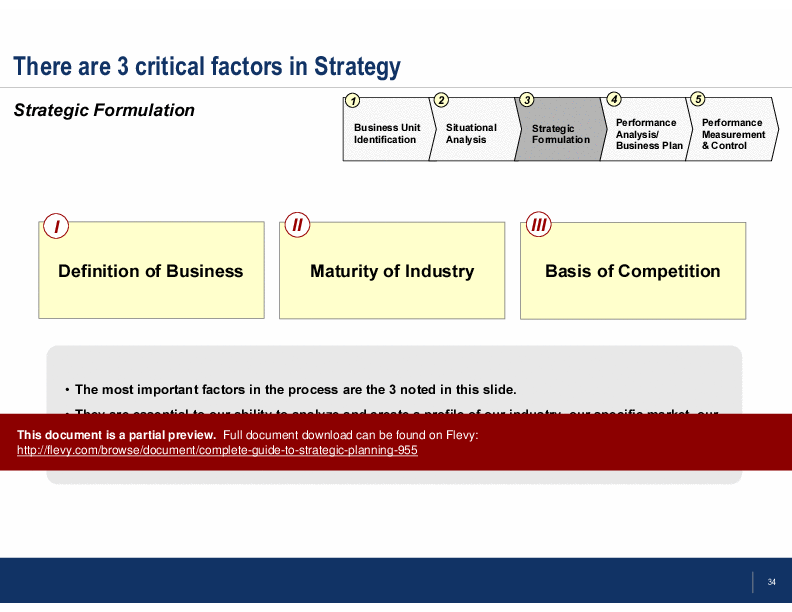
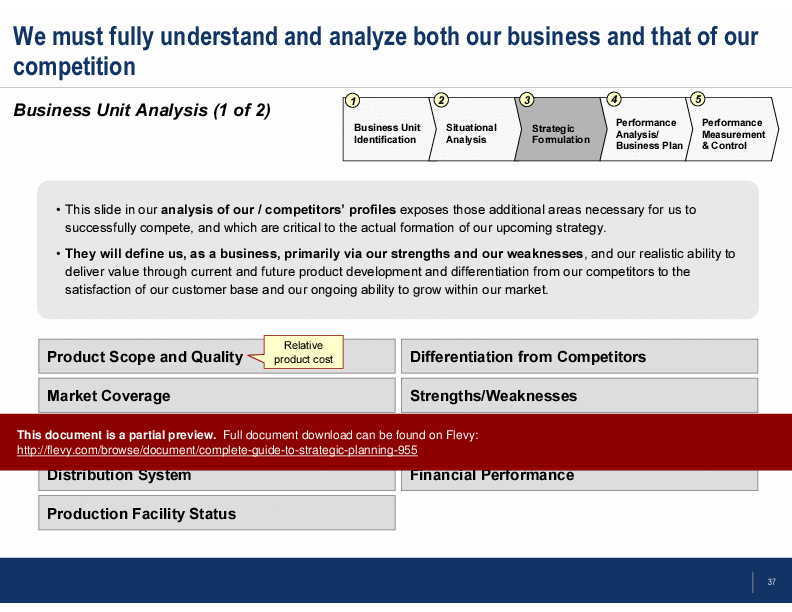
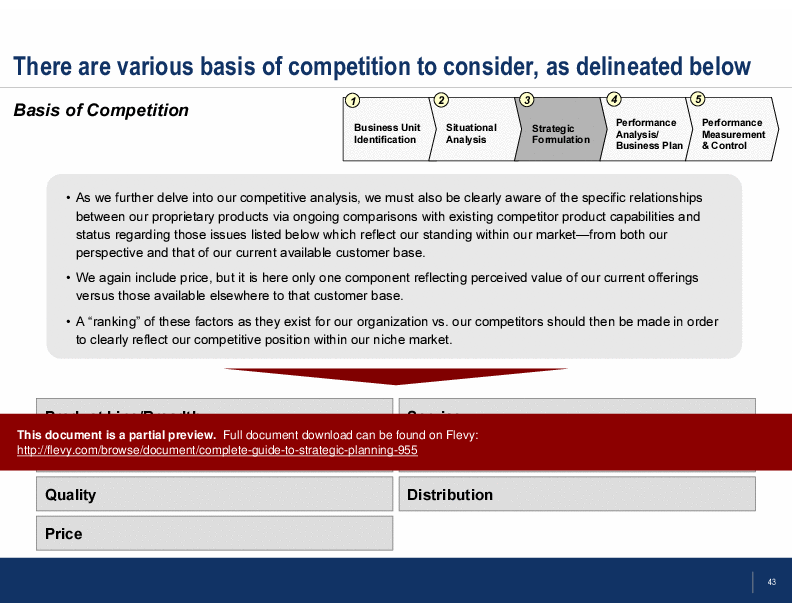
This PPT slide focuses on competitive position within a market, essential for strategic planning. It outlines a structured approach divided into 3 sections: Definition of Business, Maturity of Industry, and Basis of Competition. The "Definition of Business" emphasizes articulating core activities and objectives to align strategies with market realities. The "Maturity of Industry" discusses stages of industry development that influence competitive dynamics, aiding in anticipating changes. A funnel diagram classifies market status from "Dominant" to "Weak," illustrating a spectrum of competitive positions. This foundational analysis encourages organizations to critically assess their competitive position and prepares them for deeper exploration of influencing factors.
Source: Best Practices in Strategic Planning, Strategic Analysis PowerPoint Slides: Complete Guide to Strategic Planning PowerPoint (PPT) Presentation Slide Deck, Echelon Associates
This presentation is created by an expert in Strategic Planning, having been involved in the planning sessions of 3M, Gillette, Rubbermaid, Zenith, Sunbeam, and 100s of others. He's been working in Strategic Planning since the 60s.
Anthony Gable, MBA, Principal/Owner of Echelon Associates, is a Strategic Planning Specialist. He has been advising individual owners, executives, and profit-center (SBU) heads and their teams on the strategic planning process since 1983. Prior to that, he gained management experience from years of wide-reaching exposure in the corporate sector as a manager and executive.
Mr. Gable
... [read more] simplifies strategic planning through a unified process which analyzes the competitive environment, relative maturity of the industry, markets, products involved, and company objectives. Strategic options are then distilled out, clarified, and made tangible.
Mr. Gable has held executive positions with major organizations, including roles as a Corporate and Divisional Vice President, Director of Sales and Marketing, National Sales Manager, and profit-center (SBU) positions as a Product and Business Manager. Additionally, he has extensive successful executive involvement in both corporate turnarounds and trustee appointed work-out scenarios, with management and operational exposure throughout the US, Canada, and Europe in a wide variety of markets and end-use product applications. His consultative repertoire has included management Strategic Planning leadership development, coaching and team building with associated presentation and facilitation to small and mid-size companies as well as to executives and department heads in large, internationally recognized organizations.
The average daily rate of a McKinsey consultant is $6,625 (not including expenses). The average price of a Flevy document is $65.
Trusted by over 10,000+ Client Organizations
Since 2012, we have provided business templates to over 10,000 businesses and organizations of all sizes, from startups and small businesses to the Fortune 100, in over 130 countries.
Read Customer Testimonials
"If you are looking for great resources to save time with your business presentations, Flevy is truly a value-added resource. Flevy has done all the work for you and we will continue to utilize Flevy as a source to extract up-to-date information and data for our virtual and onsite presentations!"
– Debbi Saffo, President at The NiKhar Group
"I have used Flevy services for a number of years and have never, ever been disappointed. As a matter of fact, David and his team continue, time after time, to impress me with their willingness to assist and in the real sense of the word. I have concluded in fact
that it is not at all just a repository of documents/resources but, in the way that David and his team manage the firm, it is like dealing with consultants always ready to assist, advise and direct you to what you really need, and they always get it right.
I am an international hospitality accomplished senior executive who has worked and lived during the past 35 years in 23 countries in 5 continents and I can humbly say that I know what customer service is, trust me.
Aside from the great and professional service that Flevy's team provide, their wide variety of material is of utmost great quality, professionally put together and most current.
Well done Flevy, keep up the great work and I look forward to continue working with you in the future and to recommend you to a variety of colleagues around the world.
"
– Roberto Pelliccia, Senior Executive in International Hospitality
"Last Sunday morning, I was diligently working on an important presentation for a client and found myself in need of additional content and suitable templates for various types of graphics. Flevy.com proved to be a treasure trove for both content and design at a reasonable price, considering the time I
saved. I encountered a download issue during the ordering process. However, a quick email to Flevy's support team, even on a Sunday (!!!), resulted in assistance within less than an hour, allowing me to download the content I needed. Fantastic job, Flevy! I give 5 stars for both content/price and customer service. Thank you!
"
– M. E., Chief Commercial Officer, International Logistics Service Provider
"My FlevyPro subscription provides me with the most popular frameworks and decks in demand in today’s market. They not only augment my existing consulting and coaching offerings and delivery, but also keep me abreast of the latest trends, inspire new products and service offerings for my practice, and educate me
in a fraction of the time and money of other solutions. I strongly recommend FlevyPro to any consultant serious about success.
"
– Bill Branson, Founder at Strategic Business Architects
"As a niche strategic consulting firm, Flevy and FlevyPro frameworks and documents are an on-going reference to help us structure our findings and recommendations to our clients as well as improve their clarity, strength, and visual power. For us, it is an invaluable resource to increase our impact and value."
– David Coloma, Consulting Area Manager at Cynertia Consulting
"FlevyPro provides business frameworks from many of the global giants in management consulting that allow you to provide best in class solutions for your clients."
– David Harris, Managing Director at Futures Strategy
"Flevy is now a part of my business routine. I visit Flevy at least 3 times each month.
Flevy has become my preferred learning source, because what it provides is practical, current, and useful in this era where the business world is being rewritten.
many challenges and there is the need to make the right decisions in a short time, with so much scattered information, we are fortunate to have Flevy. Flevy investigates, selects, and puts at our disposal the best of the best to help us be successful in our work.
"
– Omar Hernán Montes Parra, CEO at Quantum SFE
"As a small business owner, the resource material available from FlevyPro has proven to be invaluable. The ability to search for material on demand based our project events and client requirements was great for me and proved very beneficial to my clients. Importantly, being able to easily edit and tailor
the material for specific purposes helped us to make presentations, knowledge sharing, and toolkit development, which formed part of the overall program collateral. While FlevyPro contains resource material that any consultancy, project or delivery firm must have, it is an essential part of a small firm or independent consultant's toolbox.
"
– Michael Duff, Managing Director at Change Strategy (UK)
Download our free compilation of 50+ Strategy & Transformation slides and templates. Frameworks include McKinsey 7-S, Balanced Scorecard, Disruptive Innovation, BCG Curve, and many more.