Editor's Note: Take a look at our featured best practice, Manufacturing Company - 10 Year Financial Model (Excel workbook). A manufacturing company produces goods by transforming raw materials into finished products using labor, machinery, and technology. These companies operate across various industries--such as electronics, automotive, textiles, or food--and often include stages like design, production, assembly, and [read more]
Also, if you are interested in becoming an expert on Supply Chain Management (SCM), take a look at Flevy's Supply Chain Management (SCM) Frameworks offering here. This is a curated collection of best practice frameworks based on the thought leadership of leading consulting firms, academics, and recognized subject matter experts. By learning and applying these concepts, you can you stay ahead of the curve. Full details here.
* * * *
For plant managers responsible for controlling overhead costs, compressed air is often one of the most expensive line items on the energy bill and one of the least scrutinized. Industry estimates consistently place compressed air systems among the largest energy consumers in manufacturing facilities, yet most plants continue running inefficient setups simply because replacing them requires justifying the capital expense upfront.
This guide breaks down where the real costs are hiding and which alternatives are worth evaluating.
Why Compressed Air Is So Expensive
Compressed air operates at 80 to 100 PSI, which sounds powerful, but the energy required to generate and maintain that pressure is enormous. The majority of that energy is lost to heat, leaks, and pressure drop before the air ever reaches the point of use. For blow-off applications specifically — drying parts, removing debris, clearing moisture from production lines — you are paying for far more force than the application actually requires.
The result is that plants routinely use 40 to 100+ horsepower worth of compressed air equipment to accomplish tasks that could be handled with a fraction of that energy draw using purpose-built low-pressure blower systems.
Where the Hidden Costs Compound
Beyond electricity, compressed air systems carry costs that rarely appear in the initial ROI calculation: compressor maintenance and overhauls, air treatment equipment (dryers, filters, regulators), distribution system upkeep, and production downtime during service. In high-throughput environments, even brief compressor downtime translates directly to lost production.
Facilities that have switched blow-off and drying applications from compressed air to dedicated blower systems commonly report significant reductions in both energy draw and maintenance overhead. One steel processing facility that converted a strip drying line from a 468 HP compressed air setup to a purpose-built blower and air knife system eliminated ongoing rust rejection issues and projected over $131,000 in annual energy savings on a single production line.
Evaluating Blower Alternatives: What to Compare
When plant managers begin evaluating blower-based systems as a compressed air replacement, one of the first decisions is blower type. Understanding the differences between a regenerative blower vs centrifugal blower matters more than most buyers initially expect.
Regenerative blowers use an impeller that recirculates air around a ring-shaped channel, generating pressure through repeated passes. They are relatively compact and inexpensive at smaller capacities, which makes them attractive for low-demand applications. However, their efficiency degrades at higher flow rates, they generate considerable noise, and they have meaningful limitations in the pressure ranges and temperatures they can sustain reliably in continuous industrial duty.
Centrifugal blowers move air through a single high-velocity pass using an impeller and volute design. This approach is more mechanically efficient at the flow volumes and duty cycles typical of industrial blow-off and drying applications. They run quieter, require less maintenance over time, and scale more predictably when production line demands change. For facilities running multiple shifts or continuous production, the lower long-term cost of ownership tends to favor centrifugal designs, even if the initial unit cost is higher.
The right choice depends on application specifics: flow volume required, pressure range needed, ambient temperature, duty cycle, and whether the system needs to integrate with air knives or other distribution components. For most medium-to-high throughput manufacturing environments, centrifugal blowers are the more practical long-term investment.
Building the Business Case
The most common barrier to switching from compressed air is not technical — it is the capital justification process. Plant managers who have successfully made the case typically structure the ROI around three numbers: current annual energy cost for the compressed air system serving blow-off applications, projected energy cost of the replacement blower system, and estimated maintenance savings over a three-to-five year horizon.
In many cases, payback periods fall within 12 to 24 months for high-usage applications, which is well within the threshold most capital committees will approve.
Getting accurate numbers requires an application review with a blower manufacturer who can size the system properly. Undersizing creates performance gaps that undermine the business case, and oversizing wastes the energy savings you are trying to capture.
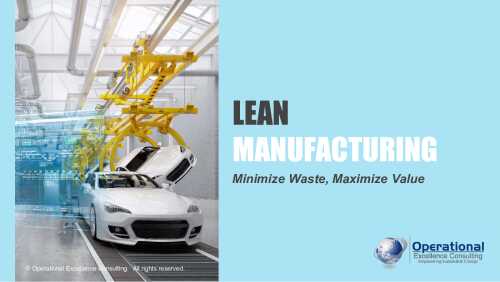
[NOTE: Our Lean Manufacturing presentation has been trusted by an array of prestigious organizations, including industry leaders such as Apple, DHL, Cummins, Stryker, Avery Dennison, Volvo Cars, Baker Tilly, Viasat, Rubix, Techaerospace, Pacific Helmets, BBA, to name just a few.]
This [read more]
Want to Achieve Excellence in Supply Chain Management (SCM)?
Gain the knowledge and develop the expertise to become an expert in Supply Chain Management (SCM). Our frameworks are based on the thought leadership of leading consulting firms, academics, and recognized subject matter experts. Click here for full details.
Supply Chain Management (SCM) is the design, planning, execution, control, and monitoring of Supply Chain activities. It also captures the management of the flow of goods and services.
In February of 2020, COVID-19 disrupted—and in many cases halted—global Supply Chains, revealing just how fragile they have become. By April, many countries experienced declines of over 40% in domestic and international trade.
COVID-19 has likewise changed how Supply Chain Executives approach and think about SCM. In the pre-COVID-19 era of globalization, the objective was to be Lean and Cost-effective. In the post-COVID-19 world, companies must now focus on making their Supply Chains Resilient, Agile, and Smart. Additional trends include Digitization, Sustainability, and Manufacturing Reshoring.
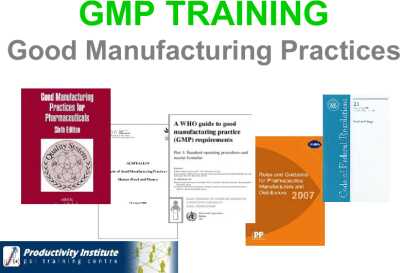
Good Manufacturing Practices (GMP) are a set of guidelines and regulations that ensure the production and manufacturing of safe and high-quality products, including food, drugs, and medical devices. These practices are designed to minimize the risks involved in any pharmaceutical production that [read more]
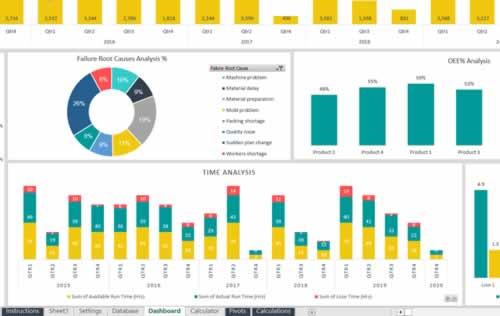
These KPIs provide manufacturers with valuable insights to help achieve their organizational objectives.
Settings: This sheet serves as the hub for configuring database operations related to "Product Details," "Operating Lines," "Operating Shifts," and "Root Causes of Failures."
Database: [read more]
Curated by McKinsey-trained Executives
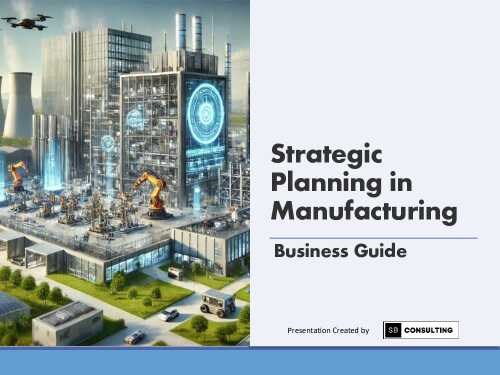
Unlock Your Manufacturing Business Potential with Our Complete Strategic Planning Toolkit
Are you ready to take your manufacturing business to the next level? Our Complete Strategic Planning Toolkit is designed to provide you with everything you need for [read more]
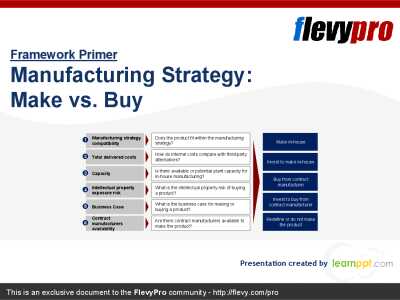
Internal manufacturing of a product versus procurement from external supplier sources is a difficult decision requiring careful and thorough assessment of multiple elements. The assessment includes organization's core competencies, business strategy, manufacturing strategy, internal capacity, [read more]
 For plant managers responsible for controlling overhead costs, compressed air is often one of the most expensive line items on the energy bill and one of the least scrutinized. Industry estimates consistently place compressed air systems among the largest energy consumers in manufacturing facilities, yet most plants continue running inefficient setups simply because replacing them requires justifying the capital expense upfront.