Editor's Note: Take a look at our featured best practice, Enterprise Data Governance - Implementation Toolkit (Excel workbook). Save time, empower your teams and effectively upgrade your processes with access to this practical Enterprise Data Governance Toolkit and guide. Address common challenges with best-practice templates, step-by-step work plans and maturity diagnostics for any Enterprise Data Governance related [read more]
Also, if you are interested in becoming an expert on Digital Transformation, take a look at Flevy's Digital Transformation Frameworks offering here. This is a curated collection of best practice frameworks based on the thought leadership of leading consulting firms, academics, and recognized subject matter experts. By learning and applying these concepts, you can you stay ahead of the curve. Full details here.
* * * *
Extensive data collection rarely follows a perfectly stable pattern. SERP tracking expands when rankings shift, price monitoring intensifies during sales periods, ad verification peaks during campaign launches, and AI dataset collection often begins as a pilot before growing into a larger workflow. Because of that, the billing model behind your proxies matters almost as much as IP quality, targeting, or session control. A plan that looks cost-effective at first can become inefficient if your traffic spikes or if unused bandwidth expires before the next heavy crawl.
In practice, the most reliable option is usually the one that matches how teams really consume traffic. When companies evaluate a professional proxy service, such as DataImpulse, for reliability, accessibility, and scalability, the real question is not only the cost per gigabyte but also whether the pricing model stays aligned with workload changes over time. For teams that need flexible geo-targeting, predictable spending, and room to scale without friction, that distinction quickly becomes more important than the headline price.
Why the Pricing Model Matters
A monthly proxy plan works well when traffic demand is steady and easy to forecast. However, many commercial use cases are not steady at all. Search visibility checks may need broader coverage during algorithm shifts. Ad verification depends on campaign timing and regional delivery checks. E-commerce monitoring spikes during holiday periods, product launches, or competitor price changes. Proxy demand follows market events, not a flat monthly average.
That’s why pricing structure matters more than list price alone. One month may require only a light crawl across a few markets; the next may demand multi-region collection at a much larger scale. A fixed monthly package then becomes either too small during peak periods or too large during slow ones, and either outcome affects cost efficiency.
Retail seasonality illustrates this clearly. U.S. retail e-commerce sales reached $365.2 billion in Q4 2025, up 21.8% from Q3. For teams running price monitoring, ad verification, or market intelligence, that kind of jump means collection activity rises sharply with it. A plan built around an “average month” won’t fit the months that matter most.
Where Pay-as-You-Go Proxies Fit Best
For variable workloads, pay-as-you-go proxies are often the better commercial fit because spending follows actual usage. Instead of paying for reserved bandwidth that may or may not be consumed, teams pay for what they really use. That matters when collection volumes shift from month to month.
Best-fit scenarios include:
SERP tracking with uneven schedules: Expanding from a handful of markets to dozens during an algorithm update.
Price monitoring around promotions: Seasonal campaigns compressing large collection volumes into short windows.
Ad verification during active campaigns: Intensive delivery checks for a limited time, then minimal activity.
Pilot-to-scale AI collection: Testing parsers and coverage first, then scaling after data quality is confirmed.
Shared proxy usage across departments: Engineering, SEO, and research teams, drawing traffic at different times.
Another key advantage is planning flexibility. When traffic doesn’t expire, buyers can purchase bandwidth without being forced to consume it within a strict billing cycle. That’s especially useful for organizations running pilots, pausing projects, or revisiting datasets later. Non-expiring proxy traffic isn’t just a pricing detail — it becomes a practical budgeting tool.
When Monthly Proxy Plans Still Make Sense
Monthly plans aren’t a poor fit in every case. They work well when demand is highly consistent, and usage patterns are mature enough to forecast accurately. If a company runs the same jobs every day, in the same locations, at roughly the same scale, fixed recurring capacity is easier to manage.
Long-running projects with predictable traffic requirements
Committed-volume arrangements where the full allocation is reliably consumed each cycle.
The downside is that monthly packages often push buyers to plan around their heaviest month, not their typical one. That may reduce risk during busy periods, but it increases waste when campaigns slow down, pilots stall, or expansion plans are delayed. A lower advertised unit price can still translate into a higher real cost if part of the traffic is never used.
How to Choose the Right Model
The best choice comes from matching billing to workload shape — not chasing the lowest headline rate. Before deciding, consider:
Does traffic stay consistent, or does it spike around events and campaigns?
Do multiple teams share the same proxy resources?
Will unused bandwidth expire, or remain available later?
How often do you expand into new geographies or use cases?
Do you need flexibility to start small and scale quickly?
For most teams running SERP tracking, price monitoring, ad verification, and AI dataset collection in parallel, pay-as-you-go proxies are the more resilient option because they absorb uncertainty better.
Monthly plans still have their place — but mainly when traffic is stable enough to justify commitment. When budget flexibility, scalable access, and efficient usage all matter, pay-per-GB proxies with non-expiring traffic are usually the model that fits extensive data collection best.
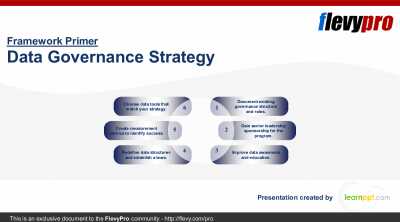
Data Governance is all about overseeing the accessibility, practicality, reliability and safety of enterprise data. Data Governance safeguards data uniformity, dependability, and fair use.
In data-driven organizations, the importance of Data Governance is supreme to generate value. For [read more]
Want to Achieve Excellence in Digital Transformation?
Gain the knowledge and develop the expertise to become an expert in Digital Transformation. Our frameworks are based on the thought leadership of leading consulting firms, academics, and recognized subject matter experts. Click here for full details.
Digital Transformation is being embraced by organizations of all sizes across most industries. In the Digital Age today, technology creates new opportunities and fundamentally transforms businesses in all aspects—operations, business models, strategies. It not only enables the business, but also drives its growth and can be a source of Competitive Advantage.
For many industries, COVID-19 has accelerated the timeline for Digital Transformation Programs by multiple years. Digital Transformation has become a necessity. Now, to survive in the Low Touch Economy—characterized by social distancing and a minimization of in-person activities—organizations must go digital. This includes offering digital solutions for both employees (e.g. Remote Work, Virtual Teams, Enterprise Cloud, etc.) and customers (e.g. E-commerce, Social Media, Mobile Apps, etc.).
Curated by McKinsey-trained Executives
Unlock the Power of Your Data: The Ultimate Data Governance Business Toolkit
In today's data-driven world, robust data governance is essential for organizations to manage their data assets effectively. We are excited to introduce the ultimate solution [read more]
This document describes the core elements of data governance. From "why" through to descriptions of specific roles it presents a comprehensive structure to how you should be applying data governance, what you can achieve and what your current issues are likely to be.
Data governance is not just a [read more]
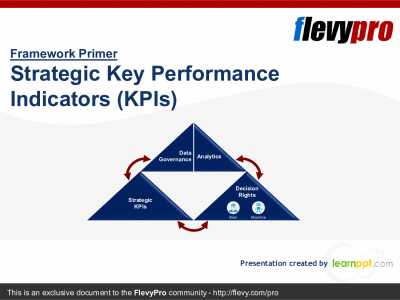
Technology and digitization has reinforced the importance of Key Performance Indicators (KPIs) in enhancing employee performance and organizational productivity significantly. The role of KPIs is becoming more and more dynamic. They are getting flexible, smarter, and valuable in achieving [read more]
Unleashing the Potential of Enterprise Data Management: Navigating the Data Deluge
In today's fast-paced digital landscape, enterprises are witnessing an unprecedented surge in data generation year after year. As reported by Grand View Research, the data management solutions market attained a [read more]
 Extensive data collection rarely follows a perfectly stable pattern. SERP tracking expands when rankings shift, price monitoring intensifies during sales periods, ad verification peaks during campaign launches, and AI dataset collection often begins as a pilot before growing into a larger workflow. Because of that, the billing model behind your proxies matters almost as much as IP quality, targeting, or session control. A plan that looks cost-effective at first can become inefficient if your traffic spikes or if unused bandwidth expires before the next heavy crawl.
 The best choice comes from matching billing to workload shape — not chasing the lowest headline rate. Before deciding, consider: