Editor's Note: Take a look at our featured best practice, Developing an Effective Compliance Management Program (34-slide PowerPoint presentation). Compliance has become a leading risk facing organisations today. In line with ISO standards, Organizations that aim to be successful in the long term need to establish and maintain a culture of compliance. Compliance is therefore not only the basis, but also an opportunity, for a successful and [read more]
* * * *
If you run a business in the UK, you probably know how frustrating it is when bad address data messes up your operations. A single misstep, a wrong flat number or an outdated street, can lead to lost parcels, annoyed customers, or failed marketing stunts. The real impact? It’s more than just having to resend something. It snowballs into lost profits and bruised reputations. Interestingly, businesses that turn their attention to a trusted street address database often find that it transforms this headache into a valuable advantage. With accurate data in their toolbox, logistics gets smoother, compliance feels far less stressful, and even customer outreach finds new direction, whether you’re in retail, banking, or other sectors looking for that extra edge.
Actually, there’s a quiet revolution happening, address management is no longer just about mail; it’s about unlocking a map to efficiency and growth. The ripples from bad address data go further than most expect, touching everything from last-mile deliveries to large-scale public service projects. Reliable address information, believe it or not, has become the backbone of smooth, modern business in the UK.
How Can an Address Database Reduce Delivery Errors and Costs?
I’ve seen it first-hand, nothing throws a delivery schedule out of sync like a dodgy address. With a decent street address database, companies instantly cut the odds of returned parcels or drivers circling endlessly by simply checking their customer addresses from the start. This isn’t just about reducing mileage costs, either. The ripple effect lifts customer satisfaction, and that’s tough to put a price on, but everyone feels it when it goes wrong.
But not every database is equal. The best ones actually track every stage in a property’s life, they notice new apartments springing up, record old warehouses getting demolished, and make sure none of this escapes your planning radar. That kind of real-time knowledge, especially if you juggle fleet vans in big cities or need to keep tight delivery promises, is what separates a reliable operation from one constantly in firefighting mode. Working with an authoritative National Geographic Database gives planners and dispatch managers the confidence that their maps match the reality on the street, every single day.
How Does Accurate Address Data Support Compliance and Fraud Prevention?
By the way, anyone working in banking, insurance, or even energy knows just how picky regulators have become about customer info. Verified addresses do more than smooth logistics, they keep you on the right side of strict rules and block a lot of dodgy activity before it even starts. It’s now normal to plug a trusted address reference into your sign-up process, and suddenly both fraudsters and administrative mistakes have a much harder time slipping through.
Meeting Regulatory Standards
Look at how banks use this data during account set-up: automating address checks has become essential for ticking every KYC (“Know Your Customer”) box and avoiding painful fines. Nobody wants their company name showing up in a compliance scandal, so confirming each address details builds a much stronger, safer foundation.
Key sectors benefiting from address verification:
Banking: KYC boxes ticked and less hassle on credit approvals.
Insurance: Smarter risk calculations based on exactly where people live or work.
Public Services: Accurate bills and sure-fire deliveries for utilities.
Healthcare: Patient addresses that never leave an ambulance lost.
Retail: Fewer fake orders and smoother ID checks for online sales.
Can a Street Address Database Help my Business Find New Customers?
Beyond the obvious stuff like delivery accuracy, address data is quietly shaping how businesses hunt for new customers and places to expand. Ever heard someone say “location, location, location”? With a detailed database, you’re actually reading the story that neighborhoods and city corners are telling through the addresses themselves. That means smarter marketing, sharper territory divisions, and picking the best sites for growth before your rivals even spot them.
Unlocking Market Insights with Geographic Data
Some of the more advanced address databases aren’t just about accuracy, they’re bursting with extra information. Think of them as city guides, not just maps. You get layers: property type, planning status, even links to municipal records, all of which fuel sharper decisions by turning complex geography into a readable playbook. So, what can businesses do with this kind of insight?
Find those neighborhoods overflowing with likely buyers.
Pick out the ideal address for a flashy new branch or distribution center.
Draw lines around sales regions that actually make commercial sense.
Spot where your current customers cluster and where you’re oddly missing out.
All this gets even more meaningful when integrated with Geographic Information Systems (GIS). Suddenly, spreadsheets become colorful maps, easy for any manager to absorb, seeing risks and hidden opportunities with a single glance.
Choosing the Right Level of Data for Your Needs
Not every business needs the same level of detail. Entry-level products suit those needing quick and reliable address checks. Meanwhile, companies with grander ambitions (maybe planning national coverage or highly targeted campaigns) often turn to premium-grade solutions overflowing with geospatial information.
What specific information is included?
Honestly, there’s quite a range here. Market leaders will go beyond the basics, offering details such as the Unique Property Reference Number (UPRN), detailed postal codes, and helpful direct ties to local government registries.
Data Level
Common Features
Primary Business Use
Core
Basic address validation and integration.
Fast, simple address lookups for websites and forms.
Plus
Includes property type (commercial/residential), UPRN, and geographic identifiers.
Market analysis, customer segmentation, and location planning.
Premium
Contains the full address lifecycle, including new builds and demolitions.
Advanced GIS applications, detailed logistics, and emergency services routing.
Some traditionalists still rely on Royal Mail’s Postal Address File (PAF) for everyday validation, but anyone wanting exhaustive technical detail about coverage or recent updates probably needs to pick up the phone and ask Royal Mail directly.
Summing up, making the most of a robust and constantly refreshed street address database puts UK firms several steps ahead, whether it’s slashing the time lost chasing wrong addresses, picking smarter marketing battlegrounds, or showing regulators that your business takes data quality seriously. Navigating with up-to-date location info is like switching from paper maps to GPS: you simply won’t want to go back.
The smartest companies treat address data as much more than a logistical leftover. It is now the foundation for confident decisions, be it plotting the best delivery route or deciding where to plant your flag next. Respecting this information and using it well really does pay off in a world where even streets seem to change their minds overnight.
ISO 37301:2021 is an international standard designed and formulated to help organizations implement a robust Compliance Management System (CMS).
The standard specifies requirements and provides guidelines for establishing, developing, implementing, evaluating, maintaining and improving an [read more]
Do You Want to Implement Business Best Practices?
You can download in-depth presentations on Compliance and 100s of management topics from the FlevyPro Library. FlevyPro is trusted and utilized by 1000s of management consultants and corporate executives.
For even more best practices available on Flevy, have a look at our top 100 lists:
These best practices are of the same as those leveraged by top-tier management consulting firms, like McKinsey, BCG, Bain, and Accenture. Improve the growth and efficiency of your organization by utilizing these best practice frameworks, templates, and tools. Most were developed by seasoned executives and consultants with over 20+ years of experience.
Readers of This Article Are Interested in These Resources
The Complete Chief Compliance Officer (CCO) Toolkit: Your Ultimate Resource for Effective Compliance Management
Are you a Chief Compliance Officer (CCO) looking to navigate the complex world of regulatory compliance with confidence and expertise? Do you aim to fortify your organization's [read more]
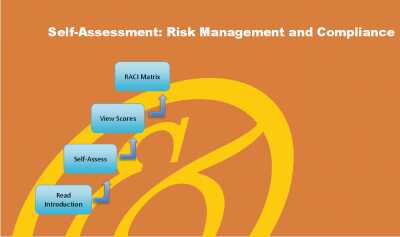
The Risk Management and Compliance Self Assessment will make you a Risk Management and Compliance domain expert by:
1. Reducing the effort in the Risk Management and Compliance work to be done to get problems solved
2. Ensuring that plans of action include every Risk Management and Compliance [read more]
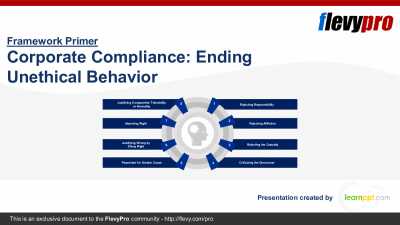
Corporate Non-compliance is a major issue across the world. Highly public cases involving major corporations point to the fact that the usual descriptions of why business employees perform illegal acts are misdirected. Organizations need to comprehend the process through which employees reach [read more]
This document provides a thorough visual taxonomy of key business processes related to managing enterprise risk, compliance, remediation, and resiliency based on APQC's cross-industry process classification system (PCF), the most used process framework globally.
A process classification [read more]
 If you run a business in the UK, you probably know how frustrating it is when bad address data messes up your operations. A single misstep, a wrong flat number or an outdated street, can lead to lost parcels, annoyed customers, or failed marketing stunts. The real impact? It’s more than just having to resend something. It snowballs into lost profits and bruised reputations. Interestingly, businesses that turn their attention to a trusted