Editor's Note: Take a look at our featured best practice, Five Stages of Business Growth (25-slide PowerPoint presentation). This presentation introduces a framework for entrepreneurs to use when building and navigating their business from a nascent, startup state to an enterprise with a global footprint. This framework, called the 5 Stages of Business Growth, is based on the fact that all businesses experience common [read more]
* * * *
Email is one of the rare channels you can control. Social reach on other platforms shifts, ads get pricier, and platforms change the game constantly. But your email list is a direct line to people who already showed interest.
Most small businesses don’t need more complexity. They need focus. Tweaking templates and building fancy automations is easy to justify, but it often distracts from the few actions that actually bring in revenue. The best moves are simple. The difference is consistency, not complexity.
1. Build a List You Can Trust
Only email people who clearly opted in. Complaints and ignored emails train inboxes to hide you. Keep your signup clear about what you will send and how often.
Also, treat your list like an evolving thing. If someone has not opened in a long time, it may be because your content stopped matching why they signed up. And if they cannot find an easy unsubscribe link, they often hit spam instead.
So, ensure you offer them a clear exit. And stop sending regular campaigns to inactive contacts unless they re-engage. A smaller engaged list often beats a bigger sleepy one.
2. Decide What Each Email Is Trying to Do
Every email needs one job. Sell a product, fill appointments, bring back a quiet customer, or build trust so the next offer converts. When you mix goals, the reader feels confused and does nothing. If your subject line sounds like weekly tips, but the email is a hard sell, people learn to ignore you.
Before you send, ask this. If a customer read only your last three emails, would they understand what you do and why you are worth paying for, without feeling tricked? If not, tighten the message.
3. Keep Segmentation Basic, but Useful
Segmentation is just relevance. A new subscriber is not in the same place as a recent buyer, so stop sending them the same message. New subscribers need a quick orientation and one clear next step. Recent customers need support plus a realistic nudge, like care tips or a sensible reorder or rebook window.
If you want one extra layer, tag people by what they clicked or bought, then email those groups when you have something relevant. A florist can send wedding updates to people who browsed bridal packages, not everyone. A gym can send class reminders only to members who attended before. That is the kind of relevance that beats big volume any day.
4. Write Like a Person, Not a Brand Voice
Most emails underperform because they sound formal and vague. You do not need clever copy. You need clarity and a human tone.
A good email reads has warmth, but it does not waste words. It is specific. Lead with the point, add one specific detail, then ask for one action. Also, write the email like you are replying to a customer who asked what is new and what matters. Skip fluffy lines like “we are thrilled.” Say what changed and why it matters. That kind of human touch builds trust because it is concrete.
5. Send on a Schedule You Can Maintain
The best schedule is the one you can keep without difficulty. Consistency beats intensity. If you can only manage two strong emails a month, do that. A predictable rhythm builds trust because it trains readers to expect you, and it gives inboxes steadier signals. Big spikes or long gaps can affect your reputation and engagement.
For many small businesses, one to four emails a month is enough if each email has a job. A simple rhythm is one useful email and one offer email. When you are busy, protect quality by sending less, not by sending rushed filler.
6. Keep Deliverability Simple and Stable
Deliverability is trust. Authentication is part of the baseline. Even great emails can get punished if the basics aren’t in place. If SPF, DKIM, and DMARC aren’t set up properly, you’re giving inboxes a reason to distrust you.
Build a simple routine for testing email deliverability. Send a smoke test to inboxes you control across a couple of providers and devices. This is not perfect inbox placement testing, but it catches obvious problems like spam folder placement, broken links, and formatting issues.
7. Focus on Genuine Subject Lines, Not Clickbait
Subject lines are not a place to be clever. They are a place to be clear. People open emails when the subject line makes them feel like opening it is worth their time.
A good subject line is specific and honest. It promises a specific benefit, like “3 things to stop doing if your skin feels tight.” It creates a real reason to act now. Not fake urgency, but actual timing. “Booking closes Friday” works if booking actually closes Friday.
Also, match the subject line to the first sentence. If the subject says restock, the first line should confirm it. If the subject says tip, the first line should give the tip immediately. That alignment keeps people from feeling misled, builds trust, and reduces spam complaints.
8. Track What Happens after the Click
Opens and clicks are useful, but they’re not the finish line. What matters is what people do next: buy, book, request a quote, or reply. If you can’t attribute every sale perfectly, at least tag your links so your analytics shows which emails are sending real traffic and which ones are converting. Check this once a month.
Low opens often point to subject lines or deliverability. High opens but low clicks usually mean the next step is unclear. Good clicks but weak sales often mean the landing page or offer did not match the promise. Change one thing at a time so you learn.
9. Protect Your Reputation and Spot Hidden Blocks
Sometimes your emails look fine, but they are filtered because your domain or sending setup is associated with suspicious activity, such as a compromised signup form or spoofing.
This is where email blacklist monitoring helps as an early warning. If you find your domain listed, pause aggressive promotions and fix the cause first, then follow the delisting steps from the list owner. Ramp back up slowly with your most engaged subscribers.
Conclusion
Email gets way easier when you stop treating it like a complicated machine. Focus on the basics. Only email people who opted in, send stuff that matches what they care about, and keep a rhythm you can maintain. Write emails people can read quickly and do something with. And let people opt out without friction. If you keep it honest and repeatable, email becomes steady sales rather than constant stress.
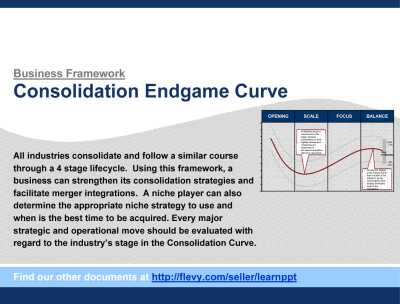
The Consolidation Curve, or Endgame Curve, is a framework based on the theory that all industries consolidate and follow a similar course through the 4 stages of: Opening, Scale, Focus, and Balance & Alliance. This framework is based on a study of 25,000 firms globally, representing 98% of the [read more]
Do You Want to Implement Business Best Practices?
You can download in-depth presentations on Small Business and 100s of management topics from the FlevyPro Library. FlevyPro is trusted and utilized by 1000s of management consultants and corporate executives.
For even more best practices available on Flevy, have a look at our top 100 lists:
These best practices are of the same as those leveraged by top-tier management consulting firms, like McKinsey, BCG, Bain, and Accenture. Improve the growth and efficiency of your organization by utilizing these best practice frameworks, templates, and tools. Most were developed by seasoned executives and consultants with over 20+ years of experience.
Readers of This Article Are Interested in These Resources
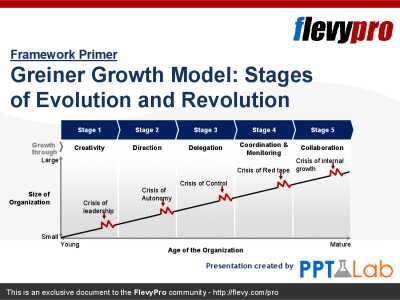
The Greiner Growth Model (Stages of Evolution and Revolution), developed by Larry Greiner, is a maturity model describing how organizations evolve through 5 stages of growth. Each stage requires appropriate strategies and structures to cope. The Greiner Growth Model is a descriptive framework [read more]
This financial policy manual is suitable for a small business. This manual aims to provide guidance :
1. By ensuring that all staff are aware of finance transactions with the business; and
2. Is a way for finance staff to make consistent decisions.
The aim of this manual is to assist in [read more]
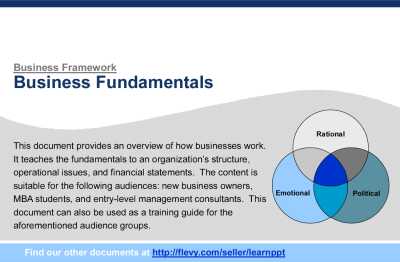
This presentation provides an overview of how businesses work. It teaches the fundamentals to understanding how modern businesses work, covering the business topics of Organizational Structures, Operational Issues, and Financial Statements.
The content is suitable for the following audiences: [read more]
Introducing the Ultimate Business Exit Strategy Framework: Achieve Seamless Transition and Maximize Your Returns
Are you a business owner or entrepreneur looking to ensure a smooth and profitable transition out of your current venture? The world of business exits can be complex and daunting, but [read more]
 Email is one of the rare channels you can control. Social reach on other platforms shifts, ads get pricier, and platforms change the game constantly. But your email list is a direct line to people who already showed interest.
 5. Send on a Schedule You Can Maintain
 9. Protect Your Reputation and Spot Hidden Blocks