
Editor Summary
Customer Segmentation is a 47-slide PowerPoint presentation that provides a structured approach to segmenting customers, selecting target segments, and developing tailored value propositions.
Read moreIt documents needs-based, behavioral, and demographic segmentation methods and statistical techniques including factor/cluster analysis and CHAID, plus a target segment selection matrix, profit potential analysis model, value-proposition guide, and templates. Target users include marketing executives, business development teams, consultants, and product managers. Sold as a digital download on Flevy.
This deck is designed for situations where an organization must identify and prioritize customer segments—such as strategic planning, new product launches, or retention program design.
Marketing executives conducting needs-based segmentation and developing segment-specific value propositions for campaigns.
Business development teams quantifying profit potential and sizing target markets to refine go-to-market focus.
Consultants running factor/cluster analysis or CHAID to define statistically robust customer groups for clients.
Product managers mapping product features and positioning to segment needs and purchase behaviors.
The structured segmentation-to-value-proposition approach mirrors hypothesis-driven consulting practices attributed to McKinsey, Bain, and BCG.
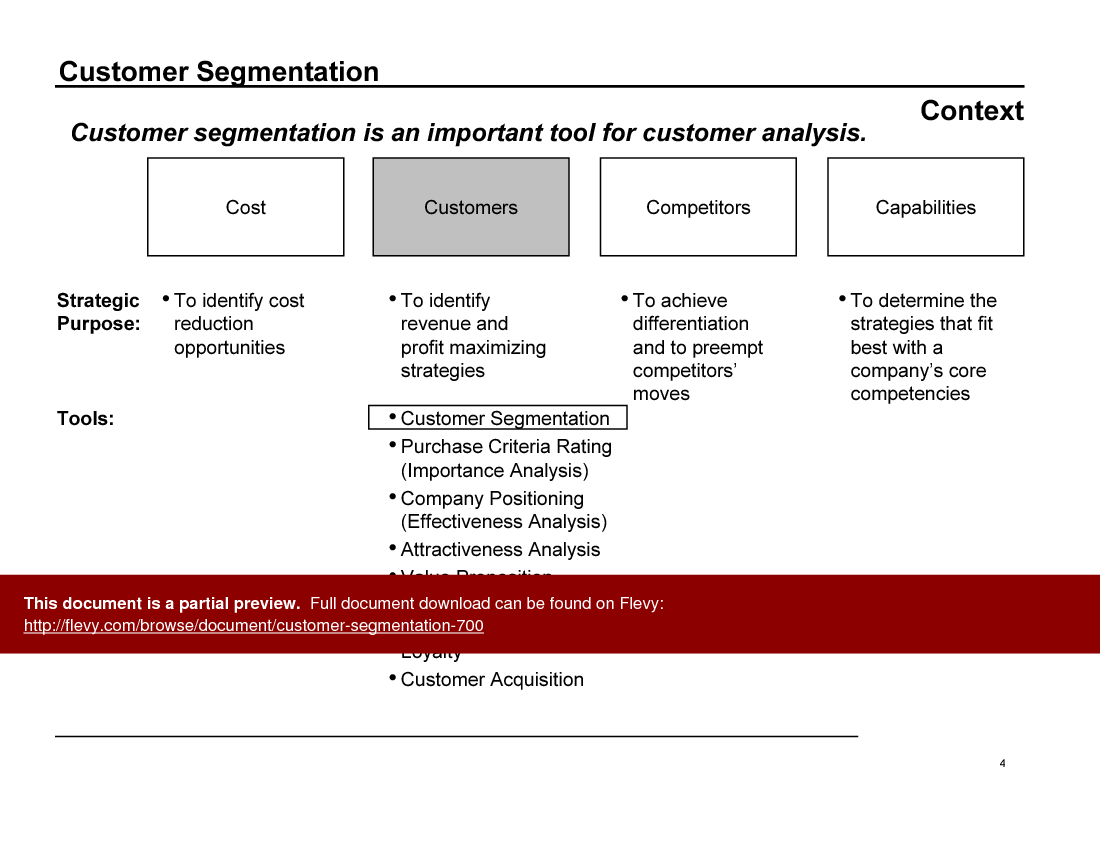
Customer segmentation is an important tool for customer analysis.
• To identify cost reduction opportunities
• To identify revenue and profit maximizing strategies
• To achieve differentiation and to preempt competitors' moves
• To determine the strategies that fit best with a company's core competencies
This presentation was developed to show how to do an effective customer segmentation excercise. It contains key concepts, approaches, and their application through some examples.
This document delves into the intricacies of customer segmentation, offering a structured approach to dividing customers into distinct groups based on their needs and behaviors. It outlines a comprehensive methodology, from creating a needs list to conducting factor and cluster analysis, ensuring that the segments are statistically robust and actionable. The presentation emphasizes the importance of aligning segmentation strategies with a company's core capabilities and market conditions.
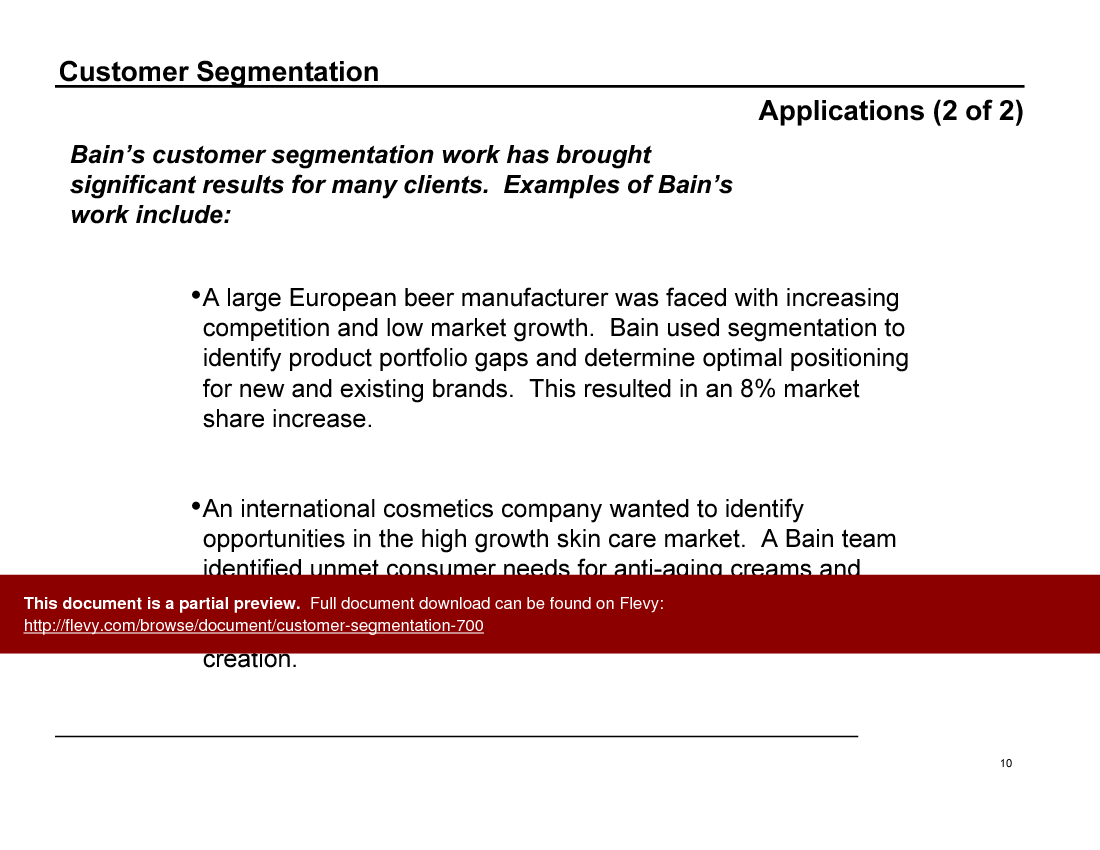
You'll find detailed examples of successful segmentation projects, including case studies from various industries. For instance, a European beer manufacturer leveraged segmentation to identify product portfolio gaps, resulting in an 8% market share increase. Another case study highlights how an international cosmetics company used segmentation to tap into the high-growth skincare market, leading to significant new product development and market penetration.
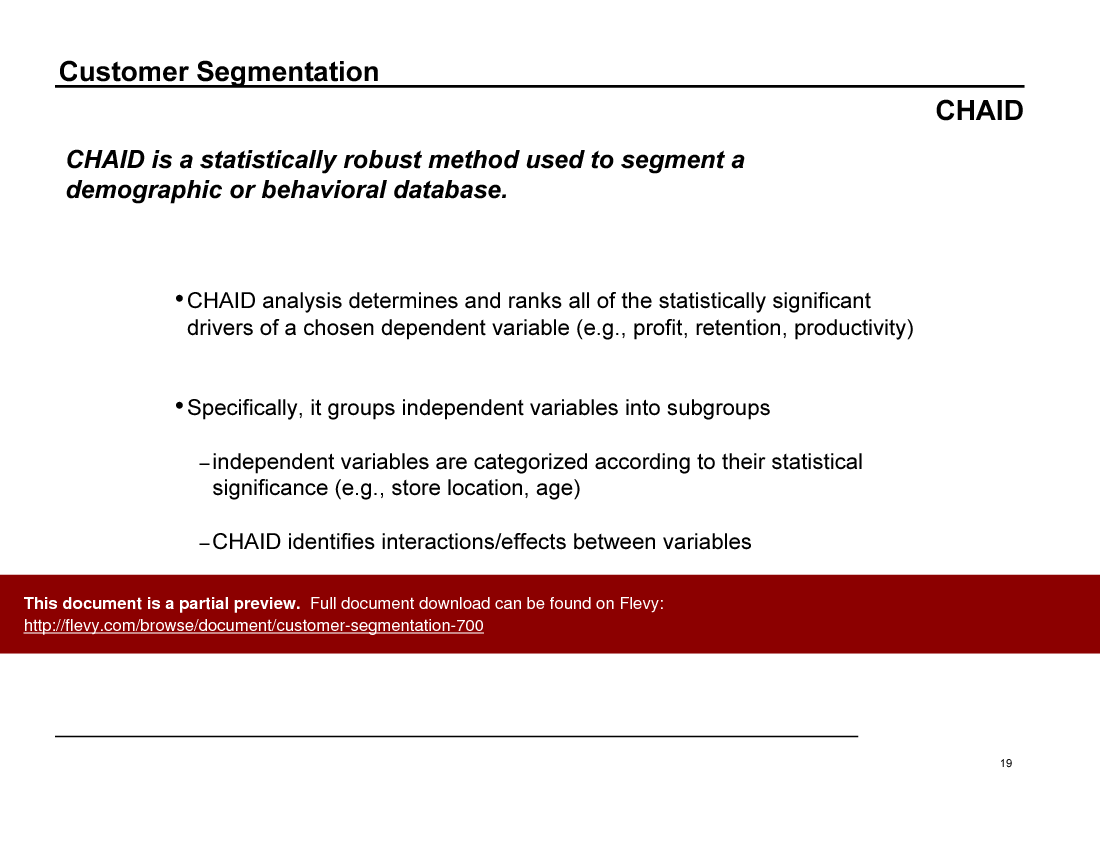
The document also covers advanced segmentation techniques like CHAID analysis, which helps in identifying key drivers of customer behavior and grouping variables into meaningful subgroups. This statistical method is crucial for companies looking to optimize their marketing strategies and improve customer targeting.
The presentation also includes practical tools and frameworks for developing value propositions tailored to each segment. By focusing on product features, service elements, and distribution channels, businesses can enhance their market share and profitability. This resource is indispensable for executives aiming to refine their customer segmentation strategies and drive business growth.
Got a question about the product? Email us at support@flevy.com or ask the author directly by using the "Ask the Author a Question" form. If you cannot view the preview above this document description, go here to view the large preview instead.
MARCUS OVERVIEW
This synopsis was written by Marcus [?] based on the analysis of the full 47-slide presentation.
Executive Summary
The Customer Segmentation PPT is a consulting-grade presentation designed to equip corporate executives and consultants with the frameworks necessary for effective customer analysis. This McKinsey, Bain, or BCG-quality resource outlines a structured approach to segmenting customers, selecting target segments, and crafting tailored value propositions. By utilizing this deck, users will be able to identify profitable customer segments, enhance customer retention, and optimize acquisition strategies, ultimately driving revenue growth.
Who This Is For and When to Use
• Marketing executives focused on customer insights and segmentation strategies
• Business development teams aiming to refine target market approaches
• Consultants assisting clients in improving customer engagement and profitability
• Product managers seeking to align offerings with customer needs
Best-fit moments to use this deck:
• During strategic planning sessions to identify and prioritize customer segments
• When launching new products or services that require targeted marketing strategies
• In workshops aimed at enhancing customer retention and loyalty programs
Learning Objectives
• Define customer segmentation and its significance in business strategy
• Segment customers based on needs, behaviors, and demographics
• Choose target segments that align with business capabilities and profitability
• Create compelling value propositions tailored to each target segment
• Determine the profit potential of serving selected customer segments
• Apply customer segmentation insights to enhance marketing and product development
Table of Contents
• The Customer Segmentation Concept (page 2)
• Applications of Customer Segmentation (page 9)
• Customer Segmentation Steps (page 12)
• Segmentation Methods (page 14)
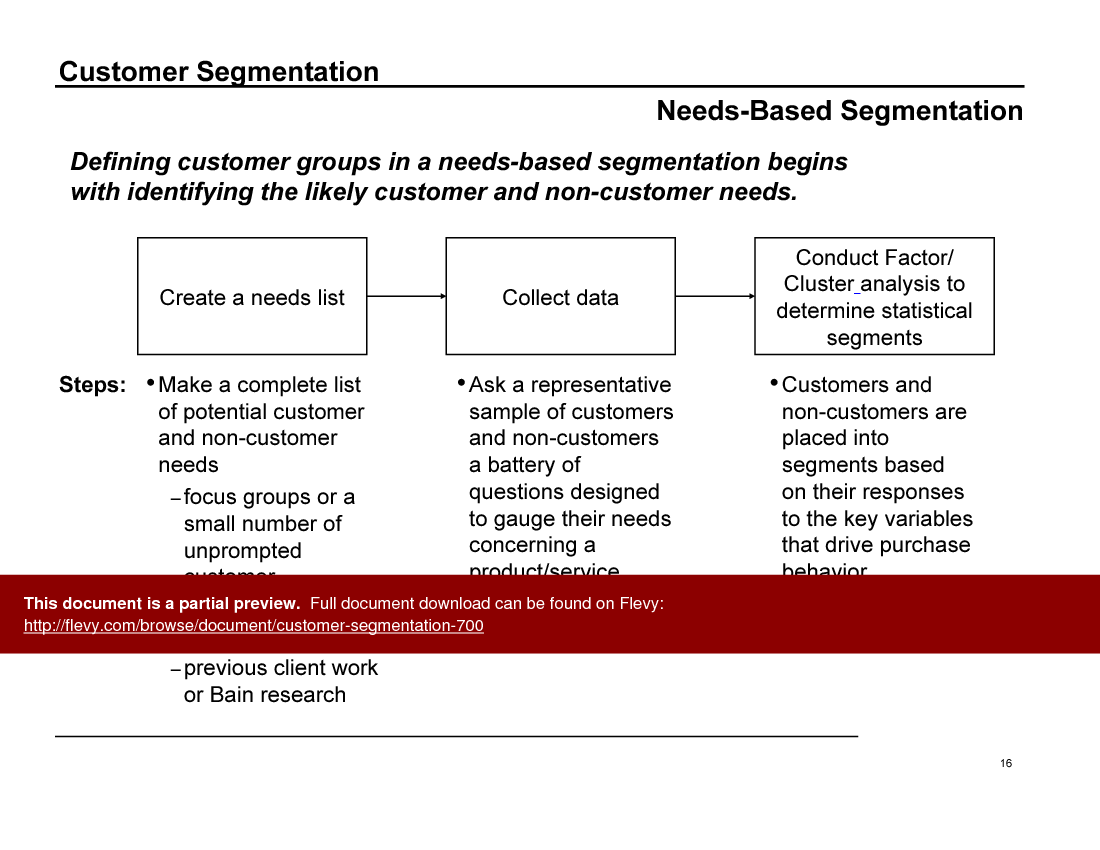
• Needs-Based Segmentation Process (page 16)
• Behavioral and Demographic Segmentation (page 18)
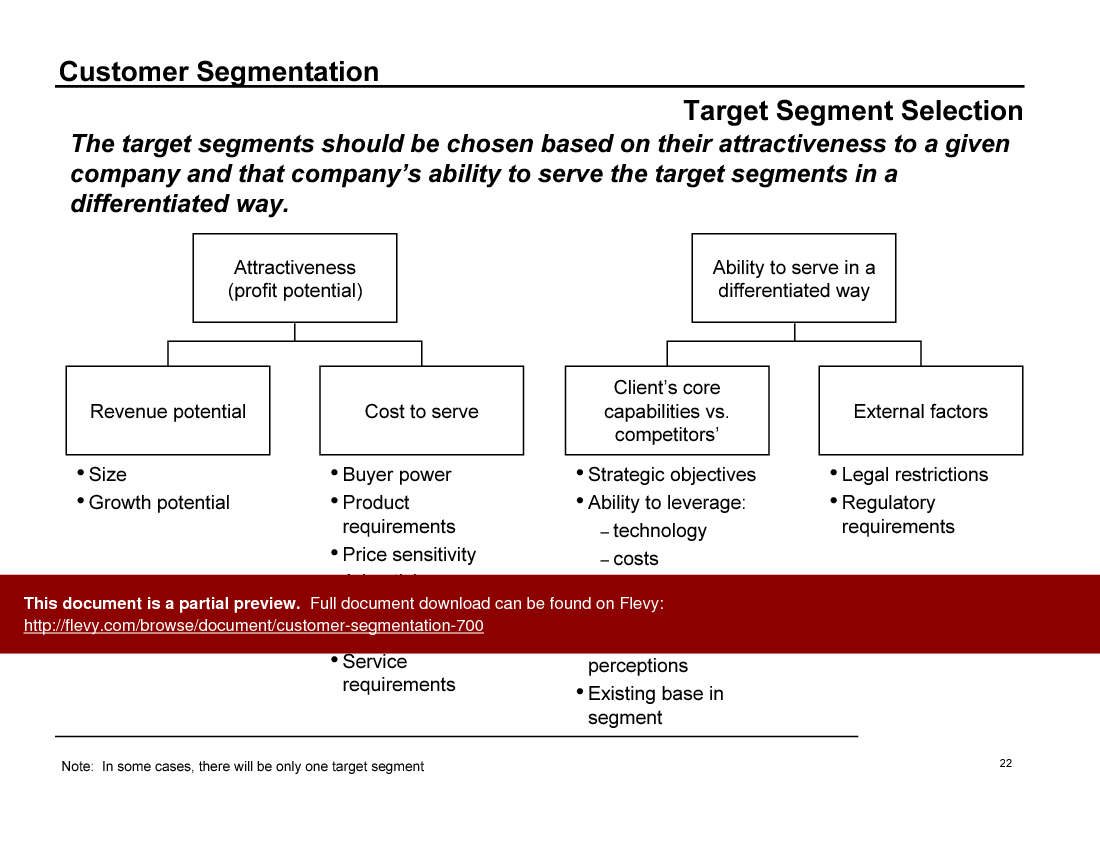
• Target Segment Selection (page 22)
• Value Proposition Development (page 25)
• Profit Potential Quantification (page 27)
• Case Studies: Smith’s Fashion Center (page 29)
• Case Studies: Highland Hotels (page 35)
• Key Takeaways (page 43)
Primary Topics Covered
• Customer Segmentation Concept - A framework for categorizing customers into homogeneous groups to tailor marketing strategies effectively.
• Applications of Customer Segmentation - Practical uses in identifying product gaps, optimizing pricing, and enhancing customer acquisition and retention.
• Customer Segmentation Steps - A structured approach involving segmentation, target selection, value proposition creation, and profit potential assessment.
• Segmentation Methods - Overview of needs-based, behavioral, and demographic segmentation techniques.
• Needs-Based Segmentation Process - Detailed steps for identifying customer needs and segmenting based on those insights.
• Target Segment Selection - Criteria for evaluating the attractiveness and serviceability of potential segments.
Deliverables, Templates, and Tools
• Customer segmentation framework template for categorizing existing and potential customers
• Value proposition development guide tailored to specific customer segments
• Profit potential analysis model to quantify revenue impacts of serving target segments
• Case study templates illustrating successful customer segmentation applications
• Presentation slides for stakeholder engagement on segmentation strategies
• Checklist for evaluating segment attractiveness and serviceability
Slide Highlights
• Overview of customer segmentation concepts and their strategic importance
• Visual representation of segmentation methods with pros and cons
• Case studies showcasing successful applications of customer segmentation
• Target segment selection matrix to guide decision-making
• Profit potential quantification slide illustrating revenue and cost impacts
Potential Workshop Agenda
Customer Segmentation Overview (60 minutes)
• Introduce the concept of customer segmentation and its importance
• Discuss various segmentation methods and their applications
• Review case studies demonstrating successful segmentation strategies
Hands-On Segmentation Exercise (90 minutes)
• Break into teams to segment a hypothetical customer base
• Develop value propositions for selected target segments
• Present findings and receive feedback from peers
Profit Potential Analysis (60 minutes)
• Explore methods for quantifying profit potential of target segments
• Discuss implications for marketing and product strategies
Customization Guidance
• Tailor segmentation methods based on specific industry needs and customer behaviors
• Adjust value propositions to reflect unique customer preferences and market conditions
• Incorporate company-specific metrics and KPIs in profit potential assessments
Secondary Topics Covered
• Customer retention strategies linked to segmentation insights
• Behavioral drivers of customer purchasing decisions
• Market positioning based on competitive analysis
• Importance of aligning product features with customer needs
Topic FAQ
What are the main types of customer segmentation and when should I use each?
The primary segmentation types are needs-based, behavioral, and demographic. Use needs-based segmentation when designing products or services to meet specific customer problems, behavioral segmentation to tailor retention and pricing strategies, and demographic segmentation for broad targeting and market sizing, ending with needs-based, behavioral, and demographic segmentation.
How do factor analysis and cluster analysis support a segmentation project?
Factor analysis reduces correlated variables into underlying factors, and cluster analysis groups customers with similar profiles based on those factors. Together they help produce statistically robust, homogeneous segments; the presentation discusses applying factor and cluster analysis as part of the segmentation methodology, specifically factor and cluster analysis.
What is CHAID analysis and how is it used in segmentation?
CHAID (Chi-square Automatic Interaction Detection) is a statistical method that identifies significant predictors of behavior and creates subgroup splits based on chi-square tests. It helps reveal meaningful segment drivers and segmentation rules without predefining groups, and the author description highlights CHAID analysis as an advanced technique.
How should I quantify the profit potential of serving a target segment?
Quantify profit potential by estimating incremental revenue from the segment and the cost-to-serve for current and new customers, then assess net contribution. The deck includes a profit potential analysis model to guide those calculations, specifically the profit potential analysis model.
What should I look for when choosing a customer segmentation template for internal use?
Look for a clear segmentation framework, statistical-method guidance (factor/cluster, CHAID), value-proposition templates, profit-potential models, case studies, and customization guidance so your team can adapt methods and KPIs to their industry, exemplified by materials like a segmentation framework template and value proposition guide.
How much time and team capacity should I plan for a hands-on segmentation workshop?
The product’s suggested workshop agenda comprises 3 sessions: a 60-minute overview, a 90-minute hands-on segmentation exercise, and a 60-minute profit-potential analysis, totaling a 210-minute (3.5 hour) workshop for a cross-functional team.
I need to retarget customers after an acquisition—what segmentation approach should I use?
Start with needs-based segmentation supported by factor/cluster or CHAID to discover distinct groups, then evaluate segments for attractiveness and serviceability and develop tailored value propositions; Flevy's Customer Segmentation indicates using a target segment selection matrix and a value proposition development guide.
How can segmentation be used to improve customer retention?
Segmentation identifies groups with specific needs and drivers, enabling targeted retention programs, personalized offers, and service adjustments that increase loyalty. The deck links segmentation insight to retention strategies and includes tools to align programs with segment preferences, specifically customer retention strategies linked to segmentation insights.
Document FAQ
These are questions addressed within this presentation.
What is customer segmentation?
Customer segmentation is the process of dividing a customer base into distinct groups based on shared characteristics to tailor marketing strategies effectively.
Why is customer segmentation important?
It allows businesses to focus resources on the most profitable customer segments, enhancing marketing efficiency and improving customer satisfaction.
What are the main types of segmentation?
The primary types are needs-based, behavioral, and demographic segmentation, each offering unique insights into customer preferences and behaviors.
How do I determine target segments?
Evaluate segments based on their attractiveness (profit potential) and your company's ability to serve them in a differentiated way.
What is a value proposition?
A value proposition is the combination of product, service, and delivery tailored to meet the specific needs of a target customer segment.
How can I quantify profit potential?
Calculate the revenue increase and cost to serve for both current and new customers within the target segments.
What tools can assist in customer segmentation?
Tools like Factor/Cluster analysis and CHAID can help identify statistically significant customer segments based on various data points.
How can segmentation improve customer retention?
By understanding customer needs and preferences, businesses can create tailored experiences that enhance loyalty and satisfaction.
What role does primary research play in segmentation?
Primary research is crucial for needs-based segmentation to gather insights directly from customers about their preferences and behaviors.
Glossary
• Customer Segmentation - The process of dividing customers into groups based on shared characteristics.
• Value Proposition - The unique value offered to a customer segment through products and services.
• Needs-Based Segmentation - A method of categorizing customers based on their specific needs and preferences.
• Behavioral Segmentation - Dividing customers based on their purchasing behaviors and patterns.
• Demographic Segmentation - Categorizing customers based on demographic factors such as age, income, and education.
• Profit Potential - The estimated revenue and profit that can be generated from serving a customer segment.
• Factor Analysis - A statistical method used to identify underlying relationships between variables in data.
• CHAID - A statistical tool that uses the Chi-Square statistic to identify significant predictors of a dependent variable.
• Target Segment - A specific group of customers identified as the focus for marketing and sales efforts.
• Market Share - The portion of a market controlled by a particular company or product.
• Customer Retention - Strategies aimed at keeping existing customers engaged and satisfied.
• Customer Acquisition - The process of attracting and converting new customers.
• Segmentation Requirements - Criteria that segments must meet to be considered viable for analysis.
• MECE - Mutually Exclusive and Collectively Exhaustive; a principle for organizing information.
• Attractiveness Analysis - Evaluating segments based on their potential profitability and market characteristics.
• Customer Needs - The specific requirements and desires that drive customer purchasing behavior.
• Product Positioning - The strategy of defining how a product is perceived in the minds of consumers relative to competitors.
• Market Positioning - The process of establishing a brand or product in a specific market segment.
• Customer Insights - Understanding customer behaviors, preferences, and motivations through data analysis.
• Competitive Analysis - Assessing competitors to identify strengths, weaknesses, and market opportunities.
• Strategic Objectives - Long-term goals that guide a company's direction and decision-making.
• Customer Experience - The overall perception of a customer’s interactions with a brand or company.
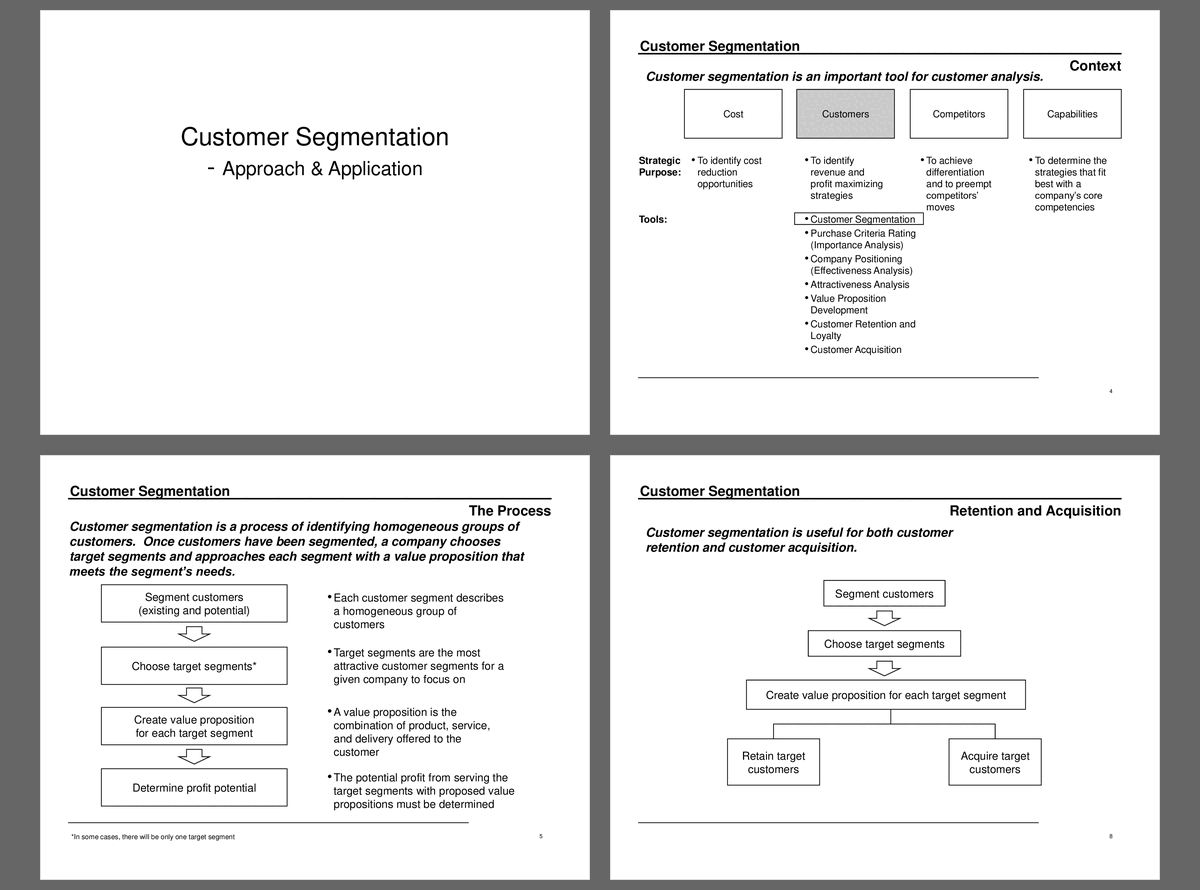
This PPT slide outlines a structured approach to customer segmentation, essential for retaining and acquiring customers. The process begins with categorizing customers based on specific criteria, laying the foundation for subsequent actions. After segmentation, selecting target segments focuses efforts on the most promising groups aligned with strategic goals. Businesses should then create tailored value propositions for each segment, addressing unique needs and enhancing engagement. The segmentation process leads to 2 primary outcomes: retaining target customers through loyalty strategies and acquiring new customers fitting identified segments. This roadmap helps organizations refine marketing and customer engagement strategies, aligning offerings with customer expectations to drive growth and profitability.
Smith’s Fashion Center, a discount women's retailer, undertook a structured process to analyze customer behavior for expansion. Key drivers influencing retail purchasing behavior were identified, forming the basis for deeper analysis. Approximately 20 targeted questions were posed to customers to capture their needs and preferences, providing essential feedback for tailoring offerings. A Factor/Cluster analysis categorized customers into distinct segments, revealing patterns crucial for effective marketing strategies. The size and revenue potential of each segment were quantitatively assessed, guiding prioritization for targeting during expansion. Insights from segmentation analysis refined the merchandise strategy for the selected expansion market, enhancing understanding of customer dynamics and informing strategic market entry decisions.
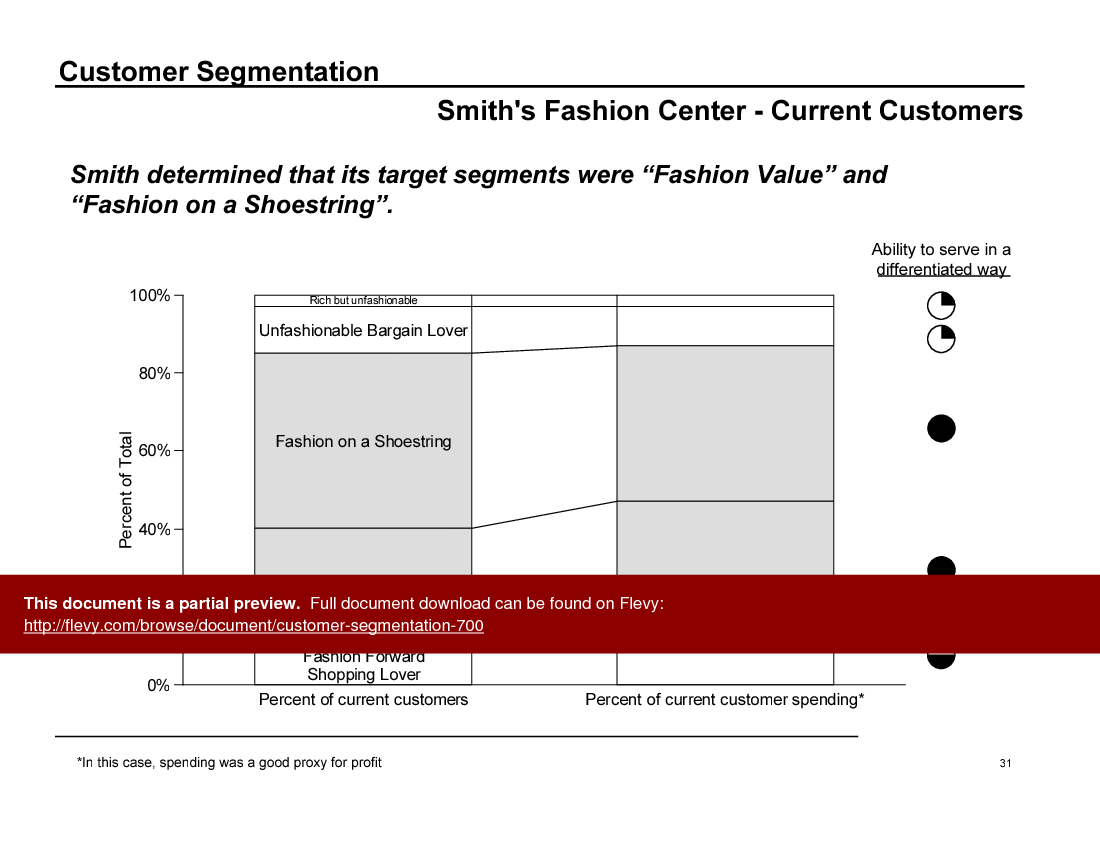
This PPT slide presents a customer segmentation analysis for Smith's Fashion Center, categorizing customers into 4 segments based on spending habits and fashion preferences: "Fashion on a Shoestring," "Fashion Value," "Unfashionable Bargain Lover," and "Fashion Forward Shopping Lover." The vertical axis represents the percentage of total customers, while the horizontal axis indicates the percentage of current customer spending. The primary target segments are "Fashion Value" and "Fashion on a Shoestring," reflecting a strategic focus on affordability and style. The positioning shows that "Fashion on a Shoestring" attracts a significant customer base and spending share, while "Unfashionable Bargain Lover" has lower alignment with strategic goals. This analysis suggests differentiated offerings tailored to each segment's needs, enhancing customer loyalty and driving sales. Understanding these segments allows Smith's to refine marketing strategies and product offerings effectively.
This PPT slide compares 3 customer segmentation methods: needs-based, behavioral, and demographic. Needs-based segmentation, though time-consuming, provides the highest value by requiring primary research to gather actionable insights directly from customers, effectively identifying their needs and purchasing drivers. Behavioral segmentation also requires primary research when client data is insufficient, showing correlation in purchasing behaviors, but lacking depth in motivations. Demographic segmentation relies on existing demographic data, offering limited usefulness with primarily descriptive insights and low correlation. Selecting the right segmentation method is critical for developing effective strategies, with needs-based segmentation yielding the most actionable insights despite higher initial effort.
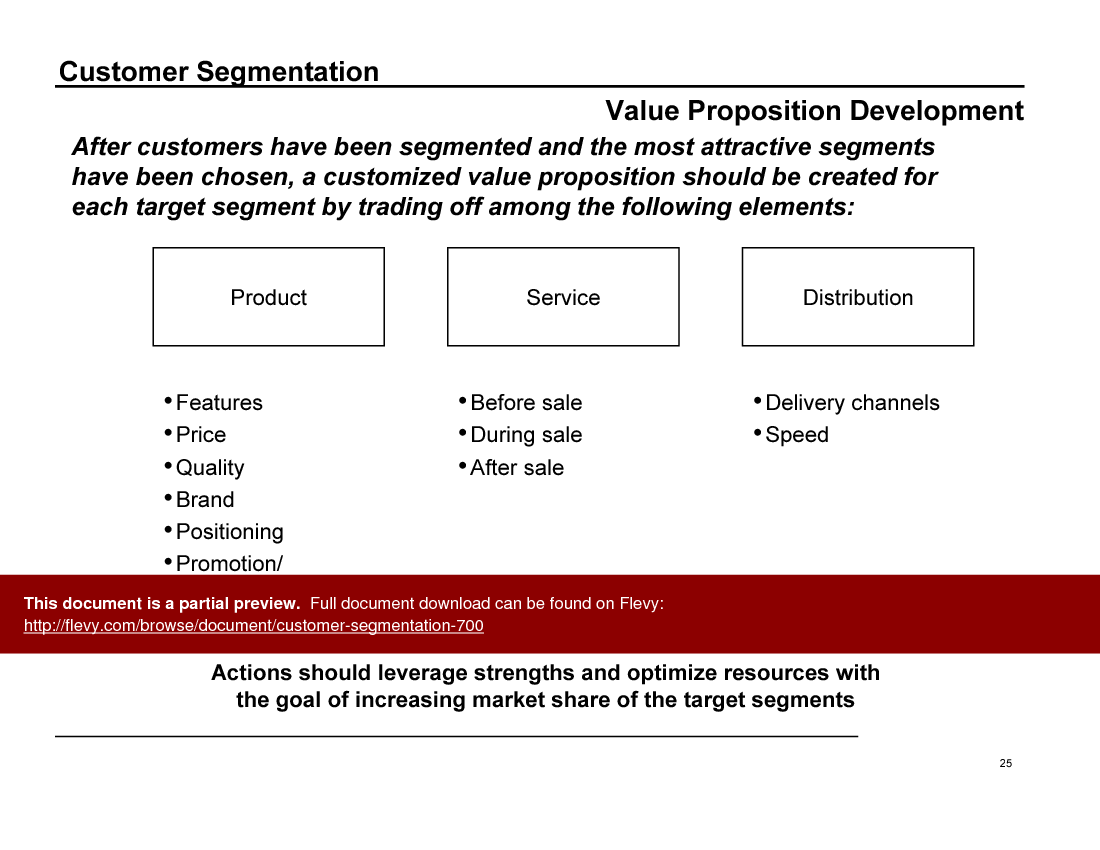
This PPT slide focuses on customer segmentation, outlining essential requirements and methodologies for effective segmentation and value proposition development. Key criteria for segmentation include meaningful differentiation, adherence to the MECE principle, measurable market share, and substantial volume for analysis. The "Value Proposition Development" section details tailoring offerings across product, service, and distribution dimensions, emphasizing features, pricing, and delivery channels to optimize resources and enhance market share. The "Target Segment Selection Matrix" categorizes segments into 4 quadrants, guiding decisions on developing capabilities or adjusting propositions based on segment attractiveness. Finally, "Profit Potential Quantification" outlines a systematic approach to assess profit potential by calculating revenue increases and costs to serve, enabling informed resource allocation and strategic focus.
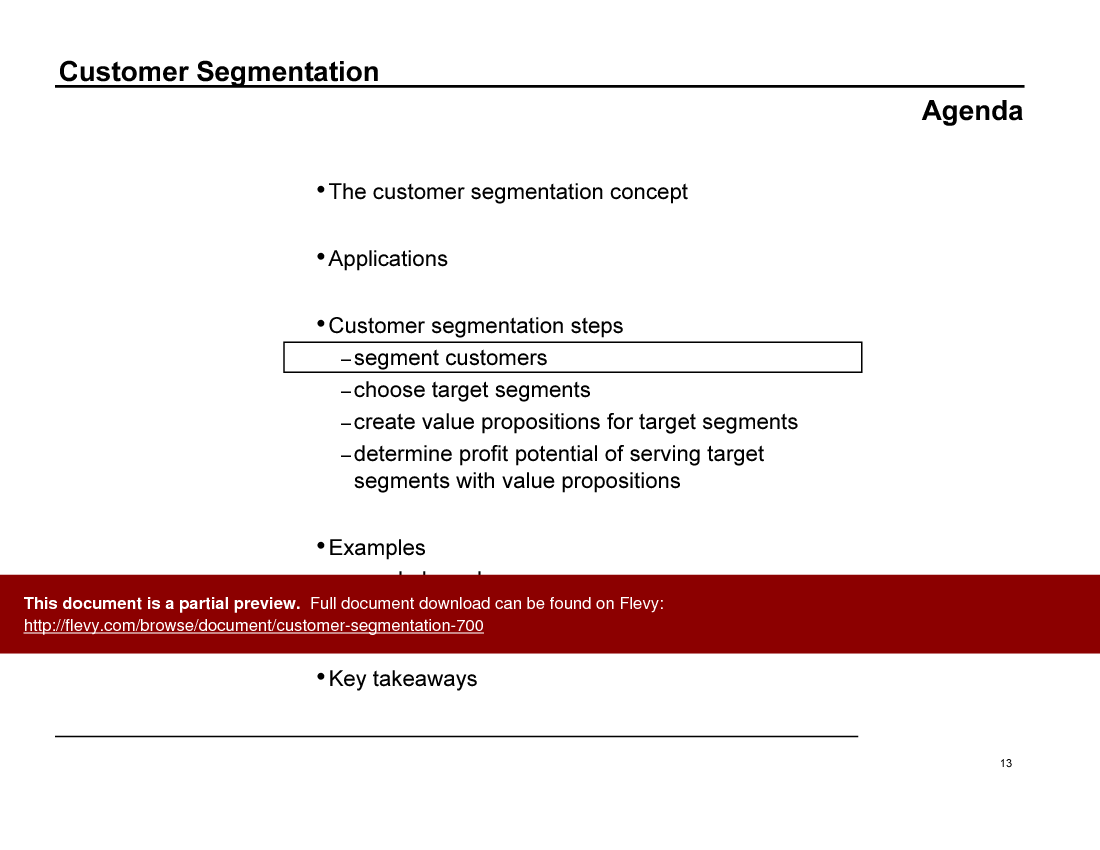
This PPT slide outlines a structured approach to customer segmentation, focusing on segmenting both existing and potential clients. Key segmentation methods include needs-based, behavioral, and demographic approaches, which are essential for relevance and effectiveness. The selection of target segments is based on attractiveness and the organization's capacity to serve them uniquely, with attractiveness evaluated through profit potential, including revenue opportunities and service costs. Each target segment requires a tailored value proposition addressing specific customer needs across product, service, and distribution. Finally, determining profit potential involves assessing revenue and cost implications, including direct profits and hidden costs like training and marketing expenses, ensuring alignment with customer expectations and maximizing profitability.
This PPT slide outlines customer segmentation, categorized into Cost, Customers, Competitors, and Capabilities. The Cost category focuses on identifying cost reduction opportunities through efficient resource allocation. The Customers section highlights strategies to maximize revenue and profit by tailoring offerings to diverse customer needs. The Competitors category emphasizes differentiation and understanding market position to craft competitive strategies. The Capabilities section aligns strategies with core competencies, ensuring strengths are leveraged to meet customer needs. Tools for implementing segmentation include Purchase Criteria Rating, Company Positioning, Attractiveness Analysis, Value Proposition Development, Customer Retention and Loyalty, and Customer Acquisition, providing a framework for analyzing segments and developing targeted strategies.
This PPT slide presents 2 methodologies for customer data segmentation: the 80/20 approach and CHAID (Chi-squared Automatic Interaction Detector). The 80/20 approach segments customers based on profitability, hypothesizing variables that contribute to profitability,, but suffers from low statistical validity, reliance on intuition, and potential omission of key variables. In contrast, CHAID is a structured analytical tool that identifies drivers of a dependent variable, such as profit, through a rigorous process of variable selection, data collection, and analysis, resulting in high statistical validity. However, it requires collaboration with the Bain Research and Data Analysis Group for software and expertise, which may not be feasible for all organizations.
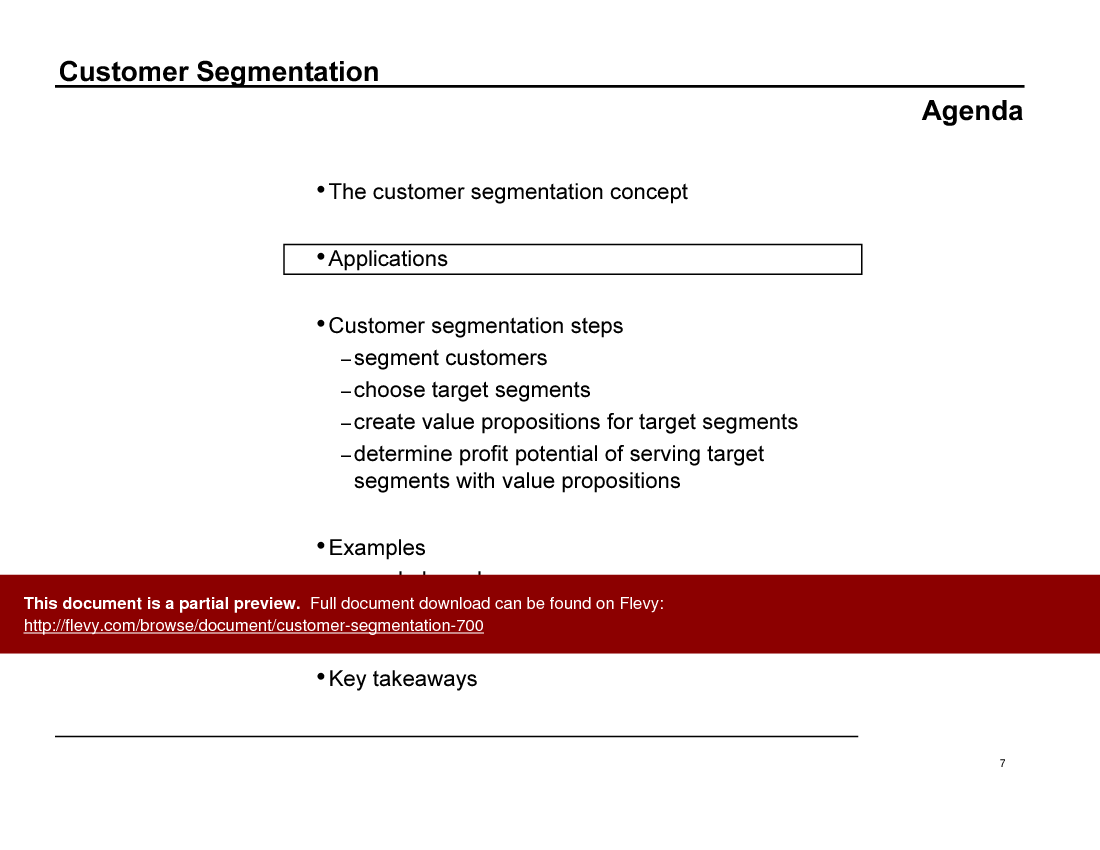
This PPT slide outlines a structured approach to customer segmentation, essential for identifying distinct customer groups. The process begins with segmenting existing and potential customers to understand diverse market needs, allowing businesses to categorize them into homogeneous groups for targeted marketing strategies. Next, companies select attractive target segments that align with their strengths and market opportunities. Following this, tailored value propositions are created for each segment, defining how products or services meet specific needs. Finally, assessing the profit potential of these segments is crucial for informed strategic decisions, ensuring effective resource allocation and maximizing return on investment.
Source: Best Practices in Customer Segmentation PowerPoint Slides: Customer Segmentation PowerPoint (PPT) Presentation Slide Deck, Documents & Files
Since 2012, we have provided business templates to over 10,000 businesses and organizations of all sizes, from startups and small businesses to the Fortune 100, in over 130 countries.
"As a consulting firm, we had been creating subject matter training materials for our people and found the excellent materials on Flevy, which saved us 100's of hours of re-creating what already exists on the Flevy materials we purchased."
– Michael Evans, Managing Director at Newport LLC
"I like your product. I'm frequently designing PowerPoint presentations for my company and your product has given me so many great ideas on the use of charts, layouts, tools, and frameworks. I really think the templates are a valuable asset to the job."
– Roberto Fuentes Martinez, Senior Executive Director at Technology Transformation Advisory
"I am extremely grateful for the proactiveness and eagerness to help and I would gladly recommend the Flevy team if you are looking for data and toolkits to help you work through business solutions."
– Trevor Booth, Partner, Fast Forward Consulting
"I have used FlevyPro for several business applications. It is a great complement to working with expensive consultants. The quality and effectiveness of the tools are of the highest standards."
– Moritz Bernhoerster, Global Sourcing Director at Fortune 500
"As a niche strategic consulting firm, Flevy and FlevyPro frameworks and documents are an on-going reference to help us structure our findings and recommendations to our clients as well as improve their clarity, strength, and visual power. For us, it is an invaluable resource to increase our impact and value."
– David Coloma, Consulting Area Manager at Cynertia Consulting
"The wide selection of frameworks is very useful to me as an independent consultant. In fact, it rivals what I had at my disposal at Big 4 Consulting firms in terms of efficacy and organization."
– Julia T., Consulting Firm Owner (Former Manager at Deloitte and Capgemini)
"As a young consulting firm, requests for input from clients vary and it's sometimes impossible to provide expert solutions across a broad spectrum of requirements. That was before I discovered Flevy.com.
Through subscription to this invaluable site of a plethora of topics that are key and crucial to consulting, I
have been able to exceed expectations and deliver quality advice and solutions to my clients. The quality and expertise of the authors are exemplary and gives me great confidence to use as part of my service offerings.
I highly recommend this company for any consultant wanting to apply international best practice standards in their service offerings.
"
– Nishi Singh, Strategist and MD at NSP Consultants
"I have found Flevy to be an amazing resource and library of useful presentations for lean sigma, change management and so many other topics. This has reduced the time I need to spend on preparing for my performance consultation. The library is easily accessible and updates are regularly provided. A wealth of great information."
– Cynthia Howard RN, PhD, Executive Coach at Ei Leadership
Save with Bundles

This document is available as part of the following discounted bundle(s):
Download our free compilation of 50+ Strategy & Transformation slides and templates. Frameworks include McKinsey 7-S, Balanced Scorecard, Disruptive Innovation, BCG Curve, and many more.