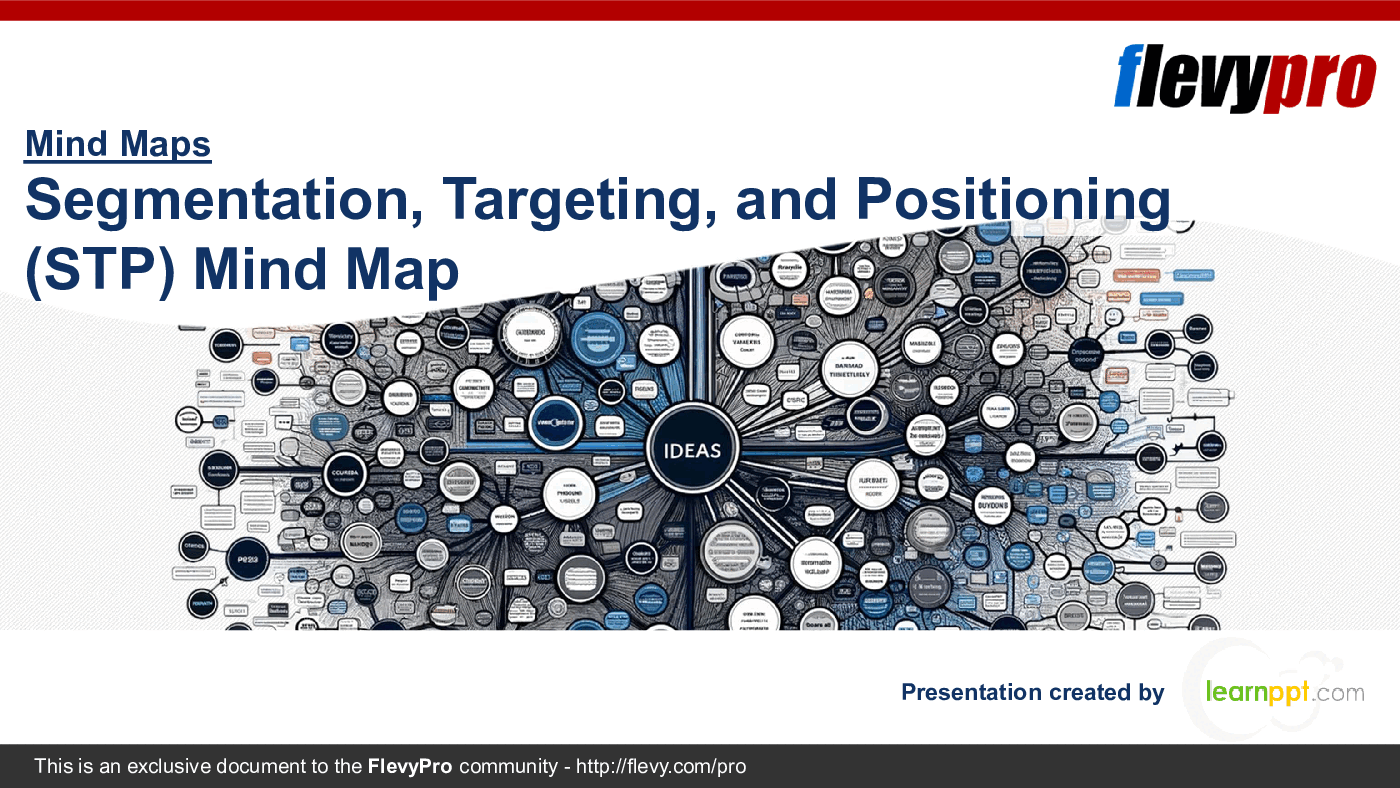
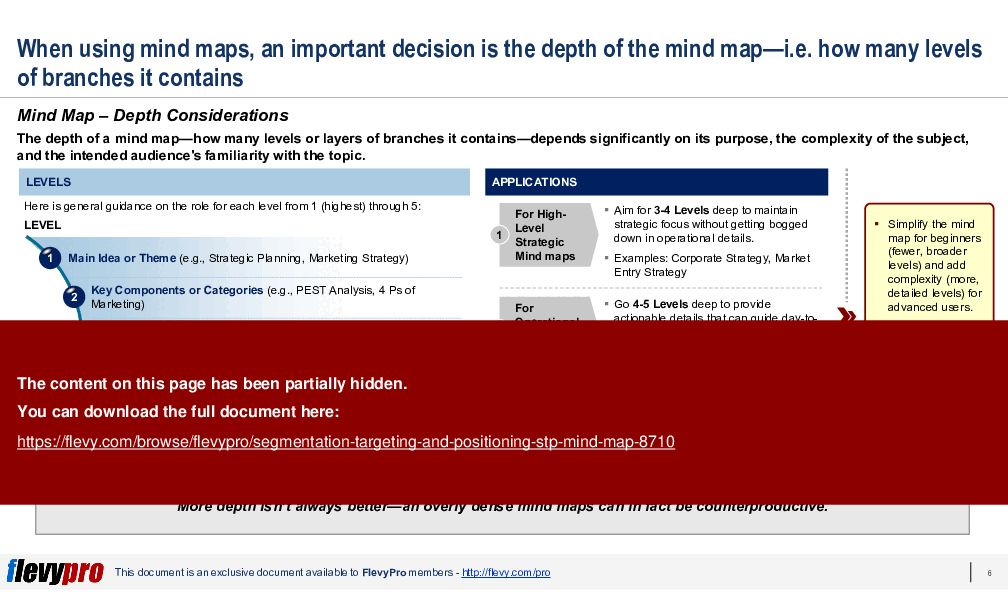
A mind map is a visual diagram that represent ideas, tasks, or other items linked to and arranged around a central key concept. It facilitates structuring information, helping users to better analyze, comprehend, and generate new ideas.
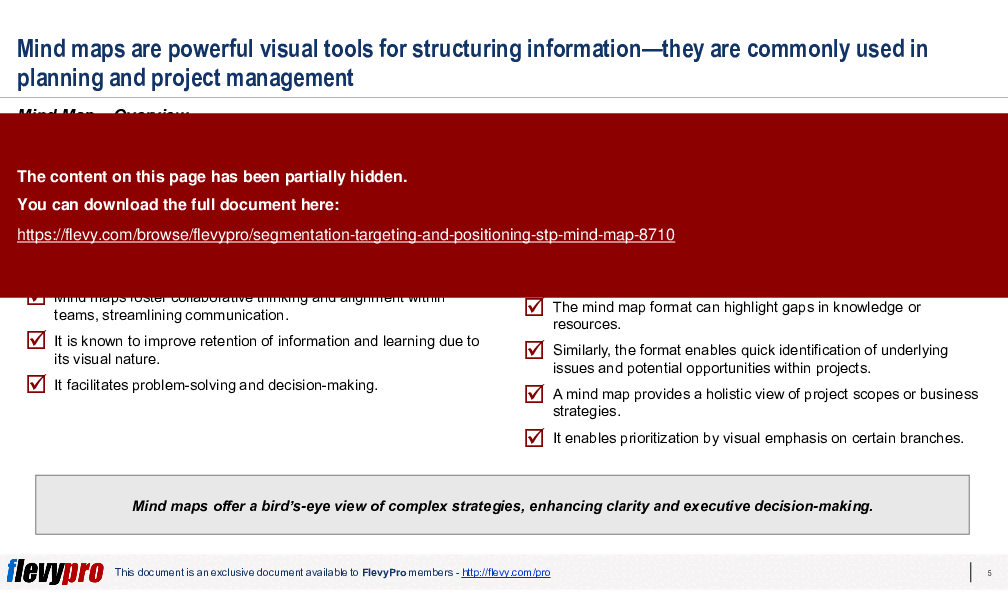
Using the mind map tool also can help reveal numerous potential insights, including:
A mind map identifies relationships and connections between different elements.
The mind map format can highlight gaps in knowledge or resources.
Similarly, the format enables quick identification of underlying issues and potential opportunities within projects.
A mind map provides a holistic view of project scopes or business strategies.
It enables prioritization by visual emphasis on certain branches.
This PowerPoint presentation includes a 4-level deep Segmentation, Targeting, and Positioning (STP) Mind Map in a number of formats for ease of use:
1. Interactive HTML
2. SVG file (for editing)
3. PDF (A3 size)
4. Markdown script (for editing)
The Markdown code allows you to easily modify the mind map in a Markdown editor, which are freely available online.
Using mind maps for Segmentation, Targeting, and Positioning (STP) marketing analysis offers several benefits. First, it visually organizes complex data about customer segments, making it easier to understand market dynamics and craft targeted strategies. Second, a mind map facilitates the identification of relationships and overlaps between different segments, which can enhance targeting accuracy and the effectiveness of positioning efforts. Finally, it serves as a dynamic tool that can be continually updated, providing a real-time view that helps marketers adapt strategies based on evolving market conditions or new insights, ensuring that marketing efforts remain aligned with business objectives and market realities.
This Kanban Mind Map defines 3 level 2 branches (for Segmentation, Targeting, Positioning). Each is further broken down into 5 branches. For instance, Segmentation is broken down into:
1. Identify segmentation bases
2. Conduct market research
3. Analyze market segment
4. Profile and understand segments
5. Select target segments
This PowerPoint presentation also includes an explanation of the mind map strategic analysis and visualization tool, along with guiding principles.
Got a question about this document? Email us at flevypro@flevy.com.
Executive Summary
The Segmentation, Targeting, and Positioning (STP) Mind Map is a comprehensive visual tool designed to enhance marketing strategies by organizing complex data about customer segments. Created by experienced consultants, this presentation provides a structured approach to understanding market dynamics and crafting targeted strategies. The mind map facilitates the identification of relationships between segments, improving targeting accuracy and positioning effectiveness. Users can adapt the mind map in various formats, ensuring alignment with evolving market conditions and business objectives.
Who This Is For and When to Use
• Marketing executives and strategists looking to refine their approach to market segmentation.
• Product managers aiming to identify and understand customer needs and preferences.
• Business analysts tasked with evaluating market opportunities and competitive landscapes.
• Consultants assisting clients in developing targeted marketing strategies.
Best-fit moments to use this deck:
• During strategic planning sessions to visualize market segmentation and targeting strategies.
• In workshops focused on aligning marketing efforts with business objectives.
• When conducting market research to analyze customer segments and their behaviors.
Learning Objectives
• Define the components of segmentation, targeting, and positioning in marketing.
• Build a comprehensive STP strategy using visual tools for clarity and insight.
• Establish effective targeting strategies that align with customer needs and market dynamics.
• Analyze market segments to identify opportunities and gaps.
• Create actionable insights from complex data to drive marketing decisions.
• Adapt marketing strategies based on real-time insights and evolving market conditions.
Table of Contents
• Overview (page 3)
• Mind Map (page 5)
• STP Marketing Mind Map (page 9)
• Slide Design Guide (page 15)
Primary Topics Covered
• Segmentation - Organizes data about customer segments, facilitating understanding of market dynamics and crafting targeted strategies.
• Targeting - Enhances targeting accuracy by identifying relationships and overlaps between different customer segments.
• Positioning - Develops unique value propositions that differentiate offerings in the market.
• Market Dynamics - Analyzes market conditions to ensure marketing efforts remain aligned with business objectives.
• Strategic Analysis - Provides a framework for evaluating market opportunities and customer needs.
• Visualization Tools - Utilizes mind maps to distill complex information into actionable insights.
Deliverables, Templates, and Tools
• Interactive HTML mind map for dynamic presentations.
• SVG file for editing and customization.
• PDF version for easy sharing and printing.
• Markdown script for further modifications in a Markdown editor.
Slide Highlights
• Overview of the STP Mind Map illustrating the structure and depth of segmentation, targeting, and positioning.
• Visual representation of customer segments and their characteristics.
• Detailed breakdown of targeting strategies and their implementation.
• Insights into positioning effectiveness and market response analysis.
Potential Workshop Agenda
STP Strategy Development Session (90 minutes)
• Introduce the STP framework and its importance in marketing.
• Collaborate on identifying key customer segments using the mind map.
• Develop targeted strategies based on segment analysis.
Market Dynamics Analysis (60 minutes)
• Review current market conditions and their impact on segmentation.
• Discuss real-time insights and adapt strategies accordingly.
Positioning Workshop (90 minutes)
• Explore unique value propositions for different segments.
• Align marketing messages with customer expectations and needs.
Customization Guidance
• Tailor the mind map to reflect specific market conditions and customer insights relevant to your organization.
• Adjust segmentation categories based on the latest market research and data analysis.
• Update targeting strategies to align with evolving business objectives and customer behaviors.
Secondary Topics Covered
• Competitive analysis and its role in positioning strategies.
• The impact of market trends on segmentation and targeting.
• Techniques for effective market research and customer insights gathering.
• Best practices for visualizing complex data in marketing presentations.
Topic FAQ
Document FAQ
These are questions addressed within this presentation.
What is the purpose of the STP Mind Map?
The STP Mind Map serves to visually organize complex data about customer segments, enhancing understanding and facilitating targeted marketing strategies.
How can I customize the mind map?
You can customize the mind map using the provided SVG file or Markdown script, allowing for adjustments based on your specific market conditions.
What formats are available for the STP Mind Map?
The STP Mind Map is available in interactive HTML, SVG, PDF (A3 size), and Markdown script formats.
Who can benefit from using this mind map?
Marketing executives, product managers, business analysts, and consultants can all leverage this mind map to refine their marketing strategies.
How does the mind map improve targeting accuracy?
By visually organizing customer segments and their relationships, the mind map helps identify overlaps and gaps, leading to more precise targeting strategies.
Can the mind map be used in workshops?
Yes, the mind map is an effective tool for collaborative workshops focused on developing and refining marketing strategies.
What insights can be gained from using the STP Mind Map?
Users can gain insights into customer behaviors, market dynamics, and effective positioning strategies, leading to more informed marketing decisions.
How does the mind map support strategic analysis?
The mind map provides a structured framework for evaluating market opportunities, customer needs, and competitive landscapes.
Glossary
• Segmentation - The process of dividing a market into distinct groups of buyers.
• Targeting - The selection of specific segments to focus marketing efforts on.
• Positioning - Crafting a unique value proposition to differentiate a product or service.
• Market Dynamics - The factors that influence the behavior of consumers and competitors in a market.
• Mind Map - A visual representation of information organized around a central concept.
• Value Proposition - A statement that outlines the unique benefits of a product or service.
• Customer Insights - Information derived from analyzing customer behaviors and preferences.
• Competitive Analysis - The assessment of competitors to identify strengths and weaknesses.
• Market Research - The process of gathering information about consumers' needs and preferences.
• Strategic Analysis - The evaluation of internal and external factors affecting an organization’s strategy.
• Visualization Tools - Tools used to create visual representations of data and information.
• Actionable Insights - Information that can be used to make informed decisions and drive action.
Source: Best Practices in Market Analysis, Market Segmentation, Mind Map, Positioning PowerPoint Slides: Segmentation, Targeting, and Positioning (STP) Mind Map PowerPoint (PPTX) Presentation Slide Deck, LearnPPT Consulting
Did you need more documents?
Consider a FlevyPro subscription from $39/month. View plans here.
For $10.00 more, you can download this document plus 2 more FlevyPro documents. That's just $13 each.
|
Download our FREE Strategy & Transformation Framework Templates
Download our free compilation of 50+ Strategy & Transformation slides and templates. Frameworks include McKinsey 7-S, Balanced Scorecard, Disruptive Innovation, BCG Curve, and many more. |










