
Explore a comprehensive framework for corporate performance measurement, authored by industry experts. Dive into Economic Profit, MVA, and CFROI for actionable insights. Corporate Performance Measurement is a 106-slide PPT PowerPoint presentation slide deck (PPT) available for immediate download upon purchase.
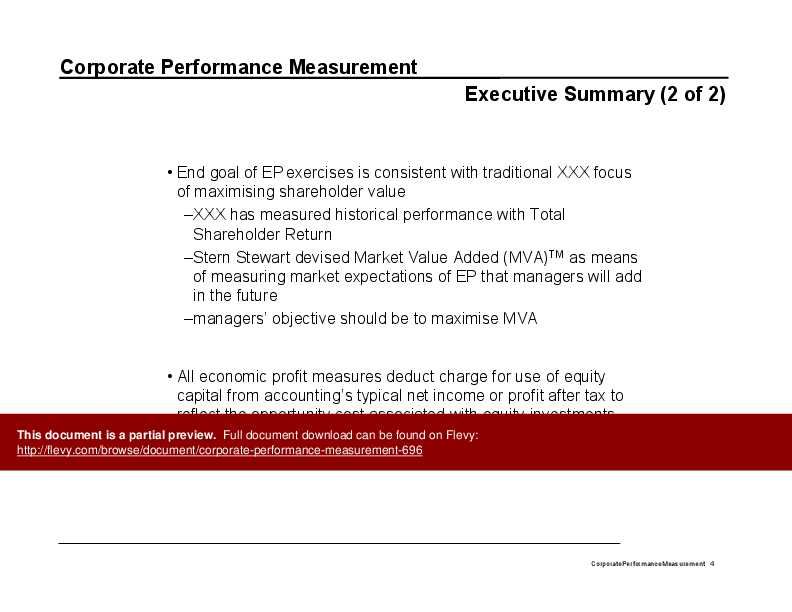
Corporate performance evaluation has evolved from the 1960s focus on ROE to the current variations of economic profit that measure impact on shareholder value. Both ROE and EP are business metrics, tools used to measure the performance of the business. Focusing on EP instead of ROE decreases the likelihood of destructive behavior by managers. End goal of EP exercises is consistent with traditional focus of maximizing shareholder value. All economic profit measures deduct charge for use of equity capital from accounting's typical net income or profit after tax to reflect the opportunity cost associated with equity investments.
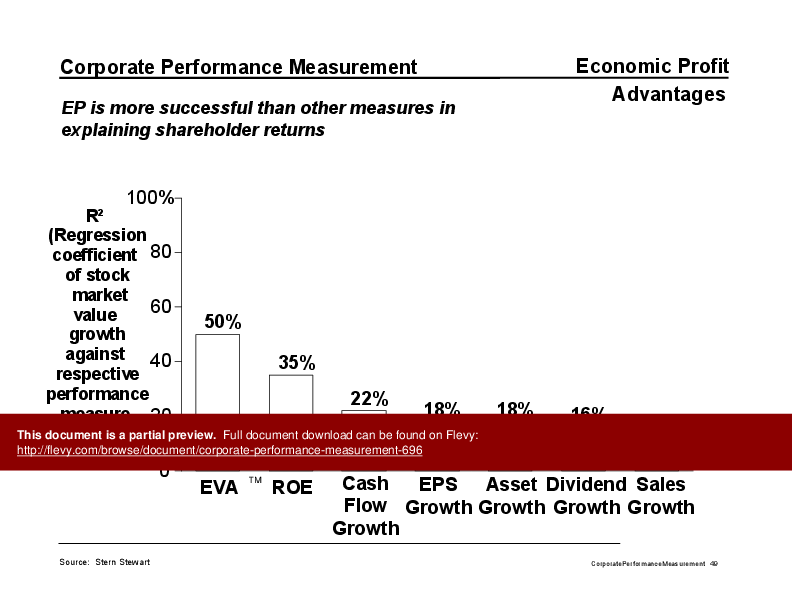
This document provides a comprehensive framework for evaluating corporate performance, integrating key metrics like Market Value Added (MVA), Economic Profit (EP), and Cash Flow Return on Investment (CFROI). It delves into the intricacies of these measures, offering a detailed breakdown of their components and how they can be applied to real-world scenarios. The inclusion of the DuPont formula and BCG’s TBR calculation ensures a robust analysis of both publicly-listed and privately-held firms.
The case study on Diageo illustrates practical application, highlighting the importance of asset utilization and the impact of different business models on profitability. By examining the Glen Ellen system, the document underscores the significance of efficient capital allocation and the potential pitfalls of ignoring capital requirements. This real-world example provides valuable insights into how theoretical concepts can be translated into actionable strategies.
For executives looking to enhance their understanding of corporate performance measurement, this document offers a wealth of knowledge. It not only covers the theoretical aspects, but also provides practical exercises and solutions, making it an indispensable resource for anyone aiming to maximize shareholder value. The detailed analysis and step-by-step approach ensure that users can effectively implement these strategies within their own organizations.
Got a question about the product? Email us at support@flevy.com or ask the author directly by using the "Ask the Author a Question" form. If you cannot view the preview above this document description, go here to view the large preview instead.
MARCUS OVERVIEW
This synopsis was written by Marcus [?] based on the analysis of the full 106-slide presentation.
Executive Summary
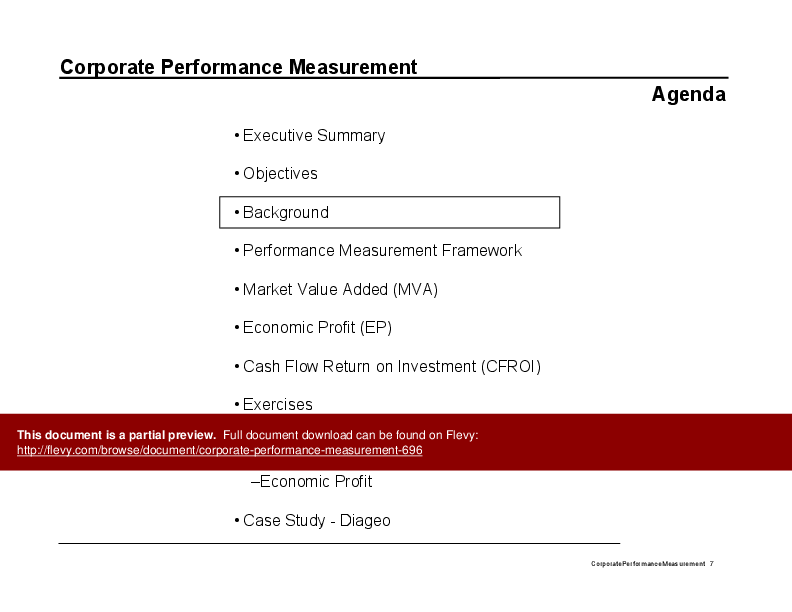
This Corporate Performance Measurement presentation provides a structured approach to evaluating corporate performance through advanced metrics such as Economic Profit (EP), Market Value Added (MVA), and Cash Flow Return on Investment (CFROI). Authored in a consulting-grade format akin to McKinsey, Bain, or BCG-quality, this deck equips corporate executives and consultants with the tools to assess and enhance shareholder value. By utilizing these frameworks, users can identify value creation opportunities, align management incentives, and make informed strategic decisions.
Who This Is For and When to Use
• Corporate executives focused on performance measurement and shareholder value enhancement
• Financial analysts and consultants evaluating business performance metrics
• Strategy teams assessing resource allocation and investment decisions
• Management teams looking to align incentives with economic value creation
Best-fit moments to use this deck:
• During strategic planning sessions to define performance metrics
• When evaluating investment opportunities and their impact on shareholder value
• In workshops aimed at aligning management incentives with corporate goals
• For training sessions on advanced performance measurement techniques
Learning Objectives
• Define key corporate performance measures including MVA, EP, and CFROI
• Explain the significance of these measures in driving shareholder value
• Calculate MVA, EP, and CFROI using real-world examples
• Analyze the implications of performance metrics on management behavior
• Develop strategies for improving corporate performance based on these metrics
• Apply case studies to illustrate the practical use of performance measures
Primary Topics Covered
• Performance Measurement Framework - A structured approach to evaluating corporate performance using advanced metrics to assess value creation and destruction.
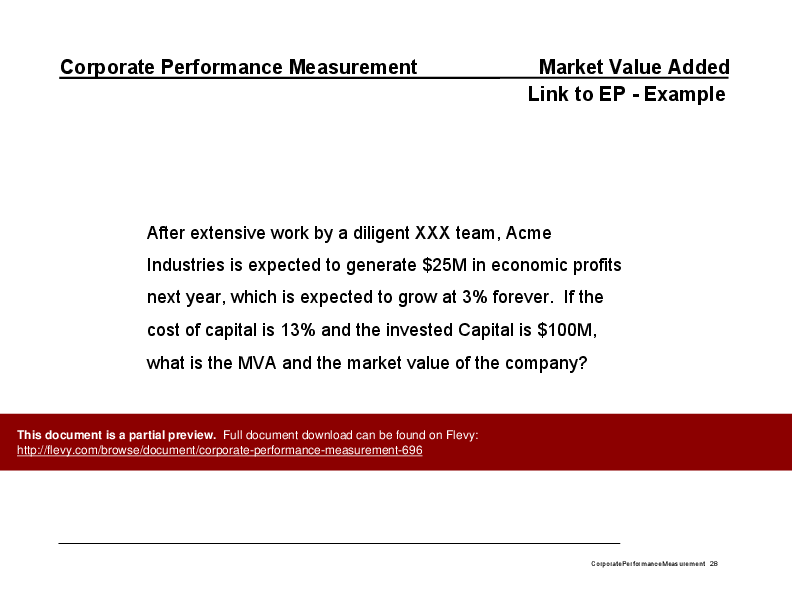
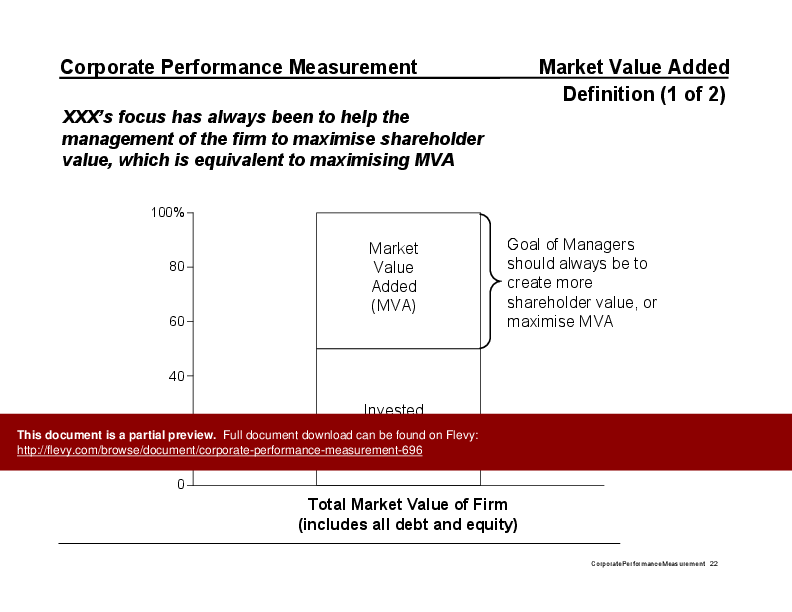
• Market Value Added (MVA) - A measure of the market's expectations of future economic profits, calculated as the total market value of a company minus invested capital.
• Economic Profit (EP) - A metric that accounts for the opportunity cost of capital, providing insight into value creation over time.
• Cash Flow Return on Investment (CFROI) - An adjusted return on investment measure that uses cash flows to evaluate management performance against the firm's cost of capital.
• Exercises - Practical applications of MVA and EP calculations to reinforce learning and application of the concepts.
• Case Study - Diageo - An analysis of Diageo's performance metrics to illustrate the application of corporate performance measures in a real-world context.
Deliverables, Templates, and Tools
• MVA calculation template for assessing market value against invested capital
• EP calculation framework to evaluate economic profit and its implications
• CFROI analysis tool to compare cash flow returns against benchmarks
• Case study analysis framework for applying performance measures in strategic decision-making
• Exercises for practical application of MVA and EP metrics
• Performance measurement dashboard template for ongoing tracking and assessment
Slide Highlights
• Overview of the evolution of corporate performance metrics from ROE to EP
• Detailed breakdown of MVA calculation using both operating and financing approaches
• Visual representation of the relationship between EP and MVA over time
• Case study insights on Diageo's performance metrics and strategic implications
• Framework for understanding the impact of economic profit on managerial decision-making
Potential Workshop Agenda
Introduction to Corporate Performance Measurement (30 minutes)
• Overview of key concepts and objectives
• Discussion on the importance of performance metrics
MVA and EP Calculation Workshop (60 minutes)
• Hands-on exercises calculating MVA and EP
• Group discussion on findings and implications
Case Study Analysis: Diageo (45 minutes)
• Review of Diageo's performance metrics
• Group discussion on lessons learned and applications
Wrap-Up and Q&A (15 minutes)
• Summary of key takeaways
• Open floor for questions and further discussion
Customization Guidance
• Tailor the MVA and EP calculation templates to reflect specific industry benchmarks and company data
• Adjust case study examples to align with the audience's industry context
• Incorporate company-specific terminology and metrics into the performance measurement framework
• Modify the workshop agenda to focus on the most relevant performance metrics for the organization
Secondary Topics Covered
• Historical evolution of performance metrics in corporate finance
• Comparison of traditional metrics like ROE with modern measures like EP
• The role of management compensation in aligning with performance metrics
• Industry-specific considerations for applying performance measures
• Challenges and limitations of using EP and MVA in practice
FAQ What is the primary purpose of Economic Profit (EP)?
EP measures a company's profitability after accounting for the opportunity cost of capital, providing insight into value creation over time.
How does Market Value Added (MVA) differ from traditional performance metrics?
MVA reflects the market's expectations of future economic profits, while traditional metrics like ROE focus on past performance without considering capital costs.
Why is Cash Flow Return on Investment (CFROI) important?
CFROI offers a more accurate assessment of investment performance by using cash flows rather than accounting profits, allowing for better comparisons against the firm's cost of capital.
How can these performance measures be applied in strategic decision-making?
These metrics can guide resource allocation, investment decisions, and management performance evaluations, aligning corporate strategies with shareholder value creation.
What are the key challenges in implementing these performance metrics?
Challenges include data availability, the complexity of calculations, and ensuring alignment between management incentives and performance outcomes.
Can these metrics be customized for different industries?
Yes, MVA, EP, and CFROI can be tailored to reflect industry-specific benchmarks and operational realities, enhancing their relevance and applicability.
How do you calculate MVA?
MVA is calculated by subtracting invested capital from the total market value of the company, which includes both debt and equity.
What is the significance of using EP in evaluating management performance?
Using EP aligns management incentives with shareholder interests, encouraging decisions that create long-term value rather than focusing solely on short-term profits.
What role does the case study on Diageo play in this presentation?
The Diageo case study illustrates the practical application of performance metrics, showcasing how they can inform strategic decisions and highlight areas for improvement.
Glossary
• Market Value Added (MVA) - The difference between the market value of a company and its invested capital.
• Economic Profit (EP) - A measure of profitability that accounts for the opportunity cost of capital.
• Cash Flow Return on Investment (CFROI) - A performance metric that evaluates cash flows against investments.
• Total Shareholder Return (TSR) - A measure of the total return to shareholders, including stock price appreciation and dividends.
• Weighted Average Cost of Capital (WACC) - The average rate of return a company is expected to pay its security holders to finance its assets.
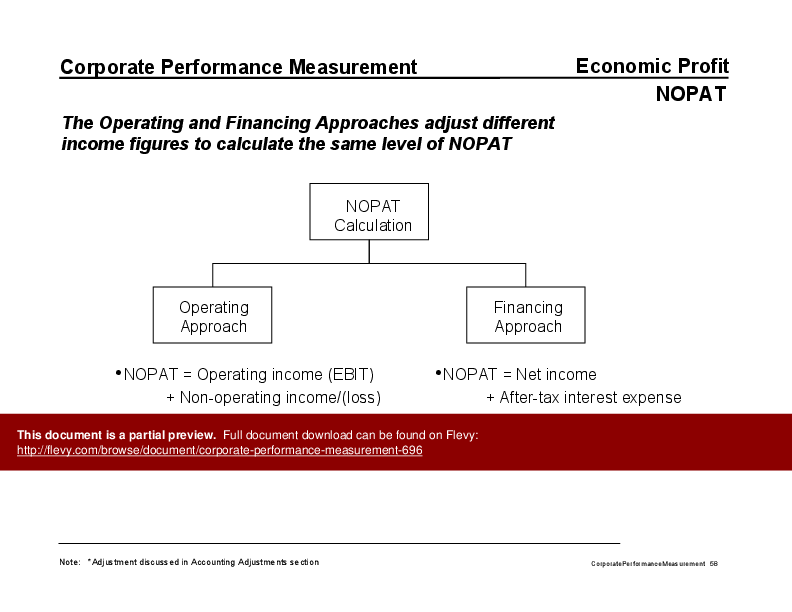
• Net Operating Profit After Tax (NOPAT) - A company's operating profit after taxes, excluding the effects of capital structure.
• Return on Equity (ROE) - A measure of financial performance calculated by dividing net income by shareholders' equity.
• Return on Assets (ROA) - A measure of profitability that indicates how efficiently a company uses its assets to generate earnings.
• Capital Charge - The cost of capital used in calculating economic profit.
• Investment Appraisal - The evaluation of the profitability and risk of an investment.
• Shareholder Value - The value delivered to shareholders as a result of the company's ability to generate profits.
• Performance Metrics - Quantitative measures used to assess the performance of a business or its components.
• Financial Analysis - The assessment of a company's financial statements to understand its performance and make informed decisions.
• Strategic Planning - The process of defining a company's direction and making decisions on allocating resources to pursue this direction.
• Value Creation - The process of increasing the worth of a company through various means, including operational efficiency and strategic investments.
• Management Incentives - Compensation structures designed to align the interests of management with those of shareholders.
• Operational Efficiency - The ability of a company to deliver products or services to its customers in the most cost-effective manner.
• Resource Allocation - The process of assigning available resources to various uses in a way that maximizes value.
• Financial Metrics - Quantitative measures used to assess a company's financial performance.
• Consulting-Grade - A term used to describe high-quality, professional-grade materials typically used in consulting practices.
• Stakeholder - Any individual or group that has an interest in the success of a company, including shareholders, employees, customers, and suppliers.
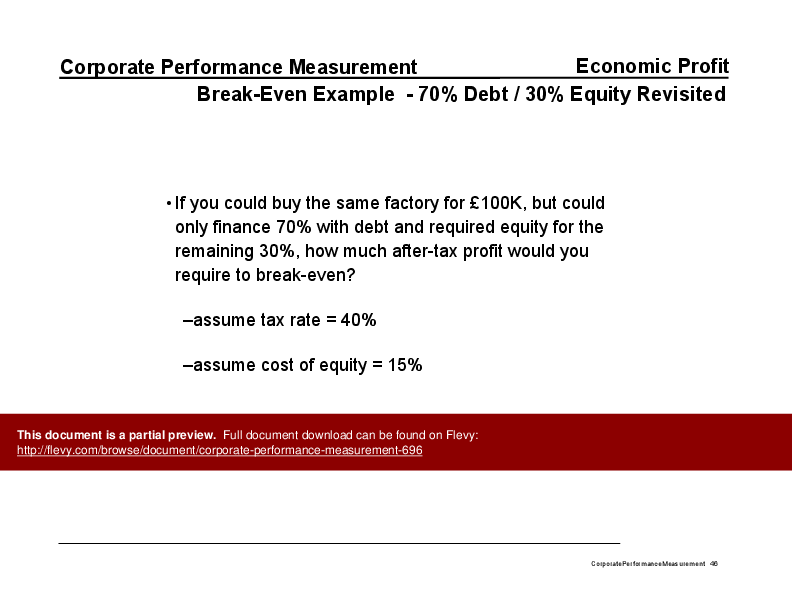
This PPT slide analyzes break-even calculations for a factory purchase of ÂŁ100K, financed with 70% debt and 30% equity. Key assumptions include a 40% tax rate and a 15% cost of equity. The debt portion of ÂŁ70K incurs annual interest payments of ÂŁ4.9K at a 7% interest rate, while the ÂŁ30K equity portion incurs a non-tax-deductible charge of ÂŁ7.5K. The required after-tax profit to break even is ÂŁ12.4K, illustrating the financial burden of equity financing compared to an all-debt approach, which would only require ÂŁ7K in after-tax profits. The financing structure directly impacts profitability needed to cover costs, with profits exceeding ÂŁ12.4K classified as economic profits. This analysis offers insights for decision-makers evaluating financing options and financial performance metrics.
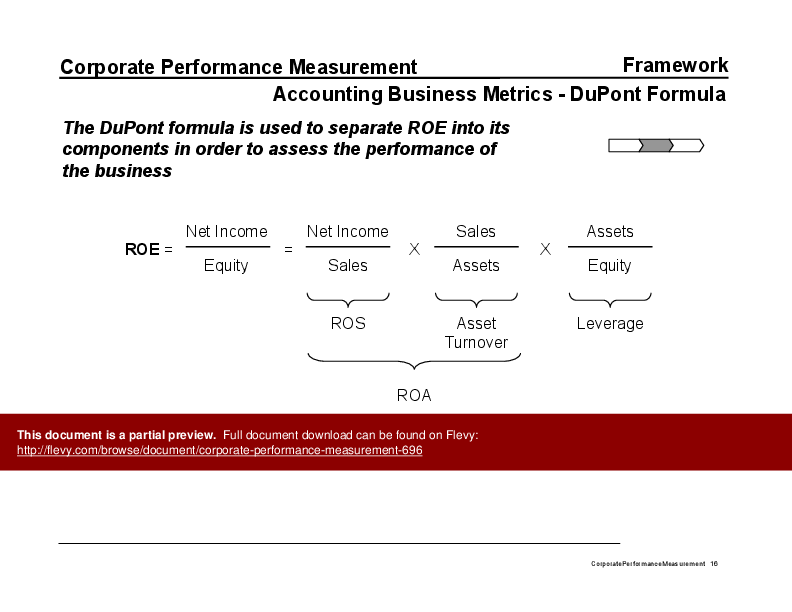
This PPT slide presents the DuPont formula for corporate performance measurement, breaking down Return on Equity (ROE) into 3 key metrics: Return on Sales (ROS), Asset Turnover, and Leverage. ROE is calculated as net income divided by equity, allowing for a detailed assessment of business performance. ROS measures profitability by comparing net income to sales, while Asset Turnover evaluates asset efficiency in generating sales. Leverage indicates the extent of debt used to finance assets. Improving any of these components can enhance overall performance, providing a framework for evaluating financial health and operational efficiency, and guiding strategic planning and resource allocation.
This PPT slide outlines the relationship between the Income Statement and Balance Sheet, focusing on how net income influences retained earnings and dividends. Net income, defined as income attributable to shareholders after EBIT, interest, and tax, serves as the basis for profit allocation decisions. Management can either reinvest profits as retained earnings to support growth or distribute profits as dividends to shareholders. Reinvesting reflects a strategy of retaining cash for operational improvements, while issuing dividends provides tangible returns to shareholders. The choice between reinvestment and dividends significantly impacts the company's financial health and shareholder satisfaction, highlighting the direct effect of management decisions on financial performance and shareholder returns.
This PPT slide analyzes traditional versus modern wine production processes, focusing on operational strategies of New World wine producers. Traditional wine-making is capital intensive, creating challenges for producers. In contrast, vertically integrated New World producers, like Robert Mondavi, streamline operations through selective outsourcing, particularly in vinification and aging stages. Non-vertically integrated producers, such as Glen Ellen, emphasize outsourcing, performing only essential activities. This analysis highlights strategic choices that enhance operational efficiency and reduce capital investment, informing decisions about partnerships and investments in the evolving wine industry. The framework illustrates how modern practices reshape traditional sectors.
This PPT slide outlines a structured approach to calculating Cash Flow Return on Investment (CFROI), a key metric for assessing corporate performance. The framework begins with determining the life of assets, essential for understanding their value over time. It emphasizes calculating gross cash flow, representing total cash generated before deductions, and gross cash investment, which includes all capital expenditures for maintaining and growing the asset base. The calculation of non-depreciating assets distinguishes between assets that lose value and those that retain worth, aiding financial analysis. CFROI serves as a comprehensive indicator of capital utilization for cash flow generation. Finally, comparing CFROI to benchmarks provides context for performance evaluation against industry standards or historical data.
This PPT slide visualizes stock performance through Total Shareholder Return (TSR), comparing a specific client, "XXX," against the S&P 500 from 1980 to 1998. The graph shows a consistent upward trend in TSR for the client, particularly in the late 1990s, indicating significant shareholder value creation. The Y-axis represents point changes in indices, while the X-axis denotes years. The client's performance consistently outpaced the S&P 500, suggesting effective corporate strategies and operational excellence. Methodology and data validation are credited to Price Waterhouse LLP, enhancing credibility for stakeholders evaluating performance metrics. Emphasizing TSR aligns with best practices in performance measurement, supporting investment decisions and strategic planning discussions.
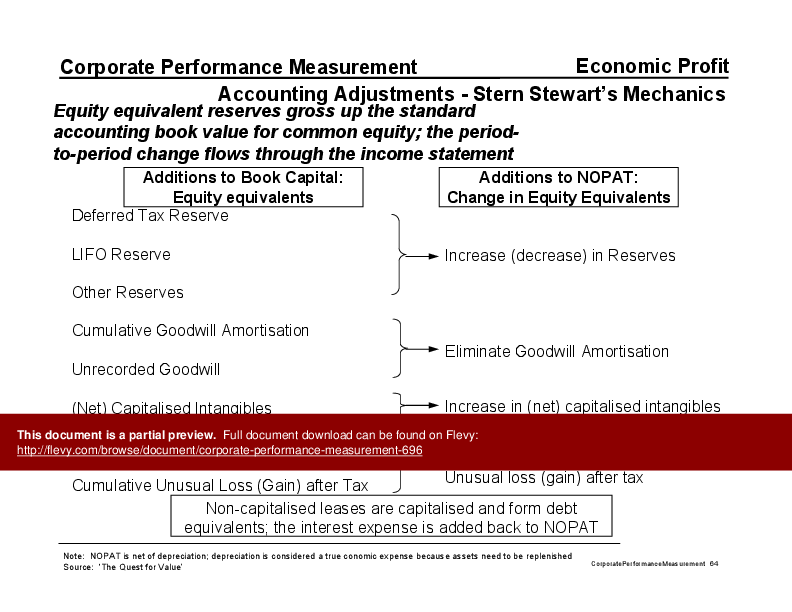
This PPT slide presents a framework for corporate performance measurement focusing on accounting adjustments by Stern Stewart. Key adjustments for accurate performance measurement include reserves, goodwill, capitalization of outlays, full-cost accounting, unusual items, and capitalization of leases, which refine financial data to reflect economic profit. Industries most affected by these adjustments include high inventory sectors like consumer goods, which face challenges such as bad debt and inventory obsolescence, and acquisitive industries that require careful goodwill consideration. R&D intensive industries must account for capitalization of outlays, while discovery, restructuring, and capital-intensive sectors highlight the relevance of full-cost accounting and unusual items. Tailored financial analysis based on industry characteristics is essential for informed decision-making.
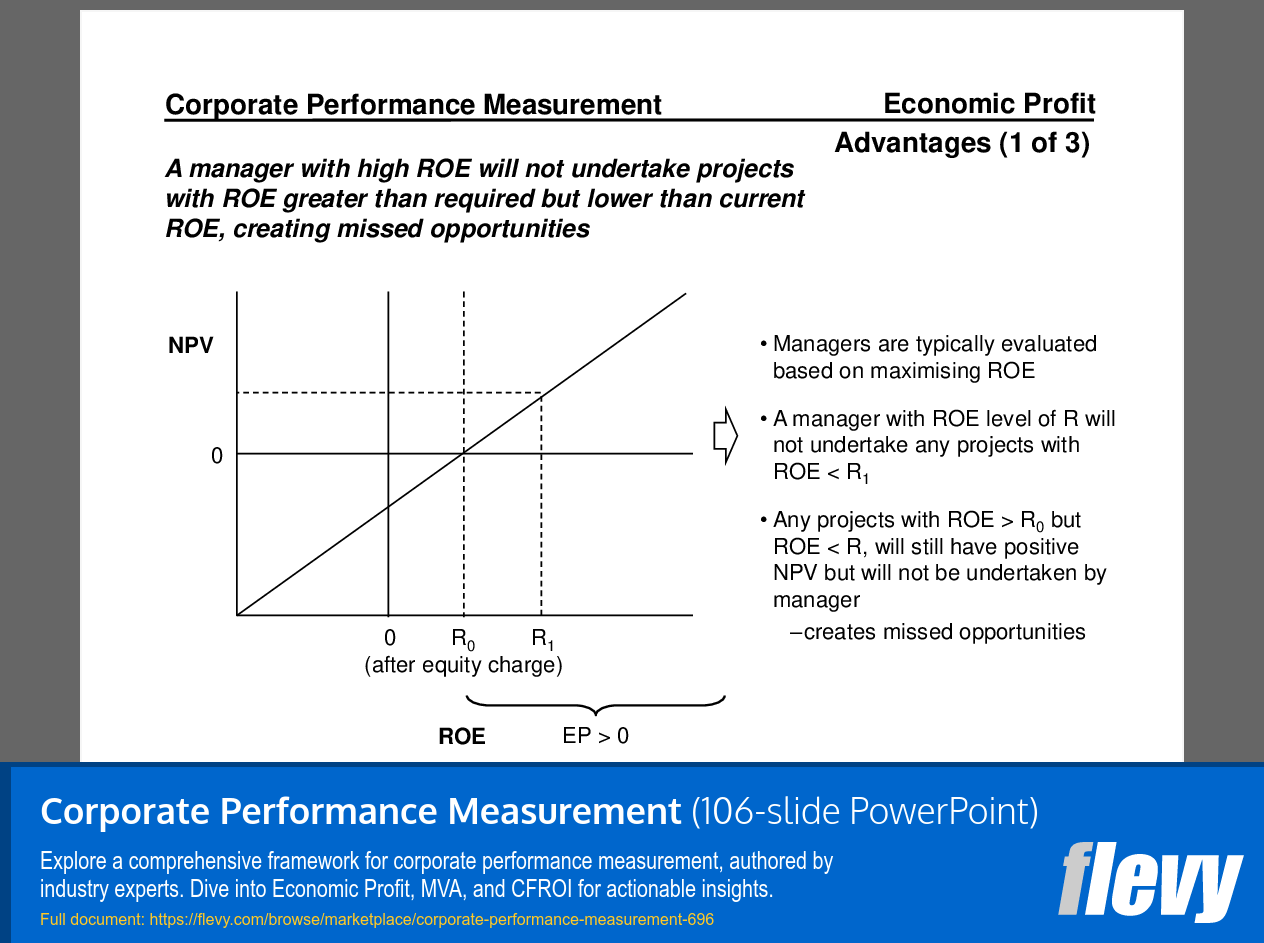
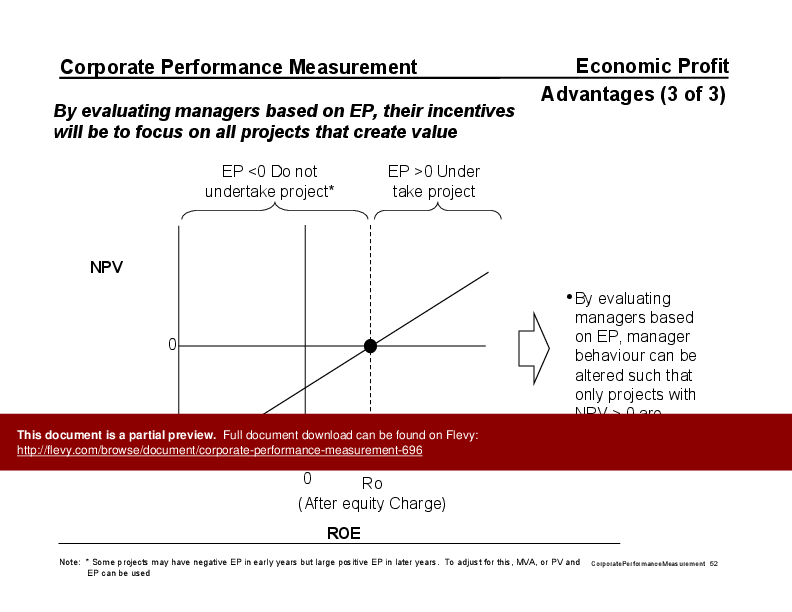
This PPT slide analyzes corporate performance measurement, focusing on Return on Equity (ROE) implications for project selection. Managers aiming to maximize ROE may overlook profitable projects, particularly those with an ROE below their current threshold (R). The graph illustrates the relationship between Net Present Value (NPV) and ROE, showing that projects with ROE above a certain threshold (R0), but below R are often dismissed despite positive NPV potential. This behavior results in missed opportunities and limits overall corporate performance. A broader evaluation framework is suggested to encourage managers to consider a wider array of projects that could positively impact the company's financial health.
This PPT slide presents a framework for corporate performance measurement, emphasizing key business drivers that influence shareholder value. Central to this framework is Operating Profit, calculated as Volume multiplied by Price, minus Costs. Volume refers to units sold, while Price is the average selling price per unit. Costs include direct costs (materials, labor) and indirect costs (selling, general, administrative expenses, and depreciation), highlighting the need for detailed cost structure analysis. Fixed Assets, including property, plant, equipment, and intangibles, are essential for operational capacity, while Working Capital is defined as current assets minus current liabilities, indicating liquidity for operations. Cost of Capital, represented by WACC (Weighted Average Cost of Capital), reflects the average financing cost, incorporating after-tax cost of debt and cost of equity, crucial for accurate financial assessments. This framework aids executives in evaluating value creation or destruction drivers for informed decision-making.
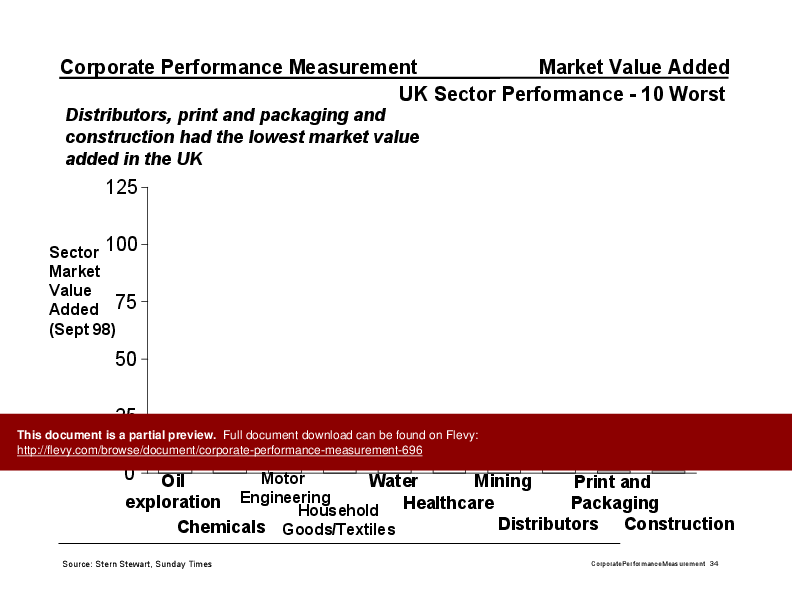
This PPT slide presents a comparative analysis of market value added by various sectors in the UK as of September 1998. The leading sectors include Banks (ÂŁ102.5 billion), Integrated Oil (ÂŁ94.3 billion), and Drugs (ÂŁ89.3 billion), significantly outpacing others. Media follows at ÂŁ42.9 billion, with Food Manufacturers, Telecoms, and Retailers below ÂŁ40 billion. Grocers, Electricity, and Drinks have the lowest market value added, ranging from ÂŁ18 billion to ÂŁ16.8 billion. This data highlights a hierarchy in sector performance, where financial services and energy-related sectors dominate, indicating potential areas for investment and strategic focus. Understanding these dynamics informs resource allocation and strategic planning for market entry or expansion.
This PPT slide details the consolidated balance sheet for Harnischfeger Industries Inc. as of October 31, 1996, focusing on liabilities and shareholders’ equity. Current liabilities total $1,077,127, including short-term notes payable, trade accounts payable, employee compensation, and accrued warranties. Long-term obligations amount to $657,765, covering post-retirement benefits and accrued pension costs, essential for assessing long-term financial health. Other liabilities, such as deferred income taxes, contribute to total obligations. Minority interest and shareholders' equity, which includes common stock, capital in excess of par value, and retained earnings, are critical for evaluating capital structure. Cumulative translation adjustments and deductions for stock employee compensation provide insight into financial management practices.
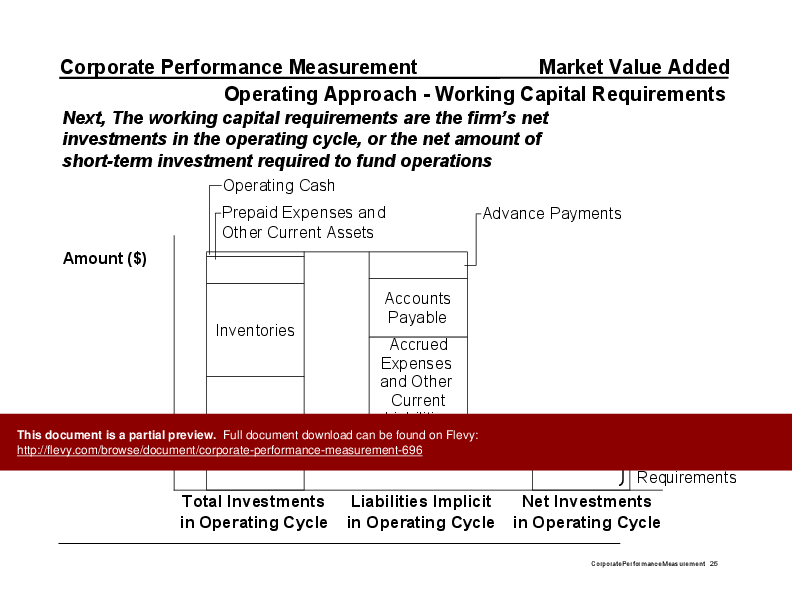
This PPT slide analyzes Harnischfeger’s working capital requirements as of October 31, 1996, totaling $374.46 million. It categorizes financial components into total investments in the operating cycle and liabilities. Total investments include operating cash of $28,640, prepaid expenses and other current assets of $158,413, inventories of $547,115, and receivables of $667,786, summing to $1,401,954. Liabilities consist of accounts payable at $346,056 and accrued expenses and other current liabilities of $526,239, totaling $874,295. The net investments in the operating cycle, calculated by subtracting total liabilities from total investments, yield a working capital requirement of $374,460. This figure reflects the capital necessary to maintain operations and support growth, providing insights into cash flow management and working capital strategies.
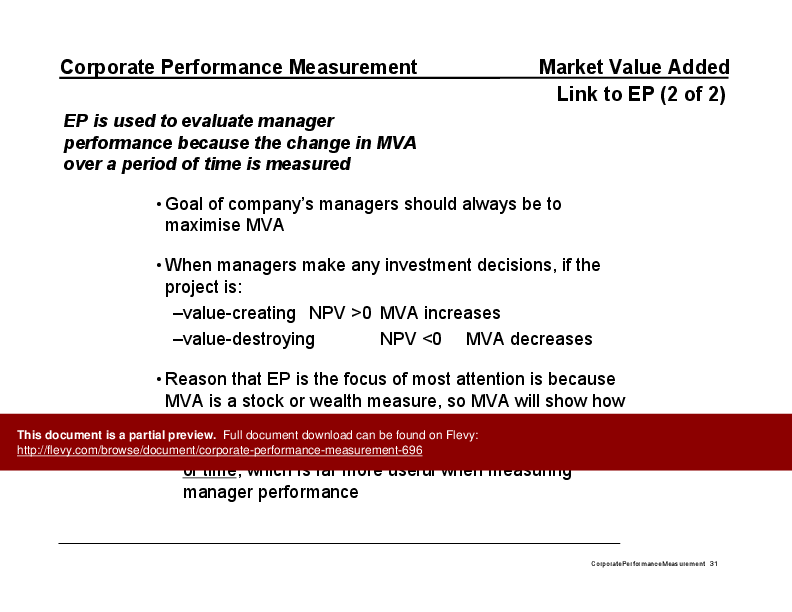
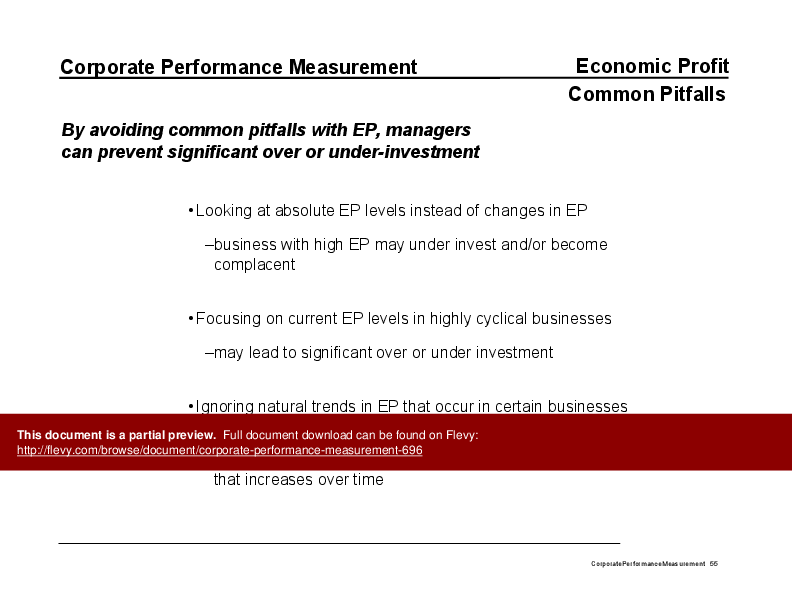
This PPT slide details the Economic Profit (EP) framework as a critical metric for corporate performance measurement. EP is calculated from Net Operating Profit After Tax (NOPAT), adjusted by a capital charge derived from the Weighted Average Cost of Capital (WACC). Key components of NOPAT include Operating Profit, Effective Taxation, Gross Profit, Advertising & Promotion (A&P), and Overheads, all essential for assessing profitability. EP's versatility allows application across various products, segments, and regions. Benefits of using Economic Profit include ease of use with historical accounting records and independence from Generally Accepted Accounting Principles (GAAP), enabling future performance projections. Positive Economic Profits indicate sustained profitability, leading to value creation, higher market prices per share, and growth potential.
This PPT slide presents a framework for understanding the relationship between information complexity in corporate performance measurement and the resulting economic value added. The vertical axis, "Value to the Organisation," peaks at an optimum information level, indicating maximum value derived from information complexity. Organizations below this optimal point face underperformance due to overly simplistic measurement, while those exceeding it encounter diminishing returns as costs of excessive adjustments outweigh benefits. Key factors determining this optimum level include the sensitivity of value measures to adjustments, the organizational level utilizing economic value-added information, strategic use of that information, and management's decision-making capabilities. This framework guides executives in calibrating performance measurement strategies to avoid oversimplification and unnecessary complexity.
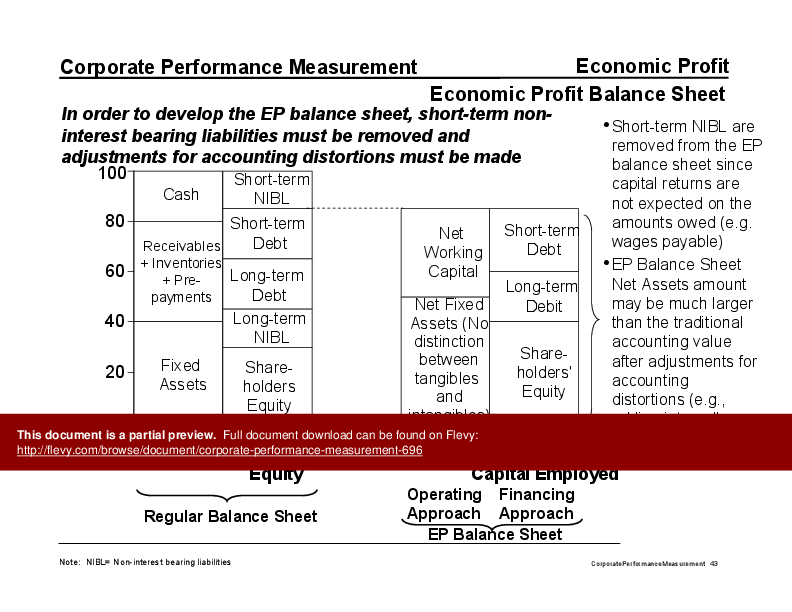
This PPT slide presents a framework for the Economic Profit (EP) balance sheet, contrasting it with the traditional balance sheet. The regular balance sheet categorizes assets and liabilities, including cash, receivables, inventories, and debt. The EP balance sheet modifies these categories, excluding short-term non-interest bearing liabilities (NIBL) that do not generate capital returns, providing stakeholders with a clearer view of net assets. It also addresses net working capital and net fixed assets, treating tangible and intangible assets equally, which may lead to a larger net assets figure compared to traditional accounting. This framework aids organizations in refining financial analysis and reporting, allowing for better assessment of true financial performance and informed strategic decisions.
This PPT slide outlines key initiatives driving success for New World wine producers, focusing on 3 main value drivers: decreased importance of appellation, reduction in capital intensity, and premium positioning with varietal dominance. The diminished significance of appellation has lowered grape costs, with producers increasingly sourcing grapes from the spot market or long-term contracts, enhancing flexibility and cost efficiency. The reduction in capital intensity is facilitated by outsourcing opportunities, particularly third-party grape sourcing, allowing for an asset-light model and operational efficiencies that improve cash flow. Premium positioning and varietal dominance enable producers to command higher returns, suggesting that strategic market positioning can yield significant financial benefits.
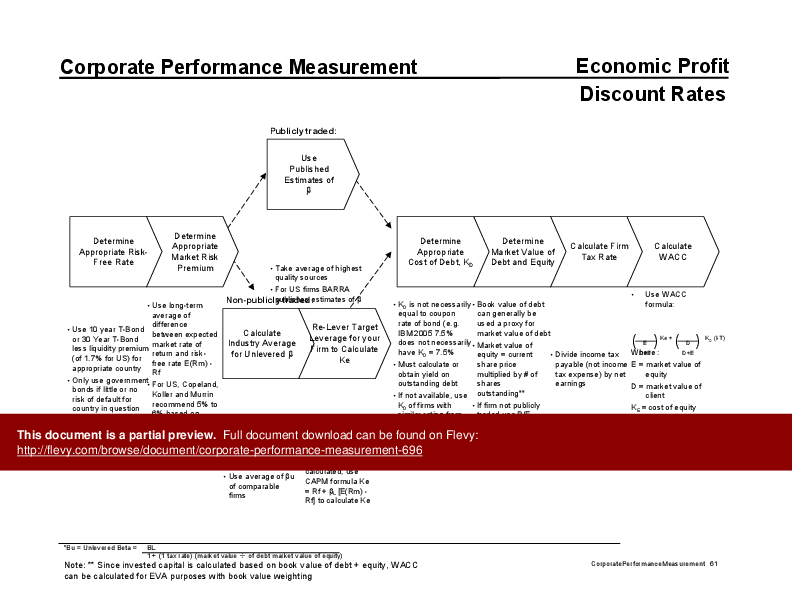
This PPT slide outlines a framework for corporate performance measurement, focusing on economic profit and discount rates for both publicly traded and non-publicly traded firms. For publicly traded firms, it uses published beta estimates, such as BARRA for U.S. firms, to assess risk. Non-publicly traded firms calculate an industry average for unlevered beta, using the long-term average of expected market returns minus risk-free rates. The slide details the determination of the cost of debt, advising the calculation of yield on outstanding debt and referencing ratings from agencies like Moody's or S&P. It also discusses assessing the market value of debt and equity, using book value as a proxy and calculating equity value based on share price and outstanding shares. Finally, it concludes with the calculation of tax rate and WACC, integrating these components into a comprehensive financial analysis.
This PPT slide illustrates Economic Profit (EP) as a residual profit concept that incorporates the opportunity cost of holding capital. The graph depicts financial metrics including Revenues, Operating Costs & Overheads, Profit Before Tax, Tax, Profit After Tax, Equity Capital Charge, and Economic Profit. The vertical axis quantifies amounts in dollars, while the horizontal axis lists the sequential financial elements. Each bar represents a stage in the profit calculation process, with Revenues showing the highest amount, decreasing through deductions for costs and capital charges. Economic Profit contrasts with traditional accounting profits, which may overlook capital costs, providing a more comprehensive view of financial performance and emphasizing the significance of opportunity costs in capital allocation. Understanding Economic Profit is essential for optimizing financial performance and resource utilization.
This PPT slide presents a framework for corporate performance measurement, highlighting modified accounting metrics that enhance decision-making accuracy. The vertical axis represents "Accuracy as Measure of Corporate Performance," while the horizontal axis indicates the "Level of Decision Making." At the high end, metrics like Total Shareholder Return (TSR) and Market Value Added (MVA) provide significant insights for strategic decision-making. In the middle, Economic Profit (EP), Economic Value Added (EVA), and Cash Flow Return on Investment (CFROI) serve as versatile performance measurement tools. The lower section features Return on Equity (ROE) and Return on Assets (ROA), which are essential, but may offer less accuracy. This framework illustrates the relationship between performance metric accuracy and decision-making levels, emphasizing the need for executives to select metrics that align with their context for effective performance management.
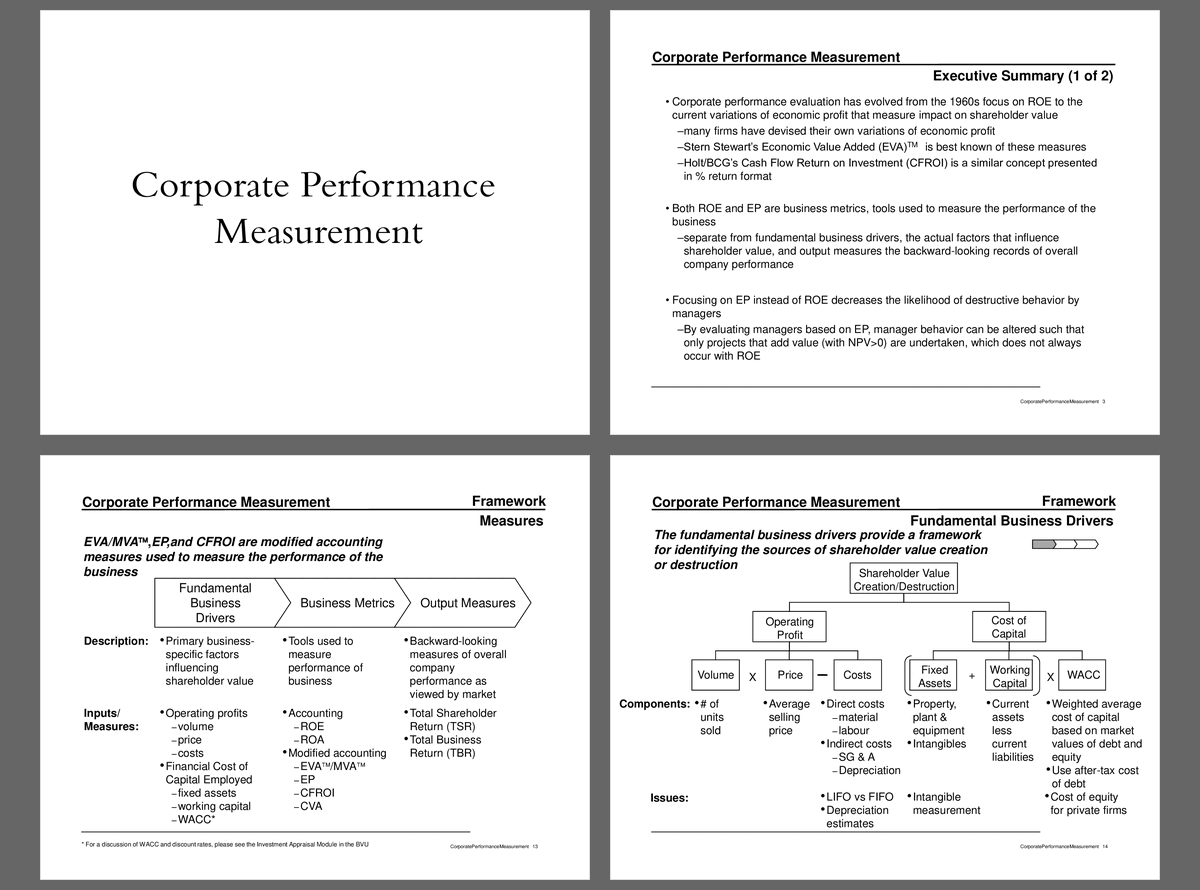
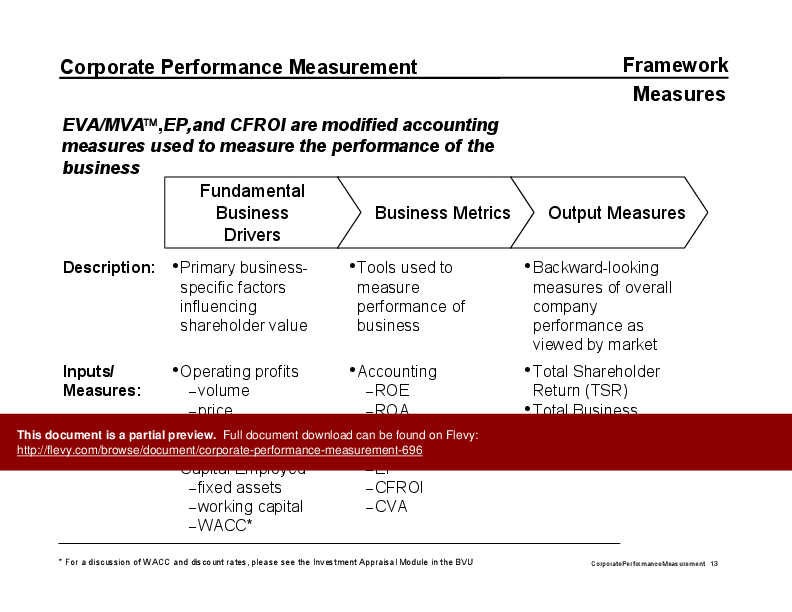
This PPT slide presents a structured framework for corporate performance measurement, focusing on modified accounting measures such as Economic Value Added (EVA), Market Value Added (MVA), Earnings Power (EP), and Cash Flow Return on Investment (CFROI). It categorizes performance metrics into 3 sections: Fundamental Business Drivers, Business Metrics, and Output Measures.
"Fundamental Business Drivers" identifies key factors influencing shareholder value, including operating profits, which are analyzed through volume, price, and costs, as well as the financial cost of capital, encompassing fixed assets, working capital, and Weighted Average Cost of Capital (WACC).
"Business Metrics" outlines tools for measuring performance, including traditional metrics like Return on Equity (ROE) and Return on Assets (ROA), alongside modified measures such as EVA and CFROI, indicating a comprehensive evaluation strategy.
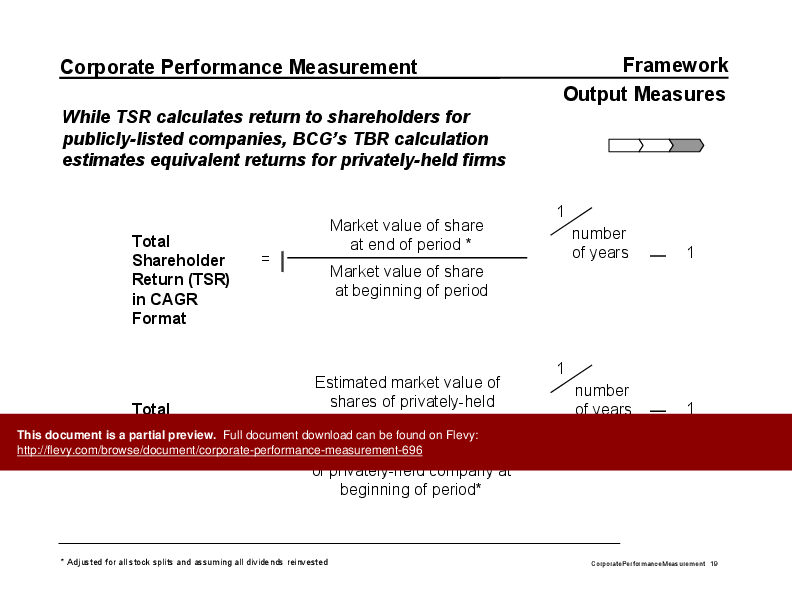
"Output Measures" focuses on backward-looking indicators like Total Shareholder Return (TSR) and Total Business Return (TBR), essential for stakeholders to assess business strategy effectiveness.
Source: Best Practices in Performance Management, Value Creation PowerPoint Slides: Corporate Performance Measurement PowerPoint (PPT) Presentation Slide Deck, Documents & Files
Need KPIs or benchmarks?Explore KPI Depot to access the most comprehensive database of KPI data, organized by function and industry.
Trusted by over 10,000+ Client Organizations
Since 2012, we have provided business templates to over 10,000 businesses and organizations of all sizes, from startups and small businesses to the Fortune 100, in over 130 countries.
"I have used Flevy services for a number of years and have never, ever been disappointed. As a matter of fact, David and his team continue, time after time, to impress me with their willingness to assist and in the real sense of the word. I have concluded in fact
that it is not at all just a repository of documents/resources but, in the way that David and his team manage the firm, it is like dealing with consultants always ready to assist, advise and direct you to what you really need, and they always get it right.
I am an international hospitality accomplished senior executive who has worked and lived during the past 35 years in 23 countries in 5 continents and I can humbly say that I know what customer service is, trust me.
Aside from the great and professional service that Flevy's team provide, their wide variety of material is of utmost great quality, professionally put together and most current.
Well done Flevy, keep up the great work and I look forward to continue working with you in the future and to recommend you to a variety of colleagues around the world.
"
– Roberto Pelliccia, Senior Executive in International Hospitality
"As a consulting firm, we had been creating subject matter training materials for our people and found the excellent materials on Flevy, which saved us 100's of hours of re-creating what already exists on the Flevy materials we purchased."
– Michael Evans, Managing Director at Newport LLC
"FlevyPro provides business frameworks from many of the global giants in management consulting that allow you to provide best in class solutions for your clients."
– David Harris, Managing Director at Futures Strategy
"Flevy.com has proven to be an invaluable resource library to our Independent Management Consultancy, supporting and enabling us to better serve our enterprise clients.
The value derived from our [FlevyPro] subscription in terms of the business it has helped to gain far exceeds the investment made, making a subscription a no-brainer for any growing consultancy – or in-house strategy team."
– Dean Carlton, Chief Transformation Officer, Global Village Transformations Pty Ltd.
"Last Sunday morning, I was diligently working on an important presentation for a client and found myself in need of additional content and suitable templates for various types of graphics. Flevy.com proved to be a treasure trove for both content and design at a reasonable price, considering the time I
saved. I encountered a download issue during the ordering process. However, a quick email to Flevy's support team, even on a Sunday (!!!), resulted in assistance within less than an hour, allowing me to download the content I needed. Fantastic job, Flevy! I give 5 stars for both content/price and customer service. Thank you!
"
– M. E., Chief Commercial Officer, International Logistics Service Provider
"My FlevyPro subscription provides me with the most popular frameworks and decks in demand in today’s market. They not only augment my existing consulting and coaching offerings and delivery, but also keep me abreast of the latest trends, inspire new products and service offerings for my practice, and educate me
in a fraction of the time and money of other solutions. I strongly recommend FlevyPro to any consultant serious about success.
"
– Bill Branson, Founder at Strategic Business Architects
"I am extremely grateful for the proactiveness and eagerness to help and I would gladly recommend the Flevy team if you are looking for data and toolkits to help you work through business solutions."
– Trevor Booth, Partner, Fast Forward Consulting
"As a young consulting firm, requests for input from clients vary and it's sometimes impossible to provide expert solutions across a broad spectrum of requirements. That was before I discovered Flevy.com.
Through subscription to this invaluable site of a plethora of topics that are key and crucial to consulting, I
have been able to exceed expectations and deliver quality advice and solutions to my clients. The quality and expertise of the authors are exemplary and gives me great confidence to use as part of my service offerings.
I highly recommend this company for any consultant wanting to apply international best practice standards in their service offerings.
"
– Nishi Singh, Strategist and MD at NSP Consultants
Save with Bundles

This document is available as part of the following discounted bundle(s):
Download our free compilation of 50+ Strategy & Transformation slides and templates. Frameworks include McKinsey 7-S, Balanced Scorecard, Disruptive Innovation, BCG Curve, and many more.